
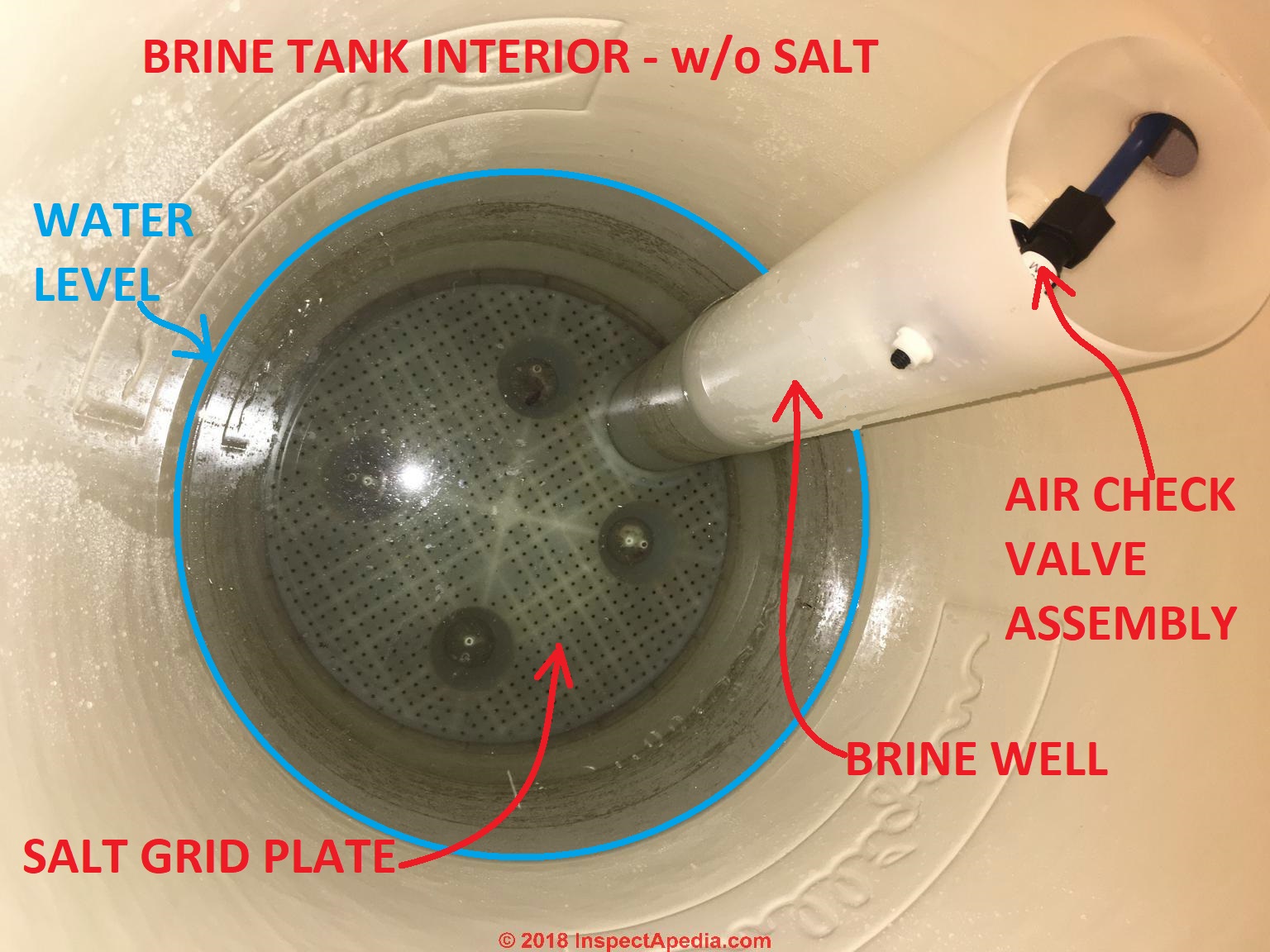
When a water softener is working normally, it does consume salt over time. But the visible salt level does not always drop in a neat, obvious way. Many systems dissolve salt below the surface, household water use can be low, and tank shape or salt type can make the level look steady for stretches.
Still, if you keep topping it off and it never seems to go down and your water is getting hard again, you are not crazy. That combination usually points to a handful of common issues:
- The unit is not regenerating when it should (power, settings, meter, motor, valve issues).
- It is regenerating, but it is not refilling the brine tank with water (refill control, clogged refill path).
- It refills, but it is not drawing brine into the resin tank (injector or venturi clog, air leak, drain restriction).
- Brine is there, but salt is not dissolving (salt bridge, salt mush, crusting).
I have chased this exact issue at my own place after a long stretch of “everything seems fine.” Then you notice the shower glass spotting again, the dishes look chalky, and that salt level is suspiciously unchanged. This guide walks you through the most common causes, in the order that saves the most time and prevents accidental damage.
Quick safety and a 2-minute sanity check
Before you touch anything
- Unplug the softener before opening the control head or disconnecting any tubing.
- If you need to move valves or disconnect drain lines, close the bypass or shut off water first. Depending on your plumbing, shutting off the main may be safer than relying on bypass alone.
- Some steps can release pressurized water. Relieve pressure at a softened cold tap and follow your manufacturer instructions.
- Keep a towel and a small bucket nearby. Brine water finds a way.
Sanity check: Is the softener actually softening?
Before you chase a problem, confirm you have one:
- Do a hardness test strip on a cold water tap that should be softened (often a bathroom sink). Compare it to an outdoor spigot which is often unsoftened.
- Check for obvious signs: scale buildup, soap not lathering, water spots returning.
If your water is testing hard and the salt level never seems to change, keep going.
How salt gets used (plain English)
Inside the softener resin tank are resin beads that “grab” hardness minerals (calcium and magnesium). Over time those beads get saturated. During regeneration, the system uses salty water (brine) to flush the hardness off the beads and send it to the drain.
So when your softener is not consuming salt, something is breaking in one of these steps:
- It never regenerates (timer, settings, power, meter, motor, valve issues).
- It regenerates but cannot refill brine (no water entering brine tank, refill flow control issue, clogged refill line).
- It refills but cannot draw brine (clogged injector or venturi, air leak, drain restriction, low water pressure on some models).
- Salt is not dissolving (salt bridge, salt mush, crusting).
- Resin bed cannot do its job (fouled resin, iron, chlorine damage, channeling after prolonged poor regeneration).
Step 1: Check for a salt bridge or mush
This is the most common “my salt never goes down” culprit, and it is also one of the easiest fixes.
What a salt bridge is
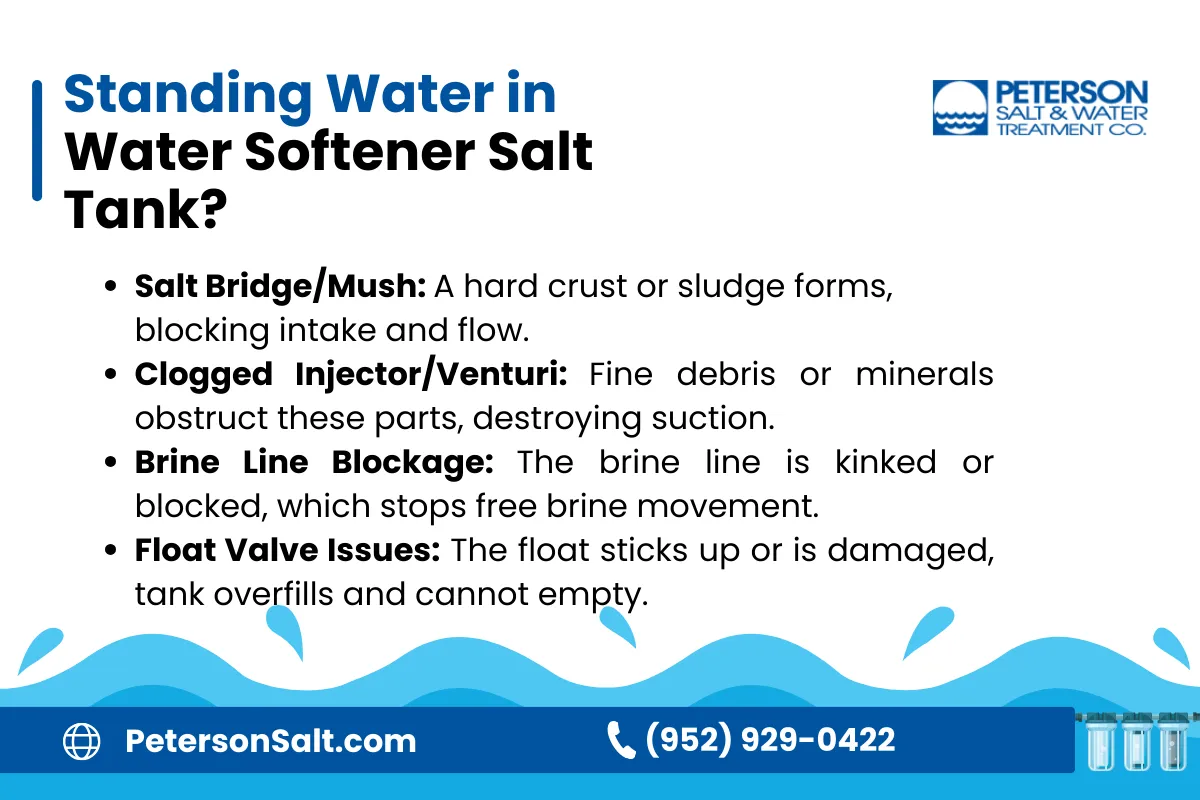
A salt bridge is a hard crust that forms above the water line, creating an empty pocket underneath. From the top it looks full, but the salt is not actually sitting in water and dissolving.
How to test for a bridge
- Use a broom handle or wooden dowel and gently push straight down in a few spots.
- If it suddenly “drops” through, or you feel a firm plate and then hollow space, you likely have bridging.
How to fix a salt bridge
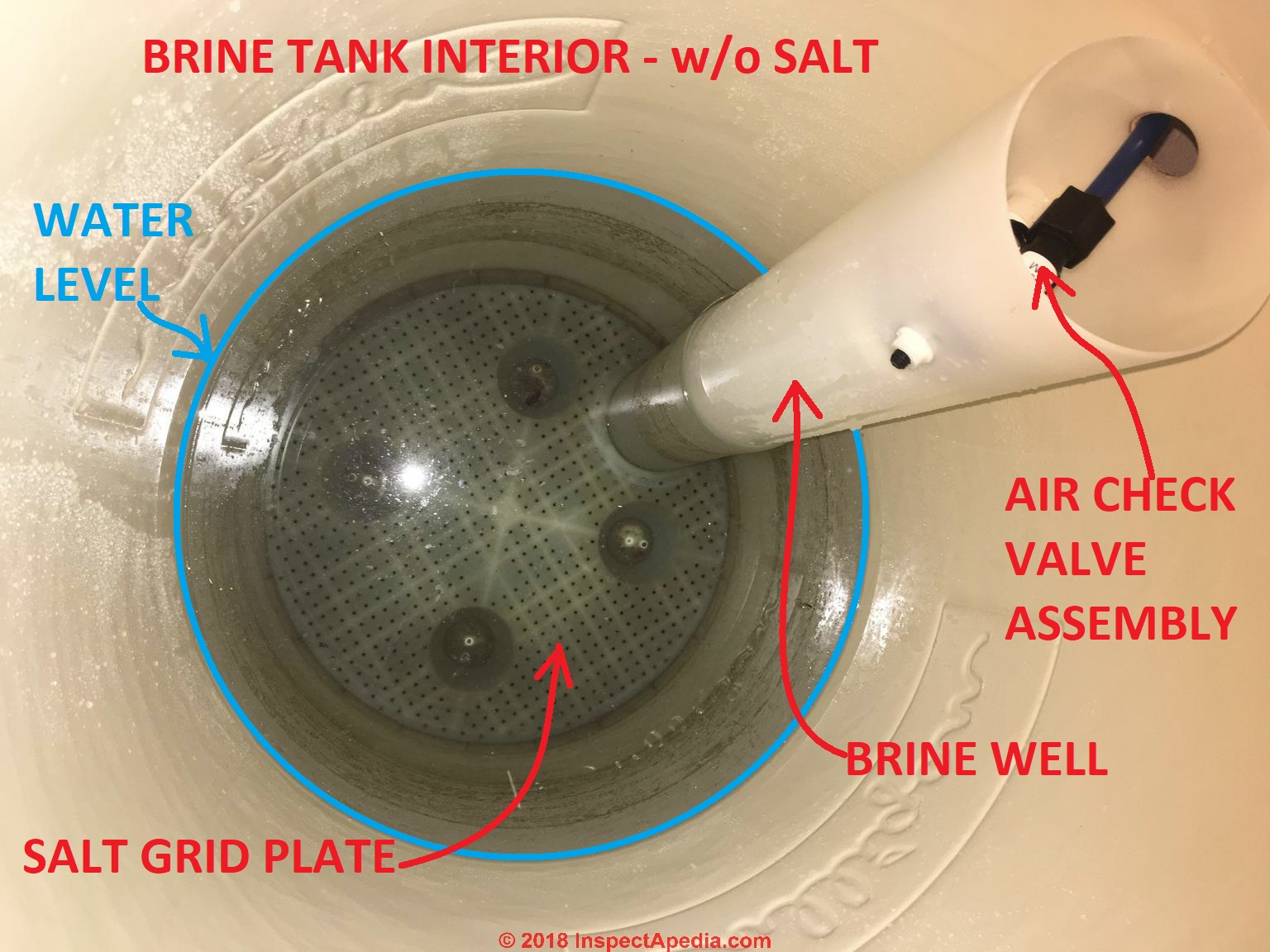
- Break the crust into chunks (gently). Avoid smashing the brine well, which is the inner tube that usually houses the float and the brine pickup tube.
- Scoop out loose salt into a bucket if the tank is packed tight.
- Add a few gallons of warm water and let it sit, then break up remaining chunks.
- Refill with clean, high-quality salt and do not overfill. I like to keep it under two thirds full.
What salt mush looks like
Salt mush is the opposite problem: sludge at the bottom that blocks water movement. It often happens with low-quality salt, humidity, or if the tank stays too full.
- Symptoms: thick slush, dirty brine, salty “cement” at the bottom, poor softening even after regeneration.
- Fix: scoop out salt, clean the brine tank, and restart with fresh salt.
Step 2: Make sure it regenerates
If your softener is not regenerating, it will not use much salt. This can be as simple as a setting, or as annoying as a failing motor or a bad meter.
Check power, time, and programming
- Confirm the display is on and the clock is correct. A power outage can reset the time and skip scheduled regeneration.
- Check whether the unit is set to metered (regenerates based on water usage) or timer (regenerates on a schedule). Either can work, but it has to be set correctly.
- Look for vacation mode, “regen off,” or an extended delay setting.
- Verify key settings like hardness and capacity are reasonable for your home. If they are wildly off, regen may be too rare or ineffective.
Metered units: check the meter
If your softener is metered, a failed or stuck turbine or meter sensor can make the unit think you are using zero water, so it never triggers regeneration even if the programming is correct.
- Look for a “flow” indicator on the display while water is running (varies by brand).
- If your unit has diagnostics, check total gallons used and whether it changes as you run a faucet.
- If the meter is not counting, inspect wiring connections if safe and accessible, and consult the manual for meter troubleshooting.
Force a manual regeneration
Most units have a button to start a regen cycle. Start it when you can listen for changes. You are listening for motor movement, water flow to drain, and later a refill sound.
- If nothing happens: likely control or motor issue, no power, or a stuck valve.
- If it advances stages but you never get obvious drain flow during backwash or rinse: the valve may not be shifting internally, or the motor is spinning but not engaging.
Check the bypass valve position
This one gets people, especially after plumbing work. If the softener is in bypass, the house gets hard water and the unit may still “do stuff” without meaningful results.
- Look for a handle marked service vs bypass.
- Confirm it is in service and fully seated.
Step 3: Confirm refill and brine draw
A softener can appear to regenerate while failing at the one part that actually uses salt: making and drawing brine. Exact timing and stages vary by valve and brand, so use your manual if you have it.
Check brine tank water level
Open the brine tank and look for water at the bottom. Some standing water is normal. The float and refill time determine the level, and “normal” varies by model.
- Bone dry brine tank: the unit may not be refilling the brine tank.
- Way too much water: the unit may be refilling but not drawing brine out, or the float is stuck, or the refill control is not shutting off correctly.
What to watch for in a full regen cycle
- Brine draw: during the brine stage, the softener should pull brine from the tank and send it through the resin and out the drain.
- Brine fill: toward the end of regen, you should hear water flowing into the brine tank for a set time.
If you are comfortable observing, mark the brine water level with tape and see if it drops during the brine draw stage.
Common brine line and float problems
- Kinked brine line or a loose fitting letting air in.
- Cracked brine line or worn O-rings that pull air instead of brine.
- Brine float stuck in the up position. It can shut off refill or restrict draw.
- Clogged brine line due to salt crystals or debris.
Fixes are usually simple: straighten the line, snug the fittings, and clean the float assembly with warm water. If the parts are brittle, replace them instead of forcing them.
Step 4: Clean the injector or venturi
The injector, sometimes called a venturi, creates suction that pulls brine from the tank during regeneration. If it is clogged with iron, sediment, or debris, the softener can refill fine but never draw brine. Result: hard water and a salt level that never seems to change.
This varies by valve design, but on many common venturi-based control heads, injector condition is a top culprit.
Symptoms that point to the injector:
- Brine tank water level never goes down during brine draw.
- Unit seems to move through regen stages, but softening does not improve.
- Drain line flow during brine draw is weak or inconsistent.
Basic injector cleaning steps (general)
- Unplug softener and close bypass.
- Relieve pressure by opening a softened cold tap for a moment.
- Remove the injector cap on the control valve (check your manual for location).
- Rinse parts with warm water and use a soft brush. Do not enlarge tiny openings with metal picks.
- Reassemble with care and check O-rings for nicks.
If your household has iron in the water, injector cleaning might become routine unless you add prefiltration or iron treatment.
Step 5: Check drain and flow controls
Regeneration relies on proper flow in and out of the valve. A drain restriction can prevent good backwash and, on many models, can interfere with brine draw performance.
Drain line basics
- Inspect the entire drain line for kinks, sags, or freezing in cold climates.
- Make sure the drain line is not pushed too far into a standpipe. It needs an air gap setup per local code.
- Look for sediment buildup at the drain discharge point.
Tip from my own rookie mistake: if the drain line is routed like a roller coaster, you are asking for trouble. Keep it tidy and supported.
Refill flow control and refill path
If your brine tank is not refilling, or refilling very slowly, the issue can be a clogged or incorrect brine refill flow control (often called BLFC on many valves) or debris in the refill elbow or tubing. Model names vary, but the concept is the same: a tiny orifice controls how much water refills the brine tank.
- If refill never happens: suspect a clogged refill control, stuck float, or valve issue.
- If refill is weak: suspect a partially clogged flow control or low water pressure.
Step 6: Resin problems that look similar
Sometimes the softener does regenerate, but the resin bed is not exchanging hardness properly. Homeowners then keep adding salt, expecting improvement, and it feels like the unit “is not using salt” because nothing changes.
Resin fouling (iron, manganese, sediment)
- Common in well water or any supply with iron.
- Fix: run a resin cleaner designed for softeners (follow label directions), and consider upstream filtration.
Chlorine damage (city water)
- Over years, chlorine can degrade standard resin beads.
- Fix: resin replacement is often the real solution. A carbon prefilter can help extend resin life.
Channeling after prolonged poor regeneration
If the unit has gone a long time without effective brine draw, or the resin is fouled, water can carve paths through the resin and reduce contact time.
- Fix: correct the underlying regeneration or brine issue first, then run a couple of regenerations to stabilize performance.
Step 7: Control head, motor, or valve failures
If you have confirmed there is no salt bridge, settings are correct, and brine draw is not happening even after cleaning the injector and verifying the drain and refill path, you may be looking at a mechanical or electrical failure in the control head.
Signs of a failing motor or stuck valve
- Softener gets stuck on one regeneration stage.
- You hear clicking or humming with no movement.
- Error codes on the display (varies by model).
- Water continuously running to drain or the unit never refills.
What you can do
- Look up your model number and search the manual for error codes and a regeneration stage chart.
- Inspect wiring connections if accessible and safe.
- Consider calling service for valve rebuilds or replacing the control head if the unit is older.
My rule: if repair requires specialty tools, proprietary parts, or you are guessing inside the valve body, it is usually cheaper to pause and get a pro diagnosis than to buy the wrong parts twice.
Simple fixes vs. call for service
Usually DIY friendly
- Breaking a salt bridge and cleaning salt mush
- Correcting time, hardness setting, and regeneration schedule
- Checking bypass position
- Cleaning the brine float assembly and straightening the brine line
- Cleaning an accessible injector or venturi (with the manual in hand)
- Fixing a kinked drain line
Often worth a pro
- Persistent failure to draw brine after injector cleaning and leak checks
- Valve body leaks, cracked housings, stripped fittings
- Motor or control board replacement if you are not comfortable with electrical troubleshooting
- Resin replacement or full system re-bed
Prevent it from happening again
- Use clean salt: pellet, solar, or other high-purity salts can all work. The real goal is low insoluble content and consistent quality, not chasing a “magic” salt that never bridges.
- Do not overfill: keeping the brine tank around two thirds full reduces clumping in humid areas.
- Peek inside monthly: a 10-second look catches bridges early.
- Clean the brine tank every year or two if you see sludge or debris.
- Test hardness a few times a year so you notice performance changes before they get bad.
Fast troubleshooting checklist
If you want the shortest path, run this list in order:
- Water is testing hard on a softened tap.
- Bypass is in service.
- No salt bridge or mush.
- Clock, hardness, and regeneration settings look reasonable.
- If metered, verify the meter is counting flow.
- Manual regeneration runs and you get obvious drain flow during backwash or rinse.
- Brine tank refills near the end of regen.
- Brine tank water level drops during brine draw.
- Injector or venturi is cleaned, O-rings are intact, and the drain line is clear.
- If still failing, suspect control head motor, seals, flow controls, or valve issues and consider service.
If you tell me your softener brand, whether you are on city water or a well, and what the brine tank water level is doing during regen, I can help you narrow down the most likely failure point.

About Marcus Vance
Content Creator @ Grit & Home
Marcus Vance is a lifelong DIY enthusiast and self-taught home renovator who has spent the last decade transforming a dilapidated 1970s ranch into his family's dream home. He specializes in budget-friendly carpentry, room-by-room renovations, and demystifying power tools for beginners. Through his writing, Marcus shares practical tutorials and hard-learned lessons to help homeowners tackle their own projects with confidence.