
If your water softener is “full of salt” but your water suddenly feels hard, you’re not alone. One of the most common mechanical reasons is a salt bridge, which is basically a crusty ceiling of salt that forms inside the brine tank and leaves an empty space underneath. Your softener may still run its normal regeneration cycle on schedule, but it can’t make strong brine (or replenish brine properly), so it regenerates without restoring softening capacity.
This page is meant to be a focused companion to our troubleshooting on “softener not using salt.” If everything else looks normal but the salt level never seems to go down, start here.
One quick “what normal looks like” note: some standing water at the bottom of the brine tank is normal, and the exact level varies by model and where it is in the cycle. A brine tank doesn’t need to look “full of water” to be working.
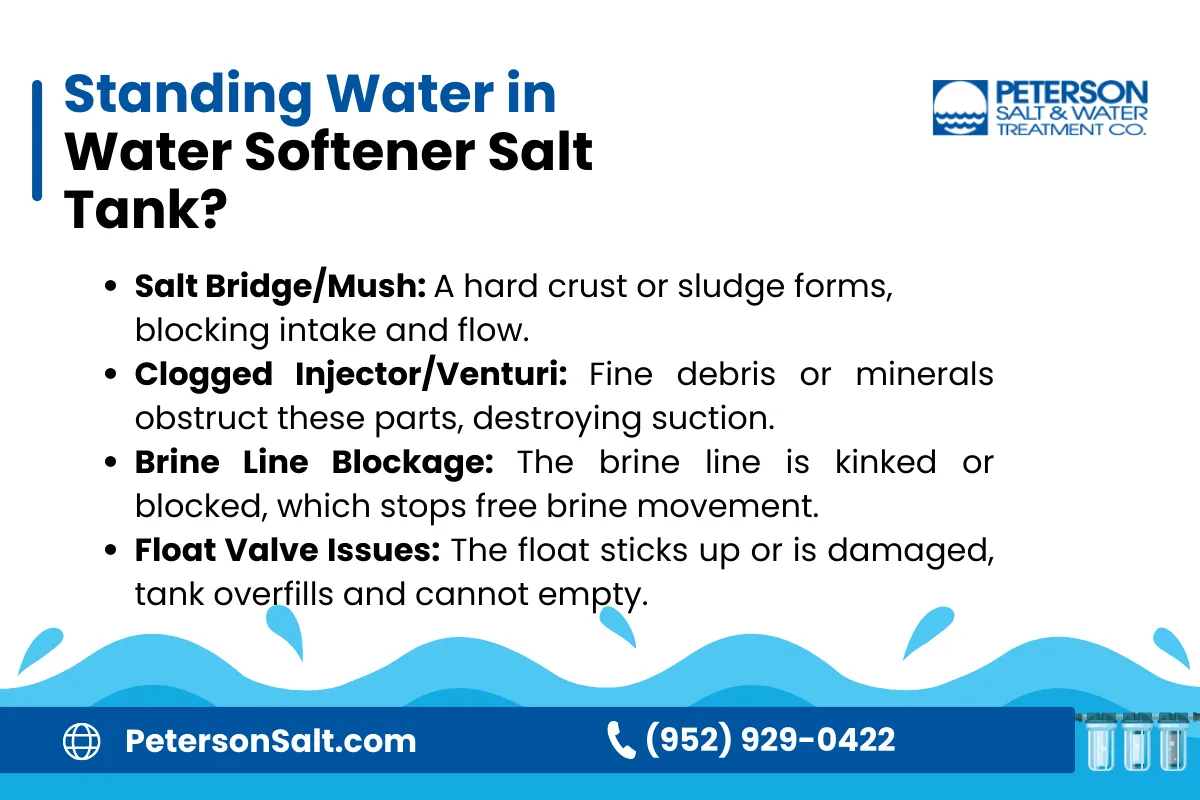
What a salt bridge is (and why it breaks your softener)
Inside the brine tank, salt pellets are supposed to sit in loose layers. Water collects at the bottom, dissolves salt, and creates brine that gets drawn into the softener during regeneration.
A salt bridge happens when the salt forms a hardened layer across the tank, like an ice sheet. Under that sheet is a hollow pocket, so the water at the bottom can’t dissolve fresh salt properly. That means the softener may regenerate with weak brine, no brine replenishment, or poor brine draw, and hardness starts slipping through.
Common signs of a salt bridge
- Salt level looks high week after week, even though you’re using water normally.
- Hard water symptoms return: soap not lathering, spots on dishes, stiff laundry, dry skin.
- Brine tank looks “full”, but the unit seems to be cycling without fixing the hard water.
- Hollow sound when you tap the salt area near the center (more on verifying safely below).
Salt bridge vs. salt mush: A bridge is hardened salt up top with a void below. Salt mush is the opposite problem, a slushy, soupy mess at the bottom that can clog the brine system. The fix overlaps, but the diagnosis is different.
Before you poke around: quick safety checklist
Brine tanks look harmless, but a few simple precautions keep this a clean, low drama project.
- Put the softener in bypass if your model allows it. This prevents unexpected cycling while your hands are nearby.
- Unplug the unit if you’ll be working for more than a quick inspection.
- Wear gloves and eye protection. Salt crystals can be sharp, and brine is irritating.
- Don’t use a shovel, rebar, or sharp metal rod. It’s easy to crack the brine tank or damage the brine well and float assembly.
How to confirm you have a salt bridge
You’re trying to answer one question: is the salt bed solid across the top with a void below?
Step 1: Look for stuck salt
Open the lid and check whether the salt is piled high but looks unusually flat and firm on top, like it has set up. Bridges often form a dome or a level shelf.
Step 2: Do the gentle tap test
Use the handle of a wooden spoon, a rubber mallet, or your knuckles and tap the outside of the brine tank at a few heights.
- A more solid thud can suggest the tank is packed with salt in that area.
- A hollow, drum-like sound in the middle can suggest a void under a bridge.
This isn’t a perfect test. Tank shape, salt type, and fill level all change the sound, so treat it as a clue, not a verdict.
Step 3: Probe with a non-metal tool
Use a broom handle, a wooden dowel, or a piece of PVC pipe. Press straight down gently near the center and then a few inches from the wall.
- If it suddenly “drops” through a crust and then feels empty, you found the void.
- If it slowly pushes through loose pellets the whole way, it’s probably not bridged.
Tip from my own mistakes: I once got impatient and used a long screwdriver. It worked, but I nicked the brine well. That little shortcut cost me an afternoon of parts chasing and a vocabulary lesson for the kids. Stick to wood or PVC.
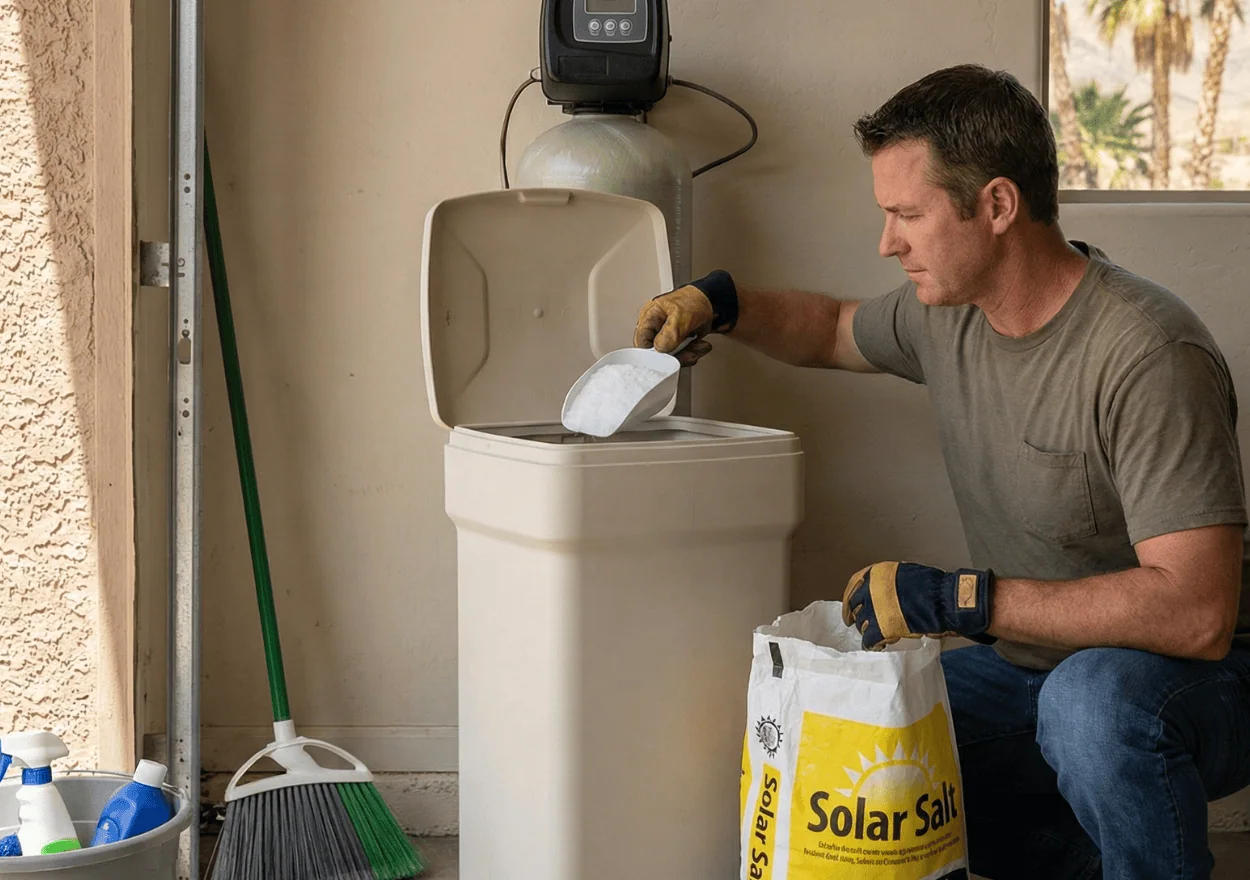
How to break up a salt bridge safely
The goal is to collapse the hardened crust so the salt can settle normally into the water below. You don’t need to pulverize everything into powder.
Method 1: Gentle probing and collapse
- Use a broom handle, wooden dowel, or PVC pipe.
- Press down in a few spots to poke holes through the crust.
- Work in a circle pattern from the center outward.
- Once it starts to give, nudge the crust to collapse. Avoid prying against the tank wall.
Method 2: Tap from the outside
With one hand on the tank to steady it, tap the outside of the brine tank lightly with a rubber mallet. You’re trying to crack the crust loose, not beat the tank into submission.
Method 3: Remove salt and break it up outside
If the salt is badly fused, it’s sometimes quicker to scoop out the top layer into a bucket, break up the chunks, and return usable pellets.
- Use a plastic scoop or a small container.
- Keep chunks that break cleanly back into pellets.
- Throw away rock-hard, dirty, or sludgy pieces.
After the bridge collapses
- Look down into the tank. You should see salt settle and level out more naturally.
- If your tank was bridged for a while, consider a brine tank cleaning (next section). Old crust and fines love to cause repeat issues.
- Take the unit out of bypass and run a manual regeneration if your control head allows it. This helps confirm brine draw is working again.
Clean the brine tank (optional, but worth it)
If you’ve had repeated bridges, or you find a lot of salt fines and crust, a quick tank clean can reset things.
What you’ll need
- Rubber gloves
- A couple of buckets
- A plastic scoop
- Warm water
- Mild dish soap (optional)
- A towel or shop rags
- Wet/dry shop vacuum (optional, but highly recommended)
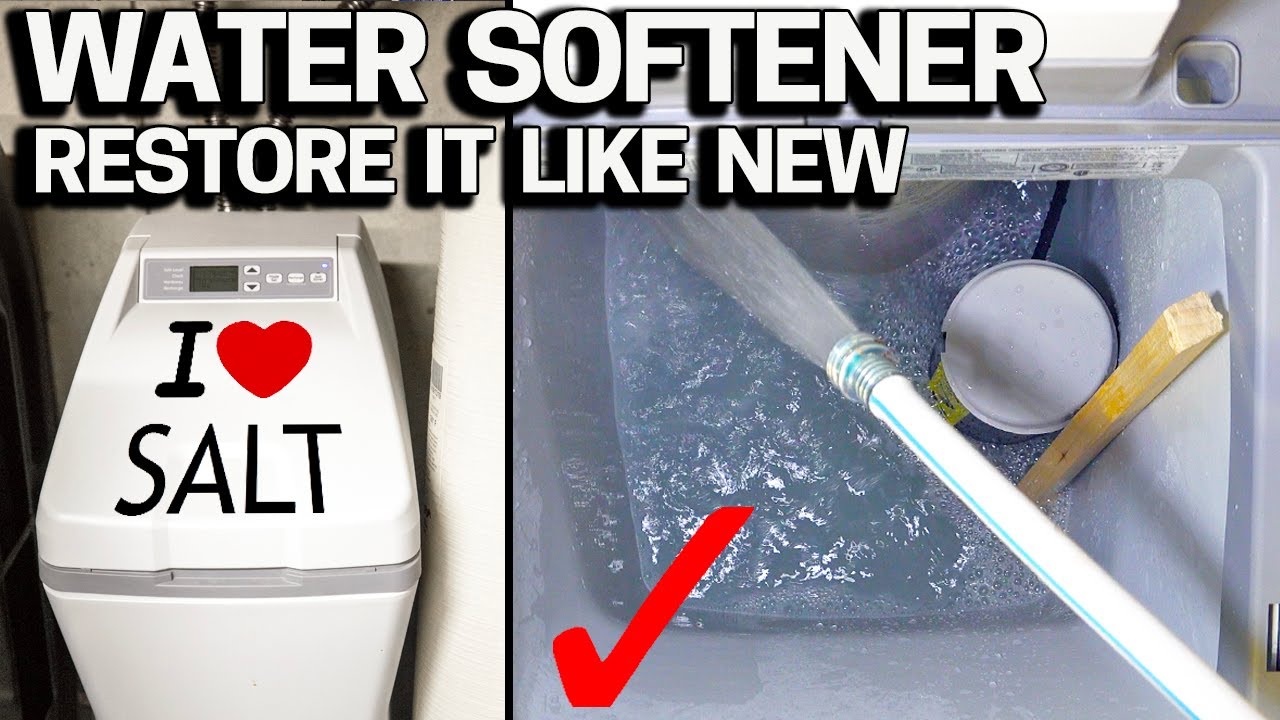
Step-by-step brine tank cleaning
- Bypass and unplug the softener.
- Scoop out remaining salt into buckets. If it’s clean and pellet-shaped, you can save it.
- Remove the brine well cap carefully if accessible. Don’t yank on tubing or the float assembly.
-
Remove brine water and slush.
- Easiest: use a wet/dry shop vac to vacuum out the water and any slushy salt. Keep the hose away from the float and tubing so you don’t snag anything.
- No shop vac: bail it out with a cup or small container (it works, it’s just slow).
- Wipe the tank with warm water. If there’s heavy residue, add a small amount of dish soap, then rinse.
- Optional sanitize: Some manufacturers allow a small amount of unscented household bleach for sanitizing, but the dose varies a lot by brand and tank size. If your manual provides a bleach procedure, follow that exactly. If not, skip bleach and stick with a good rinse.
- Reassemble the brine well cap and make sure the float moves freely.
- Add salt back, then top off with fresh pellets.
- Plug in, take out of bypass, and run a manual regeneration.
How much salt to add afterward: As a practical habit, I like keeping the tank about one-third to one-half full instead of filling it to the brim. Some manufacturers have different preferences, but in real life, overfilling often encourages bridging (especially in humid areas).
How to prevent a salt bridge
Salt bridges are usually caused by some mix of humidity, temperature swings, and the type of salt you’re using. Prevention is mostly about keeping the salt dry and keeping the tank from getting overpacked.
Use the right salt
- High purity pellets generally bridge less than cheaper rock salt that carries more impurities and fines.
- If you see lots of powder at the bottom, try switching brands or salt type.
Don’t overfill the brine tank
- Top off smaller amounts more often.
- Break up any developing crust before it becomes a full bridge.
Control humidity and temperature swings
- Keep the brine tank lid closed tightly.
- If your softener is in a damp basement, improving ventilation or running a dehumidifier can help.
- Avoid storing salt bags directly on a concrete floor. Keep them on a scrap 2x4 rack or a pallet so the bags stay dry.
Build a simple monthly habit
- Once a month, lift the lid and poke the salt bed in a couple places with a broom handle.
- Listen for hollow spots and deal with them early.
- Check that the salt level actually drops between refills.
When it’s not a salt bridge
If you break up the bridge and the softener still isn’t using salt, the issue may be elsewhere, including:
- Brine line blockage or kink
- Injector or venturi clogged
- Brine float stuck
- Incorrect settings or a power outage resetting the timer
- Resin bed problems or control valve issues
If you can, run a manual regeneration and watch for brine draw. If the brine level never drops during the draw cycle, that’s a strong clue the problem is in the brine system, not just the salt.
When to call a pro
- You see a cracked brine tank, damaged brine well, or broken float assembly.
- You cleared the bridge, but there’s still no brine draw during regeneration.
- You keep getting bridges even after switching salt, cleaning the tank, and controlling humidity.
- You suspect a control valve issue and you’re not comfortable opening it up.
Quick FAQ
Can I pour hot water into the brine tank?
I avoid it. Warm water can help dissolve crust, but dumping hot water can also create more mush and can stress plastic components. Start with mechanical break-up first. If you use water, use modestly warm water and don’t overdo it.
How long does it take for a salt bridge to cause hard water?
It depends on how often your unit regenerates and how big the bridge is. Some homes notice changes within a week or two, especially with higher water use.
My go-to checklist
- Confirm symptoms: hard water plus salt level not dropping.
- Tap and probe with wood or PVC to check for a hollow spot.
- Collapse the bridge gently, don’t stab with metal.
- Run a manual regeneration and verify brine draw if you can.
- Refill in smaller amounts, use higher purity pellets, and check monthly.
If you want the broader list of causes beyond bridging, this pairs well with our “water softener not using salt” troubleshooting page. Bridging is common, but it’s not the only culprit.

About Marcus Vance
Content Creator @ Grit & Home
Marcus Vance is a lifelong DIY enthusiast and self-taught home renovator who has spent the last decade transforming a dilapidated 1970s ranch into his family's dream home. He specializes in budget-friendly carpentry, room-by-room renovations, and demystifying power tools for beginners. Through his writing, Marcus shares practical tutorials and hard-learned lessons to help homeowners tackle their own projects with confidence.