
🚨 In a DIY emergency or rush?
Skip the details and jump straight to our 30-second cheat sheet for the most crucial info.
The first time this happened at our place, I was convinced something “broke.” We had normal water, then mid shower it started spitting air, then nothing. I shut the faucet, waited, tried again, and like magic it came back. That on again, off again behavior is scary, but it is also a big clue.
When a well produces water for a while, then pumps air or stops until it “recovers,” you are often hitting the limit of how quickly the well can refill. The good news is you can do some very practical checks before you call anyone. The important part is separating a supply and recovery problem from other common well system failures that look similar.
What this symptom usually means
If you get strong water at first, then air sputtering or no water after heavy use, then water returns after a rest period, the most common story is:
- Your household demand briefly exceeds what the well can supply.
- The well water level drops (the well “pumps down”).
- The pump starts drawing air or hits a low water cutoff, so flow stops.
- After time, the well refills (recovers) and service returns.
This is different from a system that has weak flow all the time. It is also different from a pump that never shuts off, a pump that short cycles, or a pump that will not start.
Safety first (two quick rules)
- Electricity and water are a real mix. If you need to open an electrical cover (pressure switch box, control box), shut off the breaker first and verify it is off.
- Protect the pump. If you suspect you are running the well dry, do not keep forcing it to run. Cycling a pump while it is sucking air can overheat it and chew up components.
Step 1: Confirm it is a pumping down issue
Do the simplest test: one faucet, timed
Pick one hose bibb or bathtub spout (something without a restrictive aerator). Run cold water only and watch what happens over time.
- If it starts strong and stays strong for a long time, your issue might be more about simultaneous demand (multiple fixtures at once) than the well itself.
- If it starts strong and then drops to spurting air within a predictable window, that pattern screams well recovery limitation.
If you want to get a little more organized, fill a 5 gallon bucket and time it at the start, then again right before the problem begins. A big drop in fill rate points to supply falling off, not one clogged faucet.
Step 2: Watch the pressure gauge
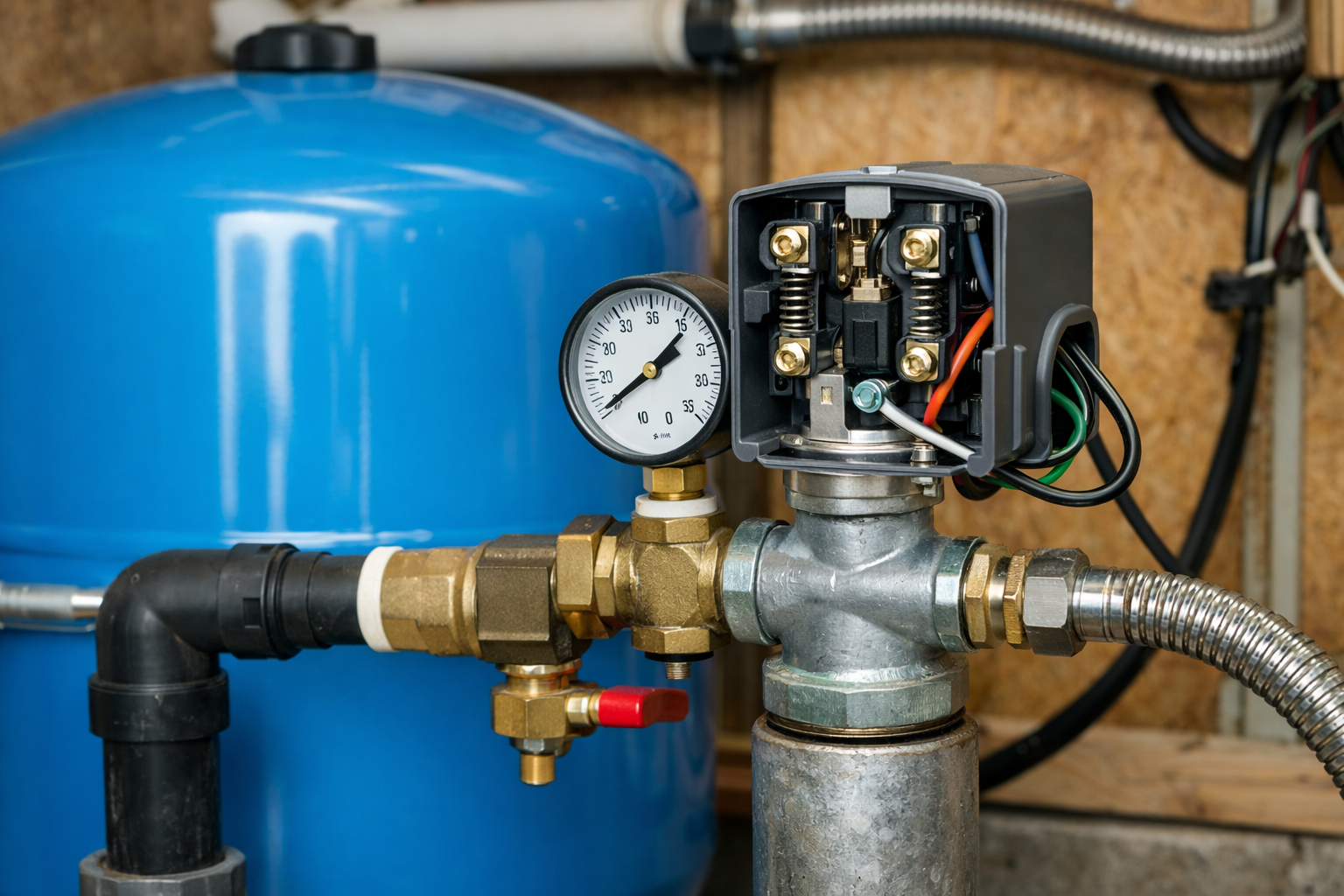
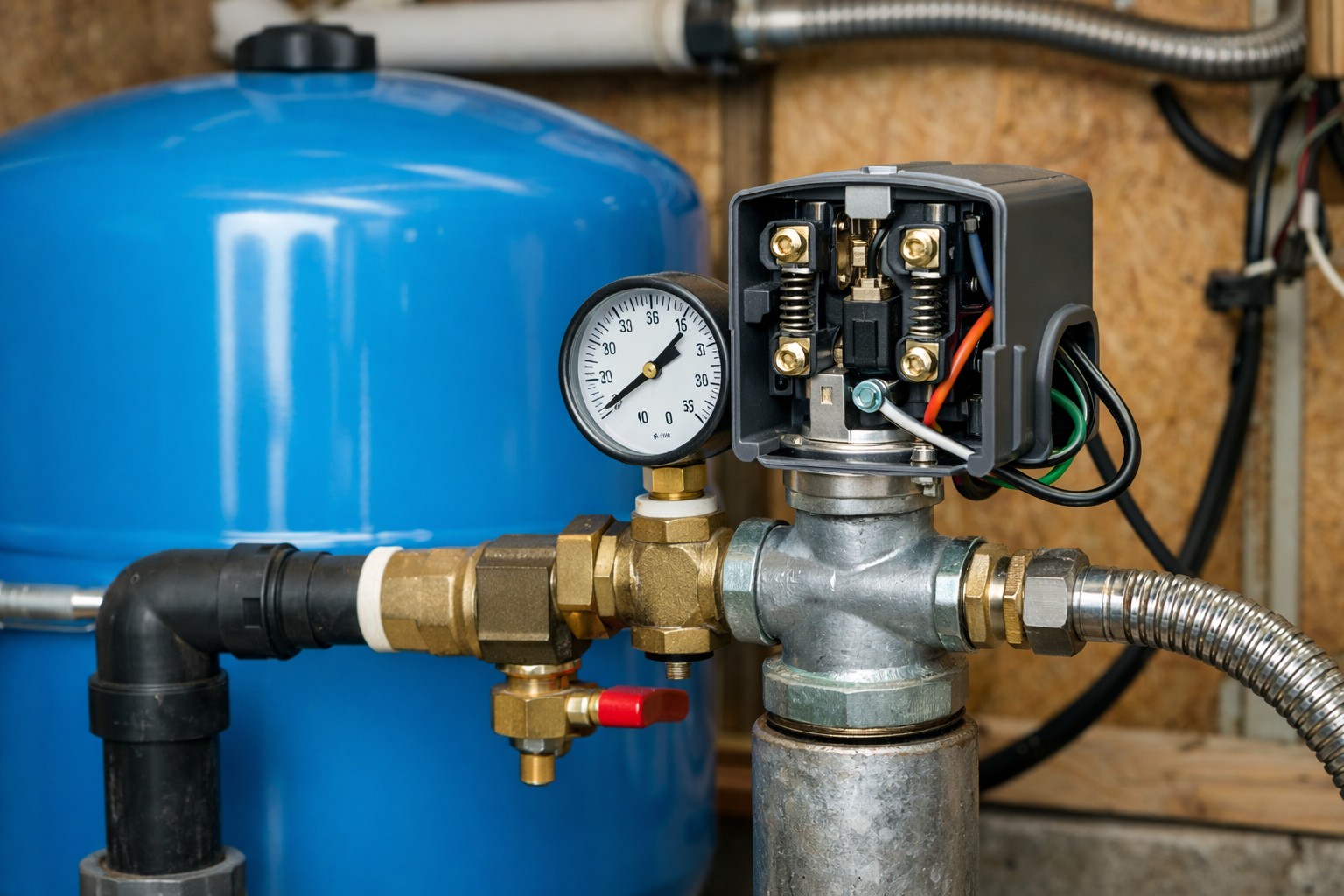
Your pressure tank usually has a pressure gauge on the plumbing nearby. Watch it when the water starts fading.
- Normal pattern: Pressure drops as you run water, then the pump kicks on and pressure climbs back up.
- Pumping down pattern: The pump kicks on, but when the well runs out, pressure may stall, bounce, or fall while the pump is running because it cannot move enough water.
If you see pressure falling while you know the pump is running, stop the water use and let the system recover.
Step 3: Check for demand spikes
This is the cheapest fix category, so I like to rule it out early. Many wells handle normal use fine but struggle when several high flow events stack up.
Common scenarios
- Two showers back to back while the washing machine is filling
- Long showers plus a running hose outside
- Sprinklers or irrigation running while someone is bathing
- Guest weekends where the house water use doubles
Easy ways to reduce peak demand
- Stagger laundry, showers, and outdoor watering.
- Install a low flow showerhead if yours is an older high flow type.
- Do outdoor watering in shorter cycles with rest periods.
- If you have an irrigation system, check for a stuck zone valve that is quietly running longer than it should.
Step 4: Rule out a waterlogged tank
A waterlogged tank typically causes rapid on and off cycling and pressure swings. That is not the same as “we ran it hard and it quit until later,” but homeowners often mix these up.
Signs of a waterlogged tank
- Pump turns on and off every few seconds to a minute when you run water
- Pressure jumps from high to low quickly at the faucet
- The tank sounds “solid” when tapped (no hollow sound near the top), depending on tank type
If your pump short cycles, address the tank and pressure switch setup. If your pump runs normally for a long stretch and only fails after heavy use, keep focusing on well supply and recovery.
Step 5: Check for low water protection
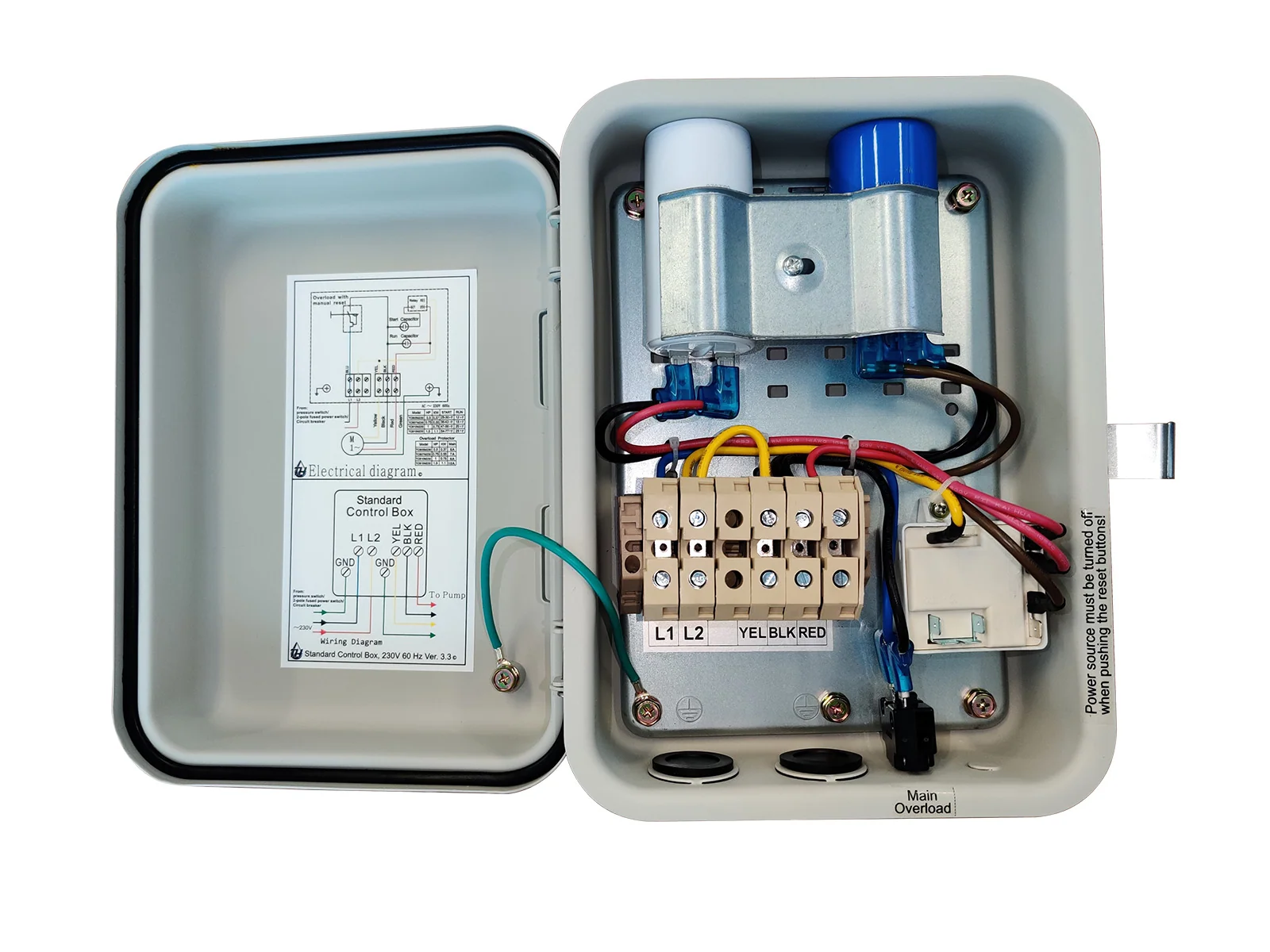
Some systems have a low water cutoff, pump saver, or dry run protection. When the well level drops too far, the protection shuts the pump down and may enforce a waiting period before it tries again.
This can look exactly like “the well quit, then later it came back.” If you have a control box near the pressure tank (more common with some submersible setups), look for indicator lights or labels. If you see evidence of repeated low water trips, that is strong confirmation your well is being overdrawn.
Step 6: Check for restrictions
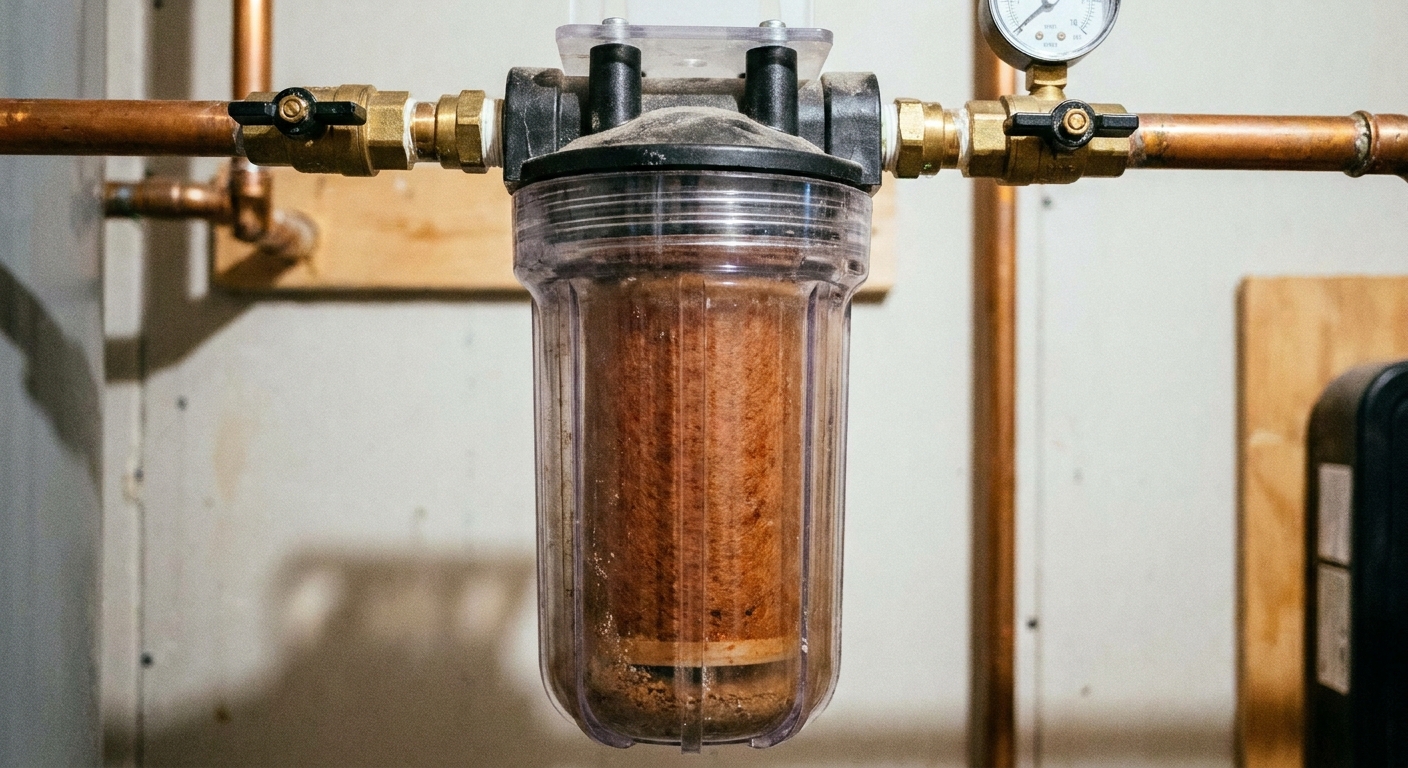
A restriction usually causes weak water more consistently, but I have seen filters make a borderline recovery problem feel much worse during heavy use.
What to check
- Whole-house sediment filter: If the cartridge is dirty, replace it and note if performance improves.
- Partially closed valves: Make sure the main shutoff and any filter bypass valves are fully open and correctly positioned.
- Softener or iron filter in backwash: Some treatment systems temporarily affect flow. If the problem coincides with regeneration or backwash cycles, adjust scheduling.
If you replace a filter and the symptom improves but does not disappear, you likely have two issues: a marginal well yield plus a restriction that was stealing your margin.
Step 7: Well recovery basics
Think of your well like a savings account with slow deposits.
- The pressure tank is a small buffer that covers short bursts.
- The well is the real source, but it refills at a certain rate (recovery).
- If you withdraw faster than the deposit rate for too long, you go “broke” temporarily.
Some wells have plenty of stored water in the casing and recover slowly, so you can take a decent shower but not run sprinklers and two loads of laundry back to back. Other wells have less storage and show the problem fast.
Common look-alikes
1) Pump short cycles
Looks like: pump clicking on and off rapidly while you run a faucet.
Usually caused by: waterlogged tank, bad tank bladder, incorrect tank precharge, pressure switch problems.
Not the same as: water works fine for a long time, then turns to air or quits, then recovers later.
2) Pump will not start
Looks like: no water and no pump sound, pressure stays low, nothing changes after waiting.
Usually caused by: tripped breaker, failed pressure switch, failed capacitor or control box component, bad wiring, failed pump.
Not the same as: water returns reliably after a rest period.
3) Pump runs but never builds pressure
Looks like: pump runs continuously, gauge does not climb, water may be weak or absent.
Usually caused by: broken pipe, leak between well and house, failed check valve, failed jet pump components (shallow well), hole in drop pipe, severely worn pump.
Not the same as: the system works normally again after the well “rests.”
4) Constant weak water
Looks like: low flow or low pressure no matter how long the water has been off.
Usually caused by: clogged filter, clogged well screen, scaling, treatment system restriction, failing pump, pressure switch setting issue.
Not the same as: strong at first, then drops out only after heavy use.
What to do if recovery is slow
Once you are confident the well is being overdrawn, you have a few paths. Some are homeowner-friendly, some require a well pro.
Low cost changes
- Manage peak demand: Stagger high use activities and shorten continuous run times.
- Fix hidden water waste: Toilets that occasionally run, outside hydrants that seep, and stuck irrigation zones can quietly pump your well down.
- Replace clogged sediment filters to reduce pressure loss.
System upgrades
- Add storage: A larger pressure tank helps with short bursts and reduces pump cycling, but it does not create more water in the ground. For low-yield wells, a storage cistern with a booster pump is often the real solution.
- Install low-water protection if you do not already have it, to prevent pump damage during run-dry events.
- Adjust pump depth or intake placement only under professional guidance. This depends on well construction and safe submergence depth.
Well work (call a pro)
- Measure static water level and drawdown under pumping conditions.
- Evaluate yield and recovery rate.
- Inspect for screen issues, sediment intrusion, or a collapsing formation.
- Hydrofracturing or deepening may be options in some areas, depending on geology and local rules.
When to call for help
- You repeatedly get air in the lines. That can stir sediment and damage equipment.
- Your pump runs for long periods with little or no pressure gain.
- You suspect a leak in the line from well to house (wet spots, sinking soil, unexplained cycling).
- You smell electrical burning, hear buzzing at the switch, or see scorched wiring.
- Water turns muddy or sandy after a run-dry event, which can indicate the well is pulling sediment.
Quick FAQ
Why do I get water, then air?
Because the pump is temporarily pulling the well down to a level where it starts drawing air, or a low water protection device is interrupting operation until the well refills.
How long should a well take to recover?
It varies widely. Some recover in minutes, some take hours. What matters is whether your normal household use routinely outruns recovery. If it does, you will keep seeing this pattern.
Will a bigger pressure tank fix it?
A bigger tank helps with short bursts and reduces pump cycling, but it does not create more water in the ground. For low-yield wells, a storage tank system is often the more reliable fix.
Is this the same as low pressure?
Not usually. Low pressure tends to be constant, or it tracks with clogs and restrictions. “Works great, then quits, then comes back later” is much more characteristic of supply and recovery limits.
The 30-Second Cheat Sheet
Essential takeaways for: Well Runs Dry After Heavy Use? What to Check
Fast diagnosis
- Strong water at first, then air or nothing after heavy use, then it comes back later: most often a well yield or recovery problem (you pumped the well down).
- Pump clicking on and off rapidly: usually waterlogged pressure tank or tank precharge issue (short cycling).
- No water and pump will not run: no-start problem (breaker, switch, wiring, control box, pump).
- Pump runs but pressure never climbs: leak, failed check valve, plumbing failure, or worn pump (not a recovery issue).
What to check in the next 10 minutes
- Run one cold faucet and see if it predictably fails after a certain time.
- Watch the pressure gauge. If pressure stalls or drops while the pump is running, stop using water and let it recover.
- Look for demand spikes (showers, laundry, hose, sprinklers running together).
- Replace a clogged whole-house sediment filter if you have one.
Do not do this
- Do not keep cycling the pump while it is sucking air or cannot build pressure.
- Do not open electrical covers unless the breaker is off and you are comfortable working safely.
Common solutions
- Stagger high water use and reduce long continuous runs.
- Fix running toilets, irrigation issues, and other hidden water waste.
- If the well is truly low-yield: consider a storage tank (cistern) + booster pump and/or low-water protection.
- Call a well pro to measure static level, drawdown, and recovery rate if the issue is recurring.
💡 Tip: Scroll up to read the full article for detailed, step-by-step instructions.
⬆️ Back to top
About Grit
Content Creator @ Grit & Home
Grit is Grit & Home’s little blue clay courier, delivering big questions about the place you call home. Expect practical ideas, a raised eyebrow, and a satchel full of curiosity.