
🚨 In a DIY emergency or rush?
Skip the details and jump straight to our 30-second cheat sheet for the most crucial info.
There is a moment every spring when your lawn flips a switch. The grass wakes up, the birds get louder, and weeds start plotting their takeover.
If crabgrass is your annual nemesis, the best move is not a stronger spray in June. It is a well-timed pre-emergent application in spring, applied before crabgrass seeds germinate.
What pre-emergent actually does
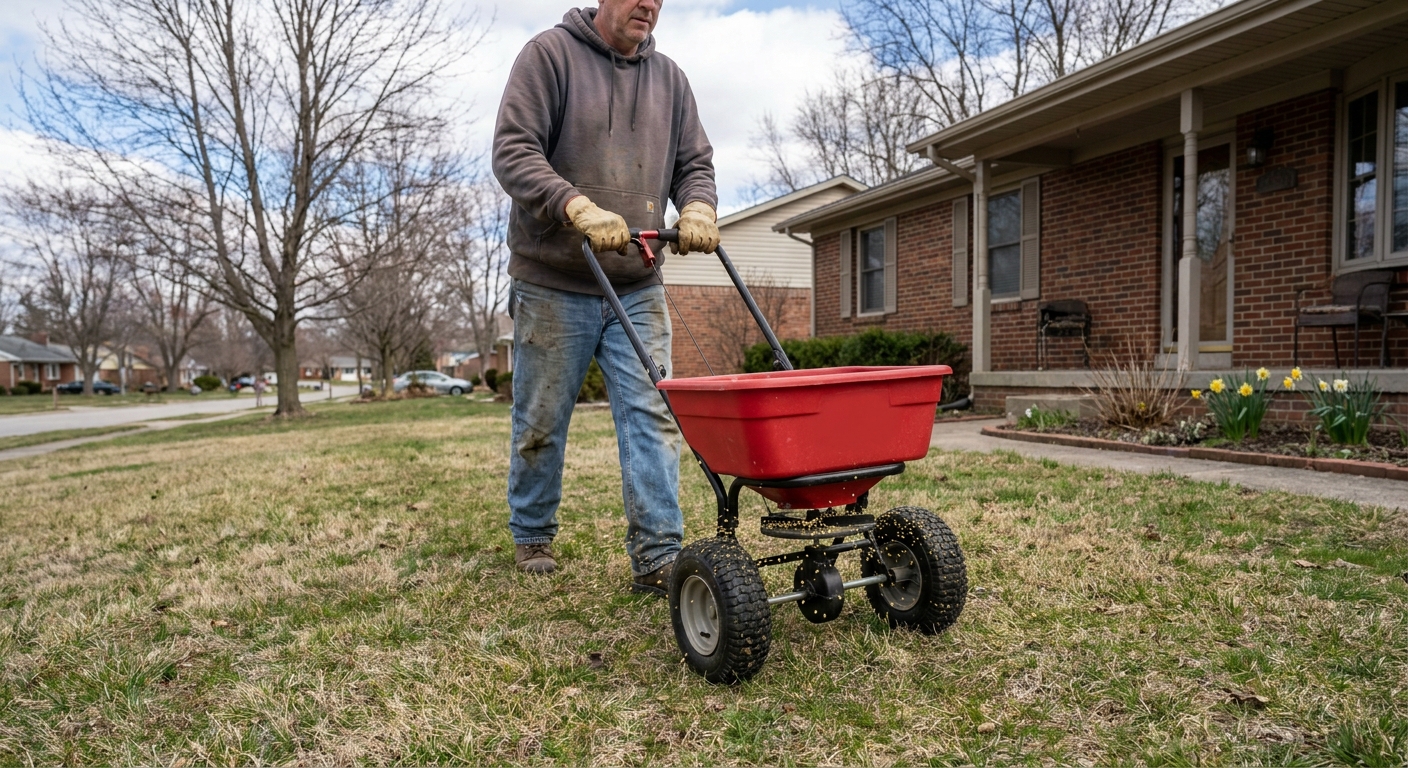
Pre-emergent herbicide works in the top layer of soil and stops certain weed seeds from establishing. You will often hear it described as a “barrier,” but it is not a plastic sheet in the ground. It interferes with root and shoot development as seedlings germinate, so they never get going.
Crabgrass is the poster child here because it is an annual. It dies off in winter, then returns from seed when soil warms up in spring. That timing is what makes pre-emergent so effective when you apply it correctly.
Pre-emergent targets
- Crabgrass (primary spring target)
- Goosegrass (often needs slightly later timing)
- Some other annual grasses and broadleaf weeds depending on product
Reality check: A pre-emergent is not a force field forever. It works for a limited window, and time, soil disturbance, and off-target movement from heavy rain can reduce results.
The best timing cue: soil temperature
If you remember one thing from this article, make it this: apply spring pre-emergent based on soil temperature, not your zip code or the first warm weekend.
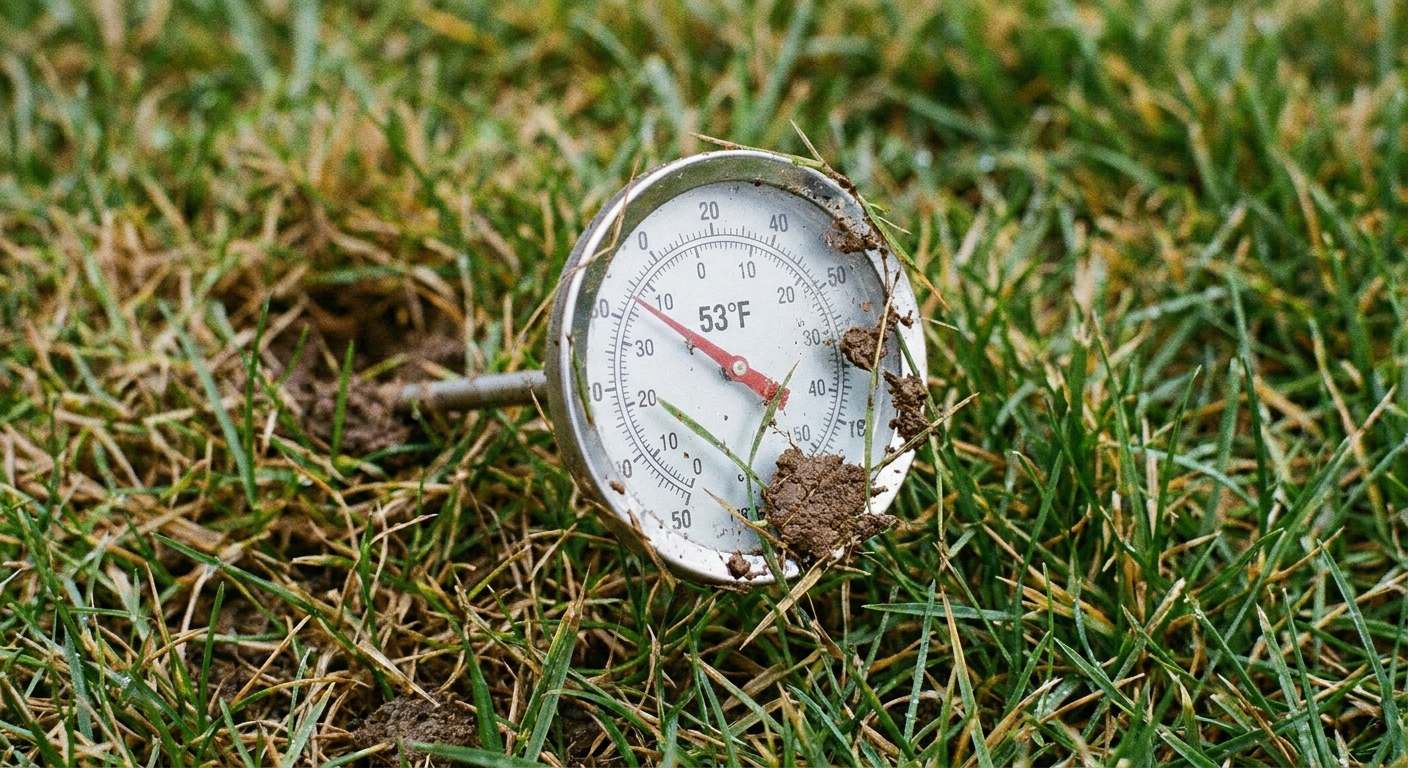
Crabgrass often starts germinating when soil temperatures reach about 55°F (13°C) at around 2 inches deep for several days in a row. Different species, microclimates, and weather patterns can shift this a bit, so treat 55°F as a practical trigger, not a law of nature.
Your goal is to get your pre-emergent down before that germination begins.
My rule of thumb
- Apply when soil temps are consistently about 50°F to 55°F at 2 inches deep and trending upward.
- If you wait until you see crabgrass, you are late for prevention. At that point you are in post-emergent territory.
How homeowners can check soil temperature
- Use a soil thermometer: Take readings in the morning for a few days in a row.
- Use online soil temperature maps: Search “soil temperature map” plus your state, or check a local extension, weather service, or garden network that reports soil temps.
- Backyard signals (helpful, not perfect): Lilacs and forsythia blooming often overlaps with the soil warming window in many areas.
Regional timing windows (quick guide)
Weather swings year to year, so treat these as starting points, then confirm with soil temperatures.
Southern US
- Typical window: late February through March
- Watch for: early warm spells that push soil temps up fast
Transition zone
- Typical window: March through early April
- Watch for: applying too early and having the product fade before peak germination
Northern US
- Typical window: mid-April through May
- Watch for: a late spring that delays soil warmup, especially in shady yards
Mountain and high-elevation areas
- Typical window: later than surrounding regions
- Watch for: cold nights that keep soil temps down even when days feel warm
One application or two?
In a lot of yards, crabgrass germination is not a one-day event. It happens over a stretch of weeks. That is why some lawn care programs use a split application.
When split application makes sense
- You live where spring warms up in fits and starts
- You get heavy rain that may move product off-target or shorten the useful window
- You have a history of crabgrass every year, even when you apply pre-emergent
Basic split timing
- First application: as soil temps approach 50°F to 55°F
- Second application: 4 to 8 weeks later (follow your product label)
Important: Do not “wing it” with rates. Always stay within the label’s maximum annual amount.
Pre-emergent product types
Most homeowners will run into two main forms: granular and liquid. The active ingredients vary, but the timing and watering-in rules are similar.
Granular pre-emergent
- Best for: beginners and small to medium lawns
- Pros: easy to apply with a spreader, less mess
- Cons: coverage depends on your spreader technique
Liquid pre-emergent
- Best for: folks comfortable with a sprayer and calibration
- Pros: can be very even coverage when applied correctly
- Cons: easy to overapply if you do not measure carefully
Common active ingredients you will see
- Prodiamine: long residual, popular for crabgrass prevention
- Dithiopyr: also strong on crabgrass and can have limited early post-emergent activity on very young crabgrass
- Pendimethalin: effective, often shorter residual than prodiamine (rate and conditions matter)
My thrifty homeowner tip: Pick a product you can apply evenly and confidently. A “perfect” active ingredient applied poorly loses to a “good” one applied correctly every time.
Lawn prep
Pre-emergent works best when it can reach the soil surface and then be watered in. A little prep goes a long way.
1) Mow and clean up
- Mow to your normal height a day or two before application.
- Blow off heavy leaf litter and sticks so product can reach the soil.
2) Do soil work first
Anything that disturbs the soil surface can break the “barrier” you are paying for. If you plan to core aerate, dethatch, aggressively rake, or topdress, do it before applying pre-emergent.
3) Hold off on seeding (usually)
Most pre-emergents will also interfere with grass seed germination. If you plan to overseed in spring, you have a few options:
- Skip pre-emergent in areas you are seeding, and accept more weeds there.
- Use a seeding-friendly option if labeled for it. Some products use mesotrione, which can provide short-term suppression of certain weeds during establishment. It is not a full-season substitute for standard crabgrass preventers, so follow the label and keep expectations realistic.
- Seed in fall and focus on pre-emergent in spring (my favorite long-term strategy).
Watering-in rules
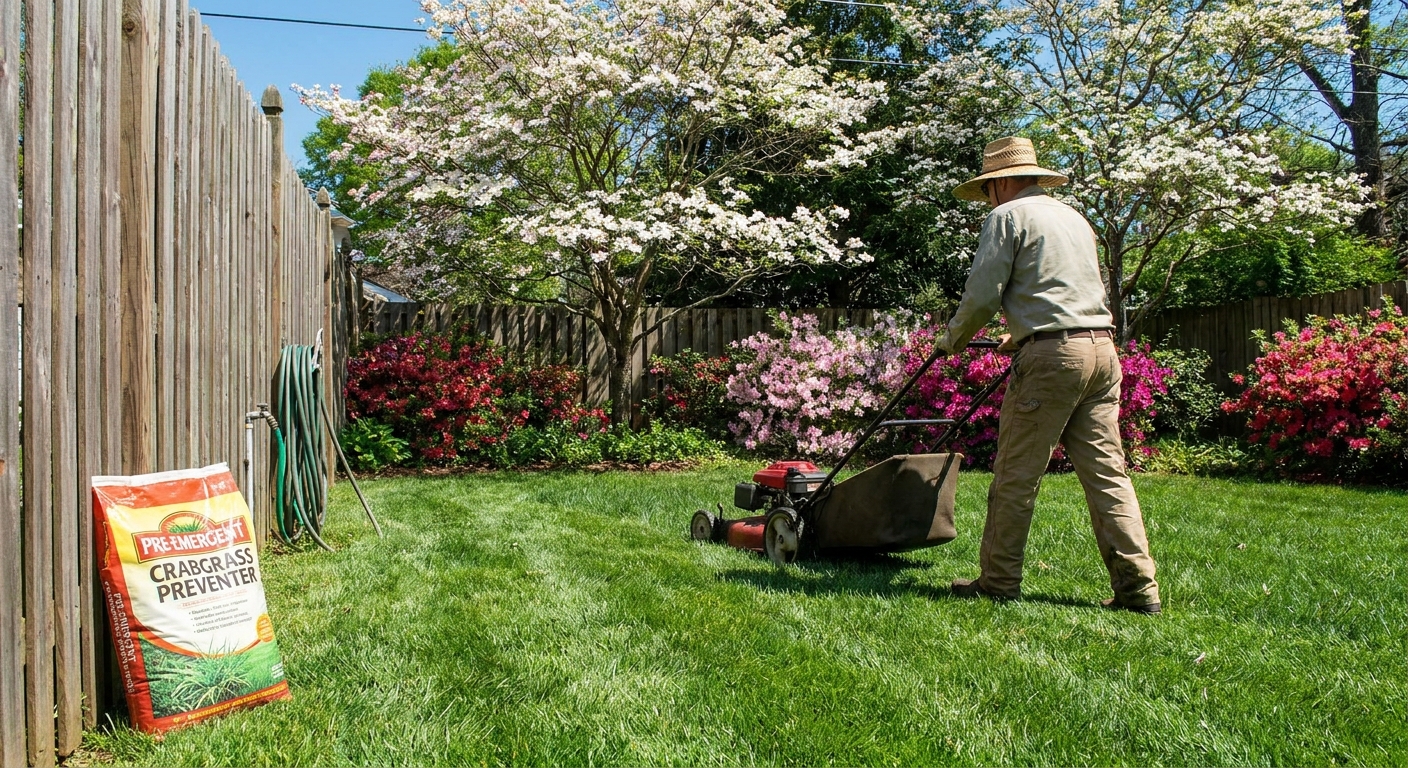
Pre-emergent needs moisture to activate and move into the top layer of soil. If you apply and then it stays dry, you may not get the coverage you want.
General watering guidance
- Water in after application, usually within 24 hours.
- A common target is often about 0.25 to 0.5 inch of water, either from irrigation or rainfall.
- Do not overdo it. You want activation, not runoff down the driveway.
Always follow the product label for exact watering instructions. Labels vary and they win any argument.
What if it rains right after?
- Light to moderate rain is often perfect for activation.
- Downpours can cause runoff, uneven distribution, or product moving where you do not want it, especially on slopes and near hard surfaces.
When can I mow after applying?
Many labels allow mowing soon after, but a safe homeowner rule is to wait until it has been watered in and the lawn is dry. If your label gives a specific mowing window, follow that.
How pre-emergent fits with post-emergent
This is a common point of confusion, so let me make it simple.
Pre-emergent: prevention
- Stops crabgrass before it sprouts.
- Works best when timed to soil temperatures.
Post-emergent: cleanup
- Targets crabgrass that is already growing.
- Works best when crabgrass is small and actively growing.
They do not duplicate each other. They are a one-two punch.
A realistic strategy that works in real yards
- Spring: apply pre-emergent on time and water it in.
- Late spring to summer: spot-treat any breakthrough crabgrass with a labeled post-emergent instead of blanket spraying the whole lawn.
- Fall: focus on thickening the turf (overseeding, fertility, mowing habits). Thick grass is your cheapest weed control.
Common mistakes (I have made most of these)
Applying too late
If soil temps are already above 55°F and climbing, some crabgrass may have already germinated. You can still apply to prevent later germination, but do not expect miracles.
Applying too early
If you put it down way before soil temps rise, the product can start to break down before the main germination window. This is especially true if you choose a shorter-residual product and your spring drags on.
Not watering it in
I have done the “set it and forget it” routine, then wondered why weeds popped anyway. If the label says water-in, take it seriously.
Disturbing the soil after
Core aerating, heavy raking, aggressive dethatching, and topdressing after application can reduce effectiveness. Plan your spring tasks so you are not undoing your own work.
Overapplying
More is not better. It can stress turf, waste money, and increase environmental risk. Measure your lawn, calibrate your spreader or sprayer, and follow the label rate.
Quick checklist
- Confirm soil temps are trending toward about 50°F to 55°F.
- Mow and clear debris if needed.
- If you are aerating, dethatching, or topdressing, do it first.
- Apply evenly (two perpendicular passes helps with granular).
- Water in with often 0.25 to 0.5 inch unless label says otherwise.
- Avoid disturbing the soil surface afterward.
- Write the date down so you can time a second application if you are splitting.
FAQ
Can I apply pre-emergent and fertilizer at the same time?
Yes, if you buy a combination product or apply separate products back-to-back. The key is still timing and watering-in. Do not fertilize just because it is bundled. If your lawn does not need nitrogen yet, consider separate products for better control of what you are adding.
What if I missed the window?
You can still apply pre-emergent to prevent later germination, and shift your plan to include a post-emergent for any crabgrass that already emerged. Then put a reminder on your calendar for next spring and watch soil temps earlier.
Is pre-emergent safe for pets and kids?
Follow the label. In many cases, you keep people and pets off the lawn until the product is watered in and the area is dry, but re-entry guidance varies by product. If you have specific concerns, choose products labeled for residential lawns and stick to label directions.
Can I use pre-emergent in mulch beds too?
Often yes, and it can be very effective there. Bed applications have their own rules for plant safety and where you can apply, so treat the label as your guide and avoid spraying or spreading into desirable plants.
The 30-Second Cheat Sheet
Essential takeaways for: When to Apply Pre-Emergent in Spring
Best timing
- Apply spring pre-emergent when soil temps hit about 50°F to 55°F at ~2 inches deep and are trending upward.
- Crabgrass often starts germinating around 55°F after several days (commonly a 3 to 5 day average). Your job is to be early.
Regional windows (starting points)
- South: late Feb to March
- Transition zone: March to early April
- North: mid-April to May
Water it in
- Most products need moisture to activate, often 0.25 to 0.5 inch of water within about 24 hours (check label).
- Activation matters as much as timing.
Product pick
- Granular: easiest for beginners with a spreader.
- Liquid: great coverage if you can measure and spray evenly.
- Common actives: prodiamine, dithiopyr, pendimethalin.
Do not sabotage it
- Do core aeration, dethatching, heavy raking, and topdressing before application. Avoid soil disturbance after.
- Most pre-emergents can block grass seed too. Do not apply where you plan to seed soon unless the label says it is compatible.
How it fits with post-emergent
- Pre-emergent = prevention (stops sprouts).
- Post-emergent = cleanup (kills what is already up).
- Best plan: pre-emergent in spring, then spot-treat breakthroughs later.
💡 Tip: Scroll up to read the full article for detailed, step-by-step instructions.
⬆️ Back to top
About Marcus Vance
Content Creator @ Grit & Home
Marcus Vance is a lifelong DIY enthusiast and self-taught home renovator who has spent the last decade transforming a dilapidated 1970s ranch into his family's dream home. He specializes in budget-friendly carpentry, room-by-room renovations, and demystifying power tools for beginners. Through his writing, Marcus shares practical tutorials and hard-learned lessons to help homeowners tackle their own projects with confidence.