
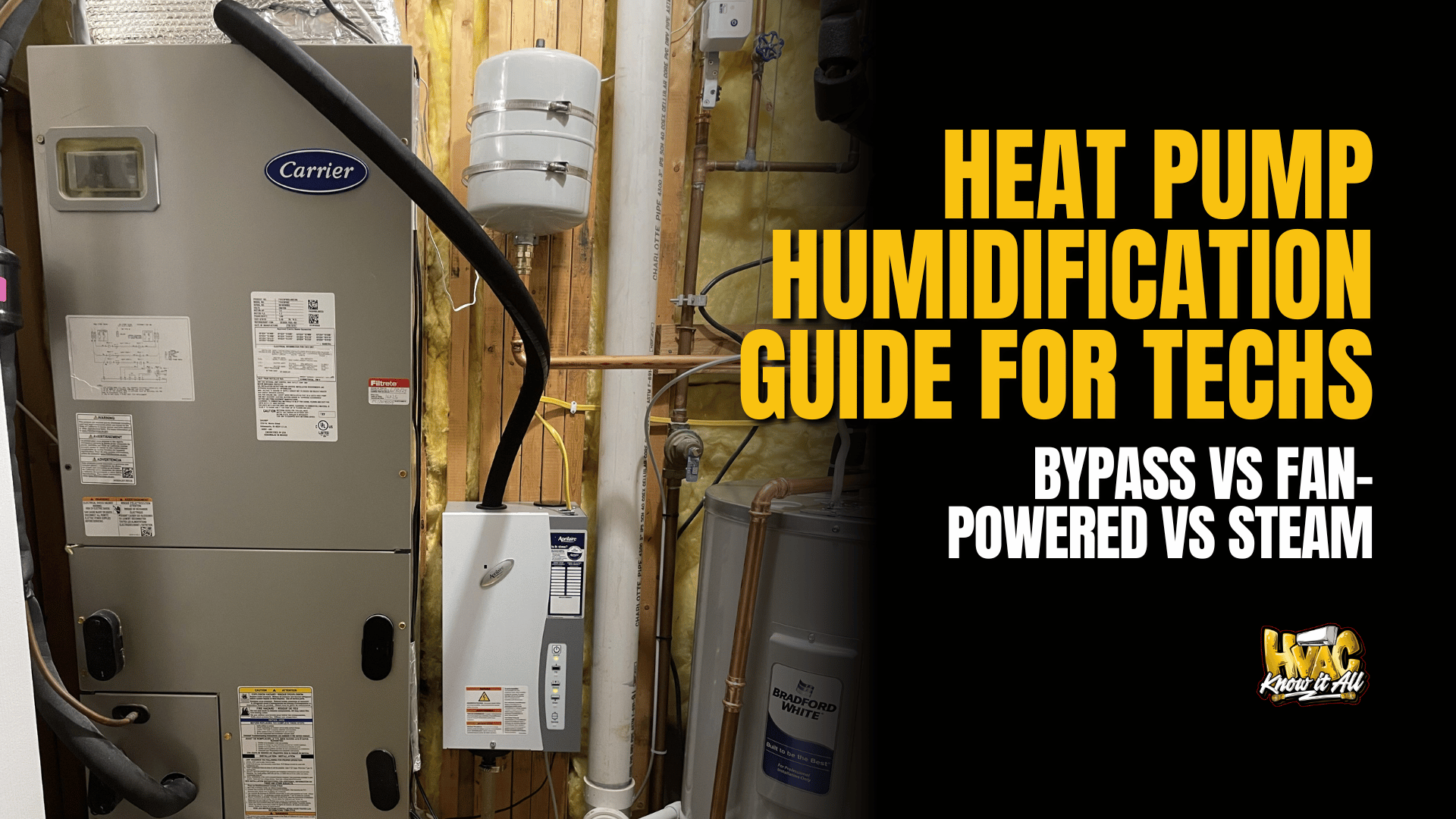
When a whole-house humidifier stops doing its job, it usually is not “mystery HVAC magic.” It is usually a water issue, an airflow issue, or a control signal issue. The nice part is that furnace-mounted humidifiers are built from a small handful of parts, and you can troubleshoot most failures with a screwdriver, a flashlight, and a little patience.
This guide focuses on furnace-mounted units (bypass, fan-powered, and steam). If you are using a portable room humidifier, the troubleshooting is different because there is no furnace blower, no water line, and no humidistat wiring. Portable units fail more from dirty wicks, mineral scale, and bad fans. Furnace-mounted units fail more from water feed problems, clogged distribution, or controls.
Safety first (do this before you touch anything)
- Power off the furnace at the service switch or breaker if you will open electrical panels.
- Water off at the humidifier saddle valve or shutoff if you will disconnect tubing.
- Let the furnace cool if it has been running.
- If you smell gas, stop and call a pro.
Tools that help: Phillips and flat screwdriver, nut driver, adjustable wrench, small cup, paper towels, needle or small drill bit (for orifice cleaning), and a multimeter if you are comfortable using one.
Small but important: As you check things, put panels back, restore water, and restore power before you test again. A loose door or safety switch can make you think you created a new problem.
Know what type you have: bypass vs steam (and why it matters)
Bypass humidifier (most common)
A bypass unit has a round duct (typically 6 inches, but other sizes and shapes exist) that “bypasses” warm air from the supply to the return and pushes it through a wet water panel (evaporator pad). It relies on the furnace blower for airflow. If the furnace is not moving air, the humidifier cannot evaporate much water.
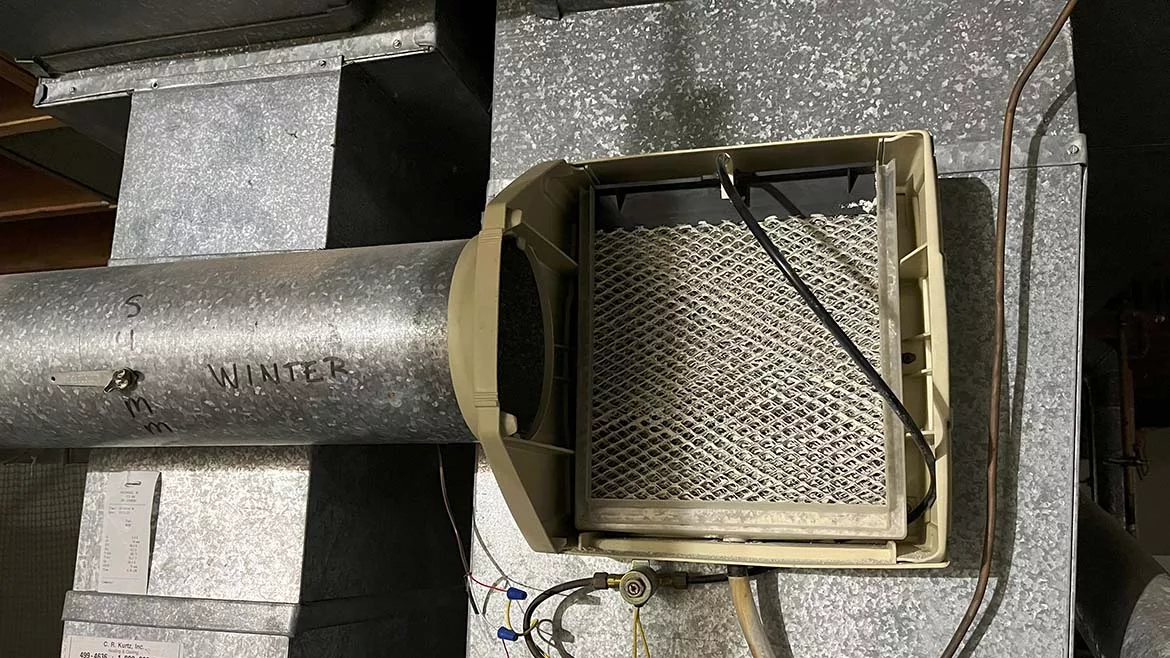
Fan-powered evaporative humidifier
Looks similar to bypass, but it has a small fan built into the humidifier housing. It still uses a water panel, but it is less dependent on duct pressure differences. Troubleshooting is similar to bypass, plus you may have a fan motor, relay, or an airflow proving switch issue (some models will not run if they do not sense airflow).
Steam humidifier
A steam unit has a canister or tank that heats water to make steam. It often has a drain line and more wiring. Steam units can humidify even with less furnace runtime, but they are pickier about water quality and components like fill valves, canisters, and high-limit safeties.
Quick symptoms: match what you see to likely causes
- Humidity stays low, no water running: humidistat not calling, solenoid valve not opening, clogged inlet/orifice, shutoff closed, airflow interlock not satisfied.
- Water runs but humidity stays low: clogged or old water panel, bypass damper closed, not enough furnace runtime, leaking air around housing, wrong humidistat settings.
- Water leaking: clogged drain, mis-seated panel, cracked tray, too much water flow, drain line slope issue.
- Steam unit error light: failed canister, scale buildup, fill valve issue, drain blockage, conductivity problem (water quality), or a specific fault code that points to the issue.
Step-by-step: the troubleshooting order that saves time
I like to troubleshoot in a simple sequence: settings, airflow, water, then wiring. That keeps you from replacing parts when the bypass damper was just closed.
1) Confirm the humidistat is actually calling for humidity
- Turn the humidistat up temporarily (for example, from 30% to 45%).
- Set the furnace fan to On for a few minutes to help testing on evaporative units.
- Important caveat: Some humidifiers are wired to run only on a heat call. On those systems, the fan being set to On might not trigger humidifier operation by itself.
- If you have an integrated thermostat with humidity control, confirm it is not in a “window protection” mode that lowers humidity aggressively in cold weather.
Reality check: In many cold climates, 40% to 45% in January can cause window condensation. Many homeowners dial it down to 25% to 35% without realizing it. Low humidity might be normal based on outdoor temperature and how leaky the house is.
2) For bypass units, check the bypass damper position
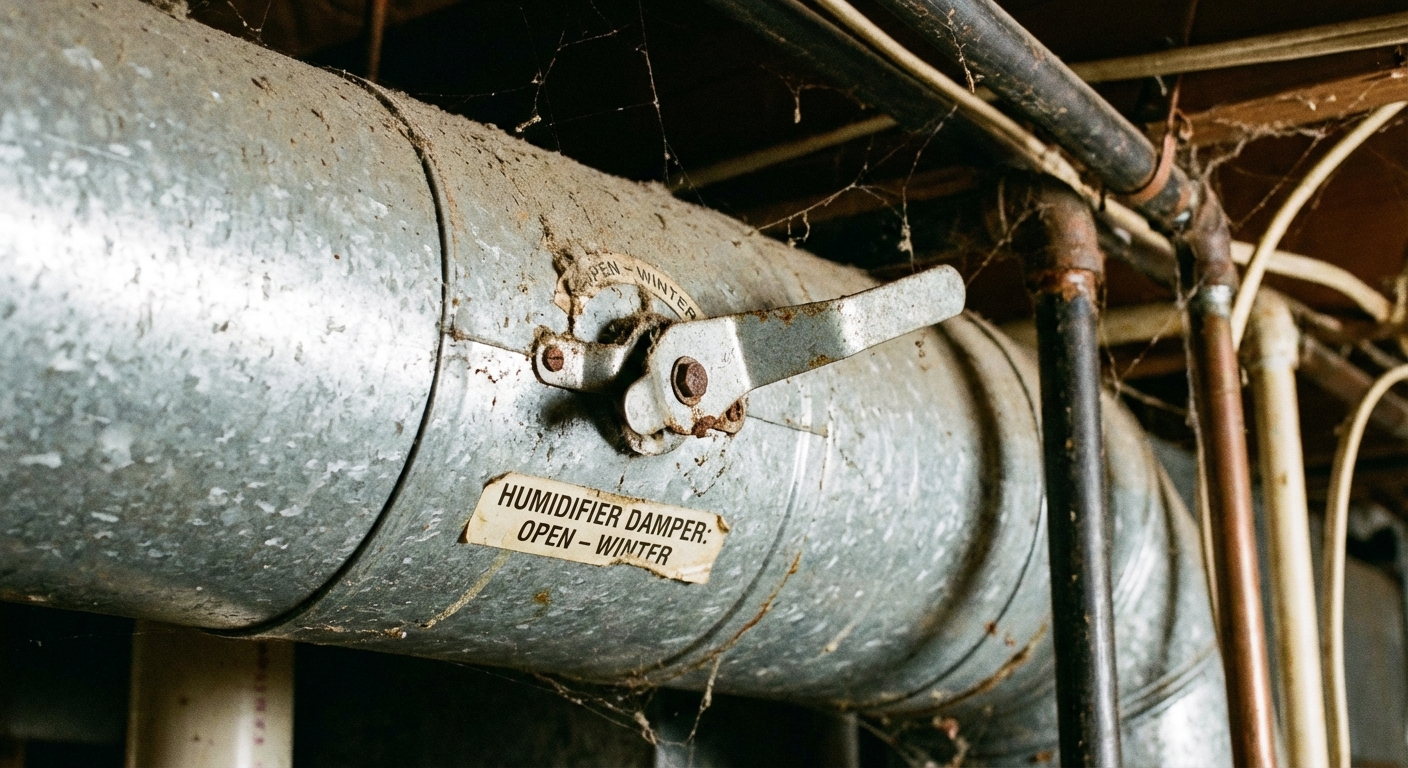
Most bypass ducts have a little damper that is marked Open and Closed (or Summer and Winter). If it is closed, you can have perfect water flow and still get almost no humidification.
3) Make sure it is in “winter mode” (not just the damper)
Some setups have more than one seasonal change. Depending on how yours was installed, “winter mode” can include:
- A bypass damper set to Open.
- A water supply valve turned on for the season (some people shut it off in spring and forget).
- An internal on-off switch on the humidifier or humidistat set to On.
4) Check furnace airflow basics
- Replace a filthy furnace filter. A clogged filter reduces overall system airflow, which reduces evaporation at the water panel.
- Make sure supply and return registers are not blocked.
- Confirm the blower actually runs when the humidifier should run (during a heat call, or during a humidity call on systems wired for blower operation).
- If the furnace short-cycles or barely runs, humidity will lag. Evaporative humidifiers need runtime.
5) Verify water supply to the humidifier
Most furnace humidifiers use a small copper or plastic water line feeding a solenoid valve on the humidifier. Before blaming the solenoid, make sure water can physically get there.
- Confirm the shutoff valve is fully open. Saddle valves are notorious for clogging and partially opening.
- Look for kinks in small plastic tubing.
- Check for an inline strainer at the solenoid inlet (common on many models). If it is packed with grit, flow will be weak or zero.
- If you have a water softener, do not guess. Some steam humidifiers want softened water, some do not, and some brands explicitly warn against it because it can affect conductivity and canister life. Check the manual for your model.
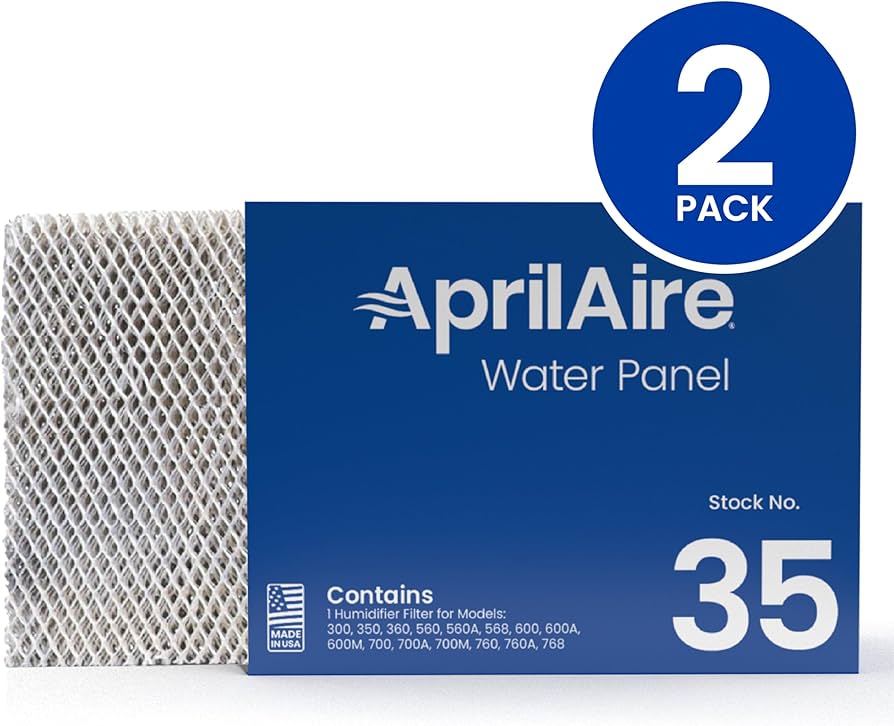
6) Inspect and replace the water panel (evaporator pad)
On bypass and fan-powered evaporative units, the water panel is the heart of the system. If it is plugged with mineral scale, water will sheet off poorly, airflow will be restricted, and humidification drops.
- Turn off power and water.
- Open the humidifier cover and slide the water panel out.
- If it is crusty, bowed, slimy, or looks like a calcified coral reef, replace it.
- Clean the tray and any distribution ramp above the panel.
My thrifty tip: I do not try to “save” a relatively inexpensive water panel with vinegar soaks. Sometimes you get another couple of weeks, but it usually comes back to bite you mid-winter when you need humidity most.
7) Check the drain line for clogs and bad slope
Evaporative humidifiers intentionally send excess water down a drain. If that drain backs up, you get leaks, overflow, and sometimes the water panel stays too wet in the wrong places.
- Confirm the drain line slopes continuously to the floor drain or condensate pump.
- Flush the drain line with warm water.
- Clean the drain spud on the bottom tray where gunk can collect.
8) Solenoid valve: test for “click” and for flow
The solenoid is an electric water valve. When the humidistat calls and the furnace is running (or fan is enabled, depending on wiring), it should open and let water trickle through the feed tube.
- With a helper turning the humidistat up and down, listen for a click at the solenoid.
- No click can mean no power to the solenoid, a failed solenoid coil, or a safety interlock preventing operation.
- If it clicks but you have no water flow, the inlet screen/strainer or orifice may be clogged.
If you use a multimeter: The solenoid is often 24VAC, but not always (some setups are line-voltage or use proprietary controls). Check the wiring diagram or label first. If you see the rated voltage at the solenoid leads during a call for humidity but no water flows, the solenoid is a prime suspect.
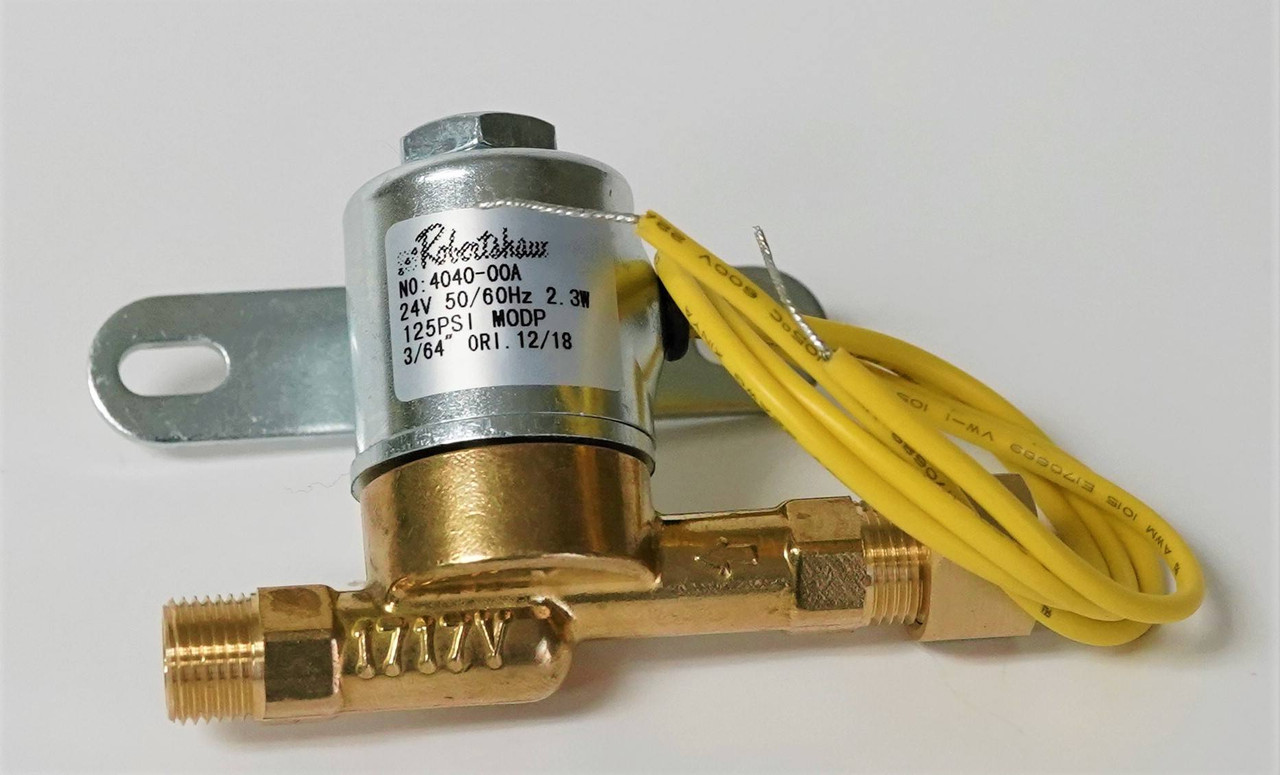
9) The tiny culprit: clogged orifice or inlet strainer
If I had to pick one sneaky failure, it is the orifice. Many humidifiers have a tiny metering hole in the feed fitting or nozzle that clogs with mineral grit. Water supply is technically on, but only a sad drip comes through.
- Turn off water.
- Disconnect the small feed tube where it enters the humidifier distribution trough.
- Inspect the fitting for a tiny insert with a pinhole or a screen.
- Clear it gently with a needle, then flush the line into a cup for a second (water on briefly) to push debris out.
Do not enlarge the hole. If you hog it out, you can overfeed the panel and create leaks.
10) Humidistat wiring and common control mistakes
Humidifiers are simple, but the control logic can be confusing. Some only run when there is a heat call. Others are wired to run with blower operation. Steam humidifiers may have their own controller and safeties.
- Loose spade connectors at the humidistat or solenoid are common, especially after ductwork bumps.
- Broken thermostat wire can happen where the humidifier cover pinches the cable.
- Miswired “HUM” terminals on the furnace control board can keep the solenoid dead.
- Outdoor temperature sensor issues (if equipped) can force humidity low or disable operation.
If you are not comfortable tracing low-voltage wiring, this is the point where calling an HVAC tech makes sense. You can still save money by doing all the mechanical checks above first, then tell the tech what you ruled out.
Steam humidifier troubleshooting basics
Steam units vary by brand, but most issues come down to the canister, fill valve, drain, or water quality.
Start with the error code
If your steam humidifier has a display, LED pattern, or fault light, look up the code in the manual. Steam units are good at telling you what they are mad about, if you speak their language.
Common steam problems
- Canister exhausted: Mineral buildup prevents proper steam production. Many canisters are designed as consumables.
- Fill valve or strainer clogged: Unit cannot fill fast enough or at all.
- Drain blockage: Unit cannot flush, leading to faults and scale concentration.
- Conductivity issues: Very soft or very pure water can confuse some systems that rely on conductivity to sense water level or operation.
What you can do safely: Check that the water supply valve is open, the drain line is not kinked, and any external inline strainer is clean. Beyond that, follow the manufacturer service steps, because steam units can contain hot water and energized heaters.
Seasonal maintenance that prevents most mid-winter failures
Every fall (or at the start of heating season)
- Replace the water panel (evaporative types).
- Open the bypass damper (if you have one).
- Turn on the water supply for the season and check for seepage at the valve and fittings.
- Clean the distribution trough and drain tray.
- Test operation by turning the humidistat up and confirming water flow.
Mid-season (especially with hard water)
- Inspect for scale, clogs, and slow drainage.
- Check the orifice and any inlet strainer if water flow looks weak.
Spring shutdown
- Close the bypass damper (Summer position).
- Turn the humidistat down or off.
- Shut off water supply to the unit to prevent slow leaks all summer.
Target humidity and expectations (so you do not chase a “problem” that is normal)
A whole-house humidifier is not always a set-it-and-forget-it appliance. Outdoor temperature, insulation, air sealing, and how much you run exhaust fans all matter.
- In very cold weather, many homes are comfortable at 25% to 35%.
- If windows sweat heavily, lower the setting. Condensation can lead to moldy sills and peeling paint.
- If your home is very leaky, your humidifier may run often and still struggle. Air sealing can make the humidifier feel “stronger” without changing the humidifier at all.
When to call a pro
- You have confirmed settings, bypass damper, water panel, and water supply, but the solenoid never gets power or the system behaves unpredictably.
- Steam unit faults persist after basic checks and after you have referenced the manual for the specific code.
- You see signs of electrical overheating, melted wires, or water dripping onto the furnace control board.
- You are not sure how the humidifier is tied into the furnace wiring and you do not want to guess.
If you do call, tell them: humidifier type, model number, what you tested, and whether you heard the solenoid click. That usually shortens the visit.
My no-nonsense troubleshooting checklist
- Humidistat turned up and not in a restrictive mode
- Humidifier set to On and in winter mode (if it has seasonal switches)
- Bypass damper open (evaporative bypass type)
- Furnace filter clean and blower running when the humidifier should run
- Water shutoff open and supply line not kinked
- Inline strainer (if present) not clogged
- Water panel replaced and tray cleaned
- Drain line clear and sloped correctly
- Solenoid clicks and receives rated voltage on a call (if testing)
- Orifice and inlet screen cleared
- Wiring connections snug, not pinched, not corroded
Work down that list and you will solve most “humidifier not working” calls without replacing random parts. And if you still need help, you will be the most informed homeowner the tech sees all week.

About Marcus Vance
Content Creator @ Grit & Home
Marcus Vance is a lifelong DIY enthusiast and self-taught home renovator who has spent the last decade transforming a dilapidated 1970s ranch into his family's dream home. He specializes in budget-friendly carpentry, room-by-room renovations, and demystifying power tools for beginners. Through his writing, Marcus shares practical tutorials and hard-learned lessons to help homeowners tackle their own projects with confidence.