
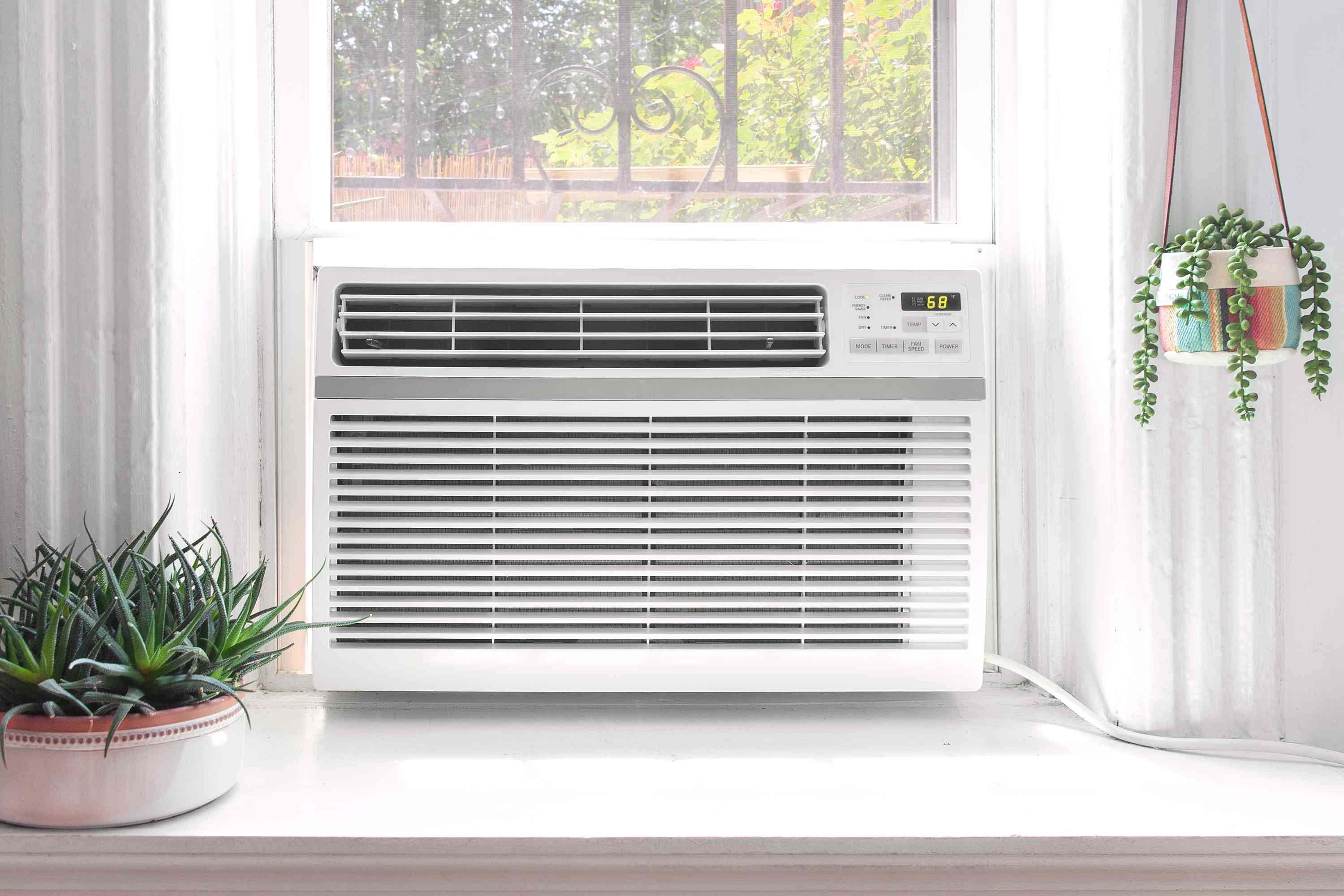
When a window AC is running but the air never gets cold, it often comes down to one of two things: the unit cannot move enough air across the evaporator coil (the cold indoor coil), or the system cannot make that coil cold in the first place. That said, a few other problems can mimic the same symptoms, like a compressor that is not starting (capacitor or overload issues), a bad sensor (thermistor), or a control problem.
The good news is many “it runs but won’t cool” problems are basic maintenance or setup issues. A lot of them take under an hour of hands-on time, even if the total wait time is longer (like when you are thawing ice).
I’ve been that person sweating in a half-finished room, convinced the AC was toast, only to find a filter that looked like a dryer lint trap. Start with the easy checks first. They fix the most units and they cost the least.
Quick safety and setup checks (2 minutes)
- Set it to COOL (not FAN) and set the temperature at least 5 to 8 degrees below the room temp.
- Give it time: after changing settings, wait up to 10 minutes (sometimes longer depending on the model). Many units delay the compressor to protect it.
- Make sure the “fresh air” vent is closed if your model has one. Pulling in hot outdoor air can make it feel like it is not cooling.
- Check the power cord buttons: many window units have an LCDI plug with TEST and RESET. If it is tripped, press RESET. (If it will not reset, stop and replace the cord or unit per the manual.)
- Confirm power is solid: make sure the plug is seated and the breaker is fully on (not half-tripped). Some window units will run the fan even when the compressor is not actually running.
Quick check: Is the compressor running?
This is a fast way to avoid guessing. Set the unit to COOL, temp low, and fan on high, then wait a few minutes.
- Listen and feel: when the compressor kicks on, you will usually hear a deeper hum (sometimes a click first), and the air coming out of the back of the unit outside should feel noticeably warm.
- If you only hear the fan and the back never warms up, the compressor might not be starting. That can be a control issue, capacitor, overload, or compressor problem. At that point, it is smart to do the airflow cleaning steps below first, but if nothing changes, it may be time for a tech or replacement.
Fix #1: Clean a dirty air filter
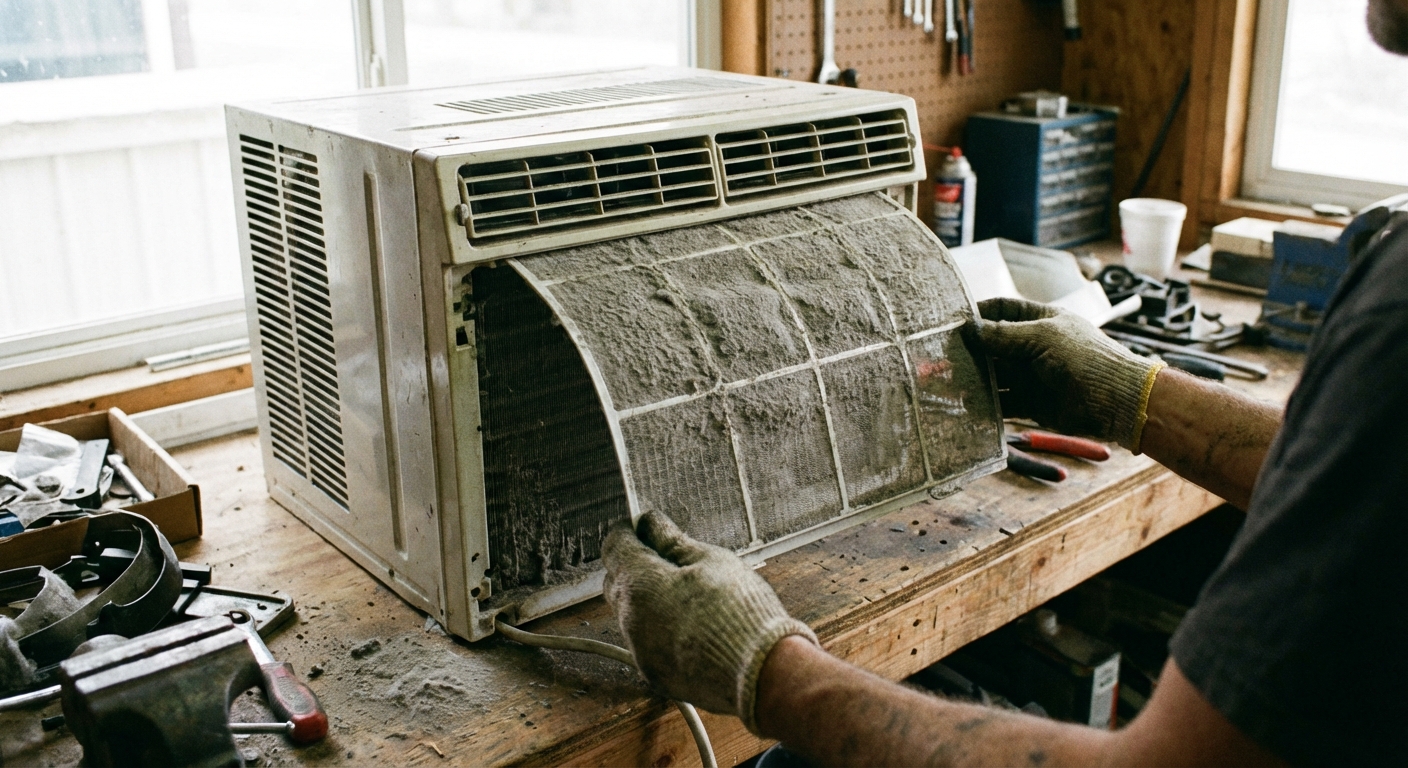
A clogged filter is the most common reason a window AC “runs” but barely cools. Airflow drops, the coil gets too cold, and the unit can even start icing up.
What you’ll notice
- Weak airflow from the front vents
- Musty smell or visible dust buildup
- Unit seems louder than usual, but not colder
What to do
- Unplug the unit.
- Pop the front cover and slide out the filter.
- If it is a reusable mesh filter, rinse with warm water and a drop of dish soap. Let it dry completely.
- If it is a disposable filter, replace it with the correct size.
- Vacuum dust from the front grille while you are there.
My rule: if you cannot remember the last time you cleaned the filter, clean it now. During peak summer, I check mine every two to three weeks.
Fix #2: Thaw frozen evaporator coils
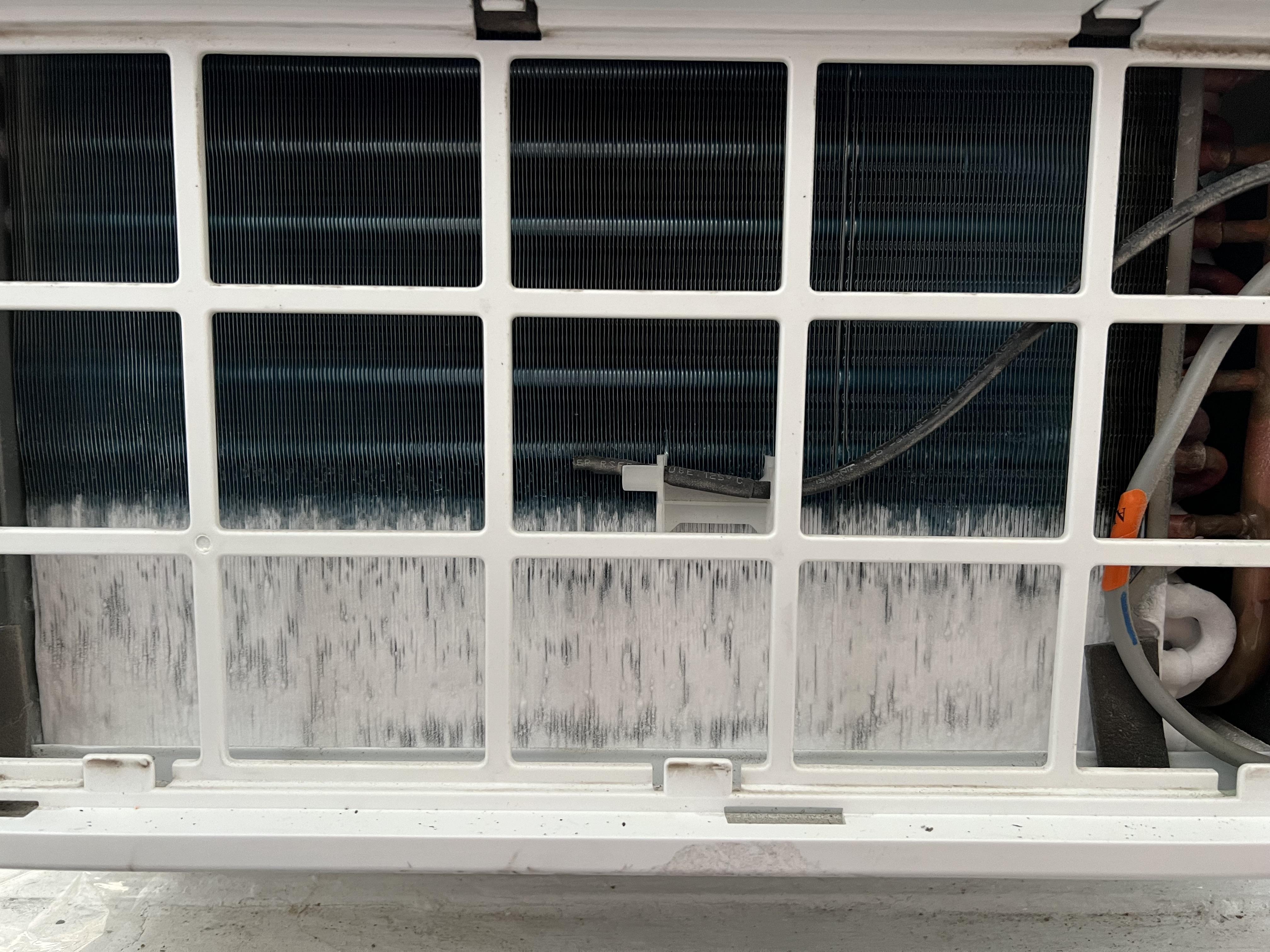
If your window AC has ice on it, it cannot cool properly. Ice blocks airflow and turns your unit into a very ineffective fan.
What you’ll notice
- Airflow gets weaker over time
- Water dripping indoors as ice melts
- Visible frost behind the front filter or grille (if you can see it)
Common causes
- Dirty filter or blocked airflow (most common)
- Very low thermostat setting combined with a cool night
- Dirty coils
- Fan problems (like a weak or failing fan motor)
- Low refrigerant (less common, but possible)
What to do
- Turn the unit OFF and unplug it.
- Let it thaw completely. This can take several hours. Put a towel down to catch drips.
- After it is fully thawed, clean the filter and gently vacuum dust from the coil fins with a soft brush attachment.
- Restart on COOL with a reasonable setpoint and make sure the fan is blowing strongly.
Do not chip ice off with a screwdriver. Those aluminum fins bend easily, and a punctured coil can end the unit on the spot.
Heads up: if the unit keeps freezing even after you have cleaned the filter, cleared vents, and you have strong airflow, that points more toward a fan issue or a sealed-system problem. That is a good time to stop DIY and call a pro or replace the unit.
Fix #3: Make sure the unit can actually keep up
Sometimes nothing is “broken.” The AC is simply outmatched. A window unit can run constantly and still never catch up if the room is too large, gets heavy sun, or has leaky windows.
Quick sizing reality check
- Measure the room: length × width = square feet.
- A rough rule of thumb is about 20 BTU per square foot for an average room, but this is only a starting point. Ceiling height, insulation, occupancy, cooking, and climate all matter.
- Add capacity if the room is very sunny, has high ceilings, or is a kitchen.
Example: A 150 sq ft bedroom often does fine with around 5,000 to 6,000 BTU. A 300 sq ft living room may need 8,000 to 10,000 BTU, depending on sun and insulation.
What you’ll notice when BTU is too small
- Compressor runs almost nonstop
- Air feels cool right at the unit, but the room stays warm
- Temperature drops a little, then stalls out
What to do (budget-friendly moves first)
- Close doors to isolate the space the unit is meant to cool.
- Block hot sun with curtains or blinds during the day.
- Seal gaps around the side panels and sash with foam weatherstripping.
- If it still cannot keep up, consider stepping up to a higher BTU unit for that room size.
One more twist: oversizing can also cause comfort issues. A too-big unit cools fast and shuts off, which can leave the room clammy because it does not run long enough to pull humidity out.
Fix #4: Clear blocked vents and improve airflow
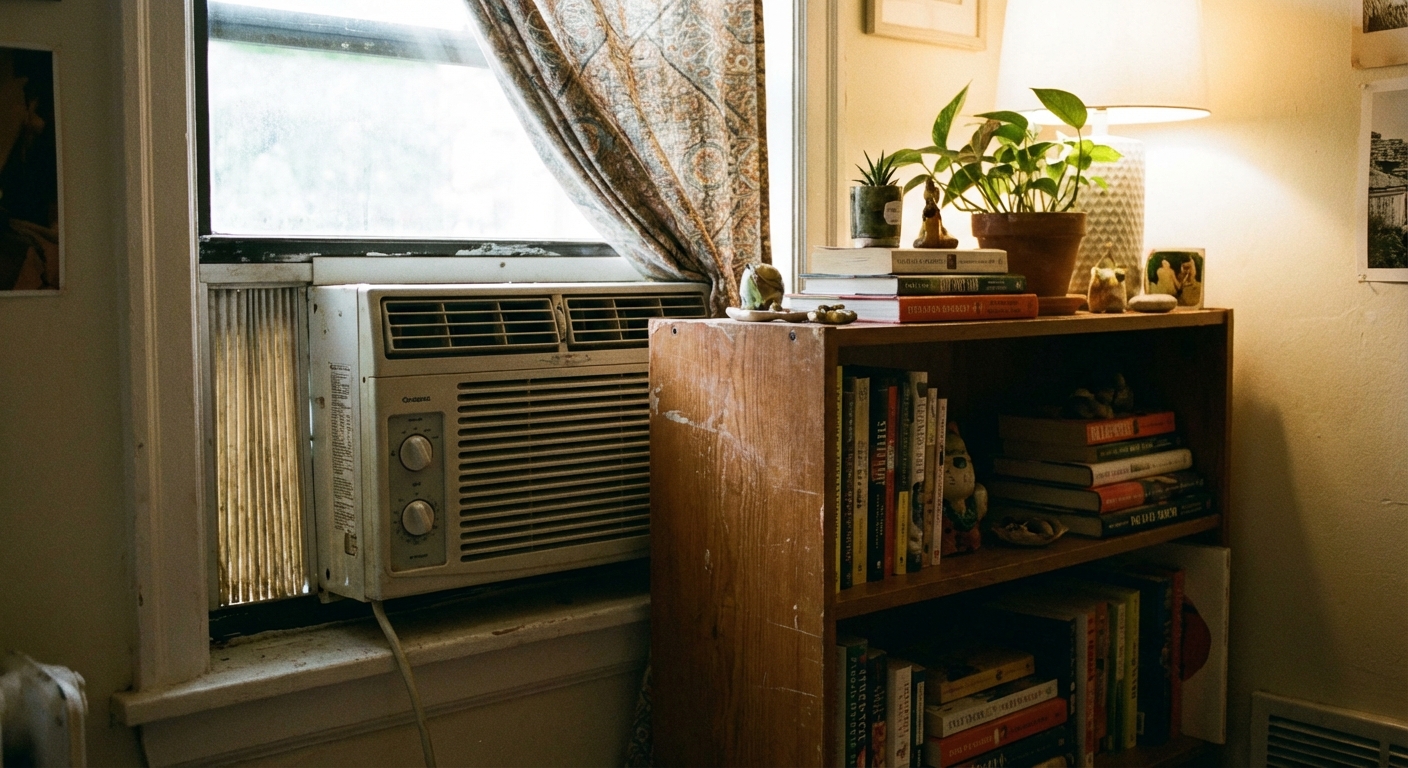
Window units are picky about breathing room. If the front is blocked, you feel weak cooling. If the back is buried in leaves or pressed against something outside, the unit cannot dump heat, and cooling drops sharply.
What to check inside
- Move curtains, beds, dressers, and shelves away from the front grille.
- Open the louvers so air can throw across the room, not straight down.
- Make sure the unit is installed with a slight outward tilt per the manual so condensate drains outside, not into the room.
What to check outside
- Clear leaves, cottonwood fluff, and dirt from the rear coils and vents.
- Give the back of the unit a few inches of clearance. Do not wedge it tight against a wall or screen.
If the rear coils look fuzzy, unplug the unit and gently brush or vacuum the outside fins. A can of compressed air can help, but use light pressure so you do not fold the fins over.
Fix #5: Clean the coils (a little deeper)
If you have done the filter and vent basics and cooling is still weak, dirty coils are the next sneaky culprit. Window ACs have two coils: the indoor evaporator coil (cold side) and the outdoor condenser coil (hot side). If either one is matted with dust, heat transfer suffers.
What to do
- Unplug the unit.
- Remove the front panel (and outer case if your model allows it per the manual).
- Vacuum gently with a soft brush attachment. Do not crush the fins.
- If needed, use a no-rinse foaming coil cleaner designed for AC coils, following label directions. Keep liquids away from controls and wiring.
- If fins are bent, a fin comb can help straighten them, but go slow. A few bent fins are not a crisis, but smashed fins reduce airflow.
Fix #6: Watch for low refrigerant (and know when it’s not DIY)
Most window ACs are sealed systems. They do not “use up” refrigerant. If it is low, it usually means there is a leak. That is why low refrigerant is not the first thing I chase. But it does happen, especially with older units that have been rattled around during moves.
Signs that point to a refrigerant problem
- Unit blows room-temperature air even with a clean filter and good airflow
- Coils freeze up repeatedly after you have fixed airflow issues
- You hear the compressor running, but cooling is minimal
What to do
- Do the airflow and cleaning steps first (filter, thaw, clear vents, coil cleaning).
- If symptoms persist, call an appliance HVAC tech or consider replacing the unit, depending on age and cost.
Why I do not recommend DIY recharge kits for window units: many window units are not designed for easy service ports, and refrigerant handling is regulated. The “cheap fix” can turn into a damaged compressor or a bigger leak fast.
Window unit vs central AC
This matters because homeowners often Google “AC not cooling” and end up reading central air advice that does not apply to a window unit.
- Window AC: one self-contained box. Airflow problems are usually the filter, the coil behind the front grille, or blocked vents. Electrical issues are often an LCDI reset plug, a power problem, or internal controls.
- Central AC: split system with an outdoor condenser and an indoor air handler or furnace. Cooling issues often involve thermostats, condensate drain switches, duct leaks, blower motors, or an outdoor condenser coil.
If you have central air and your whole house is not cooling, window-unit fixes like “clean the front filter” will not get you far. For a window unit that only cools one room, the fixes above cover the big hitters.
When to stop and replace the unit
Here is my practical, budget-first cutoff. I love repairing things, but I also love not throwing good time after bad.
- It is 8 to 12+ years old and has repeated freezing or weak cooling even after cleaning.
- The compressor will not kick on (fan only) and you have already ruled out settings, the LCDI reset plug, and basic power issues.
- You suspect a refrigerant leak and the repair estimate is close to the cost of a new unit.
- It is loud, rattly, and inefficient compared to newer models.
Fast checklist
- COOL mode, temp set low enough, fresh air vent closed
- Wait for compressor delay (up to 10 minutes, sometimes longer)
- Check LCDI plug and press RESET if needed
- Confirm the compressor is actually running (deeper hum, warm air outside)
- Clean filter
- Thaw ice, then recheck airflow
- Clear indoor and outdoor vents
- Clean coils if they are dusty or matted
- Confirm BTU size matches the room
- If it still will not cool, suspect a sealed-system or control issue and call a pro or replace
If you tell me your room size (square feet), the AC BTU rating, and what the air feels like at the vents, I can help you narrow down which fix is most likely.

About Marcus Vance
Content Creator @ Grit & Home
Marcus Vance is a lifelong DIY enthusiast and self-taught home renovator who has spent the last decade transforming a dilapidated 1970s ranch into his family's dream home. He specializes in budget-friendly carpentry, room-by-room renovations, and demystifying power tools for beginners. Through his writing, Marcus shares practical tutorials and hard-learned lessons to help homeowners tackle their own projects with confidence.