
🚨 In a DIY emergency or rush?
Skip the details and jump straight to our 30-second cheat sheet for the most crucial info.
If you have yellow jackets going into the ground, you are not dealing with the hanging paper nest under the eaves. You are dealing with a colony that can pour out of a hidden entrance like it is a trap door. And because the entrance is usually in the middle of a normal-looking lawn, this becomes urgent fast, especially with kids, pets, and anyone who mows.
This is the exact kind of problem that makes DIY homeowners feel cornered. The goal here is to slow things down, confirm what you have, locate the entrance with as little drama as possible, and choose a response that matches the risk.
Quick “do not” list (right now): Do not mow over it, do not jab the hole, do not pour random chemicals or fuel into the ground, and do not plug the entrance as your first move.
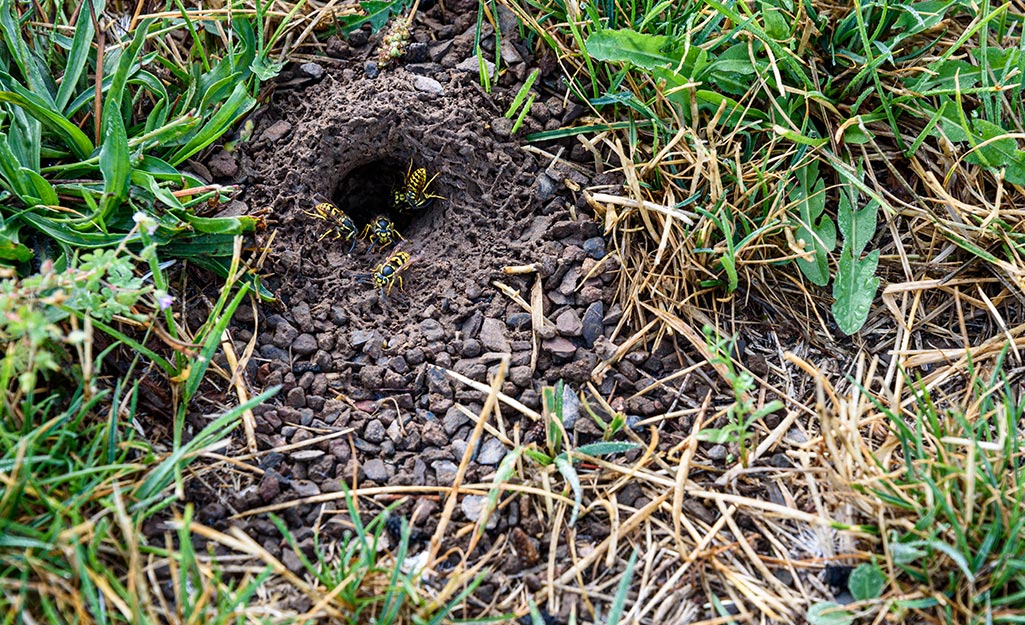
Yellow jacket or something else?
Before you treat anything, make sure you are not misreading harmless ground insects or confusing yellow jackets with paper wasps or hornets. ID first, then plan.
Quick ID
- Yellow jackets (common ground nesters): Stocky bodies, fast and “angry” flight, bold yellow and black bands. Often seen hovering low over grass and repeatedly entering a single hole.
- Paper wasps (usually above ground): Slimmer with longer legs that dangle in flight. They build open, umbrella-shaped comb nests under soffits, deck joists, and rails.
- Hornets: Often larger, with a heavier, louder flight. Many species build aerial nests in trees or shrubs, though behavior varies by region.
Common ground lookalikes
- Solitary ground bees: Usually mild, not defending a big colony. You will see scattered small holes, not a single high-traffic entrance.
- Ant holes: Tiny openings with fine soil, steady small ant movement, and no wasp-like flight pattern.
Rule of thumb: If you can stand a safe distance back and watch multiple insects repeatedly fly into the same hole, and they seem keyed up when you approach, treat it like a yellow jacket nest until proven otherwise.
How to spot the entrance
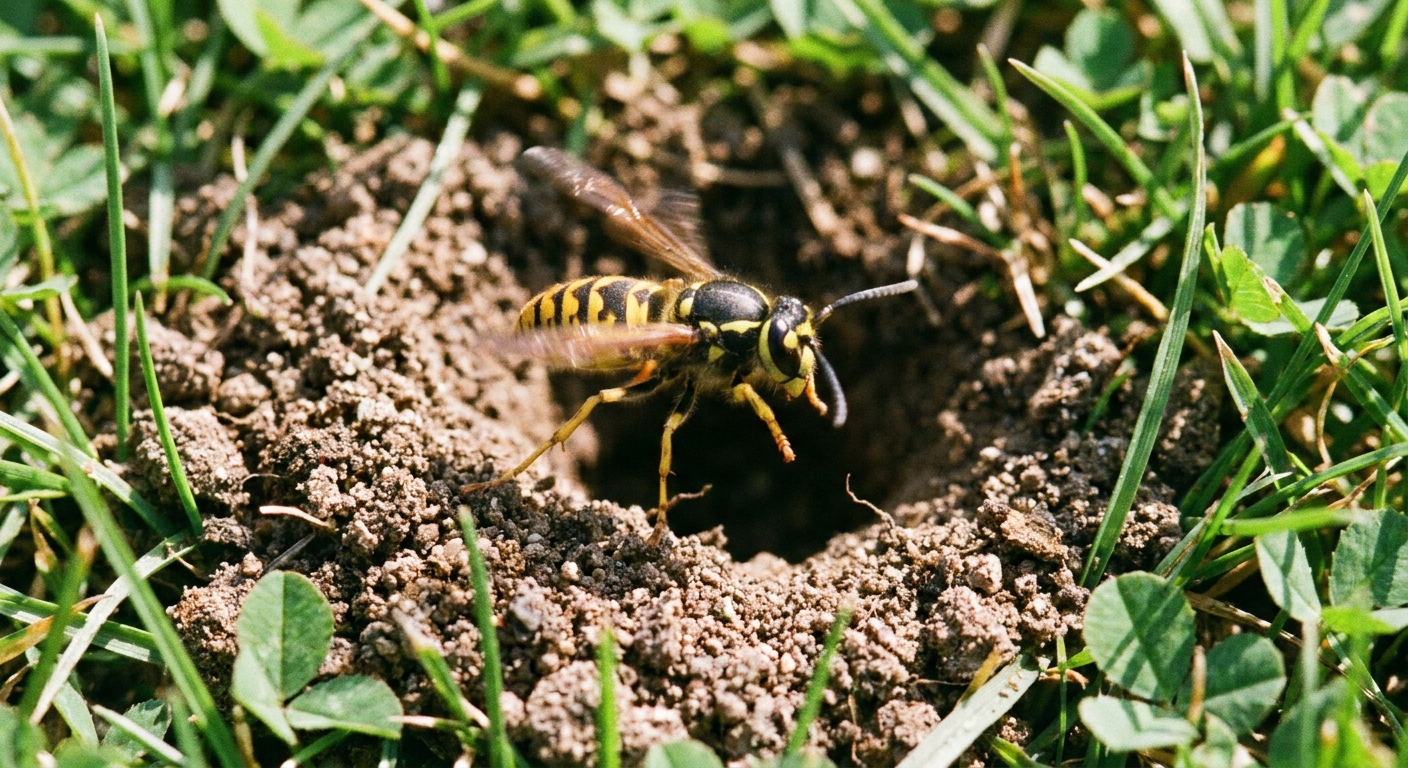
Yellow jackets often take advantage of existing cavities like old rodent burrows, voids under rock edges, and gaps near retaining walls. They can also excavate and expand soil, especially as the colony grows. Either way, your job is the same: find the active opening without getting too close.
Signs you found it
- Traffic: A steady stream of insects going in and out, especially during warm daylight hours.
- Hovering guards: A few adults hovering around knee-height, checking anything that moves.
- A “runway” look: A little worn patch of grass, exposed soil, or a bare ring around the hole.
- Sound: If you get close (do not), you can sometimes hear a faint buzz from the ground.
Places I check first
- Along fence lines where trimmers miss and grass gets thin
- At the edge of patios and steps where soil settles
- Under shrubs and low evergreens where it stays shaded
- Near old stump roots or rock borders
- By downspout splash areas where erosion opens gaps
Confirm safely
Stand well back with binoculars or your phone camera zoomed in. Watch for 2 to 5 minutes. If you see repeated in-and-out behavior at one hole, you have your entrance.
Also watch for a second opening. Some nests have multiple exits, and traffic can shift depending on disturbance, shade, or wind. A quick scan of the surrounding few feet can save you from surprises later.
Safety first
I love a good DIY win, but yellow jackets are not like patching drywall. The danger is not applying treatment. It is the defensive response when a ground nest gets disturbed.
Lock down the area
- Keep kids and pets indoors until you have a plan.
- Mark a wide no-go circle around the suspected entrance. If you have flags, cones, buckets, or a lawn chair, use them as a visual barrier.
- Pause mowing and trimming within at least 15 to 20 feet of the entrance as a good starting buffer. Increase that distance if activity is intense or the entrance is hard to see.
Watch for allergy risks
If anyone in your home has a history of severe reactions to stings (anaphylaxis), treat this as a call-a-pro-now situation. Same if the nest is near a doorway, HVAC equipment, a playset, or anywhere people cannot reasonably avoid.
If you get swarmed
- Run to shelter immediately, preferably indoors or into a vehicle.
- Cover your face and eyes as you move.
- Do not flail in place. Create distance fast.
- If stung and you develop trouble breathing, facial swelling, widespread hives, dizziness, or vomiting, call emergency services.
After a sting
Wasps and yellow jackets do not usually leave a stinger behind like honeybees. Wash the area, use a cold pack for swelling, and consider an over-the-counter antihistamine if you can take it safely. If symptoms escalate or you see any signs of an allergic reaction, get medical help right away.
Best time: day vs. night
This is where homeowners accidentally turn a manageable job into a yard-wide war.
Night is often calmer
Yellow jackets are typically less active after dark, and more of the colony is inside the nest. That can mean fewer defenders in the air and a better chance the treatment reaches more individuals.
Do not add new hazards
- If the entrance is on a slope, near a retaining wall, or anywhere you can trip, do not do a night approach.
- Use a flashlight with a red filter if possible. Bright white light may ramp activity up.
- Plan your retreat path before you step into the yard.
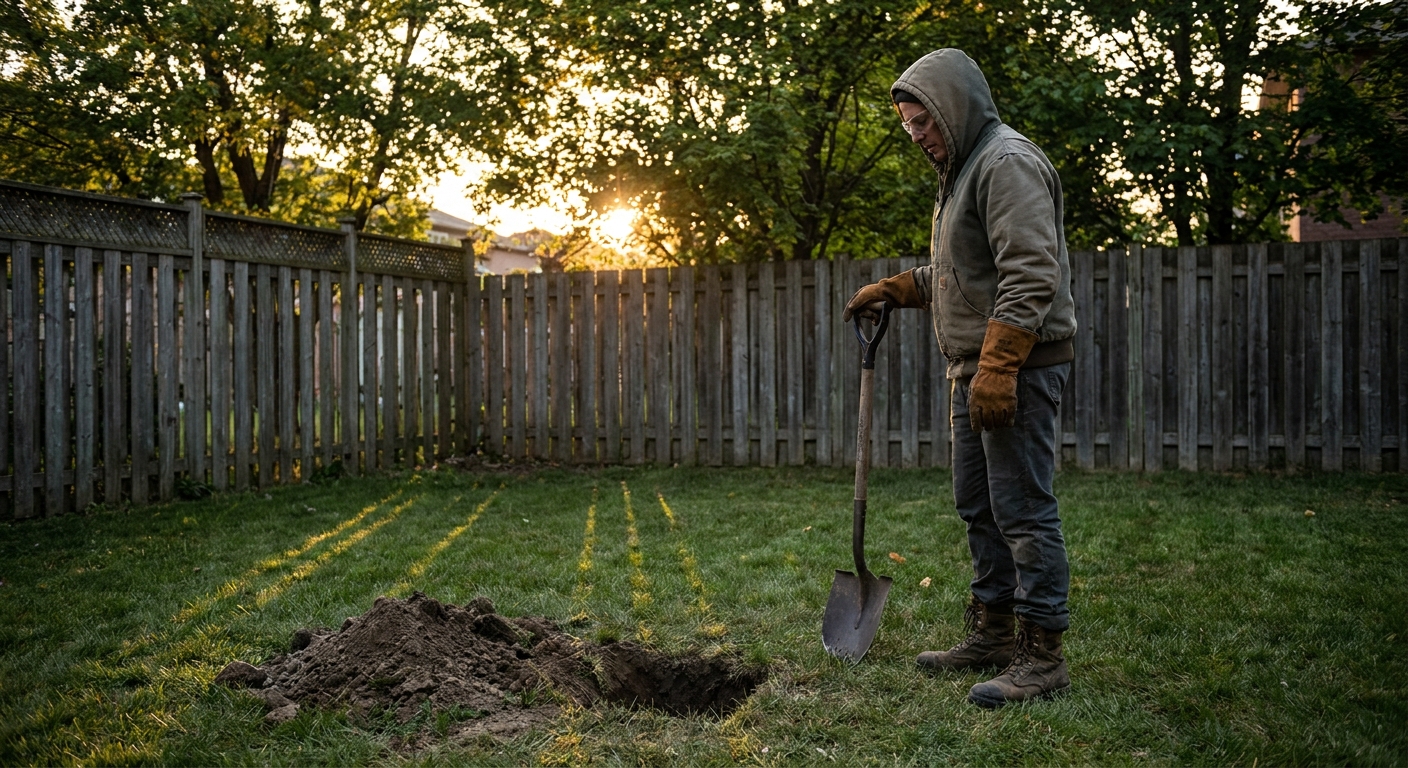
My personal rule: If I cannot confidently walk to the spot and back without looking at my feet, I do not attempt night treatment. I wait for early morning light when it is still cool and activity is low.
What to wear
You are not trying to be brave. You are trying to reduce skin exposure and avoid triggering them.
Clothing checklist
- Long sleeves and long pants (thicker fabric helps)
- Closed-toe shoes or boots with socks pulled over pant cuffs
- Work gloves
- Eye protection
Avoid these
- Shorts and sandals, even just for a second
- Loose cuffs that let insects crawl up sleeves or pant legs
- Fragrances like aftershave, scented sunscreen, or strong laundry boosters
- Dark, fuzzy clothing that can feel like a predator to some stinging insects
DIY options
There is a lot of internet advice on “just pour X into the hole.” Some of it works sometimes, and some of it escalates the situation. Here is the grounded version.
Option 1: Soapy water (limited)
A strong dish soap and water mix can kill many insects on contact by interfering with their protective outer layer and normal breathing. It is most effective when you can apply it directly to insects, not just somewhere near the nest.
- Pros: Cheap, low chemical residue.
- Cons: Can agitate the colony, may not reach deep nest chambers, can flood soil in a way that drives insects out and around the yard.
If you try it: Only consider it for a small, clearly confirmed entrance that is far from foot traffic, and only when you have a clear retreat route. Do not stand over the hole.
Option 2: Insecticidal dust (often best DIY)
Many pros use dust because workers track it into the nest as they come and go. The key is using a product specifically labeled for yellow jackets and applying it according to the label. The label is the law, and it is also your best safety guide.
- Pros: Better chance of reaching the colony inside.
- Cons: Drift risk, inhalation risk, and higher hazard for pets and beneficial insects if misapplied.
Option 3: Aerosol sprays (why they often disappoint)
This is the product most homeowners already have. The issue is simple: many long-distance wasp and hornet sprays are designed for exposed nests and direct contact. With ground nests, the colony is down in chambers and turns, and the spray often cannot penetrate far enough to matter.
- If you use an aerosol, look for one labeled for ground nests or a foaming ground-nest product that can fill void space better.
- Follow the label exactly, and do not assume one quick blast ends it. If activity stays high, stop and call a pro.
Important cautions
- Wind matters. If you can feel a breeze, dust can blow back into your face.
- Pets matter. Keep dogs away from the area until any product is settled and the label’s reentry guidance is met.
- Do not over apply. More is not better. It increases exposure and can push insects to find new exits.
What I do not recommend: Gasoline, diesel, brake cleaner, fire, “exploding it,” or sealing the hole immediately. Aside from being dangerous or illegal in many areas, these approaches can sometimes force yellow jackets to chew out a new exit, and you might not like where they choose to put it.
How to find the nest
Sometimes you notice them while grilling or gardening, but you cannot spot the entrance. Here is a calm way to narrow it down.
Tracking method
- Step 1: Pick a safe viewing spot 15 to 25 feet away as a starting buffer.
- Step 2: Watch one insect at a time and follow its flight line with your eyes. Yellow jackets often fly a fairly straight commute.
- Step 3: Move your viewing spot closer in small increments only if activity stays calm.
- Step 4: Look for a spot where multiple flight lines converge.
- Step 5: Use phone zoom to locate the actual hole without stepping into the zone.
Tip from my own mistakes: Do not crouch down to get a better angle. Your face and neck are the last places you want close to an irritated nest entrance.
Pets and yellow jackets
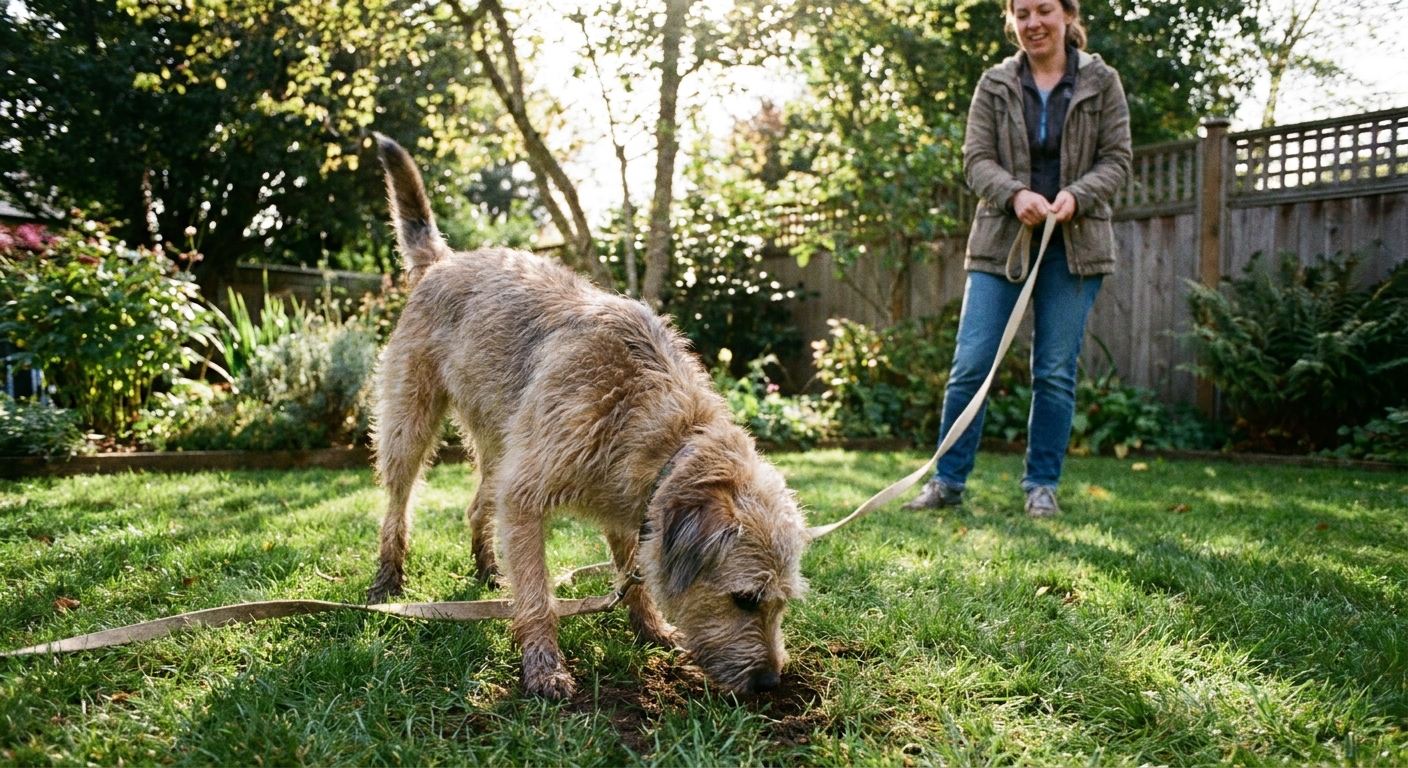
Dogs are the usual victims here. They hear buzzing, they sniff the hole, and then they get stung on the nose or inside the mouth. That can become an emergency quickly.
Pet safety steps
- Keep pets on leash when going outside until the problem is resolved.
- Block access with a temporary barrier well outside the entrance zone.
- Do not let pets investigate after treatment either. A few surviving defenders can still sting.
When to call the vet
If your pet is stung and you notice facial swelling, drooling, vomiting, weakness, or trouble breathing, call your vet or an emergency clinic immediately.
When to call a pro
I am all for sweat equity. But some jobs are not worth the risk, and ground yellow jackets can cross that line fast.
Call a professional if
- The nest is within 10 to 15 feet of a doorway, deck stairs, driveway, or mailbox route
- You cannot clearly identify the entrance, but stings are happening
- Anyone in the home has a known sting allergy
- You have a large, high-traffic nest (constant activity all day)
- The entrance is under a concrete slab, near a foundation, or inside a retaining wall void
- You tried once and they became more aggressive
What to expect
Pros typically confirm species, locate primary and secondary entrances, apply a targeted treatment, and provide a recheck plan. You are often paying for two things: the right product for the job and the experience to stay safe while using it.
After treatment
This is where patience saves you from getting stung just when you thought it was over.
- Wait and watch. From a safe distance, check activity the next day during warm daylight. You are looking for zero to minimal traffic.
- Do not immediately fill the hole. If there is still life inside, sealing can drive them to create a new exit.
- Delay mowing near the area until you are confident activity has stopped.
Fill the hole later?
Once you are confident the nest is inactive, you can backfill the entrance with soil and reseed the spot. If the hole is part of a larger burrow system, consider addressing the underlying void so it does not become an attractive ready-made nest next season.
Prevention
You cannot control everything outdoors, but you can make your yard less inviting.
- Knock down old rodent burrows and fill obvious ground voids.
- Keep sweet food and trash managed during late summer when yellow jackets get bold.
- Check high-risk areas weekly in spring and early summer. Small nests are easier than mature colonies.
- Repair gaps around patios and edging where soil erosion creates cavities.
FAQ
How big is a ground nest?
It varies by species and season, but late-summer nests can house hundreds to thousands. That is why the entrance looks like a busy little airport.
Can I plug the hole?
Not as a first move. Plugging can trap some inside, but it can also cause survivors to chew out another exit, sometimes closer to your house or under a slab.
Do they reuse the same nest?
Typically, the colony does not overwinter in the same nest. However, the cavity can be reused by a new queen in a future season, especially if the void remains.
Do they die off in winter?
In many regions, colonies collapse after hard frosts, and only new queens overwinter elsewhere. But if the nest is in a high-traffic area, do not “wait it out” if people or pets are at risk.
The 30-Second Cheat Sheet
Essential takeaways for: Yellow Jackets in the Ground: Find the Nest and Handle It Safely
First, confirm it is a ground yellow jacket nest
- Look for a single hole with heavy traffic, with insects repeatedly flying in and out.
- Yellow jackets are stocky, fast, and tend to get defensive when you get close.
- Do not assume it is a paper wasp nest. Paper wasps usually nest above ground under eaves and rails.
Immediate safety steps
- Keep kids and pets inside.
- Mark a wide no-go zone, and stop mowing near the area.
- If anyone has a sting allergy or the nest is near a doorway or play area, call a pro.
Finding the entrance
- Stand 15 to 25 feet away and watch for flight lines converging.
- Use phone zoom or binoculars. Do not crouch close to the ground.
- Assume there may be more than one opening. Watch for secondary in-and-out traffic nearby.
Day vs. night
- Night or very early morning is usually safest because activity is lower.
- Only attempt a night approach if you can walk safely and have a clear retreat path.
DIY treatment options (with cautions)
- Soapy water: Sometimes helps, but can agitate the nest and may not reach deep chambers.
- Insecticidal dust labeled for yellow jackets: Often more effective because workers track it inside. Apply exactly per label. Avoid wind, protect your lungs, and keep pets away.
- Aerosol wasp sprays: The common long-distance sprays often do not reach deep into ground nests. If you use an aerosol, look for products specifically labeled for ground nests or foaming action, and follow the label exactly.
- Never use gasoline or fire. It is dangerous and often makes the problem worse.
When to stop DIY and call a professional
- Nest is in a high-traffic spot or near concrete, foundations, or retaining walls
- High activity all day, multiple entrances, or you cannot locate the hole
- You tried once and they became more aggressive
💡 Tip: Scroll up to read the full article for detailed, step-by-step instructions.
⬆️ Back to top
About Marcus Vance
Content Creator @ Grit & Home
Marcus Vance is a lifelong DIY enthusiast and self-taught home renovator who has spent the last decade transforming a dilapidated 1970s ranch into his family's dream home. He specializes in budget-friendly carpentry, room-by-room renovations, and demystifying power tools for beginners. Through his writing, Marcus shares practical tutorials and hard-learned lessons to help homeowners tackle their own projects with confidence.