
🚨 In a DIY emergency or rush?
Skip the details and jump straight to our 30-second cheat sheet for the most crucial info.
The first time I found a tiny bug near our bed, my brain went straight to worst-case scenario. I did what most DIY homeowners do. I panicked, started googling, and nearly went nuclear with sprays before I had a solid ID.
Here is the truth: bed bugs and carpet beetles get mixed up all the time, and treating the wrong one wastes money and time. It can also mean unnecessary pesticide exposure in the room where you sleep. Bed bugs are blood-feeders that hide close to where people sleep. Carpet beetles are fabric pests, and the ones you notice are often the fuzzy larvae or the adult beetles near windows.
This guide will help you figure out what you found by comparing the clues that actually matter: bite patterns, spotting, shed skins, larvae, and fabric damage. Then I will point you to the right cleanup path once you know what you are dealing with.
Fast ID: bed bugs vs. carpet beetles
If you only have a minute, use this as your first pass. Then scroll down to confirm with photos and secondary signs.
- You wake up with new itchy welts, especially in lines or clusters: lean bed bugs.
- No bites, but you see holes in wool, felt, feathers, silk, or bald patches on rugs: lean carpet beetles.
- Ink-like black dots that often rehydrate and smear rusty-brown with a damp cotton swab: lean bed bugs. (Suggestive, not definitive by itself.)
- Fuzzy, bristly “worms” (larvae) in closets, along baseboards, or in stored textiles: lean carpet beetles.
- You spot bugs most often at night near the bed, or when you disturb the bed frame: lean bed bugs.
- Small oval beetles near windowsills during daylight: lean carpet beetles.
Bed bugs vs. carpet beetles chart
If you like a quick side-by-side, this is the shortest version.
| Clue | Bed bugs | Carpet beetles |
|---|---|---|
| What they eat | Blood | Keratin and animal-based materials (wool, fur, feathers), plus lint, hair, dead insects |
| Where you find evidence | Mattress seams, box springs, headboards, bed frames, nearby furniture | Closets, carpet edges, baseboards, under furniture, vents and lint pockets |
| Skin clues | Bites are common, often in clusters or lines (not everyone reacts) | No bites, but some people get a rash from larval hairs |
| Most telling sign | Live bugs or shed skins in bed hiding spots plus dark spotting nearby | Bristly larvae or fuzzy shed skins plus fabric damage |
What they look like (and where you find them)
Bed bugs
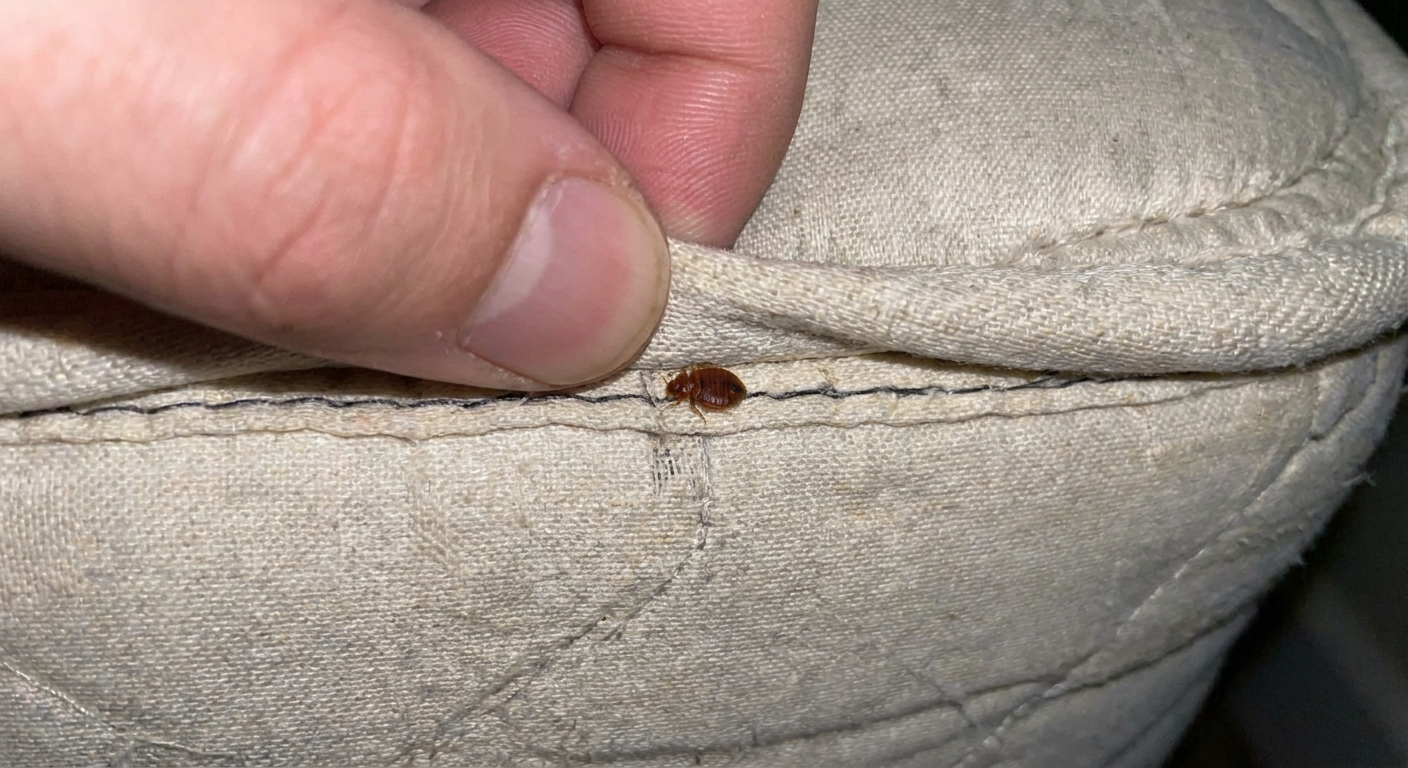
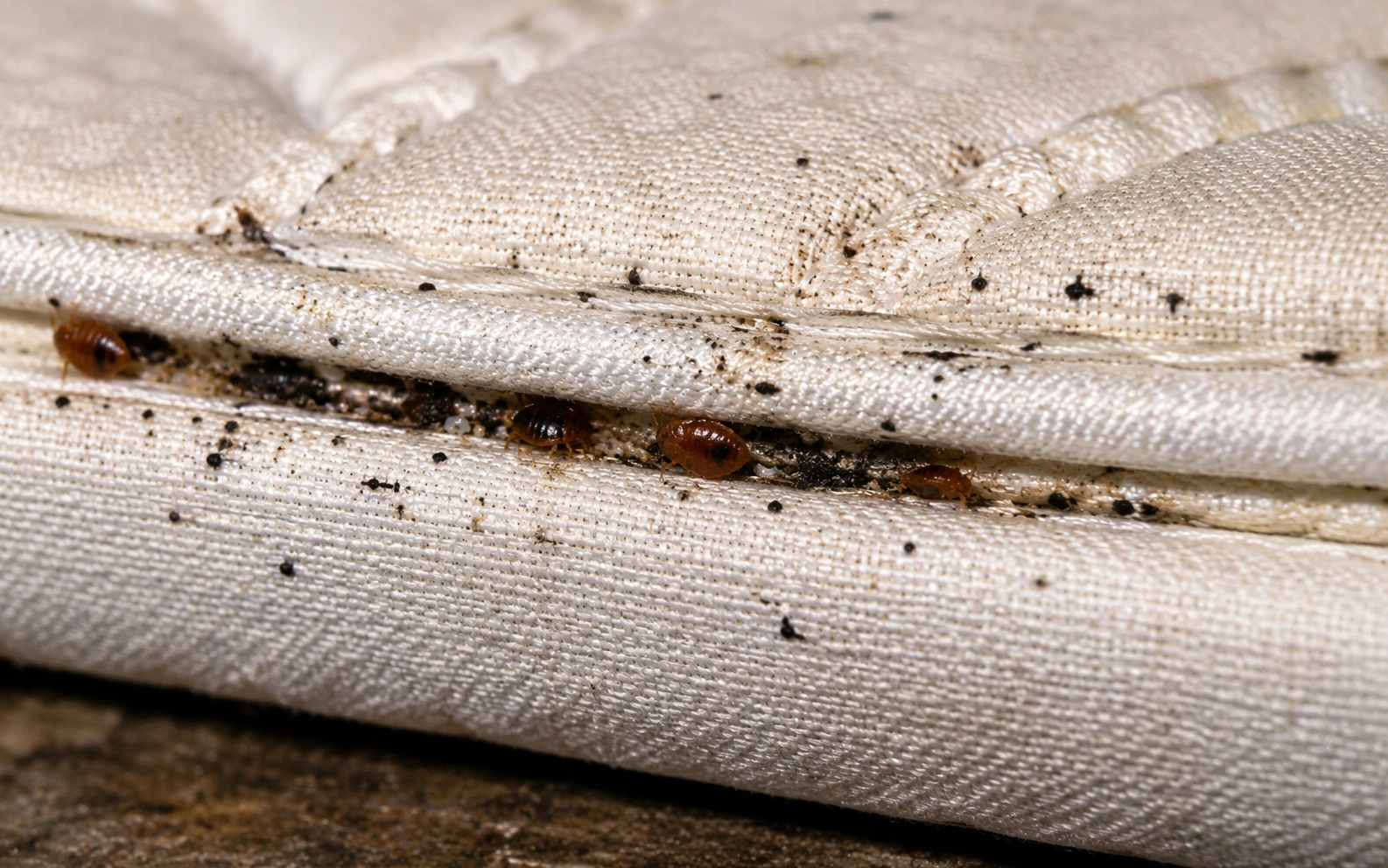
Adults are flat, oval, and reddish-brown, about the size of an apple seed when fully grown. Nymphs are smaller and paler, sometimes almost translucent until they feed.
Where to look: bed bugs stay close to the food source. Check mattress piping and seams, the box spring edge, behind the headboard, bed frame joints, and nearby nightstands. They like tight cracks where their bodies touch both sides.
Carpet beetles
Carpet beetles are usually noticed in two stages:
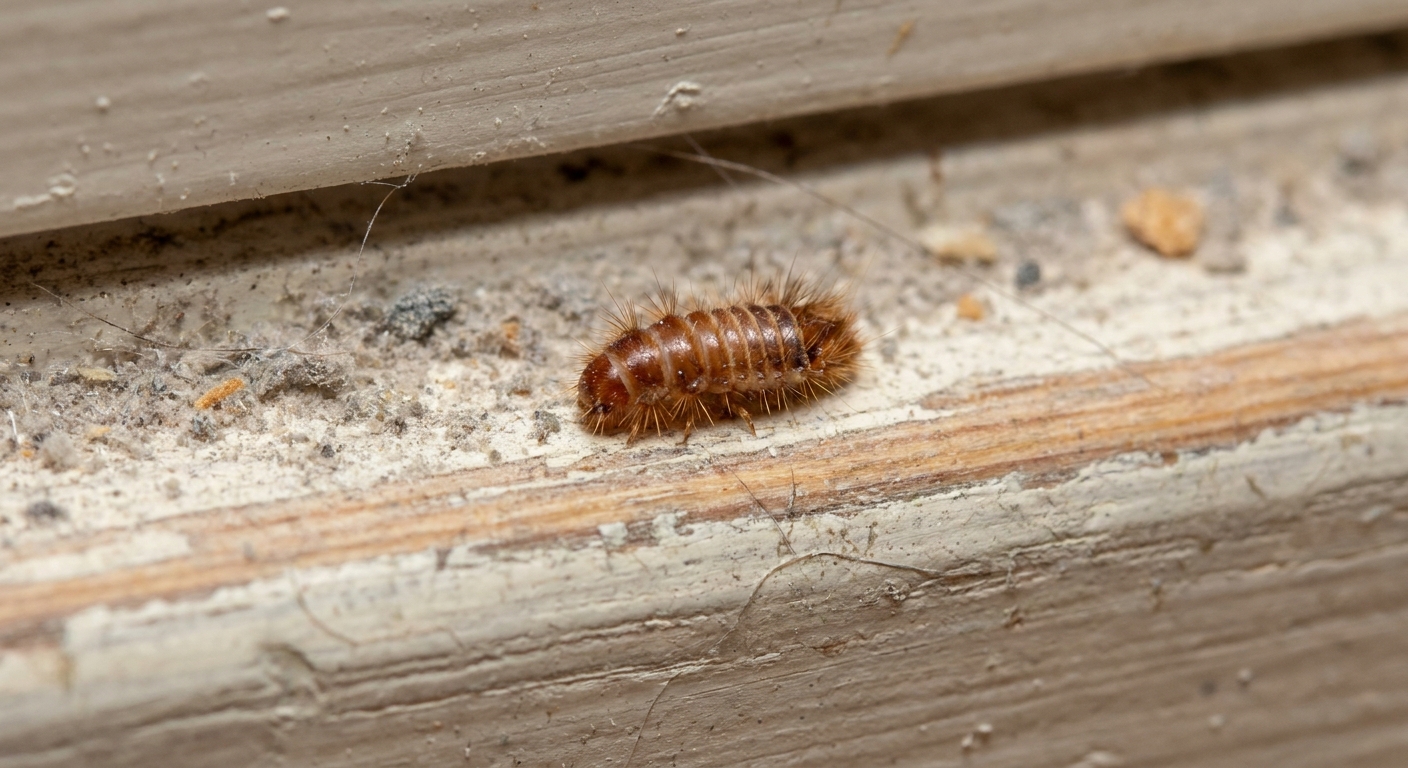
- Adult beetles: tiny oval beetles, often mottled black, brown, and cream, sometimes solid black. Adults are often found on windowsills or near lights.
- Larvae: small, brownish, bristly larvae that look like little fuzzy grains of rice or tiny “caterpillars.” The larvae do the fabric damage.
Where to look: edges of carpet, under furniture, in closets, in stored woolens, around baseboards, inside HVAC returns, and anywhere lint and pet hair collect. They thrive on animal-based fibers (keratin) and organic debris like hair, lint, and dead insects.
Bites and skin reactions
Bed bug bites
Bed bugs bite to feed. Not everyone reacts, but when people do, the pattern is often a helpful clue.
- Timing: bites often appear after sleeping, sometimes with a delay of hours to a couple days.
- Pattern: commonly clusters or lines of bites on exposed skin like arms, shoulders, neck, face, and lower legs.
- Look and feel: itchy welts, sometimes with a central puncture mark.
DIY reality check: bite reactions overlap with mosquitoes, fleas, and contact dermatitis. Treat bites as a clue, not a diagnosis. Confirm with physical signs in the room.
Carpet beetle “bites” (they do not bite)
Carpet beetles do not feed on people. What folks call “carpet beetle bites” is usually a skin irritation from the larvae’s bristly hairs.
- Timing: can flare after handling infested textiles, sitting on an infested couch, or cleaning dusty edges.
- Pattern: more like a rash or scattered small bumps, not the classic line or cluster.
- Common locations: areas where clothing rubs or where skin contacted an infested fabric.
If multiple people in the home are getting welts that show up after sleeping, that pushes the needle toward bed bugs, not carpet beetles.
Spots and stains
Bed bug fecal spots (the “ink dots”)
Bed bug droppings look like tiny black dots, like somebody tapped a marker on fabric. They often appear:
- along mattress seams and piping
- on box springs and bed frames
- on sheets near where people sleep
- in cracks of nightstands or headboards
Simple test: dab a spot with a slightly damp cotton swab. Bed bug fecal spots often rehydrate and smear rusty-brown because they are digested blood. That said, other gunk can smear too, so treat this as one clue, not a stand-alone confirmation.
Carpet beetle debris
Carpet beetles leave evidence too, but it is different:
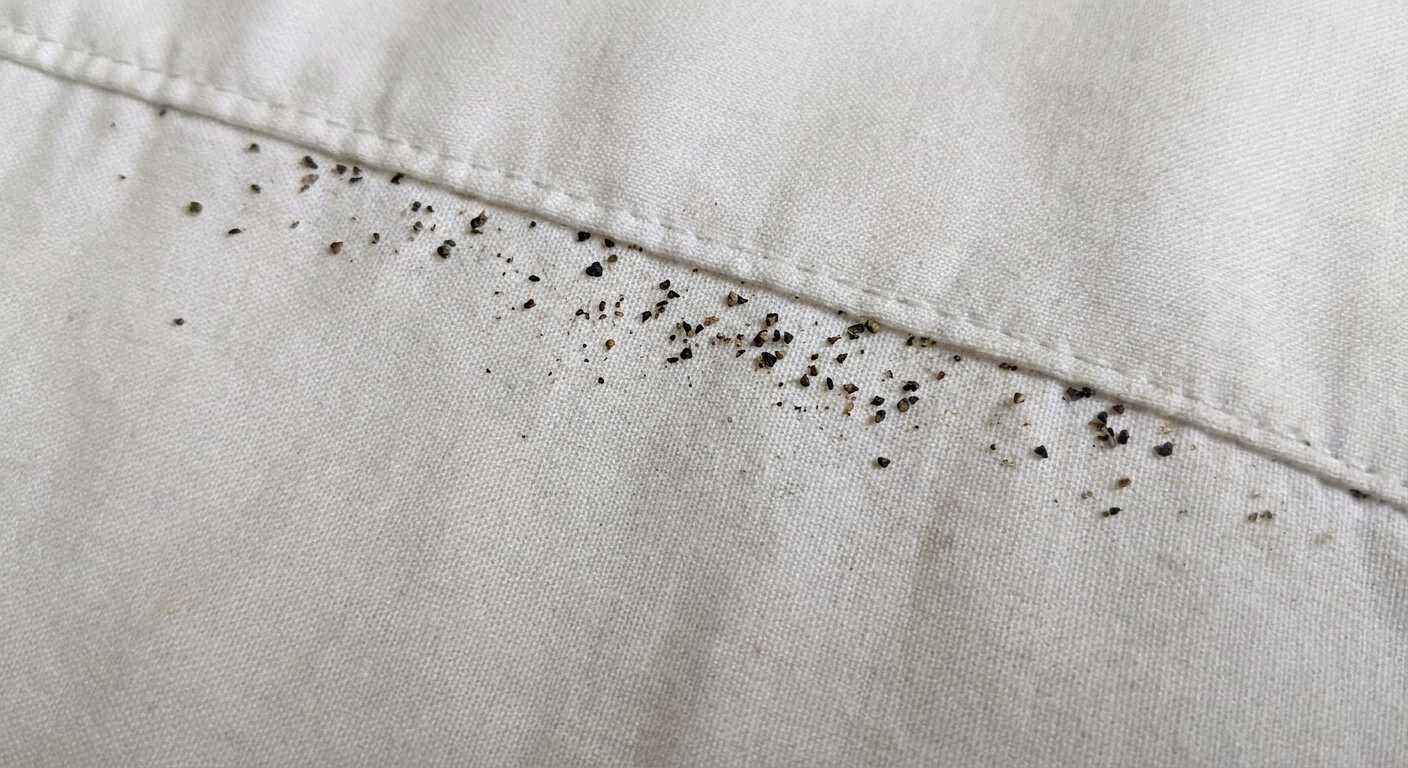
- Larval frass can look like fine sand or peppery debris in carpet edges and closets.
- Shed hairs and skins can collect in lint piles, corners, and under furniture.
What you usually do not see with carpet beetles is that marker-dot spotting concentrated along mattress seams.
Shed skins
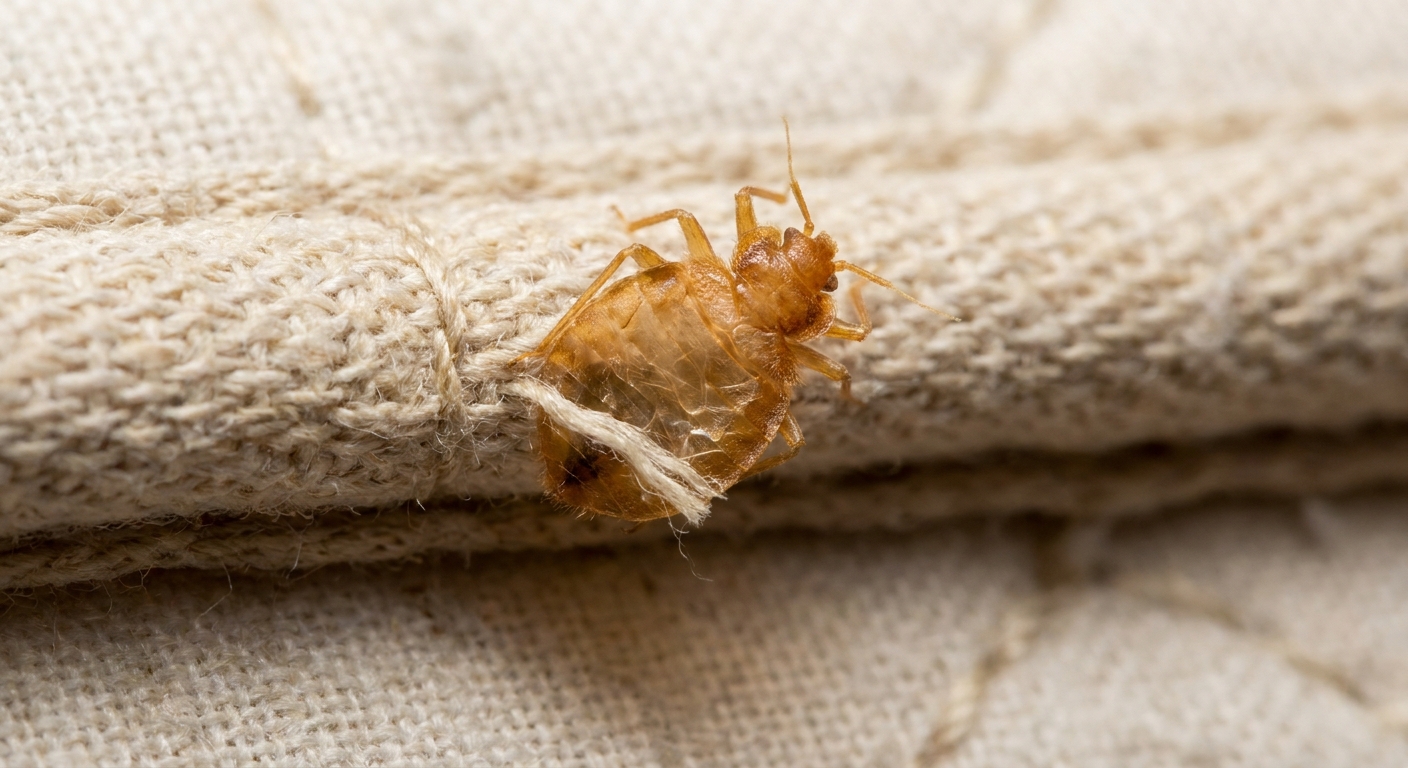
Bed bug shed skins
As bed bugs grow, they shed pale, papery skins. These often look like tiny, tan, empty bug shells with a bed-bug shape. You find them where bed bugs hide: seams, cracks, and joints near the bed.
Carpet beetle shed skins
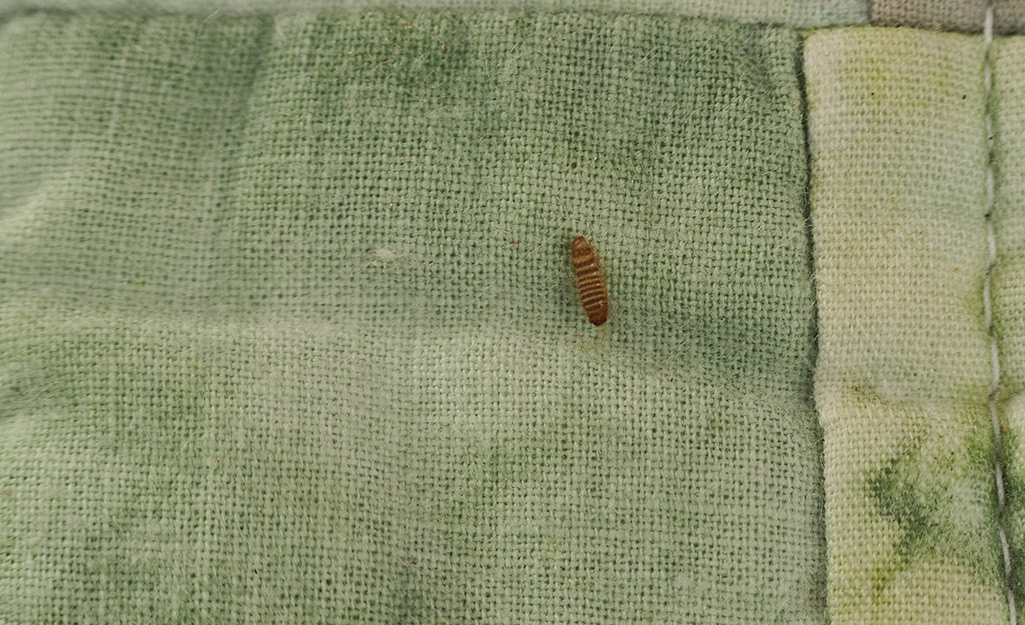
Carpet beetle larvae also shed, but the skins look more like fuzzy, bristly casings. They show up in:
- closet corners
- under baseboards and radiator covers
- under heavy furniture
- storage bins with wool sweaters, blankets, or felt items
If the shed skins look hairy or bristly, think carpet beetles.
Larvae and eggs
This is one of the clearest separators.
If you see bristly larvae
Those are carpet beetle larvae. Bed bug nymphs do not look fuzzy. They look like smaller, flatter bed bugs.
If you see tiny pale bugs, not fuzzy
That could be bed bug nymphs, especially if you are finding them in bed-related hiding places.
Fabric damage
Carpet beetle damage
Carpet beetles are famous for damaging animal-based fibers and items with organic content:
- wool rugs and wool clothing
- felt, cashmere, alpaca
- silk
- fur, feathers, taxidermy
- stored blankets, old upholstery, piano felt
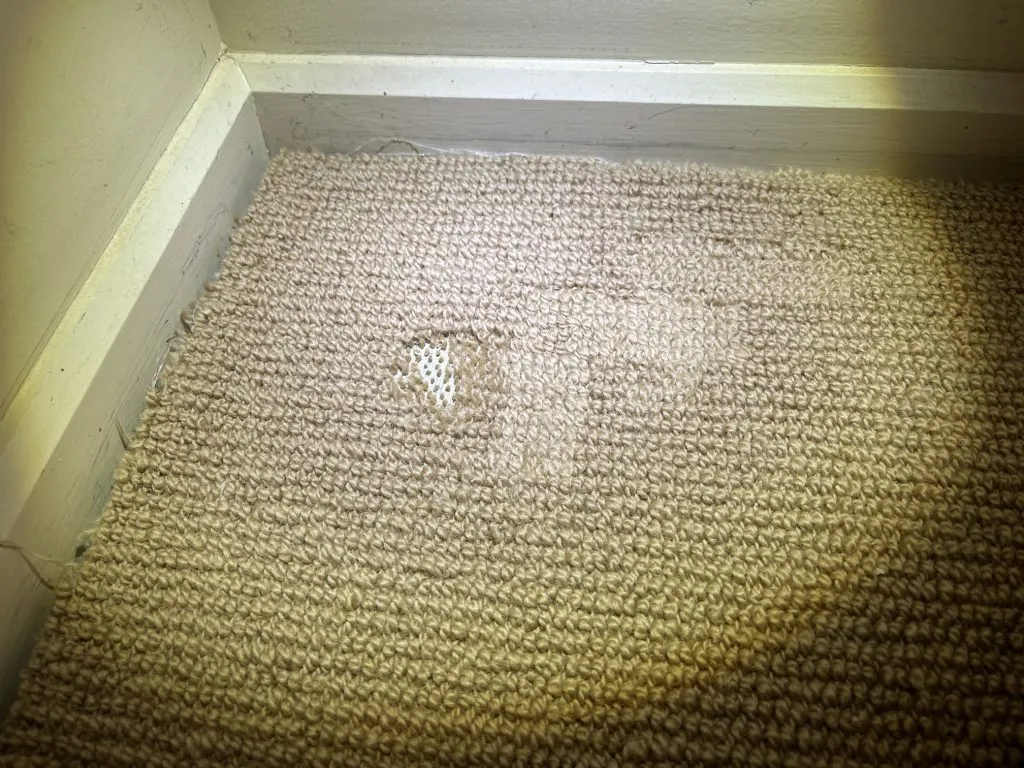
What it looks like: irregular holes, thinning areas, bald spots on rugs, and damaged edges where a rug meets the wall. Damage is often worst in quiet, undisturbed areas.
Bed bug impact
Bed bugs do not chew fabric. If your main issue is bites plus spotting on bedding, you are looking at a bed bug problem, not a fabric pest problem.
Where you found the evidence matters
When I am troubleshooting any house issue, I ask: where is the symptom showing up most?
Evidence concentrated at the bed
- mattress seams
- box spring underside
- headboard cracks
- nightstand joints
This pattern strongly suggests bed bugs.
Evidence concentrated in closets and carpet edges
- closet baseboards
- stored linens and clothing
- under furniture
- around HVAC returns and lint buildup
This pattern strongly suggests carpet beetles.
A simple 10-minute inspection routine
If you want a calm, methodical approach, do this before you treat anything.
What to grab
- flashlight or headlamp
- old credit card or thin putty knife for seams
- clear tape (to pick up a specimen)
- zip-top bag or small jar (to save a bug)
- paper towels and a cotton swab
- a coin (for scale in photos)
Step 1: Start at the bed
Pull sheets back and inspect mattress seams slowly. Use the card to lift piping. Look for bugs, shed skins, and peppery black dots.
Step 2: Check the bed frame and headboard
Look in screw holes, joints, and cracks. Bed bugs love unfinished wood and tight gaps.
Step 3: Do the swab test on suspicious spots
Dab dark dots with a damp cotton swab. A rusty-brown smear supports the bed bug theory, but it is not the only possible explanation.
Step 4: Scan carpet edges and closets
Look for fuzzy larvae, bristly shed skins, and damaged animal-based fiber items. Pay extra attention to dark, dusty corners.
Step 5: Save a sample and take a clear photo
A clear piece of tape over the bug, stuck onto a white index card, can help with identification later. If you can, snap a sharp photo next to a coin for scale. If you are still unsure, a local extension office or pest control company can often confirm an ID quickly from a good sample.
When to call a pro
I love DIY, but there are times when bringing in help is the fastest, cheapest path in the long run.
- Any confirmed bed bug and you cannot find the source quickly.
- Multi-unit housing, where coordination matters. Bed bugs can move through cracks and wall voids, and they spread easily by moving belongings between units and through shared laundry rooms.
- Heavy signs (lots of spotting, multiple rooms, repeated bites) or you keep finding new evidence after treatment.
- You cannot safely treat due to asthma, chemical sensitivity, pregnancy, or small children and pets in tight quarters.
What to do next
Once you identify the pest, follow the matching plan. Do not mix and match treatments, especially with pesticides.
If it is bed bugs
- Focus on sleeping areas and nearby hiding places first.
- Prioritize laundry, heat, vacuuming, encasements, and targeted treatment strategies that actually reach where they hide.
- Avoid foggers. They rarely reach hiding places and can make bed bugs scatter.
If it is carpet beetles
- Focus on deep cleaning, lint removal, and textile storage.
- Address animal-based fiber items, closet edges, rugs, and any hidden dust reservoirs.
Common look-alikes
- Fleas: bites often on ankles and lower legs; you may notice pets scratching; fleas jump.
- Clothes moths: fabric damage similar to carpet beetles, but you may see small moths and silky webbing or tubes in textiles.
- Bat bugs: nearly identical to bed bugs without magnification; usually tied to bats in attics or wall voids.
If your evidence does not line up cleanly with bed bugs or carpet beetles, pause and get an ID before treating. The right diagnosis is half the battle.
FAQ
Can carpet beetles live in a mattress?
It is uncommon, but larvae can wander and end up near beds, especially if there is lint, pet hair, or a wool blanket nearby. If your strongest signs are in mattress seams and you have spotting on sheets, bed bugs are more likely.
Do carpet beetles cause bites at night?
No. They do not bite. Some people get itchy from larval hairs, but it is not the same as a blood-feeding insect biting while you sleep.
I found one bug. Does that mean I have an infestation?
Not always. One adult carpet beetle near a window can be a stray. One confirmed bed bug, especially in a bedroom, should be treated as serious until you prove otherwise with inspection.
What is the most reliable bed bug sign?
A combination: live bugs or shed skins in bed hiding places plus dark spotting on seams or bedding. Bites alone are not reliable.
What is the most reliable carpet beetle sign?
Larvae or bristly shed skins in closets and carpet edges plus damage to wool or other animal-based fibers.
The 30-Second Cheat Sheet
Essential takeaways for: Bed Bugs or Carpet Beetles? How to Tell What You Found
Two-minute answer
- Bed bugs: you often get itchy welts after sleeping, and you find ink-like black dots, shed skins, or live flat bugs in mattress seams, box springs, headboards, and bed frames.
- Carpet beetles: they do not bite. You usually find bristly larvae or fuzzy shed skins in closets, carpet edges, baseboards, and you may see holes or thinning in wool and other animal-based fibers.
Quick checks that settle it
- Damp swab test: bed bug fecal spots often rehydrate and smear rusty-brown. It is suggestive, not proof by itself.
- Fuzzy worm present: that is a carpet beetle larva, not a bed bug.
- Where evidence clusters: bed-focused points to bed bugs, closet and carpet-edge points to carpet beetles.
Do not do this
- Do not spray random pesticides or set off foggers before you identify the pest. You can spread bed bugs, contaminate fabrics, and still not solve the problem.
- Do not rely on bites alone. Confirm with physical evidence.
💡 Tip: Scroll up to read the full article for detailed, step-by-step instructions.
⬆️ Back to top
About Grit
Content Creator @ Grit & Home
Grit is Grit & Home’s little blue clay courier, delivering big questions about the place you call home. Expect practical ideas, a raised eyebrow, and a satchel full of curiosity.