
🚨 In a DIY emergency or rush?
Skip the details and jump straight to our 30-second cheat sheet for the most crucial info.
The first time I noticed them at our 1970s ranch, I thought something was tunneling under the yard. There were fresh little mounds of dirt in a sunny bare patch by the driveway and these huge, orange and black wasps cruising low like tiny helicopters.
If you are seeing the same thing, odds are good you are looking at cicada killers. They look intimidating, but most of the time they are not a backyard emergency. The trick is knowing what you have, where the burrows are, and when the location makes it a problem.
What they are
Cicada killers are large solitary wasps. Instead of living as a big colony like yellow jackets, each female makes her own burrow in the ground, hunts cicadas, and stocks the tunnel with them for her larvae.
Two important details for homeowners:
- They prefer bare, sunny, well-drained soil. Think along sidewalks, driveway edges, garden paths, and thin spots in turf.
- They are usually less aggressive than social wasps. You can have a handful of burrows nearby and still not get stung, as long as you are not grabbing or trapping them.
How to ID the burrows
When I am trying to ID yard holes, I look at three things: hole size, the dirt pattern, and the traffic.
Typical burrow signs
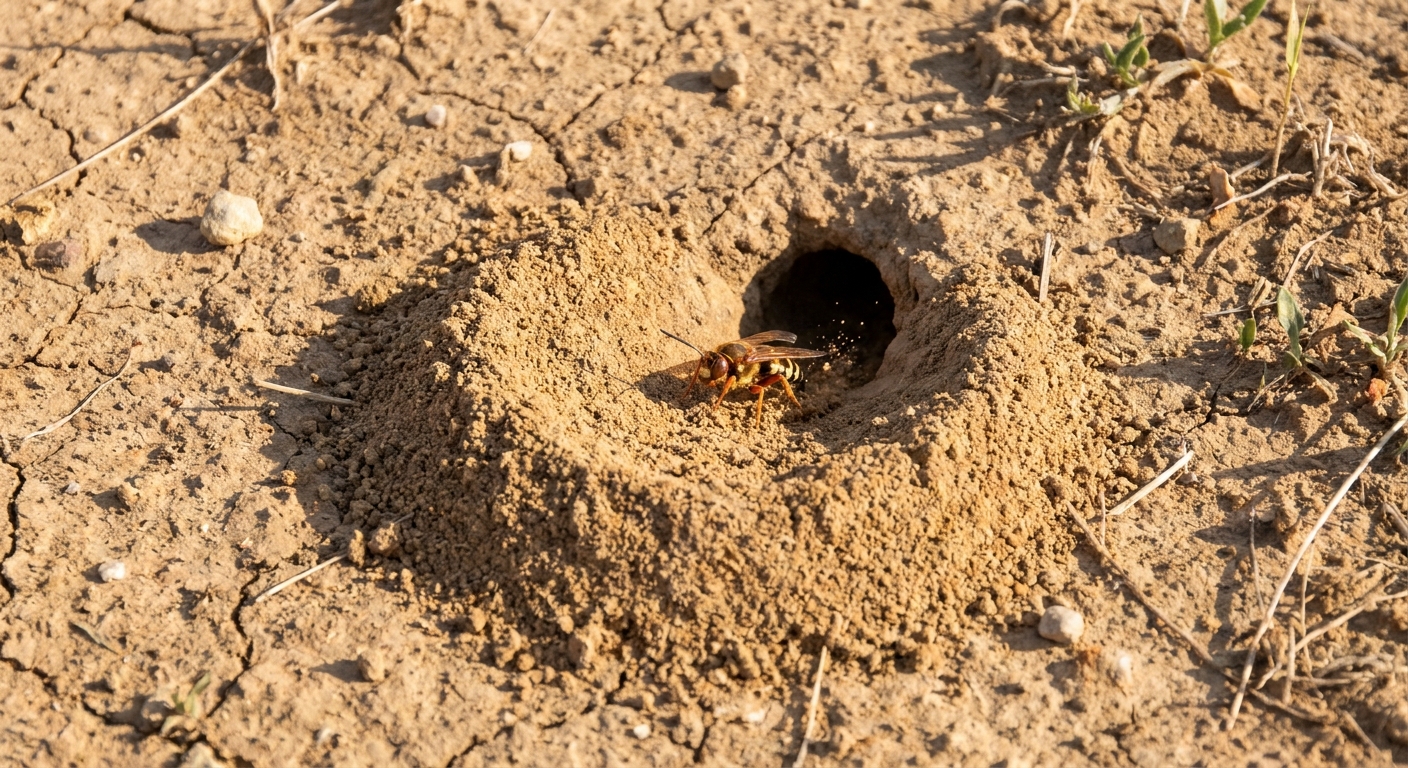
- Round hole about 1/2 to 3/4 inch wide, sometimes a bit larger in loose soil, often in compacted, sandy, or otherwise well-drained ground.
- A fan or crescent of loose soil pushed out of the entrance. It looks like someone dumped a small trowel full of dirt.
- Daytime activity in hot weather. You may see a big wasp flying low, landing, backing into the hole, or dragging a cicada.
- Multiple holes in the same general area is common, but they are still solitary. Think neighborhood, not one shared nest.
If you actually see a wasp dragging a cicada across the ground into a hole, that is essentially a confirmed ID.
Body ID and lookalikes
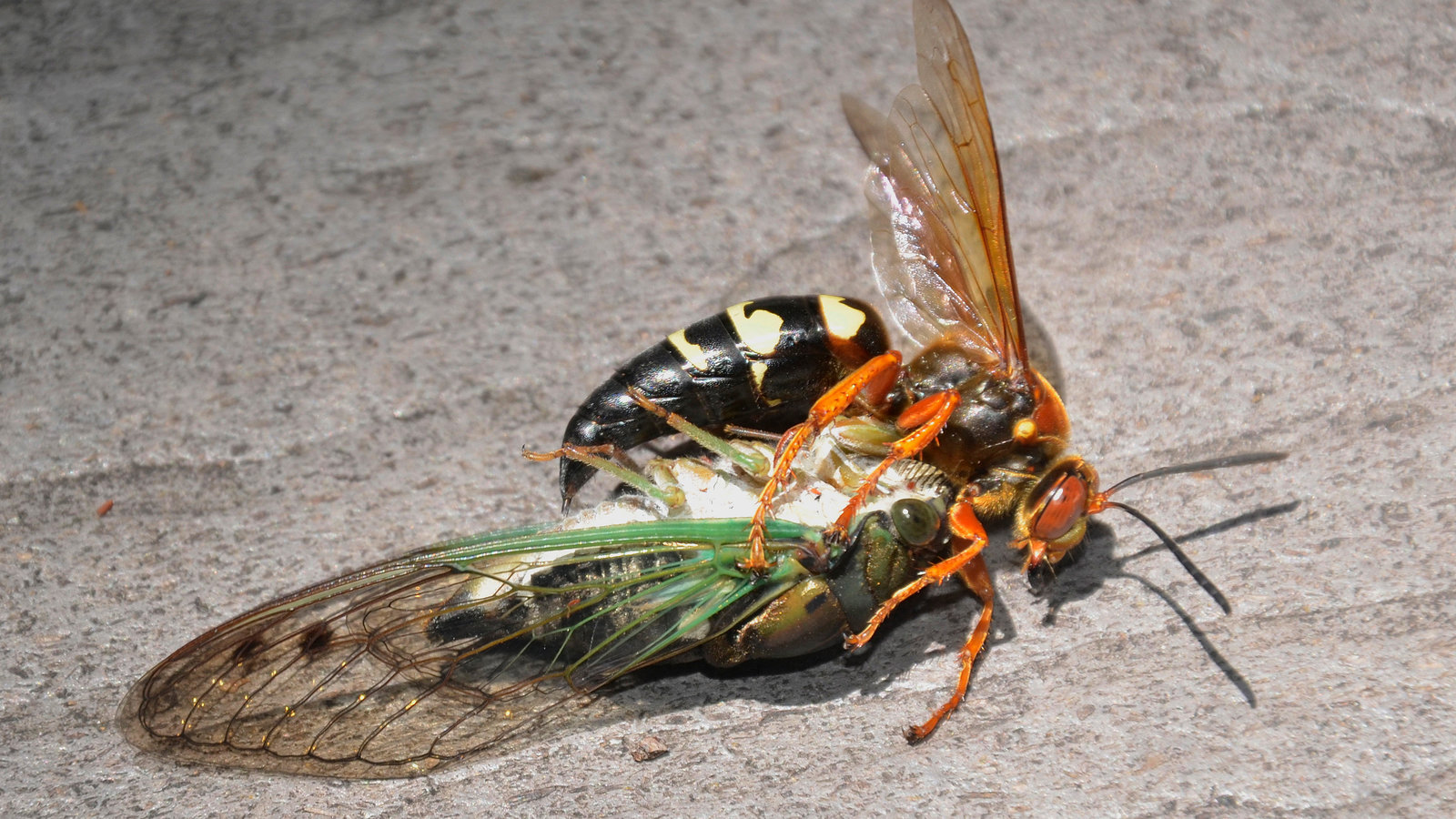
If you get a decent look at the insect itself, cicada killers have a few consistent tells:
- Size: often around 1 1/2 to 2 inches long, which is why they stop you in your tracks.
- Color: a rusty or orange-brown upper body with a banded abdomen (yellow bands on a darker background).
- Common mix-up: they are frequently mistaken for hornets at a glance.
One more thing: other solitary ground-nesting wasps can make similar spoil fans in sandy soil, including various digger wasps. For homeowners, that is fine. The practical decision is still the same: confirm it is not a social wasp nest (yellow jackets) in a high-traffic spot.
Cicada killer holes vs yellow jacket nests
This is the comparison that matters most for safety. Yellow jackets are the ones that turn mowing the lawn into a disaster.
Yellow jacket ground nest clues
- Smaller entrance, often pencil-size to coin-size, sometimes hidden in grass, mulch, or a landscape edge.
- Little to no dirt mound. Yellow jackets often use an existing void and do not leave a neat fan of excavated soil.
- Busy two-way flight path. You will see many wasps coming and going, especially if you stand still and watch for 30 seconds.
- Aggressive defense if you get close, vibrate the ground, or disturb the entrance. Mowers, string trimmers, and kids running nearby can set them off.
Bottom line: a few big wasps and a visible dirt fan in bare sun is often cicada killers. A hidden hole in turf with lots of fast traffic is more likely yellow jackets, and that is when you back away and take it seriously.
Cicada killer holes vs animal burrows
People also mix these up with chipmunks, moles, voles, and even groundhogs. The “who did it” shows up in the size and mess.
Quick animal hole check
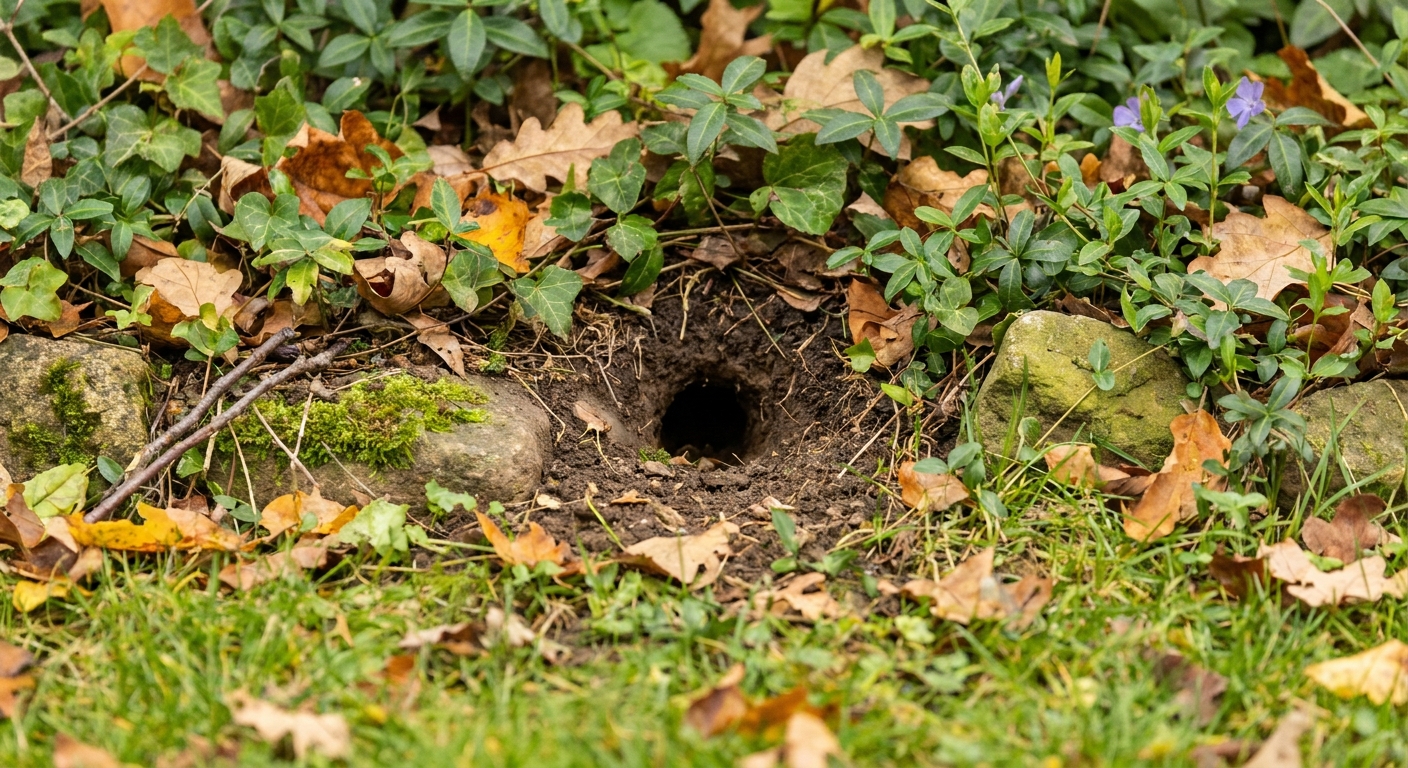
- Groundhog: much larger opening, typically several inches wide, usually near a structure, woodpile, or slope, with obvious piles of dirt and a worn path.
- Chipmunk: about 1 1/2 to 2 inches or so, and often no dirt pile at the entrance because they carry soil away to hide the burrow location.
- Moles: raised ridges and volcano-like mounds, not a clean open entrance hole.
- Voles: small holes plus shallow surface runways through grass.
Cicada killer burrows are usually a cleaner, more “drilled” looking opening with that loose dirt fan right at the doorstep.
Should you leave them alone?
Most of the time, yes.
Here is the part that calms a lot of folks down: cicada killers are not out hunting people. They are hunting cicadas. The males can act territorial and buzz you, but males cannot sting. Females can sting, but they are typically focused on provisioning their burrow and are less likely to sting unless handled or trapped.
Leave them alone if
- The burrows are in a low-traffic area (back fence line, unused side yard, far corner of the driveway).
- No one in the household has a severe allergy to stings.
- You can give the area a little space for a few weeks.
Season matters
In many areas, cicada killers are most noticeable in mid to late summer, although timing varies by region. Activity usually drops off as the season changes. Some may return to the same general sunny patch next year if conditions stay perfect for them.
Discourage nesting without chemicals
If you want them to pick a different spot next season, the cheapest fix is usually changing the real estate.
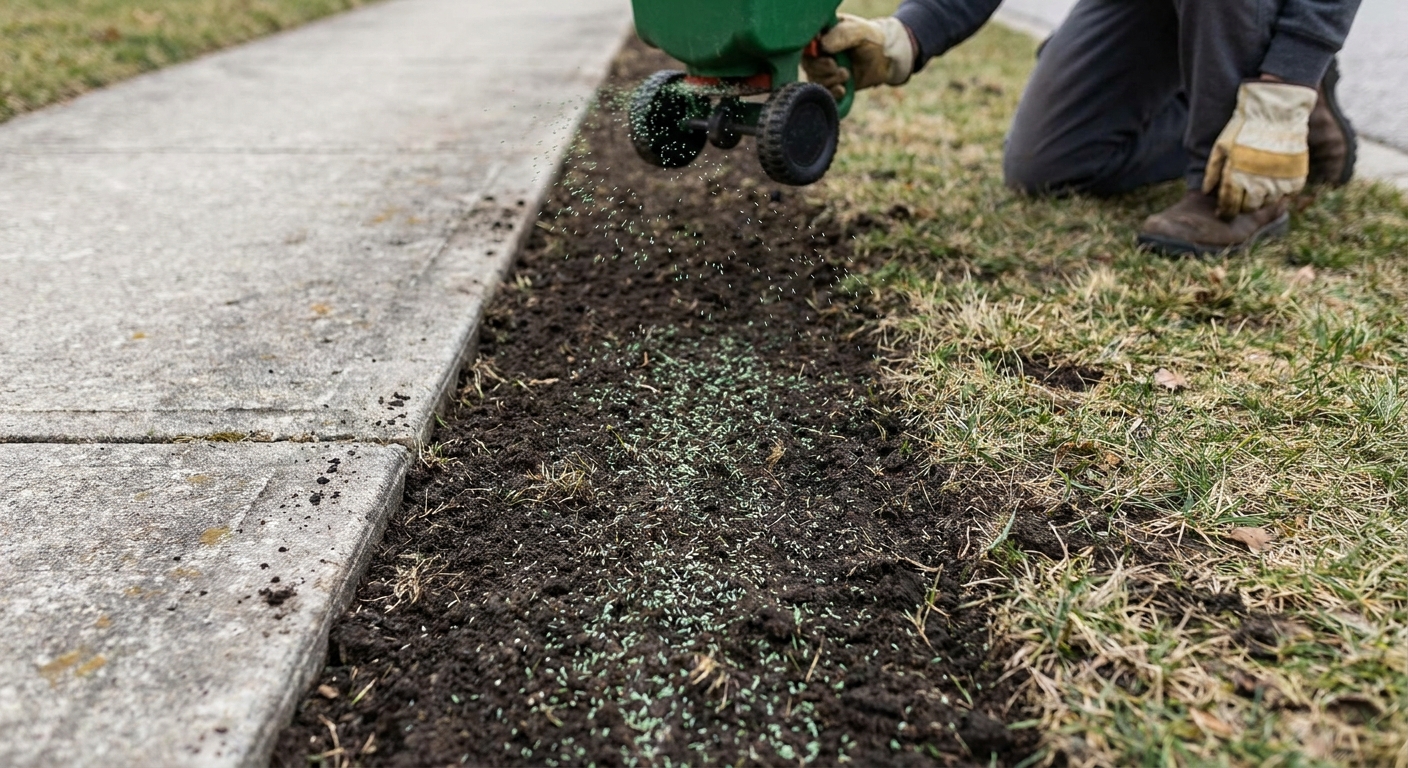
1) Establish turf or groundcover
Cicada killers like bare soil. Thick turf makes digging harder and keeps the soil cooler.
- Rake out the loose spoil piles and level the area.
- Overseed thin lawn spots and keep them watered long enough to establish.
- In beds, add mulch to reduce exposed soil.
2) Adjust watering in dry, compacted spots
I often see burrows along driveway edges where the ground bakes. If you can keep grass alive there with deeper, less frequent watering and a bit of topdressing, you make that zone less attractive.
3) Reduce bare, sunny strips near hardscapes
Edging projects, new paver installs, and gravel paths often create prime nesting strips. If you are planning a project, consider:
- Polymeric sand or tightly packed joint material between pavers where appropriate
- Groundcover plantings at the edge instead of leaving an exposed dirt ribbon
- A thicker mulch layer in planting beds
What not to do
- Do not stomp holes, flood burrows, or plug entrances while wasps are active. Even if cicada killers are typically less defensive, the bigger risk is misidentification. If it is actually a yellow jacket nest, you can provoke a nasty swarm.
- Do not let kids dig or poke holes. Even mild-tempered insects get defensive when their tunnel is being excavated.
When to call a pro
Location changes the whole equation. Even a relatively non-aggressive insect becomes a problem if kids, pets, or frequent foot traffic make accidental contact likely.
Consider calling a licensed pest control pro if
- Burrows are right next to a playset, sandbox, trampoline, or kiddie pool.
- The burrows are by a doorway, steps, or a narrow side yard walkway you use daily.
- You cannot confidently rule out yellow jackets or another social wasp.
- Anyone in the home has a history of severe reactions to stings.
- You are seeing dozens of holes and heavy activity and it is affecting normal yard use.
A pro can confirm the insect, evaluate risk, and treat appropriately and legally. That last part matters because rules and best practices vary by state and product label.
If you need the yard today
If the burrows are in an area you cannot avoid for the moment, use a short-term safety plan:
- Mark off the zone with a few yard flags or a temporary barrier so kids do not wander into it.
- Adjust mowing and trimming to steer clear of the holes until activity dies down.
- Wear closed-toe shoes when walking near the area.
- Watch for traffic patterns. If you see lots of fast in-and-out flight from one entrance, treat it like a potential yellow jacket situation and keep your distance.
Sting safety
If someone gets stung, get them away from the area first, then wash with soap and water and use a cold pack to help with pain and swelling. Over-the-counter antihistamines can help itching for many people.
Seek urgent medical care right away if there are signs of a severe allergic reaction, including trouble breathing, swelling of the lips or face, widespread hives, dizziness, vomiting, or fainting. If the person has been prescribed an epinephrine auto-injector, use it as directed and call emergency services.
FAQ
Are cicada killers dangerous?
They can sting, and any sting can be serious for someone with an allergy. But for most households, cicada killers are more scary looking than dangerous, especially compared with yellow jackets.
Why are they only in one spot in my yard?
They are picky. Bare, sunny, well-drained soil is prime nesting habitat. A thin strip along concrete or a dry slope can be perfect while the rest of the yard is not.
Will they ruin my lawn?
They can create small dirt mounds and thin patches where they dig, but they do not eat your grass like grubs. Repair is usually simple raking, reseeding, and watering.
How long will they be around?
Activity is seasonal, typically peaking in the warmest part of summer (timing varies by region). Many homeowners notice a big drop-off later in the season.
Should I plug the holes?
I would not. Plugging can trap a wasp inside and lead to defensive behavior or a new exit hole nearby. If the location is unsafe, that is a good moment to call a pro.
The 30-Second Cheat Sheet
Essential takeaways for: Cicada Killers Digging in Your Yard? What to Do
What you are likely seeing
- Cicada killers are big solitary wasps that dig burrows in bare, sunny soil. The entrance often has a fan or crescent of loose dirt.
Rule out yellow jackets first
- Yellow jacket ground nests usually have a smaller, less obvious entrance (often pencil-size to coin-size) and lots of wasps coming and going. They defend the nest aggressively, especially around mowers and foot traffic.
When to leave cicada killers alone
- Burrows are in a low-traffic area.
- No one in the home has a severe sting allergy.
- You can give the spot space for a few weeks until seasonal activity fades.
How to discourage nesting
- Cover bare soil: overseed thin lawn spots, add mulch in beds, and keep turf healthy.
- Reduce hot, dry strips along driveways and sidewalks by improving lawn coverage and watering.
When to call a professional
- Burrows are beside a playset, sandbox, pool area, doorway, steps, or narrow walkway.
- You cannot confidently rule out yellow jackets.
- Someone in the household has a history of severe reactions to stings.
Do not do this
- Do not stomp, flood, or plug holes while wasps are active.
- Do not let kids poke holes or dig in the area.
💡 Tip: Scroll up to read the full article for detailed, step-by-step instructions.
⬆️ Back to top
About Marcus Vance
Content Creator @ Grit & Home
Marcus Vance is a lifelong DIY enthusiast and self-taught home renovator who has spent the last decade transforming a dilapidated 1970s ranch into his family's dream home. He specializes in budget-friendly carpentry, room-by-room renovations, and demystifying power tools for beginners. Through his writing, Marcus shares practical tutorials and hard-learned lessons to help homeowners tackle their own projects with confidence.