
🚨 In a DIY emergency or rush?
Skip the details and jump straight to our 30-second cheat sheet for the most crucial info.
The first time cutworms hit my garden, I thought I had a mystery disease. One evening my pepper seedlings looked fine. The next morning, they were toppled like tiny trees after a storm, each stem clipped clean right at the soil line. No chewed leaves. No warning. Just a row of heartbreak.
Cutworms are sneaky because the damage shows up fast, and the culprit is usually gone by daylight. The good news is you can confirm what you are dealing with in a few minutes and stop the damage with simple, low-cost steps.
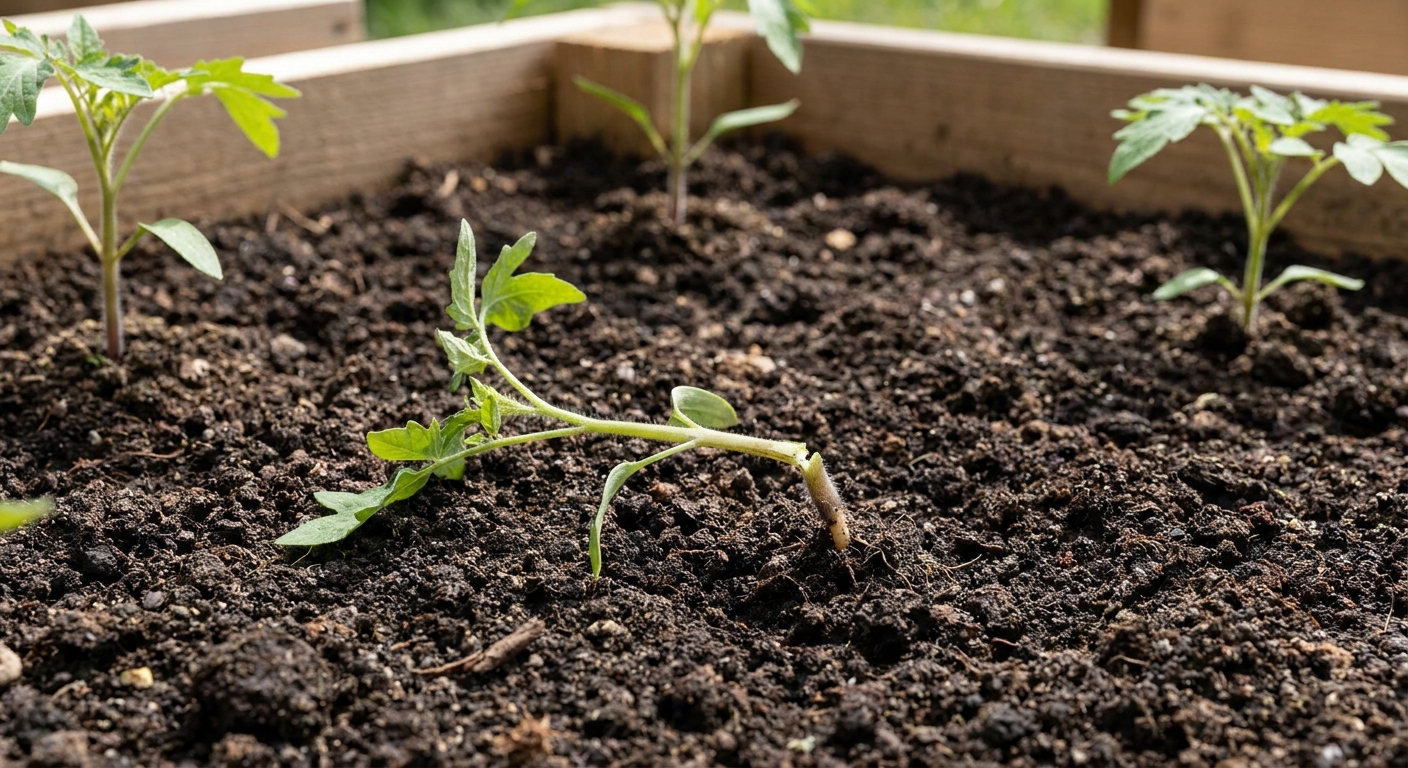
What cutworm damage looks like
Cutworms are caterpillars (moth larvae) that feed at night. They hide during the day just below the surface, often in the top few inches of soil or under debris. When they feed, they usually go after the stem, not the leaves.
- Seedlings clipped at or just below the soil line
- Healthy tops lying next to the planting spot, sometimes still green for a day or two
- Damage happens overnight, often to multiple plants in the same row
- Stems look cut, pinched, or girdled rather than shredded
One cutworm can cut down several seedlings in a night, especially when seedlings are small and tender. They are not eating the whole plant. They are basically pruning you out of a crop.
Confirm it’s cutworms (not slugs)
Before you treat anything, it is worth confirming the pest. Slugs can also feed at night and can sometimes chew low stems, so I look for a pattern of clues rather than one “gotcha” sign.
Check the stem and soil line
- More typical of cutworms: a sliced or pinched stem right at the surface or slightly below it, with the top down nearby.
- More typical of slugs: ragged rasped damage on tender leaves and stems, often with uneven edges.
Look for slime trails at dawn
Slugs leave shiny slime trails on soil, mulch, and leaves, especially in humid weather. Cutworms do not.
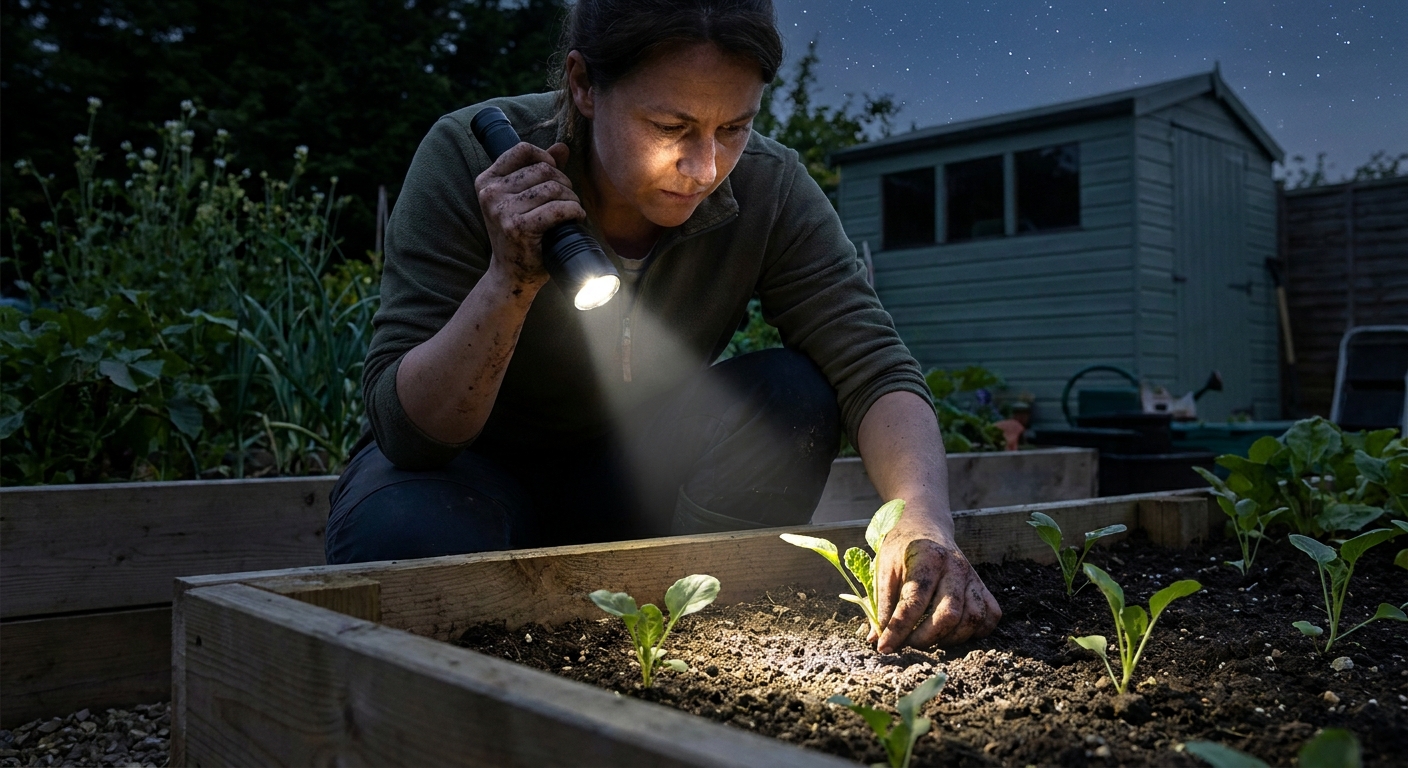
Do a quick night inspection with a flashlight
This is the fastest way to be sure. Go out 1 to 3 hours after dark with a flashlight and check around the base of damaged plants and nearby seedlings. Cutworms curl into a tight C-shape when disturbed.
If you would rather confirm during the day, you can also dig and sift gently in a small ring around the planting spot. I start right next to the stem and work outward, checking the top few inches of soil and under any clods or debris.
Stop the damage tonight: three steps that work
If seedlings are actively getting clipped, you want immediate protection plus a way to reduce the population. These are my go-to moves.
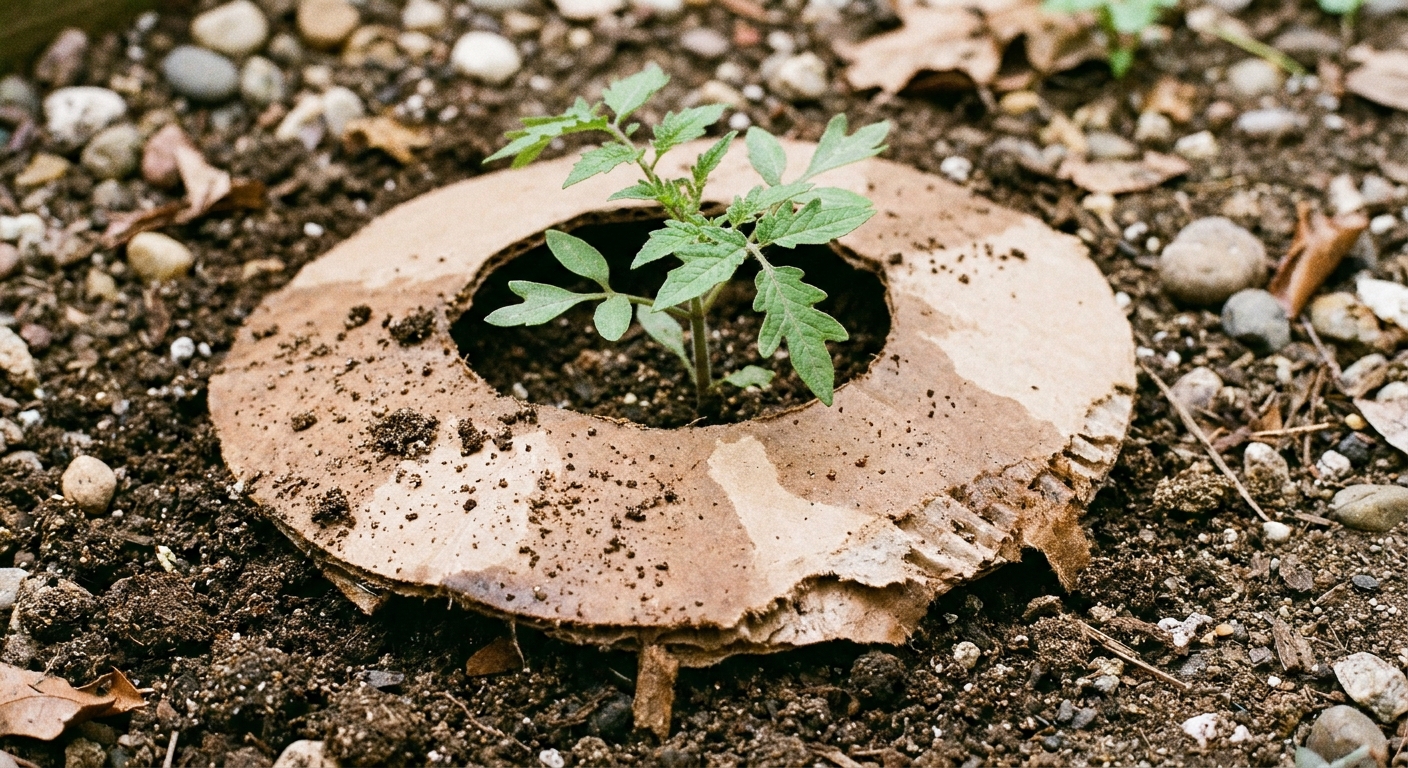
1) Install seedling collars (cheap, fast, effective)
A collar is a physical barrier around the stem that makes it hard for a cutworm to wrap around and chew through. You can make collars from things you already have.
- Cardboard: cut strips from a cereal box and form a ring.
- Plastic cups or yogurt containers: cut the bottom out to make a short cylinder.
- Paper towel or toilet paper tubes: slice into 2 to 3 inch sections.
How I install them:
- Use a collar 2 to 3 inches tall.
- Bury about 1 inch so 1 to 2 inches remains above the soil.
- Keep the collar snug enough that there is not a big gap, but not tight against the stem.
Collars protect the plant even if you have not found the cutworms yet, which is why I start here when damage is happening now.
2) Hand-pick cutworms in the evening
I know it sounds old-school, but it works, and it is targeted. When you are losing seedlings, being picky is a feature.
- Go out after dark with a flashlight.
- Check within a 6 to 12 inch radius of each clipped seedling.
- Gently scratch the soil surface and look under small clods, mulch, and plant debris.
- Pick them off and remove them from the garden.
My “telltale” spots: right next to the stem, under a little lip of soil, or tucked under a leaf that is touching the ground.
3) Use bed prep timing to break the cycle (when you are prepping beds)
Cutworms often overwinter as larvae or pupae in the soil, and adults lay eggs in weedy areas and cover crops. Smart bed prep can expose them to birds and weather.
What helps most is timing:
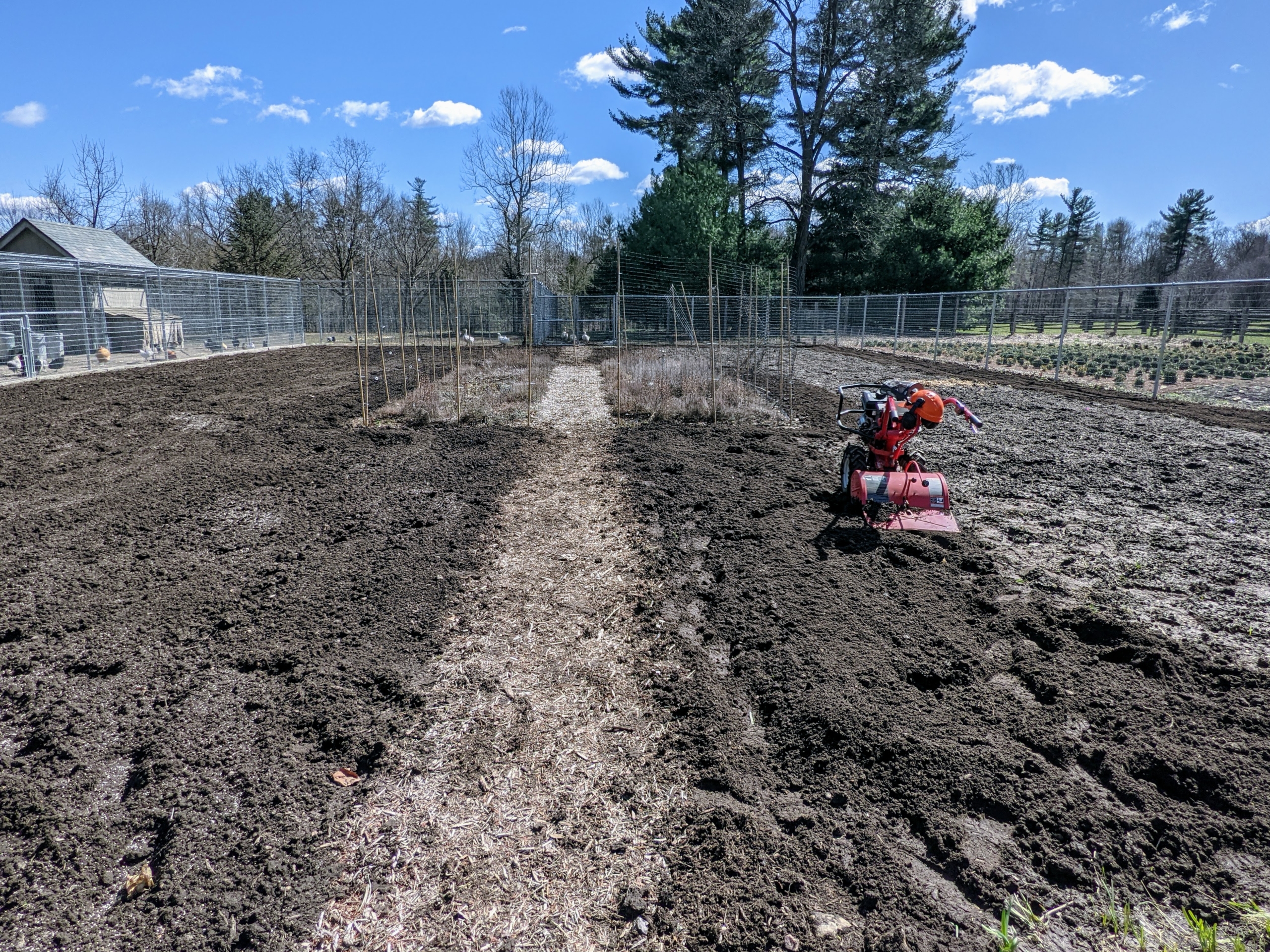
- Before planting: if you cultivate, lightly disturb the top few inches of soil about 1 to 2 weeks before you plant. This can disrupt hiding spots and expose larvae.
- After you clear a bed: if you are removing a spent crop or thick weeds, cultivate (or rake and disturb the surface) soon after cleanup so larvae lose their cover.
If you garden low-till or no-till: you can still get many of the same benefits by pulling back mulch near transplants, raking the surface lightly, and doing a couple of focused night checks around new plantings.
A common mistake: disturbing soil and planting the same day when you are already seeing cutworm pressure. If you need to plant immediately, collars plus a couple night patrols are your best friends.
What to do with seedlings that got cut
This depends on how cleanly it was severed, where it was cut, and what type of plant it is.
- If the stem is cut at the soil line: most seedlings are done. Replant and protect the replacement with a collar right away.
- If it is partially girdled: you can try to mound a little soil around the stem for support, water gently, and collar it. Sometimes a sturdy transplant can limp along, but I do not bet my season on it.
- If it is a plant that can root from a cutting (like tomatoes): if the top is still fresh, you may be able to re-root it like a cutting and save it.
- If the cut was above the growing point on certain seedlings: a few plants can resprout, but it is hit or miss. I still collar anything I try to rescue.
When I am reseeding, I collar the new plant before I even water it in. That way the protection is already in place for the first night.
Make your garden less attractive to cutworms
Once you stop the immediate clipping, a few habit changes can reduce repeat attacks.
Keep the area around seedlings tidy
Cutworms love cover. If you are using mulch, keep it pulled back an inch or two from the stem on very young plants so the base is not a shaded hideout.
Weed control matters
Adult moths lay eggs in grassy, weedy areas. A clean bed and tidy edges reduce egg-laying sites near your seedlings.
Water earlier in the day
I water early when I can. It helps keep foliage drier and can reduce slug activity, which often overlaps with the same “something is eating my seedlings at night” season in my garden.
FAQ
Do cutworms only attack seedlings?
Seedlings are the classic target because one bite can topple them. Larger transplants can still get girdled, especially if the stem is tender.
Where do cutworms hide during the day?
Usually just below the surface in the top few inches of soil, under clods, under mulch, or tucked under plant debris close to where they fed the night before.
How long do I need to keep collars on?
I keep collars on until the stem is noticeably thicker and tougher, usually 2 to 3 weeks after transplanting. For direct-seeded plants, keep them on through the most vulnerable early growth.
Are cutworms the same as grubs?
No. Grubs are beetle larvae that live in soil and feed on roots. Cutworms are moth larvae that often chew stems at the surface.
The 30-Second Cheat Sheet
Essential takeaways for: Cutworms Severing Seedlings? How to Stop Them
Fast diagnosis
- Classic sign: seedlings clipped at the soil line overnight, tops lying nearby.
- Rule out slugs: check at dawn for slime trails and ragged rasped damage. Slugs can chew low stems too, but cutworms more often leave a sliced or pinched stem with no slime.
- Confirm: go out 1 to 3 hours after dark with a flashlight. Cutworms curl into a C-shape when disturbed and hide just below the surface in the top few inches of soil near the plant.
Stop it tonight (best 3 moves)
- Install collars: use a 2 to 3 inch tall collar, bury about 1 inch so 1 to 2 inches stays above soil. Use cardboard, a cut plastic cup, or a paper tube.
- Evening hand-pick: check within 6 to 12 inches of clipped seedlings, scratch lightly, remove any cutworms you find.
- Bed prep timing: if you cultivate, do a shallow disturbance about 1 to 2 weeks before planting to expose larvae and disrupt hiding spots.
Don’t repeat the problem
- Pull mulch and debris back from young stems.
- Keep beds and edges less weedy to reduce egg-laying spots.
- Water early when you can. It helps keep the surface drier by nightfall and can reduce slug pressure (which often shows up alongside cutworm damage).
💡 Tip: Scroll up to read the full article for detailed, step-by-step instructions.
⬆️ Back to top
About Grit
Content Creator @ Grit & Home
Grit is Grit & Home’s little blue clay courier, delivering big questions about the place you call home. Expect practical ideas, a raised eyebrow, and a satchel full of curiosity.