
🚨 In a DIY emergency or rush?
Skip the details and jump straight to our 30-second cheat sheet for the most crucial info.
I still remember the first time my front-load washer finished a cycle and the detergent drawer looked like it had not even tried. Clothes were washed, the drum clearly filled and drained, but the soap and softener just sat there like a little science project.
If that sounds familiar, you are in the right place. When the machine fills with water normally but the drawer stays full, you are dealing with a dispenser problem: blocked rinse jets, a clogged siphon insert (softener), a jammed pod, low flush flow, or a gunked-up path from the drawer into the tub.
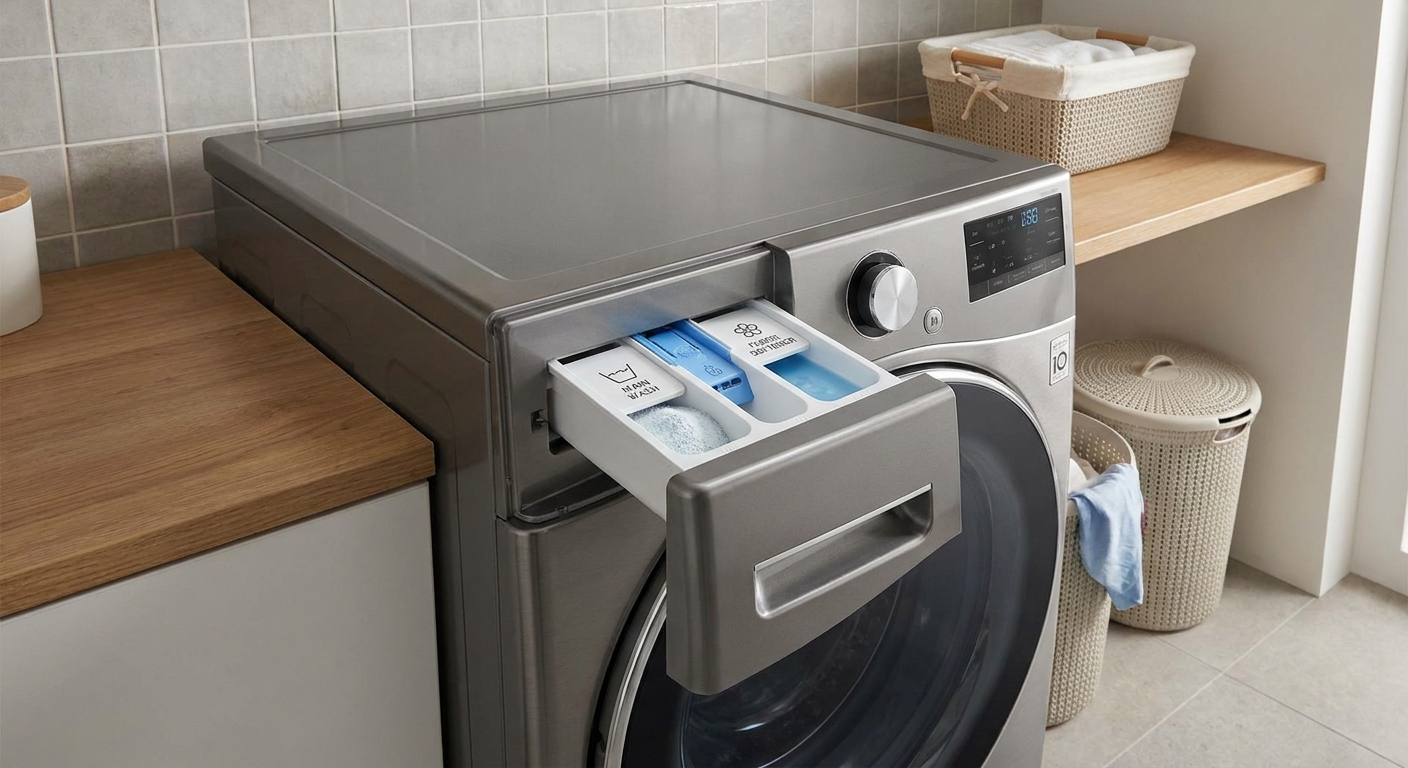
First, confirm the symptom
Two issues get mixed up all the time:
- Washer never fills with water: The tub stays dry and the cycle aborts or errors out. That can be a water supply issue (closed valves, kinked hoses, clogged inlet screens), a failed inlet valve, or sometimes a door lock or sensor problem depending on the model.
- Washer fills and runs, but the drawer stays full: The tub gets water, clothes get wet, cycle completes. That points to the dispenser not getting rinsed, the softener siphon insert not siphoning, or a restriction in the dispenser path.
This article is for the second scenario: your washer fills, runs, drains, but the dispenser compartments are still full at the end.
Safety and basics
Before you start
- Unplug the washer. You will have your hands around water and sheet metal edges.
- Turn off the hot and cold supply valves if you will be removing hoses or moving the machine.
- Keep a towel and a small bowl handy. Dispenser drawers love to drip.
Two basics that cause “drawer still full”
- Too much detergent: HE front-loaders use very little. Overfilling can turn into sludge that clogs the drawer channels and rinse paths.
- Wrong compartment: Softener in the bleach cup, bleach in the softener section, or detergent in the prewash area can all make it look like nothing dispensed.
Quick flow check
- Make sure both supply valves are fully open and the hoses are not kinked.
- Consider water pressure: if household pressure is low, the jets above the drawer may not have enough force to flush compartments well.
Fix 1: Clean the softener siphon insert
If your fabric softener compartment is still full, the usual culprit is the siphon insert. That is the removable plastic piece in the softener section that creates the siphon action needed to empty the cup during the rinse. When it gets coated with waxy softener residue, the siphon fails and the cup just sits there.
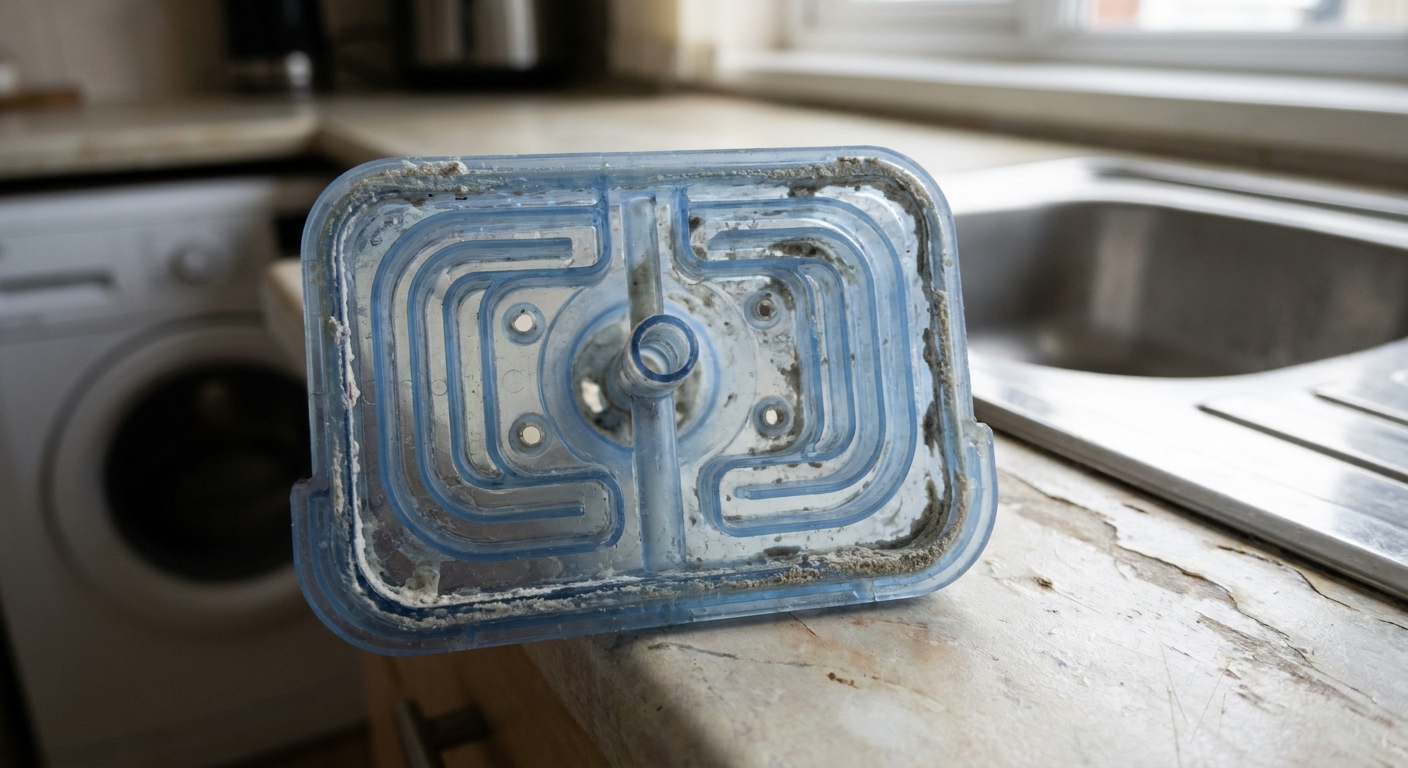
Steps
Pull the drawer all the way out. Most have a small tab you press down to fully remove it.
Pop out the siphon insert. It usually lifts straight up or unclips.
Soak everything in hot water. I use the hottest tap water I can get plus a few drops of dish soap.
Scrub the tiny passages. A soft toothbrush works well. For narrow channels, a pipe cleaner or a wooden skewer helps. Do not use a metal pick that can gouge the plastic.
Rinse until water runs freely. Hold it under the faucet and make sure the siphon path is not restricted.
Reinstall and test. Run a quick rinse cycle with the drawer empty and confirm water flushes through the softener section.
Marcus note from the school of hard knocks: If you only wipe the visible cup and ignore the insert, the problem comes right back. The insert is the whole trick.
Fix 2: Clear a pod jam
Detergent pods are convenient, but they can cause a surprisingly common (and easy-to-miss) problem: someone tosses a pod into the drawer instead of the drum, it gets partially wet, swells, and blocks the flush water path. You might also see gummy gel residue in the drawer rails.
Note: Many manufacturers want pods placed directly in the drum, unless your manual specifically says the dispenser is OK (some models have an insert for that).
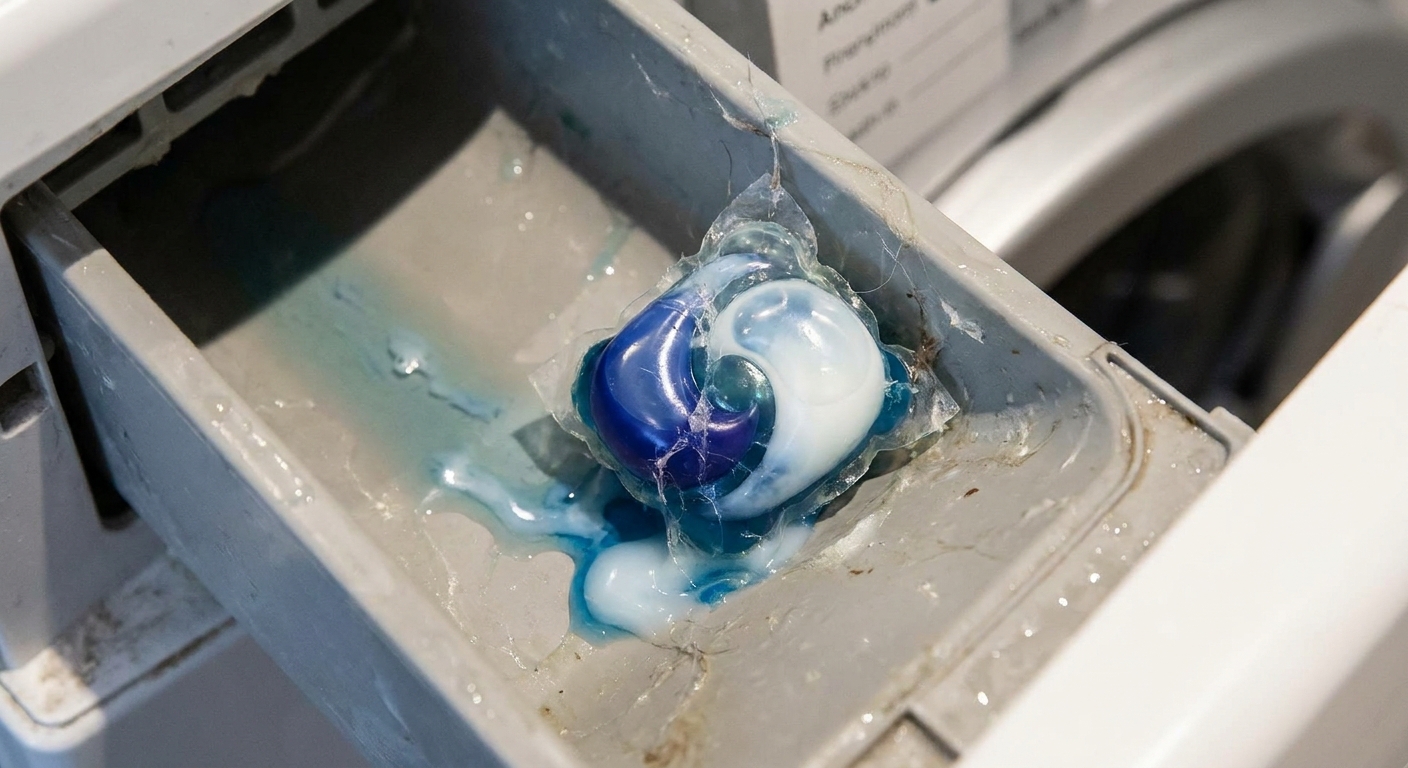
What to do
- Remove the drawer and peel out any gel clumps.
- Wash the drawer under hot water until the plastic is not slippery anymore.
- Clean the drawer cavity rails with a damp rag. If the rails are slimy, the drawer can sit crooked and not seal against the rinse jets.
Fix 3: Clean the rinse jets
Behind and above the drawer is a set of small openings that spray water into each compartment at different times. If those jets are clogged with detergent paste or mineral scale, the drawer never gets the flush it needs.
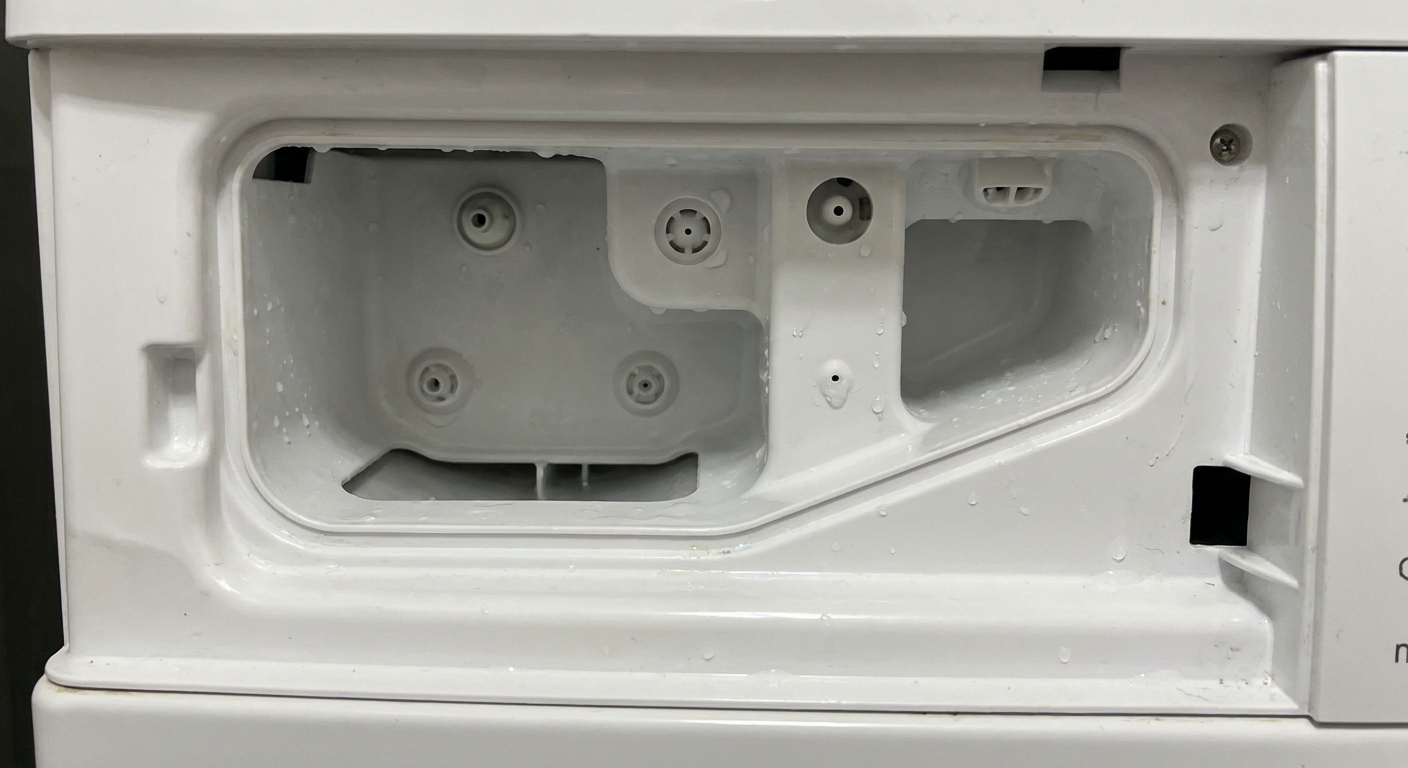
Steps
With the drawer removed, inspect the ceiling of the dispenser cavity. Use a flashlight. Look for crusty white scale, black gunk, or thick soap.
Wipe what you can reach. A rag wrapped around a butter knife works well. Keep it gentle so you do not crack plastic parts.
Use a soft brush on the jet holes. A toothbrush is fine. If you see scale, a little white vinegar on the brush or rag can help.
Important: Do not use vinegar if there is any chance of bleach residue in the dispenser. Vinegar and bleach do not mix. If you use vinegar on a rag, rinse the area with plain water afterward.
Run a rinse and watch for spray. Pull the drawer out just a little so you can see whether water is actually spraying into the compartments. Do not pull it far, some models will splash or leak if the drawer is too open. Keep your hands out of the cavity while it is running.
Fix 4: Check water supply and inlet screens
Sometimes the washer fills the tub “well enough,” but the flow to the dispenser jets is weak. That can leave detergent sitting there, especially with powder or thicker liquids.
What to check
- Both supply valves fully open.
- No kinked hoses behind the washer.
- Inlet hose screens: Turn off water, disconnect the hoses at the back of the washer, and check the little screens for grit and mineral buildup. Clean gently and reinstall snugly.
If you find a lot of debris on the screens, that is a big clue that the machine may be starving for water at the dispenser jets.
Fix 5: Clear the dispenser path to the tub
Even if the drawer and jets are clean, the rinse water still has to travel from the dispenser housing down into the tub. On many front-load washers, that path goes through a short internal chute or hose. If it is packed with sludge, lint, or undissolved detergent, the drawer can stay full or drain slowly.
This is a light-disassembly fix. If you are comfortable removing a top panel, you can usually get eyes on the dispenser-to-tub hose.
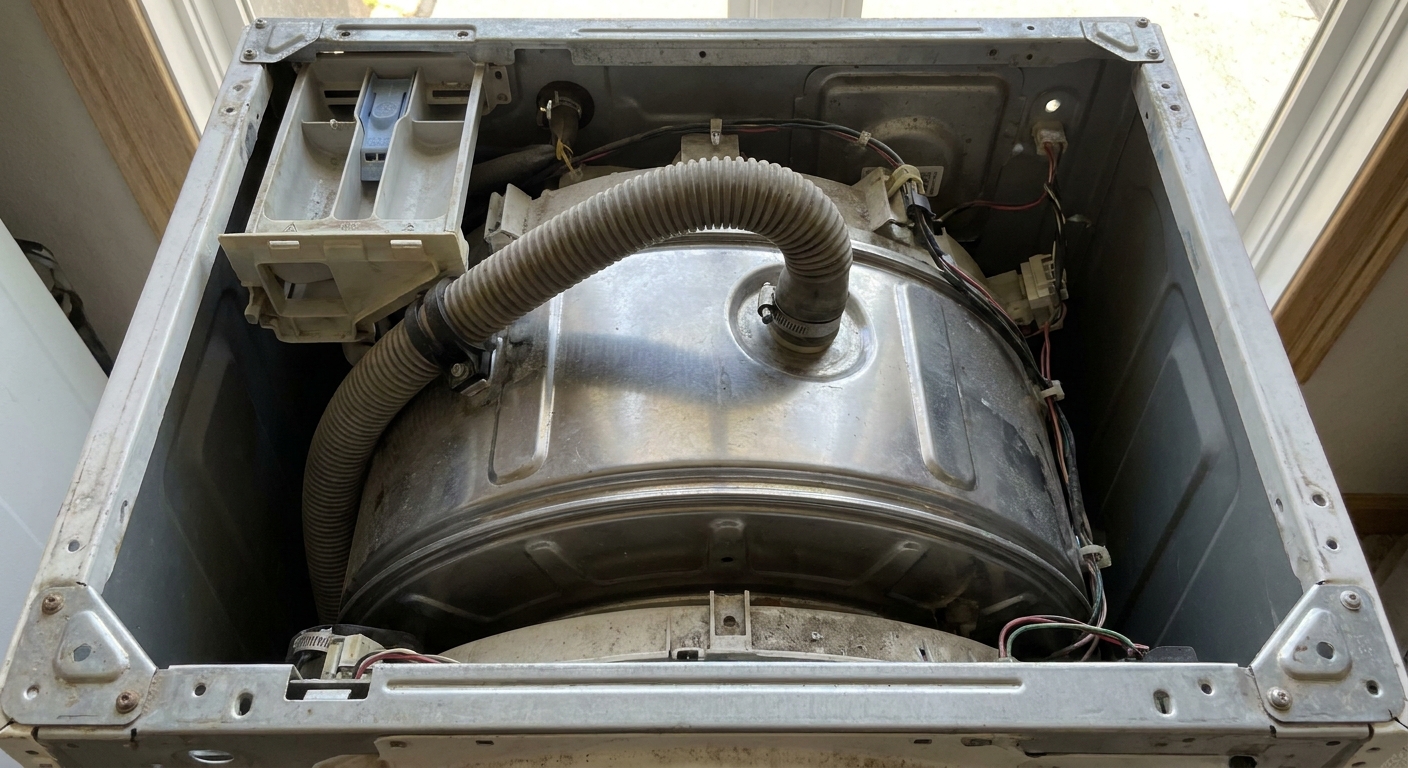
General approach (varies by model)
Unplug the washer. Always.
Remove the top panel. Many units have two or three screws at the back, then the panel slides back and lifts off.
Locate the dispenser outlet hose. It typically comes off the dispenser box and routes down to the tub.
Check for kinks and clogs. If it is kinked, straighten and reseat it. If it feels heavy or packed, remove the clamp, pull the hose off, and rinse it in a sink or tub.
Reclamp securely. A loose clamp equals a leak, and leaks always show up on laundry day.
If you are not sure you can access it without forcing plastic: stop and look up your model’s service instructions. The dispenser housing on some machines is more delicate than it looks.
Fix 6: Make sure the drawer seats
This one is easy to miss. If the drawer is not sliding fully home, water can shoot past the intended channels and never properly rinse the compartments.
What to check
- Warped drawer: If it was dropped, it may not sit flush anymore.
- Dirty rails: Sticky residue can keep it from closing the last quarter inch.
- Overfilled compartments: A tall mound of powder can interfere with inserts and lids.
Clean the rails, clean the drawer, and slide it in slowly. You should feel it click into its normal resting position.
When it is not a clog
If the rinse jets never spray at all, even though the washer fills normally, you could be dealing with a dispenser section of the water inlet valve or a control issue that is not sending water through the dispenser path. Some washers use a multi-port valve that directs water either through the dispenser or directly into the tub.
Clues you might be past the easy DIY fixes:
- You never see water flow into any compartment, even during prewash, wash, or rinse.
- The drawer and housing are clean, inlet screens are clear, but nothing flushes.
- You get error codes related to water inlet or flow.
At that point, the next step is usually model-specific diagnostics and sometimes replacing the inlet valve assembly. If you are not comfortable with that, this is a good time to call an appliance tech, especially if the unit is under warranty.
Prevent it from happening again
- Use less detergent than you think. With HE detergent in a front-loader, less is almost always better.
- Skip fabric softener if it causes repeat clogs. It is famous for gumming up the siphon insert. Dryer balls are a cheap alternative.
- Rinse the drawer monthly. It takes five minutes and saves you from thick, waxy buildup.
- Run a hot cleaning cycle occasionally. An empty hot cycle helps dissolve residue in the dispenser path. Follow your washer manufacturer’s recommendations for cleaning cycles and cleaners.
FAQ
My washer ran normally, but detergent is still sitting in the tray. Is that bad?
It usually means your wash did not get the intended dose of detergent, or it arrived late. Start with cleaning the drawer, the softener siphon insert, and the rinse jets. Then check water flow basics like supply valves and inlet screens.
Why is only the fabric softener compartment still full?
That is classic siphon insert clogging. Pull the insert and scrub the internal channels with hot water and a toothbrush.
Can I pour hot water into the drawer to unclog it?
You can rinse the removed drawer in a sink with hot water. I would not pour boiling water into the dispenser housing in the machine because you cannot always control where it goes, and some plastics can warp.
The washer fills with water, so it is not the inlet valve, right?
Not necessarily. Some washers have a multi-port inlet valve. One section can fail while the other still fills the tub. But clogs and weak flow are far more common than valve failures, so clean and check screens first.
The 30-Second Cheat Sheet
Essential takeaways for: Front-Load Washer Detergent Drawer Not Dispensing?
Fast diagnosis
- If the tub never fills with water, that is a fill problem. This page is for when the washer fills and runs but the drawer stays full.
- Only the softener cup is still full usually means a clogged siphon insert (the removable softener piece that creates the siphon action).
- Detergent still in the main wash cup usually means clogged rinse jets, low flush flow, or a blocked dispenser path.
- All compartments still full and you never see spray points to blocked jets, low water pressure, partially closed valves, clogged inlet screens, or a valve/control issue.
Most common fixes (in order)
- Remove the drawer and clean it with hot water and dish soap.
- Pull and scrub the softener siphon insert with a toothbrush and rinse until water flows freely.
- Check for a pod jam or gummy gel residue in the drawer and rails.
- Clean the rinse jets above the drawer with a flashlight, rag, and toothbrush.
- Check water supply basics: both valves fully open, no kinked hoses, decent household pressure.
- Clean the inlet hose screens at the back of the washer if flush flow seems weak.
- If comfortable, check the dispenser-to-tub hose for sludge or a kink (unplug first).
When to call a pro
- You never see water flushing into any compartment, even after cleaning jets and checking flow.
- Error codes related to water inlet or flow appear.
- You suspect the multi-port inlet valve or control system is not directing water through the dispenser.
Prevention
- Use less HE detergent.
- Rinse the drawer monthly.
- Consider skipping fabric softener if it repeatedly clogs the siphon insert.
💡 Tip: Scroll up to read the full article for detailed, step-by-step instructions.
⬆️ Back to top
About Grit
Content Creator @ Grit & Home
Grit is Grit & Home’s little blue clay courier, delivering big questions about the place you call home. Expect practical ideas, a raised eyebrow, and a satchel full of curiosity.