
🚨 In a DIY emergency or rush?
Skip the details and jump straight to our 30-second cheat sheet for the most crucial info.
The first time a disposal in our 1970s ranch wouldn’t shut off, I did what a lot of us do in a panic. I slapped the switch a few times and leaned under the sink to listen. Bad move. A disposal that keeps running with the switch “off” is an electrical-control problem until proven otherwise.
One quick reality check up front: sometimes the disposal is fine, but the switch you’re flipping is not actually the disposal switch, or the disposal is plugged into an always-hot outlet. Either way, you treat it the same at first. Kill power, then troubleshoot.
Let’s walk through it the same way I do in my own kitchen: cut power first, then work the likely causes from simplest to most involved.
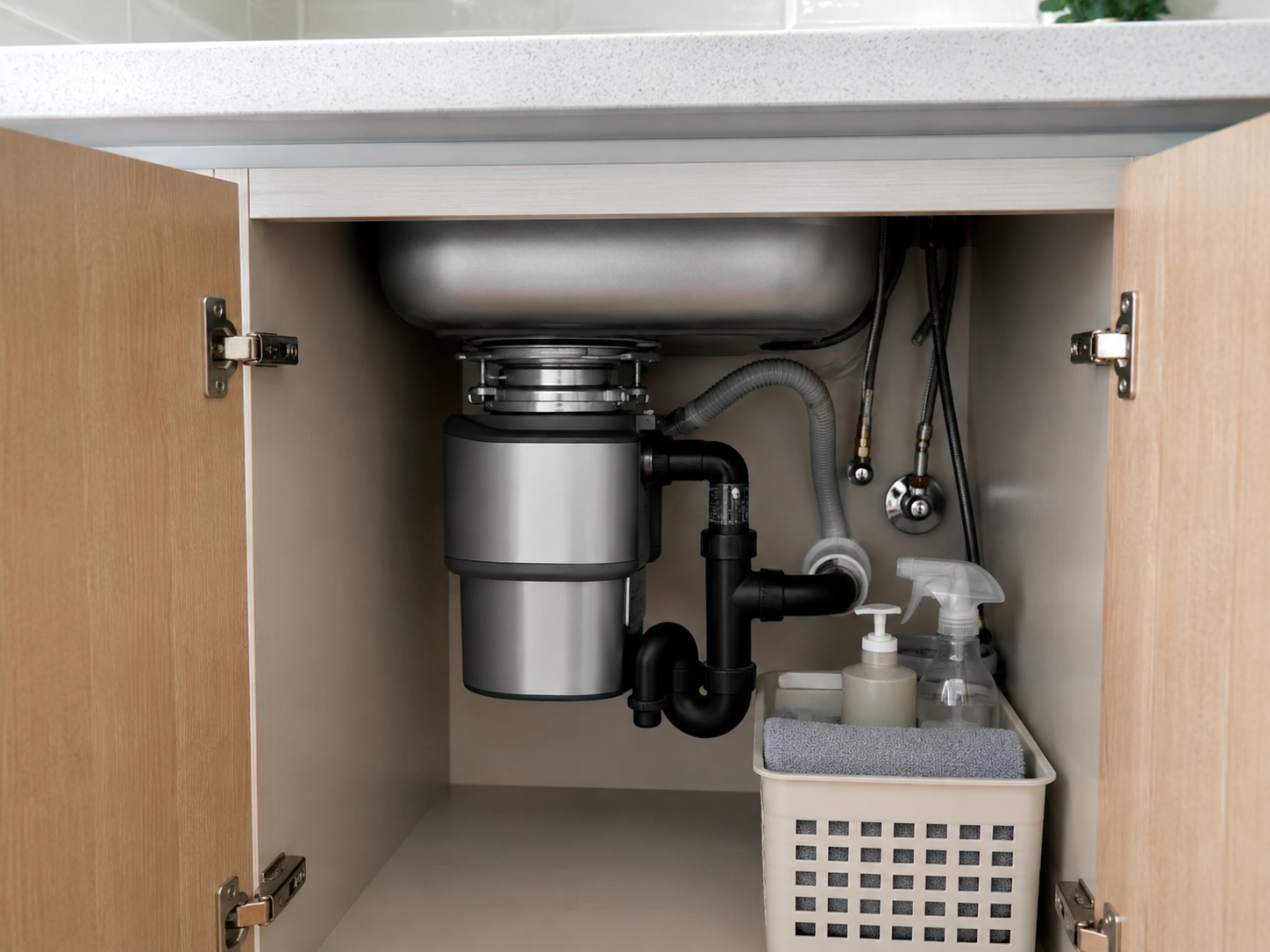
Stop it safely first
If the disposal is running right now, you have two goals: stop it quickly and make sure it cannot start again while your hands are near it.
Step 1: Cut power (do this before anything else)
- If it’s plugged into an outlet under the sink: unplug it. If you cannot reach the plug safely, do the breaker step below.
- If it’s hardwired: turn off the correct breaker at your panel.
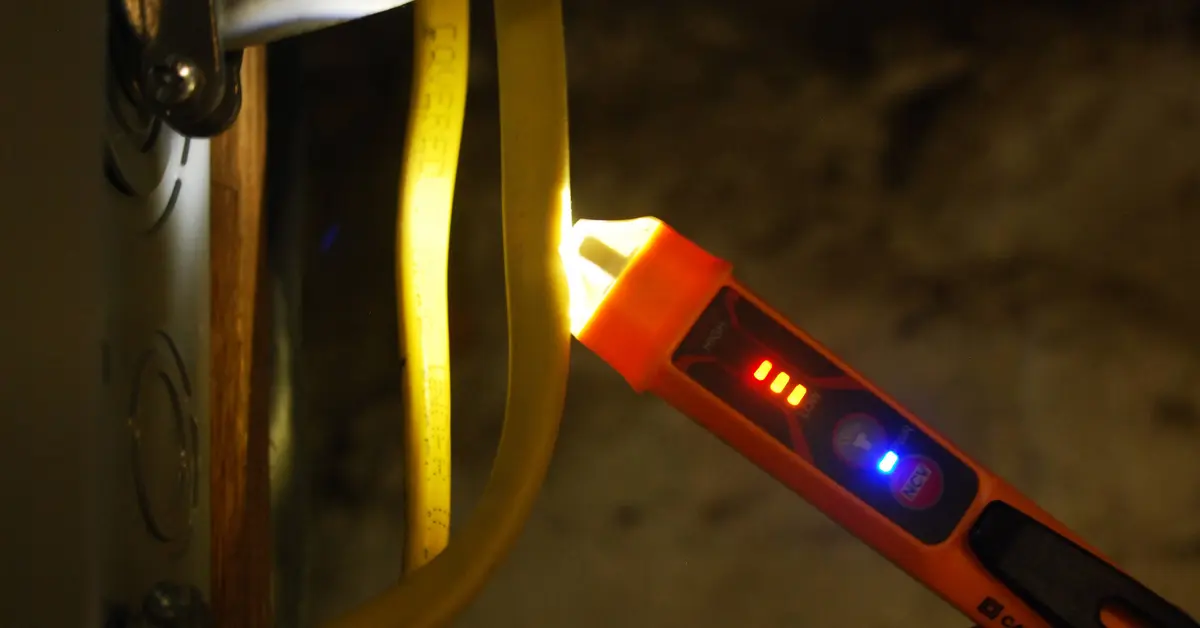
Confirm it’s de-energized. Flip the wall switch a couple times and listen. No sound. No vibration. If you have a non-contact voltage tester, it can help verify the outlet box or the disposal junction box has no power, but they can be finicky. If anything seems unclear, confirm with a plug-in tester or a multimeter.
Stop point: If you see melted plastic, scorched insulation, or anything that looks like heat damage, do not re-energize the circuit until the damaged part is replaced and the wiring is corrected.
Step 2: Keep everyone from “helping”
If you have other people in the house, put a note over the switch and tell everyone the breaker is off for a reason. It is amazing how often someone tries to be helpful and flips a switch.
Running nonstop vs humming jam: the key difference
These sound similar in the moment, but the fixes are totally different.
- Won’t turn off: the disposal is actually running, spinning, and making its normal grinding sound, even after the switch is off. This points to a switch, wiring, or control issue, or an internal failure that is keeping the motor energized.
- Hums but won’t grind: power is getting to the unit, but the motor is stuck. That is usually a jam, a seized motor, or something lodged between the impellers and the grind ring. (Different troubleshooting path.)
If yours is humming only, do not keep flipping the switch. Cut power and address the jam instead. The rest of this article assumes your disposal is actually running when it should be off.
Likely cause #1: A stuck or shorted wall switch
Many disposals are controlled by a standard wall switch. Those switches wear out, get gunked up, or develop internal damage that keeps the circuit closed even when the toggle looks “off.” In older kitchens, I also see loose terminals that can overheat or arc and damage the contacts.
What to look for
- The switch feels loose, crunchy, or unusually warm.
- You hear faint crackling at the switch or see discoloration on the cover plate.
- The disposal stops only when you shut off the breaker or unplug it, not from the switch.
Quick test (safe and simple)
With the breaker off and the disposal unable to run:
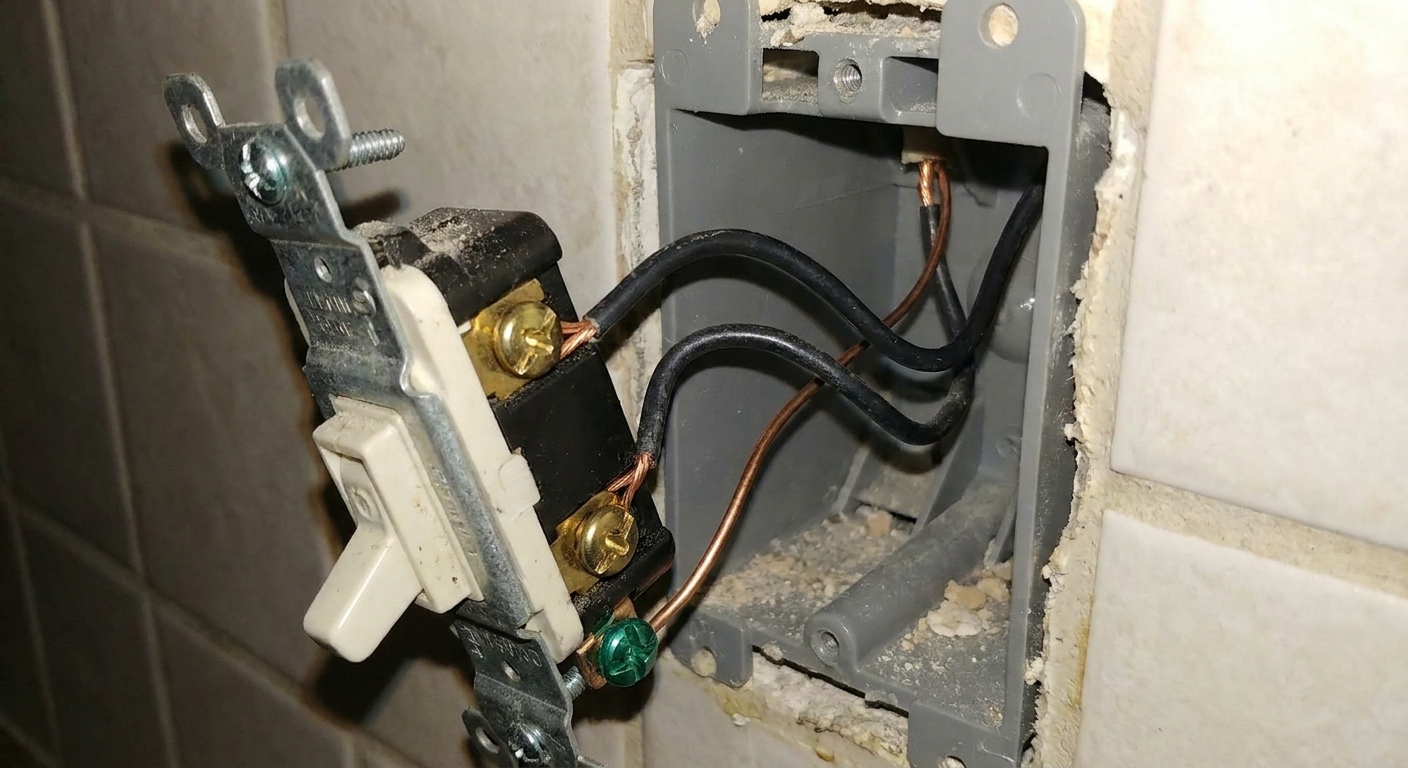
- Remove the switch plate and gently pull the switch out.
- Check for burned insulation, melted plastic, or a loose wire under a screw terminal.
If anything looks scorched, stop and replace the switch. If you are comfortable using a multimeter, you can also test continuity across the switch. In the OFF position, it should be open (no continuity). If it still shows continuity in OFF, the switch is bad.
Fix
- Tighten loose terminals (breaker off) if the switch and wiring look clean and undamaged.
- Replace the switch if it feels sloppy, shows heat damage, or fails a continuity test.
My thrifty rule: if a switch shows any signs of heat, it is not a “tighten and forget” situation. Replace it. Switches are cheap. Burned wiring is not.
Likely cause #2: The wrong switch or an always-hot outlet
This sounds silly until you have lived through a remodel or inherited somebody else’s “creative” wiring. If the disposal is on an always-hot receptacle, it will run any time it is plugged in and the disposal’s own switch or control is on. Meanwhile, the wall switch you’re flipping might control something else entirely.
How to check
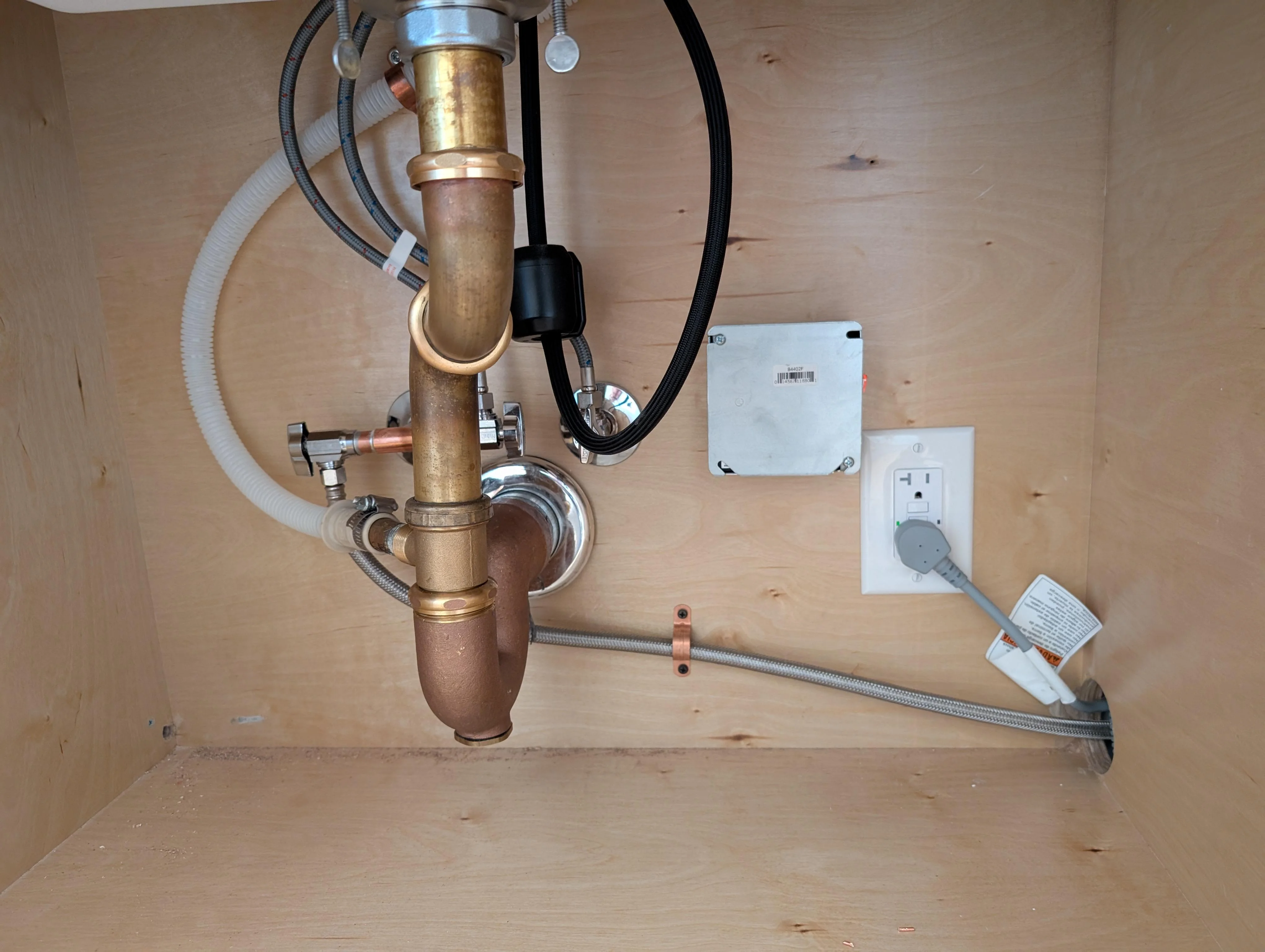
- Under the sink, find the power source: Is the disposal plugged into a receptacle, or is it hardwired into a junction box?
- If it’s plugged in: plug a small lamp or outlet tester into the same receptacle and flip the wall switch on and off. You are trying to learn one thing: is that receptacle switched or always hot?
If the receptacle stays live no matter what the wall switch does, then the switch is not controlling the disposal circuit. That is either a design choice (always-hot outlet) or a wiring problem, but it explains the symptom fast.
Likely cause #3: Miswired switched feed
When a disposal is meant to be controlled by a wall switch, the wiring needs a true switched hot feeding either the disposal directly (hardwired) or the receptacle it plugs into (plug-in style). Trouble starts when someone mixes up line (always hot) and the switched leg, or accidentally ties them together in a box.
Common scenarios I see
- Always-hot under-sink outlet: the receptacle was wired constant-hot when you expected it to be switch-controlled.
- Switched hot tied into constant hot: inside a junction box, two conductors that should be separate get wire-nutted together.
- Half-switched receptacle done wrong: a duplex outlet intended to have one plug switch-controlled and the other constant-hot is wired incorrectly, or the break-off tab is left intact or broken on the wrong side.
How to diagnose (without guessing)
With the breaker back on temporarily and using a non-contact tester or a plug-in outlet tester (hands clear of bare conductors):
- Test the under-sink outlet. Flip the wall switch on and off. If it is meant to control the disposal, that outlet (or the correct half of it) should only be live when the switch is on.
- If the outlet stays live no matter what the switch does, your “disposal switch” is not actually switching that receptacle.
Then shut the breaker back off before touching anything.
Fix options
- If you have a plug-in disposal: you likely need the under-sink receptacle wired as a switched outlet, or you need the disposal moved to the switched half of a properly half-switched receptacle.
- If it is hardwired: the junction box connections need to be corrected so the disposal receives power only on the switched hot.
Because wiring configurations vary a lot by house and by what else shares that circuit, this is the point where many homeowners sensibly call an electrician. If you DIY electrical, follow local code, use proper clamps and boxes, and match wire gauge and breaker size.
Likely cause #4: Failed internal control inside the disposal
Some disposals have internal controls that can fail in a way that keeps the motor energized whenever power is available. Another real-world scenario is a disposal that was recently replaced and the control setup was not matched to the model, such as batch-feed versus wall-switch control.
Clues it is inside the unit
- The wall switch tests fine and the outlet behaves as expected, but the disposal still runs when it has power.
- The unit runs as soon as it receives power, regardless of switch position or controller setting.
- The problem started right after a new disposal or new controller was installed.
Fix
- Confirm the control type: If you have a batch-feed style (the kind that starts when a special stopper is inserted and turned), a faulty stopper switch mechanism can cause unpredictable behavior. In practice, repair usually means replacing the unit or the manufacturer-approved switch module.
- Re-check install requirements: If the disposal was just installed, go back through the manufacturer instructions for your exact model and control method so you are not fighting a setup mismatch.
- Replace the disposal: If the internal control has failed and the unit is out of warranty, replacement is often the most cost-effective option versus chasing internal electrical parts.
Safety note: I do not recommend opening a disposal motor housing for internal electrical repair unless you are trained and the manufacturer provides a service procedure. Water, metal, and improvised electrical repairs under a sink are a risky mix.
Don’t miss these “simple” causes
The switch you are flipping is not the disposal switch
In some kitchens, especially remodeled ones, a wall switch might control an under-cabinet light or an old receptacle that is no longer used. Meanwhile the disposal is on an always-hot circuit. If the disposal only stops when you unplug it or trip the breaker, verify the switch actually controls the receptacle or junction box feeding the disposal.
GFCI and AFCI confusion
Many under-sink outlets are GFCI-protected, either by a GFCI receptacle under the sink or by an upstream GFCI in the kitchen. AFCI protection is also common in newer panels. Neither one usually explains a disposal that won’t shut off, but during testing you might trip one and suddenly think you “fixed” something. If the disposal suddenly loses power during troubleshooting, check for a tripped GFCI or breaker before you go hunting for a mystery failure.
A jam can confuse the symptoms
Sometimes people report “it won’t turn off” when the real problem is the opposite: the disposal is powered but stalled, so it hums until the overload trips. If you hear humming and then it goes quiet, that is overload protection, not the switch magically fixing itself.
When to call a pro
I am all for DIY, but I am also a big believer in knowing when the risk outweighs the savings. Call an electrician or plumber who handles disposals if:
- You see burned insulation, melted plastic, or smell electrical burning.
- The breaker trips, a GFCI will not reset, or the switch box feels hot.
- The disposal is hardwired and you are not confident identifying line vs load vs switched hot.
- Your kitchen wiring is older and you are finding unexpected splices or mixed wire types.
Quick FAQ
Why does my disposal keep running after I turn it off?
The most common reasons are a failed wall switch, a switched feed that is miswired or bypassed, or the disposal being on an always-hot outlet while the wall switch you’re flipping controls something else. Less commonly, the internal control inside the disposal has failed.
Can I just hit the reset button?
The reset button helps when a disposal is overloaded or jammed and shuts off. It does not fix a disposal that continues to run with the switch off. That is a control or wiring issue.
Is it dangerous if it keeps running?
Yes. A disposal that will not shut off needs to be treated as a live electrical fault. Cut power immediately and troubleshoot with the circuit de-energized.
The 30-Second Cheat Sheet
Essential takeaways for: Garbage Disposal Won’t Turn Off? Causes and Fixes
Do this first (no exceptions)
- Cut power immediately: unplug the disposal or turn off the breaker.
- Confirm it’s de-energized: flip the wall switch and listen. Use a non-contact voltage tester if you have one, but confirm with a plug-in tester or meter if you’re unsure.
Most common causes (in order)
- Bad wall switch: worn, damaged, or stuck contacts. Replace the switch if it feels loose, warm, or fails a continuity test.
- Not actually on that switch: the disposal is plugged into an always-hot outlet, or the switch you’re flipping doesn’t control the disposal circuit.
- Miswired switched feed: switched hot tied to constant hot, or an under-sink receptacle wired always-hot when it should be switch-controlled.
- Internal failure: the disposal runs any time it has power, even with correct switch behavior. Often means replacement.
Not the same as a jam
- Won’t turn off: it is actually spinning and running. Think switch, wiring, or control.
- Hums only: motor is stalled or jammed. Different fix path.
Call a pro if
- You see burned wires, smell electrical burning, or the switch box is hot.
- The unit is hardwired and you are not 100% confident with line/load identification.
💡 Tip: Scroll up to read the full article for detailed, step-by-step instructions.
⬆️ Back to top
About Marcus Vance
Content Creator @ Grit & Home
Marcus Vance is a lifelong DIY enthusiast and self-taught home renovator who has spent the last decade transforming a dilapidated 1970s ranch into his family's dream home. He specializes in budget-friendly carpentry, room-by-room renovations, and demystifying power tools for beginners. Through his writing, Marcus shares practical tutorials and hard-learned lessons to help homeowners tackle their own projects with confidence.