
🚨 In a DIY emergency or rush?
Skip the details and jump straight to our 30-second cheat sheet for the most crucial info.
Small courier. Big home questions.
If your gas burner lights just fine but refuses to behave at low heat, you are not imagining things. A burner that will not turn down to a true simmer is usually dealing with one of three culprits: a burner cap that is slightly off, simmer ports that are clogged, or a control valve that is no longer metering gas smoothly.
This guide sticks to the common situation: the burner lights and stays lit, but when you turn the knob down, the flame stays too high, surges, or goes out before it can settle into a small steady ring.
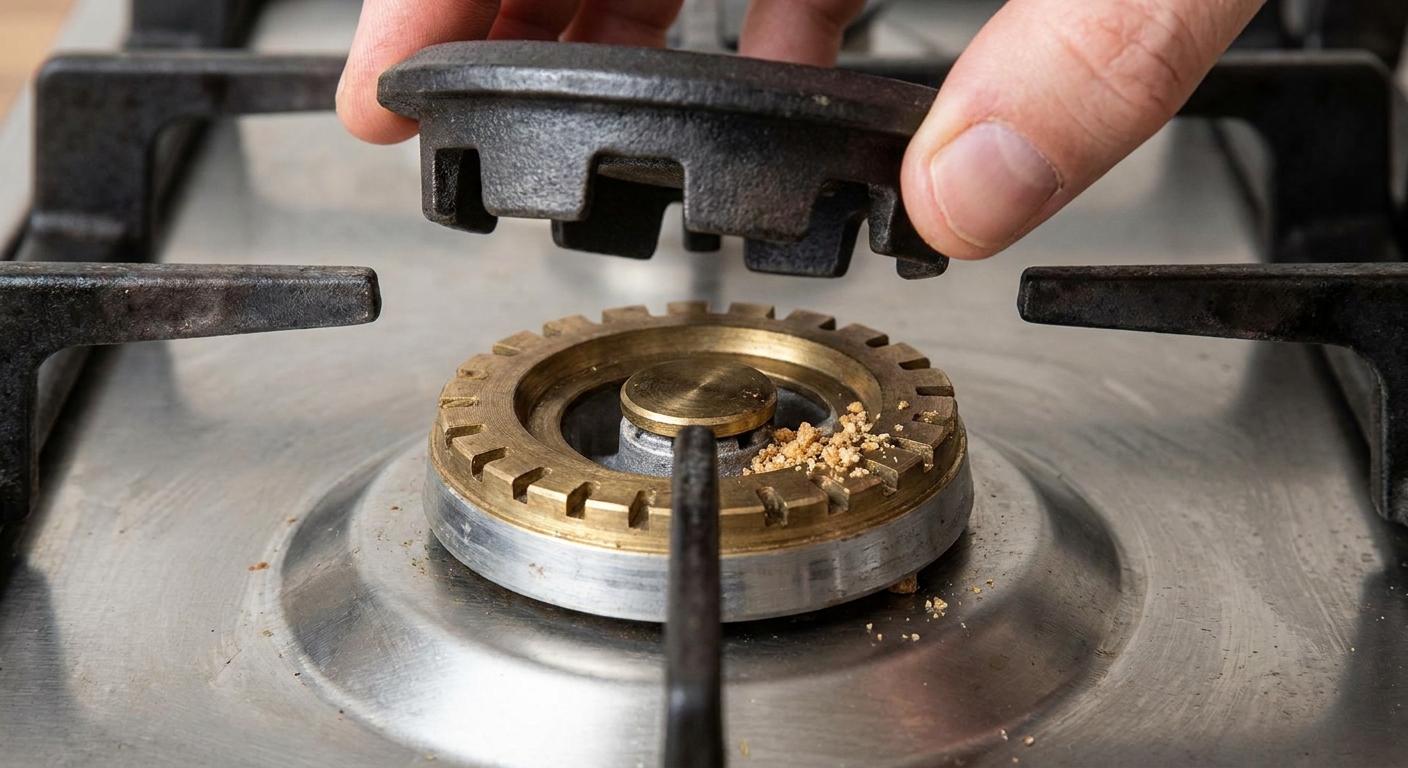
Safety first, because this is gas
Before you poke around:
- Turn the burner off and let everything cool completely.
- Shut off the gas at the stove’s gas shutoff valve if you will remove parts or clean thoroughly.
- Ventilate the kitchen if you smell gas.
- If you smell gas when everything is off, do not troubleshoot. Open windows, leave the area if needed, and contact your gas utility or a licensed technician.
Quick check: what “won’t simmer” looks like
Use this to aim your efforts.
- Flame stays large even on Low: often a mis-seated cap, wrong cap, or a valve issue.
- Flame shrinks then goes out before it stabilizes: often clogged simmer ports, moisture, or a draft pushing the flame off the ports.
- Flame pulses or surges at Low: often partial clogging, moisture, or a valve that is sticking.
- Low is fine on other burners: likely a burner-specific cap or clog rather than a whole-stove issue.
What you are aiming for on Low is a small, steady blue flame. A tiny flicker of yellow at ignition can be normal. A steady yellow or orange flame, soot, or a strong gas smell points to a combustion or air fuel mix problem that should be checked.
Fix 1: Reseat the burner cap
A burner cap can look perfectly fine while sitting just a little crooked. On many stoves, that tiny misalignment changes how the flame spreads across the burner head. High heat may still look normal, but low heat gets weird.
What to do
- Lift off the grates.
- Remove the burner cap and set it down nearby.
- Wipe the cap and burner head seating surfaces with a dry or slightly damp cloth, then dry fully.
- Place the cap back on, making sure it sits flat and does not rock.
- Check that you did not swap caps between burners. Many sets look similar but are not interchangeable.
How to confirm
With the cap properly seated, light the burner and slowly turn down. A good simmer should settle into a small even flame ring rather than clumping to one side or sputtering.
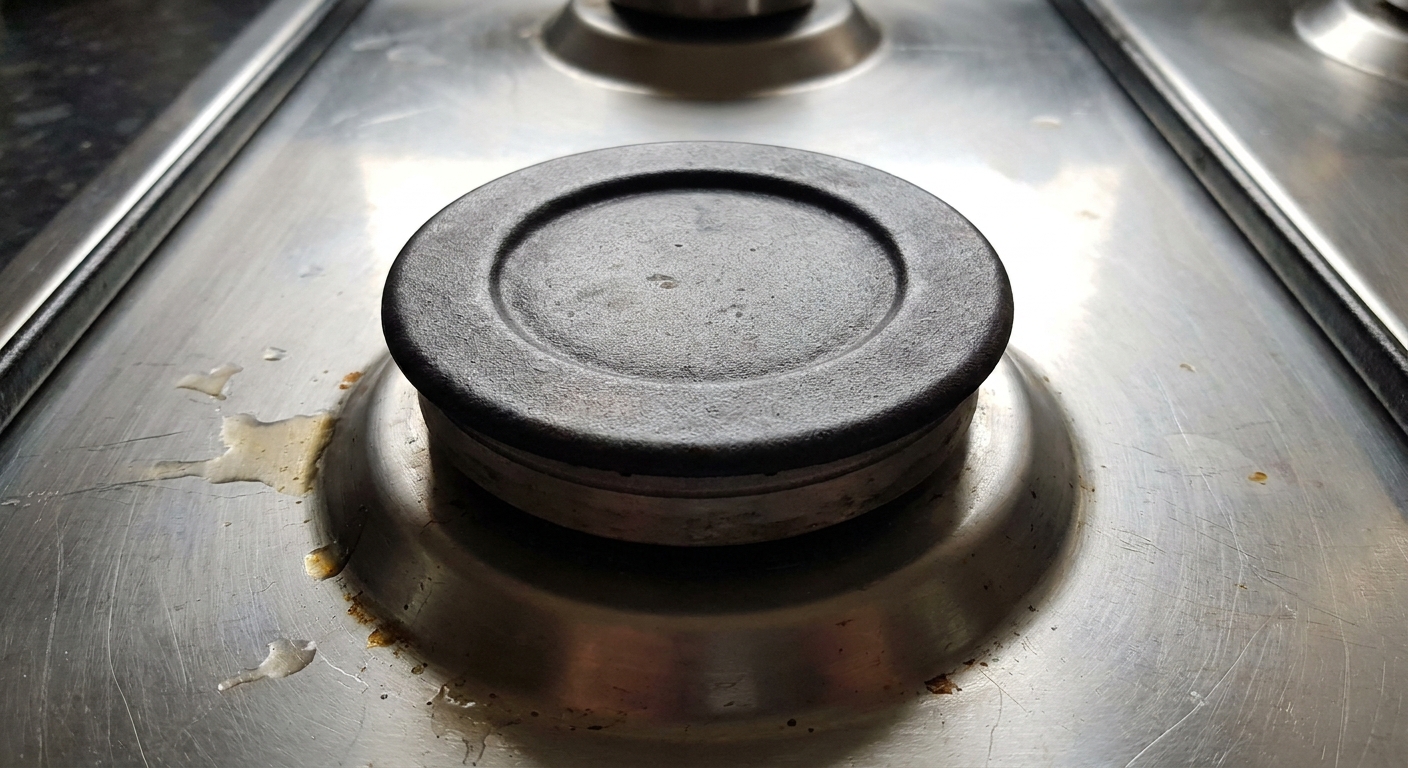
Fix 2: Clean the simmer ports
Most burner heads have a ring of ports, meaning the holes where the flame comes out. Many also have simmer ports, meaning smaller openings or a separate inner ring designed to keep a stable flame at low settings. If those tiny openings are clogged with boiled-over starch, grease, or cleaner residue, the burner can run fine on high but cannot hold a controlled low flame.
What you need
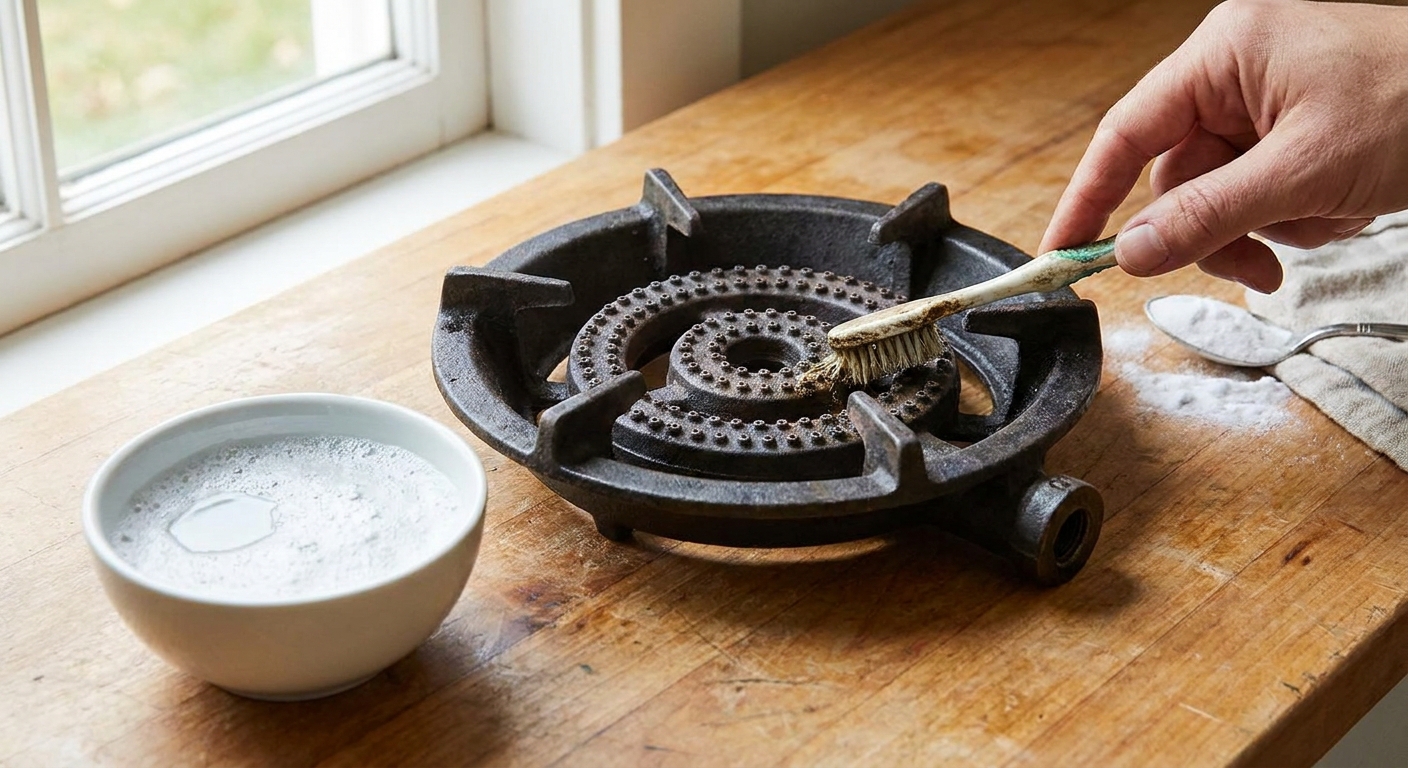
- Warm soapy water
- Soft brush (old toothbrush works)
- Wooden toothpick
- Dry towel
- Optional: vinegar for mineral buildup
Steps
- Remove cap and burner head if your model allows it. Some lift off, some are held by screws.
- Soak removable parts in warm soapy water for 10 to 20 minutes.
- Scrub the ports with a toothbrush, working around the ring of holes and any smaller simmer openings.
- Clear stubborn ports gently with a toothpick first. If you must use metal, use a very light touch and stop as soon as the blockage clears. Never drill, ream, or enlarge ports.
- Rinse and dry completely. Moisture in the ports can cause sputtering and unstable low flames.
- Reassemble and test the simmer again.
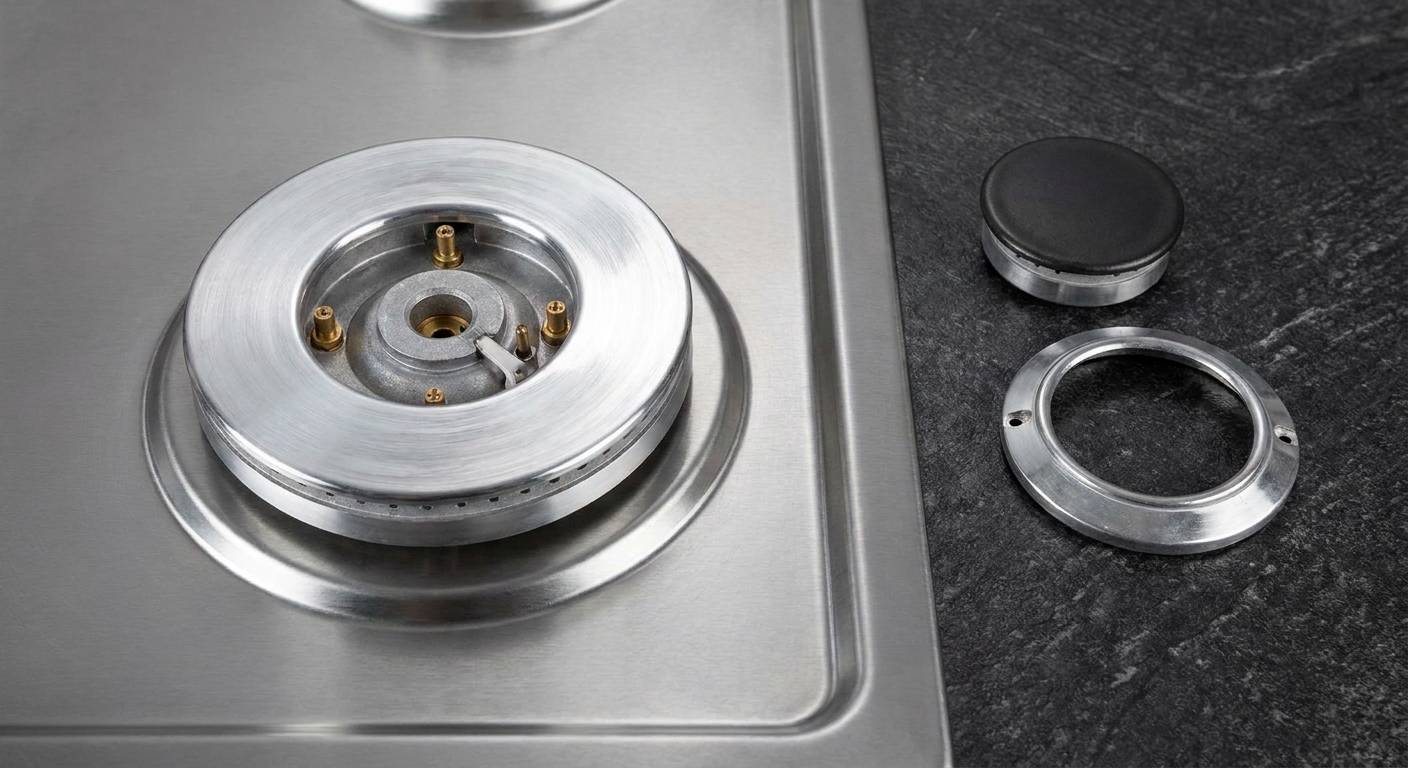
If your burner uses a two-piece head, confirm both pieces are oriented correctly. A flipped or rotated section can block certain ports and make low settings unreliable.
Fix 3: Clean under the burner head
If you cleaned the visible holes and still cannot simmer, look a step deeper. Food spills can creep under the burner head and bake into a crust right beneath it, near where gas exits and air mixes. That can make the flame unstable on low even if high still looks acceptable.
What to do
- With parts removed and the stove off, wipe the burner base area.
- Look for sticky residue, rust flakes, or debris near where gas exits.
- Clean gently and dry thoroughly before reassembly.
Fix 4: Check for drafts
Low flames are easy to bully. Before you go deeper, check for a strong vent hood setting, a nearby fan, or a cross-breeze from an open window. If the flame lifts, leans hard, or flickers wildly only when the hood is blasting, the fix may be as simple as turning the fan down while simmering.
Fix 5: Use the right burner
Some stoves have one burner designed for strong simmer control, while others are more of a blast furnace situation. If your stove has a burner labeled “simmer,” “low,” or “dual,” try that one.
If the simmer burner works normally but another burner stays high, that points back to a burner-specific cap, clog, or valve issue.
If Low is still too high
If the burner cap is seated correctly and the burner ports are clean and dry, yet the burner still will not reduce to a low flame, the problem may be in the burner valve behind the knob. Valves can wear, stick, or lose their ability to meter gas smoothly at the low end.
Clues it is the valve
- The knob feels loose, gritty, or inconsistent as you turn it.
- Low heat behaves like an on off switch, with very little controllable range.
- Cleaning and reseating changes nothing.
- The issue persists across different cookware and after the stove is fully dry.
What to do next
Valve replacement or internal service is typically not a DIY job on a gas range. At this point, it is time to call a qualified gas appliance technician. Let them know the burner lights and stays lit, but will not hold a low flame and may be over-gassing at the low setting.
Other causes that are tech territory
Depending on the range design, a stubborn “won’t simmer” burner can also come down to issues where gas and air mix before the flame, or where the gas is metered right at the burner.
- Air shutter or air mixture problems: Some burners have an adjustable air shutter. If it is out of position or gummed up, flames can turn yellow, lift, or act unstable on low.
- Debris at the orifice: The orifice (sometimes called the spud) meters gas into the burner. If it is partially blocked or damaged, low settings can behave oddly.
Both are good reasons to stop at cleaning and call a technician rather than taking the burner system apart.
Low flame adjustment screw
Some gas stoves have a low-flame (simmer) adjustment screw, but the location varies by brand and model. It may be behind the knob, or it may require access under the cooktop. Some manufacturers also consider this adjustment technician-only.
If your owner’s manual explicitly describes a low-flame adjustment procedure for your exact model, follow it carefully. If it does not, treat adjustment as a technician step. A misadjusted burner can lead to unreliable ignition, flameouts, or unsafe combustion.
When to stop and call for help
Call a technician or your gas utility if you notice any of the following:
- Persistent gas smell when burners are off
- Flames that are lifting off the burner, blowing, or making loud roaring sounds
- Evidence of scorching or melting near the knob area
- The burner will not control properly after basic cleaning and correct reassembly
Keep your simmer steady
- Clean spills quickly, especially sugary sauces and starchy boil-overs that glue up ports.
- Dry burner parts fully after cleaning before relighting.
- Do not swap caps between burners unless you are sure they are identical.
- Use appropriate cookware for simmering, like a heavier pot that smooths out heat swings.
FAQ
Why does my burner go out when I turn it down?
Most commonly, the simmer ports are partially clogged or wet, or a draft is pushing the small low flame off the ports. Clean and dry the burner head and ports, reseat the cap, and test again with the vent hood lower. If it still happens, the valve may be failing or misadjusted.
Why is the flame still high on Low?
A mis-seated or wrong burner cap can keep the flame pattern from settling. If the cap is correct and the burner is clean and dry, a worn or sticking valve can overfeed gas at the low setting and needs a technician.
Can I use a needle to clear burner holes?
Start with a wooden toothpick and a toothbrush. Avoid metal if you can, and never drill or ream burner ports. Enlarged ports can change the flame and make the burner less safe and less controllable.
Could this be the regulator?
A regulator problem often affects more than one burner and shows up as generally abnormal flames across the stove. If several burners look wrong, or flames across the cooktop change together, put the screwdriver down and call for service. If only one burner will not simmer, focus first on cap alignment, clogs, moisture, drafts, or that burner’s valve.
The 30-Second Cheat Sheet
Essential takeaways for: Gas Burner Won’t Turn Down to a Simmer?
Fast diagnosis
- Lights and stays lit, but won’t go low: usually cap alignment, clogged simmer ports, or a valve that is not metering gas smoothly.
- Low flame goes out: often dirty or wet simmer ports, or the flame is being pushed around by drafts.
- Low stays too high: cap wrong or not seated, or the valve is over-feeding gas at the low end.
Do this first (5 minutes)
- Turn burner off and let it cool.
- Lift grates, remove burner cap, wipe seating surfaces.
- Reseat cap so it sits flat and centered. Confirm you did not swap caps between burners.
- Relight and test the simmer.
If still not simmering (15 to 30 minutes)
- Remove cap and burner head (if removable).
- Soak in warm soapy water.
- Scrub burner ports with a toothbrush.
- Clear clogged ports gently with a toothpick first. Use metal only if you must, and never drill or ream ports.
- Rinse and dry completely, reassemble, test again.
Call a technician if
- The cap is correct and ports are clean and dry, but Low is still too high, unstable, or acts like an on off switch.
- The knob feels loose, gritty, or inconsistent.
- You smell gas when everything is off.
- You suspect an orifice, air shutter, or internal mixing issue.
Do not do this
- Do not keep testing if you smell gas.
- Do not enlarge burner holes while cleaning. Never drill burner ports.
- Do not attempt valve repairs if you are not qualified for gas appliance service.
💡 Tip: Scroll up to read the full article for detailed, step-by-step instructions.
⬆️ Back to top
About Grit
Content Creator @ Grit & Home
Grit is Grit & Home’s little blue clay courier, delivering big questions about the place you call home. Expect practical ideas, a raised eyebrow, and a satchel full of curiosity.