
🚨 In a DIY emergency or rush?
Skip the details and jump straight to our 30-second cheat sheet for the most crucial info.
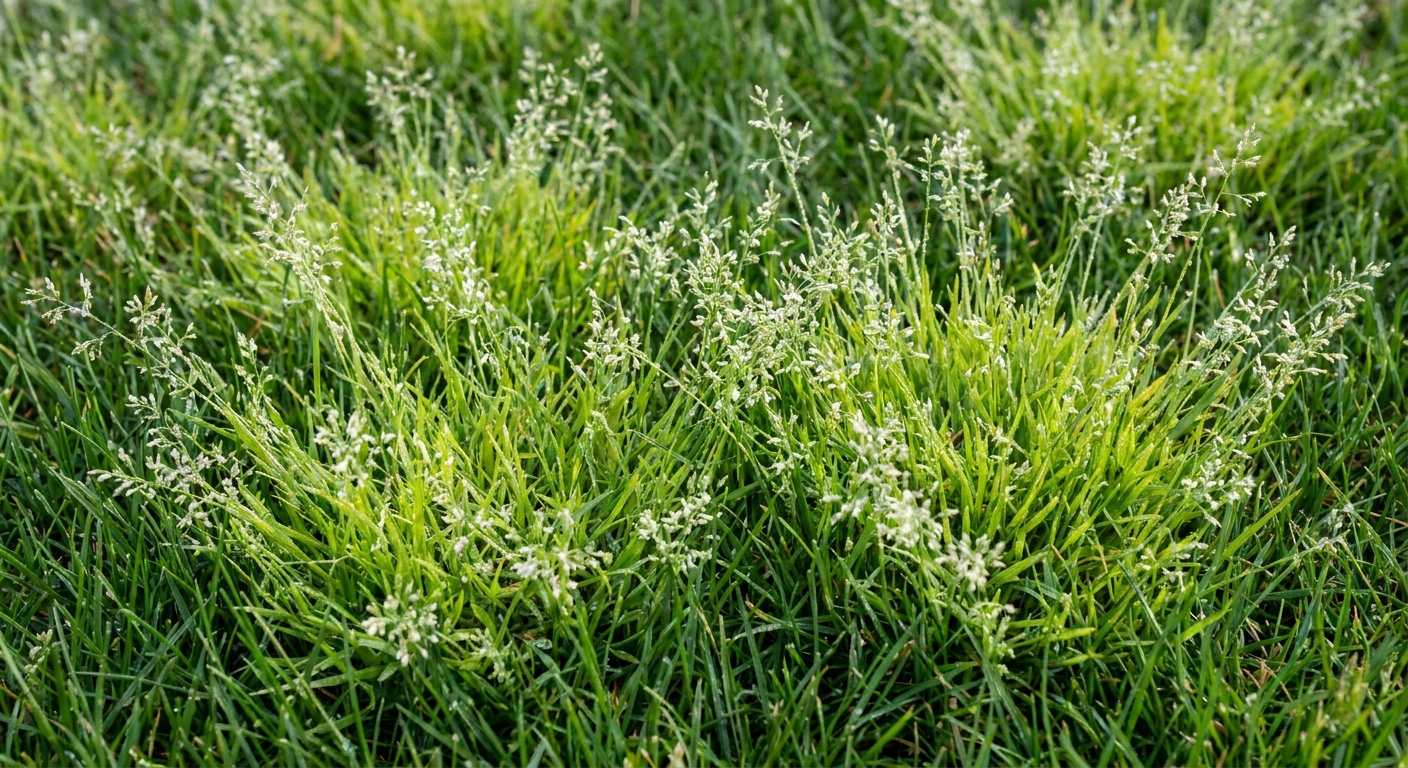
The first time I really noticed annual bluegrass in my own yard, I thought, Why does my lawn look like it is flowering? Little pale seed heads popped up everywhere in early spring, and the turf looked blotchy and lime-green in patches. I did what a lot of DIY lawn folks do. I treated it like crabgrass and promised myself I would “get it with pre-emergent next spring.”
That plan is exactly why Poa annua keeps coming back. Annual bluegrass is usually a winter annual. It often germinates in late summer to fall, hangs around all winter, then throws those obvious seed heads in spring before it declines in summer heat. If your prevention calendar is built around summer weeds like crabgrass, you are showing up to the fight after Poa already moved in.
One quick note before we get into products: herbicides are label-driven. The right active ingredient at the wrong rate or on the wrong turf can do real damage. If you only take one “safety” habit from this article, let it be this: confirm your turf type, then read the label end to end.
Know what you are fighting
What annual bluegrass looks like
Poa annua stands out once you know the tells:
- Color: noticeably lighter, often lime-green compared to surrounding turf.
- Growth habit: patchy clumps that can look tufted and uneven.
- Seed heads: pale, whitish seed heads that show up early spring and can appear even when the lawn is mowed short.
- Leaf tip: often has a boat-shaped tip if you pinch and look closely.
- Blade feel: soft and sometimes a little wrinkled looking compared to many turfgrasses.
Do not confuse it with other light green grasses
Two common mix-ups:
- Rough bluegrass (Poa trivialis): also light green, but it tends to spread and create smeary patches, especially in shade and wet spots. It does not always show the same “peppered” seed head look across the whole yard.
- Newer turf cultivars: some desirable grasses are naturally lighter or brighter, especially in spring. If the color is uniform and you are not seeing Poa-style seed heads, do not assume it is a weed.
Why it shows up in the same spots every year
Poa annua loves the conditions that many lawns accidentally create:
- Thin turf: bare or weak areas give it sunlight and room to establish.
- Wet soil: overwatering, poor drainage, and compacted soil stack the deck in its favor.
- Low mowing: mowing too short stresses your grass and opens the canopy.
- High nitrogen at the wrong time: heavy spring nitrogen can feed Poa right when it is trying to produce seed.
Why spring pre-emergent misses Poa
Crabgrass is a summer annual. It germinates when soils warm up in spring. That is why most crabgrass pre-emergents are timed for late winter to mid-spring, depending on your region and soil temperatures.
Annual bluegrass is the opposite schedule. In many areas, it germinates when temperatures cool in late summer into fall. By the time you spread a spring preventer, the Poa plants are already established. A pre-emergent cannot “un-germinate” plants that are already growing.
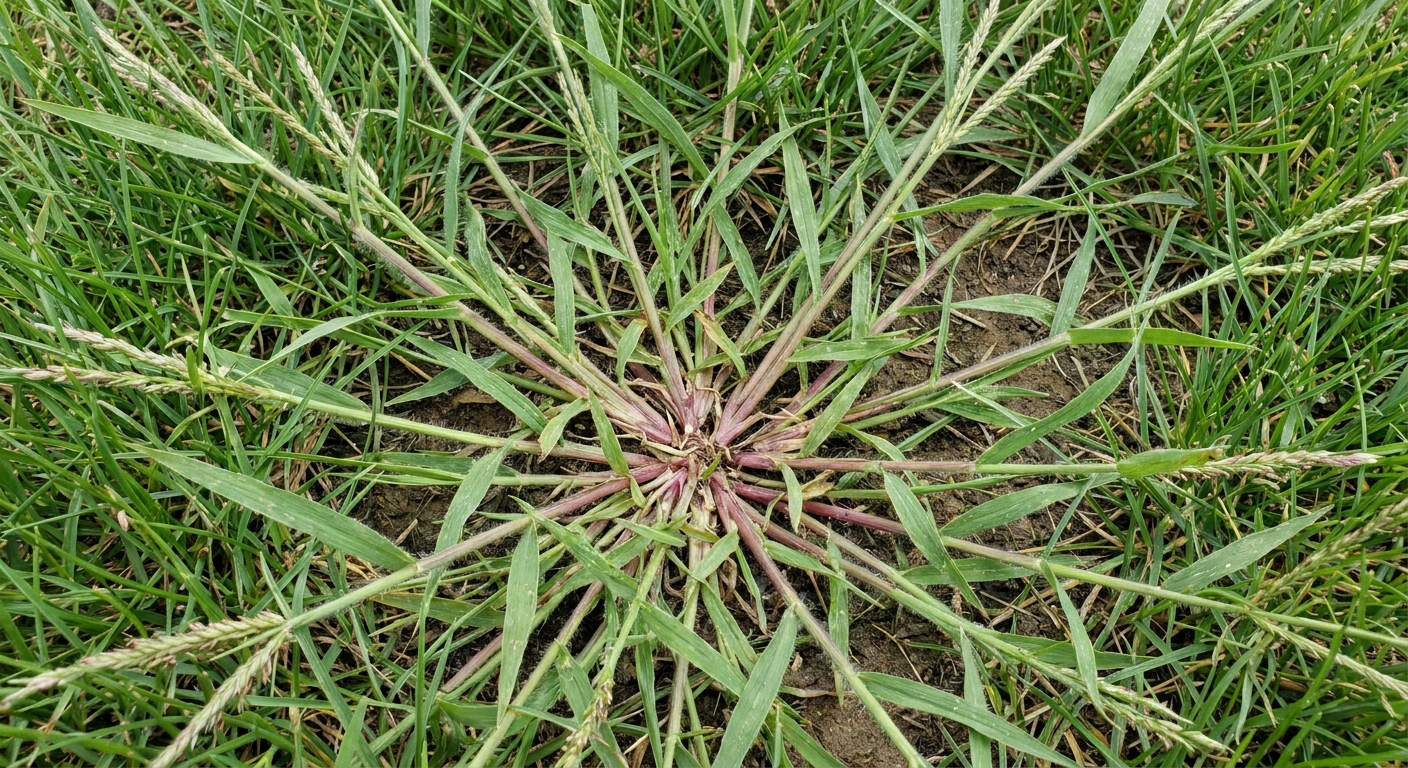
Crabgrass contrast (ID only)
If you are second-guessing what you have, crabgrass typically shows up later, in hot weather, and forms low, sprawling stems that radiate outward like a star. Poa annua is usually most obvious in cool seasons, especially when those pale seed heads start peppering the lawn.
Best long-term fix: fall pre-emergent
If you want the biggest payoff for the least effort, this is it. A properly timed late-summer to early-fall pre-emergent program is the backbone of Poa annua control.
When to apply
Instead of chasing a specific calendar date, key off conditions:
- Plan to apply when nights start cooling and you are transitioning out of peak summer growth.
- In many regions, that lands somewhere between late August and early October, but transition-zone and southern timing can be earlier or later.
- If you wait until you see Poa seedlings, you are late.
If you want a cleaner rule of thumb, many folks time Poa prevention as soil temperatures trend down (often roughly 70°F down toward 55°F at 2-inch depth). That range is not universal, but it keeps you thinking in the right direction. Your local extension office is still the best place to sanity-check timing for your county.
What to use
Read labels and match products to your grass type. Common pre-emergent actives used for annual bluegrass prevention include:
- Prodiamine
- Pendimethalin
- Dithiopyr (some products list Poa annua, but it is often more about suppression than a home-run control, depending on the label and timing)
Coverage varies by product, turf species, and region. I know that sounds like a lawyer answer, but it is also how people avoid smoking their lawn: confirm the label lists Poa annua and that your specific turf is approved.
One application or two?
If Poa annua is a repeat problem, a split application is often easier to get right than trying to nail one perfect day:
- Application 1: late summer or early fall.
- Application 2: several weeks later, based on label guidance.
This helps extend your barrier through the prime germination window.
Details that make it work
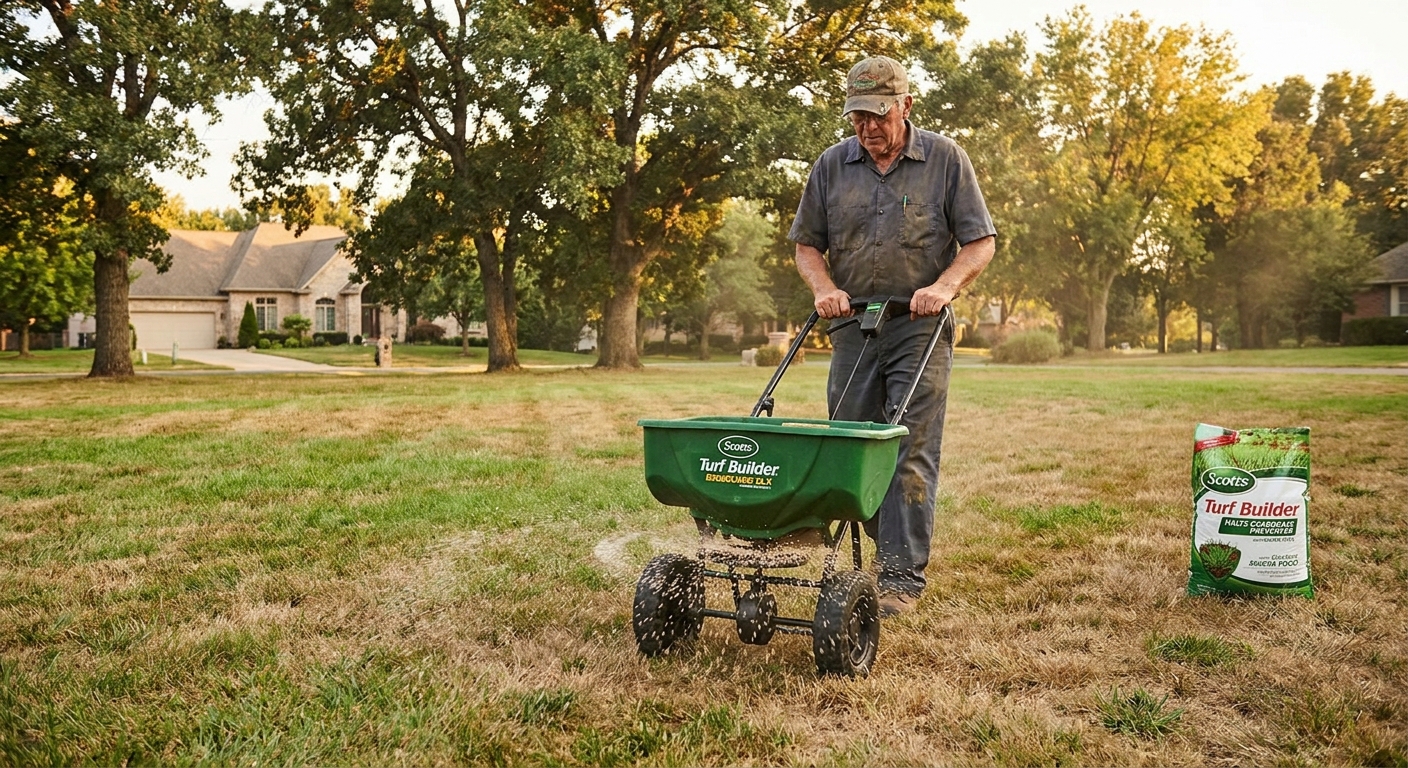
- Water it in: Most granular pre-emergents need irrigation or rainfall soon after application to activate. Follow the label.
- Do not disturb the barrier: Aggressive raking, dethatching, or core aeration after application can break the barrier. Plan major soil work first, then apply.
- Overseeding warning: Many pre-emergents can prevent desirable seed from establishing. If you must choose, I would rather have a thicker lawn long-term than a perfect pre-emergent application in a lawn that is still thin.
- If you need both: Some products and schedules are more seeding-friendly than others, but the only safe answer is the label. Look for explicit guidance like “safe to seed after X weeks” (or the opposite) and plan around that.
Cultural fixes that help
I am a big fan of chemical tools when they are used correctly, but Poa annua will keep exploiting the same weaknesses. Thin plus wet is basically an open invitation.
Water less often, but deeper
Poa likes consistently moist topsoil. Most lawns do better with less frequent, deeper watering that encourages deeper roots.
- Water early morning.
- Avoid daily light watering.
- Fix low spots that stay soggy after rain.
Improve drainage and reduce compaction
If water sits in the same areas, Poa tends to own those spots.
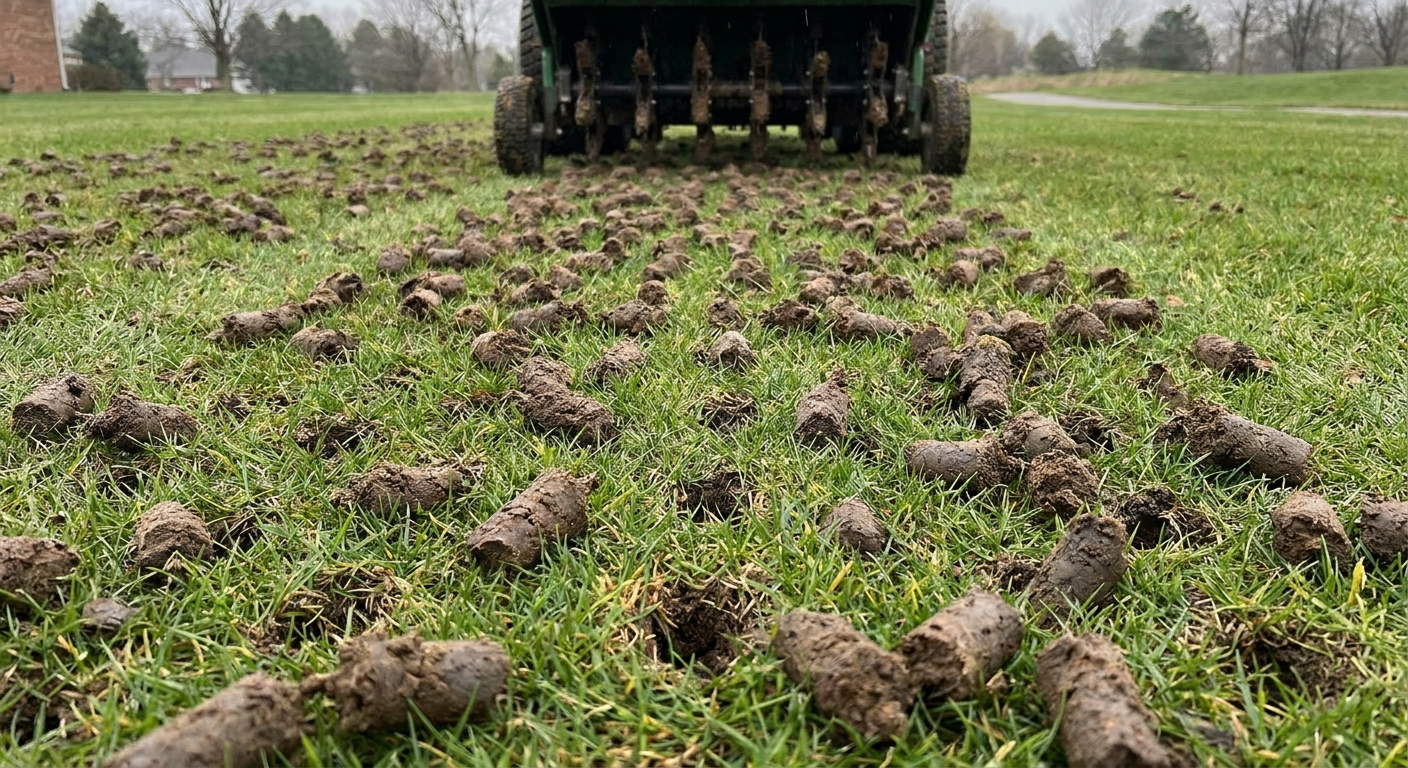
- Core aerate when it is appropriate for your grass type and season.
- Topdress with compost in stubborn thin areas if it fits your lawn plan.
- Address downspout discharge and runoff paths that keep sections wet.
Mow a little higher
Mowing too short weakens turf and lets light reach the soil surface, which helps weed seedlings. Raise your mowing height within the recommended range for your grass type and keep blades sharp.
Fertilize with a plan
Heavy spring nitrogen can make Poa look even happier while it is actively growing and producing seed. Your goal is to feed your turf at the right time for your grass type, not turbocharge Poa in spring.
Thicken the lawn on purpose
Dense turf is the best “herbicide” you can grow. Cool-season lawns often thicken best with fall overseeding. Warm-season lawns usually thicken best from late spring through summer when they are actively growing.
What to do when Poa is up
This is where I try to be straight with people: pulling or spot-treating your way out of a heavy Poa annua infestation is tough. Not impossible, but tough.
Hand pulling
Poa annua has shallow roots, so it can pull up fairly easily when the soil is moist. The problem is numbers. It also produces plenty of seed over a season, which is why small patches can turn into a yearly habit.
If you want to hand pull, here is how to make it count:
- Pull before seed heads mature.
- Get as much of the plant as possible and bag it.
- Fill the void by overseeding or encouraging turf recovery so you do not create new open soil.
Bagging clippings during seed season
If Poa seed heads are everywhere, bagging clippings for a few mowings can reduce how many seeds you drop back into the lawn. Just keep expectations realistic. Poa seed can shatter or spread before you mow, and the soil seed bank is the bigger driver over time. Bagging is a small helper, not the main plan.
Post-emergent herbicides
There are post-emergent options labeled for annual bluegrass control in certain turf types, but they are not universal and they are easy to misuse. If you go this route, start by confirming your grass type, then verify the label lists annual bluegrass (Poa annua).
To make this more actionable without getting reckless, here are examples of actives you may see on labels, depending on turf type and region:
- Warm-season lawns: some labels for products containing actives like foramsulfuron or trifloxysulfuron (and in some cases other sulfonylureas) are used for Poa suppression or control in certain warm-season grasses. These can injure many cool-season lawns.
- Cool-season lawns: selective control is limited and often involves products that are not a casual homeowner move. In many cool-season yards, the most reliable play is still fall pre-emergent plus thicker turf, rather than trying to spray your way out in spring.
Whatever the product, follow temperature limits, turf restrictions, and re-entry guidance. Also expect you may need multiple applications.
Play the long game
Poa annua often fades when summer heat ramps up, especially in full sun. In some areas, there are tougher biotypes that can hang on longer, so do not treat “summer death” as a guarantee. Either way, if it seeded in spring, it already set you up for next season. Your win is preventing fall germination and building a lawn that does not stay thin and wet.
Simple Poa game plan
If you want a practical checklist, here is what I would do in a typical yard that gets Poa annua every year.
Late summer to early fall
- Fix drainage issues and low spots that stay wet.
- Core aerate if it fits your lawn type and you plan it before pre-emergent.
- Apply a pre-emergent timed for Poa annua, and water it in per label.
- Thicken thin turf with the right approach for your grass type.
Fall through winter
- Do not overwater.
- Mow at a healthy height for your grass type.
- Spot pull small outbreaks when soil is soft.
Early spring
- Do not “feed the weed” with heavy nitrogen too early.
- Bag clippings temporarily if seed heads are heavy and you can do it without stressing the lawn.
- Make notes for next fall. That is when the real prevention happens.
Questions I hear a lot
Will a spring pre-emergent prevent annual bluegrass?
Sometimes it can reduce a small portion of germination if timing lines up, but it is not the main move. Poa annua usually germinates in fall, so late-summer to early-fall pre-emergent is the most effective schedule.
Why does Poa annua have seed heads even when I mow?
Poa can produce seed heads at low cutting heights, and it often grows faster than your turf in cool weather. During peak seed season, it can feel like you mow and the seed heads are back two days later.
Does vinegar or baking soda kill annual bluegrass?
They can burn green tissue, but they are non-selective and can damage your lawn grass too. They also do nothing for the seed bank. For lawns, I focus on prevention timing and turf health first.
Is it crabgrass or annual bluegrass?
If it is cool outside and you are seeing pale seed heads, it is usually not crabgrass. Crabgrass is a warm-weather weed that shows up later and spreads outward along the ground.
The 30-Second Cheat Sheet
Essential takeaways for: How to Get Rid of Annual Bluegrass (Poa Annua) in Your Lawn
Fast diagnosis
- Poa annua (annual bluegrass) is usually a winter annual that germinates in late summer to fall, overwinters, then throws pale seed heads in spring.
- If you only use a spring crabgrass preventer, you often miss Poa because it is already established by then.
- Quick tells: lime green clumps, seed heads at mowing height, and a boat-shaped leaf tip when you look closely.
Best prevention (do this first)
- Apply pre-emergent in late summer to early fall, timed to your area (soil temps commonly trending down from about 70°F toward 55°F at 2-inch depth, region dependent).
- Look for products labeled for Poa annua with actives like prodiamine or pendimethalin. Label and turf species matter.
- Water it in as directed so it activates.
- A split application (two treatments several weeks apart) often works better for repeat problems.
Yard changes that cut Poa down
- Fix thin, wet turf: improve drainage, reduce compaction, and avoid daily light watering.
- Mow higher within your grass type’s recommended range.
- Avoid heavy early-spring nitrogen that feeds Poa during seed season.
- Thicken your lawn so weeds have less open soil to invade.
If it is already up
- Hand pulling works for small patches, but it is rarely realistic for a whole yard.
- Bag clippings temporarily during heavy seed head season to reduce seed drop, but expect most control to come from fall prevention and reducing the seed bank.
- Post-emergent options exist for some turf types, but grass type and label language matter. When in doubt, ask your local extension office.
The honest expectation
- You usually do not “fix Poa” in one weekend. The real win is stopping fall germination and correcting the conditions it loves.
💡 Tip: Scroll up to read the full article for detailed, step-by-step instructions.
⬆️ Back to top
About Marcus Vance
Content Creator @ Grit & Home
Marcus Vance is a lifelong DIY enthusiast and self-taught home renovator who has spent the last decade transforming a dilapidated 1970s ranch into his family's dream home. He specializes in budget-friendly carpentry, room-by-room renovations, and demystifying power tools for beginners. Through his writing, Marcus shares practical tutorials and hard-learned lessons to help homeowners tackle their own projects with confidence.