
🚨 In a DIY emergency or rush?
Skip the details and jump straight to our 30-second cheat sheet for the most crucial info.
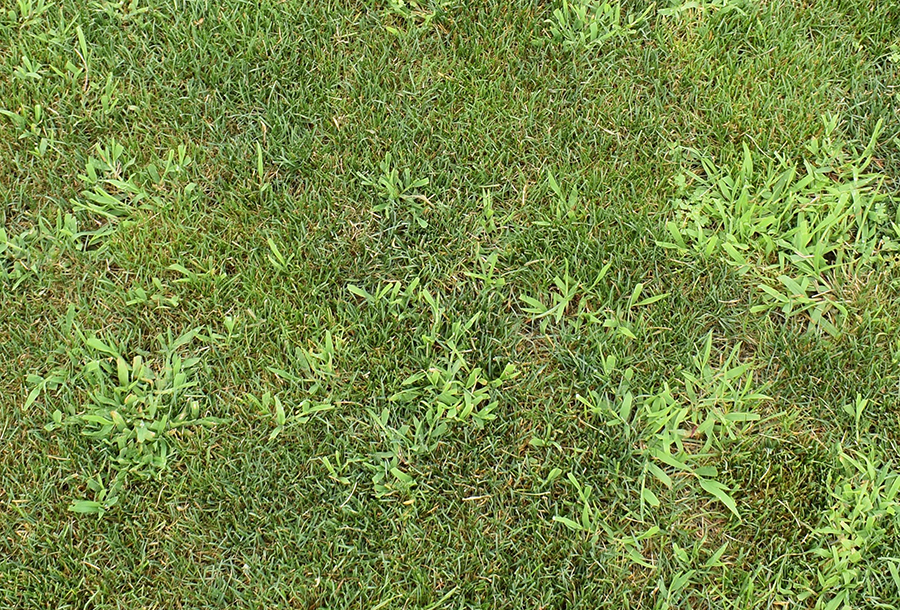
Crabgrass at a glance
If you have a patch of grass that looks a little lighter, grows faster than everything around it, and seems to sprawl outward like it is trying to crawl across the yard, you are probably staring at crabgrass.
Crabgrass is a warm-season annual weed. That means it sprouts from seed when soil warms up, explodes through summer, then dies with frost. The trick is confirming it before you treat it, because several common grasses and weeds can look similar from a standing height.
- Most common clue: A low, spreading clump that forms a flat, starburst shape.
- Color clue: Often lighter green than your turf, especially in midsummer.
- Texture clue: Wider blades than many lawn grasses, sometimes a little hairy.
Where it shows up most
If the plant itself has you guessing, look at the neighborhood it picked. Crabgrass loves the spots your lawn struggles to fill in.
- Thin or bare areas where the soil warms fast.
- Sunny, hot zones like along driveways, sidewalks, and curbs.
- High-traffic paths where turf gets beat up.
Common types: smooth vs. hairy
In many home lawns, the two most common crabgrasses are usually called smooth crabgrass and hairy crabgrass. They behave similarly in a yard. You do not need perfect species-level ID to act, but you do want to recognize the family traits.
Smooth crabgrass
- Blades are mostly hairless, but you may still see a few hairs near the base.
- Leaves are relatively broad and lie flatter to the ground.
- Seed heads often look like several thin “fingers” coming from one point.
Hairy crabgrass
- Noticeable hairs on blades and sometimes on the sheath near the base.
- Can look a bit fuzzier in close-up photos.
- Also forms that same sprawling, crab-like clump.
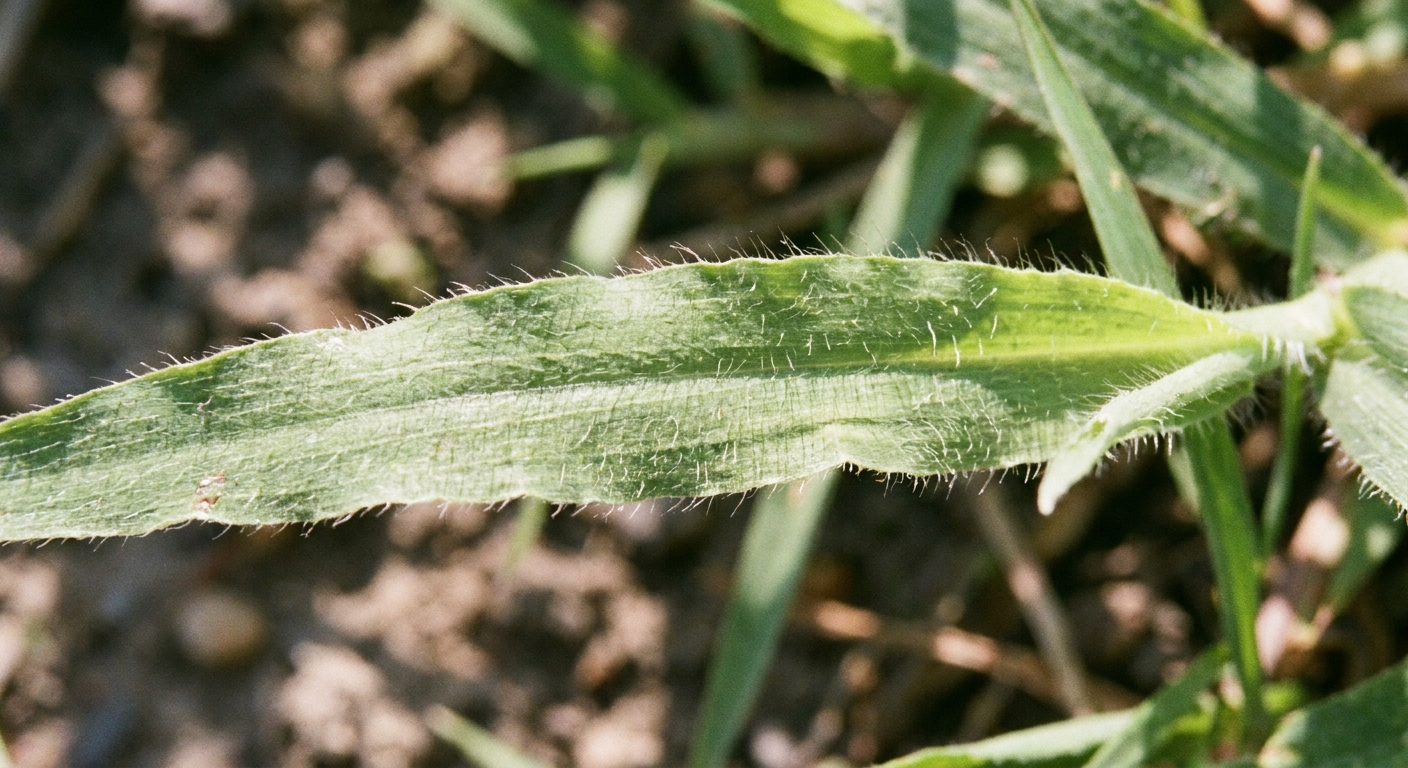
Crabgrass up close
When I am not sure, I do what my dad taught me with plumbing leaks: get close, slow down, and look for the one detail that does not lie. For crabgrass, those details are at the base of the plant and at the seed heads.
Leaf blades
- Width: Typically wider than most “nice lawn” grasses.
- Shape: Blades can look slightly folded or V-shaped when young, then flatten out.
- Hair: May be smooth or hairy depending on the type, but many plants have at least some hair near the base.
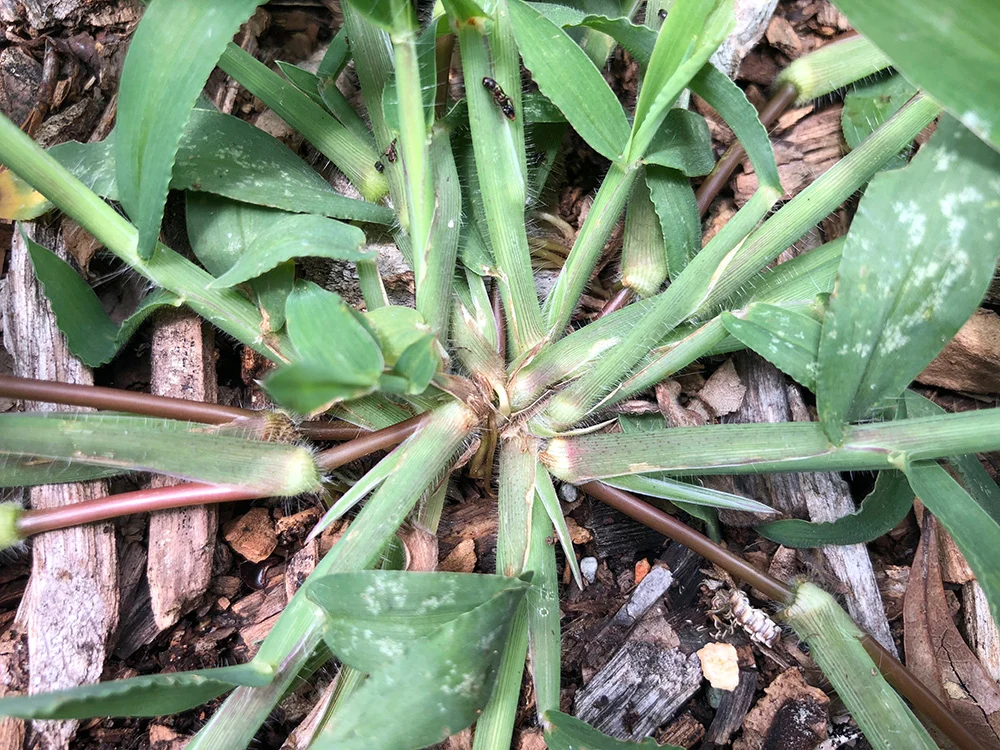
Base and habit
- Spreading clump: Stems radiate out from a central crown.
- Low and wide: Often hugs the ground instead of standing tall.
- Rooting at nodes: Stems can root where they touch soil, which helps the patch widen.
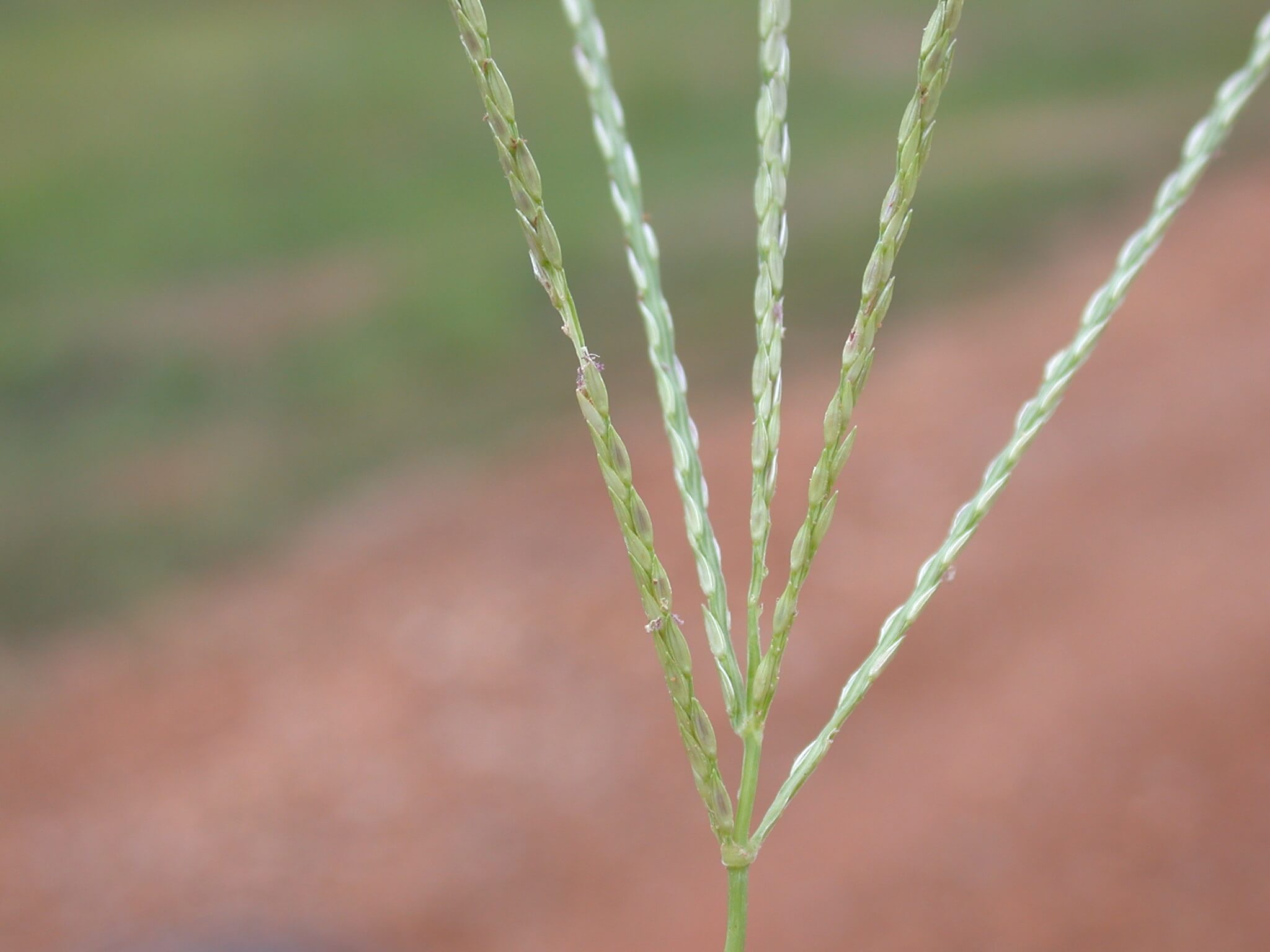
Seed heads
Once crabgrass starts seeding, ID gets much easier. Seed heads often look like several thin spikes (like fingers) branching from the top of a stem. You might see several spikes in a cluster, commonly around 3 to 7, and it varies with type and maturity.
Optional nerd check: ligules and auricles
If you like a more “case closed” clue, look where the leaf meets the stem. Crabgrass has a small, membranous ligule. It does not have the clasping auricles you will often see on quackgrass.
Season by season
Spring and early summer
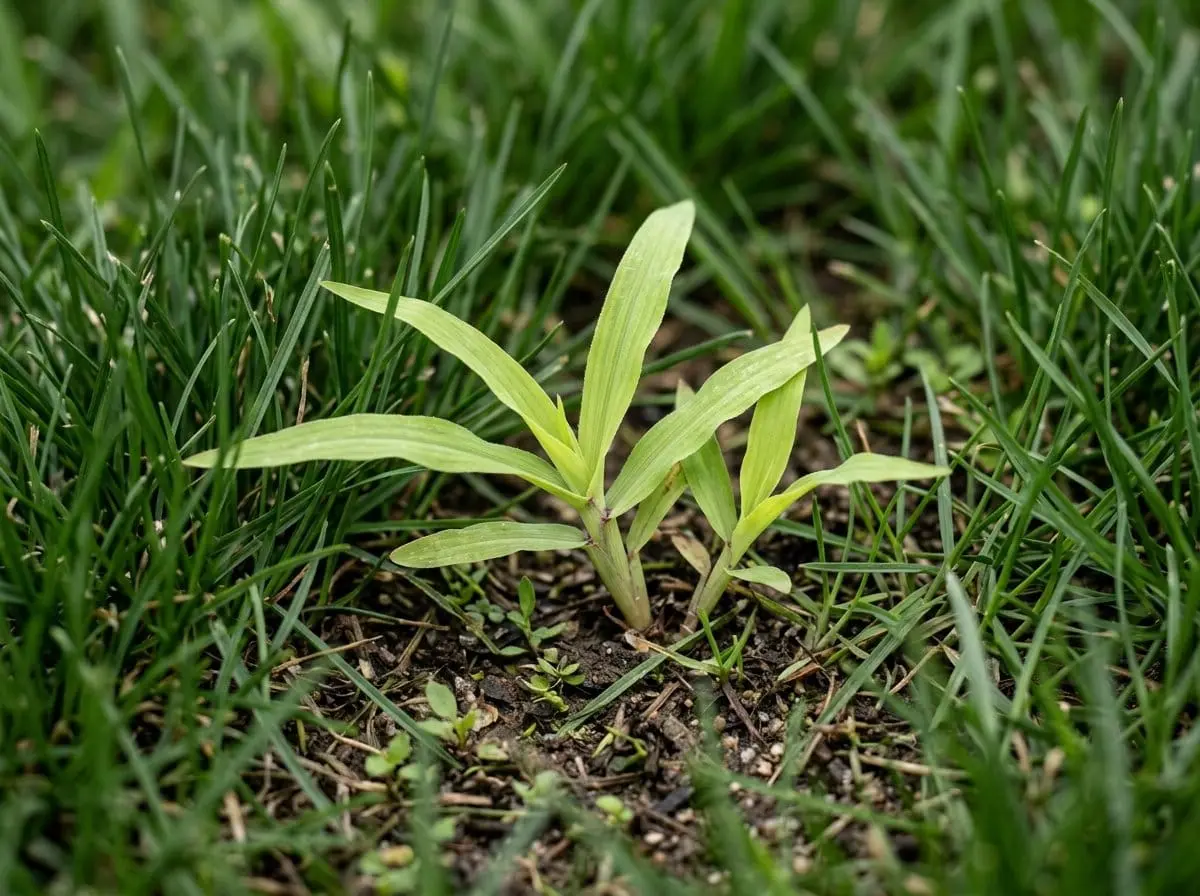
- Crabgrass starts as small, light-green seedlings.
- Early patches look like thin, star-shaped sprouts that spread outward.
- It may blend in until a heat wave hits and it takes off.
Midsummer
- Fast growth, big sprawling clumps, and the “patchy lighter green” look.
- Blades get broader and the plant crowds out surrounding turf.
Late summer and fall
- Seed heads become obvious.
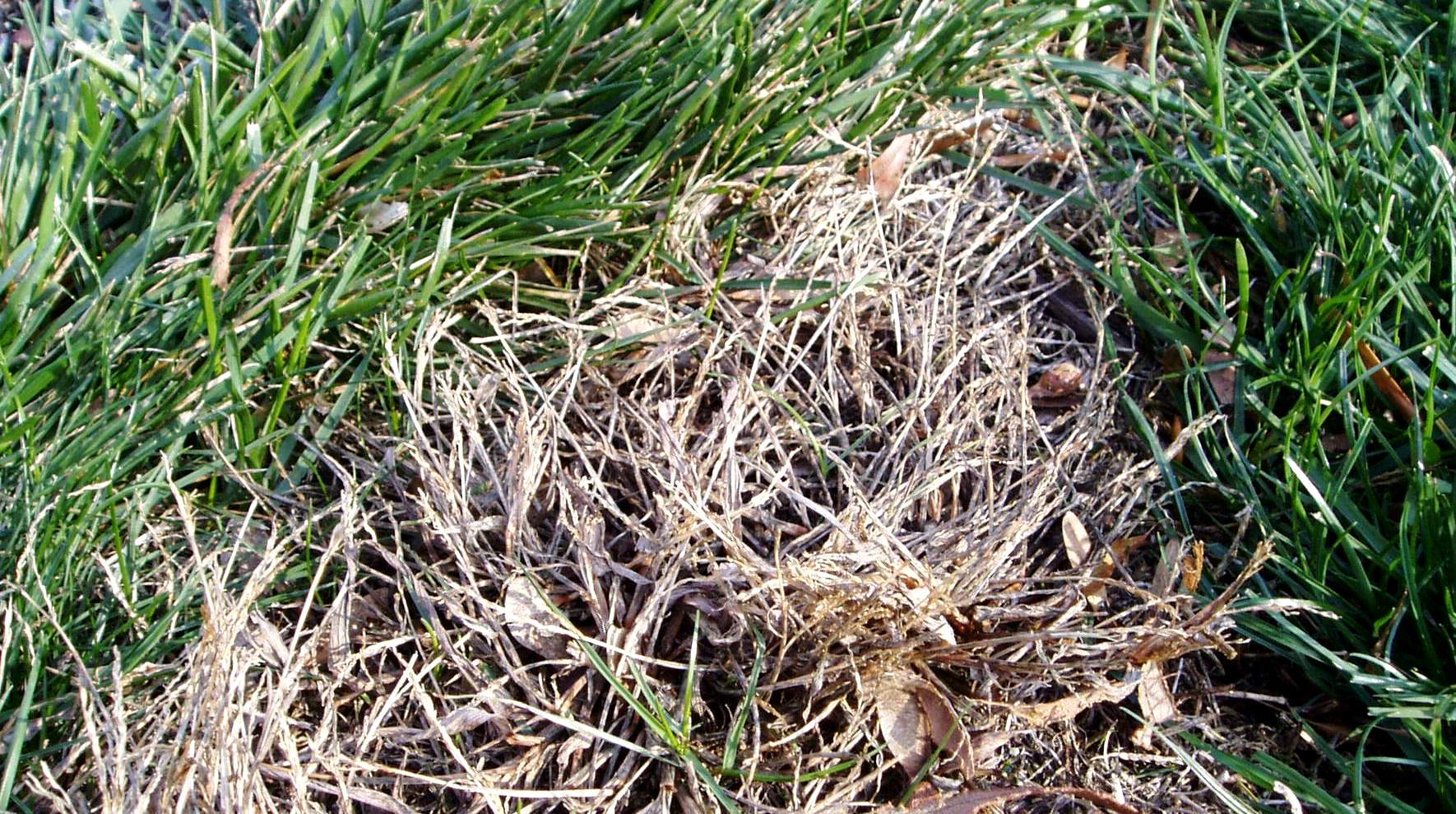
- After the first frost, crabgrass often turns brown and collapses, leaving thin or bare areas behind.
Crabgrass vs. lookalikes
This is the part that saves you money. If you treat the wrong plant, you either waste product or damage turf you actually want. Below are the quickest, most reliable differences you can spot in the yard.
1) Crabgrass vs. quackgrass
Why they get confused: Both can look like coarse, fast-growing grasses from a distance.
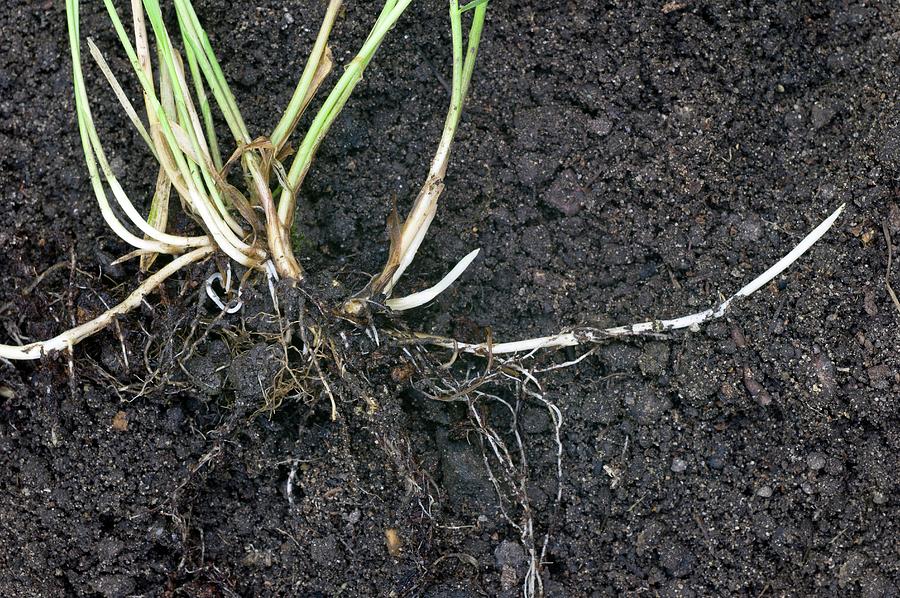
- Growth habit: Crabgrass sprawls outward in a flat clump. Quackgrass grows upright and spreads by underground rhizomes.
- How it pulls: Crabgrass often pulls in chunks from one crown. Quackgrass pulls with long, whitish rhizomes that snap and keep coming.
- Stem and collar clues: Quackgrass often shows clasping auricles where the leaf meets the stem. Crabgrass does not.
2) Crabgrass vs. dallisgrass
Why they get confused: Both can form chunky clumps and show seed stems in summer.
- Life cycle: Crabgrass is an annual. Dallisgrass is a perennial and comes back from the same crown year after year.
- Clump shape: Crabgrass often looks like a low, spreading wagon wheel. Dallisgrass forms tighter, taller clumps.
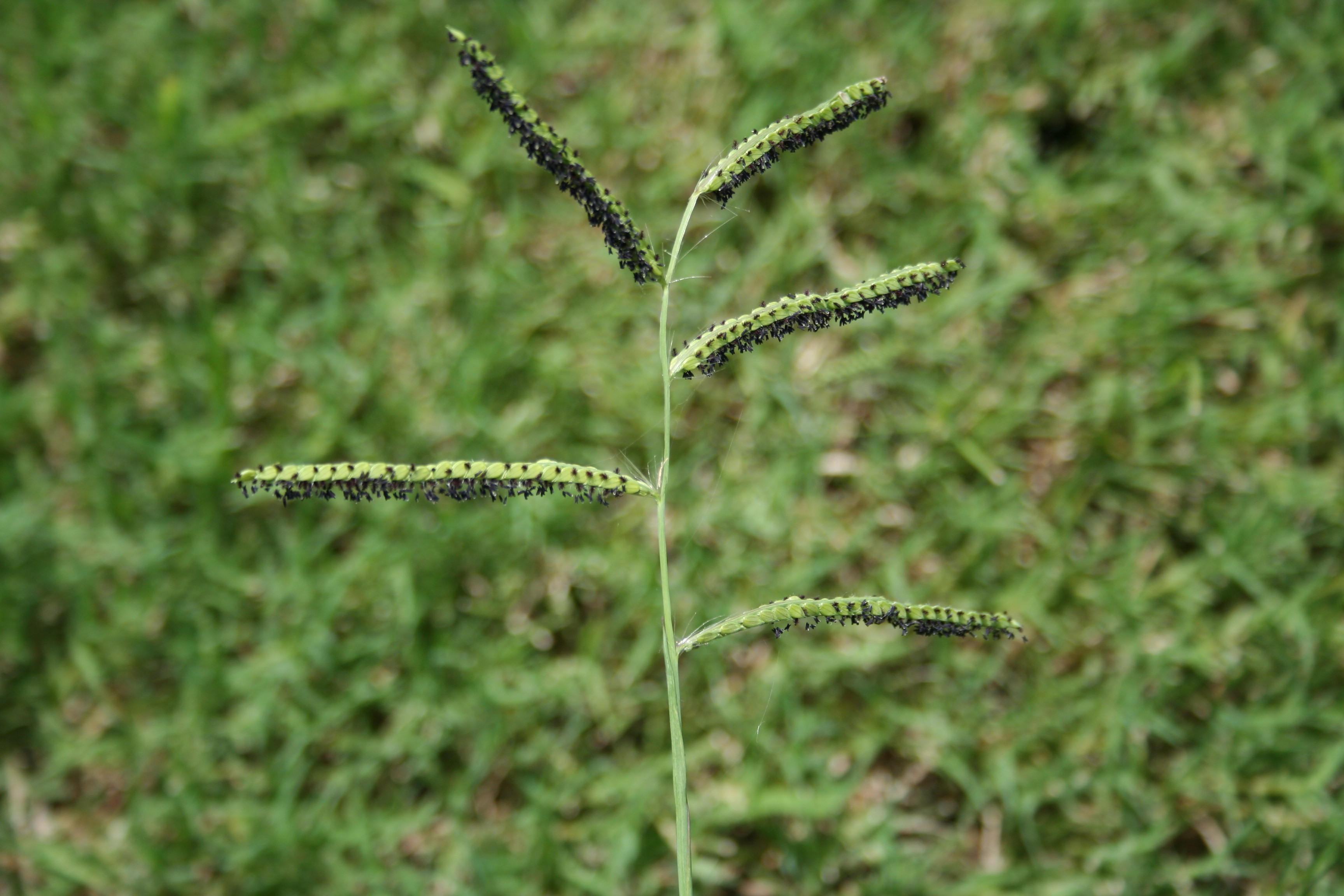
- Seed head: Dallisgrass tends to have seed spikes spaced along a stem (often with dark speckling on mature seedheads). Crabgrass more often has finger-like spikes clustered near the top.
3) Crabgrass vs. nimblewill
Why they get confused: Both can create “patches” that look different from surrounding turf.
- Patch look: Nimblewill forms dense, wiry mats and can look like a thin, fine-textured carpet.
- Cold reaction: Nimblewill often browns out when temperatures drop and after frost, which makes it stand out in cool-season lawns.
- Blade width: Crabgrass blades are usually broader. Nimblewill is finer.
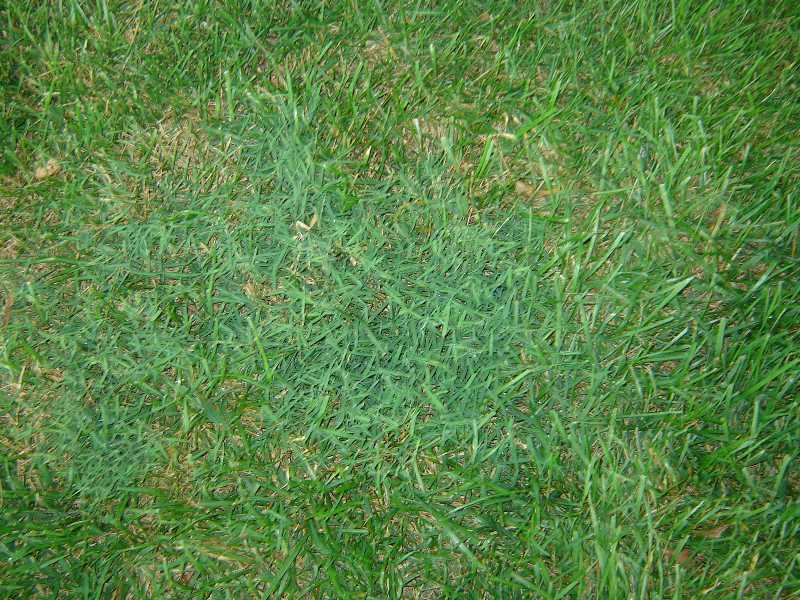
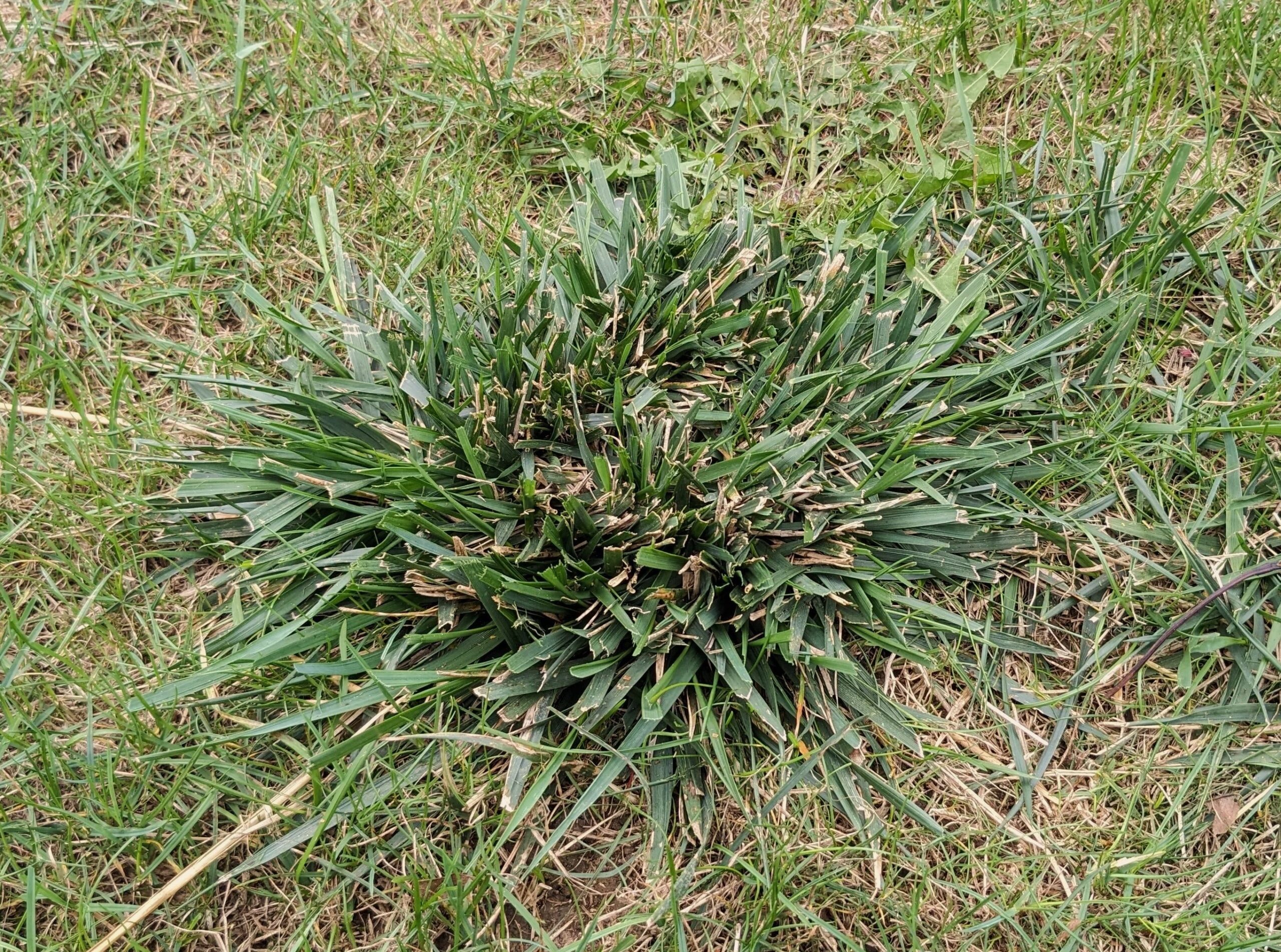
4) Crabgrass vs. tall fescue clumps
Why they get confused: Both can look like ugly, wide-bladed grass clumps in an otherwise finer lawn.
- Clump behavior: Crabgrass spreads outward and can root at nodes. Tall fescue and other coarse-type fescues are bunch-type and stay more like a tuft or fountain.
- Season: Coarse fescue clumps are cool-season grass and can stay greener in spring and fall. Crabgrass loves heat.
- Pull test: Coarse fescue clumps can be tough to pull cleanly and often have a dense, fibrous base. Crabgrass usually comes from a central crown with sprawling stems.
One more common mix-up: bermudagrass
If you are in a warm-season lawn region, bermudagrass can throw people off. Bermuda spreads with wiry runners (stolons) and can look like it is “creeping” through beds and borders. Crabgrass usually shows that single crown with stems radiating out, especially early on.
60-second checklist
If you only do one thing, do this checklist. I keep it simple on purpose.
- Step 1: Look at the shape from above. Is it a low, spreading starburst or wagon wheel?
- Step 2: Get down to soil level and find the crown. Do stems radiate outward from one center point?
- Step 3: Rub a blade. Is it broader than your lawn grass, and is there any hair near the base?
- Step 4: Check for rooting nodes. Are any stems pinning down and rooting where they touch soil?
- Step 5: If it is late summer, look for finger-like seed spikes near the top of stems.
If you checked 4 out of 5 boxes, you are very likely dealing with crabgrass. If you are seeing long underground runners when you pull, slow down and reconsider quackgrass.
Before you treat
I am all for getting after a problem, but crabgrass control is one of those jobs where timing matters as much as the product. So make your ID first, then choose a plan based on whether you are trying to prevent spring germination or knock down actively growing plants.
Also, do a quick gut-check that you are not looking at heat stress or a watering problem. Crabgrass is a plant with a crown, stems, and (eventually) seed heads, not a disease pattern.
Once you are confident it is crabgrass, head over to our control guide: How to Kill Crabgrass and Keep It From Coming Back.
If you are still not sure after the checks above, take a few close photos: one from standing height, one at soil level showing the crown, and one of any seed head. Those three angles solve most mystery-grass cases.
The 30-Second Cheat Sheet
Essential takeaways for: What Does Crabgrass Look Like?
Fast ID: what crabgrass looks like
- Overall shape: low, spreading clump that radiates outward like a starburst.
- Color: often lighter green than surrounding turf in midsummer.
- Blades: relatively wide; may be smooth or have visible hairs (especially near the base).
- Growth habit: stems sprawl and can root where they touch soil.
- Seed head: several thin finger-like spikes clustered near the top of a stem (count varies).
Don’t confuse it with these
- Quackgrass: grows more upright and pulls with long whitish rhizomes.
- Dallisgrass: perennial, tighter taller clumps; seed spikes spaced along a stem.
- Nimblewill: fine, wiry mat, not broad blades and starburst clumps.
- Tall fescue clumps (coarse-type fescue): bunch-type tuft; not sprawling and rooting at nodes.
60-second field checklist
- Spreading wagon-wheel clump?
- One central crown with stems radiating out?
- Broad blades, sometimes hairy near base?
- Nodes rooting where stems touch soil?
- Finger-like seed spikes in late summer?
Next step: After you confirm it is crabgrass, use a timing-based plan (pre-emergent for prevention, post-emergent for active plants). See: How to Kill Crabgrass and Keep It From Coming Back.
💡 Tip: Scroll up to read the full article for detailed, step-by-step instructions.
⬆️ Back to top
About Marcus Vance
Content Creator @ Grit & Home
Marcus Vance is a lifelong DIY enthusiast and self-taught home renovator who has spent the last decade transforming a dilapidated 1970s ranch into his family's dream home. He specializes in budget-friendly carpentry, room-by-room renovations, and demystifying power tools for beginners. Through his writing, Marcus shares practical tutorials and hard-learned lessons to help homeowners tackle their own projects with confidence.