
🚨 In a DIY emergency or rush?
Skip the details and jump straight to our 30-second cheat sheet for the most crucial info.
The first black widow I found in our 1970s ranch was behind a stack of leftover baseboard in the garage. I was reaching for a paint tray, felt that quick brush of “something moved,” and I did what every DIYer tells themselves they will not do. I yanked my hand back fast and dropped everything.
That spider taught me two things: black widows love the same messy, undisturbed corners we all create during projects, and “just spray the web” is not a plan.
This guide sticks to black widows specifically. I will show you how to ID them (including what can vary), where they usually set up shop around a home, and a safe, step-by-step removal approach using knockdown, vacuuming, and habitat cleanup. I will also be blunt about when it is time to call a licensed pest pro and when a possible bite means getting medical help.
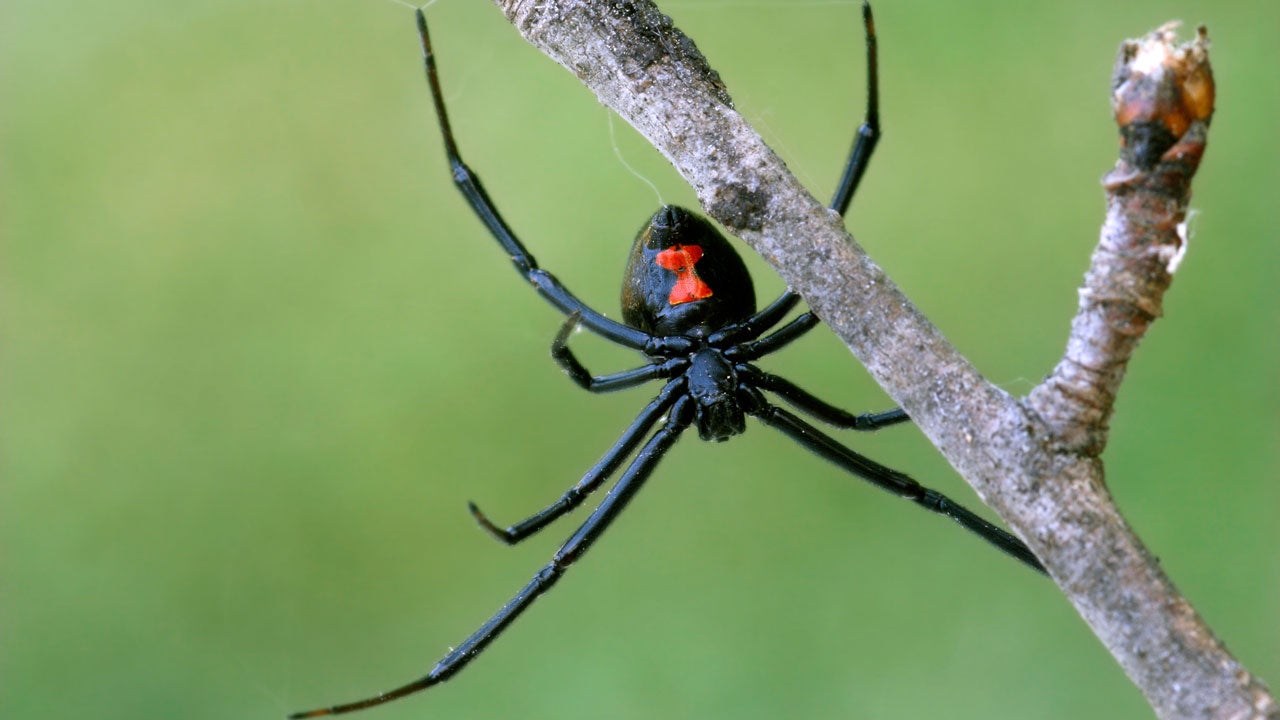
Black widow ID
If you only remember one thing, remember this: adult female black widows are the main medical concern, and they are the ones most likely to show the classic red hourglass.
That said, widow markings are not a perfect paint-by-numbers situation. Color and pattern can vary by age, sex, and even which widow species is common in your region.
What black widows usually look like
- Adult females: shiny black body with a round, bulbous abdomen.
- Underside hourglass: typically red, but it can look incomplete or a bit muted on some spiders.
- Males and juveniles: smaller and often lighter, sometimes with red/orange or yellowish markings that can show on the back as well as the underside.
- Webs look messy and irregular, not the neat, symmetrical kind.
- They tend to hang upside down in their web or retreat into a crack.
Common lookalikes (and why it matters)
Lots of spiders get called “widows” when they are not. That can lead to panic, or worse, ignoring an actual widow.
- Harmless house spiders: Many are brown or gray and build webs in ceilings and corners indoors. They might be creepy, but they are not widows.
- False widows (Steatoda species): They can be dark and bulb-shaped, but they usually lack the bright red hourglass. Some can bite, but they are not the same medical concern as true widows.
- Brown widow: Often mottled tan to brown with an orange-toned hourglass. Spiky egg sacs are a classic brown widow clue. Treat them with the same respect and removal approach.
- Brown recluse: Different spider, different behavior. Recluses are not shiny black, do not have a red hourglass, and they do not hang in messy webs. Also, recluses are not common in many areas, so do not assume you have them unless your region is known for them.
If you are unsure, treat it cautiously anyway and focus on removal without bare-hand contact.
Where black widows hide
Black widows like dry, sheltered, low-traffic spots where they can build a web and stay put. Around homes, that often means garage and yard storage zones, not the middle of your living room.
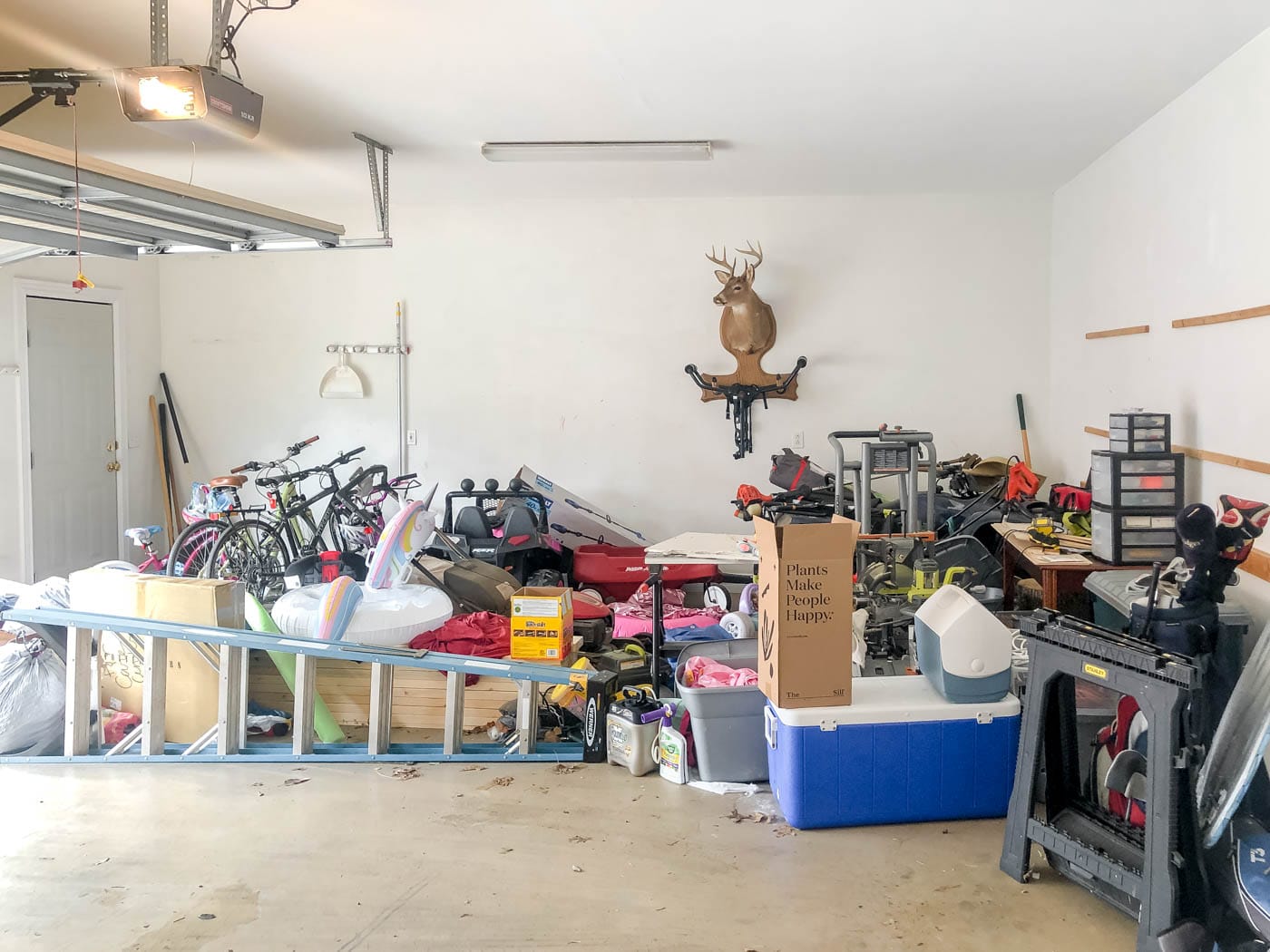
- Garages: Behind stored lumber, cardboard boxes, workbenches, shelves, and rolling tool carts.
- Woodpiles: Between logs, under tarps, and along the bottom layer where it stays cool and sheltered.
- Utility areas: Around the electric meter, hose bibs, irrigation boxes, crawlspace vents, and exterior junction boxes.
- Sheds and fences: In corners, under ledges, and behind hanging items.
- Outdoor furniture and grills: Under lips and edges, especially if they sit unused for weeks.
- Basements and crawlspaces: In rim joist areas, around stored building materials, and along foundation walls.
One more “Marcus in a fixer-upper” note: widow-friendly clutter shows up fast during renovations. Scrap wood, old trim, empty buckets, drop cloth piles, and stacked tile boxes are basically a welcome mat.
Before you start
Your goal is simple: no bare hands, no surprise contact, and no crushing with your fingers.
What I grab before I go widow hunting
- Leather or thick work gloves (not thin nitrile for this job)
- Long sleeves and long pants
- Closed-toe shoes or boots
- Flashlight or headlamp for corners and behind items
- Vacuum with a hose/wand (shop vac works great)
- Long tool for distance, like a broom handle or paint stir stick
- Sealable bag for vacuum contents or debris
Two rules that prevent most bites
- Do not reach blind behind or under stored items. Look first, then move.
- Do not handle wood, rocks, or clutter piles without gloves, especially outdoors.
How to get rid of black widows
For widows, I like a three-part approach: knock down and remove, vacuum, then declutter so the next widow does not move in next week.
Step 1: Confirm the hotspot
Use a flashlight to scan for messy webs near the ground, tucked into corners, holes, and crevices. If you see the spider, note where it retreats. Widows often have a “home base” crack they disappear into fast.
Step 2: Knock down the web
With gloves on, use a long tool (broom handle works) to pull the web loose from a distance. Do not use your hand to wipe webs, and do not press your body in close while you are working. The goal is to expose the spider and egg sacs so you can remove them, not to smash everything into dust where you cannot see what is happening.
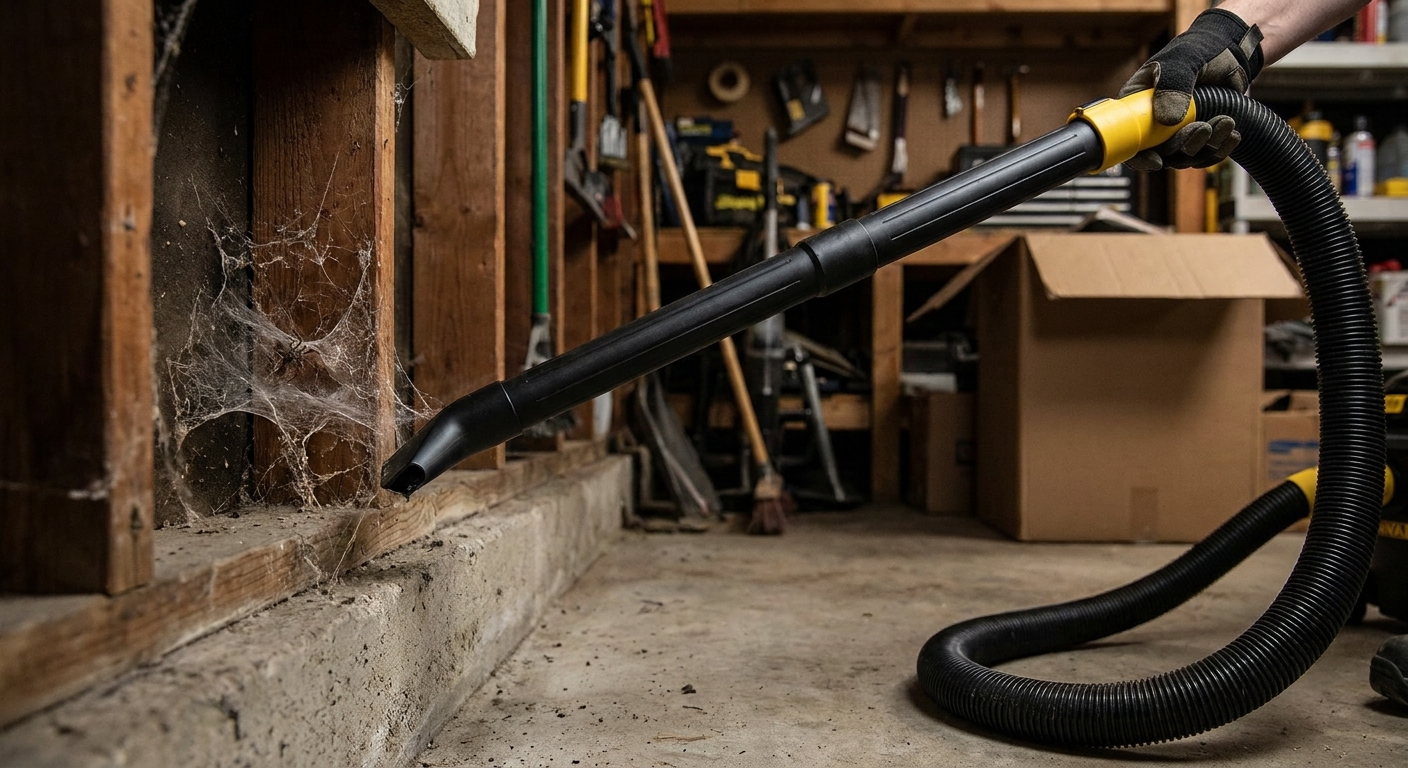
Step 3: Vacuum the spider, web, and egg sacs
This is my go-to for black widows because it avoids close contact. Use the vacuum hose to remove:
- The spider
- All webbing
- Egg sacs (for black widows, they are often smooth-looking tan to gray, with a papery texture)
Note: If you are seeing a bunch of spiky egg sacs, you might be dealing with brown widows. Either way, vacuuming and cleanup are still the right move.
Important: Vacuuming is only half the job. You need to handle the vacuum contents so the spider cannot crawl back out.
Step 4: Secure the vacuum contents
Do one of the following, depending on your vacuum type:
- If it is bagged: Remove the bag, seal it in a trash bag, and take it to an outdoor bin immediately.
- If it is bagless: Dump the canister into a sealable bag, tie it off, and take it outside right away. If you rinse the canister outdoors, keep gloves on and avoid splashing.
- If it is a shop vac: Empty it into a sealable bag. Check the hose end and canister rim for hitchhikers before storing it.
If you suspect something is still alive inside the sealed bag, warmth can help, but do not rely on it as your plan. The real safety step is keeping it sealed and contained until it is out with the trash.
Step 5: Clean the harborage
Widows do not just appear. They move into good shelter and good food zones.
- Declutter the floor-wall edges in garages and sheds. Keep a few inches of clear space along the perimeter if you can.
- Move wood off the ground on a rack or stacked on pavers.
- Swap cardboard for plastic bins with lids. Cardboard creates endless creases and hiding spots.
- Reduce insects around doors and meters by switching bright white exterior bulbs to warm or amber “bug” style bulbs, and by moving lights away from doorways when possible.
Step 6: Seal entry and hiding gaps
You do not need to make your home “airtight,” but you do want to remove the easy retreats.
- Caulk cracks along foundation edges and around penetrations.
- Repair torn screens and add door sweeps where daylight shows under exterior doors.
- Seal around pipes and conduit entering garages and utility rooms.
This is also where you separate widows from random house spiders. House spiders tend to set up indoors where they catch flies. Widows prefer those sheltered, quiet, ground-level zones and tucked cracks.
Should you spray?
Targeted treatment can help, but it is easy to do the wrong thing, especially if you are only spraying visible webs.
What does not work well
- Spraying webs only: You remove the web you see, but the spider and egg sacs can be tucked deep in a crack.
- Foggers and total-release bombs: Widows are usually hidden in protected voids. Foggers often do not reach them and can push pests deeper.
What works better for DIYers
If you choose to use a product, read the label and follow it exactly. In general, success comes from:
- Direct contact knockdown for a visible widow, followed by vacuuming and removal.
- Crack and crevice focus in known widow harborage zones, rather than spraying open air and hoping.
Avoid broadcast-spraying living areas, do not mix chemicals, and keep kids and pets out of treated areas until the label says it is safe (usually once fully dry).
If you have kids, pets, or you are treating inside living spaces, that is a good moment to pause and consider a professional. Widows are not worth risky chemical guesswork.
When to hire a pro
I am all for DIY, but venomous spiders are one place where “cheap now” can get expensive later.
Call a licensed pest control pro if:
- You are seeing multiple black widows over days or weeks, especially in different areas (garage, shed, woodpile, crawlspace).
- You are finding multiple egg sacs. That is a population problem, not a one-off spider.
- You have a crawlspace or attic access issue where you cannot safely work.
- Someone in the home is high risk (young children, elderly family members, immune-compromised) and you want a faster, comprehensive reduction plan.
You can usually DIY if:
- You found a single widow in a predictable spot, you can vacuum it safely, and you can clean up the clutter that supported it.
- You are willing to do follow-up checks weekly for a month, then monthly.
If you think you were bitten
Most widows would rather hide than bite, but bites do happen, usually when the spider is trapped against skin in gloves, shoes, clothing, or when someone grabs a hidden item.
Get medical advice urgently if:
- You saw the spider bite you or you captured it and it appears to be a black widow.
- You develop severe pain, muscle cramping, sweating, nausea, weakness, or spreading symptoms.
- The bite is on a child, an older adult, or someone with significant health conditions.
In the US, you can call Poison Control at 1-800-222-1222 for guidance. If symptoms are severe or getting worse quickly, seek emergency care.
Practical steps while you seek care: wash with soap and water, use a cool compress, and avoid home “cut it open or suck it out” stuff. If you can do it safely, take a photo of the spider for identification.
Widow-proofing hot spots
This is the part that keeps them from coming right back.
Garage
- Store items off the floor on shelves.
- Keep the wall perimeter as clear as possible.
- Vacuum corners, behind tool chests, and under shelving every couple weeks during warm seasons.
- Replace cardboard “project piles” with lidded bins.
Electric meter and utility wall

- Inspect monthly with a flashlight, especially behind conduit and under meter boxes.
- Seal obvious gaps around penetrations with the right exterior-rated sealant.
- Clear leaves and debris from the base of the wall.
Woodpile
- Stack wood elevated and a few inches away from walls.
- Do not store firewood right next to doors you use daily.
- Wear gloves every time you move wood. Every time.
FAQ
Are black widows aggressive?
No. They are defensive. Most bites happen when they are pressed against skin or trapped in clothing, shoes, gloves, or when someone grabs something they were hiding under.
Do I need to get rid of all spiders?
No. Many common house spiders help reduce insects. This article is about black widows specifically because they are medically significant and prefer certain sheltered outdoor and utility-zone hiding spots.
How do I know it is not a brown recluse?
Brown recluses are typically tan to brown, not shiny black, and they do not have a red hourglass. They are also not known for hanging in messy webs like widows. Also, recluse presence is very regional. If you are unsure, avoid direct contact and consider professional identification.
Will cleaning alone fix a widow problem?
Cleaning and decluttering are huge, but if you are finding multiple widows and egg sacs, you likely have enough harborage and enough food (insects) that you will need a more comprehensive plan. That is when a pro can be worth it.
The 30-Second Cheat Sheet
Essential takeaways for: How to Get Rid of Black Widow Spiders
Fast ID
- Adult female black widow: shiny black with a red hourglass on the underside. Markings can vary and may look incomplete in some spiders.
- Males and juveniles: smaller, often with lighter coloring and red/orange or yellowish markings, sometimes on the back too.
- Messy, irregular web near the ground, tucked into corners and cracks.
- Do not confuse with brown recluse (tan-brown, no red hourglass, not a messy-web hanger). Also note: recluse presence is very region-dependent.
Where to look first
- Garage clutter corners, behind stored lumber and boxes
- Woodpiles and stacked materials
- Exterior utility zones: electric meter, hose bibs, irrigation boxes, crawlspace vents
Safest DIY removal (widow-specific)
- Wear thick gloves, long sleeves, closed-toe shoes.
- Use a long tool to gently knock web loose. Do not wipe webs with bare hands.
- Vacuum the spider, web, and egg sacs with a hose or shop vac.
- Immediately seal and discard vacuum contents (bagged or bagless).
- Declutter and store items off the floor to remove hiding spots.
When to call a pro
- Multiple widows showing up in different areas
- Multiple egg sacs found
- Hard-to-access zones like crawlspaces, or high-risk household members
If you think you were bitten
- Wash with soap and water, apply a cool compress.
- Call Poison Control (US: 1-800-222-1222) or your local equivalent for guidance.
- Seek urgent care or emergency care if symptoms escalate (severe pain, cramps, sweating, nausea), or for children and older adults.
💡 Tip: Scroll up to read the full article for detailed, step-by-step instructions.
⬆️ Back to top
About Marcus Vance
Content Creator @ Grit & Home
Marcus Vance is a lifelong DIY enthusiast and self-taught home renovator who has spent the last decade transforming a dilapidated 1970s ranch into his family's dream home. He specializes in budget-friendly carpentry, room-by-room renovations, and demystifying power tools for beginners. Through his writing, Marcus shares practical tutorials and hard-learned lessons to help homeowners tackle their own projects with confidence.