
🚨 In a DIY emergency or rush?
Skip the details and jump straight to our 30-second cheat sheet for the most crucial info.
The first time I noticed wild onion in my yard, I thought I was losing it. I kept catching a whiff of onion every time I mowed, like I had dropped groceries somewhere in the grass. Then I saw it: skinny, bright-green shoots standing taller than the turf in little clumps. I did what most DIY lawn folks do the first year. I mowed it short and hoped it would “blend in.” A week later, it was right back, smelling even stronger.
Wild garlic and wild onion are stubborn because you are not fighting a leafy weed. You are fighting an underground bulb that stores energy, can make new baby bulblets, and happily waits out bad timing. The good news is you can get rid of them. You just have to use the right approach and hit the right window.
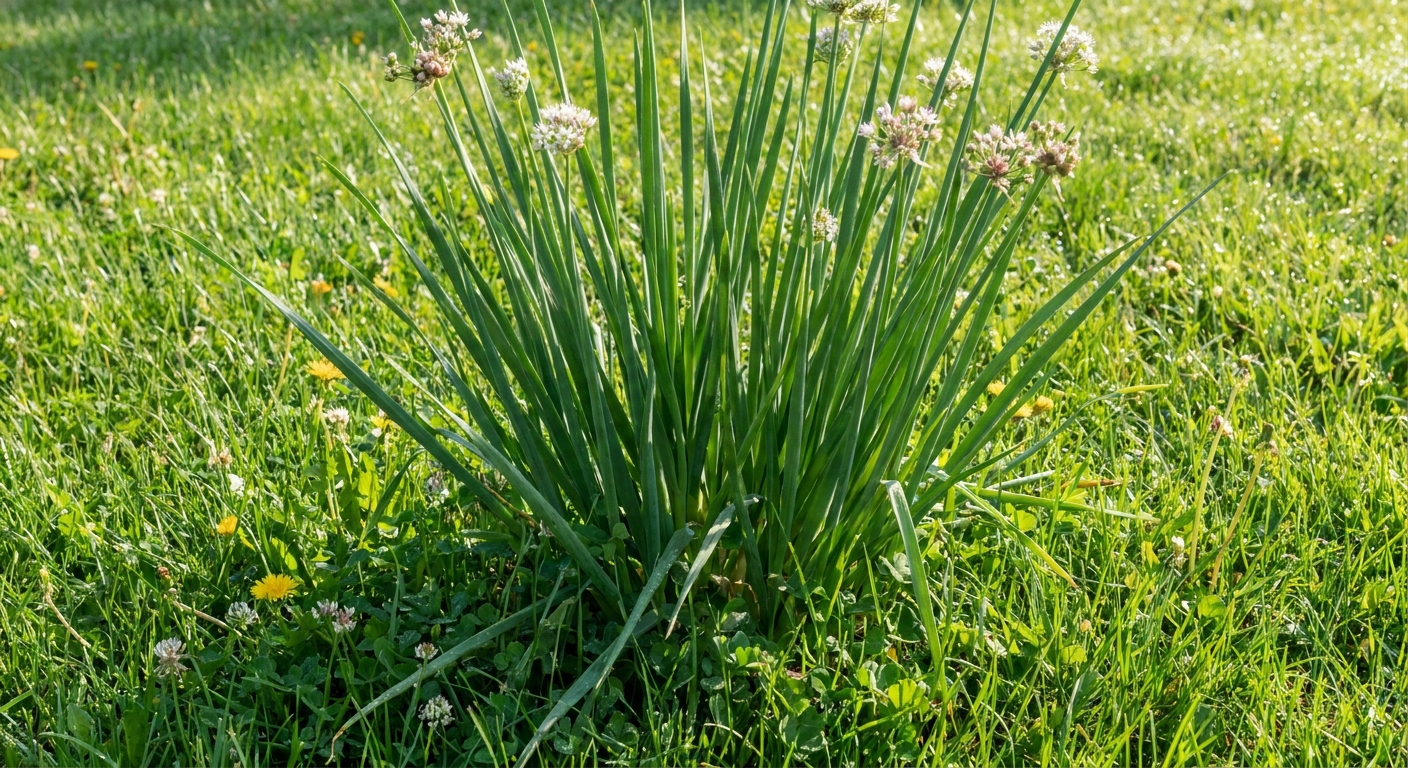
Wild garlic vs. wild onion
Before you treat anything, make sure you have the right target. The control strategy is similar for both, but the ID step keeps you from wasting time on look-alikes or picking the wrong product for your lawn.
Look at the leaves
These traits are helpful, but they are not perfect everywhere. Species vary by region, and some descriptions overlap.
- Wild garlic: leaves are often round and hollow, like little green straws. If you pinch one and roll it between your fingers, it usually feels tube-like.
- Wild onion: leaves are more often flat and solid (not hollow), more like a thicker, waxier blade.
Use the smell test
Pull or crush a leaf and smell it. Most of the time you will get an onion-garlic odor that is stronger once the tissue is crushed. If it does not smell like an allium at all, stop and re-check your ID.
Check how it grows
Both tend to show up as upright clumps that pop up faster than surrounding grass in late winter and spring. They often stand out because they stay greener earlier and taller between mowings.
Watch for look-alikes
A few plants can mimic the “strap leaf” look in lawns. If you are not sure what you are holding, treat it like a mystery plant. Do not eat anything from a lawn just because it looks onion-ish.
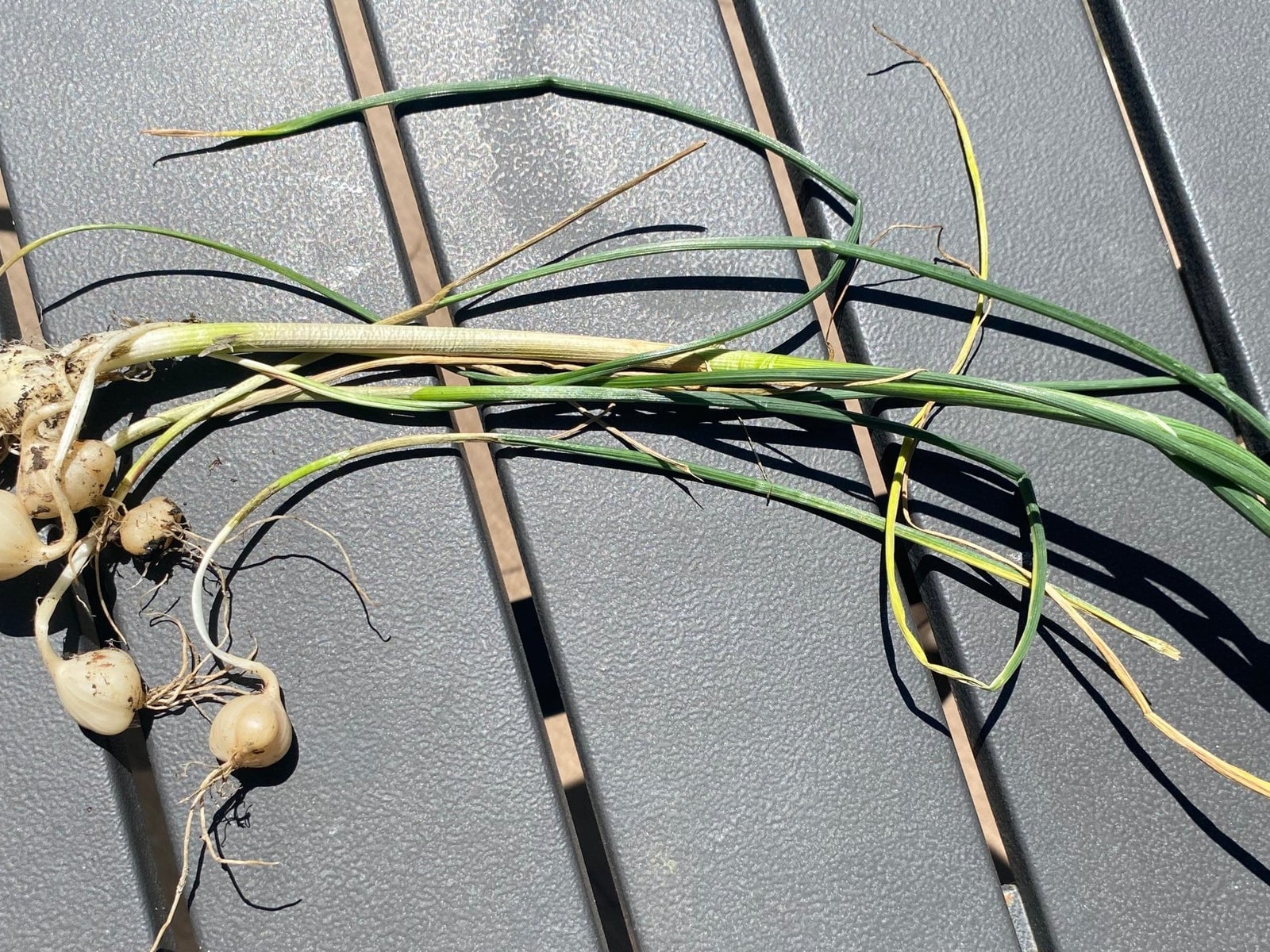
Why it keeps coming back
Wild garlic and wild onion are perennial bulbs. That one fact explains most of the frustration.
The bulb is the real plant
The leaves you see are basically solar panels. They feed the bulb underground, and that bulb survives mowing, dry spells, and most half-hearted attempts to “starve it out.” Many plants also form bulblets (tiny bulbs) attached to the main bulb, which means one clump can slowly turn into several.
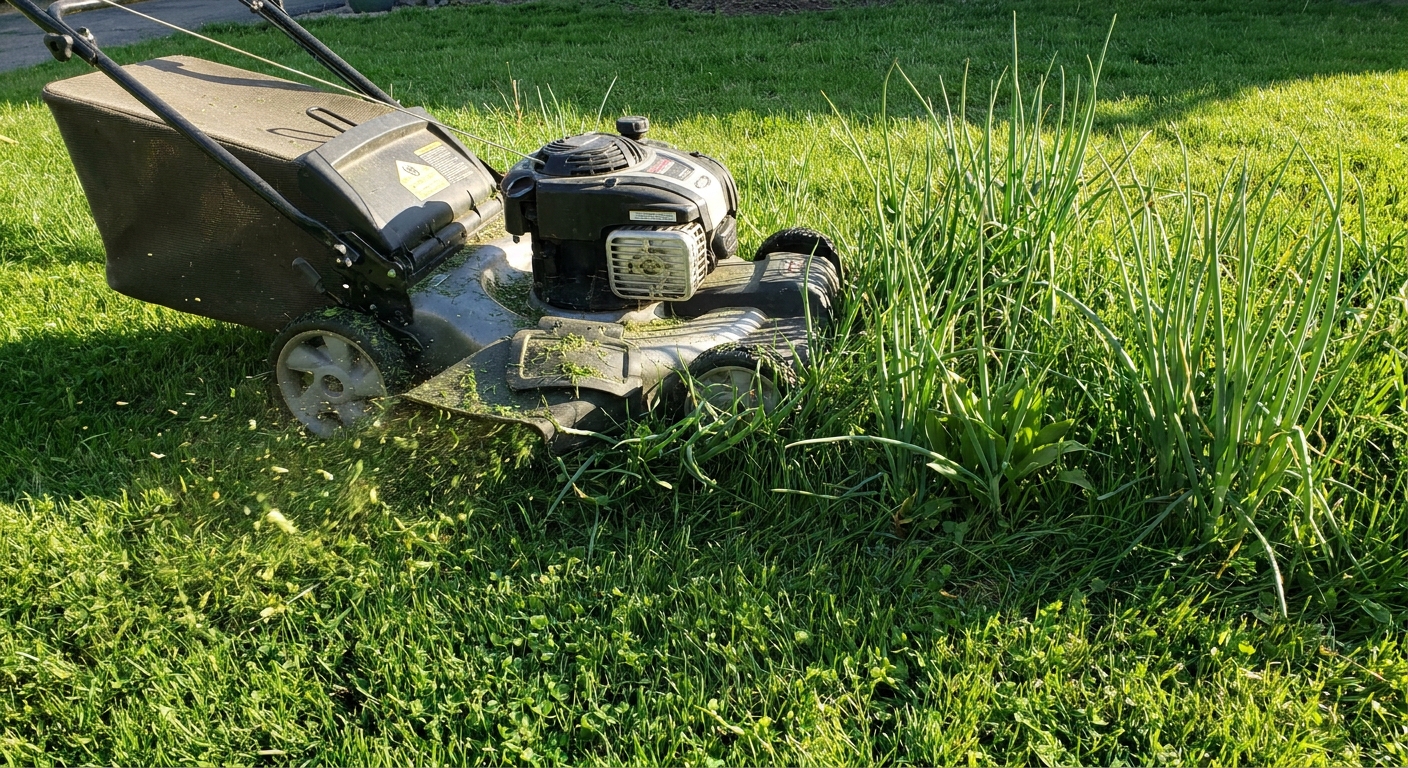
Why mowing does not solve it
Mowing rarely kills the bulb. It does three things you do not want:
- It delays real control. If you keep mowing and never treat or dig, you can blow past the best window when the plant is actively feeding the bulb.
- It can spread it later in the season. If plants form bulbils or seedheads, mowing can scatter pieces around, especially in spots that are allowed to mature.
- It boosts the smell. You chop the leaves and release that onion-garlic odor across the whole yard.
I still mow, obviously. I just do not rely on mowing as control, and I try not to let any patches mature.
Best time to treat
Timing matters more here than with a lot of common broadleaf weeds.
Late fall or early spring
Treat when the plant is actively growing so the control method, especially herbicide, has a better shot at reaching the bulb.
- Late fall: After your turf slows down, wild garlic or wild onion often stays active. Fall treatments can weaken bulbs going into winter.
- Late winter to early spring: When shoots are up and tender, treatments can work well if temperatures are mild and the lawn is not stressed.
Avoid treating in the heat of summer. By then, many plants are naturally fading back, and the bulb is already stocked up.
Pick calm, dry weather
For any spray method, you usually want:
- No rain expected for at least 24 hours (follow the label if it specifies longer).
- Low wind to prevent drift.
- Moderate temperatures that fit the product label (many lawn herbicides perform best in mild weather).
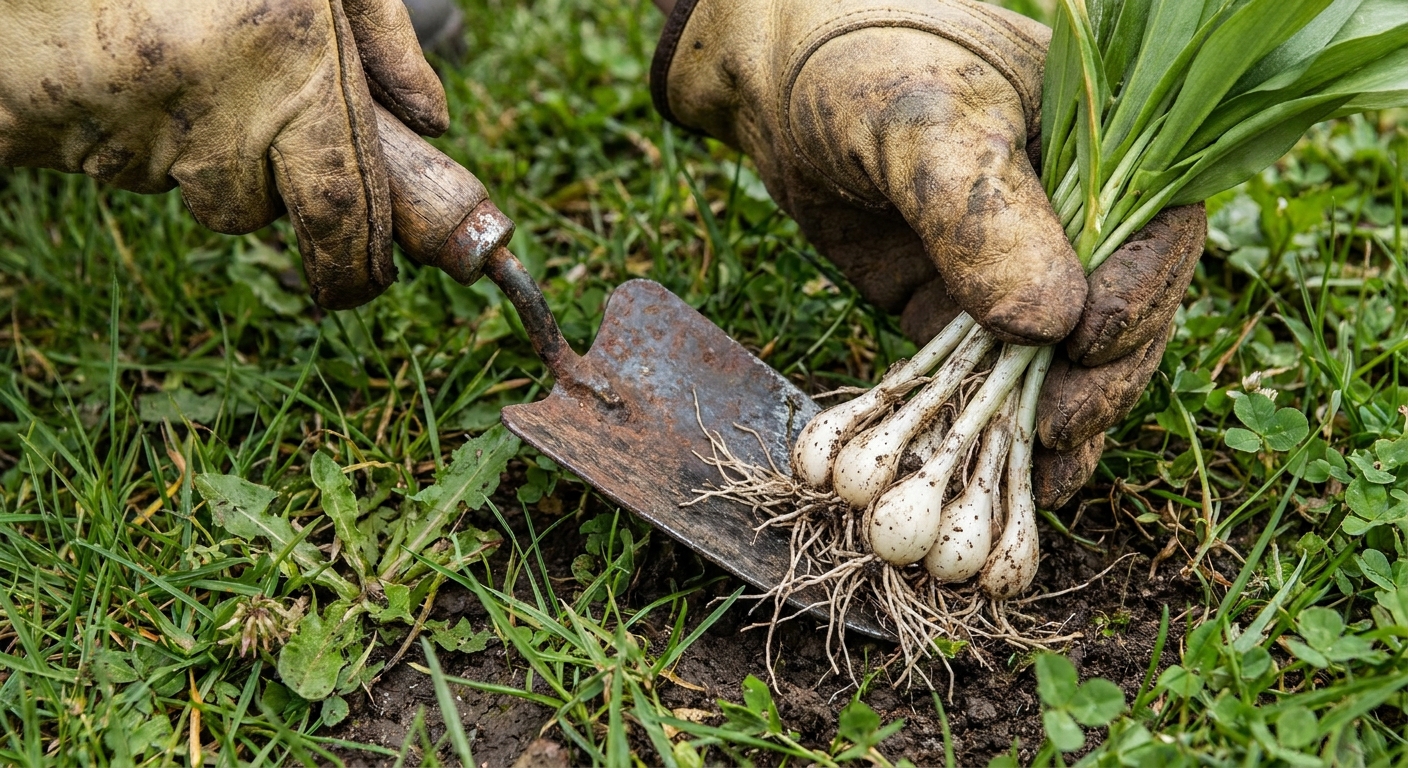
Option 1: Dig it out
If you only have a handful of clumps, digging is cheap and satisfying. It is also the fastest way to get a sure result, as long as you remove the bulb.
What you need
- Hand trowel or a narrow transplant spade
- Bucket or yard waste bag
- Gloves
How to dig the right way
- Water the area if the ground is dry. Damp soil lets you pull more of the bulb intact.
- Loosen soil around the clump in a circle a few inches out from the shoots.
- Lift from underneath and bring up the whole plant. You are looking for a small bulb at the base, sometimes with little bulblets.
- Go back for leftovers. If the leaves snap off and the bulb stays, you basically just gave it a haircut.
- Backfill and seed if you left a divot. Bare soil is an invitation for the next weed.
Marcus tip: If you dig and the patch comes right back, assume you left bulbs behind. Dig wider next time. These can be deeper than you expect in compacted lawns.
Option 2: Spot-spray herbicide
When wild garlic or wild onion is scattered across the yard, digging turns into a part-time job. This is where a selective herbicide is usually the practical choice.
What to look for
You want a product labeled for wild garlic or wild onion and safe for your grass type. Read the label twice, especially the section that lists:
- Target weeds (wild garlic and wild onion should be named)
- Turf types it is safe on
- Mixing instructions and temperature limits
- How many applications per year
- Reseeding or overseeding wait times
In many lawns, products containing ingredients like 2,4-D, MCPP (mecoprop), and dicamba are common for broadleaf weeds, but alliums can be tougher. Depending on your turf and region, control may require specialty actives (such as sulfentrazone or metsulfuron-methyl) and more than one application. The label is the rulebook.
Marcus tip: Do not assume an all-purpose “3-way” weed killer will knock this out in one pass. If the label does not name wild onion or wild garlic, keep shopping.
Grass-type caution
Double-check turf safety if you have warm-season grass. Some products can injure sensitive lawns like St. Augustinegrass or centipedegrass, especially in warm weather or at higher rates.
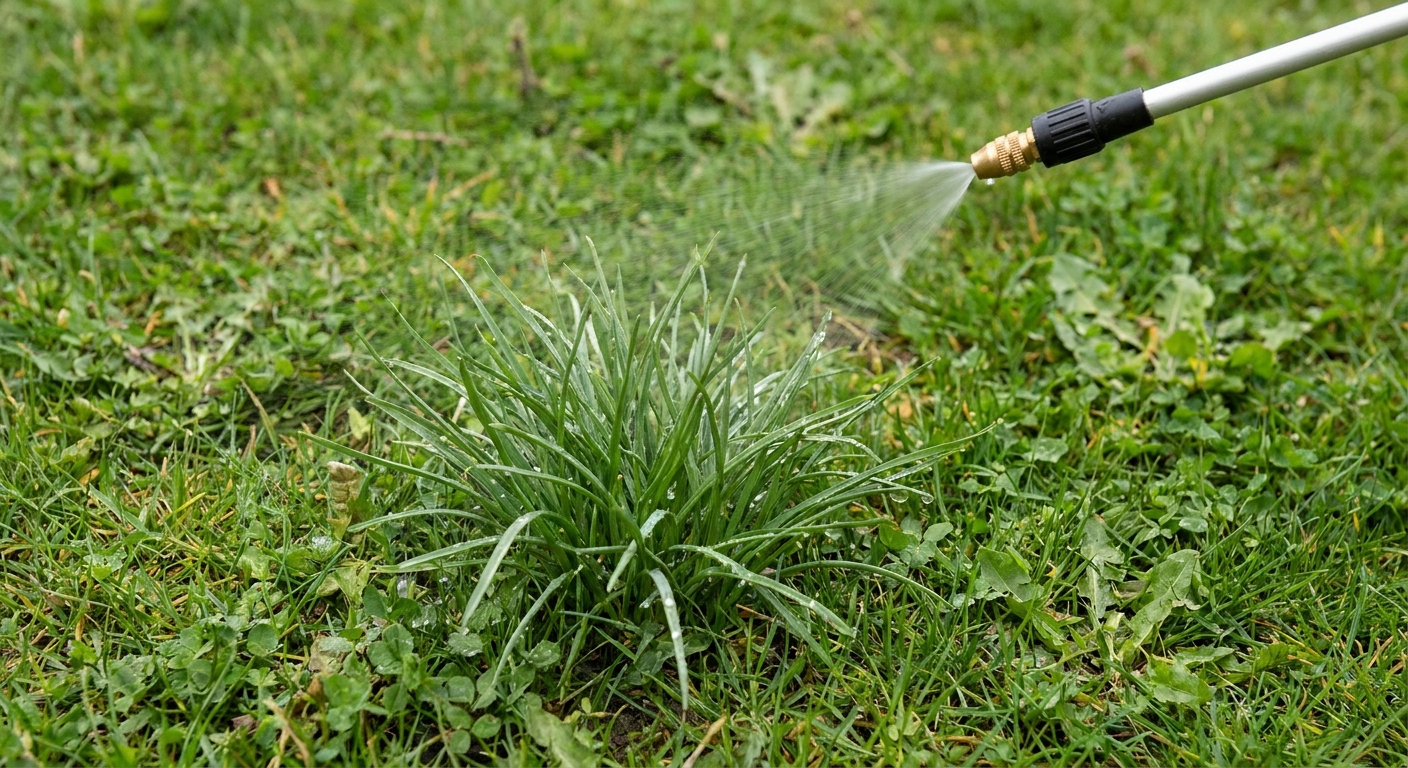
How to spot-spray without wrecking your grass
- Mow a couple days before treatment, not the same day. You want enough leaf surface to absorb the spray.
- Mix accurately. Stronger is not better. Over-mixing increases turf damage risk.
- Spot treat clumps instead of blanket spraying the whole lawn if the problem is patchy.
- Wet the leaves, do not drench. You want coating, not runoff.
- Repeat as directed. Many successful plans involve a second application 10 to 14 days later, if the label allows.
If you are planning to overseed, pay attention to the reseeding interval. Some herbicides require weeks before you can seed safely.
What not to do
- Do not rely on mowing alone. It almost never kills the bulb.
- Do not pull straight up on dry soil. You will snap leaves and leave the bulb.
- Do not blanket spray the entire yard “just in case.” Spot treat whenever possible to reduce chemical use and turf stress.
- Do not treat during drought or extreme heat. Your grass is already stressed, and results are worse.
- Do not compost pulled plants if they have bulbs attached. Bag them or dispose of them according to local yard waste rules.
Aftercare
Even with good control, you may see a few stragglers. That does not mean the treatment failed. It means bulbs can be missed, and new ones can be introduced.
Thicken your turf
- Fertilize appropriately for your grass type and season.
- Overseed thin areas when your grass species prefers it (cool-season lawns in fall, many warm-season lawns in late spring or early summer).
- Mow at the right height. Taller turf shades soil and reduces space for weeds to establish.
Fix conditions they like
Wild onion and garlic often take hold where lawns are thin or stressed.
- Improve drainage in soggy spots when possible.
- Aerate if you have compacted soil and the lawn type and season are appropriate.
- Fill bare patches quickly. Bare dirt is a landing pad for all kinds of weeds.
FAQ
Will wild onion and wild garlic die on their own in summer?
The leaves often fade back as temperatures climb, but the bulb usually survives and comes back the next cool season. If you wait for summer, you are usually letting the bulb win the storage battle.
Can I use vinegar or boiling water in the lawn?
I do not recommend it for lawn areas. Non-selective burn-down methods can damage grass, and they often do not kill bulbs reliably unless you repeat aggressively, which usually leaves you with dead turf and bare spots.
Why does my yard smell like onion after mowing?
You are chopping wild onion or wild garlic leaves and releasing their oils. The smell is a strong clue you have it even if you cannot spot the clumps from the sidewalk.
How long does it take to get rid of it?
Small patches can be solved in an afternoon by digging. Widespread issues usually take one season of well-timed treatment plus follow-up the next season for any survivors.
The 30-Second Cheat Sheet
Essential takeaways for: How to Get Rid of Wild Garlic and Wild Onion in Your Lawn
Fast ID
- Wild garlic: often has round, hollow, tube-like leaves and an onion-garlic smell (usually stronger when crushed).
- Wild onion: more often has flatter, solid leaves and an onion-garlic smell (often more onion-forward when crushed).
Why it keeps coming back
Both regrow from underground bulbs and may also make bulblets. Mowing is basically a haircut, not a cure, and once plants form bulbils or seedheads, mowing can help spread pieces around.
Best timing
- Late fall and late winter to early spring when plants are actively growing.
- Avoid hot summer treatments.
Best methods
- Small patches: dig and remove the whole bulb (dig wider than the clump so you do not snap it off).
- Widespread patches: spot-spray a selective lawn herbicide labeled for wild garlic or wild onion. Follow label rates and repeat intervals.
Quick success checklist
- Mow 2 days before spraying, not the same day.
- Spray calm, dry weather and avoid drift.
- Expect follow-up. One-and-done is rare with bulbs.
- Thicken turf with proper mowing height and overseeding thin spots.
💡 Tip: Scroll up to read the full article for detailed, step-by-step instructions.
⬆️ Back to top
About Grit
Content Creator @ Grit & Home
Grit is Grit & Home’s little blue clay courier, delivering big questions about the place you call home. Expect practical ideas, a raised eyebrow, and a satchel full of curiosity.