
🚨 In a DIY emergency or rush?
Skip the details and jump straight to our 30-second cheat sheet for the most crucial info.
July is where lawns either cruise through summer or start that slow slide into crispy, stressed turf. The good news is you do not need fancy products or weekly treatments. You need a small handful of habits that fit the heat.
This checklist is split by grass type because July care for Kentucky bluegrass looks very different than July care for Bermuda or St. Augustine. If you are not sure what you have, use this quick rule of thumb: if your lawn stays green in cool spring and fall but struggles in summer, it is usually cool-season. If it loves heat and really takes off once temps climb, it is usually warm-season.
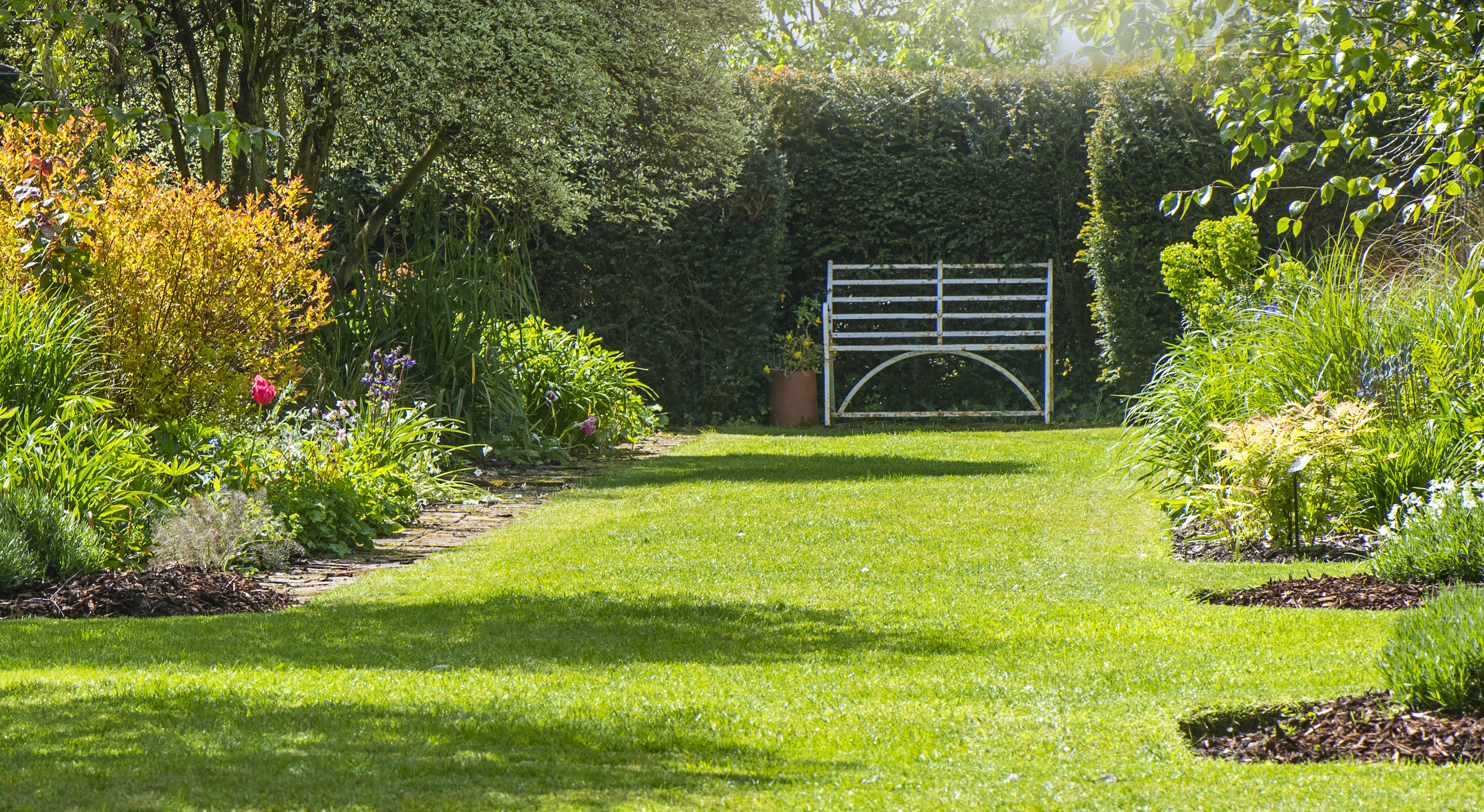
July lawn goals (keep it simple)
- Reduce stress. Taller grass and less frequent mowing help shade soil and hold moisture.
- Water deep, not often. Train roots to go down instead of staying shallow.
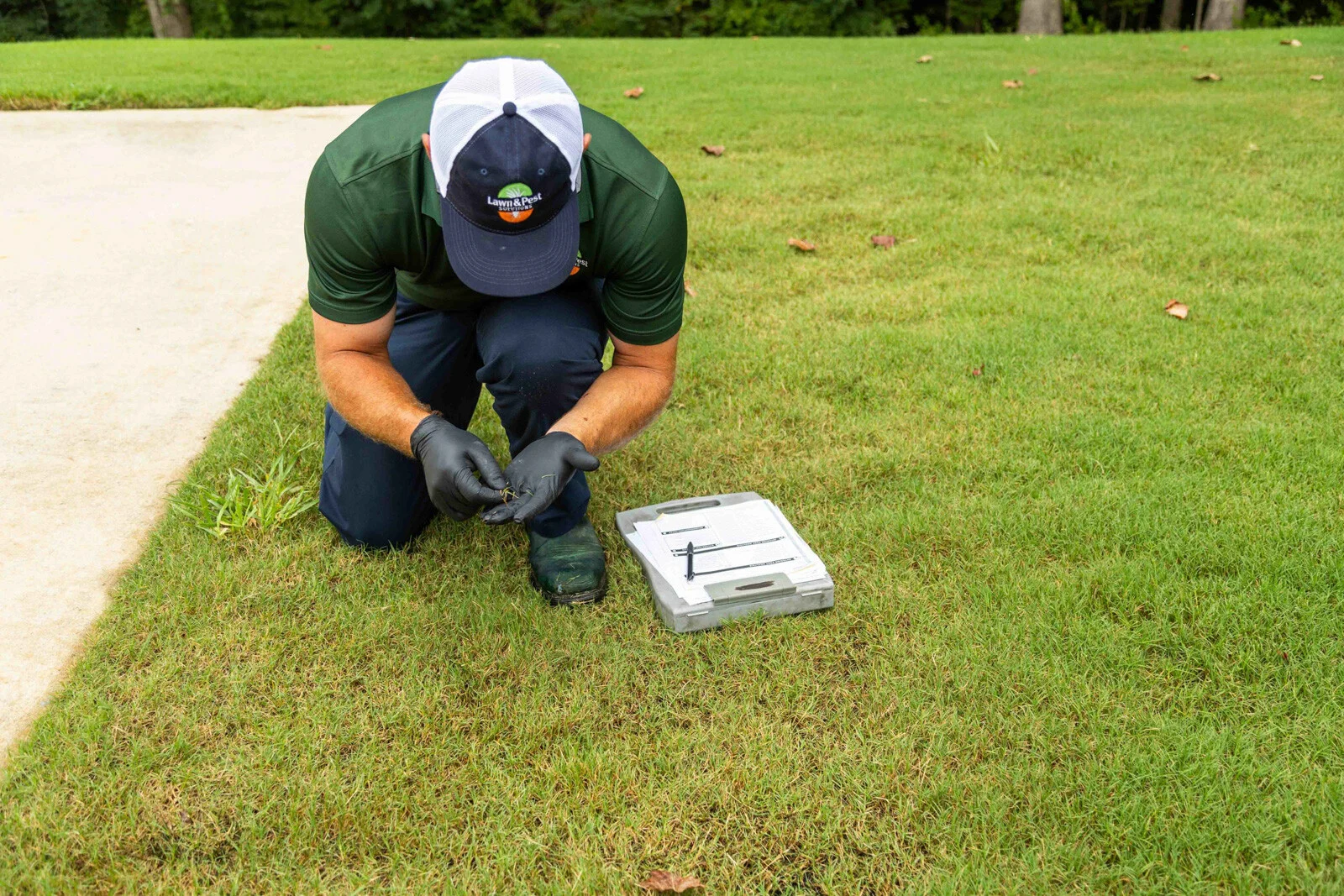
- Scout, do not guess. In July, pests and fungus can appear fast. A five-minute check beats a blind chemical application.
- Avoid big “growth” projects. Midsummer is not prime time for heavy fertilizer or overseeding for most lawns.
Cool-season lawns in July (fescue, bluegrass, rye)
Cool-season grass is in survival mode in July. Your job is to help it coast until cooler weather returns.
Mow higher and mow less
- Target height: 3.5 to 4 inches for most cool-season lawns.
- Frequency: Often every 7 to 10 days in true heat, sometimes longer if growth slows.
- The 1/3 rule still matters: Never remove more than one-third of the blade in a single mow. If your lawn got away from you, raise the deck and take it down gradually over two mows.
- Timing: Late afternoon or early evening is usually best. Avoid mowing at dusk in humid areas if it leaves the lawn wet overnight. Morning mowing is also fine if the grass is dry.
My thrifty July move: I stop chasing a perfect weekly schedule and mow only when the lawn actually needs it. Cool-season grass often slows down in July. Let it.
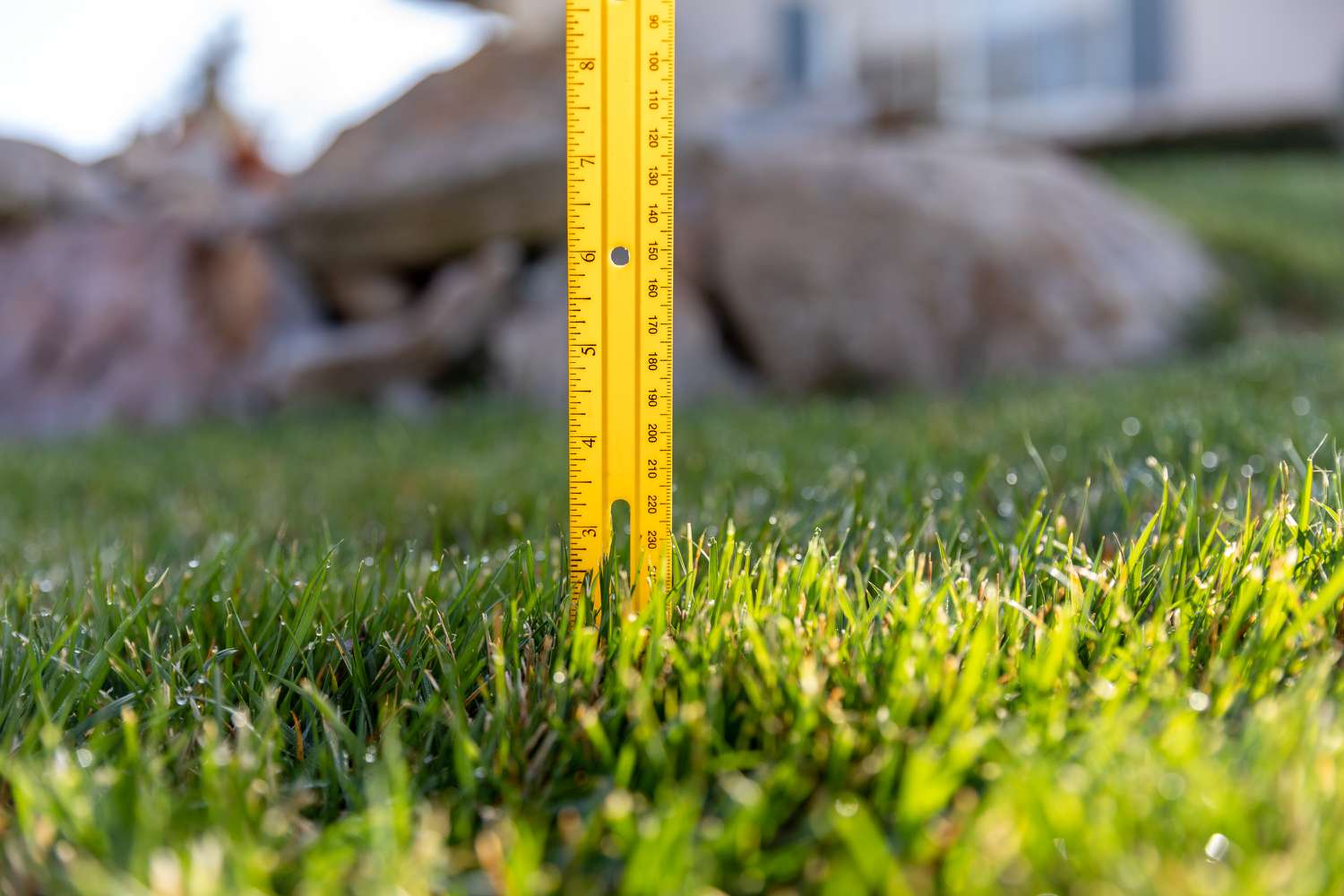
Deep watering rules (cool-season)
July watering should be about depth and consistency, not daily sprinkling.
- How often: Typically 1 to 2 times per week depending on heat, wind, soil type, and watering restrictions.
- How much: Aim for 1 to 1.5 inches of water per week total (rain included), then adjust based on local evapotranspiration (ET), sun exposure, and your soil. Hot, windy weeks and sandy soil can push needs higher. Clay soil often needs longer soak times but fewer watering days.
- Best time: Early morning (roughly 4 a.m. to 9 a.m.) when possible.
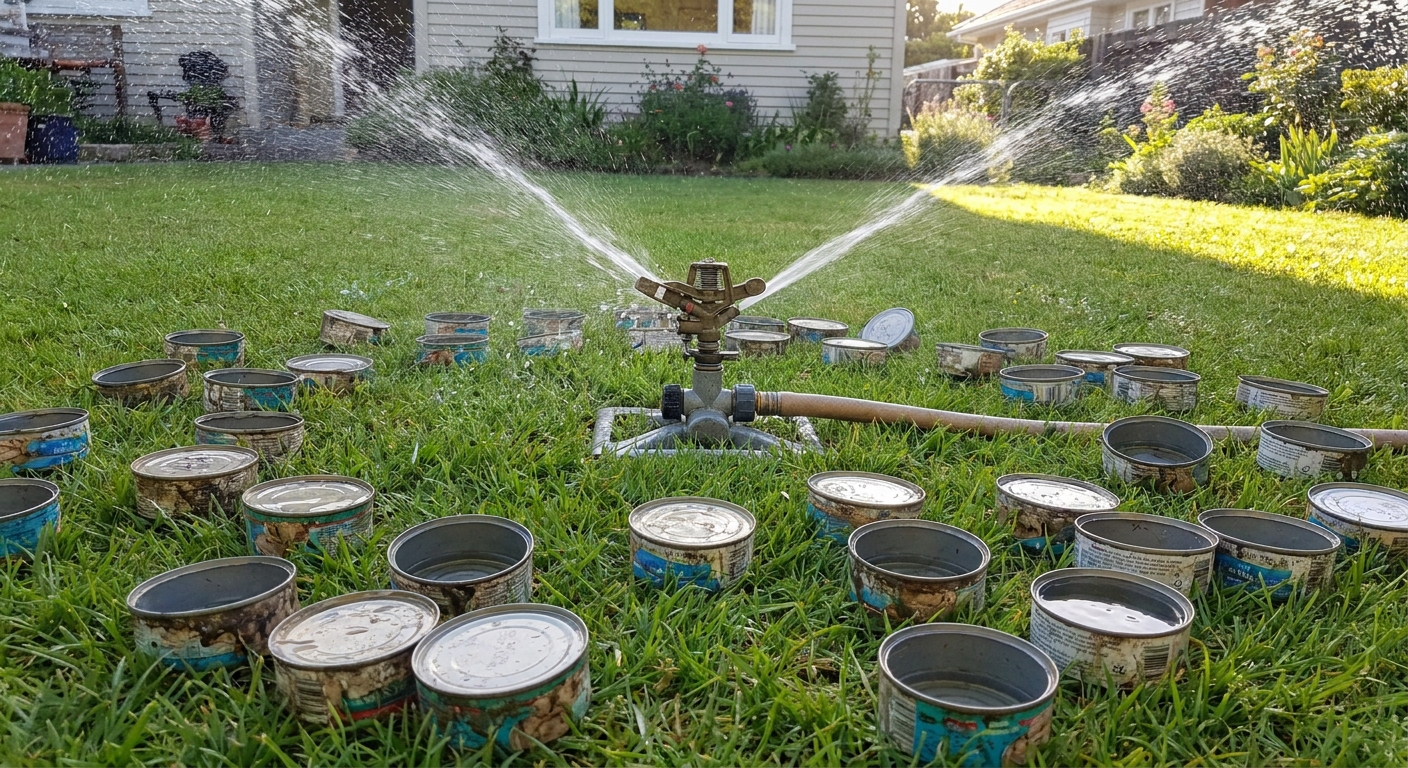
- Avoid frequent light watering: Short daily runs usually keep roots shallow and can increase disease pressure. Calibrate your sprinkler output so you know what you are actually applying.
Quick calibration: Put out a few tuna cans or straight-sided cups, run your sprinklers for 20 minutes, and measure what you collected. Now you know how long it takes to put down a half-inch.
Spot-saving tip: If local restrictions or costs make deep watering tough, prioritize the sunniest areas and slopes. Shaded zones can often coast on less.
Restriction reality check: If your city uses odd-even days or drought stages, follow that first. The goal is still the same: apply your allowed water as deeply as you can, then let the lawn dry down between watering days.
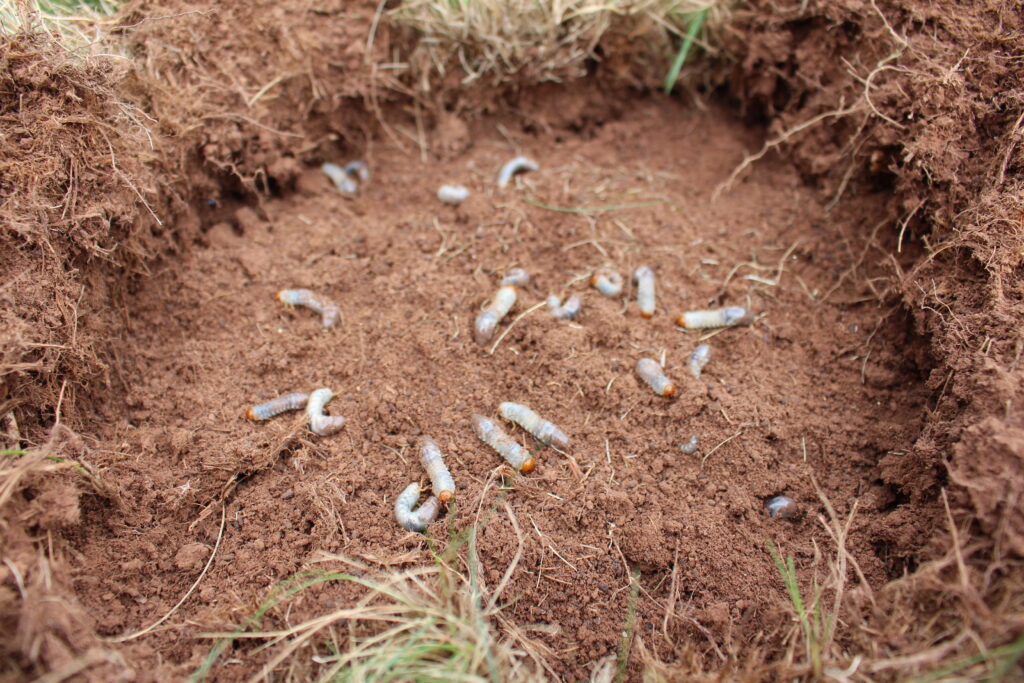
Grub scouting (cool-season)
Grubs can chew roots and cause grass to peel back like old carpet. July is a good time to check before you treat.
- Where to look: Hot, sunny areas that suddenly wilt even after watering.
- How to check: Cut three sides of a 1-square-foot flap and fold it back. Count grubs in the top 2 to 3 inches of soil.
- When it is likely a problem: A common rule of thumb is about 5 to 10+ grubs per square foot plus turf that lifts easily. Thresholds vary by grub species, lawn health, and region, so use this as a starting point, not a law.
If you confirm grubs, that is the moment to read a dedicated guide and choose the right control for the time of year and life stage. Here is our deeper walkthrough: How to Identify and Get Rid of Lawn Grubs.
Chinch bug scouting (cool-season)
Chinch bugs are more notorious in warm-season turf, but hairy chinch bugs can show up in some cool-season lawns too, especially during hot, dry stretches.
- Symptoms: Small patches that look drought-stressed and expand even when you water.
- Where to look: Along sidewalks, driveways, and sunny edges where heat reflects.
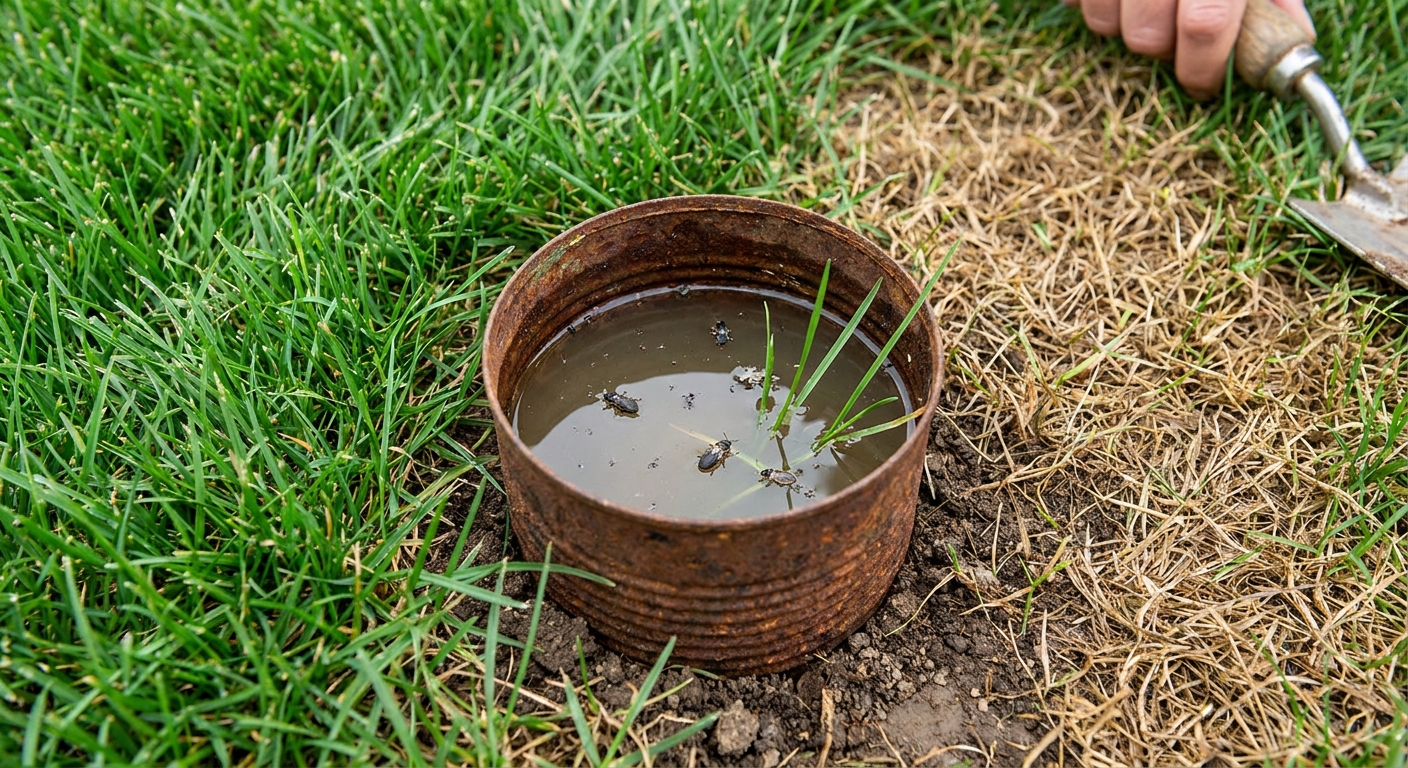
- Simple test: Push a bottomless coffee can a couple inches into the soil at the edge of a dying patch, fill with water, and watch for tiny bugs floating up.
If you actually see chinch bugs, spot-treat the affected zones and correct the conditions that helped them. If you do not see them, do not spray “just in case.”
Brown patch prevention (cool-season)
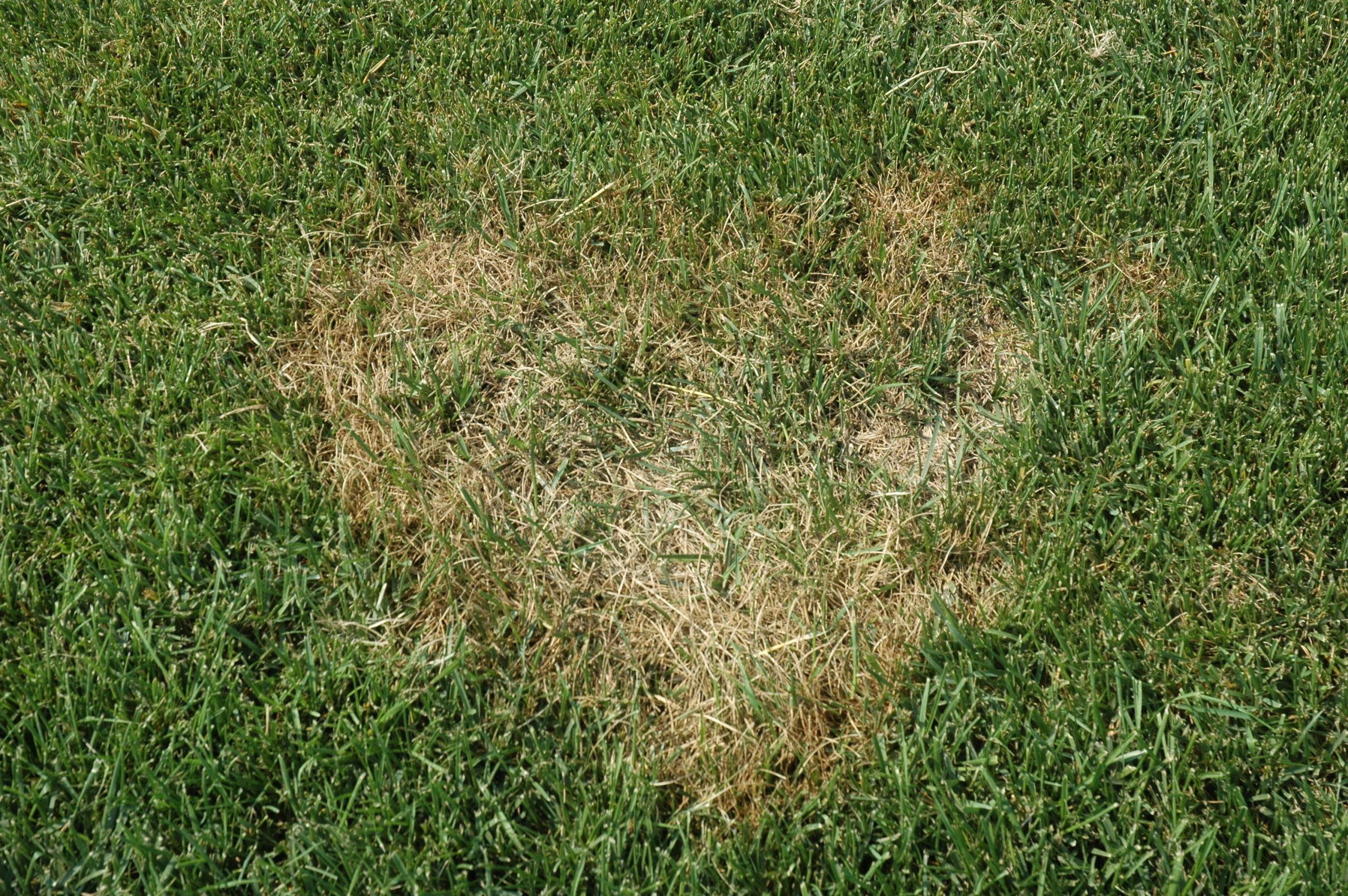
Brown patch fungus loves warm nights, humidity, and wet grass blades. In July, prevention is mostly about watering and airflow.
- Water early morning when possible. Night watering increases leaf wetness time.
- Avoid heavy nitrogen fertilizer. Tender new growth is more disease-prone.
- Keep the mower blade sharp. Ragged cuts stress grass and can worsen disease spread.
- Improve airflow in chronic zones. Trim back shrubs and low branches if a spot stays damp all day. Plan core aeration and thatch management for the right season (usually fall for cool-season lawns).
If you spot circular patches with a darker edge or a “smoke ring” look in the morning, pause and confirm before applying anything. Here is our step-by-step: Brown Patch: Identification and Treatment.
Warm-season lawns in July (Bermuda, Zoysia, St. Augustine, Centipede)
Warm-season grass is in its prime in July. You can be more maintenance-forward than you can with cool-season, but heat still changes how you mow and water.
Mowing height and frequency (warm-season)
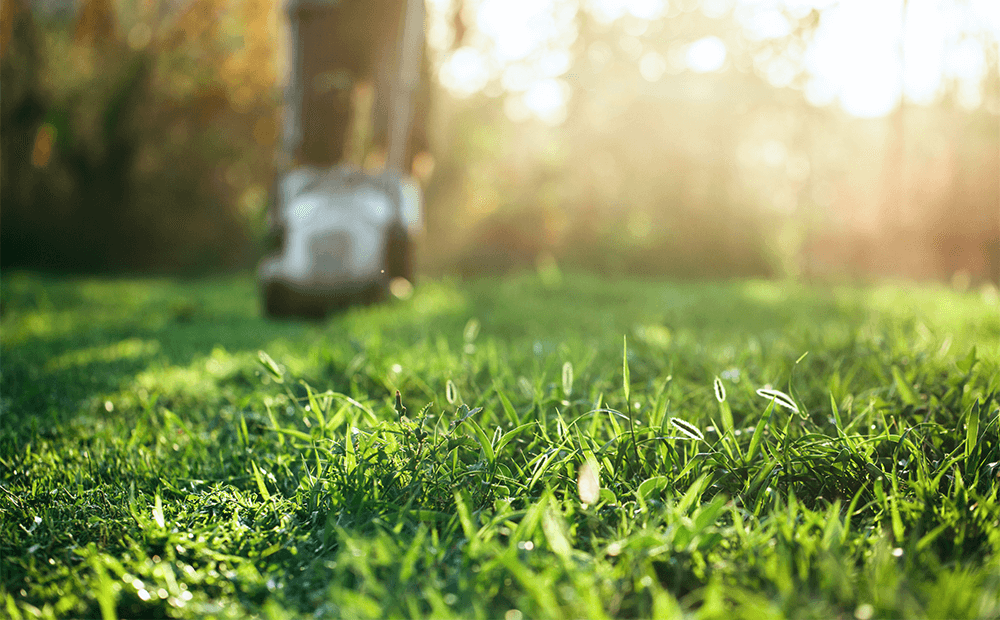
- Bermuda: Often 0.5 to 1.5 inches with frequent mowing. For most rotary mowers, 1 to 2 inches is a practical range. In peak growth, mowing every 3 to 5 days is common.
- Zoysia: Roughly 1.5 to 2.5 inches. Mow weekly, sometimes more.
- St. Augustine: Roughly 3.5 to 4 inches. Mow every 5 to 7 days.
- Centipede: Roughly 1.5 to 2.5 inches. Mow weekly.
July rule: If your lawn is under heat stress or you are in a dry spell, bump the height up a notch. Taller grass shades the soil and helps you water less.
One more caveat: Cultivars vary. If you know your exact grass type, your local extension mowing chart is the final word.
Deep watering rules (warm-season)
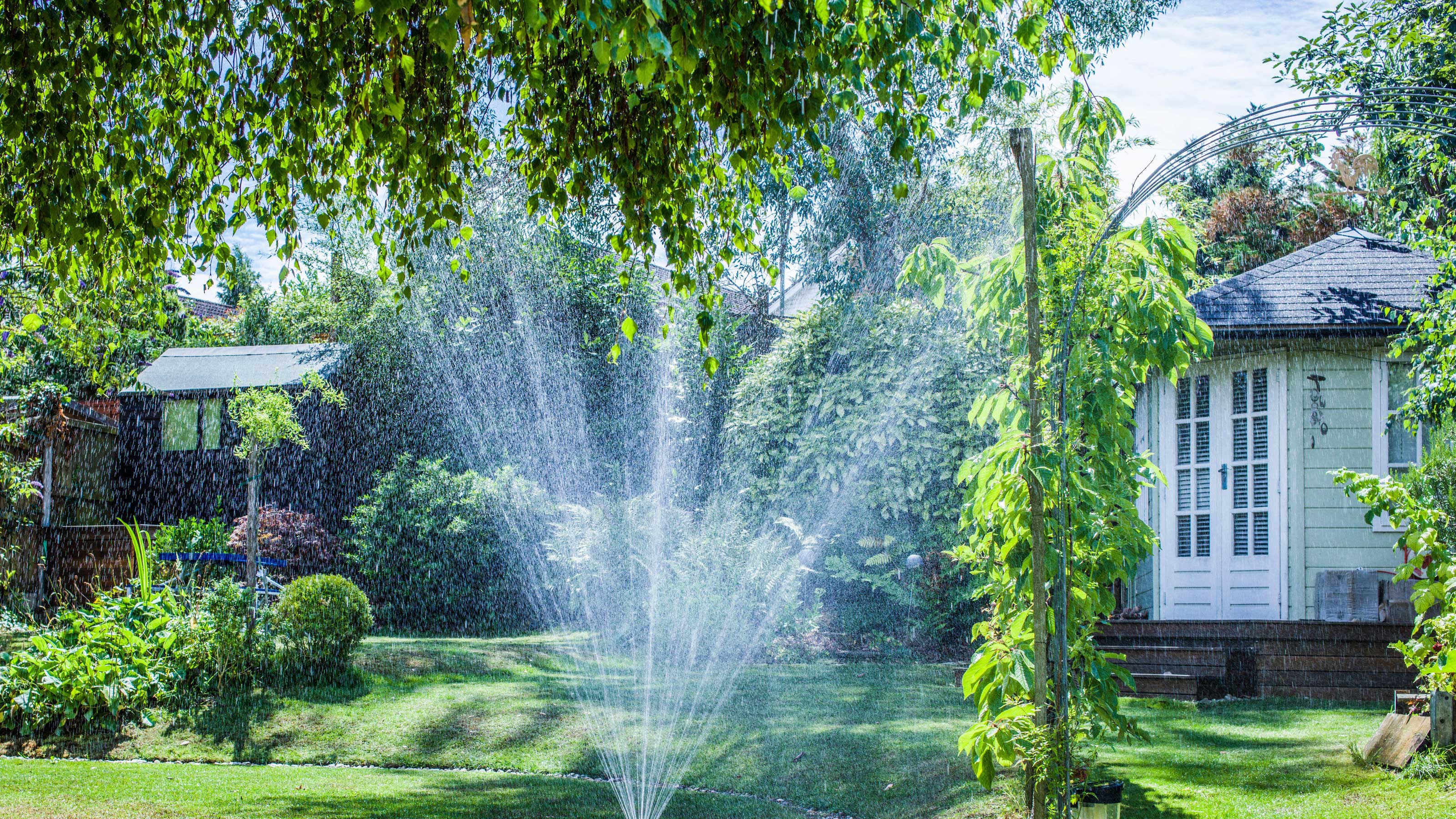
- How often: Typically 1 time per week, sometimes 2 on sandy soil or in extreme heat.
- How much: Aim for about 1 inch per week including rain, then adjust for soil type, sun, wind, local ET, and watering restrictions.
- Best time: Early morning when possible.
- Let it dry between waterings: Warm-season lawns generally prefer a deeper soak followed by a dry-down period.
Watch the lawn, not the calendar: When footprints linger, the color dulls to a bluish gray, or blades start folding, it is time to water.
Chinch bugs (warm-season, especially St. Augustine)
If you have St. Augustine, chinch bugs are one of the first things I think about in July.
- Symptoms: Yellowing that turns brown, often near pavement or in full sun, and spreads in irregular shapes.
- Confirm before treating: Use the coffee-can water test at the edge of the damage.
- Why it matters: Chinch-bug damage can look a lot like drought stress, and watering more does not fix it.
If you confirm chinch bugs, spot-treat the affected zones and correct the conditions that helped them (drought stress, excessive thatch, and overfertilizing).
Grub scouting (warm-season)
Warm-season lawns can also get grubs. The check is the same: peel back a square foot and count.
If you find enough grubs to justify action, use our grub guide to match the product to the timing: How to Identify and Get Rid of Lawn Grubs.
Fungus watch (warm-season)
Warm-season lawns can get fungal issues too, especially with high humidity and frequent watering.
- Avoid watering at night.
- Do not overdo nitrogen. Fast, lush growth can increase disease pressure.
- Improve airflow: Trim back shrubs and low branches if shaded zones stay damp all day.
If you see distinct patches that keep growing despite correct watering, confirm the diagnosis before you treat. Our brown patch guide walks through the signs: Brown Patch: Identification and Treatment.
July “do not do this” list (most lawns)
This is the part that saves money and heartbreak. July is when well-meaning homeowners accidentally make things worse.
- Do not scalp the lawn. Cutting too short in summer exposes soil, raises soil temps, and speeds up moisture loss.
- Do not fertilize heavily. Big nitrogen pushes tender growth that needs more water and is more prone to fungus. If you fertilize at all, keep it light and follow your grass type’s calendar.
- Do not overseed in midsummer (most regions). Seed struggles in heat and needs constant moisture. For cool-season lawns, save seeding for fall. For warm-season lawns, seeding is usually not the go-to anyway compared to plugging or sodding.
- Do not water every day unless you are establishing new sod or seed. And if you are establishing, that is a different plan than “normal July maintenance.”
- Do not blanket-spray pesticides or fungicides without confirming the problem. Scout first, then act.
- Do not compact it. Limit heavy traffic and avoid core aeration for cool-season lawns in mid-summer. For warm-season lawns, aeration timing can be different, so follow a local calendar if you plan it.
Quick weekly July schedule (steal this)
Cool-season (most weeks)
- Mow: Every 7 to 10 days, or whenever the lawn is tall enough that you would break the 1/3 rule.
- Water: 1 to 2 deep waterings early morning as allowed and as needed.
- Scout: A 5-minute walk for wilting, new patches, and insect activity.
Warm-season (most weeks)
- Mow: Weekly for many lawns. Bermuda often needs every 3 to 5 days in peak growth.
- Water: Usually 1 deep watering per week, sometimes 2 for sandy soil or extreme heat.
- Scout: Check sunny edges near pavement for early stress and chinch-bug symptoms.
Any time you see a new brown patch
- Check soil moisture first, then confirm whether it is insects, grubs, fungus, or simple heat stress before you treat.
Thrifty bonus: Keep mulching clippings in summer to recycle nutrients and shade the soil, unless you are actively dealing with a disease outbreak where bagging is recommended.
FAQ
How high should I mow in July?
Cool-season lawns: usually 3.5 to 4 inches. Warm-season lawns: depends on the grass and cultivar, but in general, do not mow lower than your lawn can handle in heat. When in doubt during a heat wave, raise the deck one notch.
Is it okay to water at night in July?
It is better to avoid it. Night watering keeps the grass blades wet for hours, and that is prime fungus territory. Early morning watering is the sweet spot when you can do it.
My lawn is brown in spots. Should I treat for grubs?
Only if you confirm grubs. Peel back a 1-square-foot section and count. If you are seeing a problem-level number for your area and the turf lifts easily, then it is worth digging into treatment options. Otherwise, you might be treating the wrong problem.
Should I kill crabgrass in July?
If you are noticing crabgrass now, focus on targeted control and mowing habits that reduce spread. Pre-emergent is mostly a spring job, but post-emergent options exist. If you confirm crabgrass is the issue, use our guide: How to Get Rid of Crabgrass.
The 30-Second Cheat Sheet
Essential takeaways for: July Lawn Care Checklist
July lawn care, in 30 seconds
- Mow higher in heat: Cool-season lawns: 3.5 to 4 in. Warm-season: follow grass type, but raise height during heat waves.
- Mow less when growth slows: Cool-season often shifts to every 7 to 10 days in July. Bermuda may need every 3 to 5 days in peak growth.
- Water deep, not daily: Early morning is best. Aim around 1 to 1.5 in per week (cool-season) or about 1 in per week (warm-season), including rain, then adjust for soil, wind, and local ET.
- Scout before you treat: New brown patches: check soil moisture first, then inspect for grubs (peel back 1 sq ft) and chinch bugs (coffee-can water test).
- Prevent brown patch: Avoid night watering, avoid heavy nitrogen, keep mower blade sharp, improve airflow in damp areas.
- Skip big midsummer projects: Avoid heavy fertilizing and avoid overseeding in July for most grass types.
- Only use problem guides when confirmed: If you see crabgrass, grubs, or fungus symptoms, then follow the dedicated how-to for that issue.
💡 Tip: Scroll up to read the full article for detailed, step-by-step instructions.
⬆️ Back to top
About Marcus Vance
Content Creator @ Grit & Home
Marcus Vance is a lifelong DIY enthusiast and self-taught home renovator who has spent the last decade transforming a dilapidated 1970s ranch into his family's dream home. He specializes in budget-friendly carpentry, room-by-room renovations, and demystifying power tools for beginners. Through his writing, Marcus shares practical tutorials and hard-learned lessons to help homeowners tackle their own projects with confidence.