
🚨 In a DIY emergency or rush?
Skip the details and jump straight to our 30-second cheat sheet for the most crucial info.
The first time my dog got skunked, I made the classic mistake of bringing him straight inside. Within minutes, the whole house smelled like burnt rubber, garlic, and despair. If you are standing in your yard right now with a very offended dog and a very offended nose, here is the good news: you can knock skunk odor way down at home, fast, with a simple wash. The other good news is you do not need fancy pet products to do it.
The important boundary up front: this page is about decontaminating your dog, plus the stuff your dog touched like collars and bedding. It is not a guide for removing skunks from your yard, and it is not an indoor air odor fix. Those are separate problems with separate solutions.
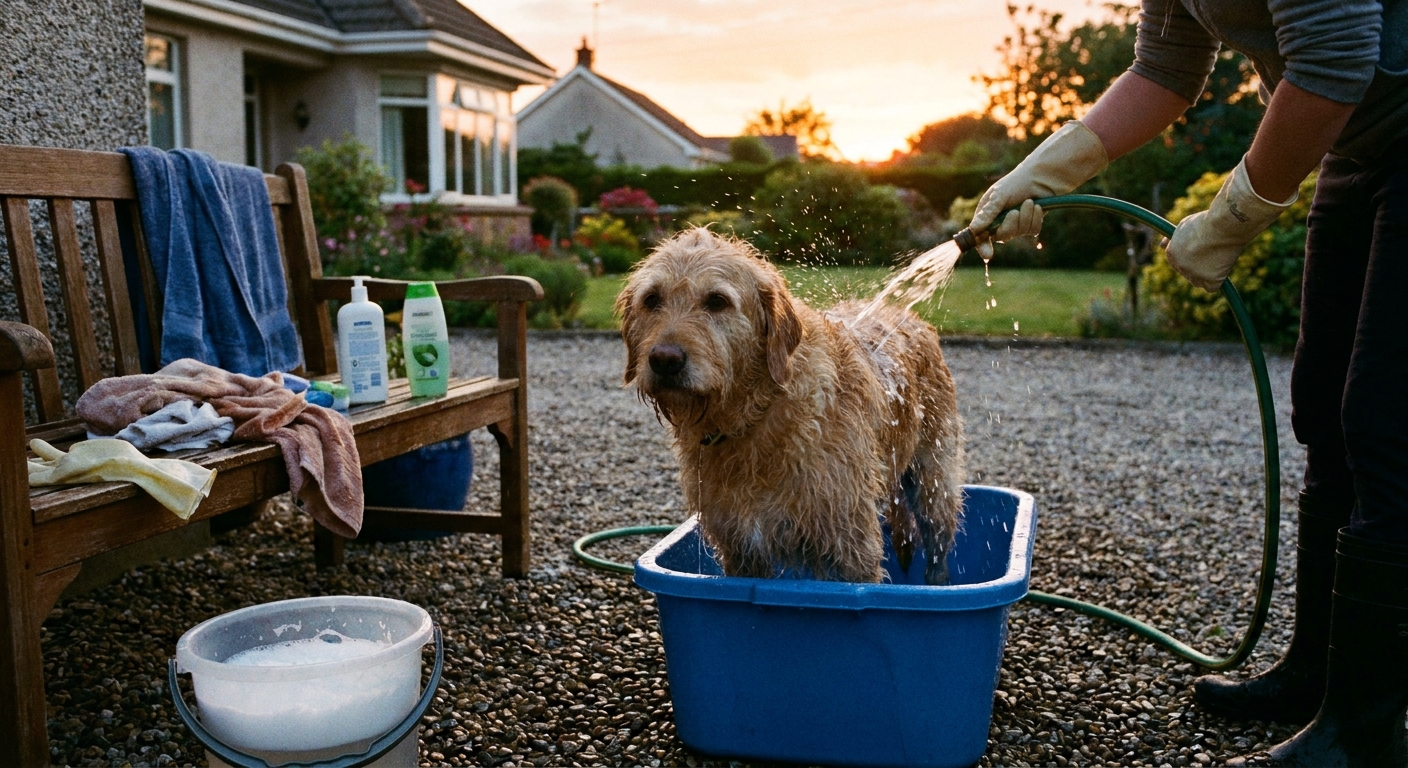
First 5 minutes: do this now
Skunk spray is oily. The more your dog rubs it around, the more it spreads into fur, skin oils, collars, and anything they touch.
- Keep your dog outside. Tie out if needed, or keep them in a well-ventilated garage with the door open. If you must bring them inside, your last resort is a ventilated mudroom or bathroom that is easy to wipe down, and only long enough to get to the tub.
- Stop the rubbing. If your dog is face-first in the grass, use a leash and calm voice to keep them from smearing it into their eyes and mouth.
- Put on gloves and old clothes. Nitrile gloves are ideal. Skunk oil likes to hang around under fingernails.
- Remove collar, harness, bandana. Put them straight into a bucket or a sealed bag outside.
- Check the face. If spray is in or near the eyes, skip ahead to the eye section before you start the wash.
Before you start
A few small moves up front make the whole job safer and less chaotic.
- Keep your dog from licking the solution. Have a second person hold the collar and keep the head up, or use an e-collar if you have one. This mix is for external use only.
- Pick a ventilated spot. Outdoors is best. If weather forces you inside, open windows, run an exhaust fan, and keep other pets away.
- Do not use this on broken skin. If your dog has open wounds, a fresh surgery site, or severe irritation where the spray landed, call your vet for guidance.
Best home wash
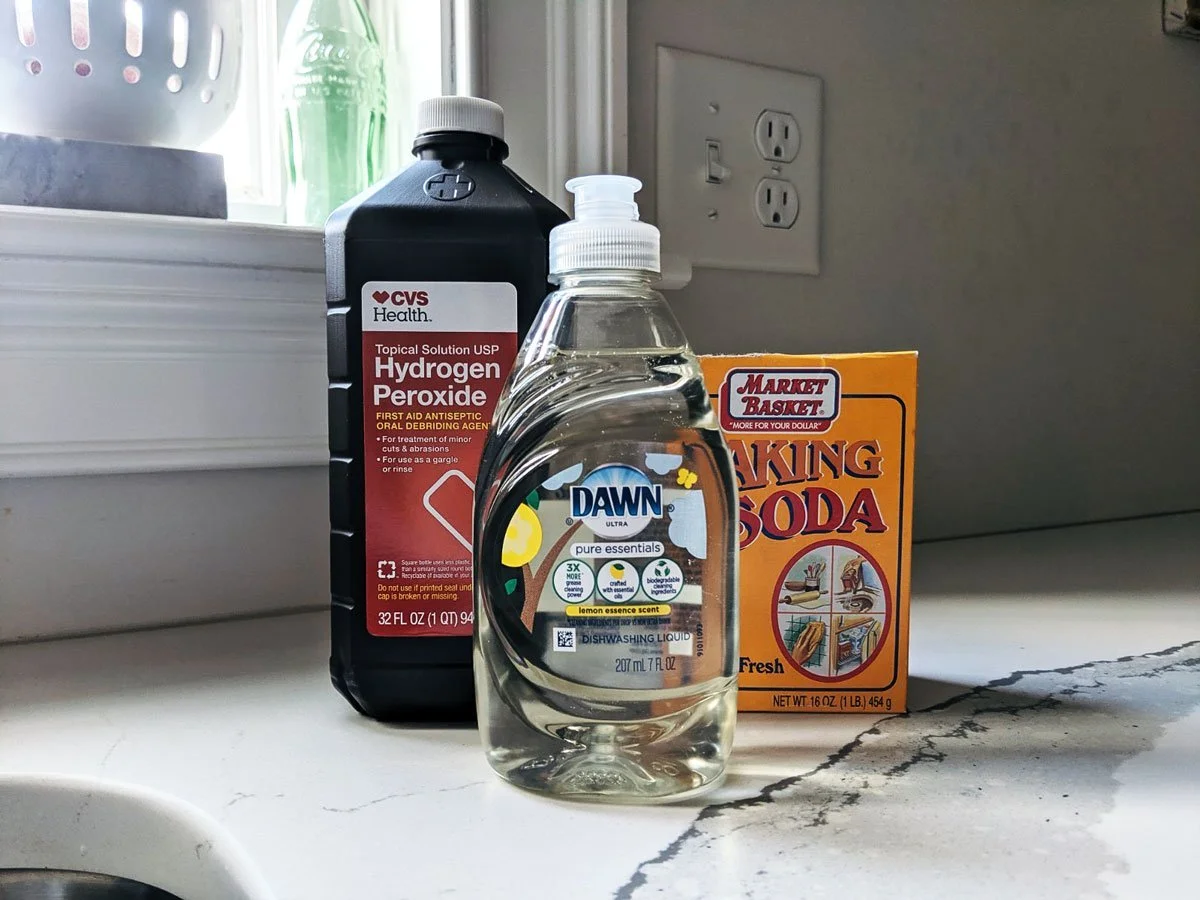
This is the classic skunk formula for a reason. Hydrogen peroxide helps oxidize the odor compounds, baking soda helps break them down, and dish soap helps cut the oily residue so you can rinse it away.
Mixing ratio
- 1 quart of 3% hydrogen peroxide
- 1/4 cup baking soda
- 1 teaspoon liquid dish soap (a grease-cutting original formula is fine)
Make it fresh and use it immediately. It loses punch as it sits.
Do not store the mixture
Once peroxide and baking soda are combined, they can build pressure in a closed container. Mix it in an open bucket or bowl and use it right away. For leftovers, follow local disposal guidance. In many places, flushing a small amount down a sanitary drain with plenty of water is fine. Avoid dumping into a storm drain that leads directly to waterways.
How much you will need
One batch is often enough for a small to medium dog. For large dogs or thick double coats, plan on 2 to 3 fresh batches. Do not try to mix it all in a sealed jug ahead of time.
Wash steps
I approach this like a messy paint job. Control the splash zone, work in sections, and do not rush the rinse.
1) Start with a dry coat
It feels backward, but do not wet your dog first. Water can spread the skunk oil around and make it harder to remove. Apply the mixture to a dry coat.
2) Protect eyes, nose, mouth, and ears
- Keep solution out of the eyes and mouth. Use a damp washcloth around the face instead of pouring product there.
- Do not fill the ear canals. If the ears got hit, wipe the outer ear leather gently.
3) Work from the smelliest spots outward
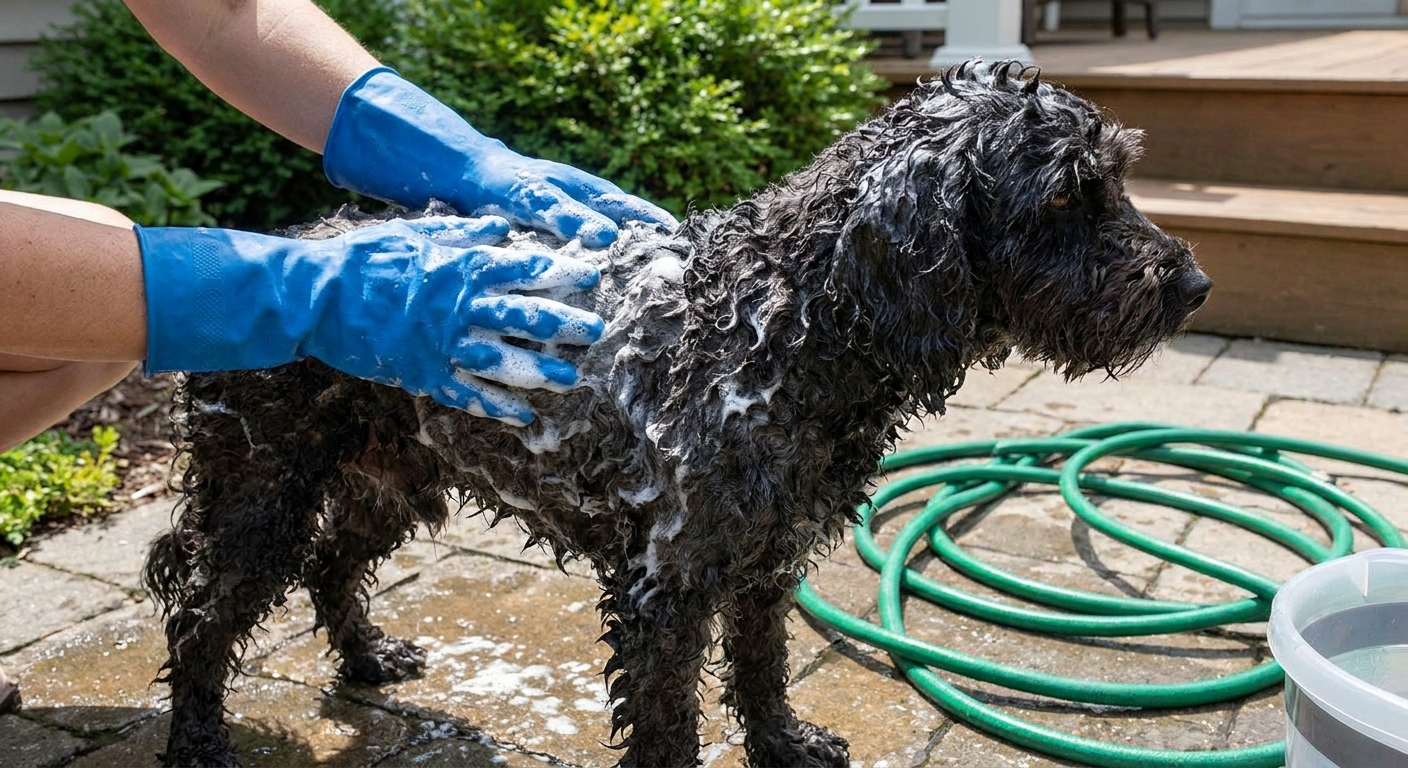
Most dogs take the hit on the face, chest, and front legs. Massage the solution in like shampoo, down to the skin.
4) Let it sit for 3 to 5 minutes
Long enough to work, not so long it irritates skin. Try to keep your dog from shaking, and also accept that they will probably shake anyway. Stand back.
5) Rinse extremely well
Rinse until the coat feels squeaky and soap-free, not slick. Leftover oil equals leftover odor.
6) Follow with a normal dog shampoo
This helps remove any remaining residue and is gentler for the skin than repeating the peroxide mix over and over.
7) Towel dry outside
Use old towels you are willing to sacrifice. Put them straight into a bag or washer, not on your couch.
Face and eye safety
If your dog was sprayed in the face, prioritize comfort and safety over deodorizing perfection.
If spray got in the eyes
- Flush with sterile saline eyewash if you have it, or room-temperature clean water if you do not.
- Rinse for 10 to 15 minutes. A gentle stream is better than a hard blast.
- Call your vet if your dog is squinting, pawing at the eyes, holding one eye shut, or the eyes look red or cloudy after flushing.
Cleaning the face
Use a washcloth with a small amount of the mixture, wrung out well, and wipe away from the eyes and mouth. Then wipe again with plain water on a clean cloth.
Do not pour peroxide solution over the head. Faces are delicate, and one bad splash can turn a smelly situation into an emergency vet visit.
What not to use
When you are desperate, it is tempting to try anything in the laundry room. A few common “fixes” either do not work well, make things worse, or carry real risk.
- Tomato juice: mostly a myth. It does not chemically neutralize skunk compounds. You end up with skunk plus tomato.
- Vinegar alone: may reduce smell a little, but it is not nearly as effective at breaking down skunk oils on fur.
- Bleach: unsafe for skin, eyes, and lungs. Never use it on a dog.
- Ammonia: harsh and dangerous, and the fumes are not something you want around a dog’s face.
- Essential oils: many are irritating or toxic to pets, and oils can trap odor against the coat.
- Human hair dye, mouthwash, strong solvents: not pet safe and can cause burns or poisoning.
How many washes?
One good wash usually takes you from “unlivable” to “manageable.” A faint whiff can linger for days, especially when the coat gets damp.
- Wait 24 hours before repeating the peroxide mix if your dog’s skin seems dry or irritated. Overdoing it can cause itching and redness.
- In between, use regular dog shampoo and plenty of rinsing.
- Long-haired and double-coated dogs may need more time and more careful section-by-section work.
Collars and leashes
If you put a skunked collar back on a clean dog, you basically reinstall the problem.
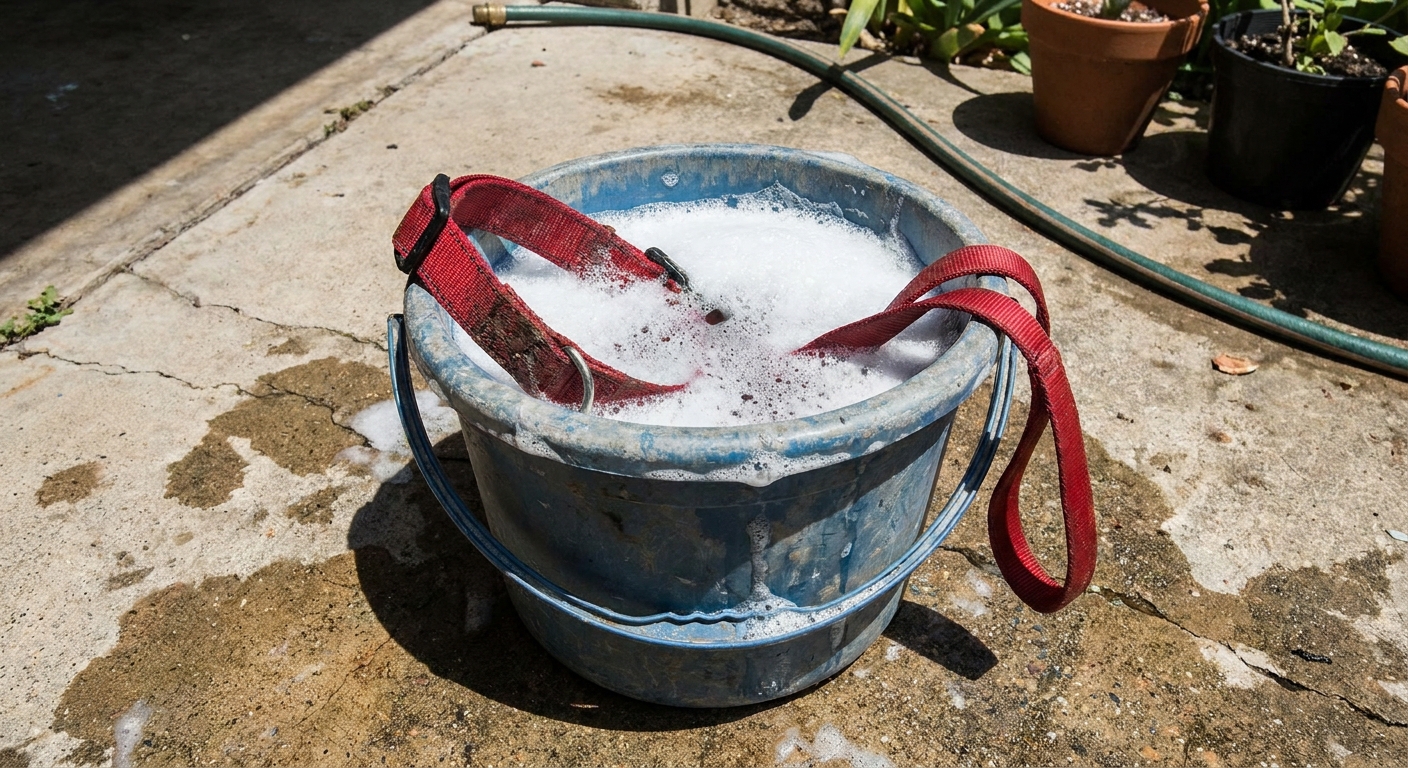
Nylon collars and leashes
- Soak in hot water with dish soap for 30 minutes.
- Scrub with a brush.
- Rinse well.
- If odor persists, do a short soak in a freshly mixed peroxide solution (same recipe, scaled as needed), then rinse again.
Leather collars
Leather is tough. Skunk oil can soak in and stick around. Dish soap and warm water can help, but sometimes the thrifty answer is still replacement if the smell will not quit.
Bedding and laundry
Anything your dog laid on after the spray is probably contaminated. Handle it like oily rags from a DIY project. I learned this one the hard way when I thought, “It is just one blanket,” and my whole laundry room argued back for a week.
- Keep items outside until you are ready to wash.
- Pre-rinse if you can with a hose outside to remove surface oils.
- Wash in hot water with your usual detergent, plus a small squirt of dish soap to cut oil.
- Air dry first if you are unsure. Heat from a dryer can set the odor. Air drying is a good test run. If it still smells after air drying, wash again.
If your washer starts to smell, run an empty hot cycle with detergent and wipe down the drum seal afterward.
When to call the vet
Most skunkings are a home-cleanup problem, not a medical crisis. But there are a few moments where I stop playing handyman and call the pro.
Call your vet or an emergency clinic if:
- Your dog was sprayed directly in the eyes and keeps squinting, pawing, or the eyes look very red or cloudy.
- Your dog is drooling excessively, vomiting, or seems disoriented. That can happen if they ingest spray while licking.
- You see hives, significant swelling, or trouble breathing.
- Your dog has open wounds, recent surgery sites, or severe skin irritation where the spray landed.
- Your dog is very young, elderly, or has existing respiratory issues and is struggling with the fumes.
Two things this will not fix
1) “My house smells now”
If the dog came inside before you washed them, you have an indoor air and surface contamination issue. Ventilation, surface cleaning, and time are the big tools there. This page is focused on getting skunk spray off your dog safely, not deodorizing your living room.
2) “How do I keep this from happening again?”
Skunk prevention is its own project. Yard exclusion, cleanup of attractants, and safe deterrents deserve their own plan. Do not expect a perfect dog wash to keep the problem from happening again.
FAQ
Can I use this peroxide mix on puppies?
Use extra caution with puppies and small dogs because they are more sensitive and chill faster. If the puppy was sprayed in the face or seems unwell, call your vet first. If you do wash, keep it brief, avoid the eyes and mouth, rinse thoroughly, and keep the pup warm afterward.
Will the peroxide lighten my dog’s fur?
It can slightly lighten some coats, especially darker fur, and it can dry the skin if overused. That is one reason I stick to one thorough application, then switch to normal dog shampoo for follow-up washes.
What if I do not have peroxide?
Dish soap and a thorough bath is better than nothing, because it helps remove the oily residue. But peroxide is what really helps neutralize the odor compounds. If you can get to a store quickly, it is worth it.
My dog still smells a little when wet. Is that normal?
Unfortunately, yes. A faint odor can linger and reappear when the coat gets damp. After the initial decontamination, a couple normal baths over the next week usually finishes the job.
Can I use this on a cat?
I would not treat a cat like a small dog here. Cats groom obsessively, which increases the risk of ingesting residue, and they can be more sensitive to many products. If a cat gets skunked, call your vet for the safest approach.
The 30-Second Cheat Sheet
Essential takeaways for: How to Get Skunk Spray Off a Dog
Do this first
- Keep your dog outside and stop them from rubbing their face on the ground.
- Put on gloves. Remove and bag the collar and harness.
Best skunk wash recipe
- 1 quart 3% hydrogen peroxide
- 1/4 cup baking soda
- 1 teaspoon liquid dish soap
Mix fresh. Do not store. For external use only.
How to wash
- Apply to a dry coat first.
- Keep your dog from licking it. Avoid eyes, nose, mouth, and ear canals.
- Work into fur, wait 3 to 5 minutes.
- Rinse extremely well, then wash once with normal dog shampoo.
Face and eye safety
- If spray got in the eyes, flush with sterile saline or clean water for 10 to 15 minutes.
- Call the vet if squinting, redness, pawing, or cloudiness continues.
What NOT to use
- Tomato juice (mostly myth)
- Bleach or ammonia (unsafe)
- Essential oils (can irritate or be toxic)
Clean the dog’s gear
- Nylon collar and leash: soak in hot, soapy water, scrub, rinse.
- Bedding and blankets: hot wash with detergent plus a small squirt of dish soap. Air dry first if you are unsure.
When to go to the vet
- Eye injury symptoms, vomiting or heavy drooling, hives or swelling, breathing trouble, severe skin irritation, or if your dog seems unusually lethargic or disoriented.
Know the limits
- This wash de-skunks your dog. It will not magically fix indoor air odor or keep skunks out of your yard going forward.
💡 Tip: Scroll up to read the full article for detailed, step-by-step instructions.
⬆️ Back to top
About Marcus Vance
Content Creator @ Grit & Home
Marcus Vance is a lifelong DIY enthusiast and self-taught home renovator who has spent the last decade transforming a dilapidated 1970s ranch into his family's dream home. He specializes in budget-friendly carpentry, room-by-room renovations, and demystifying power tools for beginners. Through his writing, Marcus shares practical tutorials and hard-learned lessons to help homeowners tackle their own projects with confidence.