
🚨 In a DIY emergency or rush?
Skip the details and jump straight to our 30-second cheat sheet for the most crucial info.
Small courier. Big home questions.
If your ice cream gets crunchy, your chicken looks dusty-white, or your frozen berries seem… a little sad and leathery, you have met freezer burn. The good news: freezer burn is mostly a packaging problem, not a mysterious curse. We can fix it with air control, a steady 0°F freezer, and a few habits that keep frozen food tasting like food.
What freezer burn actually is
Freezer burn happens when air reaches the surface of frozen food. Water molecules migrate out of the food (a kind of freeze-drying on the surface) and can re-freeze elsewhere as ice crystals. The result is:
- Dry, tough texture (especially meat and bread)
- White or grayish patches on meat, or pale spots on fruits and vegetables
- Off flavors because fats can oxidize when exposed to air
It is worth saying plainly: freezer burn is about quality. It is not the same as food being unsafe.
The big cause: air exposure
Think of your freezer as a very cold, very low-humidity environment. That dry air is eager to steal moisture from anything not protected. Freezer burn accelerates when:
- Food is stored in thin packaging (many store wrappers are meant for short-term display, not long-term freezer storage).
- There is extra headspace in a container or bag.
- Packages are opened and reclosed repeatedly.
- Food is stored a long time, especially near the door where temperatures fluctuate more.
Packaging that prevents freezer burn
You are aiming for two things: airtight and snug. Here are the methods that work, in practical-home order.
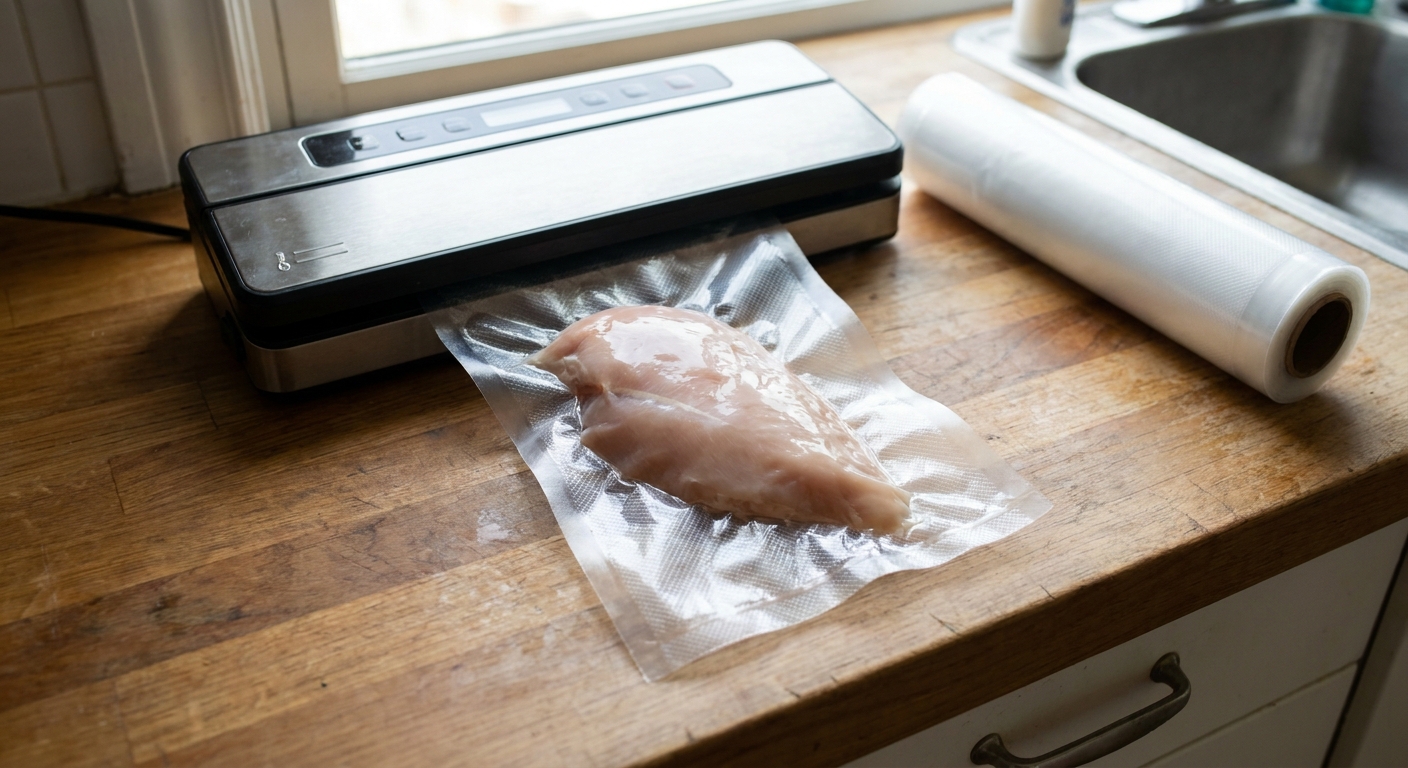
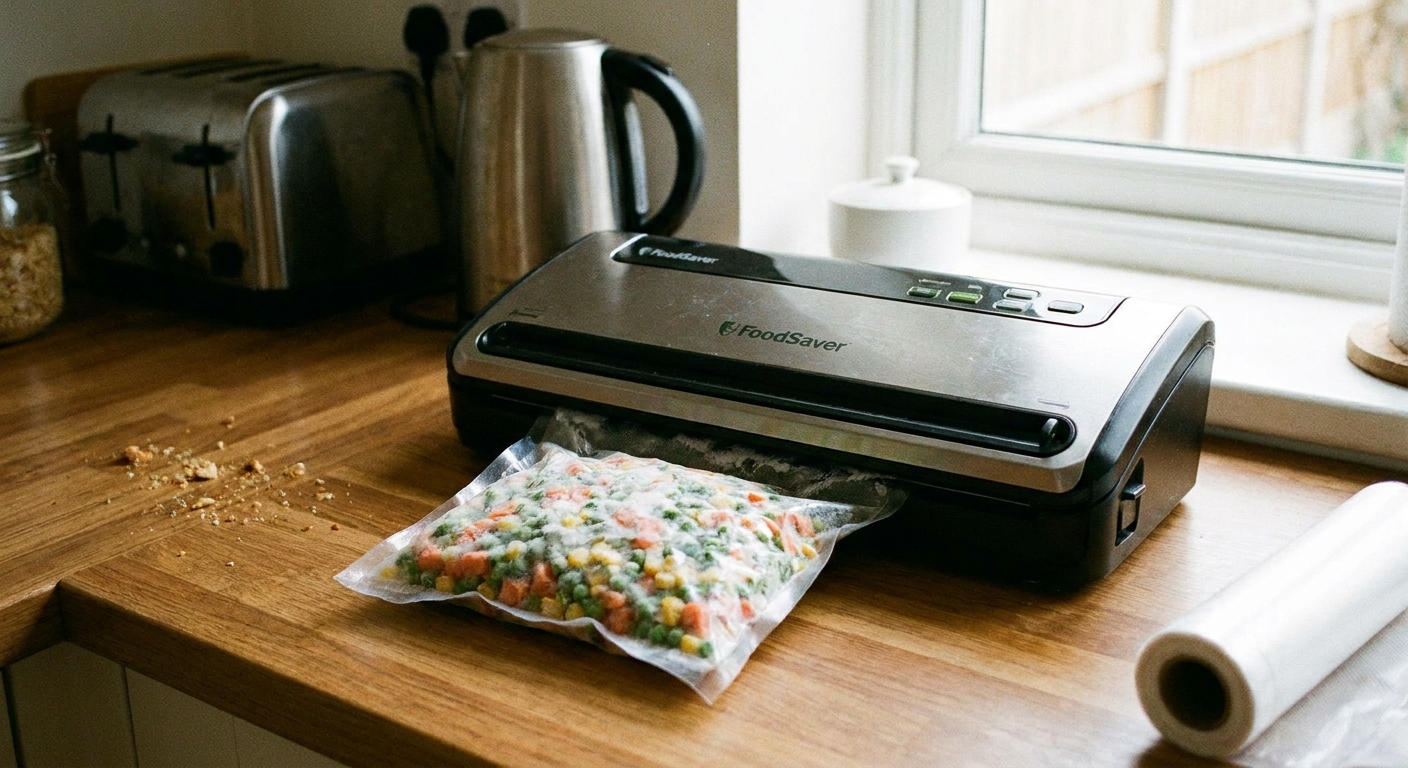
1) Vacuum sealing
A vacuum sealer removes most air and keeps food pressed tight. Great for meat, fish, shredded cheese, and prepared meals.
- Pre-freeze wet foods first. Liquids and saucy meals should be frozen flat on a tray, then sealed. This prevents liquid from getting pulled into the machine and helps the seal hold.
- For delicate foods (berries, bread), pre-freeze first so the vacuum does not crush them.
2) Freezer bags, but used correctly
If you use zip-top freezer bags, use the thick ones labeled for freezing. Then remove as much air as possible:
- Press-out method: flatten the bag on the counter and push air up and out before sealing.
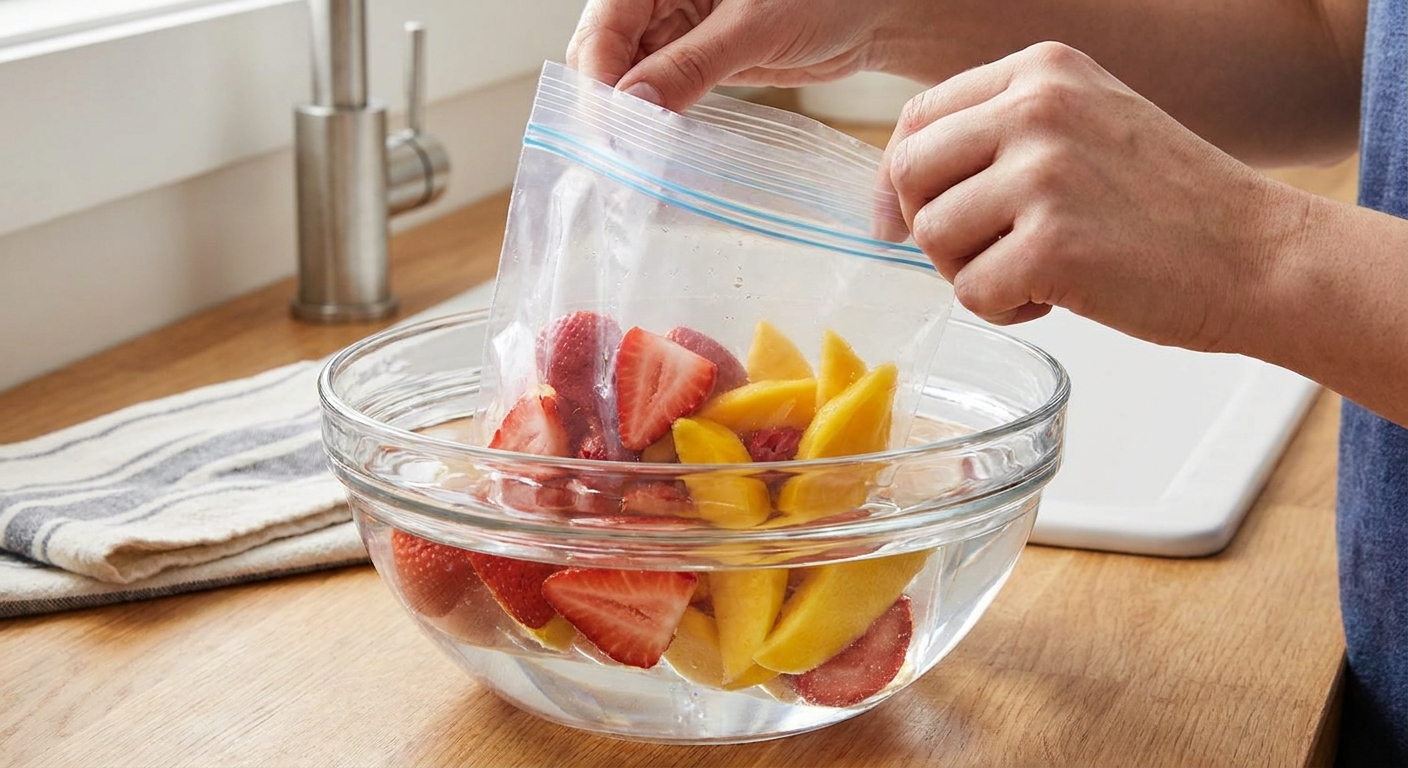
- Water displacement method (for sturdy foods): lower the bag into a bowl of water to push air up and out, then seal before the zipper goes under.
- Straw method (for dry foods only): seal the bag almost closed, insert a clean straw, suck out air, then seal fast. Skip this for raw meat or seafood since you do not want mouth contact anywhere near those bags.
Finally, press bags flat. Flat packages freeze faster and stack better. A simple example: portion chili into a quart freezer bag, press it into a thin slab, freeze it flat on a sheet pan, then file it vertically like a book.
3) Double-wrap store packaging
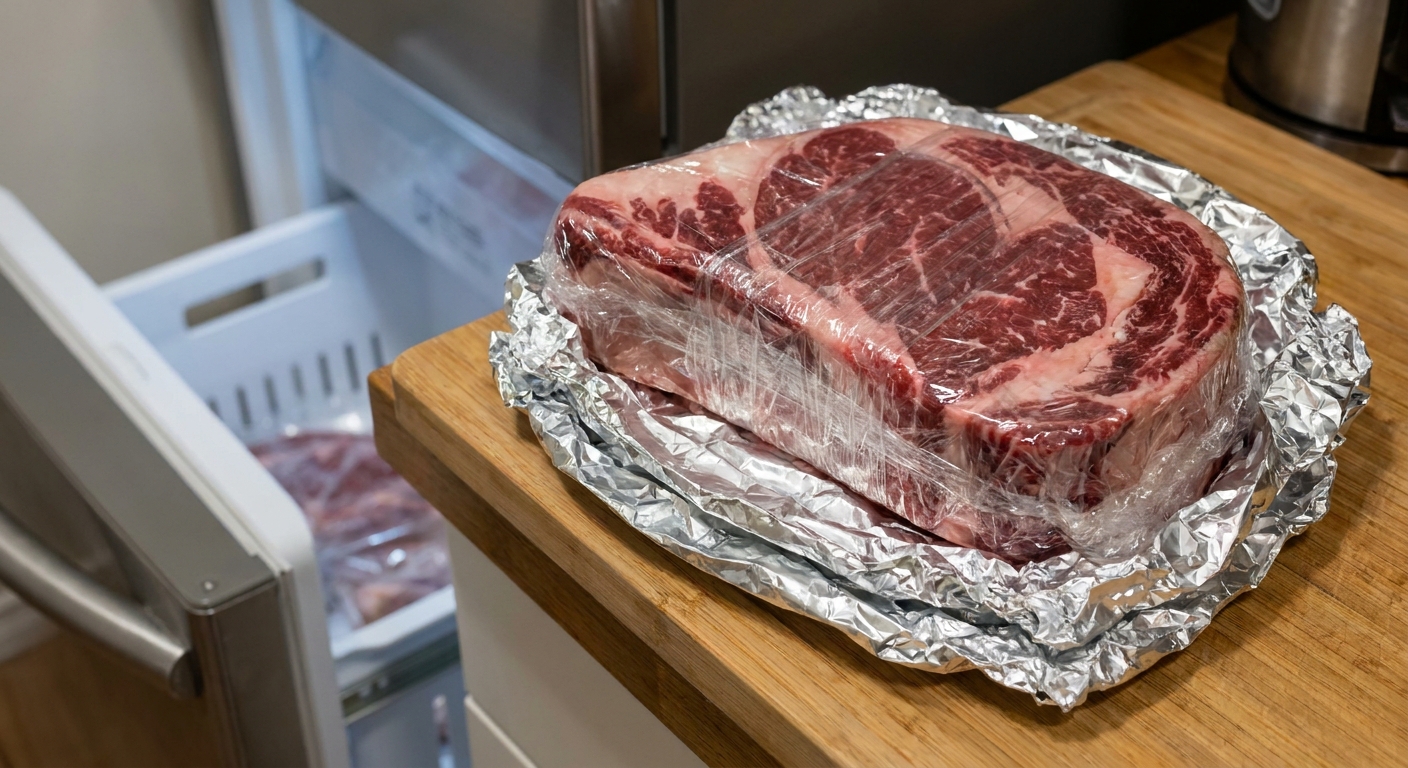
Those foam trays and thin overwraps are not built for months in the freezer. If you are freezing store-bought meat or fish:
- Overwrap with plastic wrap snugly against the surface, then add foil or place into a freezer bag.
- Better: repackage into a freezer bag with air pressed out, or vacuum seal if you have it.
- For long storage, a simple best practice is a double barrier: wrap portions individually, then place those portions into a second bag.
4) Rigid containers
Rigid freezer containers are great for soups, chili, and leftovers. The trick is headspace control.
- For liquids, leave room for expansion as they freeze.
- Once frozen solid, you can pop the block out and transfer it to a freezer bag to reduce air exposure if you want longer storage.
Cool it fast
Faster freezing makes smaller ice crystals, which usually means better texture when you thaw and cook. To freeze faster:
- Portion food into thinner, flatter shapes.
- Do not overload the freezer with warm food all at once.
- Spread packages out in a single layer until frozen, then stack.
Set your freezer to 0°F
The usual target for home freezers is 0°F. Colder is fine for food safety and quality, but 0°F is the common benchmark that balances performance and energy use.
Two important notes:
- Freezer burn can still happen at 0°F. Temperature helps slow quality loss, but it cannot compensate for air exposure.
- Temperature swings make things worse. Frequent door opening, a door gasket that does not seal well, or poor circulation near vents can create warmer and colder zones. Those uneven temps and mini thaw-refreeze cycles beat up texture and can invite more surface drying over time.
How to check temperature
Use an appliance thermometer placed between items (not in the door). Leave it in place for several hours, or check first thing in the morning after the freezer has stayed closed overnight. If you see temps consistently warmer than 0°F, that is not a freezer-burn issue. That is a freezer performance issue.
If the freezer feels warm
Freezer burn happens when the freezer is cold and food is exposed to air. If your freezer is not holding temperature, food safety becomes the bigger concern.
If your freezer is warming up, head to our existing troubleshooting guides:
And if you are just trying to dial in the settings, our temperature guide can help you aim for the right target:
Freezer type matters a bit
If you have a frost-free (auto-defrost) freezer, it tends to run drier and it cycles through small temperature changes as it manages frost. That convenience can mean slightly more dehydration risk over long storage, which makes good packaging even more important.
Chest freezers often hold steadier temps (and lose less cold air when opened), so food can keep quality longer, but packaging is still the real freezer-burn shield.
How long foods keep best quality
Frozen food can remain safe for a long time at 0°F, but quality changes as moisture migrates and fats oxidize. Here are common “best quality” timeframes many home cooks use.
Meat and seafood
- Ground meat: about 3 to 4 months
- Steaks, chops, roasts: about 4 to 12 months
- Cooked meat and leftovers: about 2 to 3 months
- Lean fish (cod, tilapia): about 6 months
- Fatty fish (salmon): about 2 to 3 months
- Shrimp and scallops: about 3 to 6 months
Fruits and vegetables
- Fruits: about 8 to 12 months
- Vegetables: about 8 to 12 months
Pantry-style freezer items
- Bread and baked goods: about 2 to 3 months (wrap well to prevent staling and drying)
- Shredded cheese: about 2 to 6 months, depending on type and packaging (texture changes are normal)
- Nuts: about 6 to 12 months (freezing slows rancidity)
Prepared foods
- Soups and stews: about 2 to 3 months
- Casseroles and pasta dishes: about 2 to 3 months
These are quality guidelines, not expiration clocks. If your packaging is excellent and temps are steady, quality can last longer.
Is freezer-burned food safe?
Usually, yes. Freezer burn is dehydration and oxidation from air exposure. It does not automatically mean the food is spoiled or dangerous.
That said, you still need to use normal food-safety judgment. If the food thawed and sat warm, smells off after thawing, or you cannot confirm it stayed properly frozen, treat that as a separate issue.
When it is still worth cooking
- Meat with small freezer-burn spots: trim the dry areas, then braise, stew, or slow-cook where moisture can return.
- Vegetables with some frost or drying: use in soups, stir-fries, casseroles.
- Bread with dry edges: toast it, turn it into croutons, breadcrumbs, or bread pudding.
- Ice cream with icy crystals: safe, but texture may be gritty.
When to toss it
- The item is extensively dried out and will not be enjoyable even in a saucy dish.
- High-fat foods taste rancid or stale after thawing.
Habits that prevent freezer burn
Label and rotate
Freezer burn loves forgotten food. Label packages with what it is and the date. Put new items behind older ones.
Store smart
The freezer door is the warmest, most swingy spot. Keep long-term items toward the back and center.
Do not hover
Every extra minute invites warm, moist air in and that can create frost and temperature swings. Decide first, then open.
Cool food before freezing
Warm containers raise the local temperature and create condensation that turns into surface ice. Cool food in the fridge first, then freeze.
Keep it reasonably full
A mostly full freezer holds temperature better. Just do not cram it so tightly that air cannot circulate. A couple of water jugs (frozen solid) can help stabilize temps if you are low on food.
Quick answers
Why does freezer burn happen in sealed bags?
Often because there is still air in the bag, the zipper did not fully seal, or the bag is thin and allows slow moisture loss over time. Press out air, use thicker freezer-grade materials, and double-wrap for long storage.
Do I need freezer paper?
You do not need it, but it can help. The key is a tight wrap against the food plus an airtight outer layer like a freezer bag.
Does frost in the freezer cause freezer burn?
Frost buildup can signal extra moisture and air exchange, which can contribute to quality loss. But freezer burn is specifically food surface dehydration from air exposure. If you have heavy frost, see Freezer Icing Up? Causes and Fixes.
Is a vacuum sealer the only real solution?
No, it is just the easiest way to remove air. Careful bagging, double-wrapping, and using rigid containers with minimal headspace can work very well.
The 30-Second Cheat Sheet
Essential takeaways for: How to Prevent Freezer Burn
Stop freezer burn in 30 seconds
- Freezer burn is air exposure. It is surface dehydration and oxidation, not “spoiled from being too cold.”
- Target 0°F. A steady 0°F slows quality loss, but packaging still matters.
- Pack snug and airtight. Vacuum seal for best results, or use thick freezer bags with as much air pressed out as possible.
- Double-wrap store packaging. Thin overwrap is not long-term freezer storage.
- Freeze flat and fast. Thin packages freeze quicker and keep texture better.
- Best quality timelines: ground meat 3 to 4 months, steaks and roasts 4 to 12 months, cooked leftovers 2 to 3 months, fruits and vegetables 8 to 12 months.
- Safety: freezer-burned food is usually safe to cook. Trim dry spots and use moist methods like soups, stews, and braises for best eating.
- If the freezer is warm: that is not freezer burn. Go to Freezer Not Freezing? 6 Fixes to Try First and Freezer Icing Up? Causes and Fixes.
💡 Tip: Scroll up to read the full article for detailed, step-by-step instructions.
⬆️ Back to top
About Grit
Content Creator @ Grit & Home
Grit is Grit & Home’s little blue clay courier, delivering big questions about the place you call home. Expect practical ideas, a raised eyebrow, and a satchel full of curiosity.