
🚨 In a DIY emergency or rush?
Skip the details and jump straight to our 30-second cheat sheet for the most crucial info.
Small fixes. Big home questions.
If your tap water suddenly looks milky, cloudy, or like it has a fog trapped inside the glass, your brain does the reasonable thing and yells: Something is wrong.
Sometimes it is. Sometimes it is just air taking the scenic route through your plumbing. The trick is telling the difference before you go scrubbing the whole kitchen or spiraling into a full water system investigation.
Let’s do the simplest, most helpful test first.

Do the glass test (it tells you a lot in 2 minutes)
Fill a clear glass with cold water from the faucet that looks cloudy. Set it on the counter and watch what happens for 1 to 3 minutes.
Result A: It clears from the bottom up
If the water goes from cloudy to clear starting at the bottom and moving upward, that is almost always trapped air (tiny bubbles). The bubbles rise and escape, so the bottom clears first.
- Common causes: recent plumbing work, a water main break, hydrant flushing, pressure changes, a well pump cycling, or high-flow fixtures pulling air into the stream.
- Usually not a health concern on its own. It is more of a “plumbing physics” moment than a “mystery contaminant” moment.
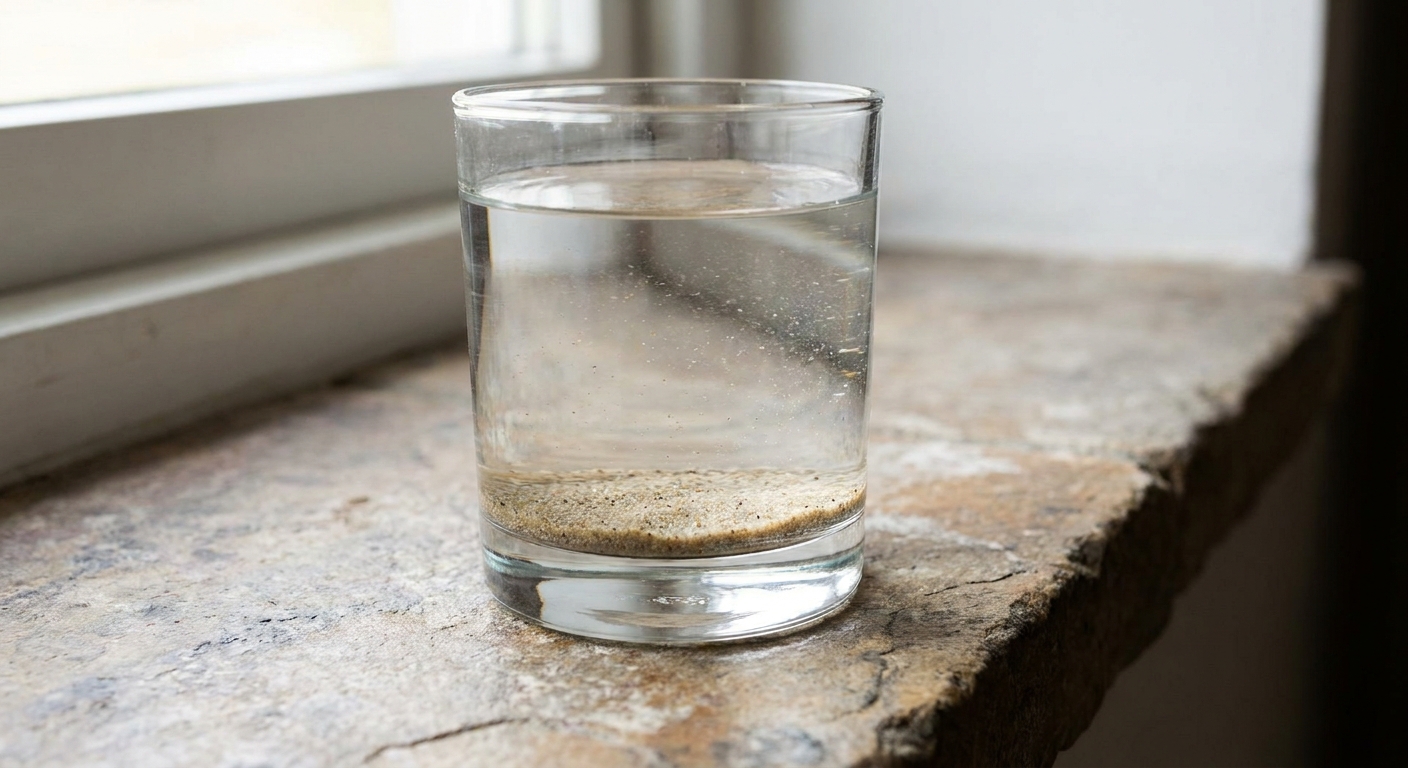
Result B: Particles settle to the bottom
If you see grit or specks that sink and collect at the bottom, you are likely looking at sediment. This can come from disturbed supply lines, corroded pipes, or sediment kicked up in a water heater or well system.
Result C: It stays cloudy and does not clear
If the water remains cloudy after several minutes, or it looks hazy with no bubble clearing pattern, treat it as a “needs investigation” situation. This is when you start checking fixtures and systems, and you may need a plumber or a well professional.
If it clears bottom-up: what to check (air in the lines)
1) Did you or the city just do plumbing work?
Air commonly gets introduced after:
- pipe repairs or a shutoff valve being closed and reopened
- new faucet installation
- water meter work
- nearby water main repair or hydrant flushing
What to do: run cold water at the lowest faucet in the home (often a basement or first-floor utility sink) for a few minutes. Then run other faucets briefly. The goal is to purge air without blasting every fixture at once.
2) Check aerators for “bubble drama”
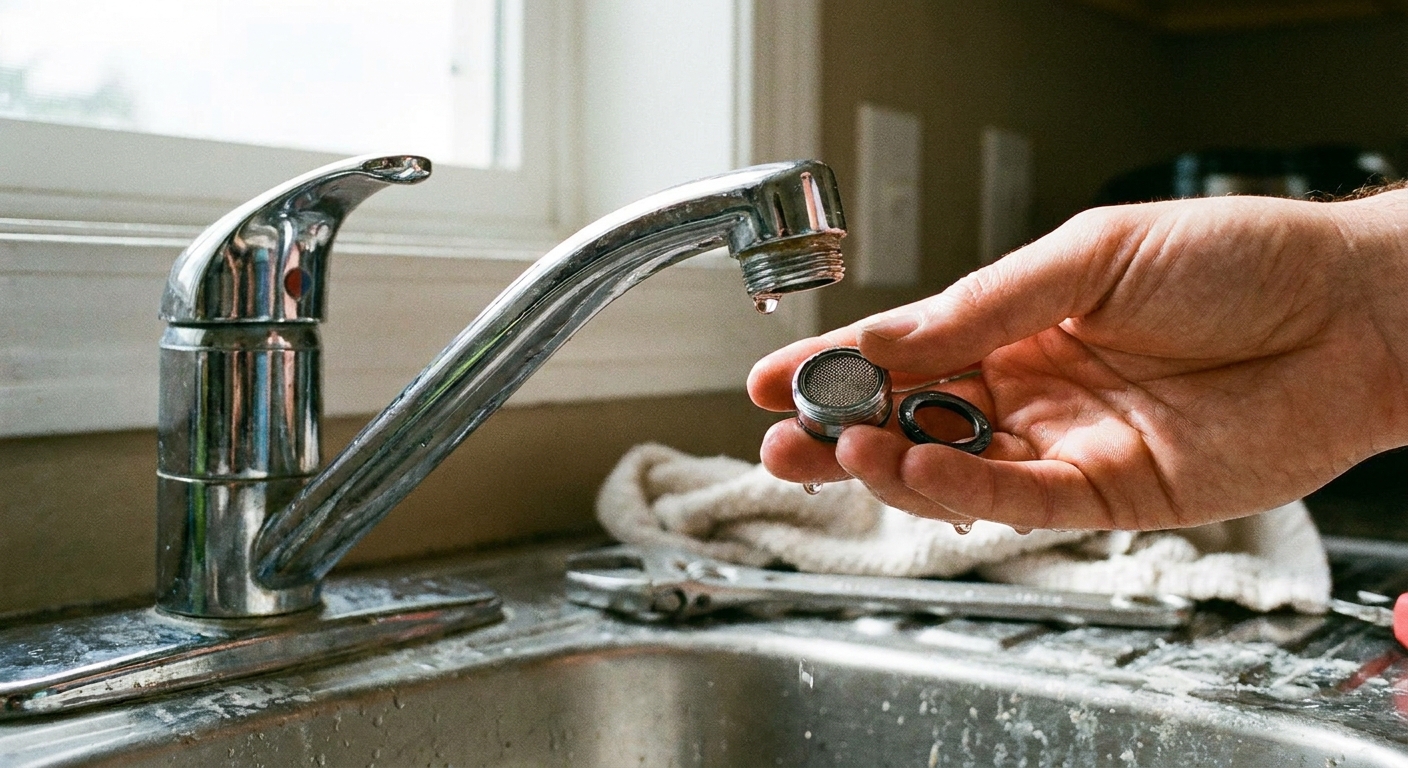
Faucet aerators mix air into the stream on purpose to reduce splashing. If an aerator is partially clogged, it can make water look extra white and frothy.
Quick check:
- Unscrew the aerator at the faucet tip.
- Rinse it and look for grit, mineral flakes, or rubber washer bits.
- Run the water for 10 to 15 seconds with the aerator off.
- If the cloudiness changes drastically, clean or replace the aerator.
If you see sediment: likely sources and next steps
Sediment can be harmless nuisance grit or a clue that something upstream is shedding material.
1) Recent plumbing work or street flushing
Supply disturbances can shake loose mineral scale and deposits. If this is the cause, sediment often improves within a day.
What to do: run cold water for a few minutes, avoid hot water until you have checked the water heater (more on that next), and clean aerators afterward.
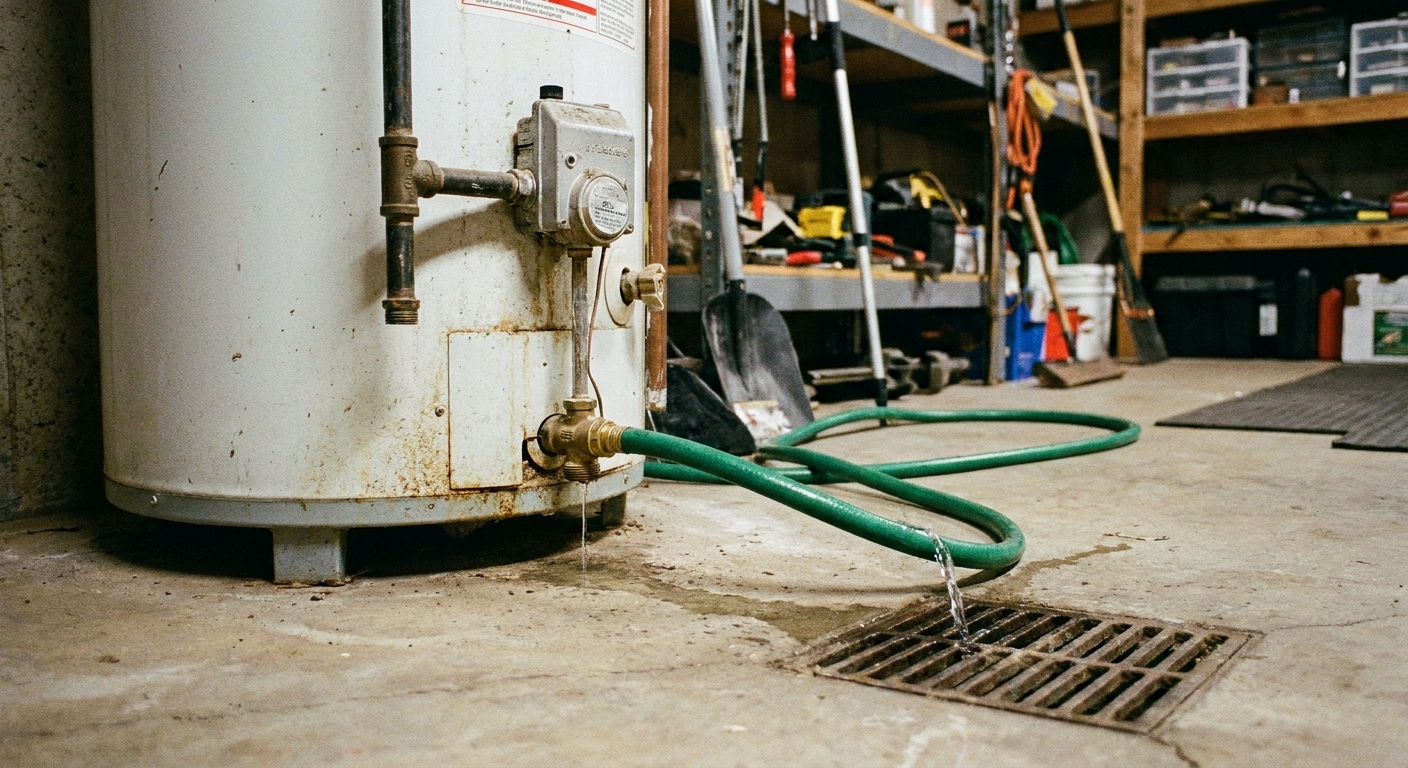
2) Water heater sediment (especially after draining)
If your water heater was just drained or flushed, it can temporarily stir up mineral sediment. That stirred-up sediment can show up as cloudiness or fine particles at hot water taps.
What to do:
- First confirm whether the cloudiness is only on hot water, only on cold water, or both.
- If it is mainly hot water, let the tank sit a bit, then run hot water at a tub spout for a couple minutes to move any loose sediment through.
- If sediment keeps showing up, you may need a more thorough flush, or the tank may have heavy buildup.
Heads up: If you have a tankless water heater, sediment can still be a culprit, but it shows up as scale in the heat exchanger. That is a different maintenance path than flushing a tank.
Cloudy water troubleshooting, by where it happens
Only one faucet is cloudy
- Most likely: a clogged aerator, debris in that shutoff valve, or a flexible supply line shedding bits.
- Try: remove and clean the aerator, flush the faucet, and check the shutoff valve is fully open.
All faucets are cloudy (hot and cold)
- Most likely: air in the lines, city supply disturbance, pressure changes, or a whole-house filter issue.
- Try: glass test, then purge lines at the lowest faucet. If you have filtration, check cartridges and bypass settings.
Only hot water is cloudy
- Most likely: water heater sediment or aeration in the heater.
- Try: run hot water at a tub spout, check heater age and maintenance history, and watch for recurring particles.
Only cold water is cloudy
- Most likely: air in cold supply, disturbed main, or (for wells) pump or pressure tank behavior.
- Try: purge cold lines and note whether it comes and goes with pump cycling.
When cloudy water needs a plumber (or a well check)
Cloudiness that clears quickly is usually air. Cloudiness that does not clear, returns constantly, or comes with other symptoms deserves backup.
Call a plumber if:
- the water stays cloudy for more than a few minutes in the glass test
- you see consistent sediment, flakes, or black specks
- multiple fixtures are clogged and aerators keep filling with debris
- water pressure suddenly drops or surges along with the cloudiness
- there is a metallic smell, chemical smell, or water tastes noticeably different
- you have any sign of a leak, pipe corrosion, or recent repipe work that might have left debris
Schedule a well check if you are on a private well and:
- cloudiness is persistent or recurring daily
- sediment appears after the pump runs, like after showers or laundry
- you hear short-cycling (pump clicking on and off rapidly)
- filters clog much faster than normal
A well contractor can check the pump, pressure tank, and whether sediment is entering from the well itself. If you have not had your well water tested recently, this is also a smart moment to do it.
Quick questions I hear a lot
Is milky tap water safe to drink?
If it clears from the bottom up within a couple minutes, it is typically air and not a contamination issue by itself. If it does not clear, if there are particles, or if there is an odor or taste change, pause and investigate before drinking.
Why is my water cloudy after the water heater was drained?
Draining can stir sediment, and refilling can introduce air. You can see temporary cloudiness. If it persists on hot water, sediment buildup may be heavy or the drain valve may not have fully cleared debris.
Why does cloudy water happen more in winter or after outages?
Pressure changes and line disturbances can introduce air. Outages, repairs, and seasonal maintenance in municipal systems can do it too.
Could it be hard water?
Hard water itself is dissolved minerals, so it does not typically make water look milky in the glass test. Hard water does, however, build scale that can break loose as sediment after plumbing disturbances.
The 30-Second Cheat Sheet
Essential takeaways for: Milky or Cloudy Water From the Faucet?
The fastest test
- Fill a clear glass with cold tap water and watch it for 1 to 3 minutes.
- Clears from bottom up: trapped air bubbles.
- Particles sink and collect: sediment.
- Stays cloudy: needs troubleshooting and possibly a pro.
If it is trapped air
- Often follows plumbing work, a main break, hydrant flushing, or pressure changes.
- Run cold water at the lowest faucet for a few minutes to purge air.
- Check and clean faucet aerators.
If it is sediment
- Clean aerators and flush the line.
- If it is mainly hot water, suspect the water heater, especially if it was just drained or has heavy buildup.
Call a plumber or schedule a well check if
- cloudiness does not clear after several minutes
- sediment keeps returning or aerators keep clogging
- pressure changes, taste or odor changes, or possible corrosion appear
- on a private well: recurring sediment, rapid filter clogging, or pump short-cycling
💡 Tip: Scroll up to read the full article for detailed, step-by-step instructions.
⬆️ Back to top
About Grit
Content Creator @ Grit & Home
Grit is Grit & Home’s little blue clay courier, delivering big questions about the place you call home. Expect practical ideas, a raised eyebrow, and a satchel full of curiosity.