
🚨 In a DIY emergency or rush?
Skip the details and jump straight to our 30-second cheat sheet for the most crucial info.
Small courier. Big home questions.
If your Bermuda lawn goes tan the moment nights get cool, overseeding with rye is the costume change: temporary green for winter, then a clean exit so Bermuda can take the stage again in spring. The trick is doing two things well: getting rye established in fall, and getting rye out of the way later.
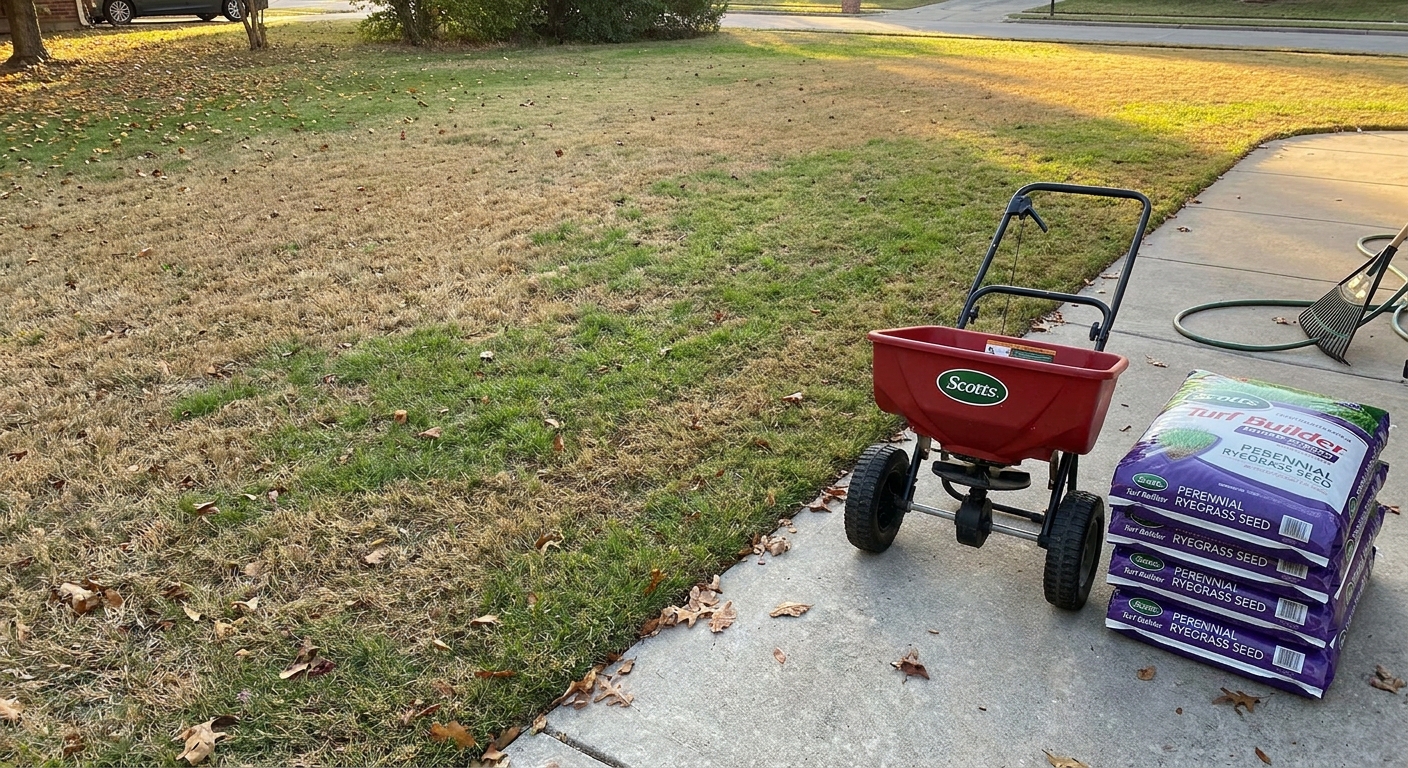
Rye choice: annual vs perennial
You can overseed Bermuda with annual ryegrass or perennial ryegrass. Both green up fast, but they behave differently when spring arrives.
- Perennial ryegrass: Finer texture, darker green, typically denser and more lawn-like. It can hang on stubbornly into late spring, which means it can compete with Bermuda if you do not manage the transition.
- Annual ryegrass: Cheaper and usually easier to transition out because it is less persistent. Texture is often coarser and color can be lighter.
One more label note that saves confusion: many bags marketed for overseeding are intermediate ryegrass or blends. It typically behaves closer to annual rye than true perennial, but the bag label is the boss.
If you want the easiest spring transition, annual or intermediate rye is the simpler roommate. If you want the prettiest winter carpet and are willing to manage spring more actively, perennial rye can look sharper.
When to overseed
Overseeding is mostly a temperature game. Rye germinates best when it is cool, while Bermuda is slowing down.
Target window
- Start when daytime highs are regularly 70 to 80°F and nights are cooling.
- Soil temps around 60 to 70°F are a sweet spot for rye germination.
- If you get frost: seed 2 to 6 weeks before your average first frost so seedlings establish before real cold slows growth.
- If you are frost-light or frost-free: frost dates are not very helpful. Time it by soil temps and consistent cooler overnight lows instead.
Too early and Bermuda is still aggressive, shading out rye and making you mow constantly. Too late and rye germination and fill-in are slow, leaving you with a spotty winter lawn.
Do you wait for dormancy?
Not usually. Many successful overseeds happen while Bermuda is starting to slow but still has some green. Your prep work and mowing height do most of the handoff work.
Before you seed
Rye seed is tiny. It does not need to be planted deep, but it does need seed-to-soil contact. That means reducing the Bermuda canopy and clearing debris.
What you will need
- Ryegrass seed (annual, intermediate, or perennial)
- Spreader (broadcast or drop)
- Mower (and bagger if you have it)
- Leaf rake or blower
- Sprinklers and a hose timer (highly recommended)
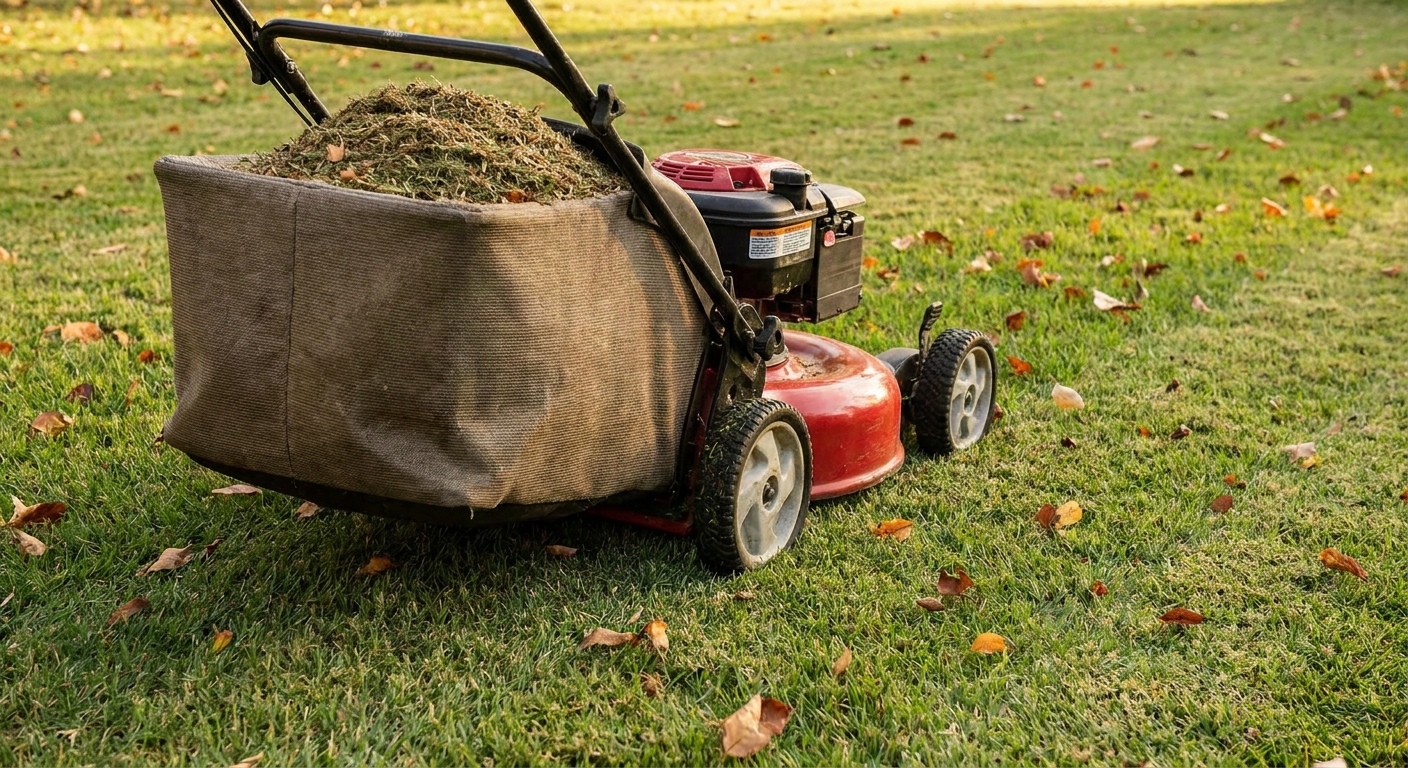
1) Mow lower than your usual
Gradually step your mowing height down over 1 to 2 weeks. The goal is to open the canopy without scalping the yard into a dirt-brown panic.
- Make your last pre-seed cut on the low end for your setup.
- Reel mower lawns can sometimes go very low, even around 0.5 inch, if the yard is level and you know what you are doing.
- Most rotary-mower lawns do better closer to 1 to 1.5 inches to avoid scalping and bare spots.
- Bag clippings on the final cut if possible. Clippings act like a blanket over seed.
2) Clear thatch and leaves
A little thatch is normal on Bermuda, but a thick mat blocks seed. Rake up loose thatch, clear leaves, and remove twigs and acorns that would keep seed from settling.
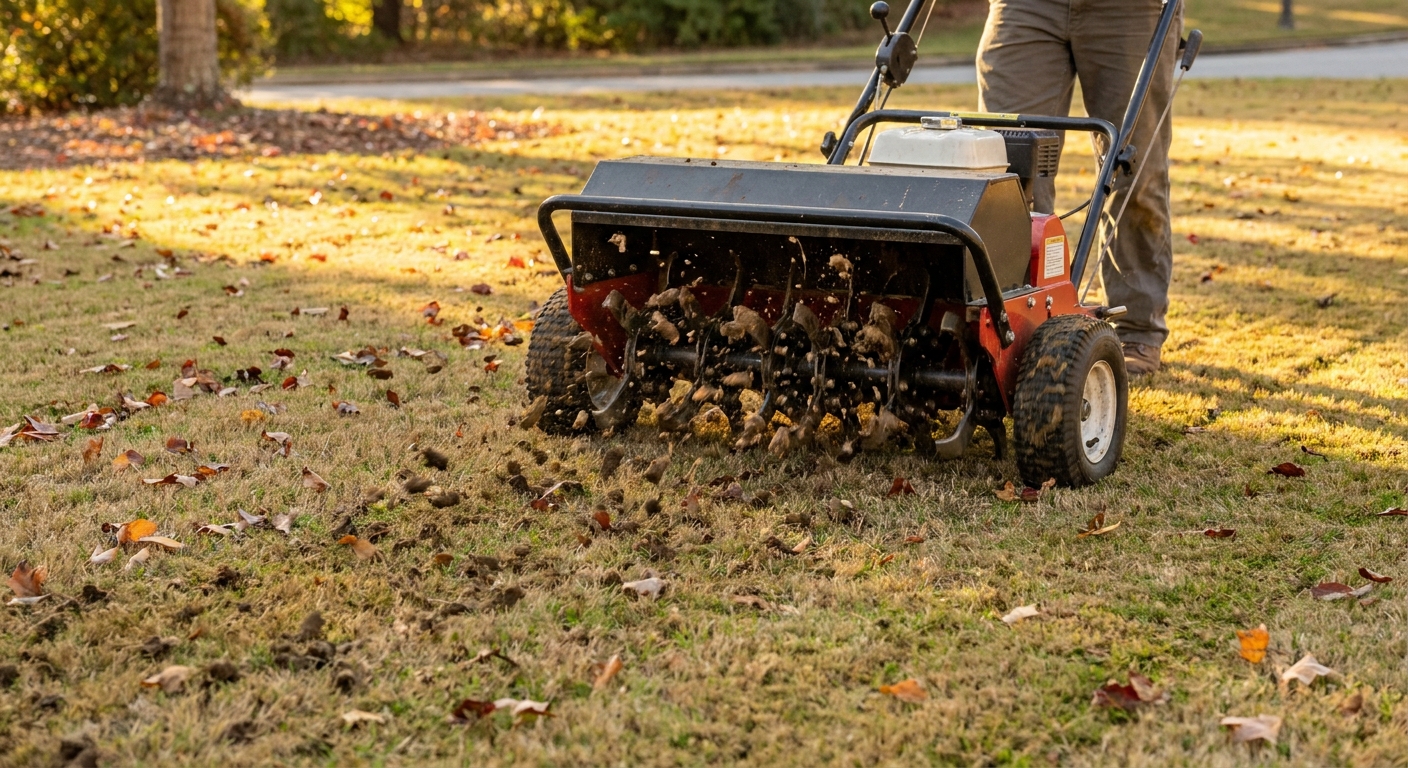
3) Optional: core aerate or lightly dethatch
You do not have to aerate to overseed, but it can help if your soil is compacted or your thatch is thick.
- Core aeration: Helps water move in and gives seed more landing spots.
- Light dethatching: Can improve contact, but avoid overdoing it right before cold weather.
Seeding rates
Rates vary by climate, desired density, and whether your seed is coated. Use your seed bag as the final authority, but these are typical home lawn starting ranges for overseeding Bermuda for winter color.
Typical rates (per 1,000 sq ft)
- Perennial ryegrass: about 6 to 8 lb per 1,000 sq ft
- Annual or intermediate ryegrass: about 8 to 12 lb per 1,000 sq ft
If you go heavy, you will get faster coverage and deeper winter color, but you also buy yourself a tougher spring transition. If you have struggled with Bermuda greening up late in the past, resist the urge to double it.
Spreader strategy
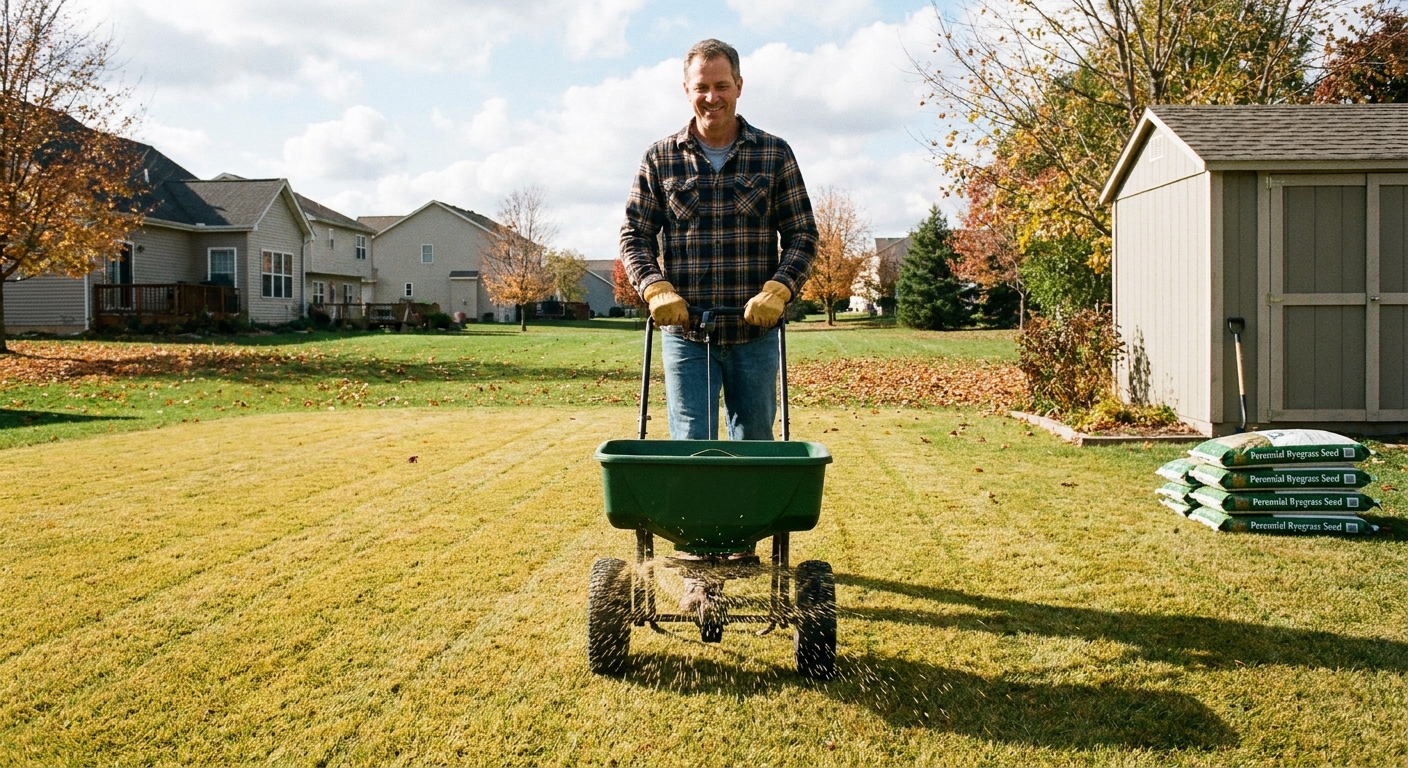
- Apply half the seed in one direction, then the other half perpendicular for even coverage.
- Do not bury rye seed deep. After spreading, lightly rake or drag a leaf rake upside-down to nudge seed into contact with soil.
Watering after seeding
Ryegrass germination depends on steady moisture near the surface. The exact schedule depends on evaporation. The goal is damp, not swampy.
Days 1 to 14
- Water 2 to 4 times per day in short cycles, only as needed to keep the top quarter-inch of soil damp.
- In cooler or humid weather, you may need fewer cycles. Too much water can invite disease and damping off.
- Avoid long, soaking runs that cause runoff or puddles.
Weeks 3 to 6
- Shift to once daily or every other day, longer cycles.
- Start training roots deeper by letting the surface dry slightly between waterings.
After it is established
Water like a normal cool-season lawn for your area: less frequent, deeper irrigation. When you can, water in the morning instead of late evening to reduce fungal problems.
First mow rules
Mowing too early is the classic I accidentally combed out my new grass mistake.
- Wait until rye reaches about 2.5 to 3 inches before the first mow.
- Use a sharp blade. Dull blades yank seedlings.
- Never remove more than one-third of the blade in a single mowing.
- For most overseeded lawns, a winter mowing height of 1.5 to 2.5 inches works well. Taller holds color and stress resistance. Shorter looks tidy but needs more frequent mowing and water.
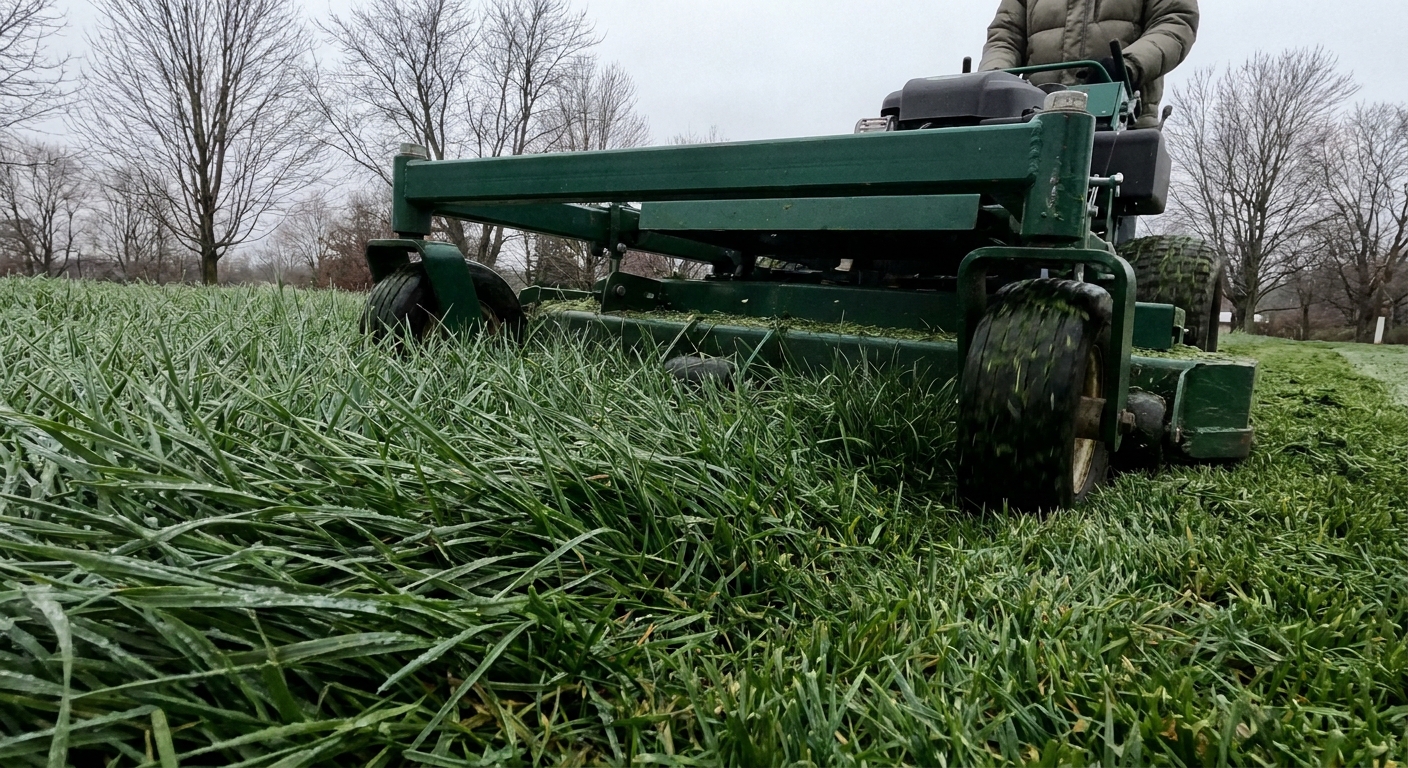
Fertilizer
Rye needs nitrogen to stay vivid, but Bermuda does not need to be pushed in fall. In many areas, Bermuda is heading into dormancy and will not use much.
- Use a fertilizer labeled for cool-season grass, and follow label rates.
- A common approach is light nitrogen once seedlings are established, often after 2 to 3 mows, then occasional feeding through winter if growth and color fade.
- Avoid heavy late-fall nitrogen that creates lush growth right before hard freezes.
If you are unsure, less is safer. Overseeding is supposed to be temporary, not a full cool-season renovation.
If your winter color has been disappointing year after year, a basic soil test can be worth it. pH and low nutrients can make every overseed look weaker than it should.
Pre-emergent warning
This one ruins a lot of first-time overseeds: many crabgrass and weed pre-emergents can also block rye seed from germinating.
- If you applied a fall pre-emergent, check the label for the required seeding interval.
- If you plan to apply one, pick a product and timing that does not conflict with overseeding, and follow the label exactly.
Common fall mistakes
- Seeding into thick Bermuda: Rye sits on leaves, dries out, and disappears. Mow lower and clear clippings.
- Letting seed dry out early on: Keep the surface consistently moist for germination.
- Overseeding too heavy: Looks great in January, then Bermuda sulks in April.
- Watering like it is July: In cool, damp weather, too much irrigation can trigger fungus. Water for moisture, not habit.
- Mowing too low in winter: You can scalp rye and expose dormant Bermuda, which defeats the whole color mission.
Spring transition
This is the part that separates a good overseed from a spring headache. As temperatures rise, rye can keep competing for light, water, and nutrients. Your job is to make conditions less comfortable for rye and more comfortable for Bermuda.
1) Stop feeding rye
As soon as spring is approaching and Bermuda is close to waking, stop nitrogen applications intended to keep rye dark green. Feeding rye in spring is like giving your houseguest extra closet space.
2) Reduce irrigation
Rye likes cool and moist. Bermuda can handle drier cycles once it starts to wake up. Begin stretching time between waterings so the surface dries more between cycles.
3) Mow lower, gradually
Step the mowing height down over a few cuts to stress rye and let more sunlight reach Bermuda stolons.
- Do not drop from 2.5 inches to 1 inch overnight.
- Lower in increments and keep blades sharp to avoid tearing.
4) Let Bermuda win the temperature battle
Bermuda typically starts greening up when soil temperatures hit the mid-60s°F and keep rising consistently. When you see consistent green spread, keep emphasizing:
- more sun to the Bermuda crown (lower mowing)
- less nitrogen for rye
- less frequent watering
5) If rye persists too long
In some regions, especially with perennial rye, you may still have a stubborn stand. Options include:
- Continued cultural transition: Lower mowing and less water often works, just slowly.
- Selective herbicide: Some lawn products are labeled to remove ryegrass from Bermuda, but labeling and timing are everything. Some can also stress turf or slow Bermuda green-up if misused. Check that the product is specifically labeled for ryegrass control in Bermuda and follow directions exactly. If you are not comfortable with that, call a local turf professional for guidance in your area.
Quick yard math
If you know your lawn size, you can estimate bags quickly:
- Square feet of lawn ÷ 1,000 = your thousand square feet units.
- Units × seeding rate = pounds of seed needed.
Example: 5,000 sq ft lawn overseeded with perennial rye at 7 lb per 1,000 sq ft: 5 × 7 = 35 lb of seed.
FAQ
Should I scalp Bermuda before overseeding?
You want it shorter than normal, but scalping to bare stems can stress the turf and expose soil. Step the height down gradually, then do one final low cut and remove clippings.
Can I overseed Bermuda without aerating?
Yes. Aeration helps with compaction and seed-to-soil contact, but the essentials are mowing lower, clearing debris, even spreading, and frequent light watering until germination.
Will rye come back next year?
Overseeded rye is usually temporary. Some may reseed lightly, but most lawns require overseeding again each fall if you want winter color.
What is the single biggest spring mistake?
Fertilizing rye in spring. It keeps rye vigorous right when Bermuda needs light and space to wake up.
The 30-Second Cheat Sheet
Essential takeaways for: Overseed Bermuda With Rye for Winter Color
Goal
Temporary winter green on a Bermuda lawn, then a smooth spring handoff so rye does not crowd out Bermuda.
Best fall timing
- Seed when days are about 70 to 80°F and nights are cooling.
- Aim for soil temps about 60 to 70°F.
- If you get frost: seed 2 to 6 weeks before your average first frost.
- If you rarely freeze: ignore frost dates and time it by soil temps and overnight lows instead.
Prep (do this or regret it)
- Mow Bermuda lower than usual over 1 to 2 weeks, then one final low cut.
- Bag or rake off clippings, leaves, and loose thatch.
- Optional: core aerate if compacted.
- Check any pre-emergent label for “wait to seed” intervals. Many prevent rye from germinating.
Seeding rates (per 1,000 sq ft)
- Perennial rye (typical home lawn): 6 to 8 lb
- Annual or intermediate rye (typical home lawn): 8 to 12 lb
Higher rates = faster winter color but a tougher spring transition. Always sanity-check with your bag rate, especially for coated seed.
Watering after seeding
- Days 1 to 14: 2 to 4 short waterings per day, only as needed to keep the surface damp.
- Weeks 3 to 6: water less often but longer to deepen roots.
- Avoid keeping the lawn wet all night. Once seedlings are up, morning watering helps reduce disease.
First mow rules
- Mow when rye is 2.5 to 3 inches tall.
- Sharp blade only.
- Never remove more than 1/3 of the height at once.
- Typical winter height: 1.5 to 2.5 inches.
Spring transition (protect the Bermuda)
- Stop feeding rye as spring approaches.
- Reduce irrigation frequency.
- Lower mowing height gradually to let sunlight reach Bermuda.
- If rye persists too long, consider a product specifically labeled for ryegrass control in Bermuda. Some can slow Bermuda green-up, so label and timing matter. When in doubt, get local pro advice.
💡 Tip: Scroll up to read the full article for detailed, step-by-step instructions.
⬆️ Back to top
About Grit
Content Creator @ Grit & Home
Grit is Grit & Home’s little blue clay courier, delivering big questions about the place you call home. Expect practical ideas, a raised eyebrow, and a satchel full of curiosity.