
🚨 In a DIY emergency or rush?
Skip the details and jump straight to our 30-second cheat sheet for the most crucial info.
The first time my refrigerator dispenser started dripping, I did what a lot of us do. I wiped it, blamed the kids, and moved on. Then I noticed a little mineral “stalactite” forming on the spout and a wet ring on the drip tray every morning. That is when it clicked: a dispenser that drips after you let go is most often a valve or seal that is not shutting fully, a dispenser mechanism that is not returning cleanly, or a door line that is freezing and then burping water as it thaws. It can also be as simple as residual water, trapped air, or a slightly mis-seated filter right after a filter change.
This guide is the way I troubleshoot it at home, starting with the quick checks that cost nothing and moving toward the parts that actually fix a persistent drip.
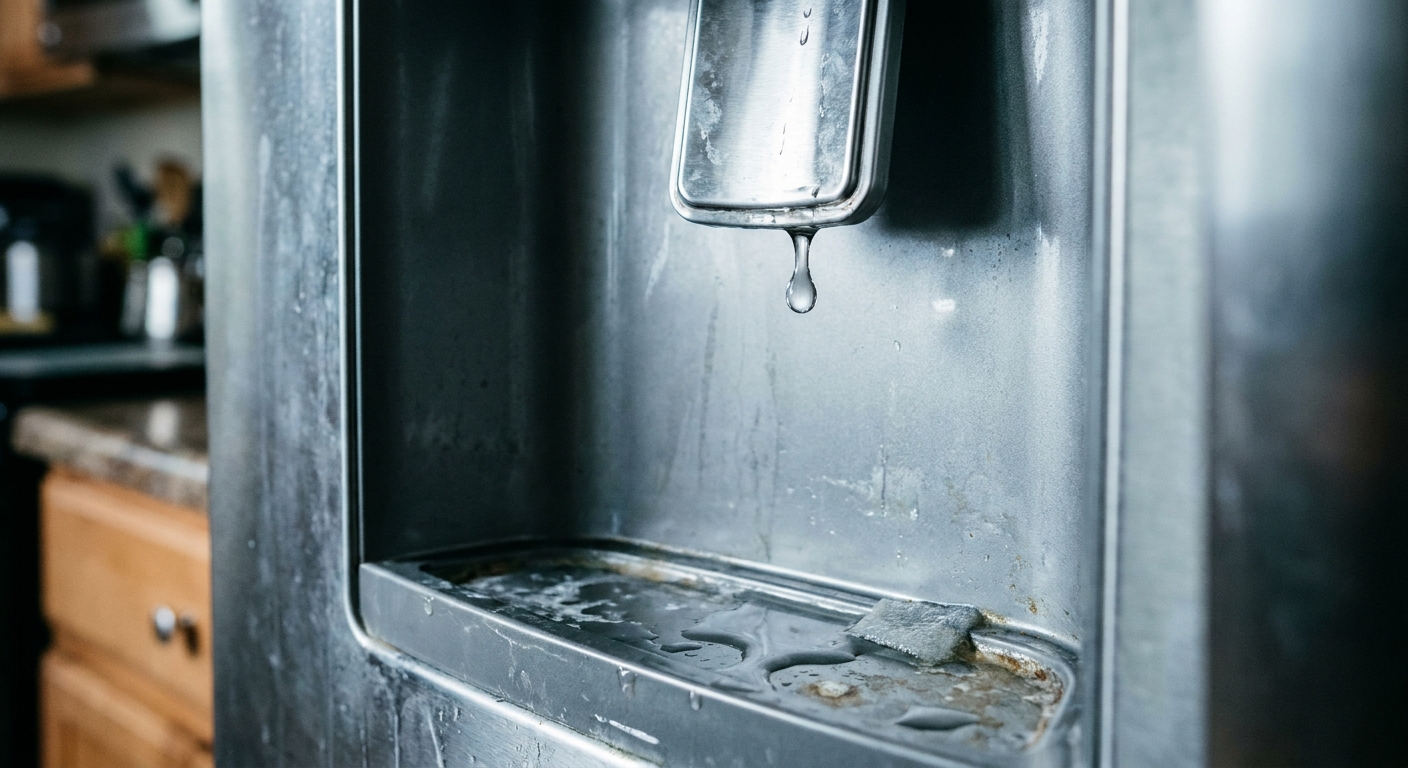
Quick safety and setup
You can do most of this without tools, but you will be happier if you prep first.
- Unplug the refrigerator before removing any dispenser trim, switch housings, or wiring connectors.
- Shut off the water supply (usually a saddle valve or shutoff valve behind the fridge or under the sink) before disconnecting any water line.
- Put down a towel and keep a cup handy for water left in the line.
If your dispenser is also leaving a puddle under the refrigerator or you find water down in the crisper, that is usually a different leak path than a door drip. Focus your troubleshooting on under-fridge lines, the drain system, or internal leaks instead of the dispenser spout.
30-second diagnosis
Before you take anything apart, do these two quick observations. They point you to the right fix fast.
1) Does it drip for 5 to 30 seconds, then stop?
That can be normal residual water draining from the spout and line, especially right after filter changes, heavy use, or when there is a bit of air in the line. If it is just a few drops, I usually call it normal. If it happens every time and is more than a few drops, keep reading.
2) Does it drip for minutes or form drops indefinitely?
That usually means one of these:
- Dispenser actuator is sticking and not letting the mechanism return.
- Dispenser spout seal or housing is compromised so water tracks and sneaks out.
- Water inlet valve is seeping and slowly feeding the line even when you are not dispensing.
- Water line is freezing and thawing, causing odd dripping and spurting.
- Abnormal water pressure or water hammer is aggravating a marginal valve. High pressure does not usually create drips by itself, but it can make a worn valve show its age fast.
Fix 1: Clean the actuator
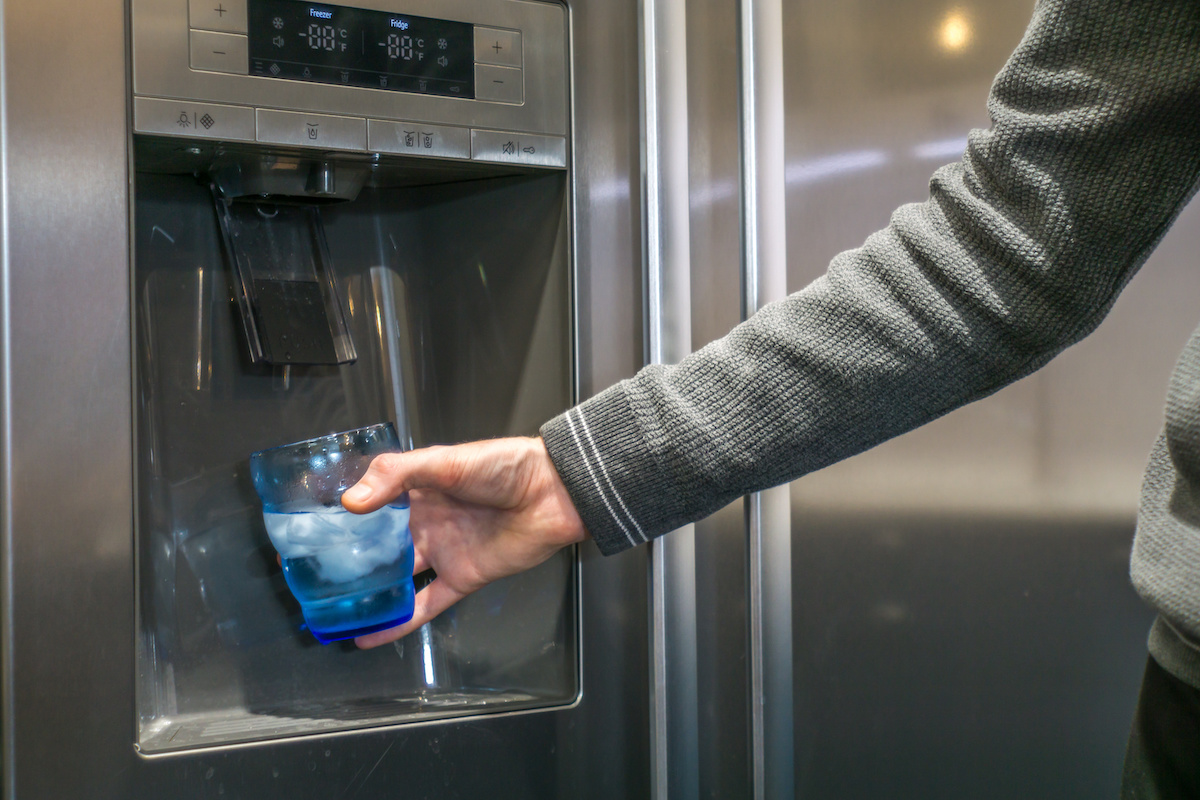
The actuator is the paddle your glass presses, plus the little linkage behind it that triggers the dispenser switch. Sugar, dried splash-back, and hard water minerals can make it slow to return, and “slow to return” can equal “valve stays open a fraction longer than it should.”
What to look for
- The paddle feels gritty or does not snap back cleanly.
- You can gently pull it forward and it seems to hang up.
- The drip is worse after dispensing sticky drinks (kids and flavored water are common culprits).
What to do
- Wipe the paddle and surrounding trim with warm water and a drop of dish soap on a microfiber cloth.
- Clean the spout area where mineral crust builds up. A cloth dampened with white vinegar helps dissolve scale.
- Press and release the paddle 20 to 30 times to see if it starts returning crisply.
What success looks like: over the next day of normal use, the paddle should snap back cleanly and the “after drip” should shrink to a couple drops at most.
If cleaning helps for a day and then the drip comes back, you are likely dealing with a worn seal, a tired switch mechanism, or a seeping inlet valve.
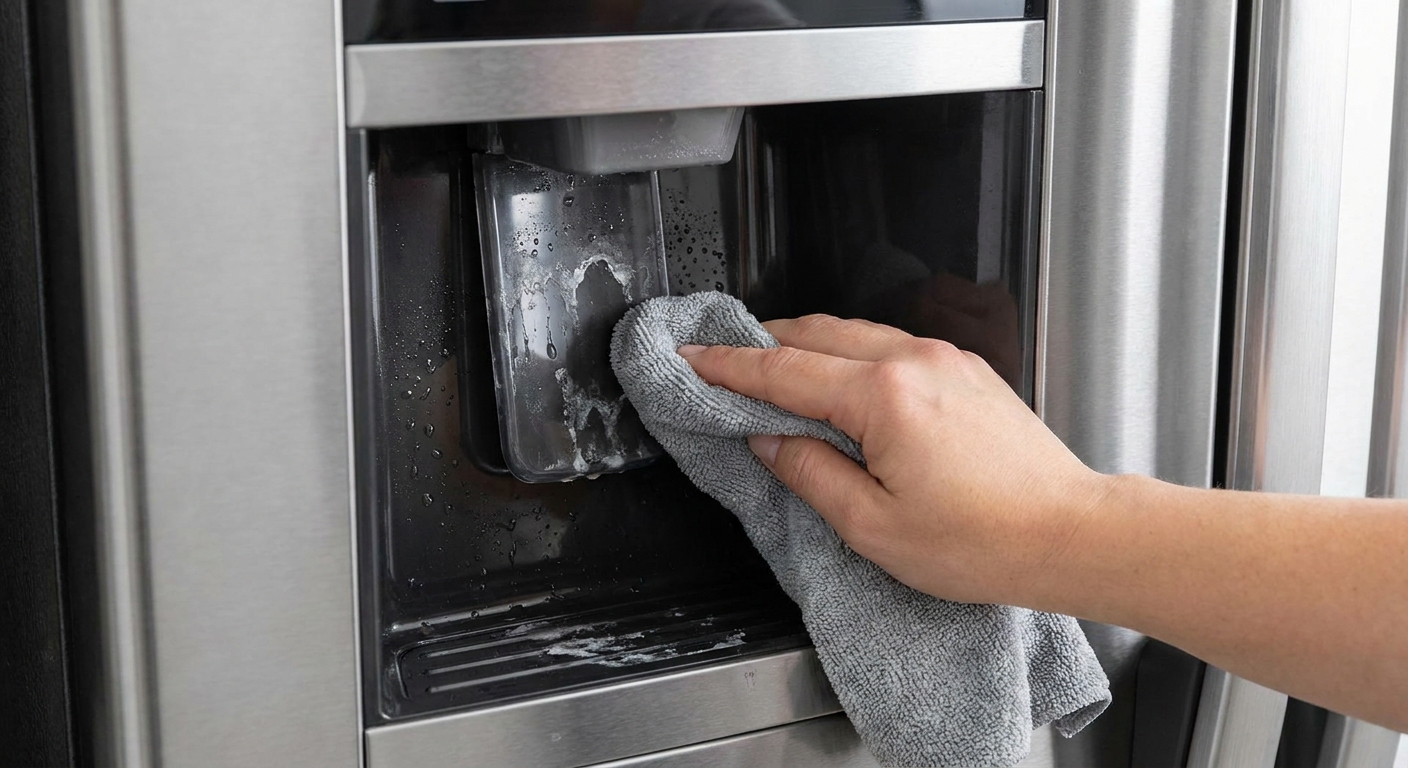
Fix 2: Check the spout seal
Some dispensers have a small rubber grommet or seal at the spout, and many have a plastic housing that can hairline crack. A crack can let water track along the plastic and drip even when the valve is technically closed.
Signs this is your issue
- Water seems to come from beside the spout, not the center.
- You see white mineral trails on the dispenser face or trim.
- The drip tray is wet even when nobody has used the dispenser recently.
What to do
- Unplug the fridge.
- Remove the drip tray and look upward with a flashlight.
- Inspect the spout and the surrounding plastic for hairline cracks.
- If the spout seal is accessible and clearly damaged, replace it using the exact part for your model number.
What success looks like: the drip tray stays dry between uses, and you no longer see water tracking down the dispenser face.
If you find a cracked dispenser housing, replacement is usually the real fix. Adhesives rarely hold long term in a wet, cold, high-use spot, and a tiny crack can spread.
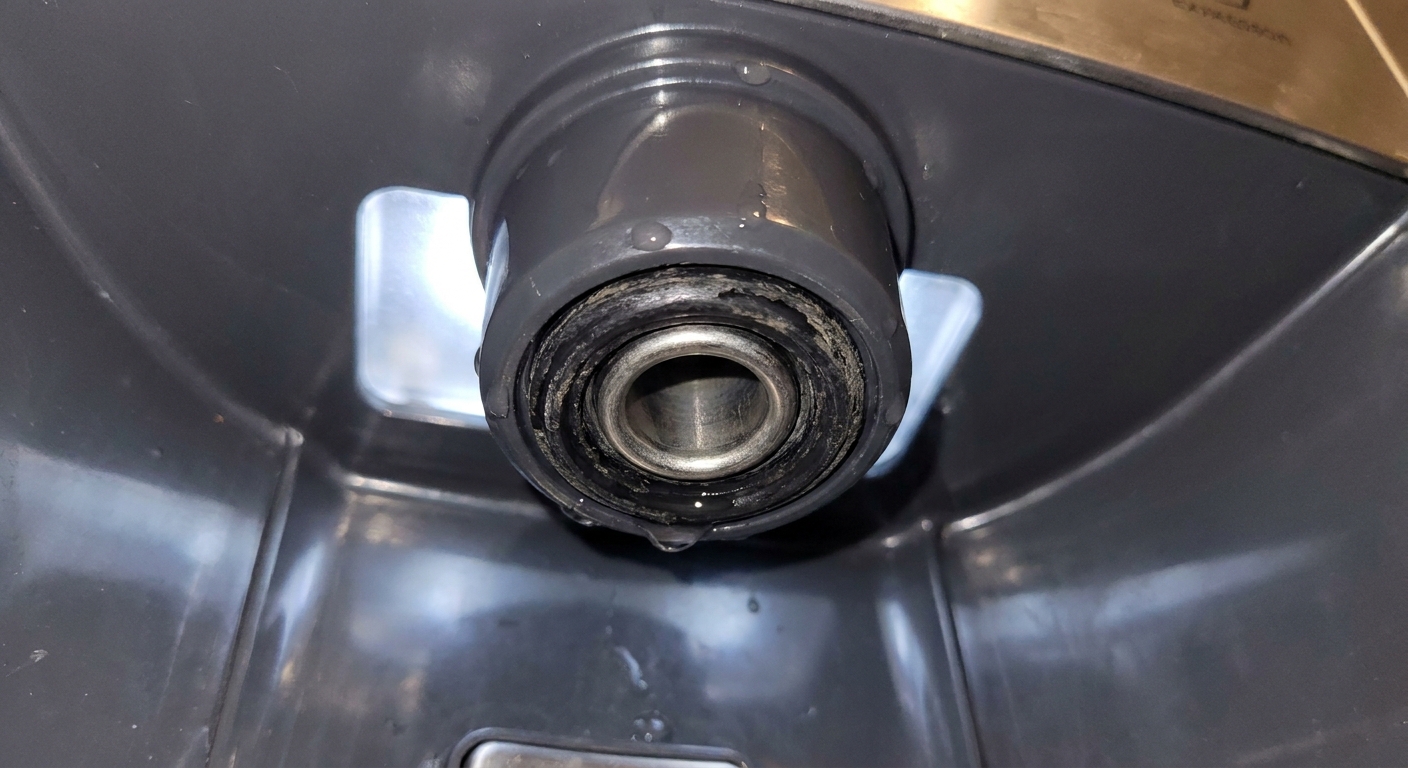
Fix 3: Rule out a frozen door line
This one surprises people. In side-by-side and French door fridges, the water line often runs up through the door. If it freezes (usually because the freezer is set too cold or airflow is restricted), you can get strange behavior: weak flow, no flow, then dripping as the ice plug melts and releases water.
Clues the line is freezing
- The dispenser works fine sometimes, then slows to a weak stream.
- After a period of no use overnight, you get spitting, followed by dripping.
- Your freezer is set very cold, or the door gasket is leaking and the unit is overcompensating.
What to try
- Raise the freezer temperature 1 to 2 degrees Fahrenheit (°F) and give it 24 hours. Many freezers run best around 0°F.
- Check for blocked vents inside the freezer and reposition items so air can circulate.
- Thaw the door line: unplug the fridge and leave the freezer door open for a couple of hours with towels down, or use a hair dryer on low from a safe distance on the dispenser area (keep it moving, do not overheat plastic).
What success looks like: the stream returns to normal and you stop getting the sputter-then-drip cycle after long idle periods.
If freezing keeps happening, you may have a door insulation issue or a model known for door-line freezes. At that point, look up manufacturer service bulletins for your exact model number, or consider a technician if you are not comfortable disassembling the door.
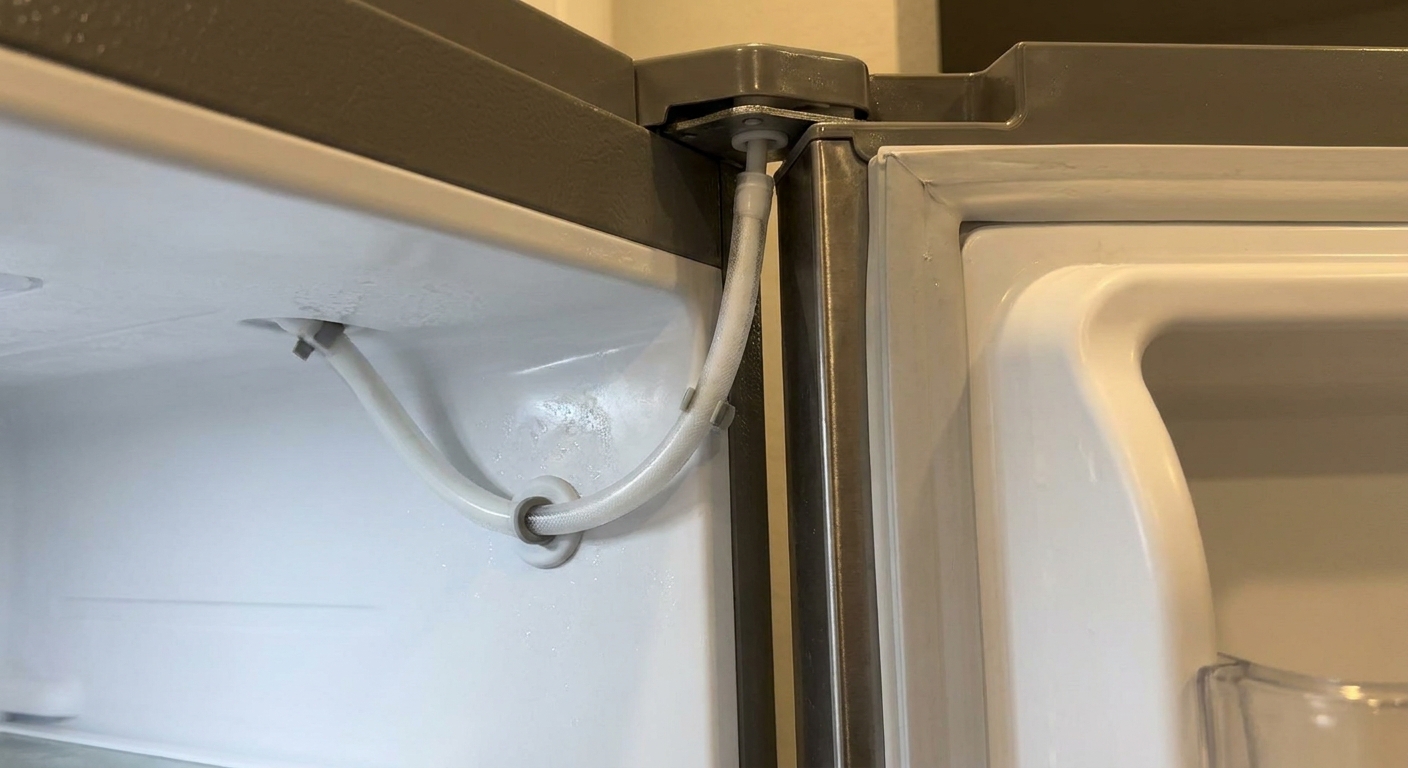
Fix 4: Test the inlet valve
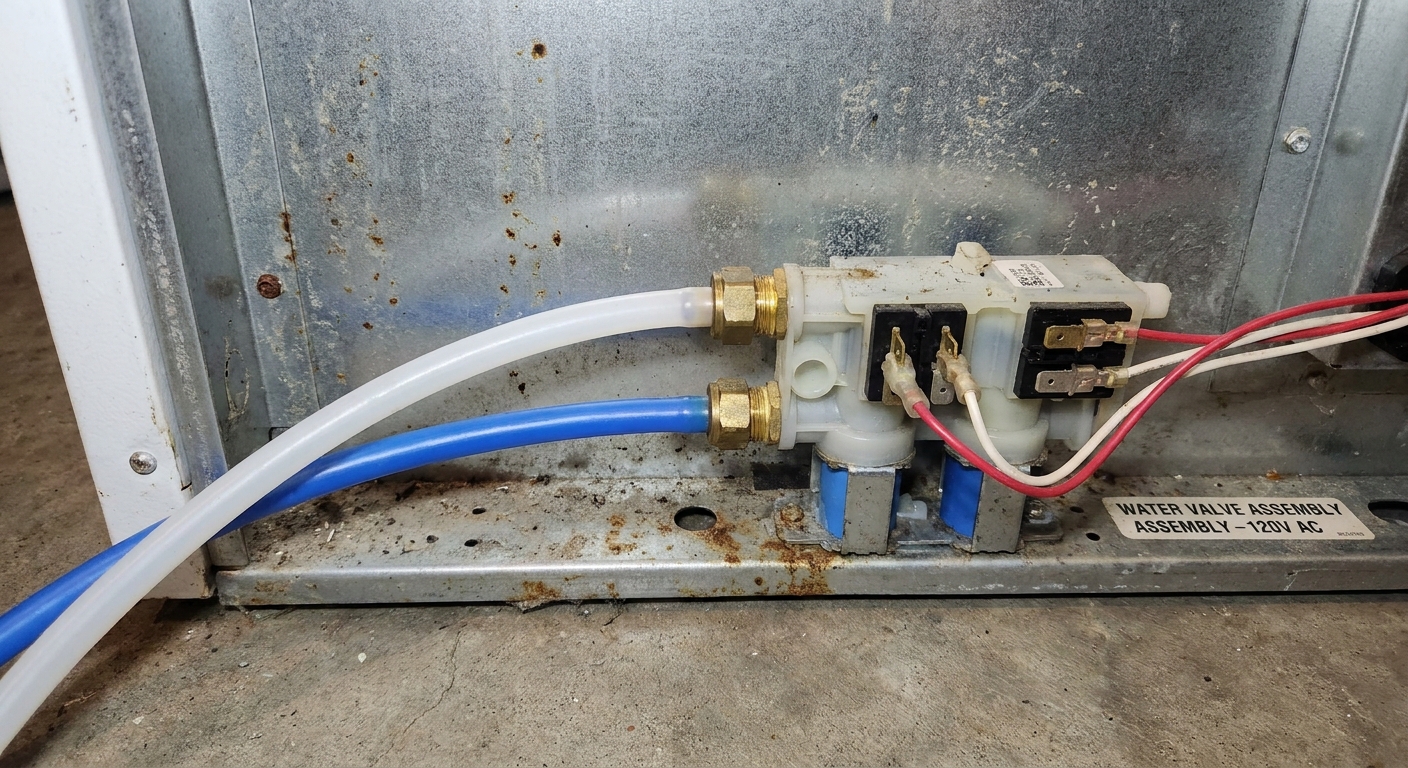
If the dispenser drips even when you have not used it recently, a seeping inlet valve is high on my list. The inlet valve is the electrically controlled valve at the back of the fridge that opens to send water to the dispenser (and often a separate circuit for the ice maker). On many models it is a dual valve with two solenoids, so pay attention to which line goes where when you replace it.
When the internal diaphragm gets worn or debris prevents a tight seal, it can leak a small amount of water past even when closed. That slow seep shows up as a drip at the spout.
How to confirm it
This is my favorite simple test:
- Dispense water for a few seconds, then stop.
- Dry the spout area.
- Wait and watch to see if it keeps dripping.
- Shut off the water supply valve to the refrigerator.
- Keep watching for 10 to 15 minutes.
If the periodic dripping stops completely after the supply is shut off, you are very likely dealing with a valve that is not sealing properly. If it continues briefly and then tapers off, that can be residual water already in the line. What I do not like to see is drops continuing to form every few seconds for the full wait time while the supply is still on.
Replacing the inlet valve
Exact access and fittings vary by model, so use your model number to match the correct part and confirm the layout. The basic approach is consistent:
- Unplug the refrigerator.
- Shut off the water supply.
- Pull the refrigerator out enough to reach the lower back panel.
- Remove the rear access cover near the bottom.
- Place a towel and small container under the valve.
- Disconnect the water lines (often push-to-connect fittings) and the electrical connectors.
- Swap in the new valve, reconnect lines firmly, and reinstall the panel.
- Turn water back on and check for leaks before pushing the fridge back.
Thrifty tip: Take a photo of the valve and line routing before you disconnect anything. It saves the “where did this line go?” moment.
What success looks like: the drip stops between uses, and the dispenser does not slowly form a new droplet over time.
Fix 5: Check the switch
Behind the paddle is typically a small micro-switch. If the switch sticks or the mechanism does not fully return, the fridge may keep the valve energized for a beat too long. That can look like a persistent drip, or water that continues briefly after you let go.
This is more model-specific and sometimes requires removing the dispenser front cover. If you are comfortable doing that:
- Unplug the fridge.
- Carefully remove the dispenser trim (often clips, sometimes hidden screws).
- Inspect for broken plastic tabs, warped components, or a switch that does not click cleanly.
What success looks like: the paddle returns sharply, the switch clicks cleanly, and the water stops immediately when you release.
If anything is cracked or sloppy, replacement parts beat improvising. In my experience, a “mostly working” dispenser mechanism only gets worse.
Filter quick check
If the dripping started right after a filter change, I always do this before ordering parts:
- Reseat the filter: remove it, inspect the end for damage, then reinstall it firmly according to your model (twist-in or push-in).
- Inspect O-rings: a nicked or missing O-ring on the filter or filter head can cause weird behavior, including repeated drips.
- Flush air: dispense water for several minutes, or follow your manufacturer guidance, until sputtering stops and the stream is steady.
What success looks like: the spitting stops first, then the after-drip shrinks back to a few drops.
What not to do
- Do not ignore it. A constant drip can build mineral scale, stain stainless trim, and in some setups overflow the drip tray.
- Do not crank down on push-to-connect fittings. They do not seal by overtightening. They seal by fully seating the tube.
- Do not assume the water filter is the cause. Filters are more tied to low flow than a post-dispense drip, unless a filter change introduced air or the filter is not seated properly.
When to call a pro
I am all for DIY, but I also know when a job turns from “Saturday fix” into “I might crack a door panel.” Consider calling for service if:
- Your model routes water through a complex in-door reservoir and you suspect internal leaks.
- The door needs significant disassembly to access the line and you are not comfortable with it.
- You replaced the inlet valve and still get a persistent drip, which can indicate a control issue or a more involved dispenser housing failure.
- Your home water pressure is known to be very high or you have frequent water hammer and you want a plumber to evaluate a pressure regulator or hammer arrestor.
FAQ
Why does my refrigerator water dispenser drip after I release the lever?
Most often, it is residual water draining from the spout, an actuator mechanism that is not returning cleanly, a compromised spout seal or housing, or an inlet valve that is seeping and letting small amounts of water through even when closed. Right after a filter change, trapped air or a slightly mis-seated filter can also cause repeat drips.
Is a little dripping normal?
A few drops right after you dispense can be normal. A drip that continues for minutes, happens when nobody has dispensed recently, or forms mineral buildup quickly is not normal and is usually a valve, seal, or freezing-line issue.
Will replacing the filter stop the dripping?
Usually no. Filters commonly cause weak flow when clogged. If the drip started right after a filter change, reseat the filter, inspect the O-rings, and flush air by dispensing for several minutes. Persistent dripping that continues day after day more often points to the inlet valve or dispenser components.
How do I know if the inlet valve is bad?
Try the shutoff test: if the dispenser keeps dripping, turn off the water supply to the fridge. If the periodic dripping stops once pressure is removed, the inlet valve is a strong suspect. A few tapering drops after shutoff can still be residual water already in the line.
The 30-Second Cheat Sheet
Essential takeaways for: Refrigerator Water Dispenser Keeps Dripping? Causes and Fixes
Fastest way to stop the drip
- If it drips for minutes or keeps forming drops: suspect a seeping inlet valve, a compromised spout seal, or a cracked dispenser housing.
- If the paddle feels sticky or slow: clean the actuator area and spout with warm soapy water, then vinegar for mineral scale.
- If flow is sometimes weak or it spits: check for a freezing door water line. Raise freezer temp slightly and thaw the line.
- If it started right after a filter change: reseat the filter, check the O-rings, and flush air from the line.
2-minute test to confirm the inlet valve
- Dry the spout area.
- Let it drip, then shut off the fridge water supply.
- Wait 10 to 15 minutes.
- If the periodic dripping stops: the inlet valve is likely seeping and needs replacement. A few tapering drops right after shutdown can still be residual water.
Most common parts that fix a constant drip
- Water inlet valve (back of refrigerator)
- Dispenser spout seal or dispenser housing (front door dispenser area)
- Actuator mechanism or micro-switch (behind the paddle)
- Filter head O-ring (if issues began after a filter swap)
Don’t waste time on these
- Changing the filter first (usually a low-flow fix, not a drip fix)
- Glue fixes on cracked dispenser plastic (rarely lasts in a wet, cold spot)
💡 Tip: Scroll up to read the full article for detailed, step-by-step instructions.
⬆️ Back to top
About Grit
Content Creator @ Grit & Home
Grit is Grit & Home’s little blue clay courier, delivering big questions about the place you call home. Expect practical ideas, a raised eyebrow, and a satchel full of curiosity.