
🚨 In a DIY emergency or rush?
Skip the details and jump straight to our 30-second cheat sheet for the most crucial info.
Small cooler. Big home questions.
Your standalone freezer is doing its job, but it is doing it with the stamina of a toddler who found a bag of jellybeans. It runs. It hums. It never seems to take a break. Yet your food is still safely frozen.
That combo usually means the freezer is fighting something external (heat, airflow, frost, leaky door seal), or it is being told to run more than it should (setting, fast-freeze switch, control issue). Let’s walk through the most common causes in the order that costs the least to fix.
First: confirm what “runs constantly” means
Freezers normally run longer than refrigerators, especially when they are:
- In a hot space (garage, utility room, sun-facing pantry)
- Full of unfrozen items after a big grocery run
- Chest-style, which often run less frequently and hold cold well, but may run in longer stretches when they do kick on
If you are not sure, listen for a true cycle. In moderate conditions, many freezers will often run for a while, then rest for a while, but the exact pattern varies a lot by model, room temperature, load, and whether the unit has a variable-speed compressor or is in a defrost cycle. In a warm room, any “rest” time can shrink dramatically.
A quick temperature reality check
Do not guess based on how the ice cream feels. Use a freezer thermometer (or a probe thermometer placed between packages). A typical target is 0°F (-18°C).
- 0°F and steady: good cooling. We are hunting a cycling or load problem.
- Much colder than 0°F: you may be over-setting the control, or the control is failing.
- Warmer than 0°F: that is a different problem than this page, and it needs its own troubleshooting path. If it also cannot reach temperature while running nonstop, that can point to bigger issues like airflow failures, a weak fan, or in some cases a sealed-system problem.
Check 1: Condenser airflow and clearance
A freezer has to dump heat somewhere. If it cannot shed heat efficiently, it will run longer and longer to maintain temperature.
What to look for
- Not enough space around the sides, back, or front grille (varies by model)
- Blocked vents if it is in a tight closet or surrounded by storage bins
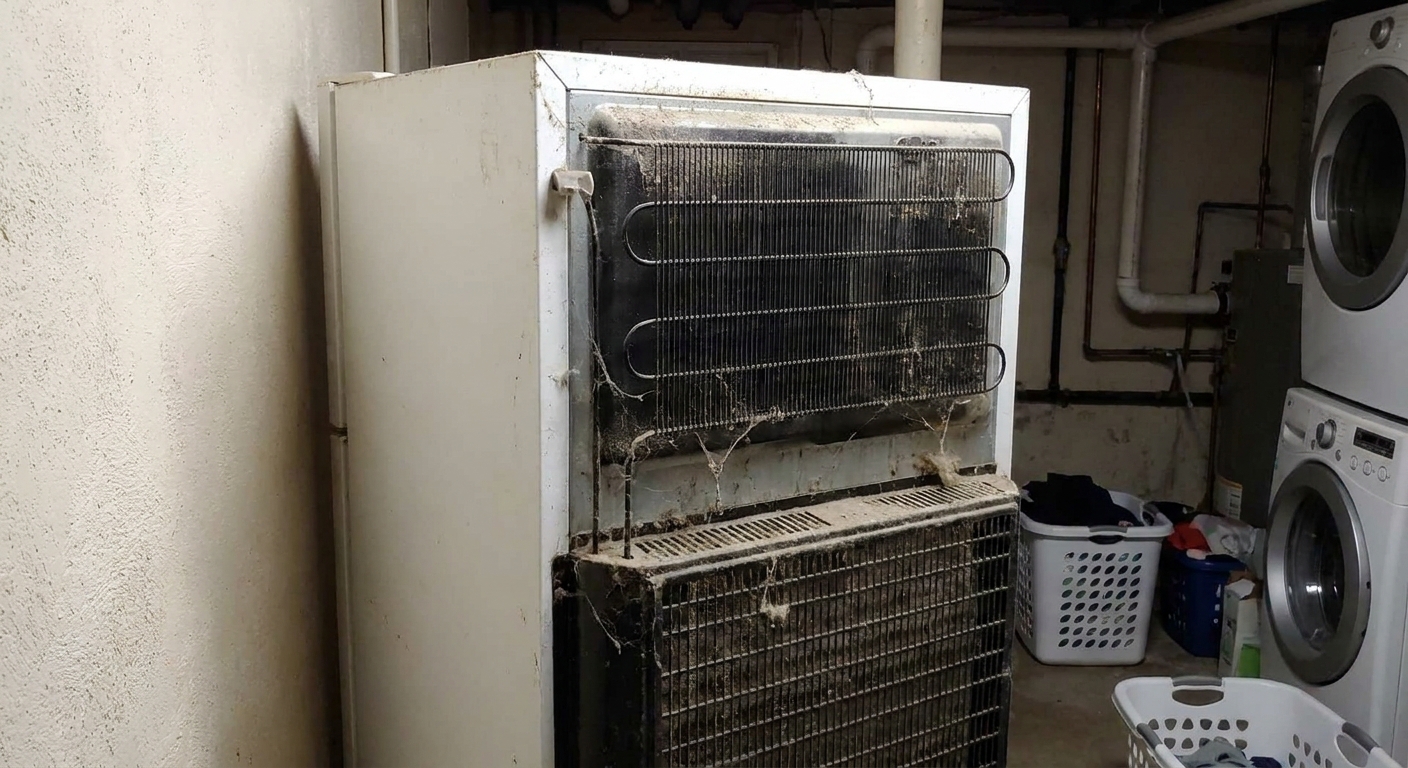
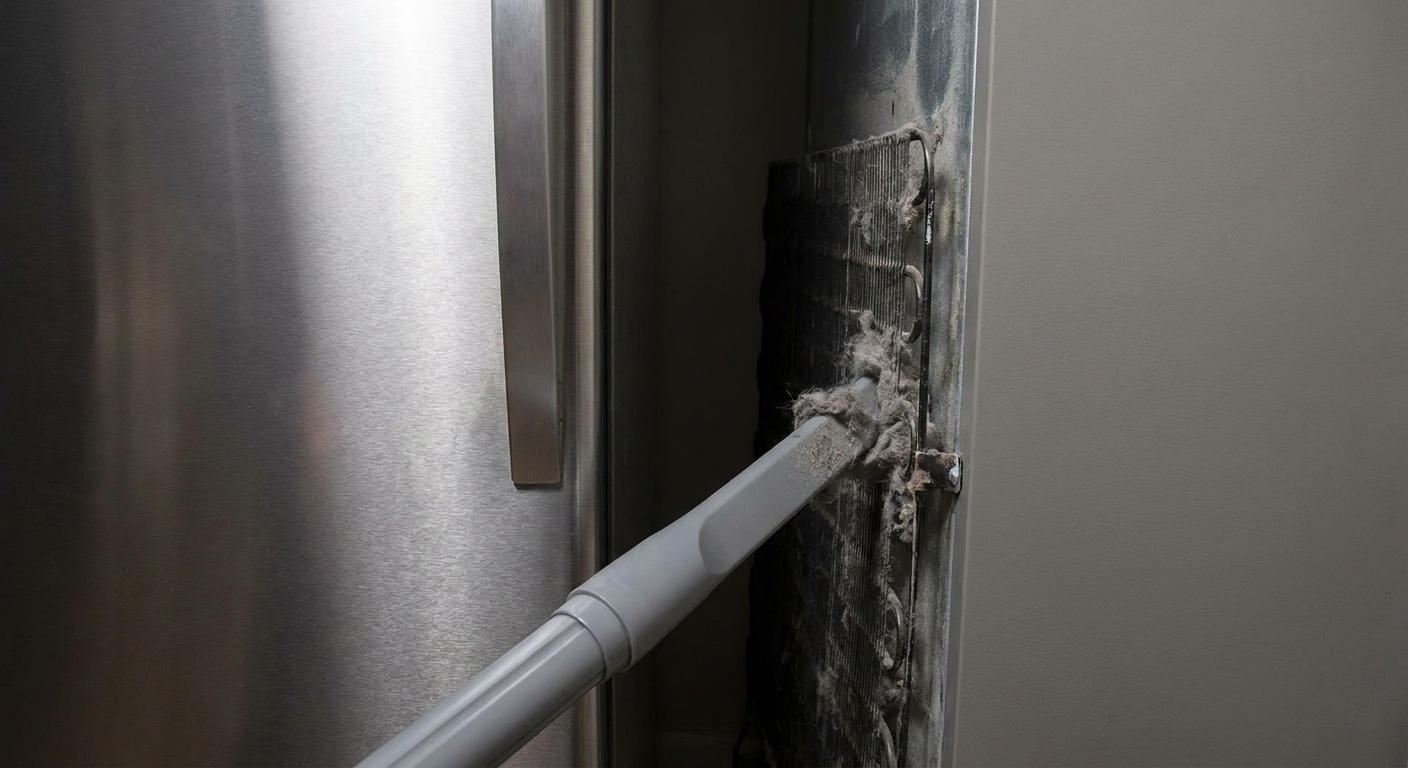
- Dust and pet hair on the condenser coils or condenser fan area (common on uprights)
Many chest freezers hide the condenser tubing inside the outer walls, so you will not always see exposed coils. Uprights more commonly have coils and a service area behind a lower rear panel.
What to do
- Unplug the freezer.
- Pull it out a few inches so it can breathe, or follow the clearance guidance in your manual if you have it.
- Vacuum the rear access area and any visible coils. A coil brush helps, but a vacuum with a crevice tool is a strong start.
- Plug back in and give it a few hours to settle.
Check 2: Door gasket and door alignment
A freezer that is cold but runs nonstop is often leaking cold air in slow motion. The compressor keeps running to replace what is escaping, even though the cabinet still feels plenty cold.
The paper test
Close the door on a strip of paper (or a dollar bill) and gently pull.
- Good seal: resistance all the way around.
- Bad seal: paper slides out easily in one spot or several spots.
Common gasket problems
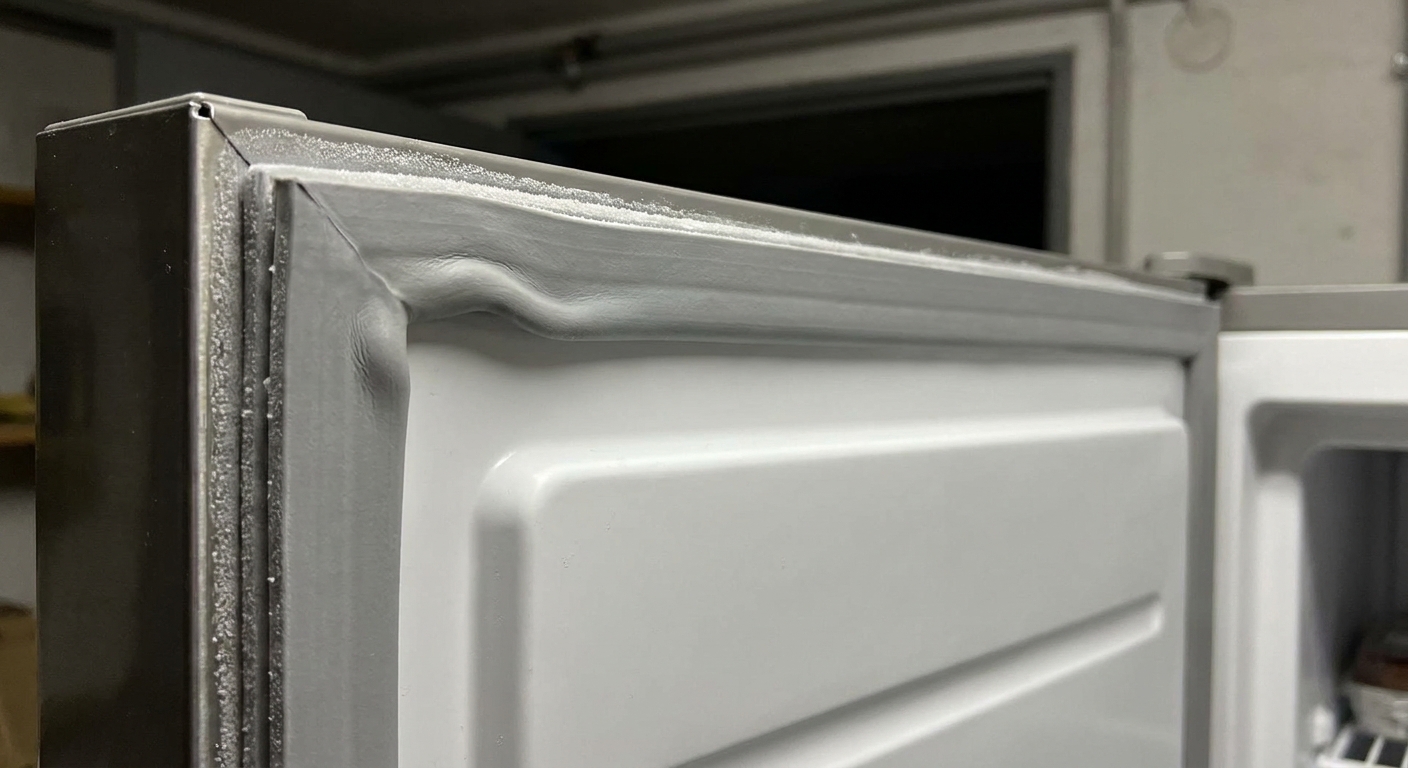
- Crumbs, hair, ice beads, or sticky residue keeping the gasket from seating
- Warped gasket that does not lie flat
- Door sag on uprights causing the top corner to leak
What to do
- Clean the gasket and mating surface with warm soapy water, then dry.
- Look for gaps at the corners when the door is closed.
- On uprights, check that the freezer is level and not leaning forward. A slight backward tilt often helps the door close firmly.
Check 3: Setting and fast freeze
Some freezers have a dial with numbers that do not mean much on their own. Others have a digital setpoint. Either way, a too-cold setting can keep the compressor running nearly all the time, especially in warm conditions.
What to do
- Set the freezer to 0°F (-18°C) if it is a digital control.
- If it is a dial, nudge it one small step warmer, wait 24 hours, and recheck temperature.
- Look for a button labeled Fast Freeze, Quick Freeze, or Super Freeze. If it is on, turn it off unless you just loaded a lot of warm food.
If the freezer stays well below 0°F and will not cycle off even on a warmer setting, that points toward a control or sensor issue. More on that below.
Check 4: Room heat and placement
Freezers hate being grilled from the outside. If your freezer lives in a hot garage, near a dryer, next to a furnace, or in a sunbeam that hits it daily, “always running” might be the predictable outcome.
Signs heat is the main problem
- The freezer runs more during the hottest part of the day
- The outside walls feel unusually warm
- The air around the freezer is stagnant or cramped
What to do
- Move it away from heat sources and direct sun.
- Improve airflow around it.
- If you can, keep the room closer to typical indoor temperatures.
Note: Temperature extremes in either direction can matter. Some units are not garage-rated and can behave oddly outside their designed ambient range. If your freezer lives in a garage, check your manual for the recommended operating temperature range.
Check 5: Frost load inside
Frost does not just look messy. It blocks airflow and insulates surfaces that need to transfer heat. If the freezer is keeping temperature but never resting, heavy frost is a prime suspect.
What is normal vs not
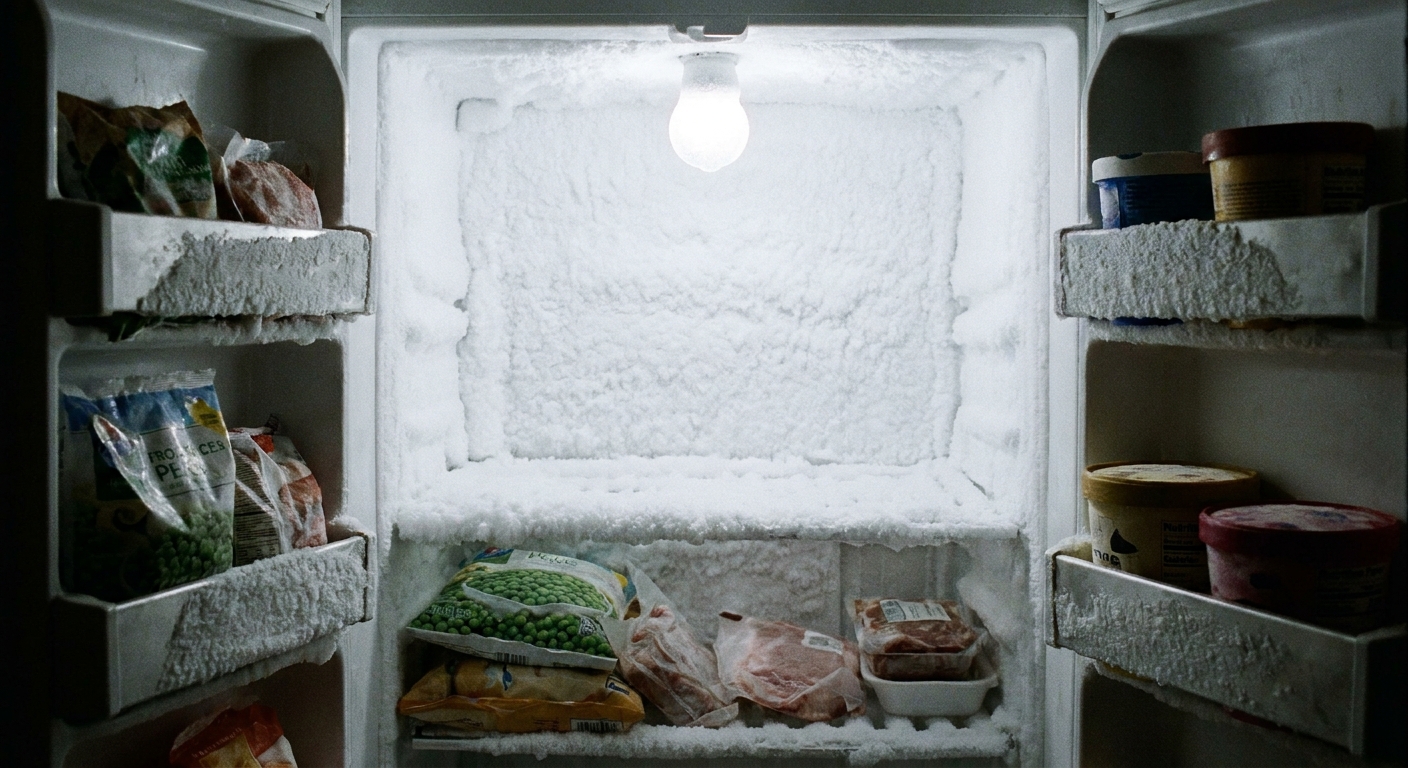
- Normal: a light, even dusting over time, especially in humid seasons.
- Not normal: thick, crunchy buildup, sheets of ice, or frost that quickly comes back after you defrost.
Where frost matters most
- Uprights with a rear interior panel: frost buildup behind that panel can choke airflow
- Around door edges: suggests warm, moist air is leaking in
- On shelves and packages: often means frequent door openings or a poor seal
What to do
If you see significant frost, plan a manual defrost.
- Move food to a cooler with ice packs.
- Unplug the freezer and leave the door open.
- Let ice melt naturally. Avoid sharp tools that can puncture refrigerant lines.
- Dry the interior fully before restarting.
If an upright has heavy frost behind the back panel and it returns within days or a couple of weeks, that often points to a defrost system problem (heater, defrost thermostat, timer, or control). The freezer can seem “fine” at first while it quietly loses airflow and runs longer to compensate.
Check 6: Overstuffing and blocked vents
A freezer can be full. It just cannot be jammed in a way that blocks its internal airflow path.
What to look for
- Packages pressed tight against interior vent areas
- Baskets or bins piled above the fill line so the lid or door does not close cleanly
- Large flat items leaning against the back wall in an upright
What to do
- Repack so air can circulate.
- Leave a little space near vents and the back interior panel.
- Make sure the door closes without a shove.
If basics do not help: cycling culprits
Once you have ruled out airflow, heat load, gaskets, and frost, you are left with components that tell the freezer when to stop, plus the fans that move heat where it needs to go.
Control or sensor issues
Depending on the model, your freezer may use a mechanical thermostat, a thermistor sensor, or an electronic control board. If it misreads temperature, it can keep calling for cooling even when the cabinet is already at or below setpoint.
Clues:
- Freezer temperature is well below 0°F even on a warmer setting
- No change in runtime when you adjust the dial or setpoint
- Compressor runs nearly nonstop, but the freezer never seems to “satisfy” the control
At this stage, a service call can make sense. Diagnosis often requires a multimeter and model-specific access to the sensor or thermostat.
Condenser fan problems (common on uprights)
If the condenser fan is weak or not running, the compressor may run continuously while struggling to shed heat. You may feel excessive heat near the compressor area.
What you can do safely: with the freezer plugged in, listen near the lower rear area for a fan. If you hear only the compressor hum and no fan movement, unplug and inspect for dust blockage. If it still does not run, it likely needs repair.
Evaporator fan or defrost system failures (uprights)
Many uprights rely on an evaporator fan to push cold air through the cabinet. If airflow is weak, or the defrost system fails and the evaporator turns into a frosty brick behind the rear panel, the freezer may still limp along at 0°F for a while, but it will run much longer to get there.
Clues:
- Thick frost behind the rear interior panel
- Airflow from interior vents feels weak
- Fan noise changes, or you stop hearing the interior fan when the compressor is running
When to stop and call for help
Call a pro if you notice any of the following:
- Burning smell, buzzing, or clicking that repeats every few minutes
- Compressor area is extremely hot or too hot to touch safely. Unplug the freezer and call for service.
- Freezer is tripping the breaker
- Temperature starts drifting warmer after days of nonstop running
If the freezer is old and power bills matter, nonstop runtime can be a cost signal even if food is currently safe. A technician can tell you if it is a simple control fix or a sign the sealed system is working too hard.
FAQ
Is it bad for a freezer to run all the time?
It is not ideal. Constant running increases wear and can shorten compressor life. It also usually means you are paying extra electricity to overcome a solvable problem like poor airflow, heat, frost, or a leaky gasket.
Can a freezer run constantly because it is too full?
Yes, if “full” means airflow is blocked or the door does not seal well. A well-packed freezer with good airflow can be efficient. A jammed freezer can make the compressor work nonstop.
Why does it run more in summer?
Higher room temperature and humidity increase the heat load and the moisture entering during door openings. That means longer run times and more frost potential.
Should I turn the temperature colder to make it cycle off?
No. Colder settings usually make it run more, not less. Aim for 0°F and fix the reason it cannot satisfy the control.
The 30-Second Cheat Sheet
Essential takeaways for: Standalone Freezer Runs Constantly but Stays Cold?
What “runs constantly but stays cold” usually means
Your freezer is winning the temperature battle, but it is working too hard. The most common causes are poor condenser airflow, a leaking door seal, too-cold settings or Fast Freeze being on, a hot room, heavy frost, or blocked interior airflow.
Do this first (fast checks)
- Verify temperature: target about 0°F (-18°C) with a thermometer.
- Check clearance and airflow: pull it out a few inches (or per the manual) and make sure vents are not blocked.
- Clean dust: vacuum condenser coils or the rear service area if accessible.
- Paper test the gasket: resistance all the way around the door.
- Look for Fast Freeze: turn it off if it is on.
If you see frost
- A light dusting is normal. Thick, crunchy frost, especially on an upright’s back wall, can prevent normal cycling.
- Plan a manual defrost. Do not chip ice with sharp tools.
- If heavy frost returns quickly, a defrost system problem is likely.
Likely repair issues if basics do not help
- Thermostat/thermistor/control misreading temperature
- Condenser fan weak or not running (common on uprights)
- Evaporator fan or defrost failure causing hidden frost and restricted airflow
Call for service if
- Burning smell, repeated clicking, or breaker trips
- Compressor area is extremely hot, or too hot to touch safely
- Temperature starts creeping warmer
💡 Tip: Scroll up to read the full article for detailed, step-by-step instructions.
⬆️ Back to top
About Grit
Content Creator @ Grit & Home
Grit is Grit & Home’s little blue clay courier, delivering big questions about the place you call home. Expect practical ideas, a raised eyebrow, and a satchel full of curiosity.