
🚨 In a DIY emergency or rush?
Skip the details and jump straight to our 30-second cheat sheet for the most crucial info.
The first time I ran into this, I assumed the toilet was “just old.” In reality, it was a tiny timing issue inside the tank. The handle was doing its job, but the flapper was closing too soon, so the flush only worked if I held the handle down long enough to keep that flapper open.
The good news is this is usually a simple, low-cost fix. You can diagnose it with the tank lid off, a flashlight, and about five minutes of patient tinkering.
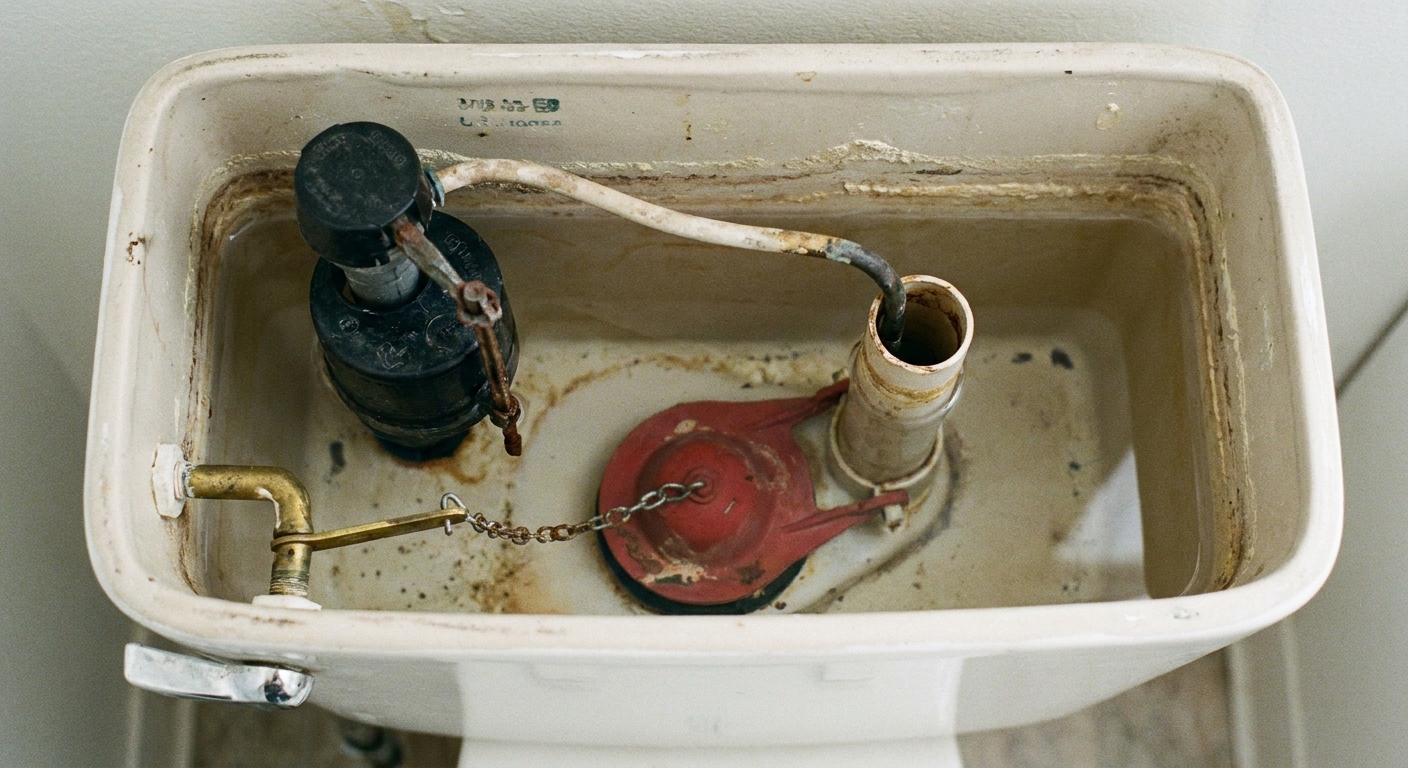
Quick safety and setup
- Remove the tank lid and set it somewhere safe. Porcelain tank lids chip easily. I like to set mine on a folded towel on the counter or floor.
- Flush once with the lid off and watch what happens. The “movie” of the parts moving is your best diagnostic tool.
- Turn the water off at the shutoff valve if you will be putting your hands deep in the tank or swapping parts. You can test chain and lever adjustments with the water on, but I prefer turning it off when working.
Tools you might need: adjustable wrench or pliers, small screwdriver (sometimes), flashlight, and possibly a replacement flush lever or flapper.
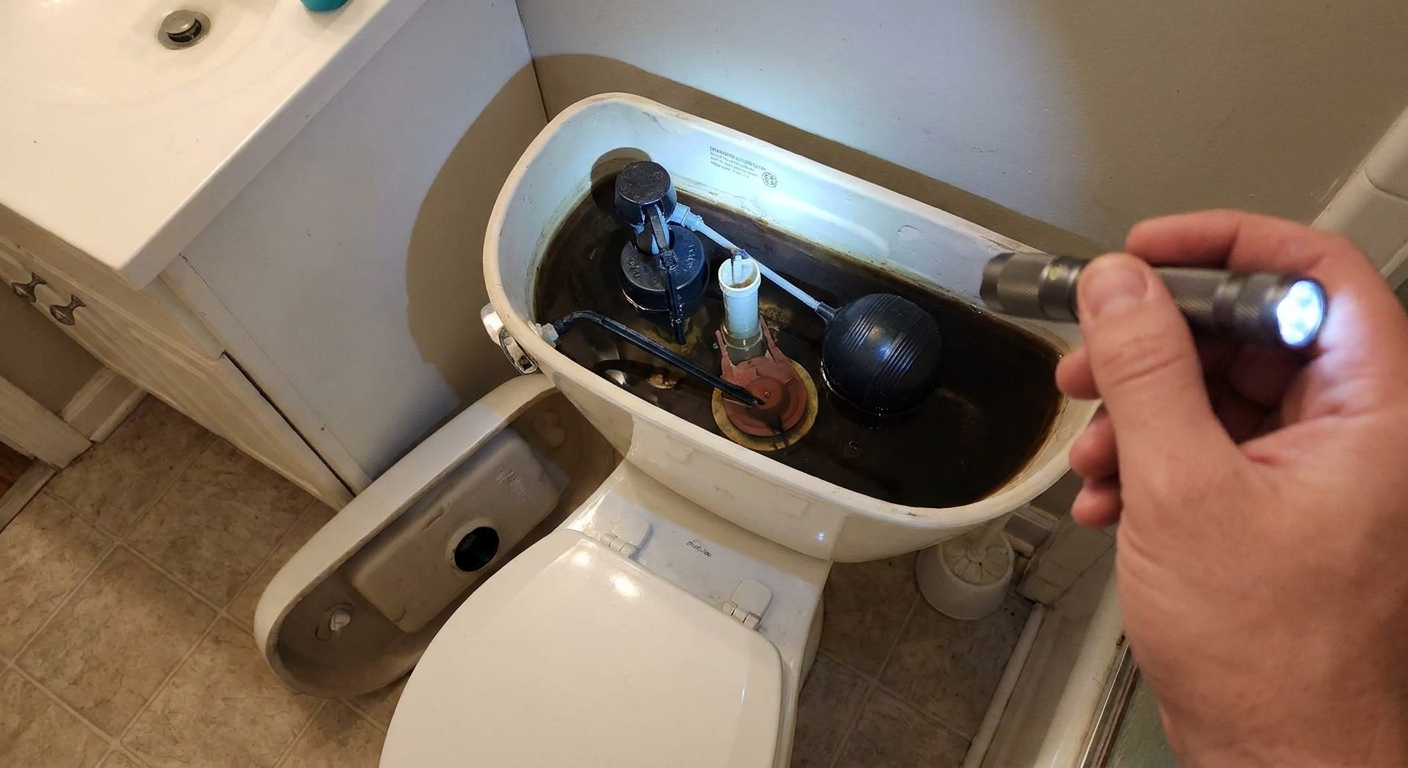
Diagnose it in 30 seconds
With the tank lid off, press the handle down and watch two things:
- Does the chain go tight immediately or does it have a lot of slack before it lifts the flapper?
- Does the flapper stay up on its own for most of the flush, or does it drop quickly the moment you let go?
If the flapper barely lifts, you are usually dealing with chain slack, a loose lever connection, or a worn lever. If it lifts but drops fast, you are dealing with a flapper timing issue.
Fix 1: Adjust the chain length (most common)
If the chain has too much slack, pressing the handle does not lift the flapper high enough or fast enough. If the chain is too tight, it can hold the flapper slightly open or make it bind.
What “right” looks like
- With the flapper closed, you want a little slack in the chain (roughly 1/4 to 1/2 inch is a good target).
- The lever arm should move freely, and the chain should pull the flapper up without delay.
How to adjust it
- Locate the chain from the flush lever arm to the flapper.
- Move the chain hook to a different link. Shorten it if there is lots of slack. Lengthen it if the chain is tight when the flapper is seated.
- Test flush with one normal handle press. Watch whether the flapper stays open long enough to complete a full flush without holding the handle.
My mistake to help you avoid: I have “fixed” this by tightening the chain too much, then wondered why the toilet occasionally ran. If the flapper cannot fully seat, water leaks into the bowl and the fill valve refills the tank periodically.
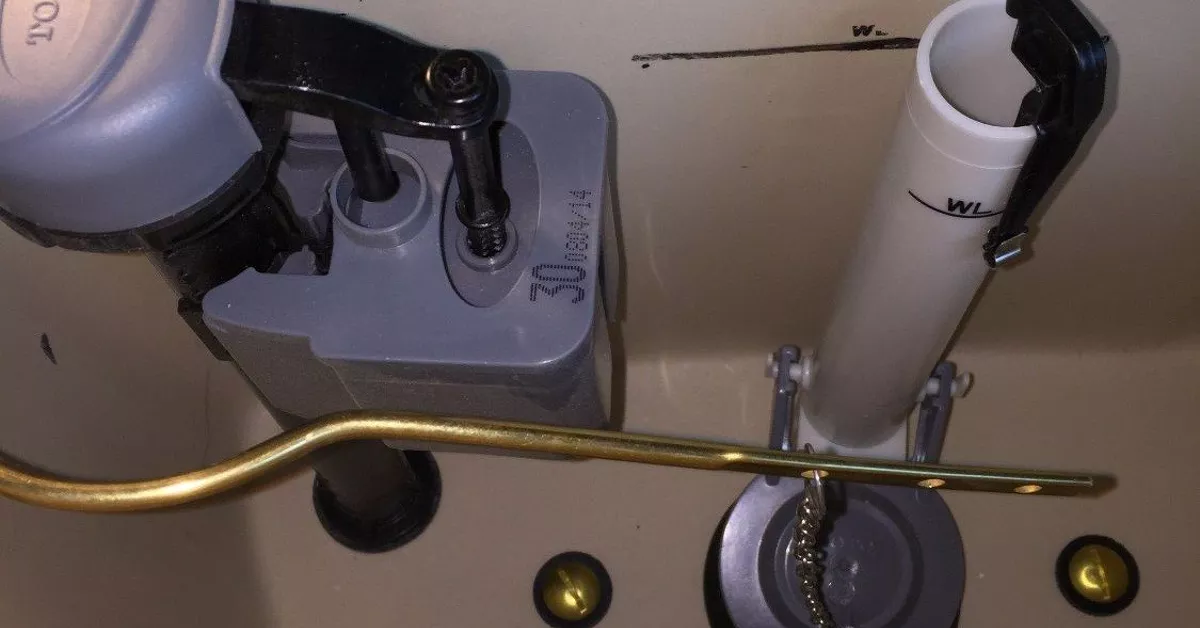
Fix 2: The flapper closes too soon
If you let go of the handle and the flapper immediately falls shut, the tank cannot dump enough water quickly, so you are forced to hold the handle down to keep the flapper open.
One important note: flappers are supposed to close as the tank level drops. The problem here is that it is closing too soon to finish a full flush.
Common reasons it will not stay up
- Wrong flapper type for your toilet. Some toilets use a standard 2-inch flapper, others use 3-inch, and some use specialty designs.
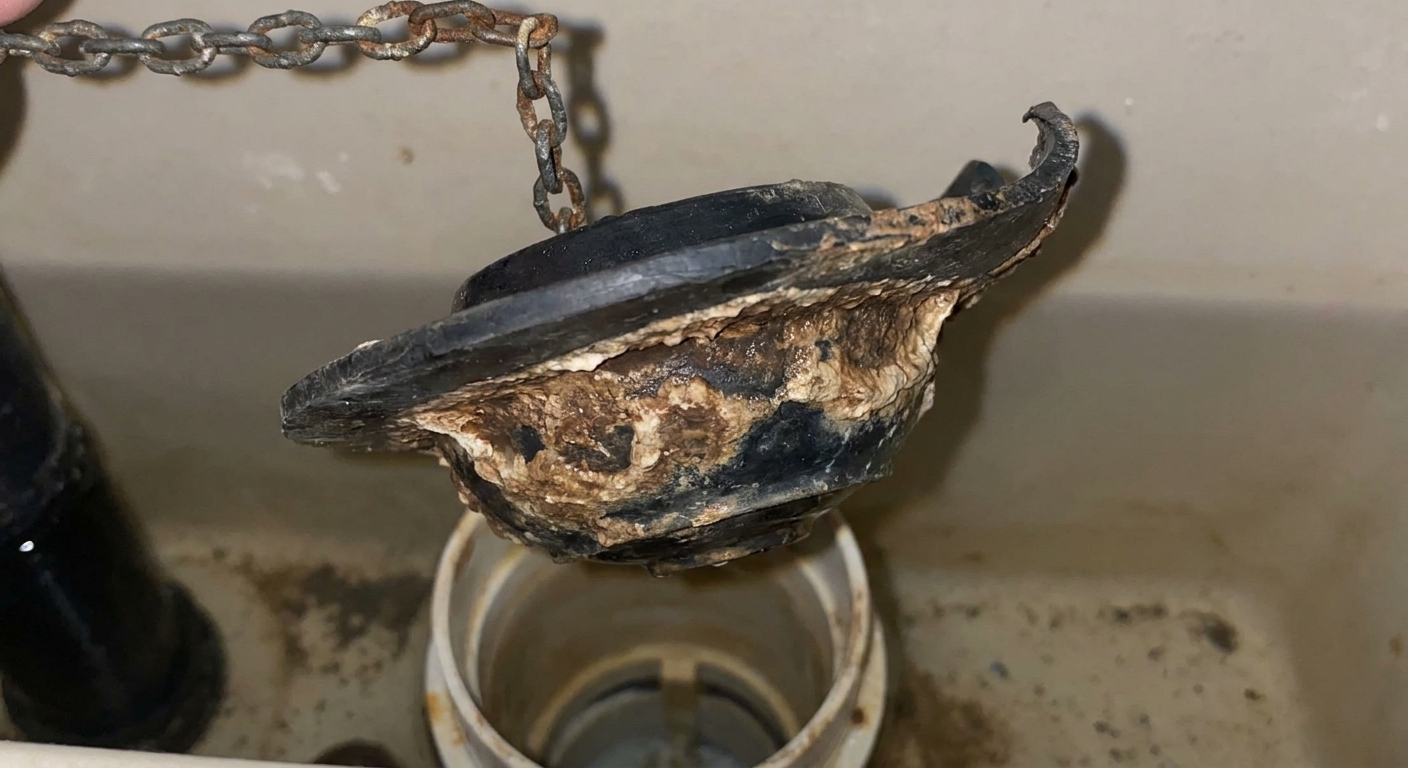
- Flapper is stiff, swollen, heavy, or mineral-crusted from age and buildup, so it does not move and seal the way it should.
- Not enough lift due to chain or lever geometry, so it never gets into a stable open position.
- Worn or mismatched part that changes the timing of how long it stays open.
What to do
Step 1: Confirm the flapper is lifting high enough. If it barely lifts, do Fix 1 and Fix 3 first.
Step 2: Lower the water level before swapping parts. Shut off the water and flush once to drain most of the tank. It is a lot less splashy.
Step 3: Inspect the flapper. If it is warped, cracked, slimy, or hard as a hockey puck, replace it. Flappers are inexpensive and one of the most common wear items in a home.
Step 4: Check the seat. Wipe the flush valve seat (the ring the flapper seals against). Mineral buildup can prevent smooth movement and proper sealing.
Step 5: Match the replacement correctly. Bring the old flapper to the store or match by brand and model if you know it. After you install it, make sure the chain is not twisted and still has a little slack.
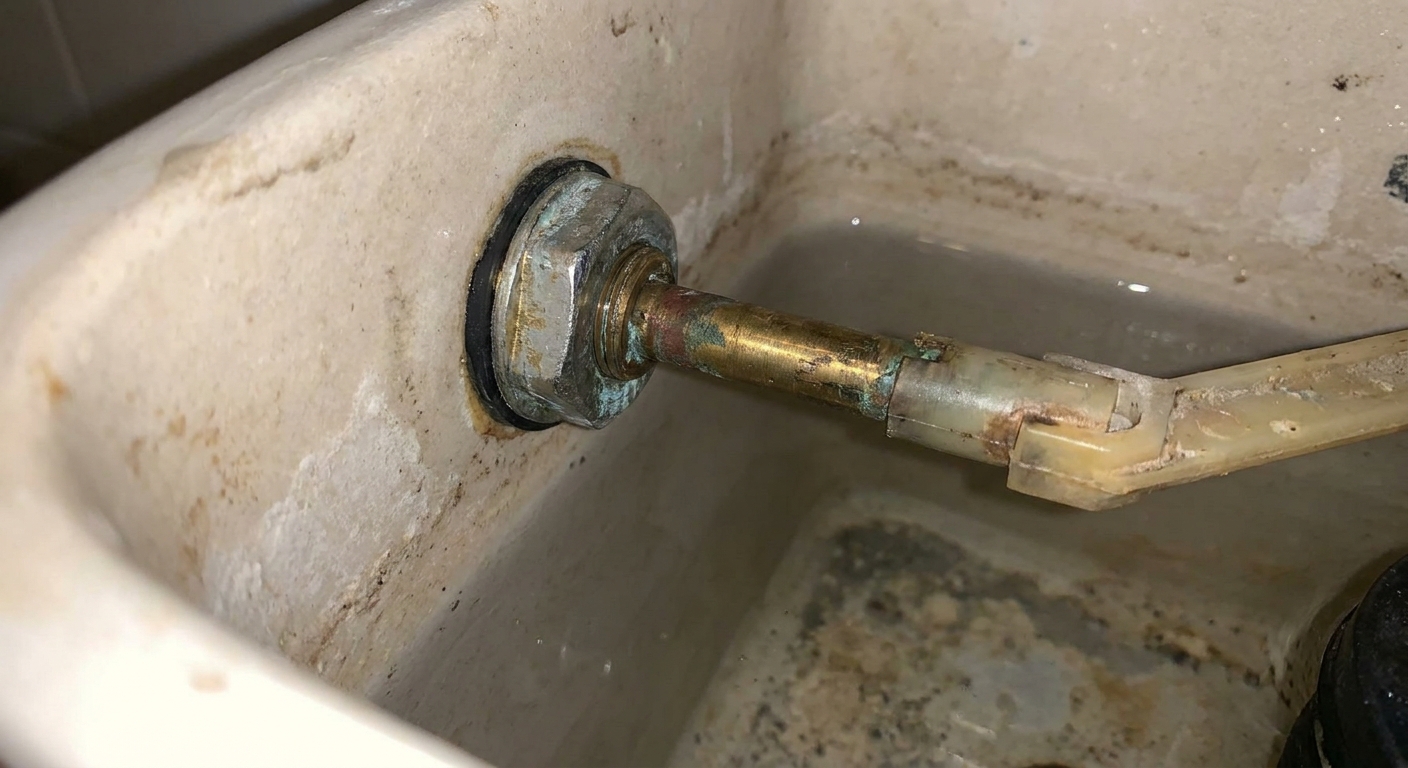
Fix 3: Tighten the handle nut
If the handle feels sloppy, does not spring back, or sometimes “does nothing” unless you push it just right, the mounting nut inside the tank may be loose.
Many toilet handle nuts are left-hand (reverse) threaded, but not all models are. A simple rule: if it will not loosen the normal way, try the opposite direction.
- To tighten, you may need to turn the nut counterclockwise.
- To loosen, you may need to turn it clockwise.
How to tighten it
- Take the tank lid off.
- Find the plastic or metal nut on the inside where the handle shaft enters the tank.
- Snug it up by hand first, then gently with pliers if needed.
Tip: Do not over-tighten. Porcelain tanks and plastic threads do not forgive excessive force.
Fix 4: Replace a worn flush lever
Sometimes the handle itself is the culprit. The lever arm can corrode, bend, or develop slop at the pivot so it does not pull the chain through a clean, strong arc. The result is a flapper that only stays open if you keep pressure on the handle.
Signs the lever is the problem
- The handle must be pushed farther than normal.
- The lever arm rubs the tank wall or hits the fill valve float.
- The arm is visibly bent downward, reducing lift.
- The pivot feels gritty or loose.
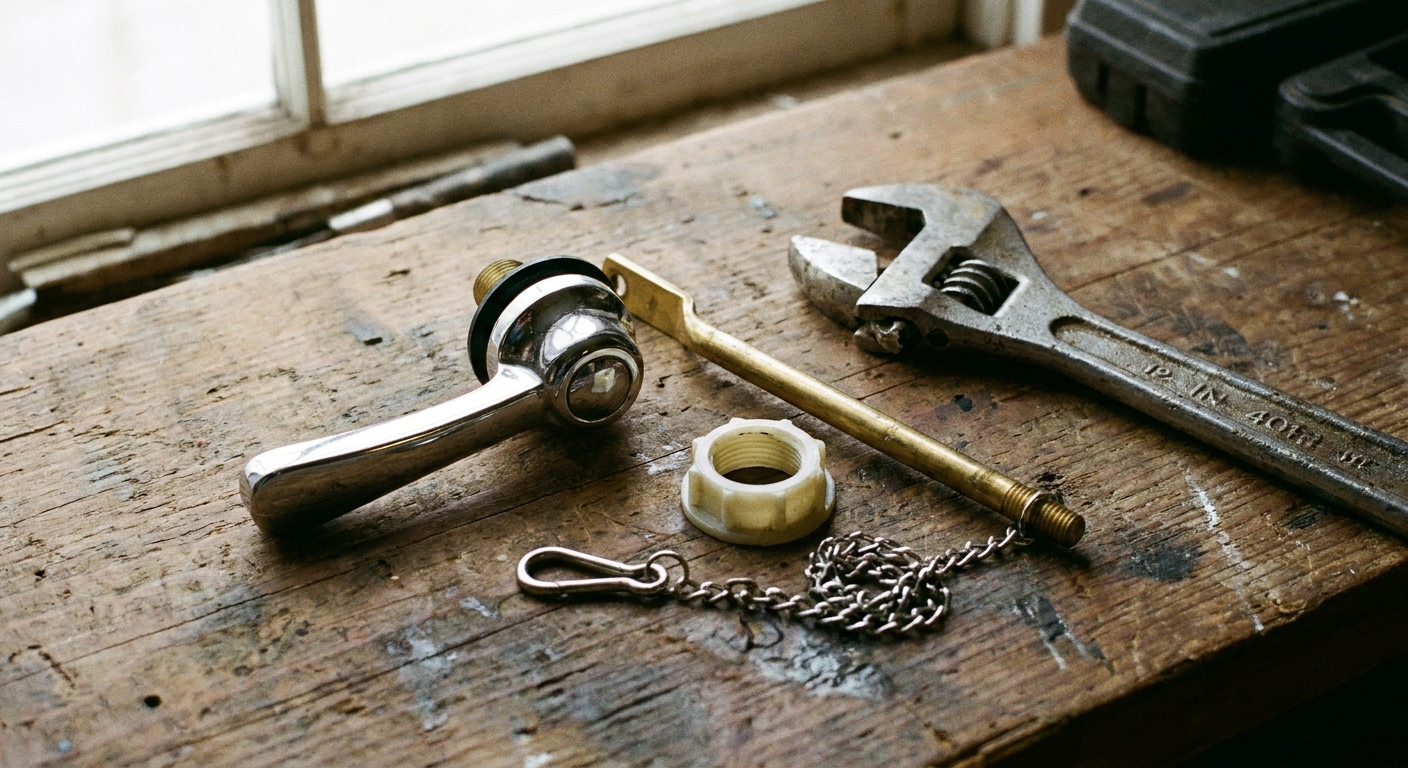
Replacement overview
- Shut off water and flush to lower the tank level (optional but less messy).
- Unhook the chain from the lever arm.
- Remove the inside mounting nut (if it will not turn the expected direction, try the opposite direction).
- Slide out the old handle and install the new one.
- Reconnect the chain with a little slack and test flush.
If you buy a “universal” lever, choose one with an adjustable arm and match the handle style (front, side, or angle mount).
Not a flapper toilet
If you take the lid off and you do not see a rubber flapper, you may have a canister or tower-style flush valve (common on some newer toilets). The symptom can feel the same, but the parts are different. Instead of a flapper and chain, you are usually adjusting or repairing the lift mechanism, seal, or linkage. The same idea still applies: the valve needs to open easily and stay open long enough to dump the right amount of water.
When this is not the issue
A quick clarification so you do not chase the wrong fix.
- If the toilet flushes completely but does not clear the bowl well (it swirls, finishes, but leaves solids behind), that is usually a weak flush problem such as rim jets, siphon jet, low tank water level, or a partial clog. Holding the handle is not the main symptom there.
- If the toilet keeps running after flushing or you hear periodic refilling, that is usually a flapper seal issue, float adjustment, or fill valve problem. A too-tight chain can contribute, but a “running toilet” has its own checklist.
Troubleshooting checklist
- Chain is snagging on the overflow tube or lever arm. Re-route it so it hangs straight.
- Flapper ears are binding on the pegs. Clean buildup or replace the flapper.
- Water level is too low in the tank. Follow the waterline mark on your overflow tube or fill valve if it has one. If there is no mark, a common target is around 1 inch below the top of the overflow tube, but manufacturer specs vary.
- Trip lever arm angle is wrong. Some arms can be gently bent to clear obstacles, but replacement is often cleaner and sturdier.
If you want the simplest approach: start with chain adjustment, then tighten the handle nut, then replace the flapper (or seal, if you have a canister), and only then replace the lever. That order fixes most “hold the handle down” flushes without wasted parts.
FAQ
Why does holding the handle down make it flush normally?
Because holding the handle down keeps tension on the chain, which holds the flapper open longer. That extra time lets the tank dump enough water to complete a proper siphon and flush.
How much slack should the chain have?
A little slack with the flapper closed is the goal. Roughly 1/4 to 1/2 inch is a solid starting point. You want enough slack that the flapper can fully seat, but not so much that the handle movement is wasted taking up slack.
Is it bad to keep flushing by holding the handle down?
It will not usually damage the toilet, but it is a sign something is out of adjustment or worn. Left alone, it can lead to inconsistent flushing and, if the chain is part of the issue, occasional running.
Do I need a plumber for this?
Not usually. If you are comfortable removing the tank lid and making small adjustments, you can fix this. Call a plumber if you find cracked porcelain, corroded bolts leaking at the tank, or if multiple parts are failing and you would rather not troubleshoot.
The 30-Second Cheat Sheet
Essential takeaways for: Toilet Handle Must Be Held Down to Flush? Fixes
Most common cause
A toilet that only flushes when you hold the handle down is usually a chain or flapper timing issue. The flapper is closing too soon unless you keep tension on the handle.
Do this first (fast checks)
- Take the tank lid off and flush while watching the chain and flapper.
- Adjust chain slack so there is a little play with the flapper closed (roughly 1/4 to 1/2 inch).
- Make sure the chain is not snagging on the overflow tube, lever arm, or tank wall.
If you still have to hold the handle
- Replace the flapper if it is warped, stiff, swollen, mineral-crusted, or mismatched. Clean the flush valve seat first.
- Tighten the handle nut inside the tank. Many are left-hand (reverse) threaded, but not all. If it will not move the normal direction, try the opposite direction.
- Replace the flush lever if the arm is bent, rubbing, or sloppy at the pivot.
Not the same problem
- If it flushes fully but leaves the bowl dirty, you are dealing with a weak flush issue.
- If it keeps refilling or you hear water running, it is a running toilet issue (often flapper seal or fill valve).
💡 Tip: Scroll up to read the full article for detailed, step-by-step instructions.
⬆️ Back to top
About Grit
Content Creator @ Grit & Home
Grit is Grit & Home’s little blue clay courier, delivering big questions about the place you call home. Expect practical ideas, a raised eyebrow, and a satchel full of curiosity.