
🚨 In a DIY emergency or rush?
Skip the details and jump straight to our 30-second cheat sheet for the most crucial info.
I love a garbage disposal when it’s treated like what it is: a helpful finishing tool for tiny leftovers, not a second trash can. In my house, the fastest way to turn dinner cleanup into a late-night sink repair is letting the wrong food go down the drain. I’ve been there, standing over a humming disposal that won’t spin, wishing I’d scraped the plate instead.
If you want to avoid jams, clogs, and that awful burnt smell, here’s what you should not put in a garbage disposal, plus what each one does inside the unit.
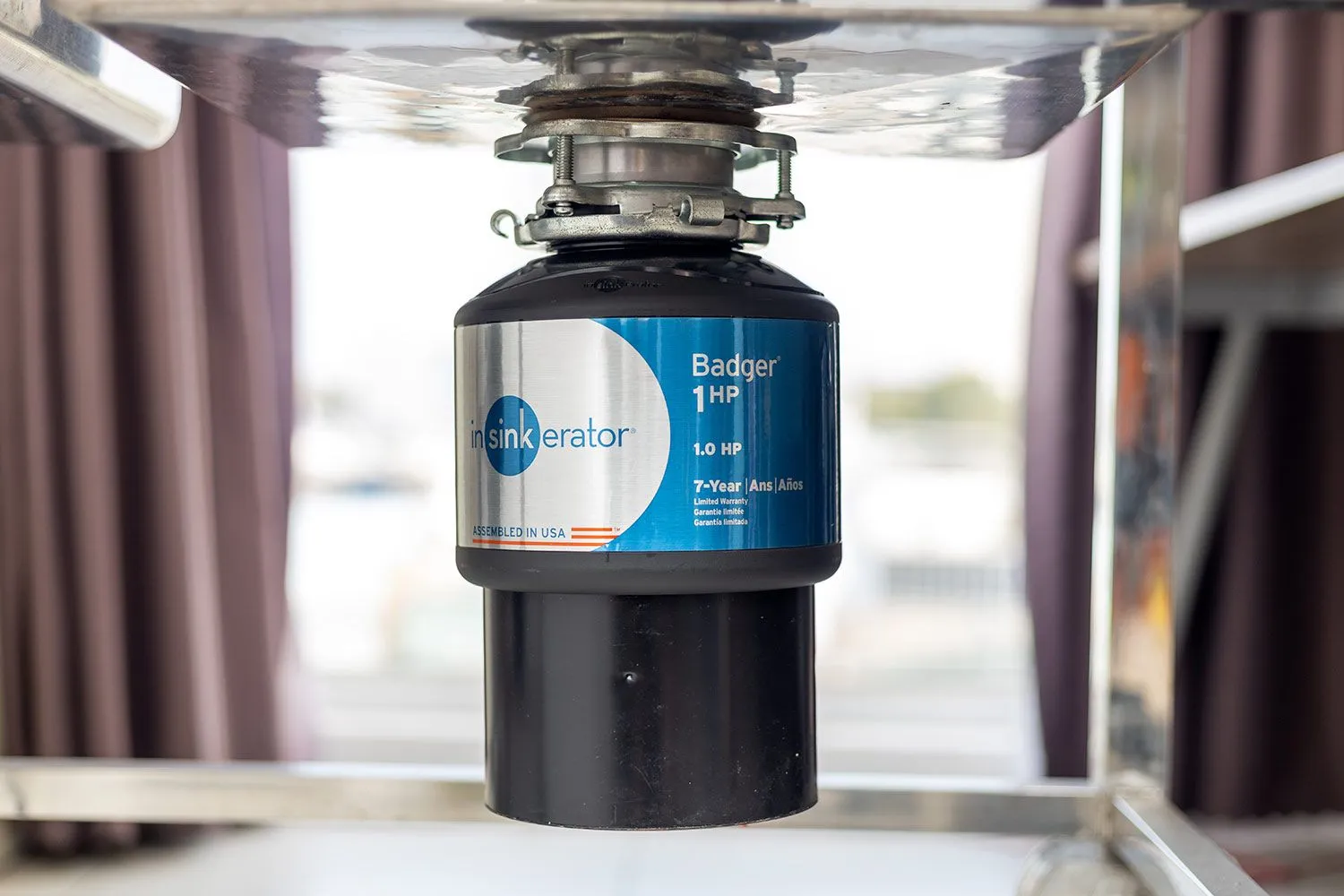
Quick rule of thumb
Garbage disposals handle small, soft scraps with plenty of running water. They hate anything that is:
- Greasy (coats parts and pipes)
- Fibrous (wraps around the shredder ring and impellers)
- Starchy (swells and turns into paste)
- Hard (can jam the turntable and strain components)
- Wedge-prone (tough skins, peels, pits, and seeds that snag and block flow)
Don’t put these foods in a garbage disposal (and why)
Grease, fat, and cooking oil
What it does inside the disposal: Warm grease looks harmless going down. Then it cools, turns tacky, and coats the inside of the disposal and the drain line. That coating grabs everything that comes after it, building a clog like layers of lint on a dryer screen.
Do this instead: Pour grease into a can or jar, let it solidify, then toss it in the trash. Wipe greasy pans with a paper towel before washing.
Worth knowing: Cold water can help a disposal rinse more cleanly, but it does not make grease “safe.” The real fix is keeping grease out of the drain entirely.
Fibrous vegetable scraps (celery, asparagus, corn husks, artichokes)
What it does inside the disposal: Fibers don’t shred cleanly. They string out and can wrap around the shredder ring and impellers, which is a classic way to get that disposal humming but not spinning.
Do this instead: Compost them or toss them in the trash. If you accidentally send a small amount down, run lots of cold water and do not follow with more fibrous scraps.
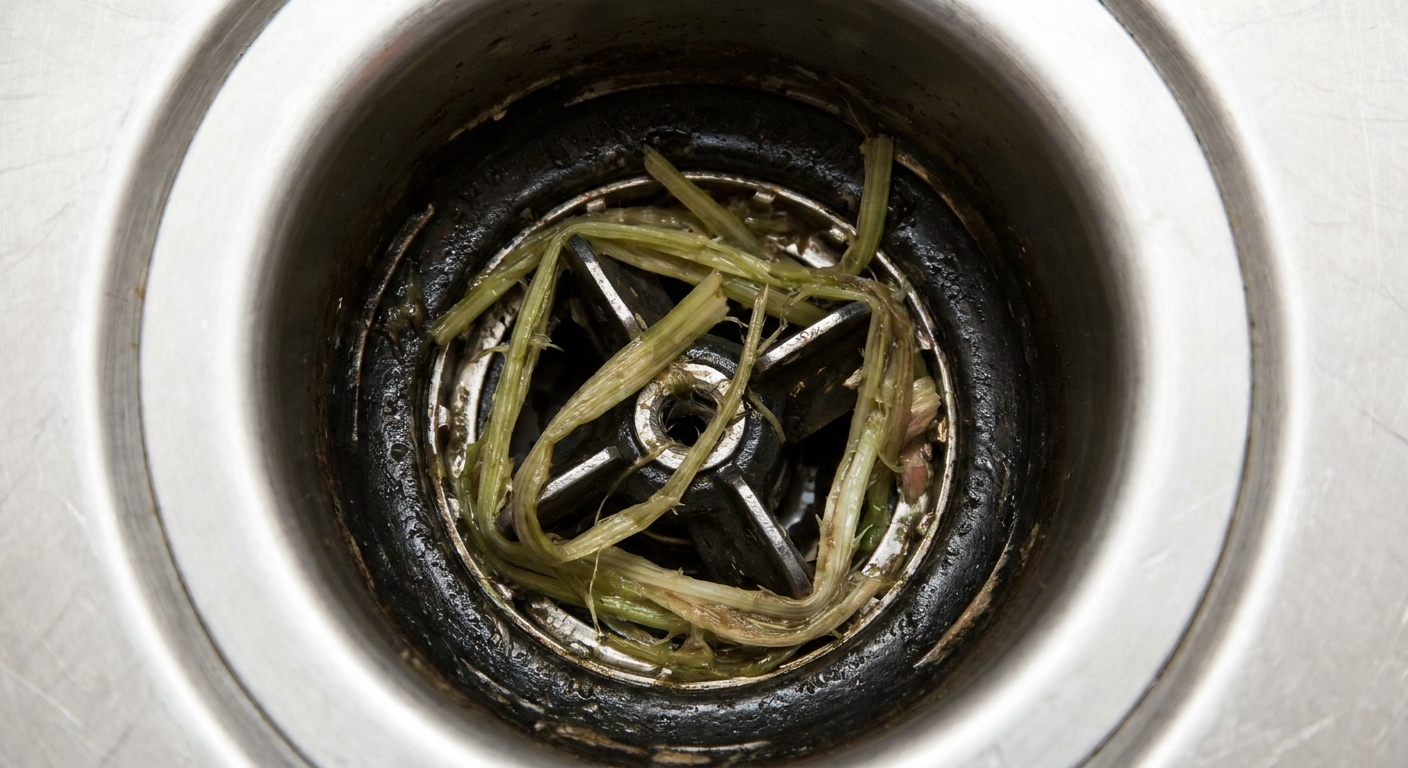
Potato peels
What it does inside the disposal: Potato peels are a one-two punch. They are fibrous enough to snag, and they shed starch that can turn into a gluey paste. That paste can cling to the walls of the disposal and then settle in the trap and branch line.
Do this instead: Compost or toss in the trash. If you accidentally send a couple small peels down, flush with plenty of cold water immediately and do not follow with more starch.
Pasta, rice, oatmeal, and other starchy foods
What it does inside the disposal: Starch swells with water. Inside a disposal it can turn into a thick slurry that doesn’t rinse away well. Downstream, it can pack into elbows and the P-trap and set up into a heavy paste, especially if there is any grease already coating the pipe.
Do this instead: Scrape into the trash. If you have small bits stuck to a plate, rinse them into a strainer or wipe them out first.
Eggshells (especially in larger amounts)
What it does inside the disposal: There’s a persistent myth that eggshells “sharpen” the disposal. They don’t. In some kitchens, small amounts pass through without drama. In others, the thin membrane can catch and string around components, and the crushed shells can settle like gritty sand in the trap, collecting sludge over time.
Do this instead: Toss in the trash or compost. A single stray shell fragment is not an emergency. A bowl full is where you start rolling the dice.
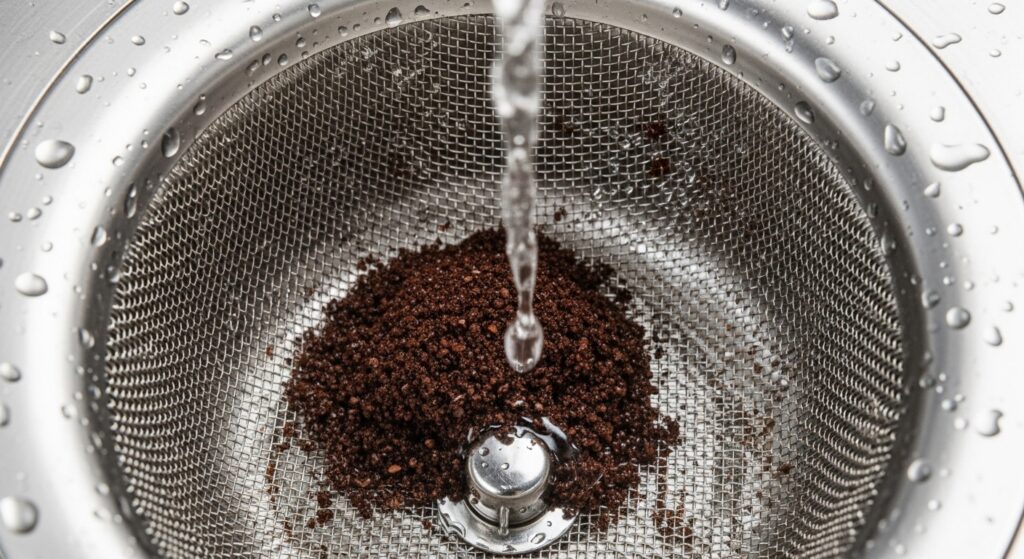
Coffee grounds
What it does inside the disposal: Coffee grounds do not dissolve. They accumulate as a dense, wet sludge that can settle in the P-trap and pipes. Mix that with grease and you get a stubborn clog that smells like old diner drains.
Do this instead: Compost them, toss them in the trash, or use them in the yard. In the sink, keep grounds out with a drain strainer if you use a French press or pour-over.
Bones, fruit pits, and hard shells
What it does inside the disposal: Hard items can wedge between the shredder ring and turntable. Best case: it jams. Worst case: it damages internal parts or overheats the motor. Even if your model claims it can handle certain bones, it is still an easy way to create a jam.
Do this instead: Toss them in the trash. The disposal is for scraps, not for skeletons.
Onion skins, garlic skins, and tough peels
What it does inside the disposal: Papery skins love to float and fold. They slip past the splash guard and then mat into a wad that can block flow or wrap around moving parts. Citrus peels are tougher and more fibrous than they look, and larger pieces can bounce around until they wedge.
Do this instead: Toss in the trash or compost. If you want to freshen odor, a tiny piece of citrus with lots of water is usually fine, but peels are still better out of the drain.
Stringy foods (banana peels, rhubarb, pineapple core)
What it does inside the disposal: Same issue as celery. The strings behave like thread in a sewing machine and can bind up the moving bits. Banana peels in particular can turn into a slippery paste that smears and sticks.
Do this instead: Toss in the trash or compost.
Nuts and nut shells
What it does inside the disposal: Whole nuts can grind into a thick, gritty butter-like paste, and shells can be hard enough to jam. Either way, the end product is not something you want settling in your trap.
Do this instead: Toss in the trash. If you rinse a plate that had a few chopped nuts, keep the faucet running strong while the disposal runs.
Never put these non-food items in a garbage disposal
Fruit stickers, twist ties, rubber bands
What they do inside the disposal: These are prime wrappers. They can snag and wind around moving parts, leading to a jam or a disposal that spins but struggles.
Do this instead: Toss them in the trash every time. Stickers go in the trash before fruit gets washed.
Paper towels, wipes, and napkins
What they do inside the disposal: They do not break down like food. They wad up, grab onto grease, and create a blockage fast.
Do this instead: Trash. Always.
Dental floss and hair
What they do inside the disposal: Like fibrous food scraps, these wrap around components and can bind them up. Floss is basically designed to be strong, stringy, and not dissolve.
Do this instead: Trash. Put a small bathroom-style waste bin under or near the sink if it keeps ending up there.
So what can go in a garbage disposal?
If you want a simple, safe target: think “small, soft, and in moderation.” Stuff like:
- Small leftover bits of cooked vegetables
- Tiny amounts of cooked meat scraps
- Small bits of fruit (not the peels, pits, or cores)
- Soft bread crumbs in small amounts
Even with “safe” scraps, the best habit is to scrape plates into the trash first and let the disposal handle what the scrape misses.
Septic note: If you have a septic system, go even lighter on disposal use. Disposals add solids to the tank, which can mean more frequent pumping and more chances for problems.
Habits that prevent a jam
Run cold water the whole time
Cold water helps move scraps through and can keep fats more solid. Turn on the water first, run the disposal, feed scraps gradually, then keep the water running for 15 to 30 seconds after the grinding sound clears.
Just remember: cold water is not a workaround for pouring grease down the drain. Grease can still cool and stick farther down the line.
Feed slowly, not all at once
Dumping a bowl of scraps is a great way to stall the motor. Add a little at a time so the disposal can keep up.
Cut big scraps down
If something is borderline, smaller pieces reduce the chance of a wedge-style jam. But if it’s fibrous or starchy, smaller pieces still do not make it a good idea.
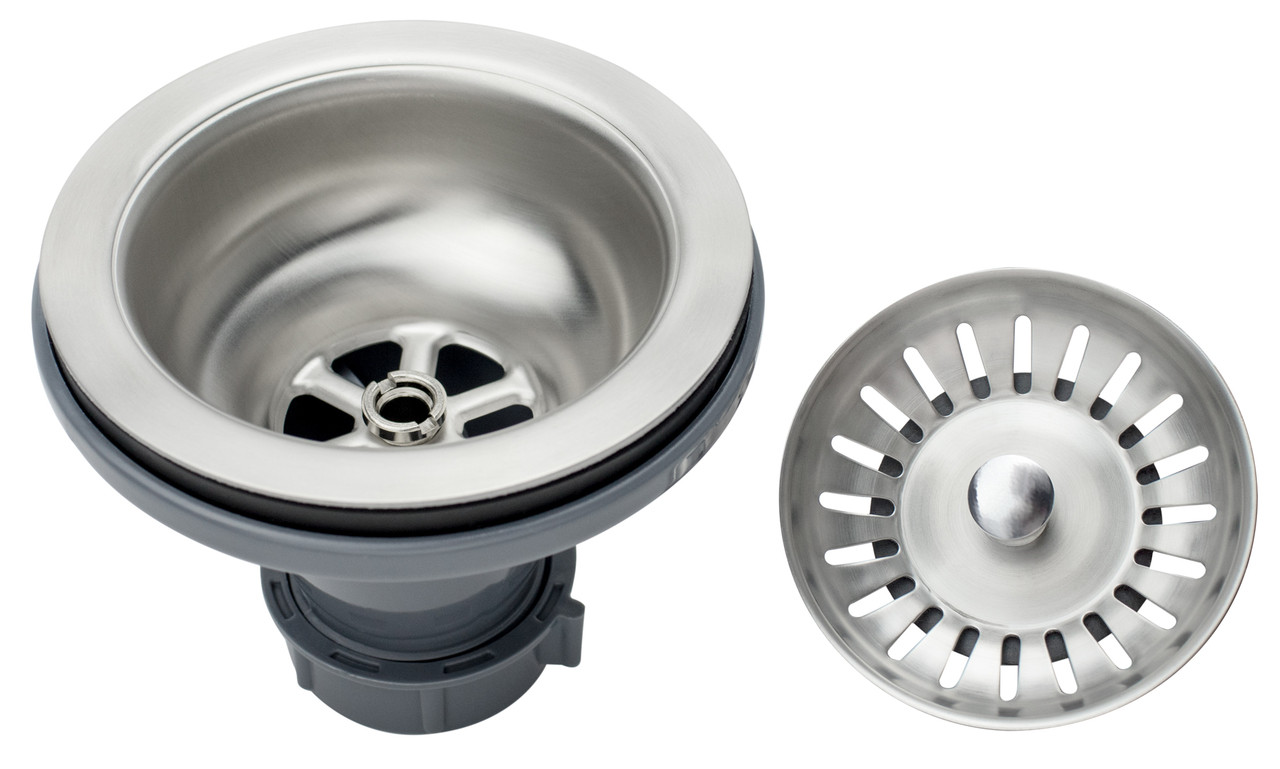
Keep a sink strainer nearby
This is my cheap insurance move. A basic strainer catches the troublemakers: peels, skins, stickers, bones, and twist ties.
If it’s jammed
If your disposal is humming, stalled, or tripping the reset, do not keep flipping the switch. That is how you overheat the motor.
Do this first
- Cut the power. Turn it off at the switch, then unplug it under the sink. If it is hardwired, turn off the breaker.
- Never put your hand inside. Use tongs or pliers to pull out anything you can see.
Try the manual turn
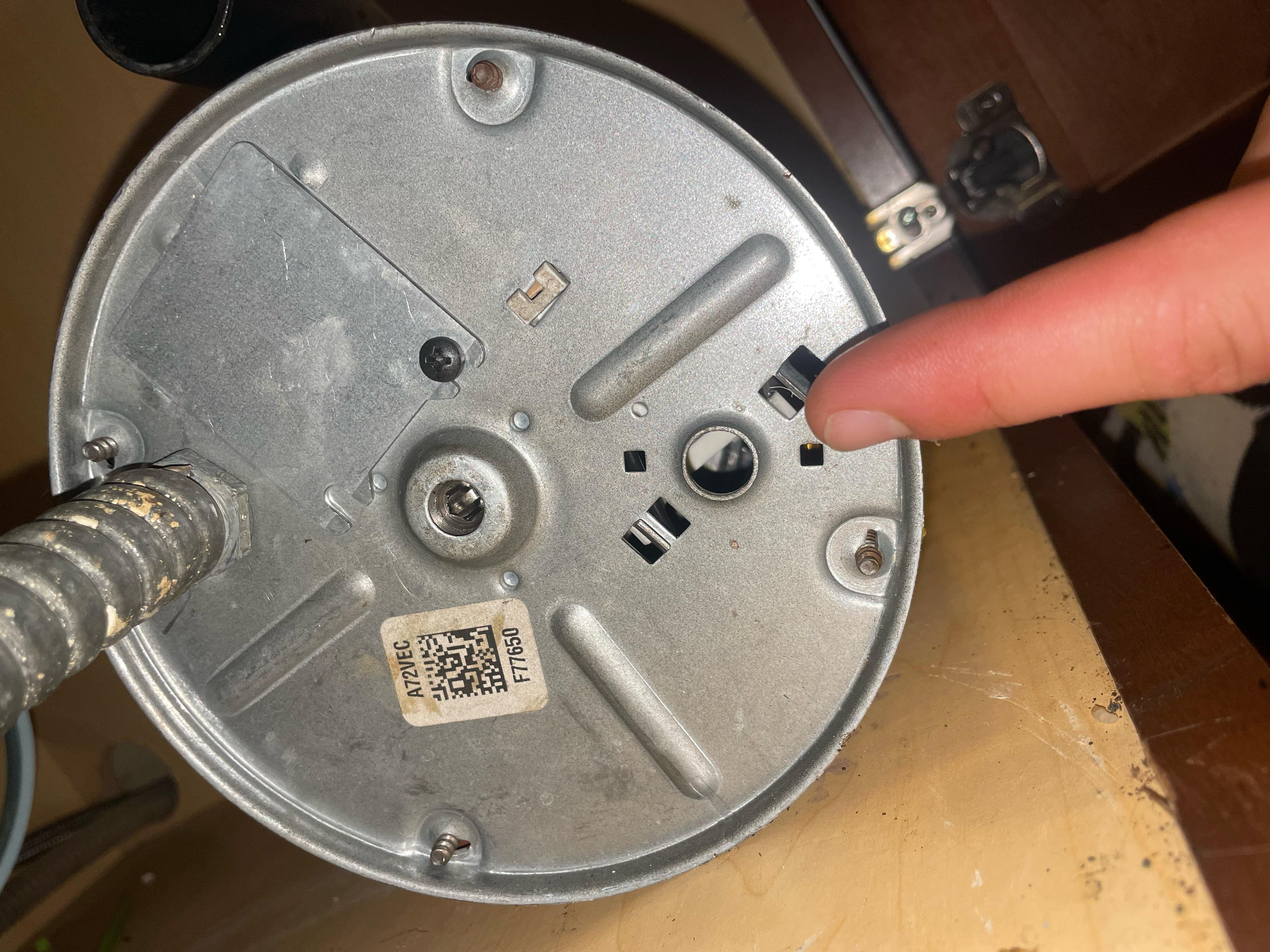
Many disposals have a hex socket on the bottom for an Allen wrench. Work it back and forth to free the jam, then press the reset button (usually on the bottom) if it popped. After that, restore power and test with running cold water.
When to call for help
- Repeated slow drains even after you stop using the disposal heavily
- Leaks under the sink or around the disposal flange
- Reset keeps tripping or the unit smells burnt after a jam
- Clogs affecting multiple fixtures, which can mean a bigger drain line issue
If any of those show up, it is usually cheaper to deal with it early than to keep forcing it.
FAQ
Is it OK to put lemon peels in a garbage disposal?
A small piece occasionally can help with odor, but large peels are tough and fibrous, and they can jam or wrap. I treat citrus peels as a trash or compost item and use other methods to reduce odor, like flushing with plenty of water after normal use.
Can a garbage disposal handle meat scraps?
Small, soft scraps are usually fine, but avoid dumping large amounts of fatty meat or connective tissue. Fat leads to pipe buildup, and stringy bits can tangle.
Are eggshells really bad for disposals?
Not always, and a few shells are not an automatic disaster. But they are a frequent contributor to gritty buildup in some plumbing setups, especially when combined with grease and other heavy scraps. For me, it is one of those items that is easier to keep out than to troubleshoot later.
The 30-Second Cheat Sheet
Essential takeaways for: What Should You Not Put in a Garbage Disposal?
Never put these in a garbage disposal
- Grease, fat, oil: coats the disposal and drain pipe, grabs other debris, builds clogs.
- Fibrous scraps (celery, asparagus, corn husks, artichokes): strings wrap moving parts and jam the unit.
- Potato peels: fiber plus starch creates paste that sticks and clogs.
- Pasta, rice, oatmeal: swells with water and turns into a heavy paste that settles in the trap.
- Coffee grounds: sink into a dense sludge that accumulates in the P-trap.
- Bones, fruit pits, hard shells: can wedge and jam the grind mechanism and strain the motor.
- Onion/garlic skins, tough peels: mat and wrap instead of shredding cleanly.
- Non-food items (stickers, twist ties, rubber bands, paper towels, wipes, floss): snag and wrap, or wad into blockages.
Habits that prevent jams
- Run cold water before, during, and 15 to 30 seconds after grinding.
- Feed slowly, not in big dumps.
- Scrape plates first. Use the disposal for small leftovers only.
- Use a sink strainer to catch peels, skins, bones, and stickers.
If it hums but will not grind
Stop immediately. A hum usually means the motor is trying to turn but something is jammed.
💡 Tip: Scroll up to read the full article for detailed, step-by-step instructions.
⬆️ Back to top
About Marcus Vance
Content Creator @ Grit & Home
Marcus Vance is a lifelong DIY enthusiast and self-taught home renovator who has spent the last decade transforming a dilapidated 1970s ranch into his family's dream home. He specializes in budget-friendly carpentry, room-by-room renovations, and demystifying power tools for beginners. Through his writing, Marcus shares practical tutorials and hard-learned lessons to help homeowners tackle their own projects with confidence.