
🚨 In a DIY emergency or rush?
Skip the details and jump straight to our 30-second cheat sheet for the most crucial info.
Small critter. Big home questions.
If your yard woke up looking like it lost a fight with a tiny excavator, you do not need a wildlife degree. You need a few clues: the shape of the hole, the depth, whether the sod looks peeled back, if you see raised runways, and when it appeared.
This guide helps you sort the usual suspects: armadillos, skunks, and moles. Once you have a match, I will point you to the right Grit & Home removal page instead of rehashing the whole game plan here.
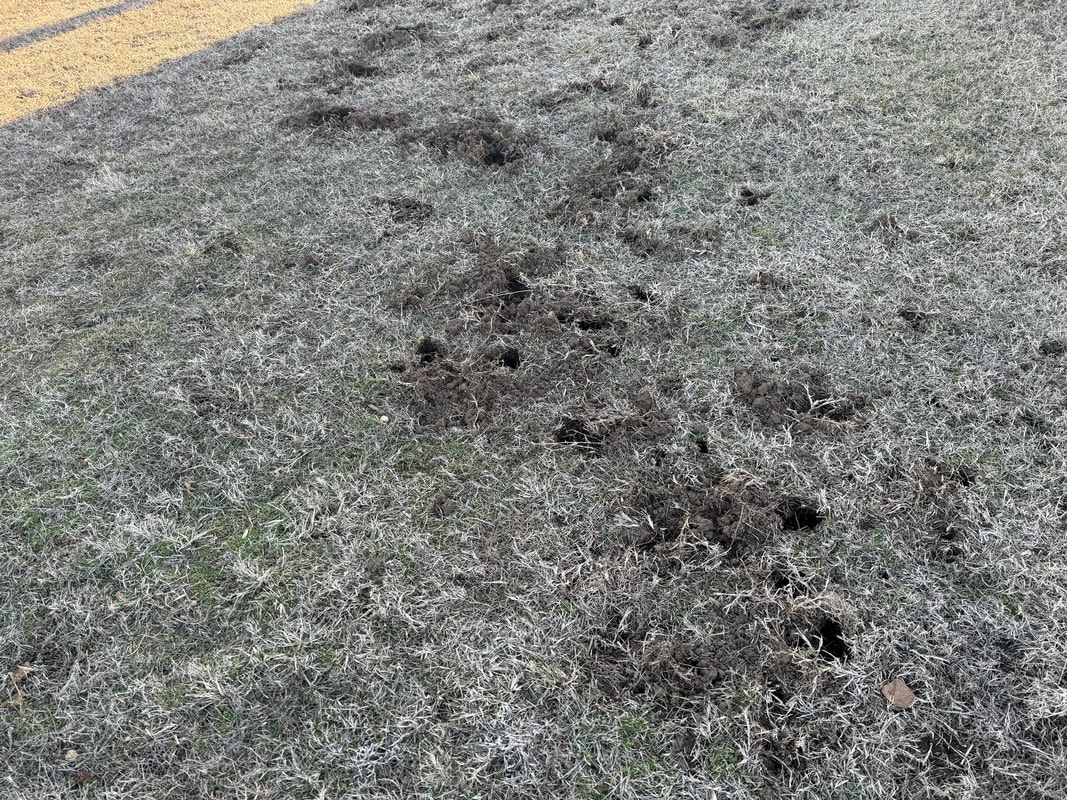
Quick ID in 60 seconds
- Raised ridges or snake-like lines under the grass? That is usually moles (surface runways) or sometimes a line of mounds. In gopher country, mounds are often gophers, so keep reading before you declare victory.
- Lots of small cone holes, 1 to 3 inches wide, sometimes with sod peeled back? That is a strong armadillo clue (foraging digs).
- Shallow, messy divots and scattered plugs like someone jabbed the lawn with a trowel? Often skunks hunting grubs.
Now let us slow down and confirm with the details that matter.
Start with the pattern
1) Raised ridges or tunnels?
If you can follow a slightly raised line across the yard like a wiggly zipper under the turf, you are looking at a subsurface traveler. That points to moles far more than armadillos or skunks.
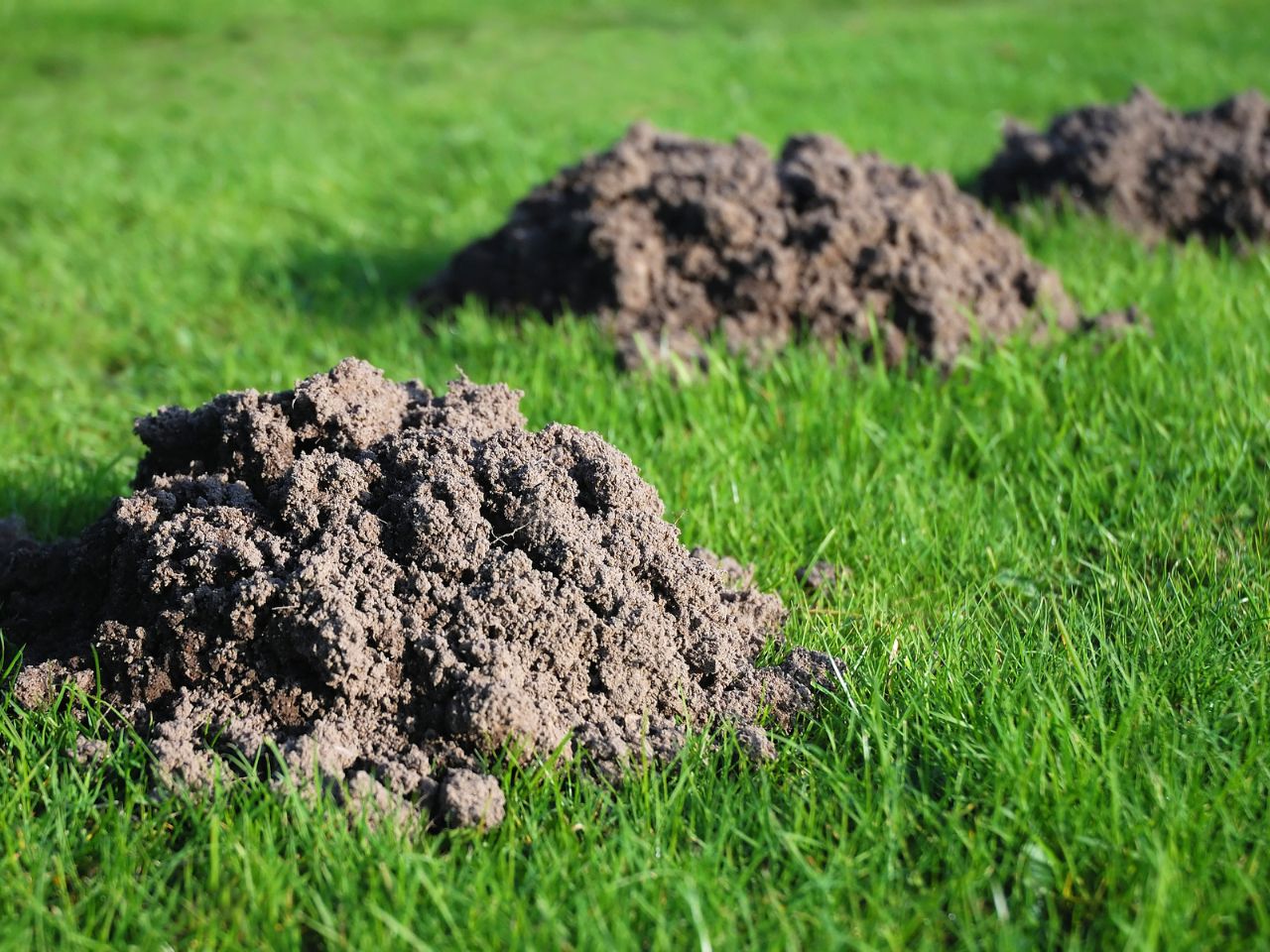
- Most likely: Mole
- Why: Moles tunnel to travel and feed, creating surface runways or deeper tunnels that heave soil.
2) Turf peeled back?
When you see the lawn rolled back or pried up in chunks, think of an animal with a strong nose and foreclaws doing targeted foraging. Armadillos can do this, and skunks can too, but armadillos tend to leave more distinct cone holes mixed in.
3) Lots of little divots?
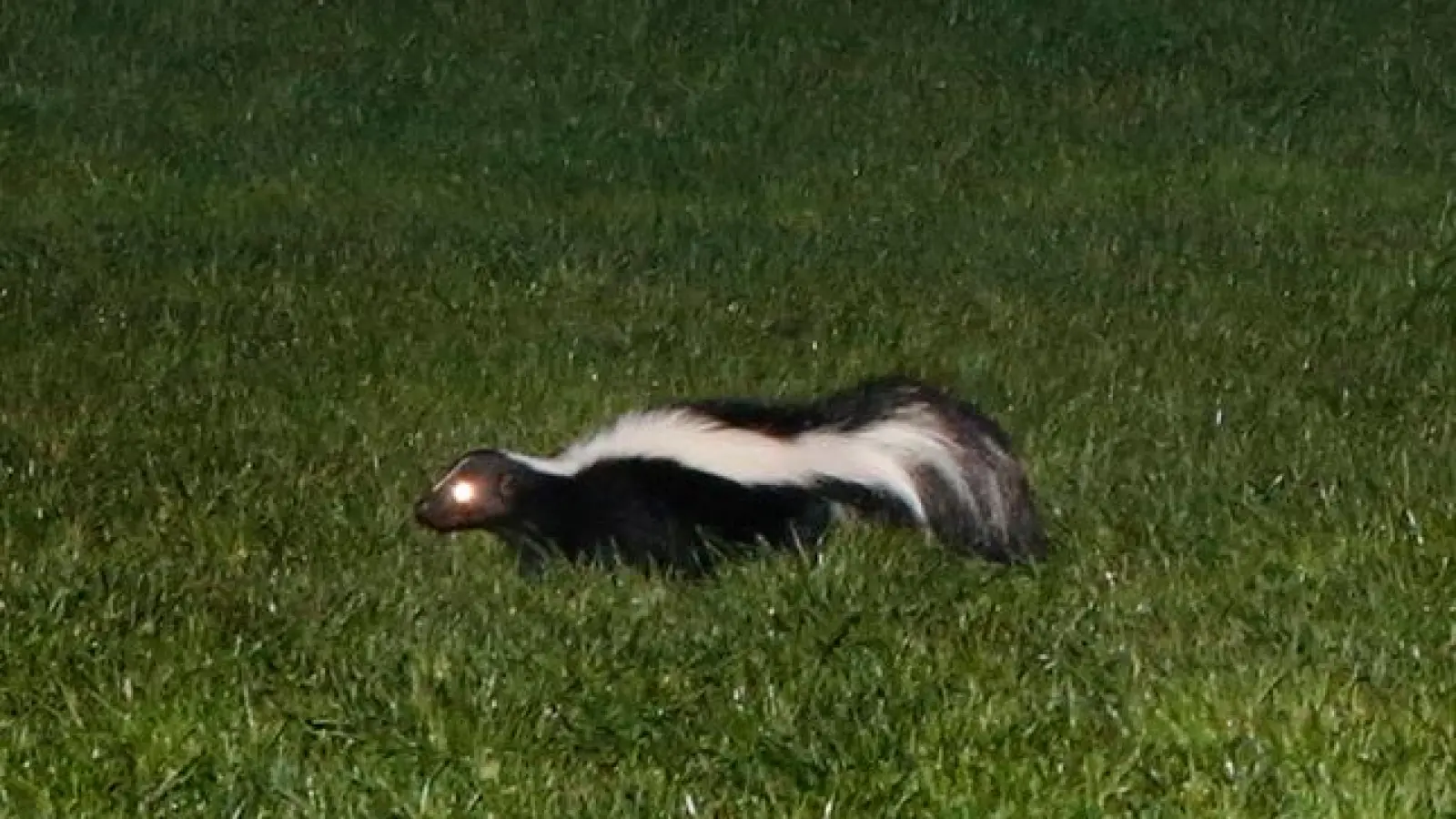
Skunks often leave small, shallow divots while hunting grubs and insects near the surface. The result can look like scattered peppering of damage rather than tidy holes.
- Most likely: Skunk
- Why: They scratch and nose around for grubs, especially in turf that is already grub-rich and easy to tear.
Read the hole
Armadillo digs
Armadillos leave cone-shaped digging marks. Picture a little ice cream cone pressed into the ground, not a neat round tunnel entrance.
- Typical look (foraging): Conical hole, often 1 to 3 inches wide
- Depth: Often a few inches deep, sometimes deeper if they keep working the spot
- Extra clues: Several holes clustered in one area, plus torn turf if they pry up sections to get at bugs
One important note: armadillos can also make larger burrow entrances (bigger than the snack-size cone holes above). If you are seeing a single larger opening along a foundation, under a shed, or at a brush line, do not rule them out. Those openings can be several inches wide, depending on the animal and the soil.
Skunk divots
Skunk digging is usually shallow and scratchy, more like a quick snack stop than a construction project.
- Typical look: Shallow divots and plugs, often around 3 to 4 inches across (sometimes smaller)
- Depth: Usually shallow, an inch or two, with disturbed grass and soil tossed lightly
- Extra clues: Damage can appear overnight, and you might occasionally notice a musky odor nearby if a skunk has been hanging around (but smell is not a reliable ID tool unless one actually sprayed)
Mole signs
Moles are less about open holes and more about tunnels and soil pushed up. When you do see openings, they are often part of a tunnel system, not a bunch of snack-sized pokes.
- Typical look: Raised surface runways; sometimes round openings where the tunnel nears the surface
- Depth: Varies, with both shallow feeding tunnels and deeper travel tunnels
- Extra clues: Soil mounds can appear, and the lawn can feel spongy where tunnels run
Depth check
Grab a long screwdriver, a thin stake, or a chopstick you do not care about. Gently probe next to the damage.
- If it suddenly slips into a void and keeps going, you may have a mole tunnel.
- If it hits firm soil quickly and the damage is mostly shallow disturbance, that leans skunk.
- If you find several fairly deep conical pockets without a continuous tunnel, that leans armadillo.
Be gentle around sprinkler lines, landscape lighting, and pet fence wires. For any real digging or staking, call 811 first. Poking your own utilities is an expensive plot twist.
Timing clues
No, you do not have to pull an all-nighter with a flashlight. You can still learn a lot from timing.
- Overnight surprise, especially after warm evenings: Skunks and armadillos are both often active at night.
- Damage progresses steadily, with new ridges appearing: Moles are active in bursts throughout the day and night, and the lawn often shows ongoing runway changes as they tunnel.
If you actually spot the animal, you win the easiest round of this game. If you do not, the yard usually tells the story.
Common mix-ups
If your clues do not match cleanly, you might be looking at a lookalike.
- Voles: narrow surface runways plus small openings (often 1 to 2 inches), usually no big soil mounds. Grass may look clipped down along the paths.
- Pocket gophers (regional): more likely to leave fan or crescent-shaped mounds and plugged holes. If you are in gopher country, they are a major confounder.
- Raccoons and birds: can roll back sod in bigger sheets when chasing grubs. The mess can look dramatic compared to skunk divots.
- Chipmunks and rats: tend to make more defined entrance holes near patios, roots, woodpiles, or sheds, not widespread lawn peppering.
Regional reality check: armadillos are mostly a southern and central U.S. problem (and expanding). Farther north, skunk, mole, and vole are often the more likely trio.
Match your clues
Cone holes and torn turf
You are likely dealing with an armadillo. Next stop is our armadillo removal and exclusion help, which picks up right where identification ends.
Read: Armadillo Damage in Your Yard: Deter and Exclude Them
Shallow divots and scattered digging
You are likely dealing with a skunk, especially if the damage looks like quick foraging rather than tunneling.
Read: How to Get Rid of Skunks
Raised runways or soil mounds
You are likely dealing with moles. Mole control is its own special category because the real action is happening under the lawn.
Before you treat anything
Check for grubs
Skunks and armadillos are often in your yard for the buffet. If you have grubs, you may need to address that too, or you might solve the visitor and keep the menu.
A simple check: cut a small flap of turf (about 1 square foot) near damage and peel it back. If you see multiple C-shaped white grubs in the top couple inches of soil, that is a clue. A few grubs can be normal, but a heavy concentration is when lawns tend to get hammered by hungry visitors.

Look for a tag team
It is not rare to have moles making tunnels and skunks tearing at those same areas because insects are plentiful. If you have both runways and divots, you may be looking at a tag team.
Rule out non-animals
- Sprinkler breaks can cause soft spots and collapsed areas.
- Rotting roots can leave sudden sinky patches.
- Pets dig with enthusiasm and zero consistency.
FAQ
Do armadillos make round holes?
They can, but the classic lawn sign is a cone-shaped dig with loosened soil. Also keep in mind: a true armadillo burrow entrance can be larger than the little foraging cones. If you are seeing a long pattern of raised ridges, that is much more mole-like.
Can skunks make big holes?
Skunks usually make shallow digs, but a determined skunk in easy soil can make damage look larger than expected. The giveaway is the overall pattern: scattered divots and plugs versus tunnels or repeated conical pokes.
What if I see a hole with a mound next to it?
A mound plus tunneling signs points toward moles. In some regions, pocket gophers are another possibility, especially if the mounds look fan-shaped and the holes seem plugged rather than open.
Is it safe to fill the holes right away?
You can level trip hazards, but if you fill everything before you identify the pattern, you erase your best clues. If you can, take a few photos first and do a quick walkthrough in daylight. Then choose the control method that fits your local rules and the animal you actually have.
The 30-Second Cheat Sheet
Essential takeaways for: Armadillo, Skunk, or Mole? How to Tell the Holes Apart
Fast tell: runways vs holes
- Raised ridges or tunnels under grass: Mole (or sometimes voles, if you also see narrow surface paths and tiny openings).
- Many cone-shaped holes (about 1 to 3 inches wide), sometimes with turf flipped up: Armadillo foraging.
- Shallow divots and messy scratching, scattered across lawn: Skunk.
Best confirmation checks
- Screwdriver probe: a sudden “drop” into a void suggests a mole tunnel.
- Look for turf flaps: common with armadillos (and sometimes skunks and raccoons when grubs are the prize).
- Check for grubs: if you find several under a small turf flap, you may be attracting skunks or armadillos.
Go to the right removal page
- Armadillo signs: Armadillo Damage in Your Yard: Deter and Exclude Them
- Skunk signs: How to Get Rid of Skunks
- Mole signs: How to Get Rid of Moles
💡 Tip: Scroll up to read the full article for detailed, step-by-step instructions.
⬆️ Back to top
About Grit
Content Creator @ Grit & Home
Grit is Grit & Home’s little blue clay courier, delivering big questions about the place you call home. Expect practical ideas, a raised eyebrow, and a satchel full of curiosity.