
🚨 In a DIY emergency or rush?
Skip the details and jump straight to our 30-second cheat sheet for the most crucial info.
The first time this happened to me, I chased the wrong problem for an embarrassing amount of time. The breaker would hold just fine, the appliance would run, and then ten minutes later the lights would go out like someone flipped a switch. I kept thinking “short circuit” because that is what everyone says when a breaker trips. But an instant trip and a delayed trip are two different animals.
If your breaker stays on at first, then trips only after a dryer, space heater, microwave, or similar load has been running for a while, this guide will help you narrow it down safely and methodically.
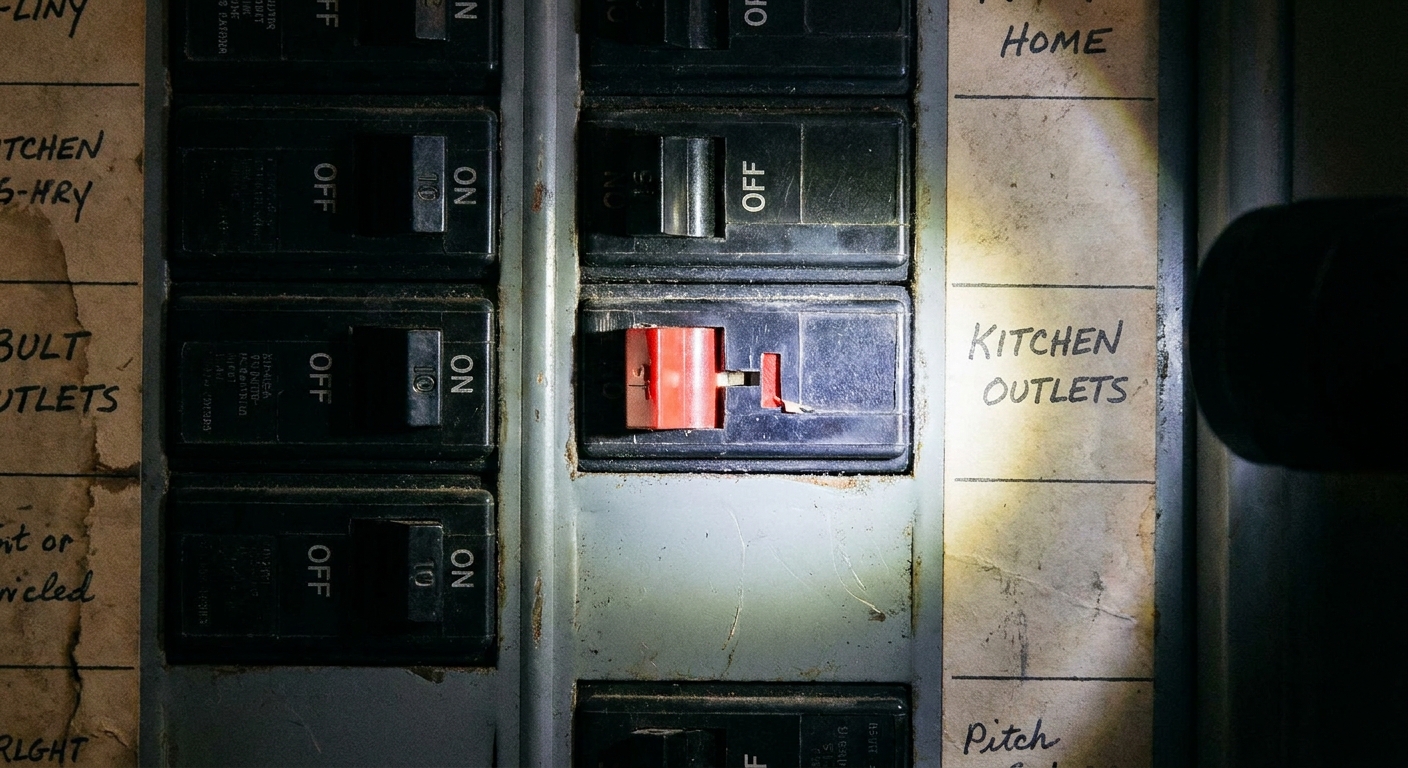
First: what the timing is telling you
Trips instantly when you reset it: that often points to a dead short or a hard fault. That is a separate situation. If yours trips the moment you flip it on, head to our guide on breaker trips again right after you reset it on Grit & Home.
Runs for minutes, then trips: commonly one of these:
- Overload: the circuit is pulling more current than it is designed for, so the breaker heats up and opens.
- Weak or failing breaker: it may trip more easily as it warms up, even at loads that used to be fine.
- Loose connection heating up: at the breaker, outlet, plug, or appliance terminal. Heat builds over time.
- Appliance problem: a motor, heating element, or internal wiring starts drawing extra current as it runs or warms.
- AFCI or GFCI behavior: these trips are not the same as a thermal overload trip and can happen even when the circuit is not overloaded.
Safety checks first
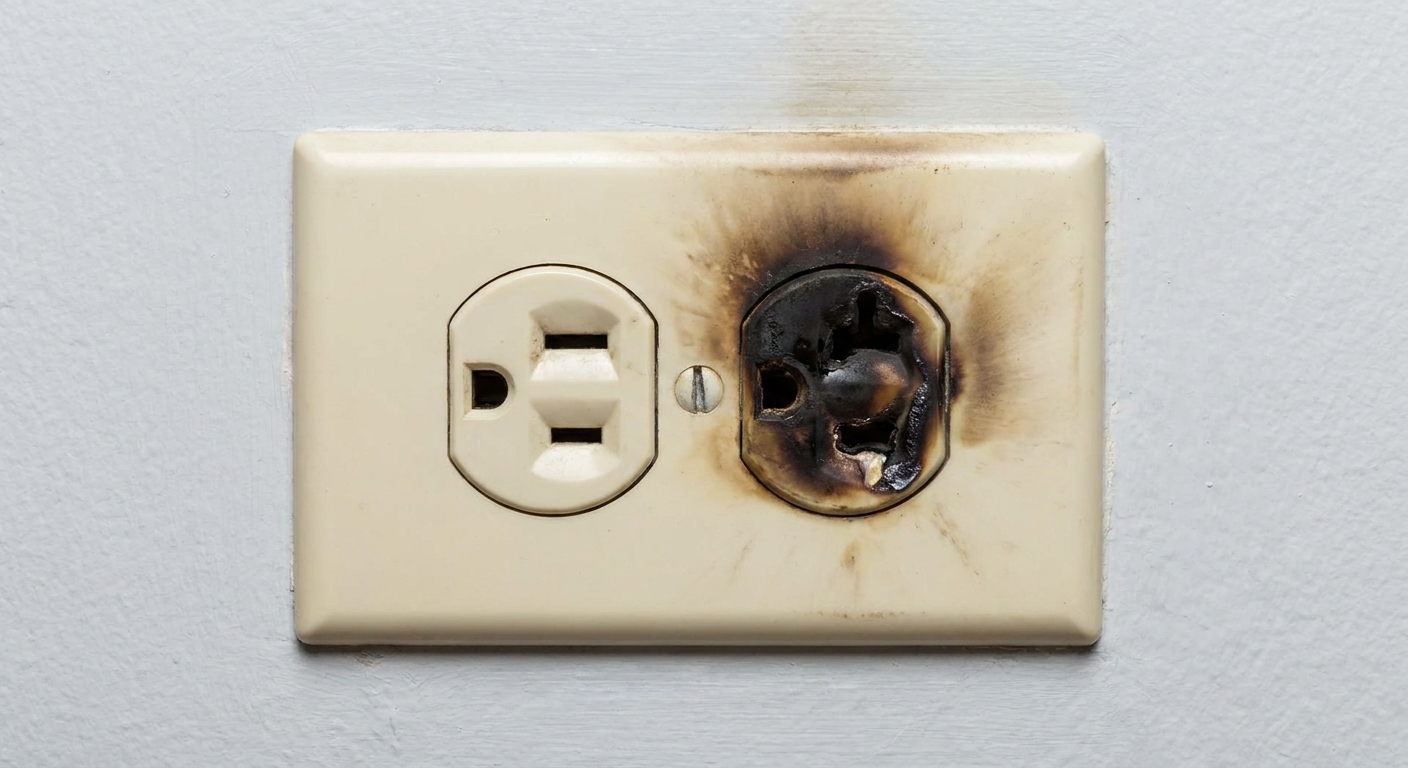
- If you smell burning plastic, see discoloration around an outlet, or hear sizzling or buzzing, turn off the breaker and stop. Call an electrician.
- Do not keep resetting a breaker that keeps tripping. Each trip is a clue. Repeated resets can make damage worse if something is overheating.
- If you open the panel, do not touch the service lugs or main feed conductors. Even with the main breaker off, those can still be energized in many panels.
- When in doubt, the safe move is to hire a licensed electrician. A delayed trip can be an overheating connection, and that is not a “wait and see” issue.
Step 1: Identify what is tripping
This sounds basic, but it matters.
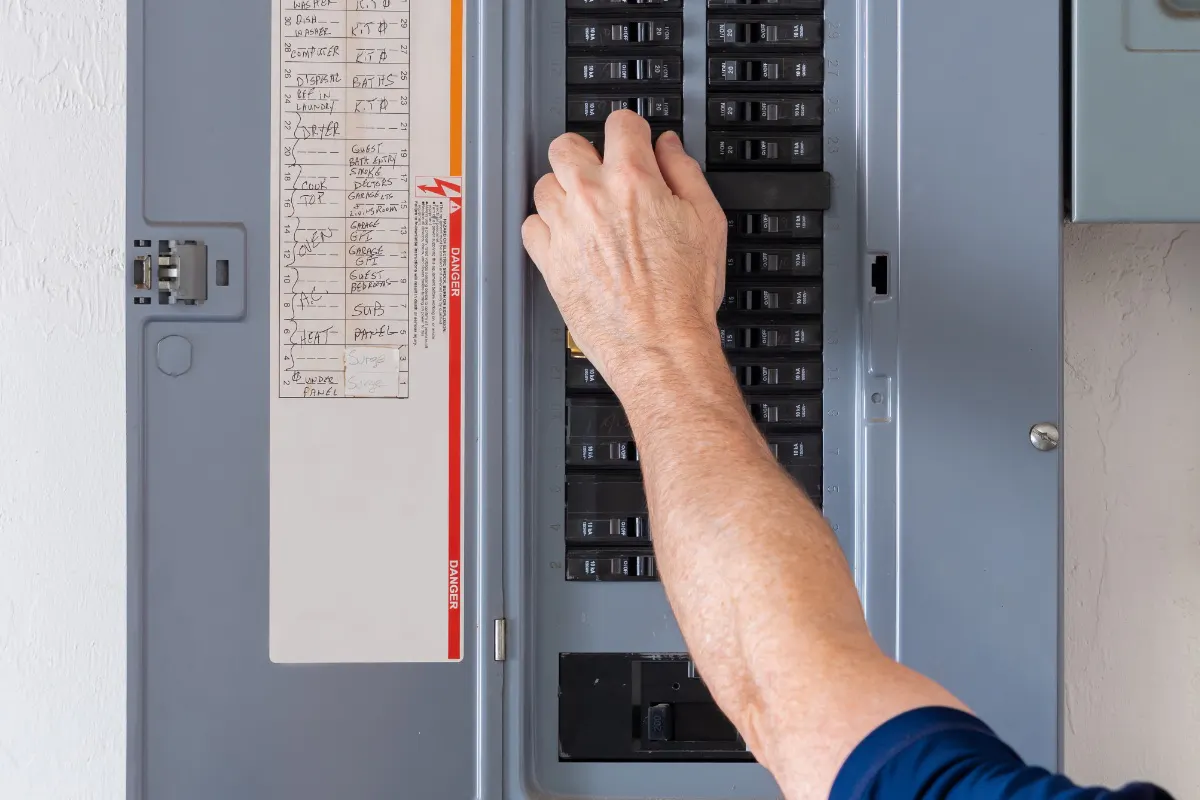
- Which breaker handle moved? Many breakers land in a middle position when tripped. Push it firmly to OFF first, then back to ON.
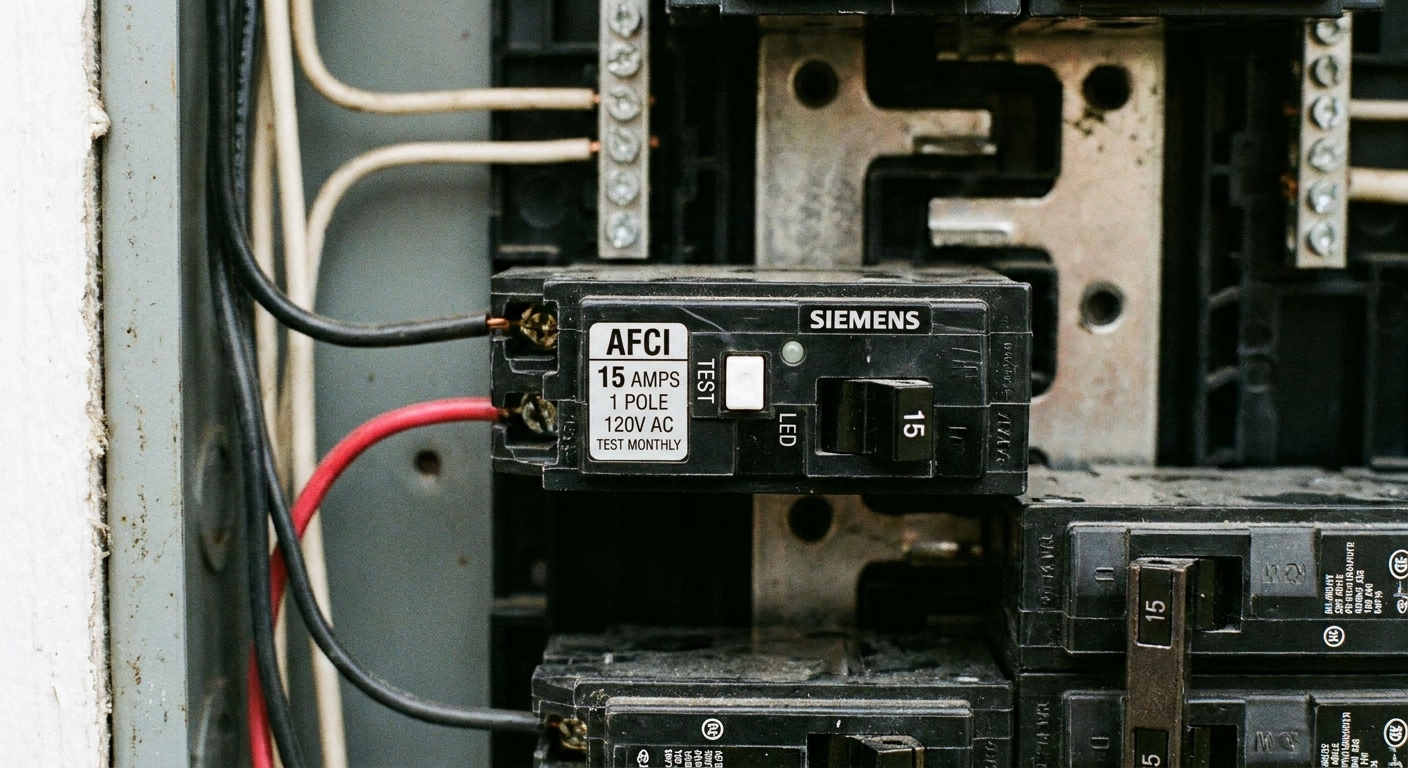
- Is it an AFCI or GFCI breaker? It may have a TEST button and sometimes an indicator light.
- Is it a single-pole 120V circuit (most outlets, microwaves on a standard plug) or a double-pole 240V circuit (electric dryer, many water heaters, some baseboard heaters)?
If it is only your electric water heater breaker tripping, that is usually a specific water-heater troubleshooting path. See our Grit & Home article on electric water heater keeps tripping the breaker.
Step 2: Rule out overload
Overload is a very common cause of a breaker that trips after several minutes. Most standard thermal-magnetic breakers have a thermal element, and that element trips based on heat. A small overload might take a while to warm the breaker enough to open.
Do a quick isolation test
- Unplug everything else on that circuit that you can.
- Run only the appliance that seems to trigger the trip.
- If it is a dryer circuit, you cannot “unplug other stuff” because it should be dedicated. For a 120V appliance, you often can.
If the breaker stops tripping when other loads are removed, you were likely overloading the circuit.
Quick load math (no tools)
Look at the appliance nameplate. You will usually see watts or amps.
- Amps can be estimated as watts ÷ volts (roughly 120V for most plug-in appliances).
- If something is expected to run for 3 hours or more, electricians treat it as a continuous load and typically aim to keep it around 80 percent of the circuit rating. Most space heaters are not truly continuous, but they are still high draw, so the “headroom” problem is real.
Common overload setups I see all the time
- Space heater + anything else on the same 15A circuit. Many space heaters pull 1500W, which is about 12.5A at 120V. That leaves very little headroom.
- Microwave + toaster oven + coffee maker on the same kitchen circuit.
- Garage outlet circuit running a shop vac or compressor plus chargers or a freezer.
- Bathroom receptacle circuit running a hair dryer plus a portable heater.
Thrifty fix: move one plug-in load to a different circuit. Long-term, the right fix might be adding a dedicated circuit for high-draw appliances, especially in older homes with fewer kitchen and general-purpose circuits.
Step 3: Suspect a weak breaker
Breakers do wear out. Heat cycling and age can make them trip sooner than they should, especially if they have lived a hard life with lots of high loads.
Clues the breaker is the problem
- It trips more easily when it is warm.
- The handle feels loose or sloppy compared to neighboring breakers.
- It is an older panel and the circuit has a normal load that used to run fine for years.
- The trip happens at roughly the same runtime even when you remove other loads and the appliance checks out.
Reality check: confirming an “under-load” trip usually takes an electrician with an ammeter plus a good look at the terminations. A breaker that seems weak can also be a connection problem creating heat right at the breaker.
What you can do as a homeowner
- Feel test (carefully): after the breaker trips, touch the panel cover near that breaker. Warm is common. Hot to the touch is a red flag. Do not remove the panel cover just to do this.
- Compare behavior: if you have a similar breaker feeding a similar load (example: two bathroom circuits) and one is much more sensitive, that points to a breaker issue or a connection issue.
Important: replacing a breaker is inside the panel. If you are not 100 percent comfortable and experienced, this is a hire-out task.
Step 4: Check the plug, outlet, and cord
If an appliance runs for a while and then trips the breaker, a heating connection is a big suspect. A loose outlet screw, worn receptacle contacts, or a tired plug can turn into a little space heater of its own.
What to check (no tools)
- Unplug the appliance and let everything cool.
- Inspect the plug blades. Look for darkening, pitting, or melting.
- Look at the outlet face. Any browning, warping, or a melted look means stop and replace the receptacle, and also check the wiring behind it.
- After running for a few minutes (if it is safe), carefully feel the plug and cord near the plug. Warm is suspicious. Hot is unacceptable.
If you have a receptacle that feels loose when you plug in, or you suspect a backstabbed and worn-out outlet, replacement is usually the right move. If you are not comfortable working on outlets, this is an easy call for an electrician.
Extension cords and power strips
I am not anti extension cord, but I am anti the wrong extension cord.
- High-draw appliances should not be on a skinny cord. A light-duty cord can heat up and create voltage drop, which can make some motors work harder.
- Space heaters should be plugged directly into a wall outlet whenever possible.
Step 5: Consider the appliance
Appliances can trip breakers even when the house wiring is fine.
Dryer trips after a while
- Heating element issue can draw abnormal current or short to the dryer frame intermittently as it heats.
- Motor pulling high current as bearings warm up or lint buildup causes extra strain.
- Vent restriction increases run time and overall heat stress (and can contribute to failures), even if the current draw at any moment does not change much. Clean the lint screen housing and verify strong airflow outside.
Space heater trips after a while
- Many have an internal thermal safety that cycles, but if airflow is blocked or the heater is dusty, it can overheat and behave erratically.
- If the breaker trips, not just the heater shutting off, you may be overloading the circuit or the heater may be drawing more than it should.
Microwave trips after a while
- Some microwaves pull hard when the magnetron is running and may share a countertop circuit with other loads.
- A failing microwave can draw extra current as it heats up.
Simple test: if you can safely plug the appliance into a different dedicated circuit (not just another outlet on the same circuit) and the problem follows the appliance, the appliance is the likely culprit.
Step 6: Do not ignore panel and neutral issues
A delayed trip can be caused by a connection that heats up over time. That could be at the breaker terminal where the circuit conductor lands, or at a splice upstream. Loose connections create heat, and heat is what we do not want inside walls or panels.
Homeowner-friendly checks are limited here because it involves removing the panel cover. Also, do not start tightening terminals unless you are qualified. Over-torquing, under-torquing, and landing the wrong conductor under the wrong screw can all create new problems.
If you do remove the deadfront and you see any of the following, stop and call an electrician:
- Discolored insulation on a conductor
- Rusty, white, or green corrosion at terminals
- Melting or a burnt smell
- Aluminum branch wiring and you are not trained on proper terminations
One more electrician-only category: if the circuit is a multi-wire branch circuit (shared neutral) and an AFCI or GFCI breaker is involved, certain neutral or shared-neutral mistakes can cause weird trips. That is a “call a pro” situation.
AFCI trips and false alarms
If the breaker that trips is an AFCI (arc-fault circuit interrupter), you can run into nuisance tripping with certain appliances, especially older ones with brushed motors or certain electronic controls.
Clues you might be dealing with AFCI behavior:
- It is an AFCI breaker with a TEST button.
- The circuit is not overloaded.
- The appliance runs for a bit, then trips seemingly at random.
- The wiring and outlets show no heat damage.
Some AFCI breakers have an LED or blink code that hints at why it tripped (arc-fault, ground-fault, or overcurrent). This varies by brand, so check the breaker label or the manufacturer instructions.
That said, an AFCI can also be doing its job and detecting a real arcing issue at a loose connection. If you are seeing repeated AFCI trips, treat it seriously. The safest move is to have an electrician evaluate the circuit and connections.
Quick decision tree
- Trips instantly on reset: go to our immediate trip troubleshooting article.
- Trips only when other devices are also running: likely overload.
- Plug and outlet are warm or discolored: likely bad connection or worn receptacle.
- Problem follows the appliance to a different circuit: likely appliance issue.
- Only water heater breaker trips: go to our water heater breaker article.
- Breaker seems touchy and warm with a normal load: possible weak breaker or connection issue, call a pro.
When to call an electrician
I love DIY, but I also love sleeping in a house that is not quietly cooking a connection behind the drywall.
Call a licensed electrician if:
- The breaker or panel area feels hot.
- You see burn marks at outlets, plugs, or in the panel.
- The breaker trips even with everything else unplugged and the appliance is known-good.
- This is a dryer, range, HVAC, or other 240V circuit and you are not trained to diagnose it.
- You have repeated AFCI trips and cannot clearly tie them to overload or a bad appliance.
FAQ
Why does my breaker trip after 10 minutes, not right away?
Breakers respond to conditions like heat and fault detection. A small overload or a warming weak connection can take minutes to build enough heat to trip a standard thermal-magnetic breaker. That timing is a major clue that you are not dealing with a simple dead short.
Can a breaker go bad and trip too easily?
Yes. Breakers can weaken with age and heat cycling. If the load is normal, wiring looks good, and the breaker trips more as it warms up, a failing breaker is on the short list. Confirmation usually takes current measurement and a careful inspection of the connections.
Is it safe to just put in a bigger breaker?
No. Upsizing a breaker without upsizing the wire is how circuits overheat. The breaker is there to protect the wire in the wall. If a circuit is overloaded, fix the load or add a new circuit.
My dryer trips the breaker after a while. Is it the vent?
A clogged vent usually causes overheating and long dry times, and it can contribute to heat stress and failures. But a breaker trip can also point to a failing heating element or motor. Clean and verify airflow first, then move on to electrical and appliance diagnostics.
The 30-Second Cheat Sheet
Essential takeaways for: Breaker Trips After an Appliance Runs for a While? What to Check
What the timing usually means
- Instant trip on reset: often a short or hard fault. Use our “breaker trips right after reset” guide.
- Trips after minutes: often overload, a weak breaker, a loose/heating connection, an appliance drawing too much, or AFCI/GFCI behavior.
Do these checks in order
- Unplug other loads on that circuit and test again. If it stops tripping, it was likely overload.
- Check the plug and outlet for warmth, discoloration, melting, or a burnt smell. If any are present, stop and call a pro.
- Avoid extension cords for heaters and other high-draw appliances.
- Test the appliance on a different circuit (a truly different breaker). If the trip follows the appliance, suspect the appliance.
- If the breaker area is hot or trips with a normal load, suspect a weak breaker or loose connection. Call an electrician.
Special cases
- Only the water heater breaker trips: use our electric water heater breaker troubleshooting article.
- AFCI breaker trips “randomly”: could be nuisance tripping or a real arcing connection. Treat repeated trips seriously.
Stop and get help if
- Anything smells burnt or feels hot
- You see melted outlets or scorched wires
- You are dealing with a 240V appliance circuit and are not experienced
💡 Tip: Scroll up to read the full article for detailed, step-by-step instructions.
⬆️ Back to top
About Grit
Content Creator @ Grit & Home
Grit is Grit & Home’s little blue clay courier, delivering big questions about the place you call home. Expect practical ideas, a raised eyebrow, and a satchel full of curiosity.