
🚨 In a DIY emergency or rush?
Skip the details and jump straight to our 30-second cheat sheet for the most crucial info.
Small courier. Big home questions.
If your breaker only trips when it rains, that is a clue with a big neon arrow: moisture. Rain changes the rules because water can sneak into places electricity should stay dry, creating a leakage path that trips a GFCI, an AFCI, or the breaker itself.
Let’s trace this the safe way, starting outdoors where rain hits first, then working inward.
First, a quick safety reset plan
Before you start flipping anything, treat rain-related electrical trips as a possible shock hazard.
Do this now
- Leave the breaker OFF if it trips during active rain, especially if you suspect an outdoor outlet, a well pump, a hot tub, a sump pump, or anything near water.
- Unplug what you can reach safely indoors on that circuit (lamps, chargers, dehumidifier, TV). Do not wade into wet areas to unplug things.
- If you smell burning, see sparks, hear buzzing, or see water in the panel area, turn off the main breaker if it is safe to do so and call an electrician right away.
How to reset correctly (when things are dry enough to test)
When you are ready to test, switch the breaker fully to OFF (not halfway), then firmly back to ON. If it immediately trips again, stop and go to the isolation steps below.
Why rain makes breakers trip
Most rain-only trips happen because water creates a weak electrical bridge where there should be insulation and air. That can look like:
- Ground fault: current leaking to ground through water, wet soil, damp wood, or a wet metal box. Often involves GFCI protection somewhere on the circuit.
- Arc fault: moisture plus a loose or compromised connection or insulation can trigger arcing events an AFCI breaker may detect. (AFCI behavior can vary by breaker type and manufacturer.)
- Short circuit: water makes a direct connection between hot and neutral, or hot and ground.
The key: it can be intermittent. The rain starts, water gets in, breaker trips. Then everything dries, and it behaves again. Annoying, yes. Also useful for troubleshooting.
Step 1: Identify the trip type
Two quick clues help you aim your flashlight.
Clue A: Did a GFCI trip instead of the breaker?
Walk the usual suspects: bathrooms, kitchen, garage, basement, exterior outlets. If you find a GFCI outlet with its reset button popped, the breaker may still be ON. That points strongly to moisture (or a wet tool or cord) on the load side of that GFCI.
One more helpful twist: sometimes the GFCI device is indoors (garage or basement) and it protects one or more outdoor outlets downstream. So the tripping button you find may not be near the wet problem.
Clue B: Is the breaker an AFCI or dual-function (AFCI/GFCI)?
Many newer panels use breakers with a test button. If your breaker has a test button, it may be AFCI, GFCI, or both. Those are more likely to trip when dampness shows up on outdoor circuits or circuits that feed exterior lighting.
Step 2: Start outside
Rain-only trips often come from an exterior device that is no longer weather-tight.
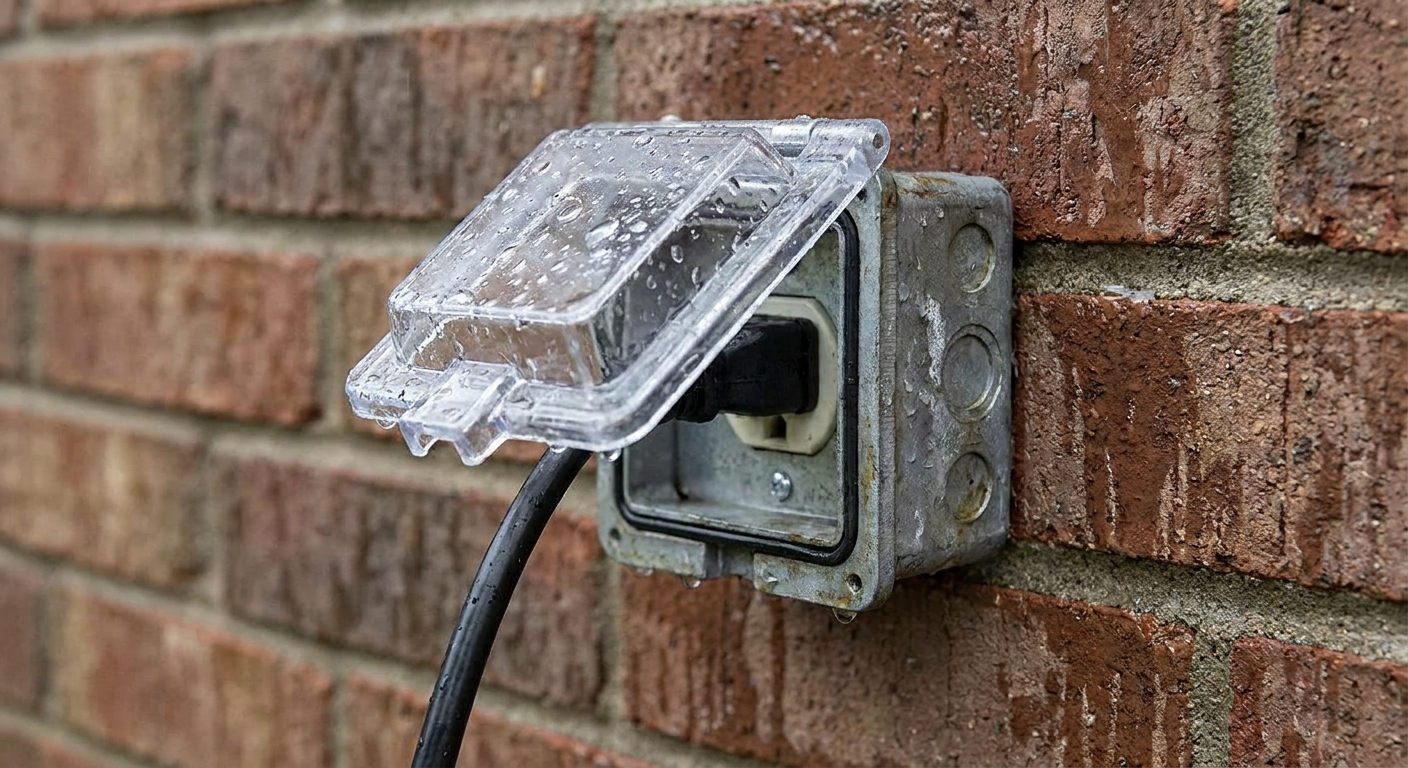
Outdoor outlets: covers, gaskets, and sneaky drips
Look at every exterior receptacle you have, including ones you forget exist: back porch, front stoop, near the AC condenser, under the deck, on a detached garage, at the patio, near the soffit, by the pool equipment.
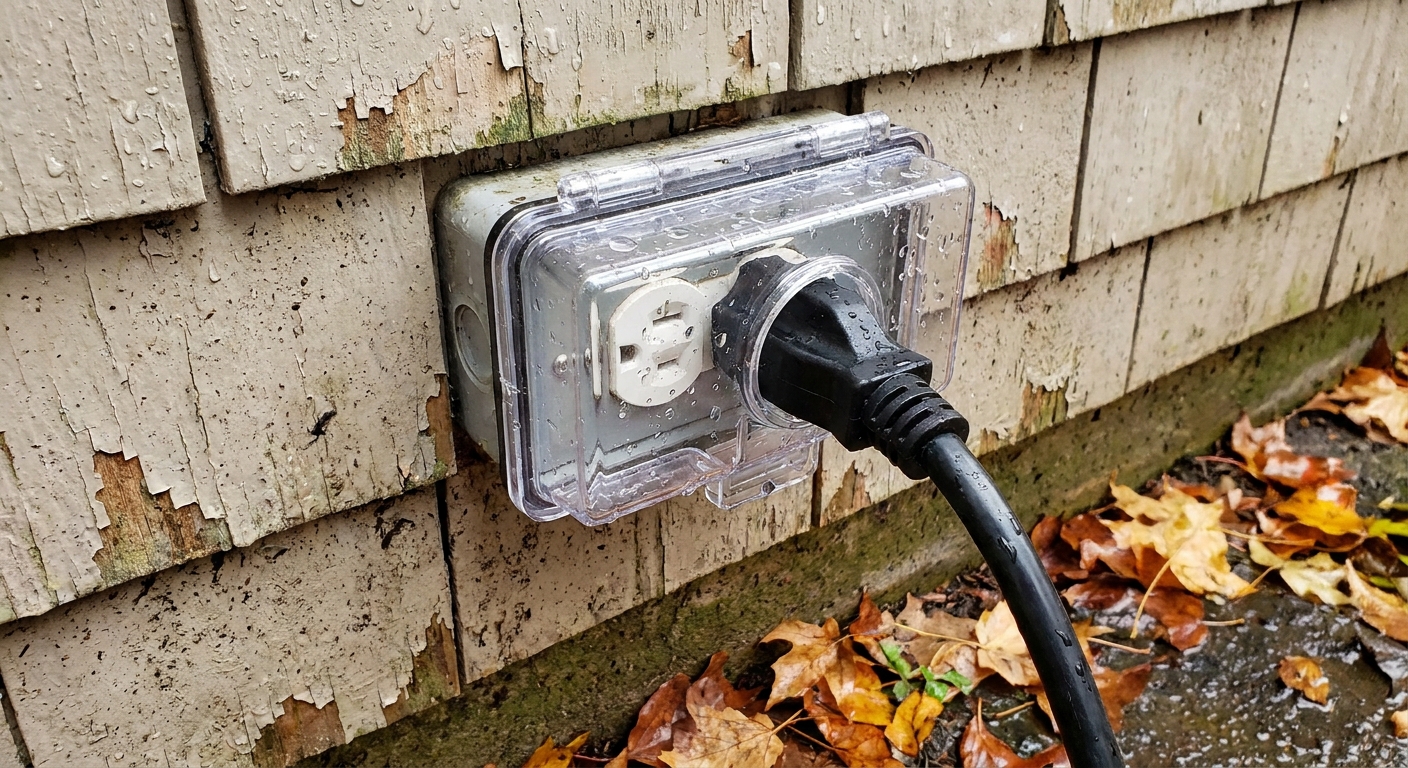
- Check the cover type. If it is a flat cover that cannot close with a plug inserted, it is easier for water to get in. In-use bubble covers tend to protect better when cords are plugged in.
- Check for cracks in the cover, missing screws, warped plastic, or a torn gasket.
- Check if the box is loose against siding or masonry. Gaps can funnel water into the box.
- Check for water tracks above the outlet, like a drip line from a gutter corner, hose bib, or a leaky exterior light.
Extension cords and outdoor power strips
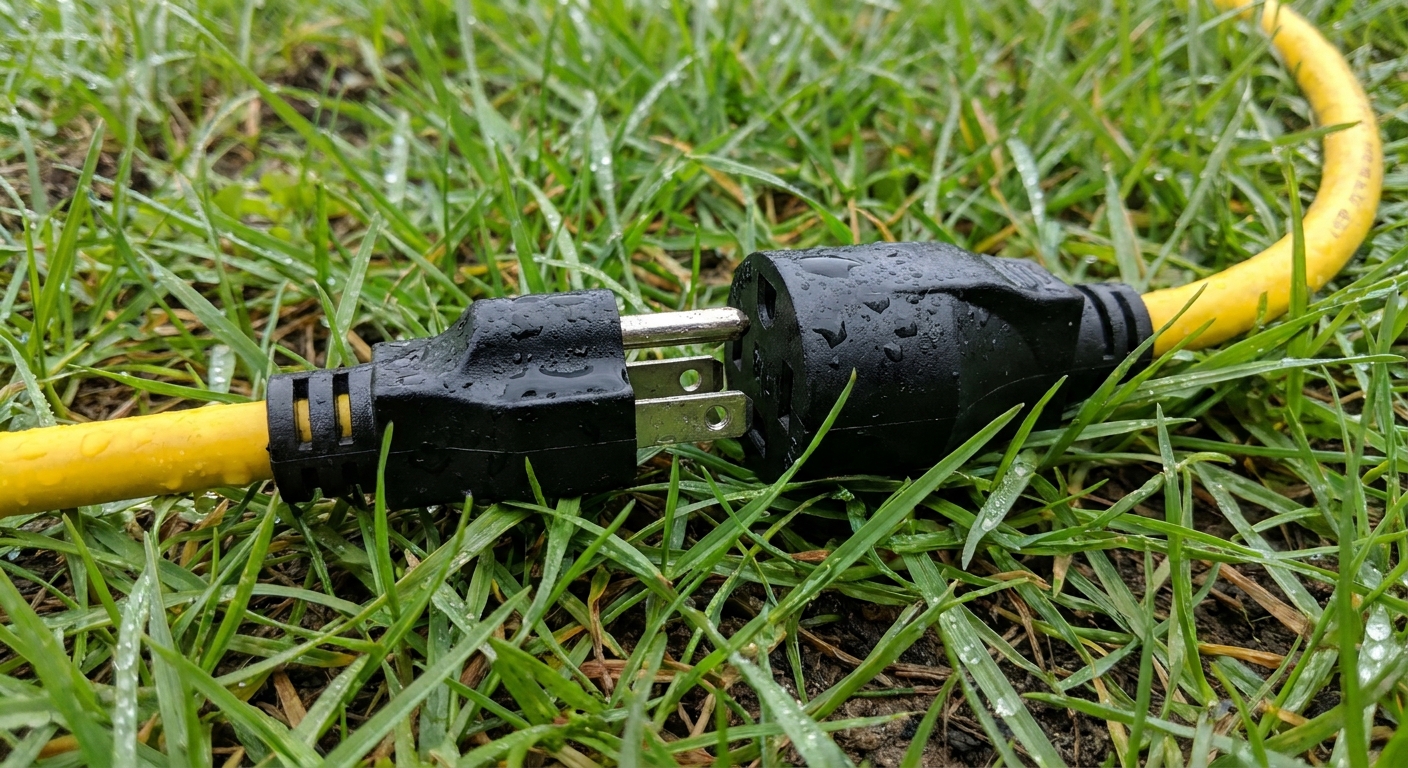
This one is so common it deserves a raised eyebrow. If a cord, connection, or power strip is sitting on wet ground or getting rained on, it can trip a GFCI or a dual-function breaker even if the outlet itself is fine.
- Unplug all outdoor cords and remove power strips from patios, decks, and yards.
- Look for a connection lying in a puddle or buried in wet grass.
- Inspect for nicks, flattened spots, or taped repairs. A “temporary” tape job becomes a rain-activated fault fast.
Outdoor lights, soffit fixtures, and motion floods
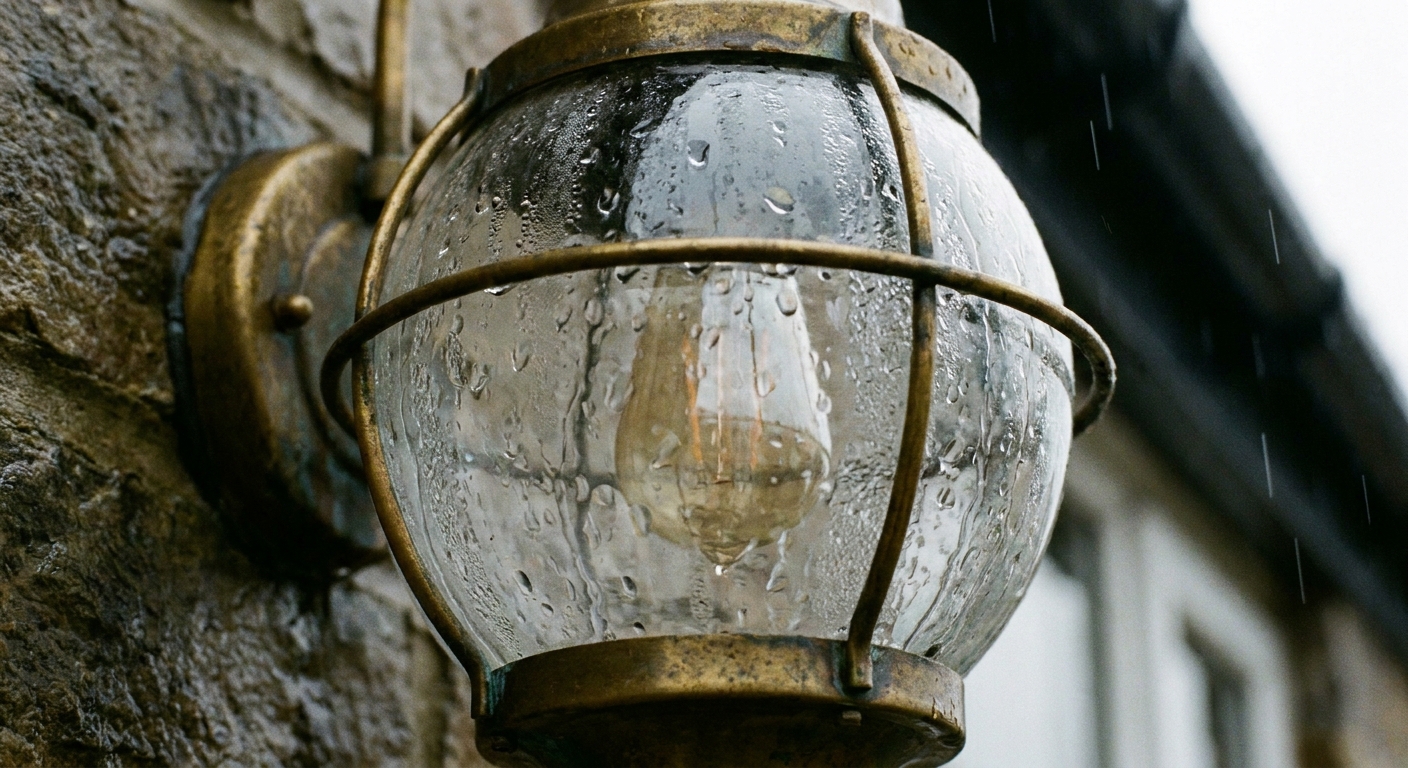
Exterior lights can collect water through cracked lenses, failed seals, or conduit that slopes the wrong way. When the fixture fills with water, a trip may happen only during heavy rain or wind-driven rain.
- Look for fogging or droplets inside the lens.
- Check for cracked glass or missing gaskets.
- Look at the mounting surface. If the fixture is not sealed to the wall, water can run right into the box.
- If you have a metal light pole or post light, note whether trips happen after several hours of rain. Water can travel down inside the pole.
Step 3: Follow the wet path
Sometimes the problem is not the outlet or light itself. It is how water travels.
Conduit and cable entries
Water can follow a cable like a tiny highway and end up inside a box you thought was protected.
- Look for conduit that enters a box from the top without a drip loop or proper fittings.
- Check for missing knock-out plugs or open holes in boxes.
- Look for unsealed penetrations where cable enters the house (especially near decks and additions).
Underground wiring (UF cable) to a shed, garage, or yard post
If the circuit feeds a detached building, yard lighting, a gate opener, or a well pump, rain can saturate soil around a damaged underground cable. A small nick in the jacket can become a rain-only fault.
Clues you might be dealing with underground damage:
- The circuit behaves in dry weather for weeks, then trips reliably after soaking rain.
- Trips happen even when you unplug everything at the shed or garage.
- You have had recent digging, fence posts, landscaping, or aeration.
Underground faults are not a good DIY guessing game. This is a strong “call a pro” moment because it often requires proper testing equipment and sometimes locating and replacing the run.
Step 4: Isolate the circuit safely
If you can do this safely, isolating is the fastest way to stop the whack-a-mole.
Make a quick map
With the breaker OFF, walk the house and note what is dead: outlets, lights, garage door opener, exterior lights, porch outlets, basement outlets. A rain-only trip often involves at least one outdoor item even if the breaker label does not mention it.
Unplug everything on that circuit
Unplug all loads that are easy to reach indoors. Then reset the breaker.
- If it holds, plug items back in one at a time. If the trip returns when you plug in a specific device, you found a strong suspect. (Dehumidifiers and old freezers in damp garages are repeat offenders.)
- If it still trips with everything unplugged, the issue is likely in fixed wiring, an outdoor device, or a junction box.
Turn off exterior switches
Porch lights and yard lights often share circuits with indoor outlets. Turn off exterior light switches, then try resetting. If the breaker holds with the exterior lights switched off, that points toward a wet fixture, wet box, or wet wiring at the light.
What not to do
- Do not keep resetting a breaker that trips during rain. The bigger risk is repeatedly re-energizing a circuit that has an active fault. In some cases, cycling power under fault conditions can also stress connections and components.
- Do not open your electrical panel. The dead front cover and the area behind it are not a DIY exploration zone, especially if there is any chance of moisture.
- Do not dry outlets with a hair dryer or spray anything into an electrical box.
- Do not replace a breaker as a first guess. A breaker that trips only when it rains is usually doing its job. Replacing it might stop the symptom temporarily or, worse, remove a layer of protection.
When to call an electrician
Here is the line in the sand: you can observe, unplug, and switch off. A licensed electrician can open boxes, test insulation resistance, check torque on terminations, and find a wet fault without gambling.
Call an electrician if any of these are true:
- The breaker trips immediately even with everything unplugged and exterior switches off.
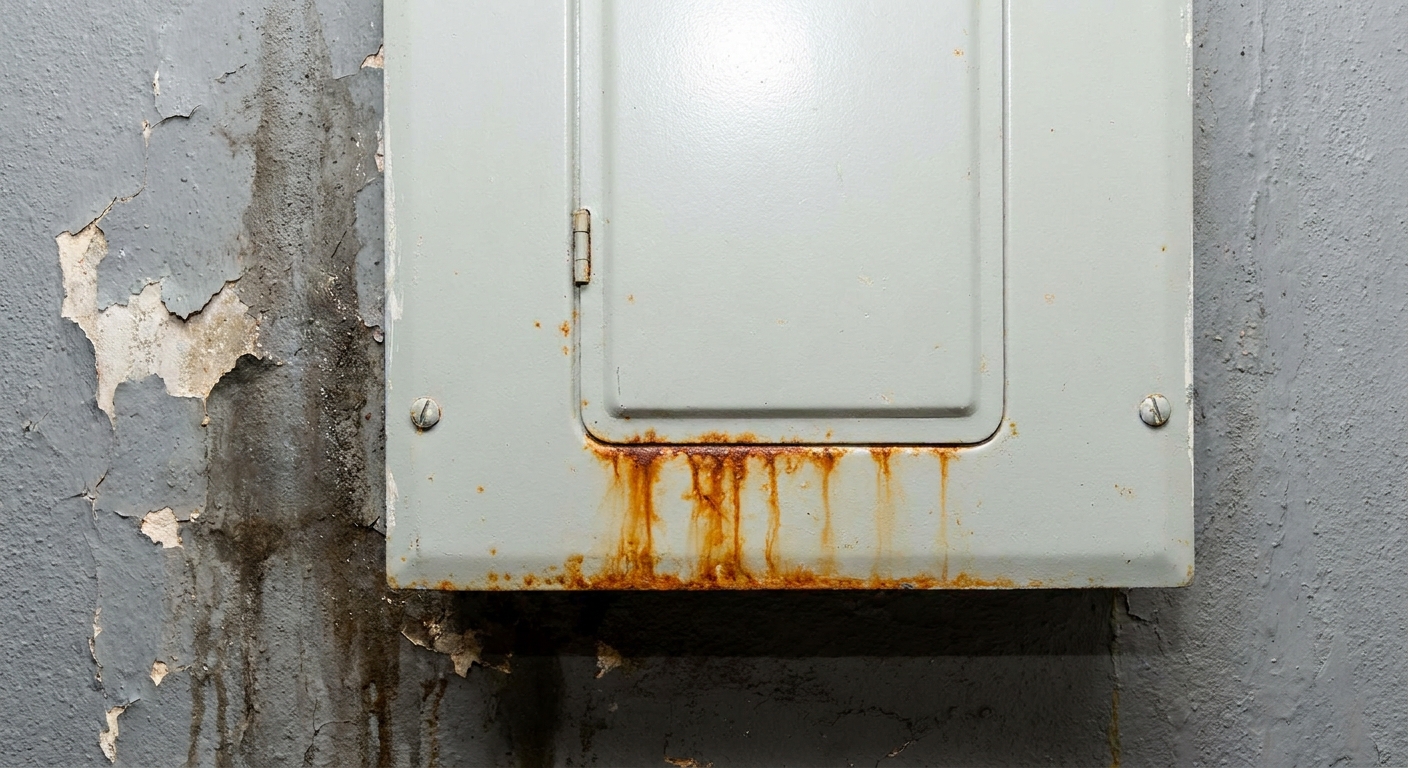
- You see water in or near the panel, rust streaks on the panel, or a damp wall around it.
- The circuit feeds well equipment, pool/hot tub, sump pump, septic pump, or HVAC and you cannot keep it safely off.
- You suspect underground wiring damage.
- You find an exterior outlet or light that looks cracked, loose, scorched, or melted.
Rain-proofing fixes to request
I will stay in my courier lane here: I can point at the likely fixes, but I will not tell you to open energized boxes.
Common professional fixes for rain-only trips include:
- Replacing a failed exterior receptacle with a WR-rated (weather-resistant) GFCI and a new gasketed cover.
- Upgrading to an in-use weatherproof cover and properly sealing the box to the wall surface.
- Replacing an exterior light fixture and resealing the mounting plate.
- Finding and replacing a damaged section of UF cable or re-running conduit to a detached structure.
- Correcting bad splices in an exterior junction box with proper connectors and an approved enclosure.
If you like to be prepared, take clear photos of each exterior outlet and light, plus your breaker label and the breaker face (brand and whether it is AFCI, GFCI, or dual-function). Also jot down the weather pattern when it trips: wind-driven rain vs straight-down rain, light drizzle vs heavy soak, and whether it takes minutes or hours. That shortens the diagnostic loop when help arrives.
FAQ
Why does it trip hours after it starts raining?
Water can take time to collect in a fixture or box, or saturate soil around an underground cable. Wind-driven rain can also push water into places it does not reach during a light drizzle.
Could it just be an old breaker?
It is possible, but “only when it rains” usually implicates moisture first. An electrician can test the circuit and determine whether the breaker is nuisance tripping or responding correctly.
What if it only trips when I use my patio outlet?
Stop using that outlet until it is inspected. The outlet, the cover, the box seal, or whatever you plug in may be getting wet. Rain plus a hand on a plug is a bad combination.
Is it safe to leave the breaker off until it dries?
Often, yes, as long as that circuit is not powering critical equipment like a sump pump, medical devices, or refrigeration you cannot lose. If it is, call for professional help quickly rather than cycling resets.
The 30-Second Cheat Sheet
Essential takeaways for: Breaker Trips When It Rains? What to Check
What a rain-only trip usually means
Moisture is creating a leakage path in an outdoor outlet, exterior light, junction box, underground cable, or something plugged in outside. Treat it as a shock hazard.
Do this first
- Leave the breaker OFF during active rain if it keeps tripping.
- Unplug easy-to-reach loads indoors on that circuit.
- If you smell burning, hear buzzing, see sparks, or see water near the panel, turn off the main (if safe) and call an electrician.
Fast checks (common culprits)
- Outdoor outlets with cracked or loose covers, missing gaskets, or water tracks above them
- Wet extension cords, outdoor power strips, plug connections on the ground
- Exterior light fixtures with water inside the lens or a poor seal to the wall
- Circuits feeding sheds, yard posts, or well equipment with possible underground cable damage
Isolation steps (no box opening)
- Unplug everything on that circuit and reset once
- Turn off exterior light switches and reset once
- If it still trips with everything unplugged, it is likely fixed wiring or an outdoor device
Call an electrician if
- It trips immediately even with everything unplugged and exterior switches off
- You suspect underground wiring
- There is any water at the panel or signs of heat damage
💡 Tip: Scroll up to read the full article for detailed, step-by-step instructions.
⬆️ Back to top
About Grit
Content Creator @ Grit & Home
Grit is Grit & Home’s little blue clay courier, delivering big questions about the place you call home. Expect practical ideas, a raised eyebrow, and a satchel full of curiosity.