
🚨 In a DIY emergency or rush?
Skip the details and jump straight to our 30-second cheat sheet for the most crucial info.
The first time I found little brown beetles in a bag of flour, I did what any reasonable DIY homeowner does when something gross shows up uninvited. I pulled everything out of the pantry like I was gutting a closet for a remodel and started looking for the source.
Here is the good news: drugstore beetles are a stored-food pest. They do not bite, they do not live in your walls, and you usually do not need to bomb the kitchen. If you remove what they are eating and clean up the stragglers, you can end the problem fast.
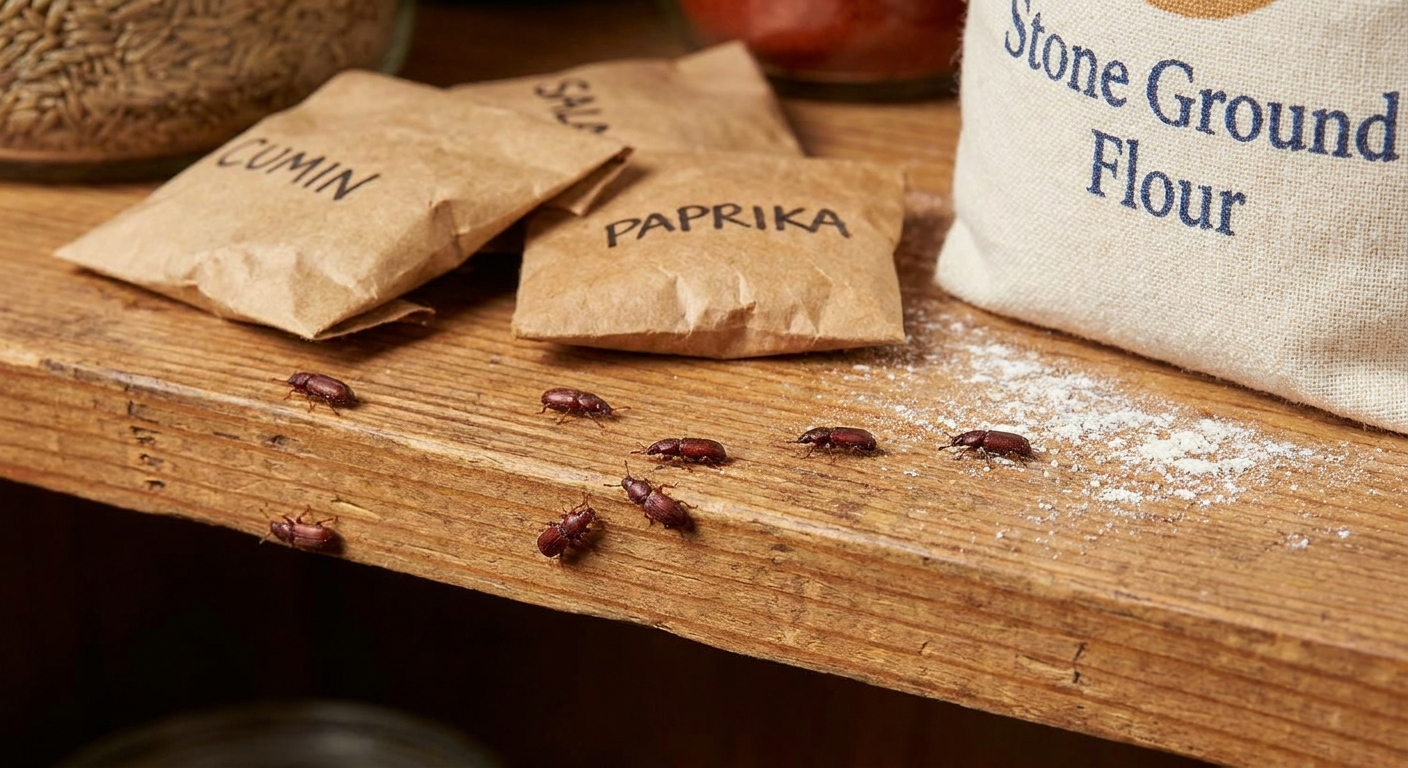
Quick ID: is it really a drugstore beetle?
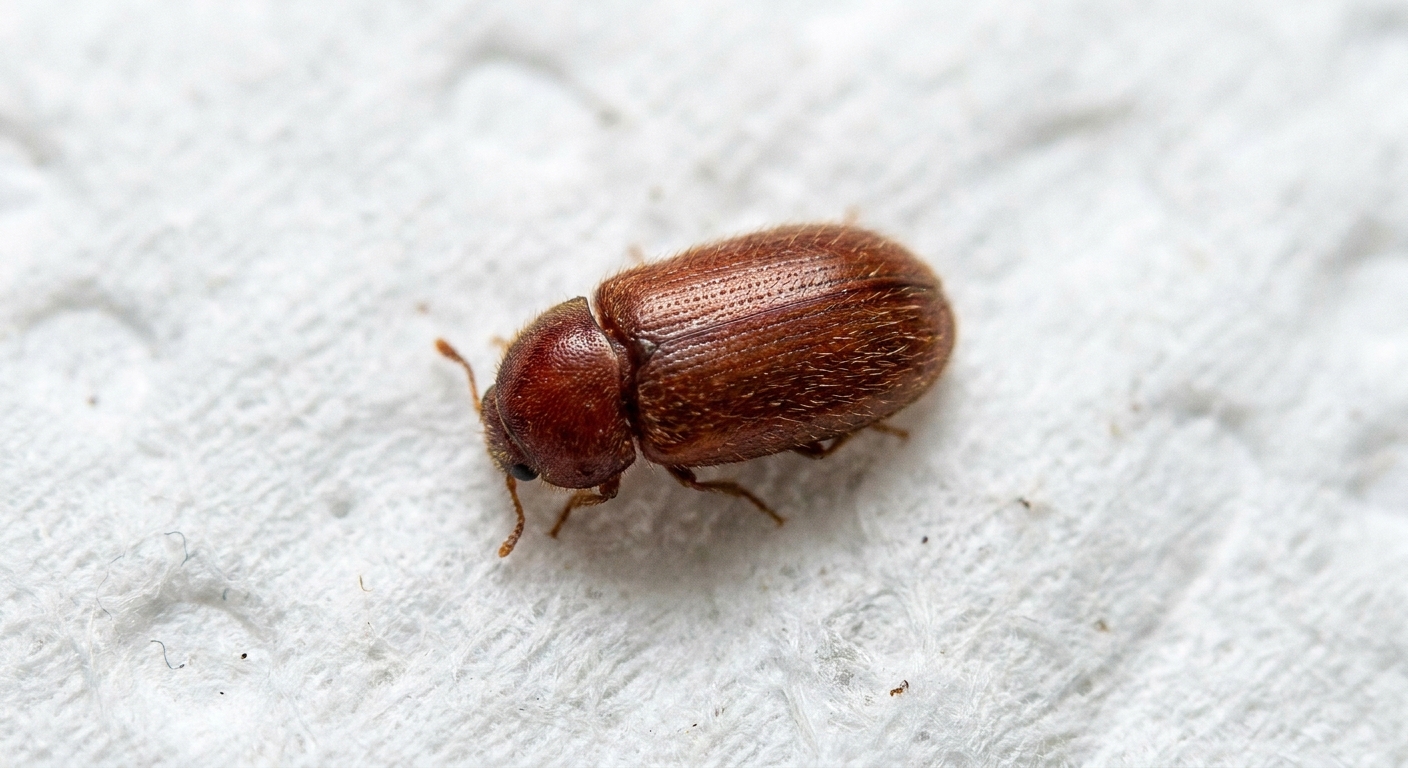
Drugstore beetles are small, oval, and brown, about the size of a sesame seed. They show up in dry goods like flour, spices, baking mixes, tea, dry pet food, and even things like dried flowers or potpourri.
Drugstore beetle signs
- Tiny brown beetles in or near food packages, especially older items
- Fine gritty dust in the bottom of a box or bag, which is feeding debris
- Small round holes in thin cardboard packages or paper spice packets
- Wandering adults on shelves, counters, or windowsills
What they look like up close
Up close, a drugstore beetle has a slightly humpbacked profile and the head is tucked down, so from above it can look like a smooth little brown capsule. Their wing covers look faintly lined.
Not sure? Separate them from pantry moths and carpet beetles
A lot of pantry pests get lumped together. The cleanup is similar, but identification helps you focus your efforts.
Drugstore beetles vs pantry moths
- Pantry moths leave webbing and clumpy strings in corners of bags, along shelf edges, and inside containers.
- Drugstore beetles do not make webbing. You will find beetles and powdery debris instead.
Drugstore beetles vs carpet beetles
- Carpet beetle larvae look like tiny, fuzzy, brownish worms and often show up around wool, stored clothes, baseboards, or lint.
- Drugstore beetles are usually found in food and pantry items. Adults are smooth, hard-shelled beetles.
If the damage is on sweaters, rugs, or upholstery, that is a different battle. For pantry beetles, the food is the battleground.
Step-by-step: how to get rid of drugstore beetles
The goal is simple: remove every possible food source and every hiding place where eggs or larvae could be sitting. Do it once, do it thoroughly, and you usually do not have to keep chasing them.
Step 1: Empty the pantry completely
Pull everything off the shelves. Yes, everything. If you leave even a couple of boxes behind, you can miss the one item keeping the cycle going.

Step 2: Sort and decide what to toss
Use this rule in my house: if I see live insects, larvae, or obvious debris in the package, it is done.
- Discard immediately: anything with live bugs, powdery buildup, odd clumping, or chewed holes
- Be cautious with: paper packets, cardboard boxes, and opened bags. These are common starting points.
- Often safe if clean: sealed cans and unopened glass jars, but still wipe them down
How to discard without spreading them: seal infested items in a trash bag, tie it tight, and take it outside to the bin.
Step 3: Freeze what you keep (especially if it is borderline)
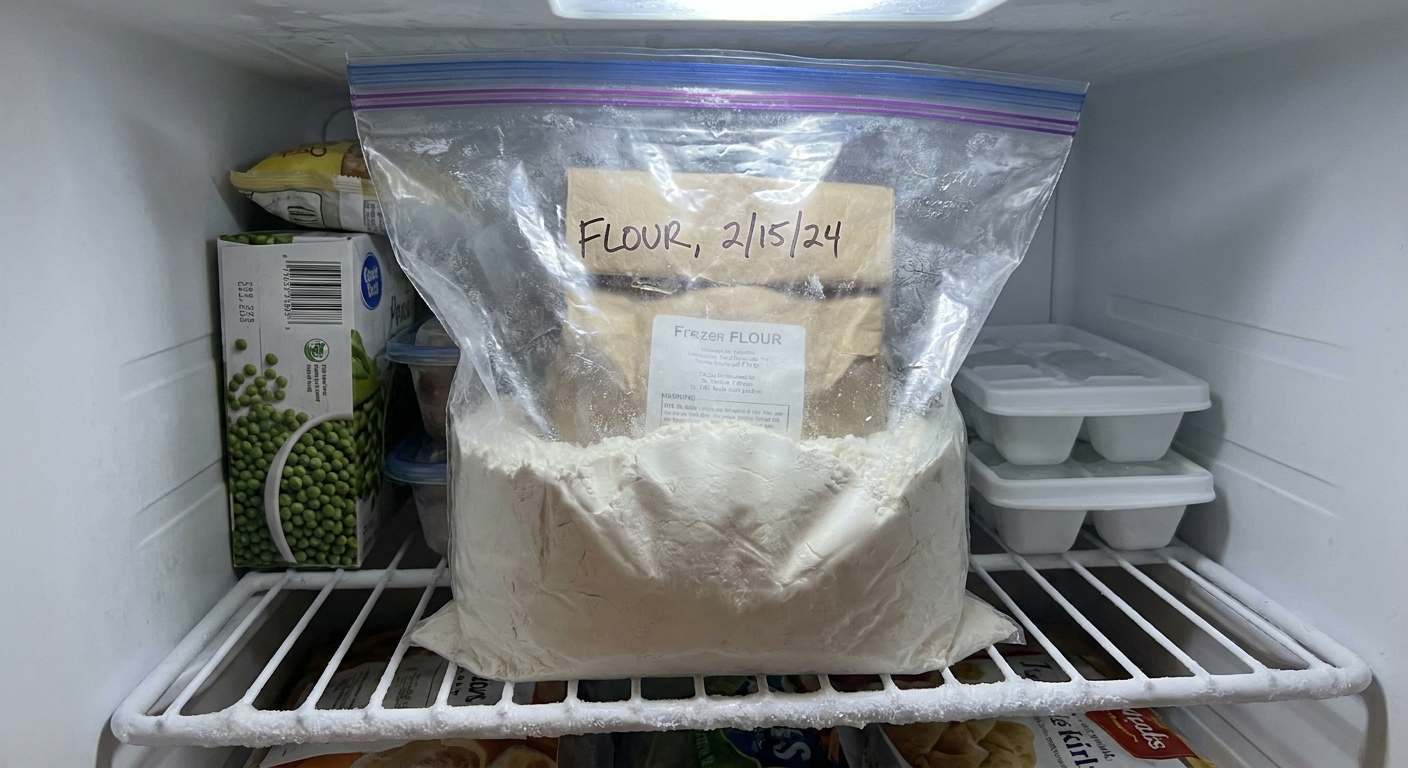
Freezing is my favorite thrifty move because it lets you save items that look clean but might be carrying eggs you cannot see yet.
- Seal the product in a freezer bag or airtight container.
- Freeze for at least 4 days. A full week is extra insurance if your freezer runs warm or you packed items tightly.
- Let it come back to room temp while still sealed to prevent condensation from dampening the food.
This works well for flour, rice, grains, nuts, dried fruit, and many spices.
Step 4: Vacuum every crack and shelf pin hole
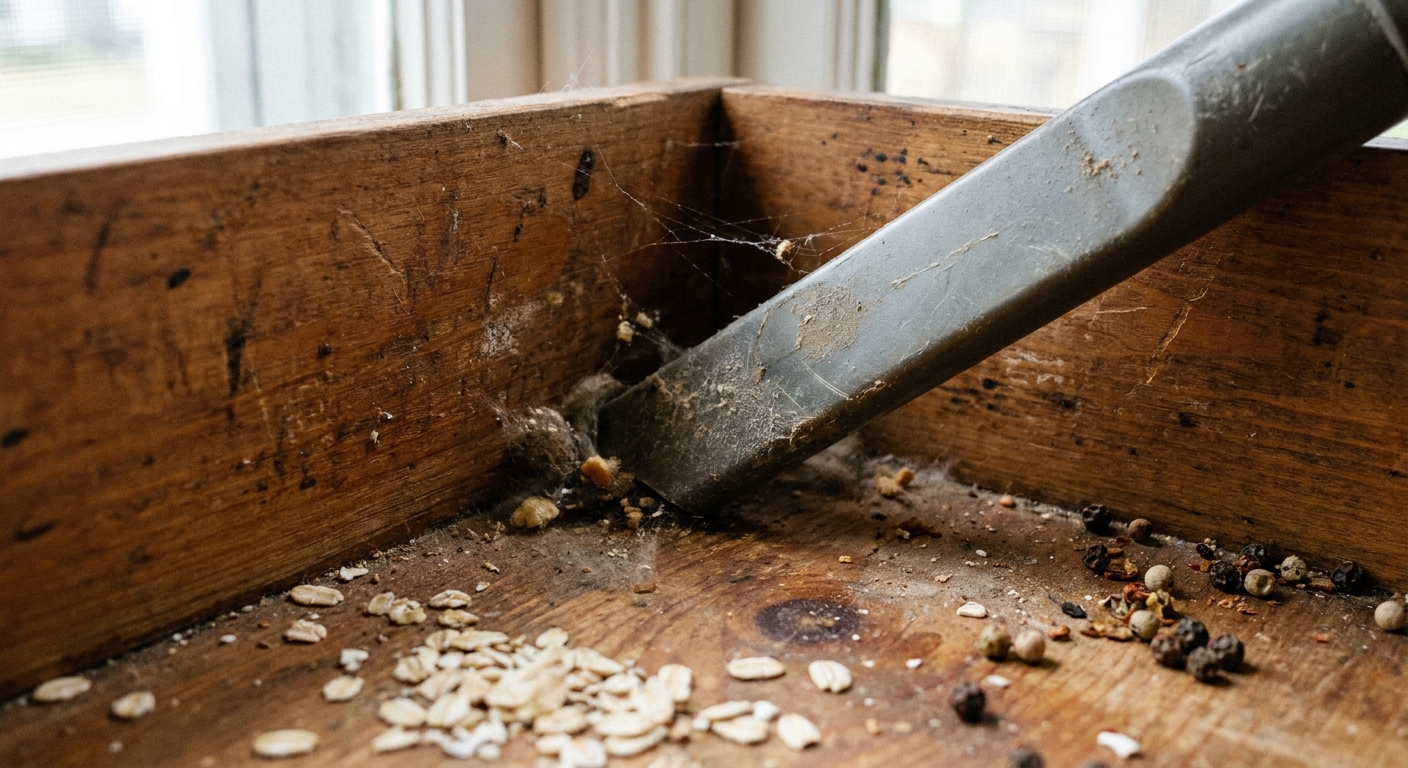
This is where most people lose the fight. Eggs and larvae love seams, shelf peg holes, and the little ledge where a shelf meets the wall.
- Vacuum shelves, corners, and all crevices with a hose attachment.
- Vacuum along the pantry baseboard and the floor right under the pantry.
- Immediately empty the vacuum canister into a bag, seal it, and take it outside. If you use a bagged vacuum, remove the bag right away.
Step 5: Wash the pantry surfaces
After vacuuming, wash shelves and walls to remove residue and any remaining eggs.
- Use warm water with dish soap for general cleaning.
- For extra punch, wipe down with a 50-50 mix of white vinegar and water. Test a small spot first if you have painted shelves.
Let everything dry completely before restocking. Moisture can shorten shelf life for dry goods and makes a pantry feel musty.
Step 6: Use traps if you want confirmation, not as the main fix
Sticky pantry pest traps can help you see whether adults are still wandering around. But traps do not solve the root problem if an infested food source is still on the shelf.
If you use traps, place them inside the pantry away from kids and pets, and replace them as directed.
Where they usually come from
Most of the time, drugstore beetles hitch a ride home from the store inside a package. It is not a cleanliness judgment. It is just how stored-product pests travel.
Common starting points I have seen in real pantries:
- Old spices and seasoning packets
- Flour, pancake mix, cake mix, cornstarch
- Dry pet food and treats
- Bird seed
- Tea, herbs, dried peppers
- Bulk-bin purchases stored in thin bags
How to prevent them from coming back
Once you get your pantry back to zero bugs, prevention is mostly about storage and rotation. This is one of those homeowner wins where a few cheap habits beat expensive sprays.
Switch to truly airtight containers
Cardboard and thin plastic bags are not protection. Move vulnerable foods into containers with gasketed lids.
- Flour, sugar, rice, pasta, oats
- Nuts, baking chips, dried fruit
- Pet food, especially if you buy larger bags

Date and rotate
I keep a marker in the pantry and write the purchase month on flour and grains. Use the older stuff first. The longer something sits, the more chances a small unnoticed infestation has to turn into a big one.
Quarantine high-risk items
If you are bringing home bulk grains, bird seed, or a big bag of kibble, consider freezing it for a few days before it ever goes into the pantry. It is a simple habit that prevents a lot of headaches.
Keep crumbs from becoming a buffet
Wipe up spills and vacuum pantry floors occasionally. Drugstore beetles can feed on small amounts of food dust in corners.
Do you need insecticide in the pantry?
In most pantry beetle situations, you do not. Removing the food source is the real cure.
If the infestation keeps returning after a thorough purge, you can consider:
- Crack and crevice treatments labeled for kitchen use, applied only into gaps, never on shelves where food sits
- Calling a pro if you have repeated outbreaks or suspect a hidden source like a wall void near stored dry pet food
Always follow the product label exactly and keep food, dishes, and utensils protected. When in doubt, skip the chemicals and focus on inspection, freezing, and airtight storage.
FAQ
Are drugstore beetles harmful?
They are not dangerous like stinging insects, but they can contaminate food and make it unsafe or unappetizing to eat. Treat infested food as trash.
Why do I see them on the ceiling or near windows?
Adults wander and are attracted to light. Seeing them away from the pantry usually means the pantry source has been active long enough for adults to spread out.
Will baking the pantry items kill them?
Heat can kill insects, but it is easy to ruin food and it is hard to do evenly in a typical kitchen setup. Freezing is safer and simpler for most homeowners.
How long until they are gone?
If you remove all infested goods and clean thoroughly, you will usually see a big drop immediately. Stragglers can appear for a couple weeks as any missed eggs mature. If you keep seeing them after that, re-check for a forgotten food source.
The 30-Second Cheat Sheet
Essential takeaways for: Drugstore Beetles in the Pantry: How to Get Rid of Them
What you are probably dealing with
- Drugstore beetles are tiny oval brown beetles that infest stored dry goods like flour, spices, tea, and pet food.
- They are not pantry moths (no webbing) and not carpet beetle larvae (those are fuzzy worm-like fabric pests).
Fix it fast (do this in order)
- Empty the pantry completely.
- Toss infested food (seal it in a bag and take it outside).
- Freeze questionable items you want to keep for at least 4 days (up to 7 for extra safety).
- Vacuum shelves, corners, shelf pin holes, and baseboards. Dispose of vacuum contents outside immediately.
- Wash shelves with warm soapy water, then wipe with a vinegar and water mix if desired. Let dry fully.
- Restock in airtight containers with gasketed lids.
Prevention habits that actually work
- Store flour, grains, spices, and pet food in sealed containers, not cardboard or thin bags.
- Date and rotate pantry items. Old spices and baking mixes are common starting points.
- Consider freezing bulk items (grains, bird seed, kibble) before putting them in the pantry.
When to call a pro
- You keep seeing beetles after a full purge and deep clean.
- You suspect a hidden food source you cannot access.
💡 Tip: Scroll up to read the full article for detailed, step-by-step instructions.
⬆️ Back to top
About Grit
Content Creator @ Grit & Home
Grit is Grit & Home’s little blue clay courier, delivering big questions about the place you call home. Expect practical ideas, a raised eyebrow, and a satchel full of curiosity.