
🚨 In a DIY emergency or rush?
Skip the details and jump straight to our 30-second cheat sheet for the most crucial info.
The first time I dealt with flying squirrels, I made the rookie mistake: I stood in the driveway at 2 p.m., stared at the roofline, and confidently told my wife, “It’s probably just a gray squirrel.” Then night hit. The attic sounded like a small bowling alley above our bedroom, and the “one squirrel” theory fell apart fast.
Flying squirrels are a different kind of attic guest than the daytime tree squirrels most of us picture. They are smaller, they can slip through shockingly tight gaps, they are active after dark, and they often move in as a group. If your usual “squirrel in the attic” plan is built around daytime activity and a single animal, you can miss a whole colony.
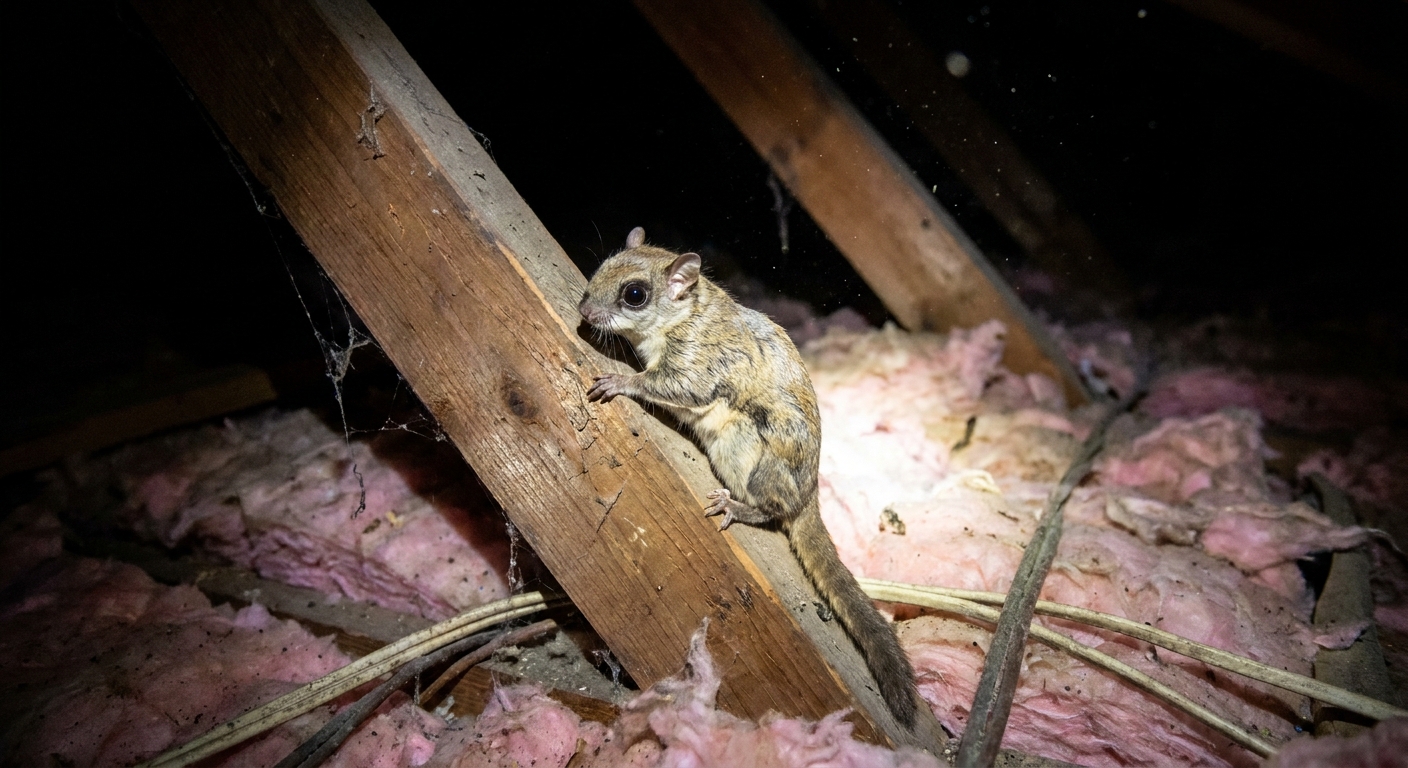
Flying squirrel basics (and why your attic is perfect for them)
Flying squirrels do not truly fly. They glide, using a loose flap of skin between their front and back legs called a patagium. They launch from a tree, steer with their limbs, and land on siding, shingles, fascia, or a roof edge like they have done it a thousand times, because they have.
Quick note on geography: most homeowners in the U.S. are dealing with either southern flying squirrels or northern flying squirrels. The behavior that matters to you is broadly the same: nocturnal activity, small entry points, and a tendency to share nest sites.
Night gliding: why you rarely see them
Most flying squirrel species in the U.S. are nocturnal. That means your house can be busy from 10 p.m. to 4 a.m. and seem completely calm at lunchtime. If you only inspect in the daytime, it is easy to miss the real pattern.
Group nests: why “one-way door for one squirrel” can fail
Gray squirrels often operate as a pair or a single mom with babies. Flying squirrels are more social. It is common for multiple adults to share a nest site for warmth, especially in colder weather. If you have a colony, you can exclude one animal and still hear activity the next night.
Small entry gaps: why they get in where gray squirrels cannot
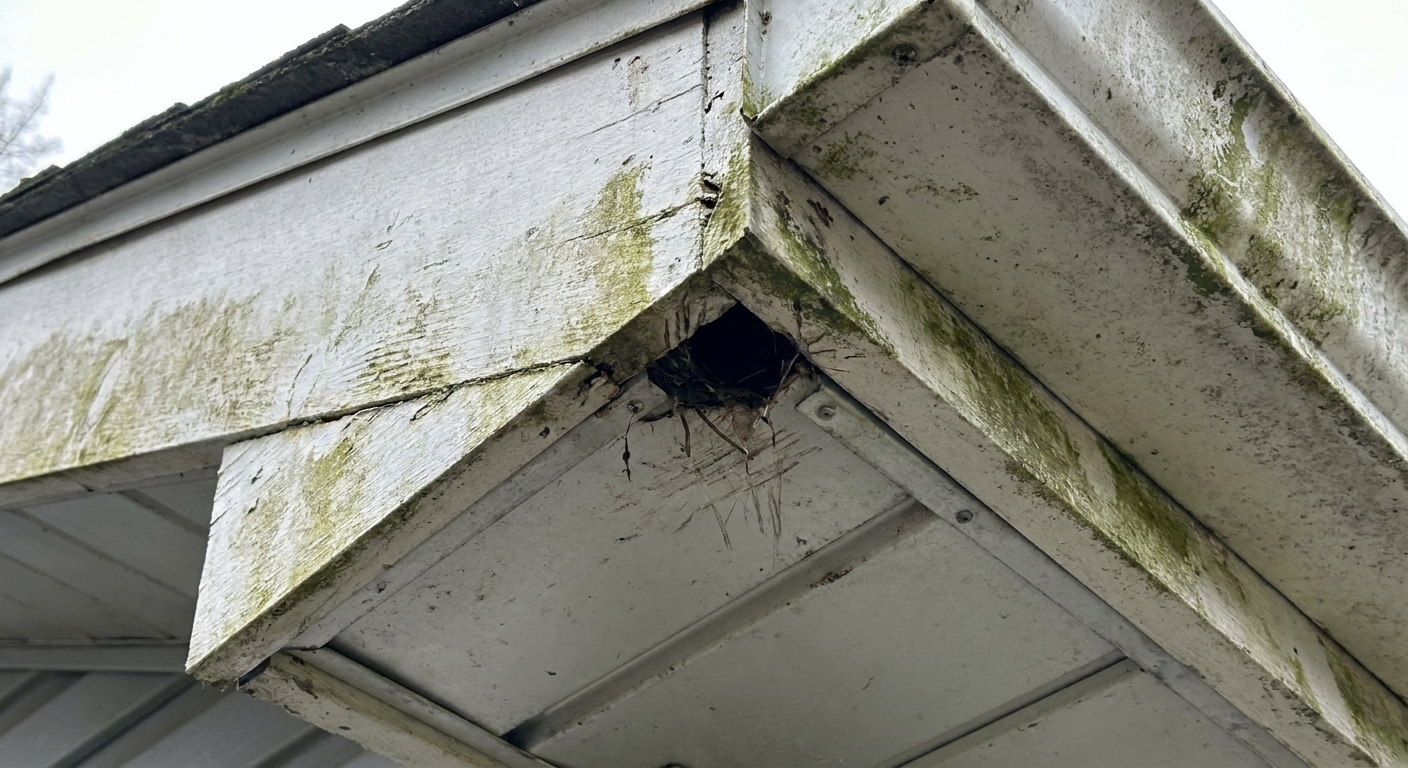
Flying squirrels are smaller and more flexible than most people expect. They can use openings around roof returns, soffit corners, gable vents, and construction gaps that you might overlook as “too tight for a squirrel.”
If you want a practical number, openings around 1 to 1.5 inches can be enough in the real world, depending on the squirrel and the construction. Treat any small gap on a roofline like a suspect until you prove otherwise.
Signs you have flying squirrels (not gray squirrels)
If you are hearing “something up there,” the details matter. These are the clues that push me toward flying squirrels.
Noises after dark
- Timing: activity ramping up after sunset, often peaking late at night.
- Sound: light scurrying, quick pattering, soft thumps, and occasional scratching. Less of the heavy daytime stomping you get with a big gray squirrel.
- Location: sound moving along roof edges and eaves, then into a specific area where the nest is.
Multiple animals, fast movement
When a colony is active, you may hear several sets of feet. If you tap the ceiling lightly, you might get a burst of scrambling that sounds like more than one animal reacting.
Droppings and staining
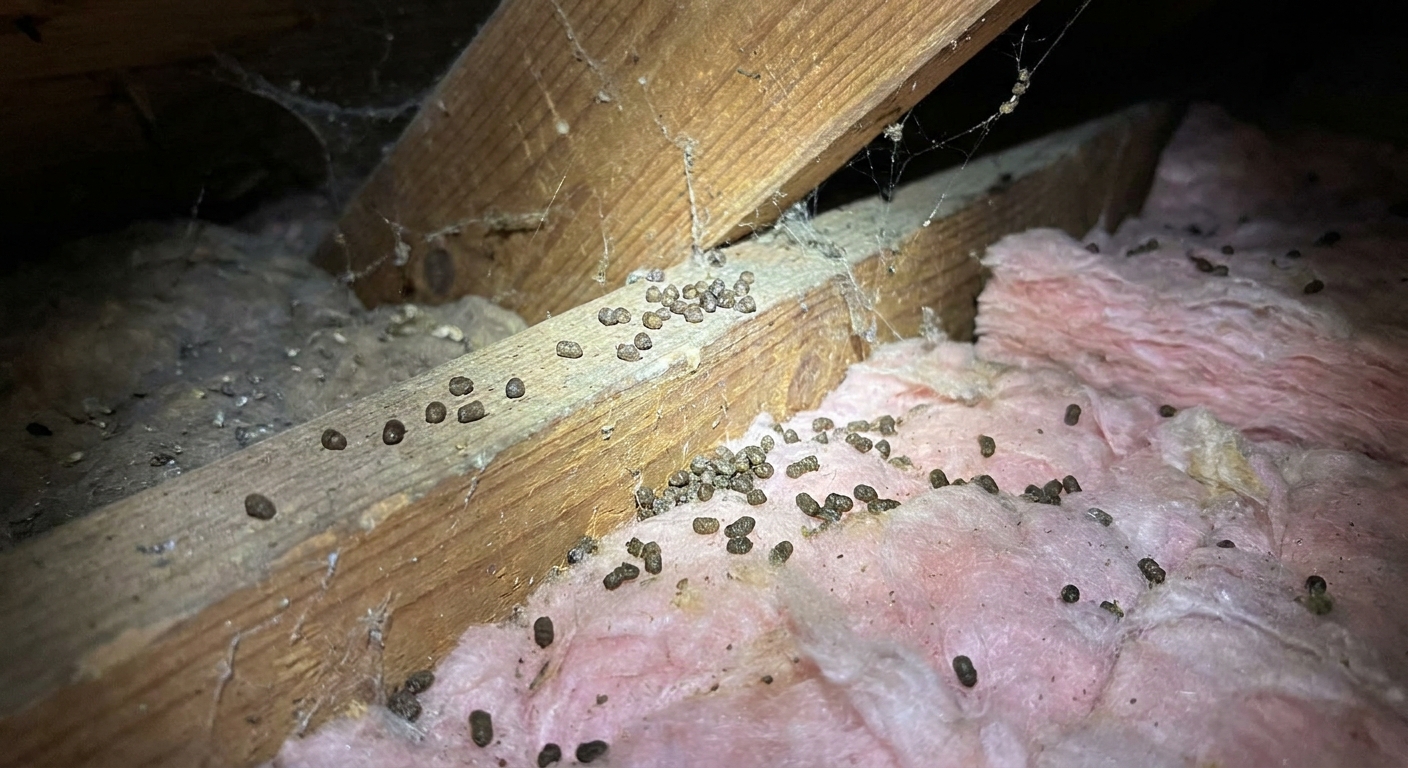
Flying squirrel droppings are small, dark pellets that can be mistaken for mouse droppings. The important caveat is this: droppings alone are not a reliable species ID. Use them as a map for activity, not a final diagnosis.
A more useful clue is where you find them. Flying squirrels tend to leave droppings near travel routes along rafters or near a nest site, and you may find them clustered in one attic zone.
Nesting material and group bedding
They will shred insulation, paper, or stored fabric for bedding. With multiple squirrels sharing, the nest can look bulkier than you would expect for a small animal.
Tiny entry points along rooflines
Common access spots include:
- Soffit to fascia joints and inside corners
- Gaps where roof decking meets fascia
- Gable vents with loose or damaged screening
- Roof returns and dormer intersections
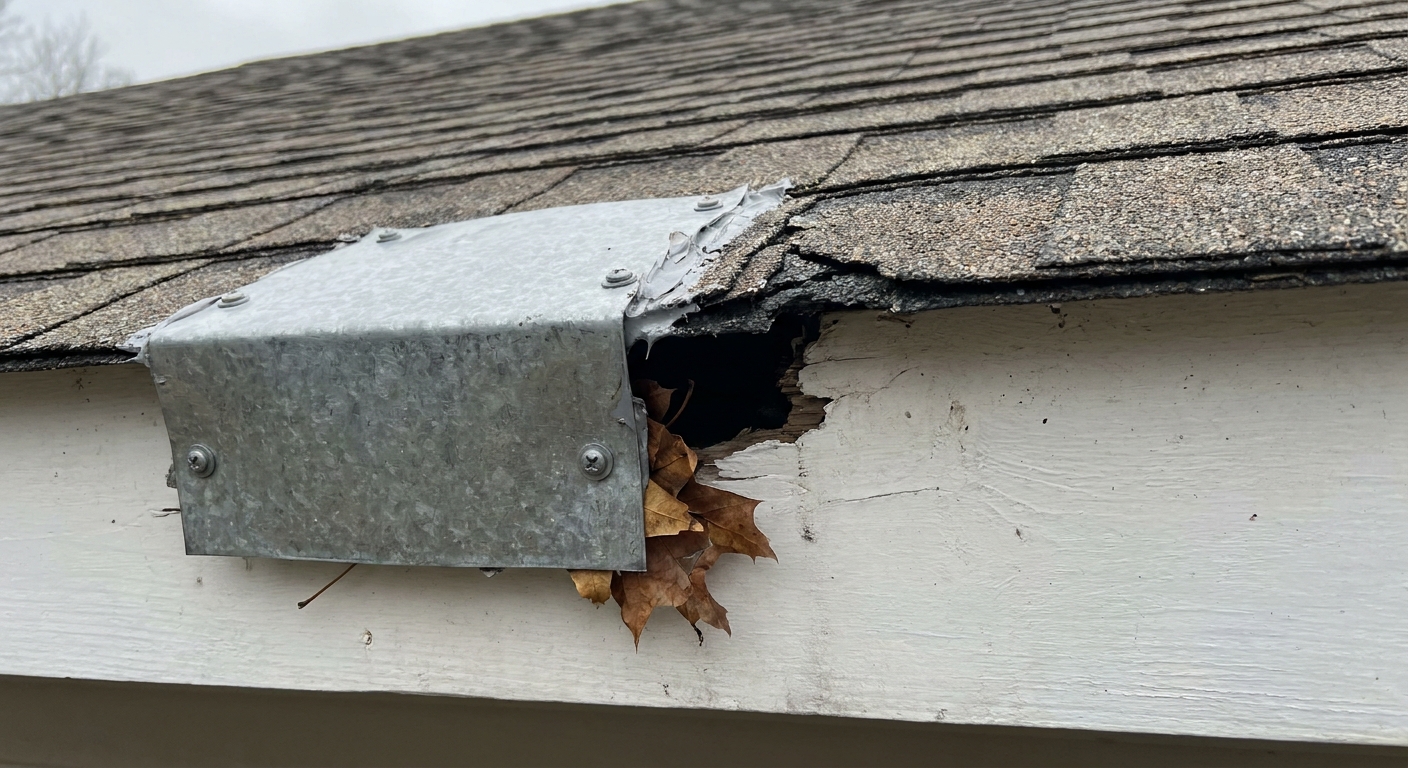
- Spaces around penetrations like exhaust vents (especially if a cap is loose)
How to confirm it is a flying squirrel
You want confirmation before you start sealing holes. The goal is to identify the animal, locate the main entry point, and understand whether you are dealing with a single intruder or a group.
Do a dusk watch, not a noon watch
About 20 to 40 minutes after sunset, stand outside with the lights off and watch the roofline. Focus on the areas where you hear noise. Flying squirrels can appear as quick, silent shapes that launch from the roof edge and glide to a nearby tree.
Use a flashlight and look for eye shine
From the ground, a strong flashlight can sometimes catch eye shine near the eaves or gable vent. If you see multiple eye reflections spaced apart, that is another “colony” clue.
One caution: absence of eye shine does not rule them out. Angle, distance, and what they are standing behind all matter.
Check gable vents and soffits for rub marks
Repeated traffic leaves dark smudges, oily staining, and sometimes chewed edges. Look for:
- Brown or black rub marks around a gap
- Freshly chewed wood fibers
- Loose or bent vent screening
In the attic: follow the highways
If you can safely access your attic, go up during daylight with a bright headlamp. You are looking for the travel routes along rafters and top plates. The heaviest droppings often show you the busiest paths.
Safety note: wear gloves, an N95 or better respirator, and eye protection. Attics are dusty, and wildlife waste can bring health risks like bacteria exposure (for example salmonella) and parasites like fleas and mites. If you find a lot of droppings or insulation contamination, that is a good point to hand it off to a pro.
Baby season risk: when not to exclude yet
This is the part that gets homeowners in trouble. With flying squirrels, you are often dealing with multiple animals, and excluding at the wrong time can trap babies inside. That leads to odor, staining, and a problem that gets worse instead of better.
Why timing matters
Flying squirrels can have young during warmer months, and in many areas there can be more than one breeding period. The exact timing varies by region and species. The takeaway is consistent: if you hear high-pitched chirping, peeping, or persistent squeaking from a specific spot, assume babies.
If you are trying to plan a project window, it is smart to ask a local wildlife control operator about seasonality in your county before you install a one-way door.
Clues you might have young in the attic
- Chirping or squeaking sounds that do not move around much
- Adults repeatedly coming and going from one exact location
- Activity that seems to spike at dusk and again before dawn (feeding runs)
If you suspect babies and you are not experienced with wildlife exclusion, this is one of the clearest “call wildlife control” moments. A reputable operator will use methods that avoid separating mothers and young.
Why a gray squirrel plan can fail
A lot of attic squirrel advice is built around gray squirrels: you find one entry hole, you trap or exclude one animal, and you seal it up. With flying squirrels, that same plan can fail in a few predictable ways:
- You inspect at the wrong time: daytime calm does not mean the attic is empty.
- You underestimate how many there are: you exclude one, and three more are still inside.
- You seal too early: you close gaps before confirming everyone is out, or before checking for young.
- You miss the true entry: they may be using a smaller gap you did not consider viable.
If you take one lesson from this article, make it this: confirm the animal and the timing before you pick a method.
How to get flying squirrels out (step by step)
I like to treat this like any other home project: assess, control the variables, then lock in the fix. Here is the process that works most reliably for homeowners.
Step 1: Locate all possible entry points
Walk the exterior and look closely at roof edges, soffits, returns, and vents. If you are comfortable and it is safe, inspect from a ladder. If not, this is a good time to hire out the inspection.
- Mark suspicious gaps with painter’s tape so you do not lose them.
- Look for rub marks and droppings on siding ledges or window trim below an entry area.
Step 2: Pick one primary exit
Most successful exclusions depend on choosing the main hole as the one you will fit with a one-way door, then sealing the secondary gaps so they cannot bypass the device.
Step 3: Install a one-way exclusion device (and give it time)
A one-way door can work well for flying squirrels, but it has limits:
- It does not remove babies. If young are present and cannot leave, you can create a welfare and odor problem.
- It is not instant. With a group, it may take multiple nights for all animals to exit.
- It must be placed correctly. If there are other open gaps, squirrels may bypass the device and re-enter.
For a simple benchmark, I like to leave the device in place for at least 3 to 7 nights of decent weather, then reassess. Cold snaps and storms can change movement patterns, so more time can be better than rushing.
Step 4: Confirm the attic is quiet at night
You want a few nights with no scurrying, no thumps, and no new droppings near the nest area. If it is quiet at night, it is usually truly quiet.
Step 5: Seal the entry points for real
After you are confident the attic is empty, remove the one-way device and seal the hole permanently. The best repairs depend on the location, but typical long-term materials include:
- Metal flashing
- Hardware cloth with sturdy fasteners for vent areas
- Exterior-grade screws and washers (not just staples)
- Exterior sealant as a secondary barrier, not the only barrier
Cleanup and attic repair after exclusion
Getting the squirrels out is half the job. The other half is removing what attracted them and fixing what they damaged.
Insulation and droppings
- Spot clean small areas with proper PPE and careful bagging.
- If droppings are widespread or insulation is matted and contaminated, consider professional cleanup. It is messy work and easy to do unsafely.
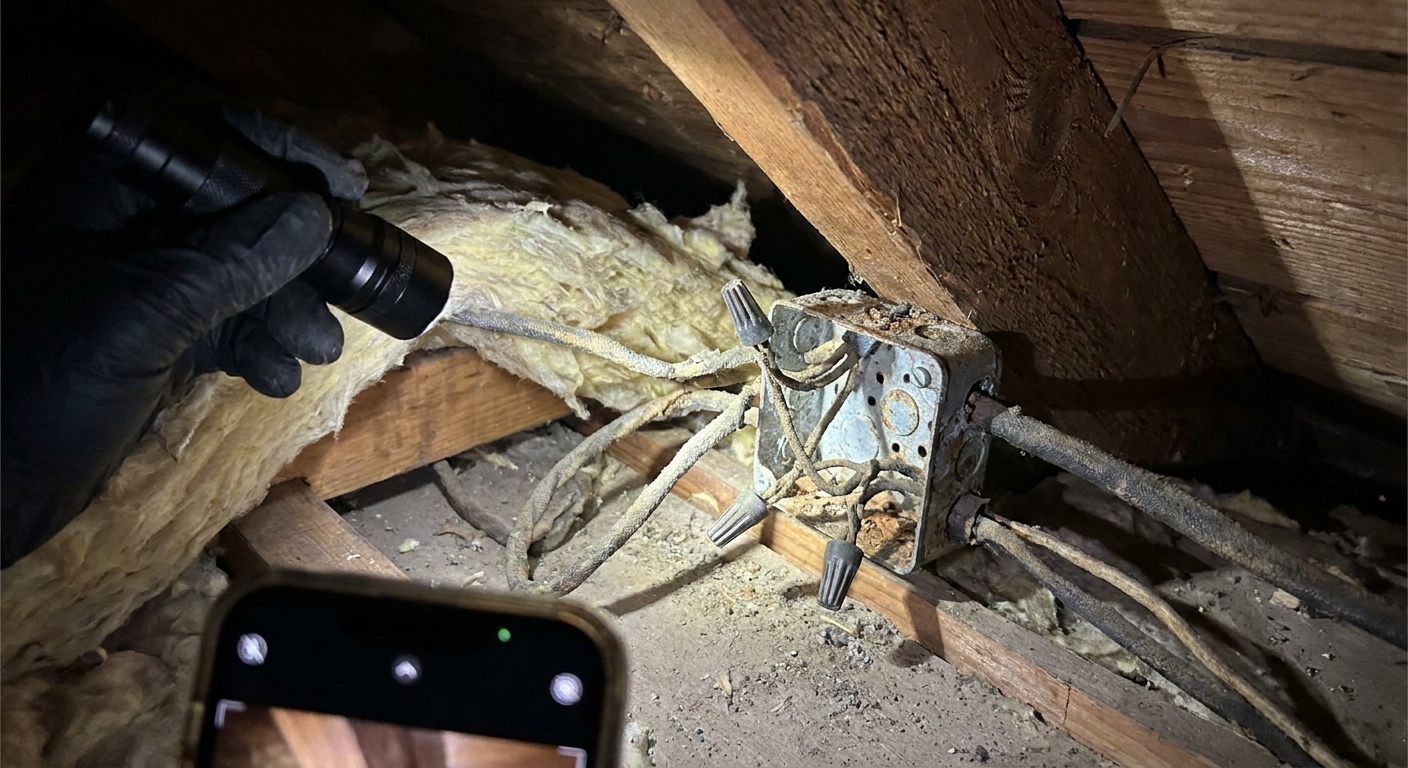
Check for chewed wiring
Squirrels, including flying squirrels, can chew. In an attic, that can mean wiring damage. If you see nicked insulation on electrical cables, do not ignore it. If you are not comfortable assessing it, call an electrician.
Fix moisture and access issues
Loose soffit panels, rotted fascia, and failed vent screens are basically open invitations. Tighten up the building envelope, and you reduce the odds of a repeat visit next season.
Prevention after the fix
Once you win the battle, do the boring stuff that keeps you from fighting it again next year:
- Trim tree limbs back from the roofline so the attic is harder to reach.
- Upgrade vent screening with properly fastened hardware cloth where appropriate.
- Stay ahead of rot on fascia and soffits. Soft wood turns into an entry point.
- Do a quick night check once in a while if you have a history of visits.
What not to do
A few “quick fixes” tend to create slow, expensive problems:
- Do not use poison. It can leave you with dead animals in walls or ceilings and it does not solve the entry issue.
- Avoid sticky traps. They are inhumane and they can create a frantic animal situation in your attic.
- Do not seal first and ask questions later. Confirm the attic is empty and you are not trapping young inside.
- Be careful with relocation. Laws vary by state, and in some places relocating wildlife is restricted. If you are unsure, ask a local pro what is allowed.
When to call wildlife control
I am pro-DIY, but I am also pro-knowing where the risk lives. Call a qualified wildlife control operator if any of the following are true:
- You suspect babies, or you hear persistent chirping from one spot
- You cannot clearly identify the entry point
- You have multiple entry points on steep rooflines or high gables
- You find heavy droppings or widespread insulation contamination
- There is any chance you are dealing with bats (or you are not sure)
- You see chewed wiring or smell burning or electrical odor
- You want to be certain you are following local rules on methods and relocation
A good operator should talk you through timing, confirm species, use humane exclusion, and seal entry points properly. If someone immediately jumps to poison, I would keep calling around. Poison creates secondary problems in walls and ceilings that homeowners end up paying for twice.
FAQ
Are flying squirrels dangerous?
They are not typically aggressive, but they are still wild animals. Avoid direct contact. The bigger risk is droppings contamination, parasites, and damage to wiring or insulation.
Can I just seal the hole when I find it?
Not until you confirm the attic is empty and you are not trapping young inside. With flying squirrels, that “seal it now” approach is where a lot of smell and ceiling-stain horror stories come from.
Why do I only hear them at night?
That nocturnal schedule is one of the strongest indicators you are dealing with flying squirrels instead of gray squirrels.
How long should I leave a one-way door up?
A practical target is 3 to 7 nights of decent weather, then confirm quiet nights before you do permanent sealing. If weather is bad or you suspect a larger group, give it more time.
Will a one-way door work?
It can, as long as you: (1) confirm the species, (2) rule out babies, (3) close all other potential entry points, and (4) wait long enough to verify the attic stays quiet at night before you permanently seal.
The 30-Second Cheat Sheet
Essential takeaways for: Flying Squirrels in the Attic: Signs and How to Get Them Out
Fast ID: is it flying squirrels?
- Most noise happens after dark: scurrying and light thumps late night, quiet midday.
- Small entry gaps: openings that look “too small for a squirrel” can still be enough, especially around vents and roof edges.
- Often more than one: group nesting is common, especially in colder months.
- Droppings can look like mice: small pellets, often clustered near rafter travel routes, but droppings alone can’t confirm the species.
Confirm before you seal
- Do a dusk watch 20 to 40 minutes after sunset for gliding movement at the roofline.
- Use a flashlight to look for eye shine near eaves or vents. No eye shine does not rule them out.
- Find the primary entry hole by looking for rub marks and chewed edges.
Don’t trap babies
- If you hear chirping or peeping from one spot, assume young are present.
- Do not exclude until you are sure babies are mobile, or call a pro. Local timing varies by region and species.
What works (in order)
- Identify all entry points.
- Install a one-way exclusion device on the main hole.
- Seal secondary gaps so they cannot bypass the device.
- Verify 3 to 7 quiet nights (good weather helps).
- Remove device and permanently repair with flashing or hardware cloth and fasteners.
Call wildlife control if
- You suspect babies.
- You cannot safely access steep or high roof areas.
- You find heavy droppings, widespread insulation contamination, or chewed wiring.
- You are not sure whether it could be bats.
- You are unsure what is legal in your area (relocation and methods vary by state).
💡 Tip: Scroll up to read the full article for detailed, step-by-step instructions.
⬆️ Back to top
About Grit
Content Creator @ Grit & Home
Grit is Grit & Home’s little blue clay courier, delivering big questions about the place you call home. Expect practical ideas, a raised eyebrow, and a satchel full of curiosity.