
🚨 In a DIY emergency or rush?
Skip the details and jump straight to our 30-second cheat sheet for the most crucial info.
Small courier. Big home questions.
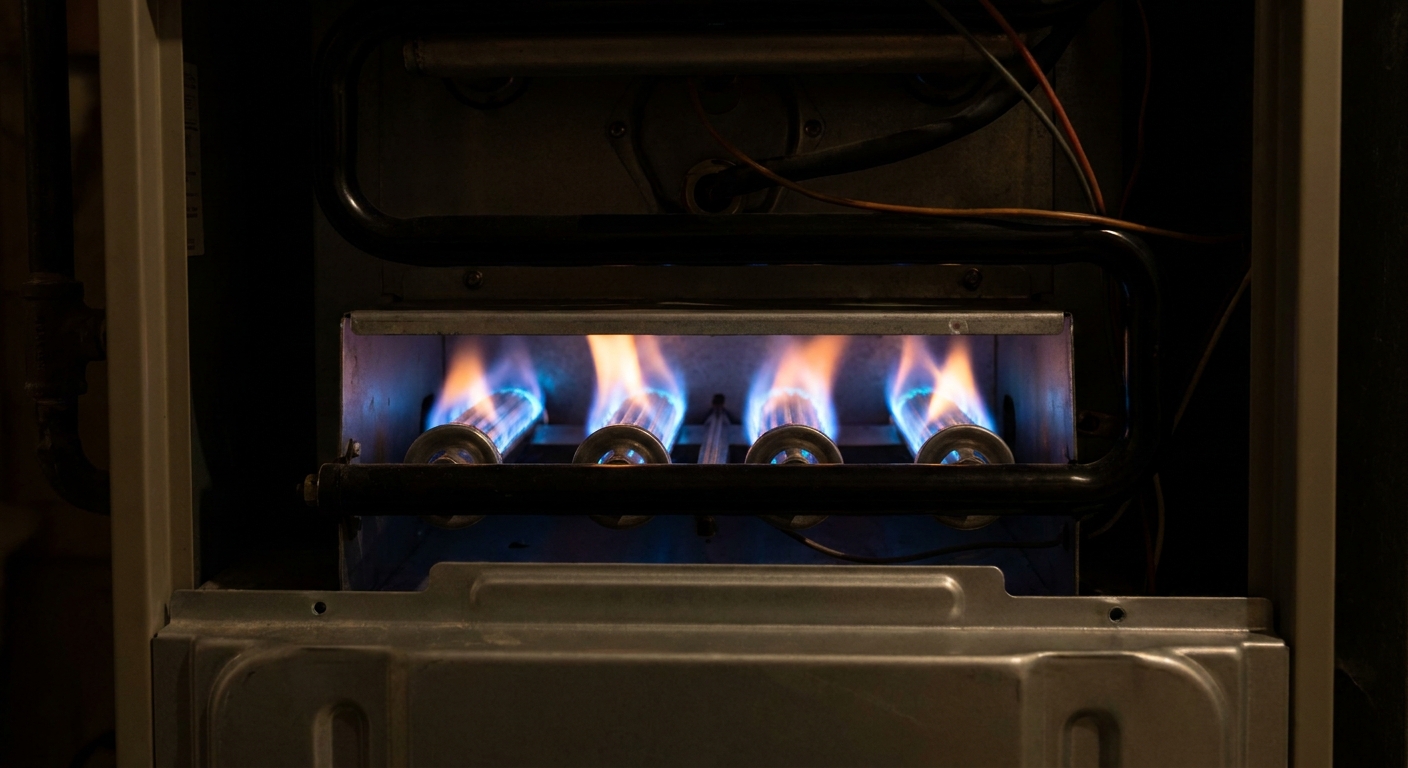
If your furnace burner will not shut off, your job is not to outsmart it. Your job is to make it safe, then figure out whether the furnace is still being told to heat, or whether a part is stuck in the ON position.
One quick language check before we dive in: people often say “the furnace won’t shut off” when they mean the blower fan keeps running. This page is for when the burners stay lit and the furnace keeps making heat even though the thermostat should be satisfied.
First, check for an emergency
Stop troubleshooting and shut the system down if you notice any of the following:
- You smell gas (especially near the furnace or gas meter).
- Soot, scorch marks, or melted wiring around the burner area or control board.
- Rumbling, booming, or delayed ignition when the burners light.
- Anyone feels dizzy or sick in the home, or your carbon monoxide alarm chirps or goes off.
If you smell gas: leave the area, avoid switching electrical devices on or off, and contact your gas utility or emergency services from outside or away from the building.
Shut it down safely
If the burners will not shut off, do not keep cycling the thermostat and hoping. Use this order:
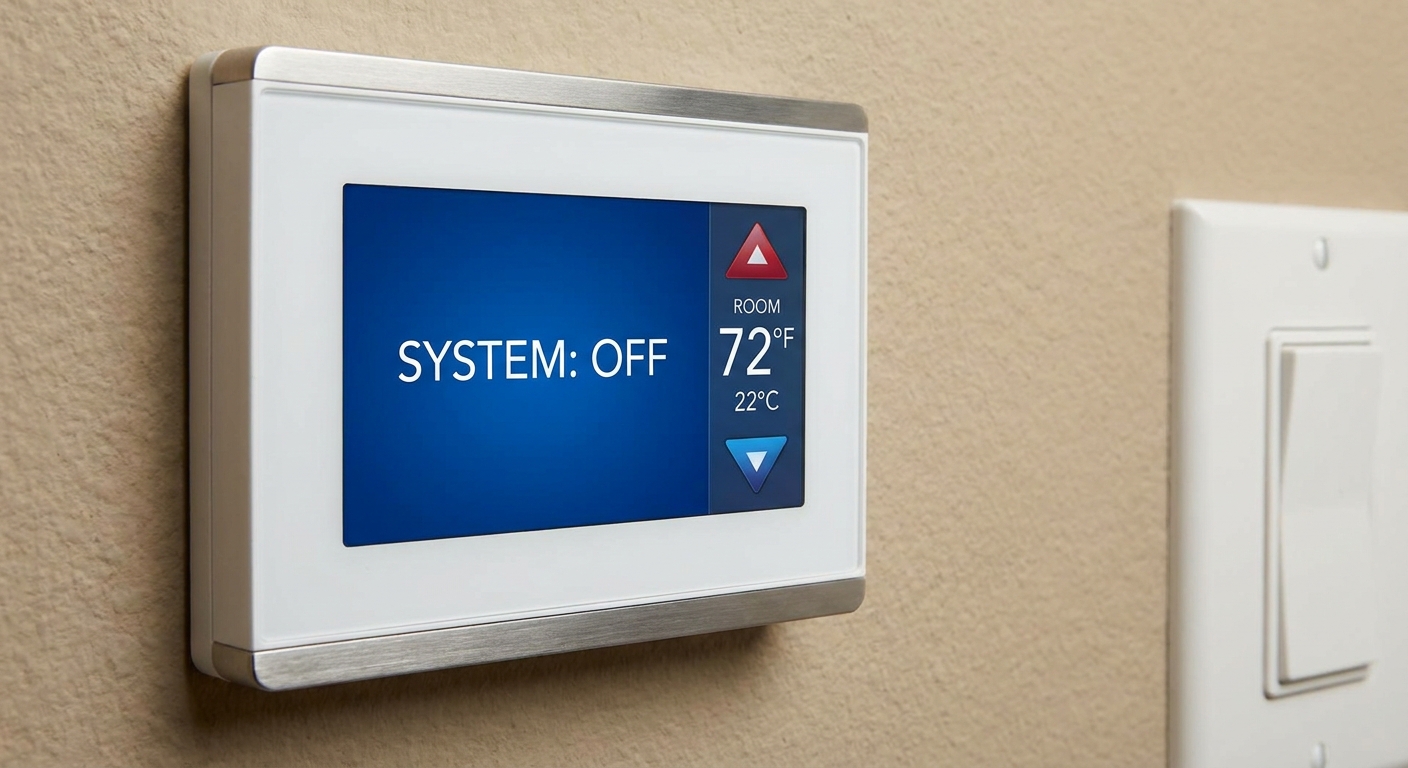
- Set the thermostat to OFF (or set heat well below room temperature).
- Turn off power to the furnace at the furnace service switch (often looks like a light switch near the unit) or at the breaker.
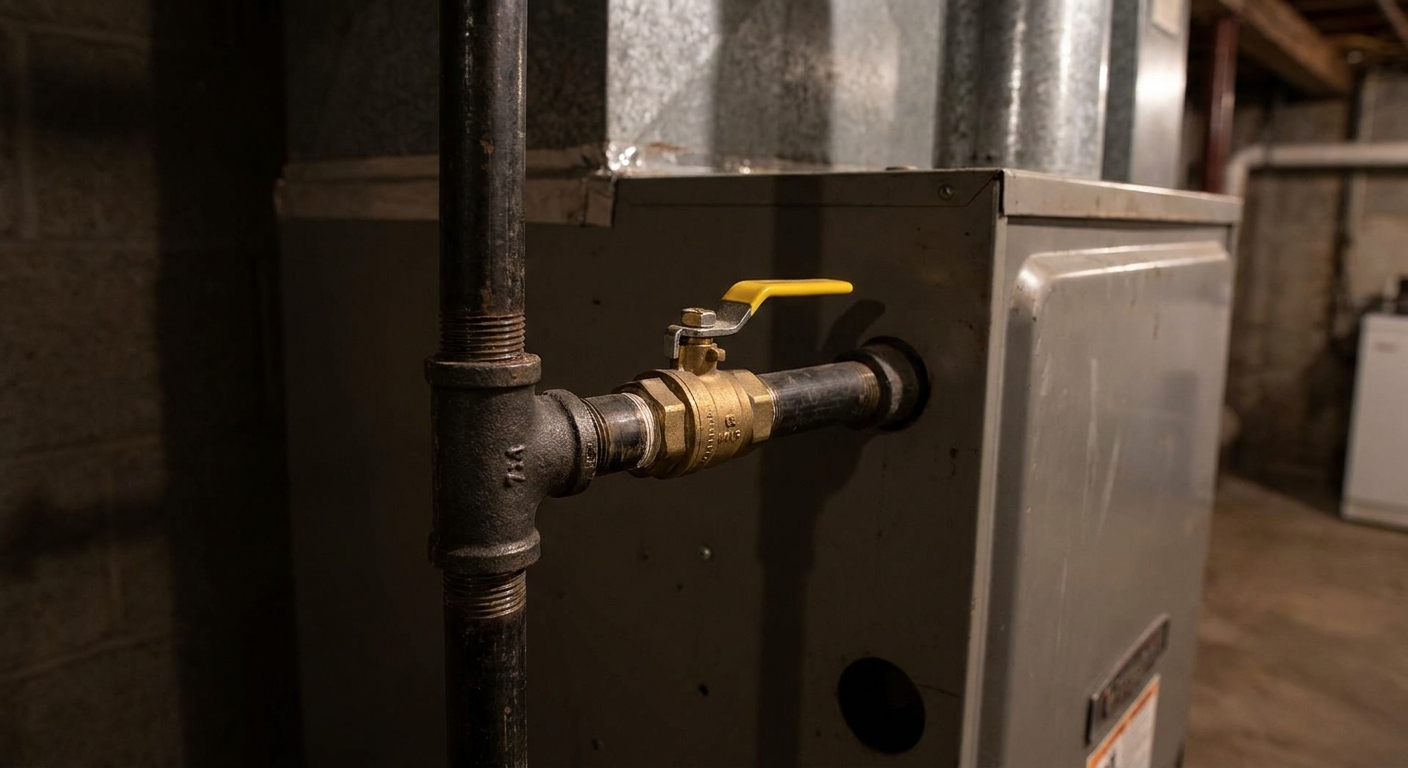
- If the burners still appear to be firing or you are unsure, turn off the gas at the furnace gas shutoff valve. It is typically a lever on the gas pipe near the furnace. Parallel to the pipe is ON. Perpendicular is OFF.
On most modern gas furnaces, turning off power should extinguish the burners within seconds. If flames persist, treat it as an emergency: turn off the gas, leave the area if you suspect a leak, and call a professional.
What this usually means
In a normal heat cycle, the thermostat calls for heat, the furnace proves it is safe to fire, the gas valve opens, and the burners light. When the thermostat is satisfied, the call ends, the control board closes the gas valve, the burners go out, and the blower runs a short off-delay to cool the heat exchanger.
If burners stay on, the problem typically falls into one of three buckets:
- The furnace is still receiving a heat call when it should not be. That can be a thermostat issue or thermostat wiring issue.
- A relay on the control board is stuck and acting like it is still calling for heat.
- The gas valve is not closing when it is told to close. This is less common, more serious, and not a DIY fix.
Step 1: Check thermostat basics
This sounds obvious, but it is the fastest win.
- Confirm mode: Set the thermostat to OFF, not HEAT.
- Check holds and schedules: A schedule may be raising the setpoint again. Temporarily disable schedules if your thermostat supports it.
- Lower the setpoint: Put the heat setpoint at least 5 degrees below room temperature.
- Replace batteries if the thermostat uses them, especially if the screen is dim or glitchy.
If the thermostat is clearly not calling for heat and the burners still run, move on to separating a thermostat call from a furnace control problem.
Step 2: Look for clues
With the furnace running (only if you can do so safely), look for:
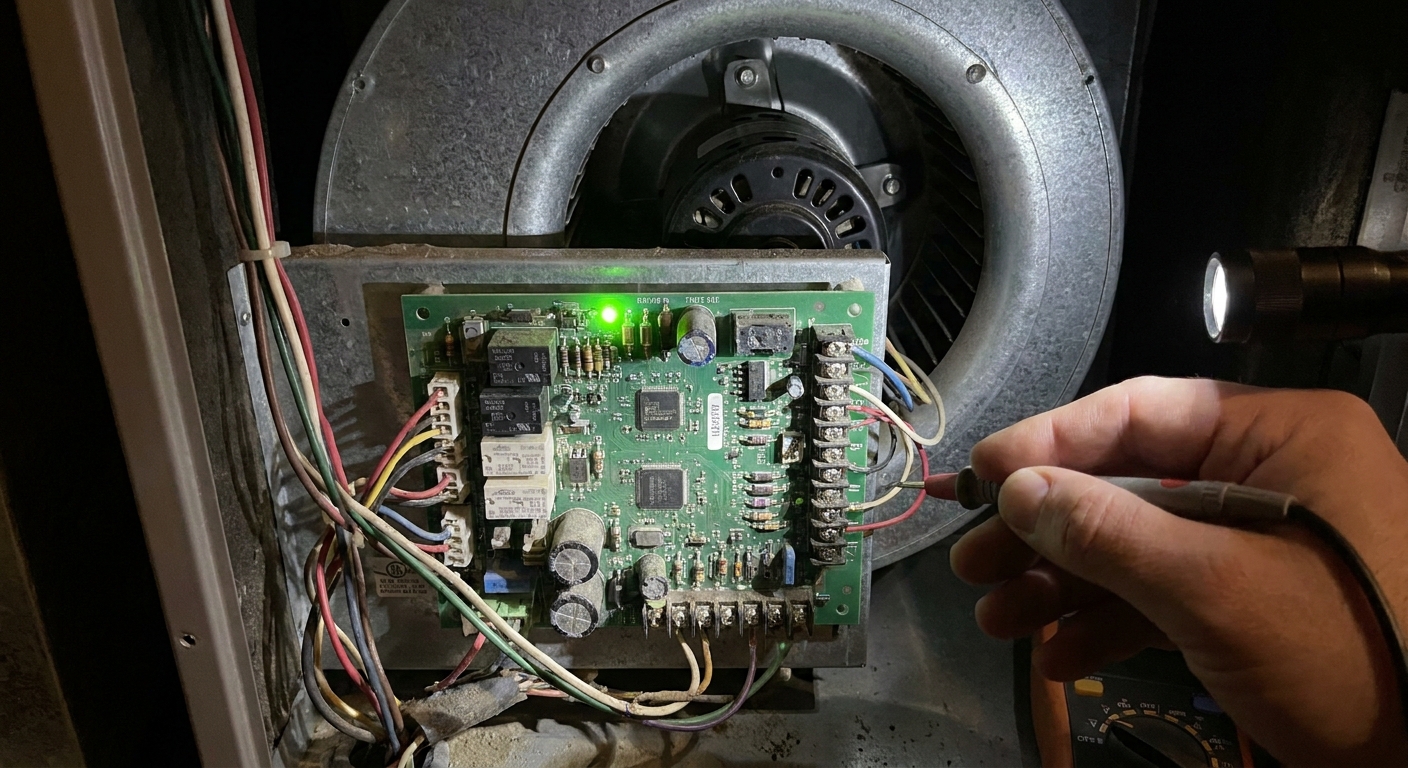
- Status light on the control board flashing a code. Many furnaces have a viewing window on the lower door.
- Short cycling (burners on briefly, then off, then on again). That points to safety limits or airflow issues, not a true “won’t shut off.”
- Burners steady on continuously even after the thermostat is turned down. That points toward a stuck call or stuck output.
If you can safely note a blink pattern, write it down. You can match it to the wiring diagram or the furnace manual later, or give it to a technician.
And yes, I know the temptation is to stare at it until it blinks a confession. Write the code down and keep moving.
Step 3: Is it still being told to heat?
This is the key diagnostic fork, and it is still homeowner-friendly.
Option A: Test at the thermostat
On many thermostats, removing the display or face from its base will stop the heat call. On some smart thermostats, the base can behave differently or hold the last state briefly, so treat this as a clue, not the final verdict.
If you have a modern snap-off style thermostat:
- If you remove the thermostat face and the furnace stops calling for heat, the thermostat may be misbehaving or miswired.
- If removing the face changes nothing and the burners keep firing, the issue is more likely in the furnace controls or wiring.
Do not force anything. If wires are tight or brittle, stop.
Option B: The definitive test at the furnace
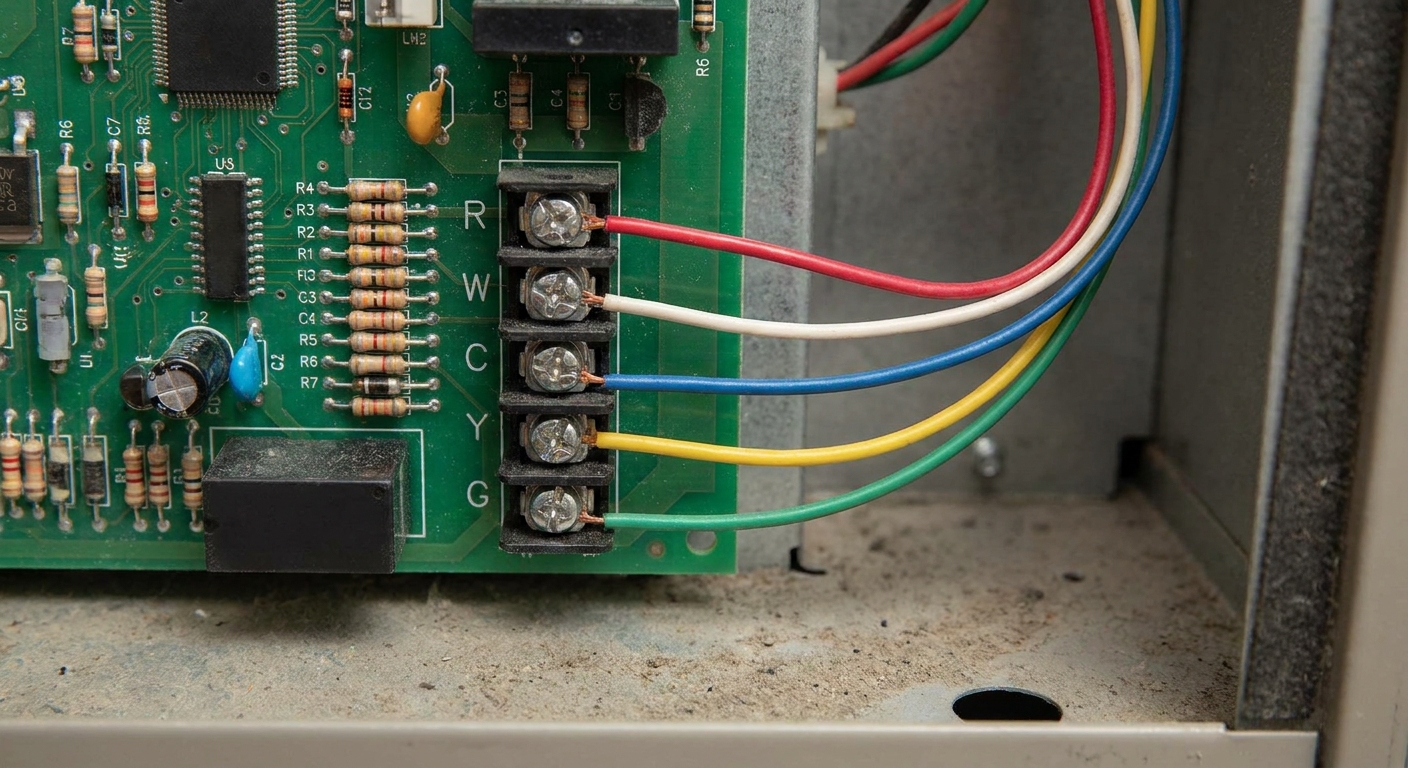
Turn off power to the furnace at the switch or breaker first. Then remove the blower or controls access panel (often the lower door) to access the control board where the thermostat wires land.
You are looking for low-voltage terminals usually labeled R, W (heat), C, Y, G. On two-stage systems, you may see W1 and W2. Start by removing W or W1 first.
- Take a clear photo of the wiring before touching anything.
- Find the wire on the W or W1 terminal.
- Loosen the terminal screw and remove only that wire. Keep it from touching anything metal.
- Restore power briefly and observe. If the furnace attempts to light or burners come on, shut power back off.
What the result means:
- If the burners stop and stay off: The furnace was being told to heat. That points to a thermostat problem, thermostat base issue, or a short in the thermostat cable between thermostat and furnace.
- If the burners still try to run: The furnace is acting like it has a heat call even when it does not. That points to a stuck relay on the control board or a control issue that needs service.
After the test, shut power back off and reconnect wiring as it was.
If it stops with W removed
Now you are in the “the furnace is being told to heat” lane. Common causes:
1) Thermostat is stuck
Mechanical thermostats can stick. Smart thermostats can also fail or glitch, especially with low batteries or power issues.
- Replace thermostat batteries if applicable.
- Check that the thermostat is level only if it is an old mercury-bulb style unit.
- If you recently replaced a thermostat, double-check that the heat wire is on W or W1 exactly as required for your system.
2) Thermostat wire is shorted
If the insulation is damaged, the R (power) and W (heat call) wires can touch, creating a constant call for heat.
Places to look:
- Where the thermostat wire enters the furnace cabinet. Watch for sharp sheet-metal edges or a missing grommet that lets vibration rub through the insulation.
- Staples or tight bends along exposed runs.
- At the thermostat wall opening where wire can be pinched.
3) Accessory wiring is backfeeding
Sometimes an add-on humidifier, air cleaner, or other accessory is tied into the wrong terminals and backfeeds the heat call. If you have recent HVAC work or a new accessory, that context matters. This is a good moment to call a technician, especially if wiring is unfamiliar.
If it does not stop with W removed
Now you are in the “furnace is stuck on” lane. That usually means the control board is driving heat when it should not, or a valve is not responding.
1) Stuck relay on the control board
The control board contains relays that switch components on and off. A stuck relay can keep the furnace in heat mode even without a thermostat call.
What you can do safely:
- Shut off power and look for burn marks, swollen spots, or a burnt electronics smell near the control board.
- Check for loose low-voltage wires or obvious damage.
What you should not do: try to tap the board to free a relay, bypass safeties, or keep resetting power to force it to behave. If a relay is stuck, replacement is typically the fix.
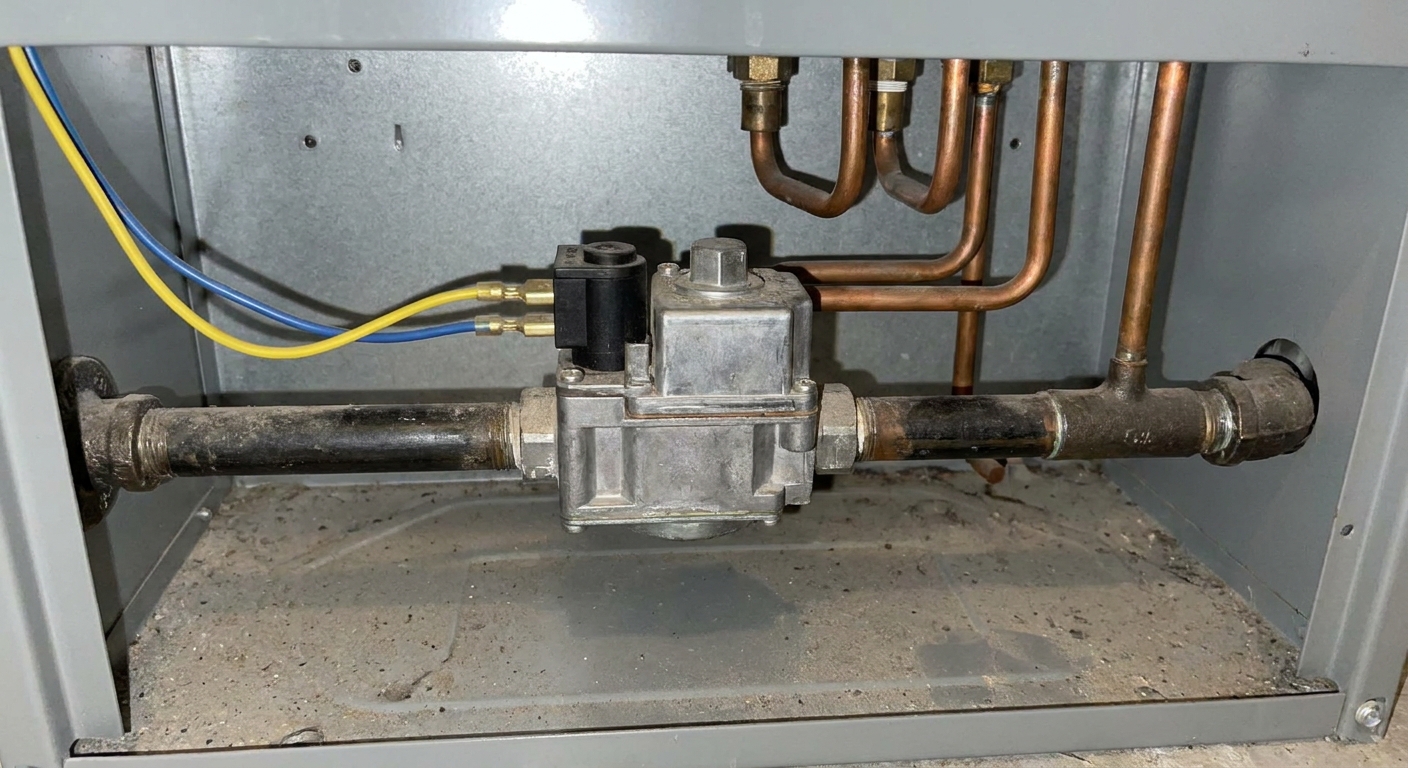
2) Gas valve issue (call a pro)
The gas valve should close when the control board removes power to it. A valve that is not closing correctly is a serious issue.
Possible clues that point toward professional service:
- Burners stay on in a way that seems disconnected from normal cycling.
- You hear unusual humming or buzzing from the gas valve area, especially if it is paired with other symptoms.
- The furnace behaves erratically after power resets.
Do not attempt to disassemble or test a gas valve yourself. If you suspect a gas valve issue, keep the furnace off and contact an HVAC professional.
3) Safety circuit bypass or miswire
This is rare for most homeowners, but it shows up after DIY wiring or rushed repairs. If anything looks non-original, spliced oddly, or jumpered, stop. A furnace that can fire without the normal control sequence is not a safe DIY playground.
What not to do
- Do not keep power-cycling the furnace repeatedly to reset it if burners keep running. You can worsen damage.
- Do not bypass door switches, rollout switches, pressure switches, or limit switches.
- Do not run the furnace with panels removed longer than needed for a quick observation. Many units rely on correct airflow and sealed compartments.
- Do not ignore carbon monoxide alarms even if the house feels fine.
When to call for service
Call an HVAC professional if:
- You removed the W or W1 wire and the burners still run.
- The furnace shows a fault code you cannot clear by correcting a simple issue like a loose panel door.
- You see scorching, melted wiring, water damage, or heavy rust inside the burner area.
- You suspect a gas valve problem, smell gas, or have any CO concerns.
If you want to be helpful on the phone, share: furnace brand and model, what you observed, and whether the burners stopped when the W or W1 wire was removed.
FAQ
Is it normal for burners to stay on after the set temperature is reached?
No. Burners should shut off when the thermostat is satisfied. The blower fan may continue running for a short off-delay, but the burners should go out.
Could a dirty filter cause burners to stay on?
A severely restricted filter more commonly causes overheating and cycling off on a high-limit switch, not burners that never shut off. Still, replacing a dirty filter is always a good move for safety and performance.
My thermostat is off but the furnace is still heating. Is that possible?
Yes. That usually means either the thermostat wiring is shorted (R touching W somewhere) or a furnace control component like a board relay is stuck.
If I shut off the furnace switch, will the gas stop?
On most modern furnaces, turning off power should make the gas valve close and the flames should go out quickly. If flames do not go out, turn off the gas shutoff valve and call a professional.
The 30-Second Cheat Sheet
Essential takeaways for: Furnace Burner Won’t Shut Off? What to Check
Do this first (safety)
- Thermostat to OFF or set heat well below room temp.
- Turn off furnace power at the service switch or breaker.
- If needed, turn off the gas shutoff valve at the furnace (handle perpendicular to the pipe is OFF).
- If you smell gas or a CO alarm goes off, leave and call for help.
Fast way to narrow the cause
You are trying to learn whether the furnace is still getting a heat call.
- Kill power to the furnace.
- At the furnace control board, remove the thermostat wire on W (take a photo first).
- Restore power briefly and observe. If the furnace attempts to light, shut power back off.
- If burners stop: problem is upstream. Thermostat stuck, thermostat wiring short, or accessory wiring issue.
- If burners keep running: problem is in the furnace. Likely stuck control board relay or a control issue. Call a pro.
Call a technician if
- Burners keep firing even with the W wire removed.
- You see scorch marks, melted wiring, or smell burning electronics.
- You suspect a gas valve problem or smell gas.
💡 Tip: Scroll up to read the full article for detailed, step-by-step instructions.
⬆️ Back to top
About Grit
Content Creator @ Grit & Home
Grit is Grit & Home’s little blue clay courier, delivering big questions about the place you call home. Expect practical ideas, a raised eyebrow, and a satchel full of curiosity.