
🚨 In a DIY emergency or rush?
Skip the details and jump straight to our 30-second cheat sheet for the most crucial info.
The first time this happened to me, I thought I had a bad bearing or a dying motor. Turns out the “new” filter I had shoved in was the wrong size, it bowed hard, and the blower did what blowers do. It grabbed the weak point and swallowed it. If you are standing there right now with a filter half missing and your furnace making unhappy noises, you can usually handle the immediate fix safely without turning it into a bigger repair.
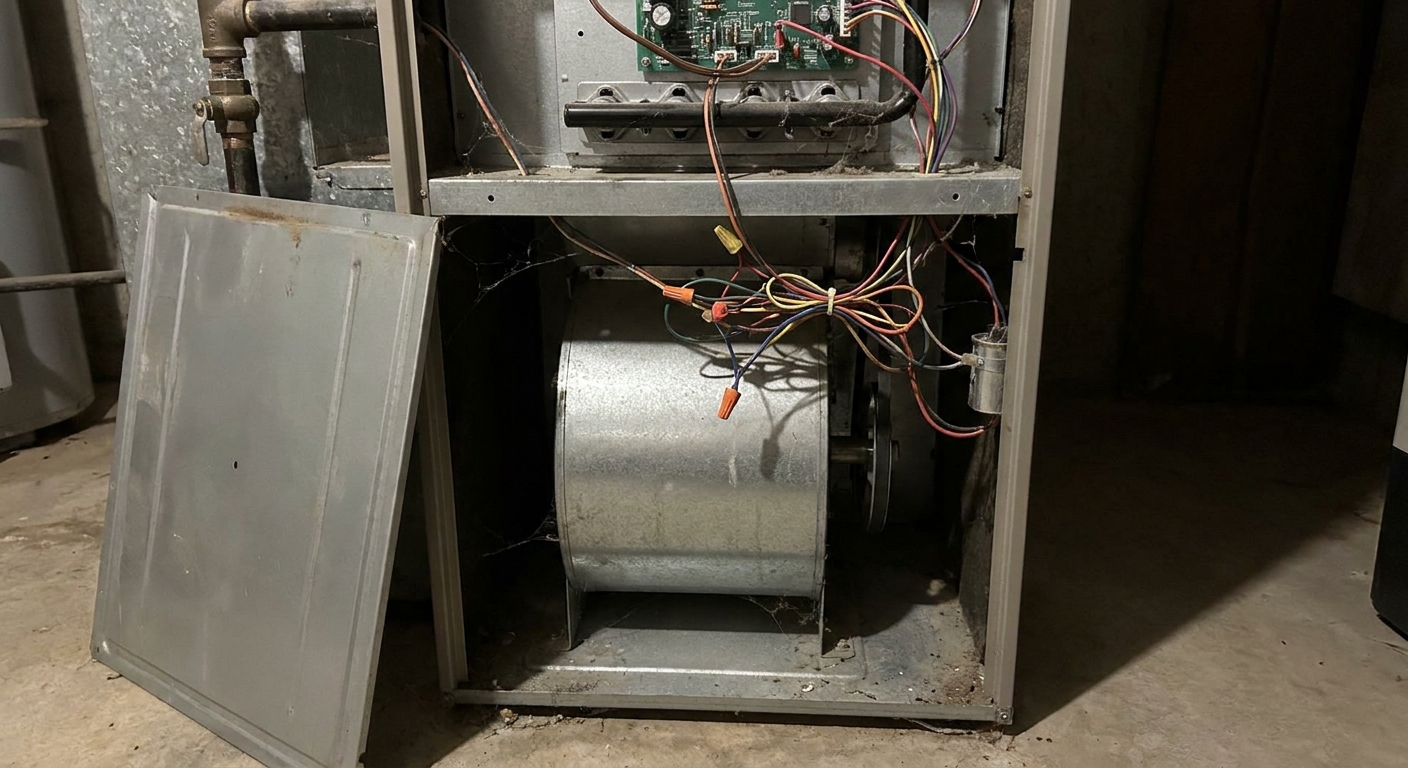
This is not the normal filter change. This is retrieval and inspection, plus making sure you do not run the system with debris in the blower.
First: shut the system off
Do not let the furnace keep running “just to see what happens.” A collapsed filter can wrap into the blower wheel, shed cardboard, and throw the wheel out of balance.
- Thermostat: Set to OFF.
- Power switch: Turn off the furnace service switch, usually mounted on or near the unit.
- Breaker: If you are not sure the switch kills all power, shut off the furnace breaker too.
If your furnace was actively heating, give it a few minutes to cool down before you put your hands in the cabinet.
Also: sheet metal edges are sharp. Wear gloves and move slow.
What you will need
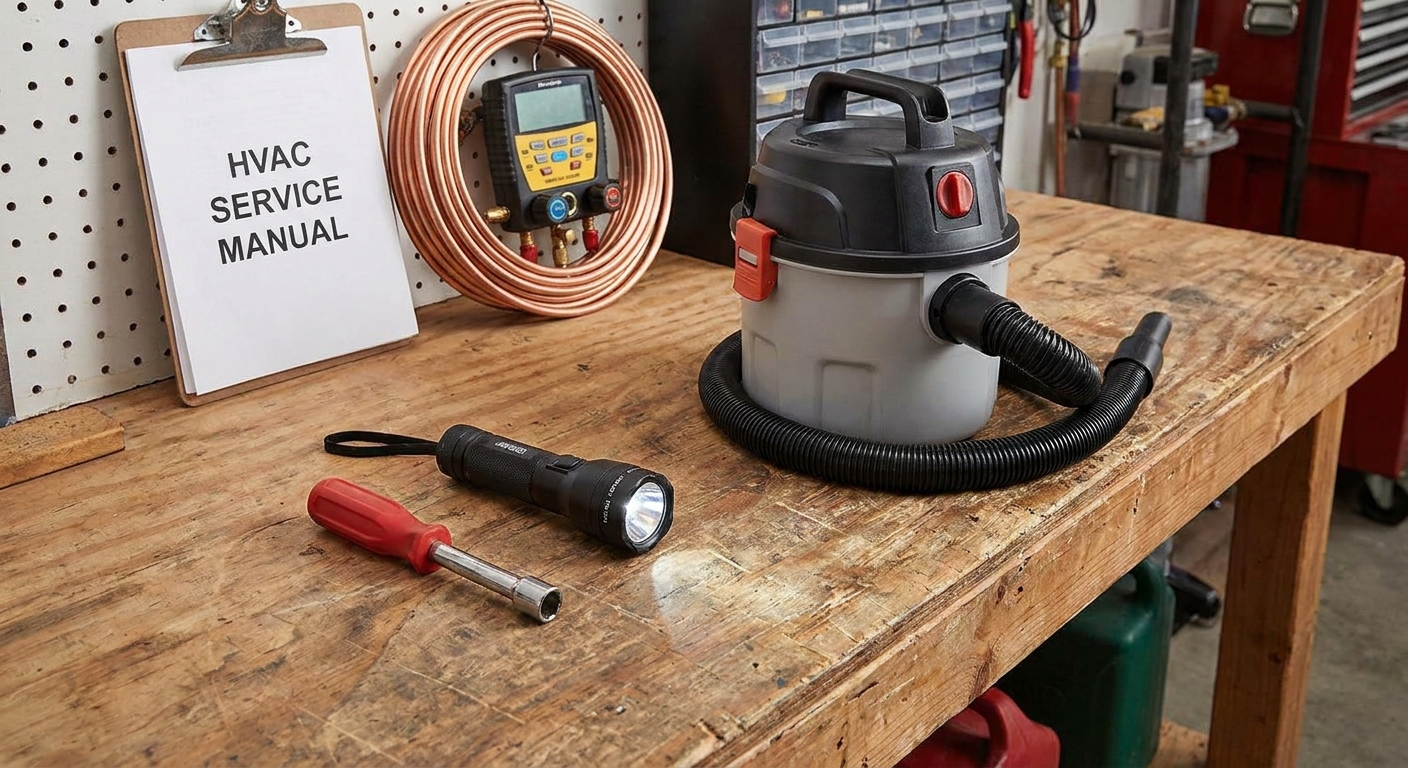
You do not need a whole shop full of tools, but you do want good light and a way to grab a mangled filter without shredding it further.
- Flashlight or headlamp
- Work gloves
- Nut driver or screwdriver (common sizes are 1/4 inch or 5/16 inch for panels)
- Shop vacuum with a hose and crevice tool
- Needle-nose pliers (helpful if the filter frame is wedged)
Find the filter location
Before you start pulling panels, take a second to confirm where your system is designed to filter air. Common setups include:
- Return grille filter: a filter behind a large intake grille in a hallway wall or ceiling
- Side slot at the furnace: a filter that slides into a slot between the return duct and the blower compartment
- Media cabinet: a thicker filter in a dedicated box attached to the furnace or air handler
Most homes have one primary filter location. Do not stack filters or add a second one unless your system is specifically designed for it.
Open the blower area
How you access the blower depends on your furnace style, but most modern forced-air furnaces have two front panels: an upper burner compartment and a lower blower compartment. The filter rack might be in the return duct beside the furnace, below it, or inside a slot between compartments.
- Remove the lower blower door first.
- If the filter is not visible, you may need to remove the adjacent filter rack cover on the return plenum or duct.
Quick safety note: Many furnaces have a door safety switch that cuts power when the panel is removed. Still, treat the unit as if it could turn on until you have confirmed power is off at the switch or breaker.
Remove the collapsed filter
Your goal is to pull the filter out in one piece and keep loose debris from falling deeper into the blower housing.
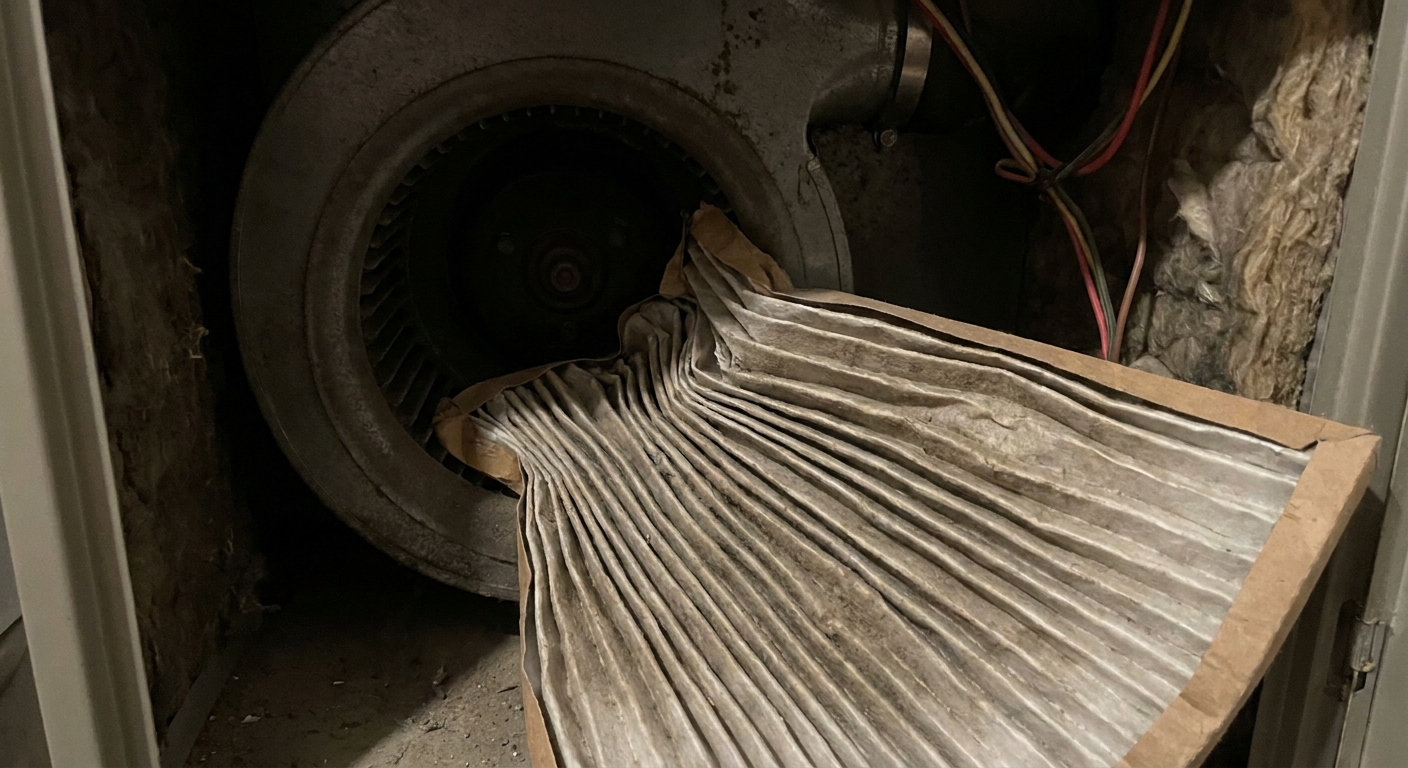
Step 1: Find where it went
Usually the filter is either:
- Folded and wedged right at the blower inlet, or
- Partially ingested with the cardboard frame torn and media hanging into the blower wheel.
Step 2: Pull it straight out
- Grab the cardboard frame, not the pleated material.
- If it is stuck, wiggle gently side to side while pulling.
- If the filter is tearing, stop and use needle-nose pliers to pull loose pieces out a little at a time.
Do not: jam a new filter in and hope the old one “works its way out.” It will not.
Step 3: Vacuum the cabinet
Once the filter is out, vacuum any loose fibers, dust, and cardboard crumbs from the blower compartment and the return side of the cabinet. Keep the vacuum nozzle clear of wiring and do not suck up things that are part of the furnace, like wire ties, foil tape, insulation, or any screws you are not sure about.
Inspect the blower wheel
This is the part a lot of homeowners skip, and it is where you can prevent a wobble, noise, or premature motor wear.
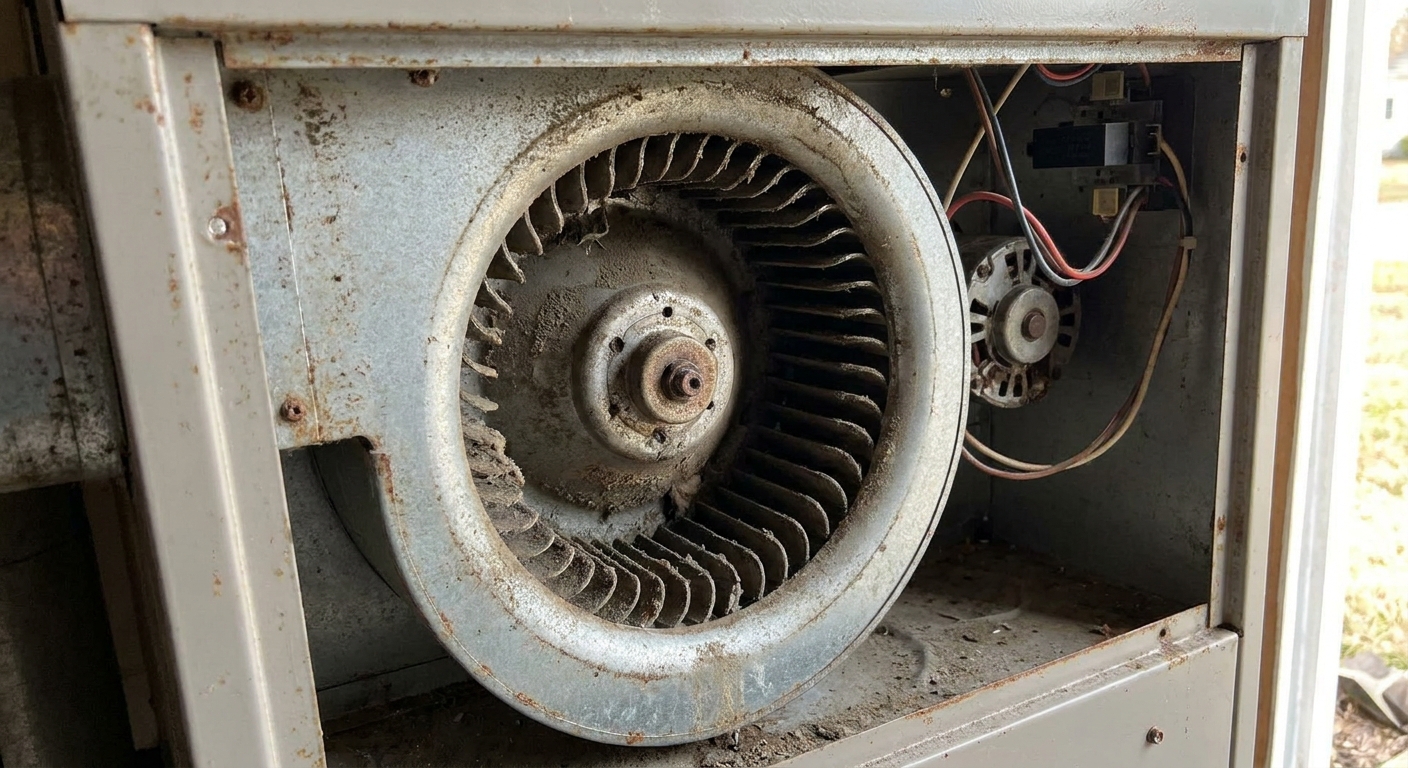
What you are checking for
- Debris in the wheel: Bits of filter media or cardboard caught in the fins
- Wobble: A wheel that looks off-center or bent
- Rubbing: Scrape marks where the wheel hit the housing
- Loose hardware: On some blowers, the wheel is secured to the motor shaft with a set screw that can loosen over time
How to check it
- With power off, use a flashlight and look into the blower wheel fins.
- If you can access the wheel safely, spin it by hand. It should rotate freely without grinding or scraping.
- Listen and feel for anything catching, ticking, or rubbing.
If you see damage
If the wheel is bent, cracked, rubbing the housing, or packed with debris you cannot remove easily, stop and call an HVAC pro. Running it in that condition can damage the motor or shake things loose over time.
Why it happened (and how to stop it)
In my experience, this problem is usually about fit and support. Fix the cause, or you will be back in the same spot next month.
Wrong filter size
If the filter is even a little too small in height or width, air will whistle around it and the filter can shift, bow, and collapse. If it is too thin for the rack, it can also slide out of position.
- Match the size printed on the old filter or on the furnace label, but verify with a tape measure.
- Common sizes like 16 x 25 x 1 are “nominal.” The actual size can be slightly smaller. You want the correct nominal size for your rack.
Missing rack cover or retainer
Some setups have a filter slot that relies on a cover plate, rails, or a retaining clip to keep the filter from being pulled forward. If that retainer is missing or the cover was left off, the filter can migrate.
- Make sure the filter has a solid stop on both ends.
- Replace the rack cover or retainer if it is bent or missing.
Filter not seated right (including backwards install)
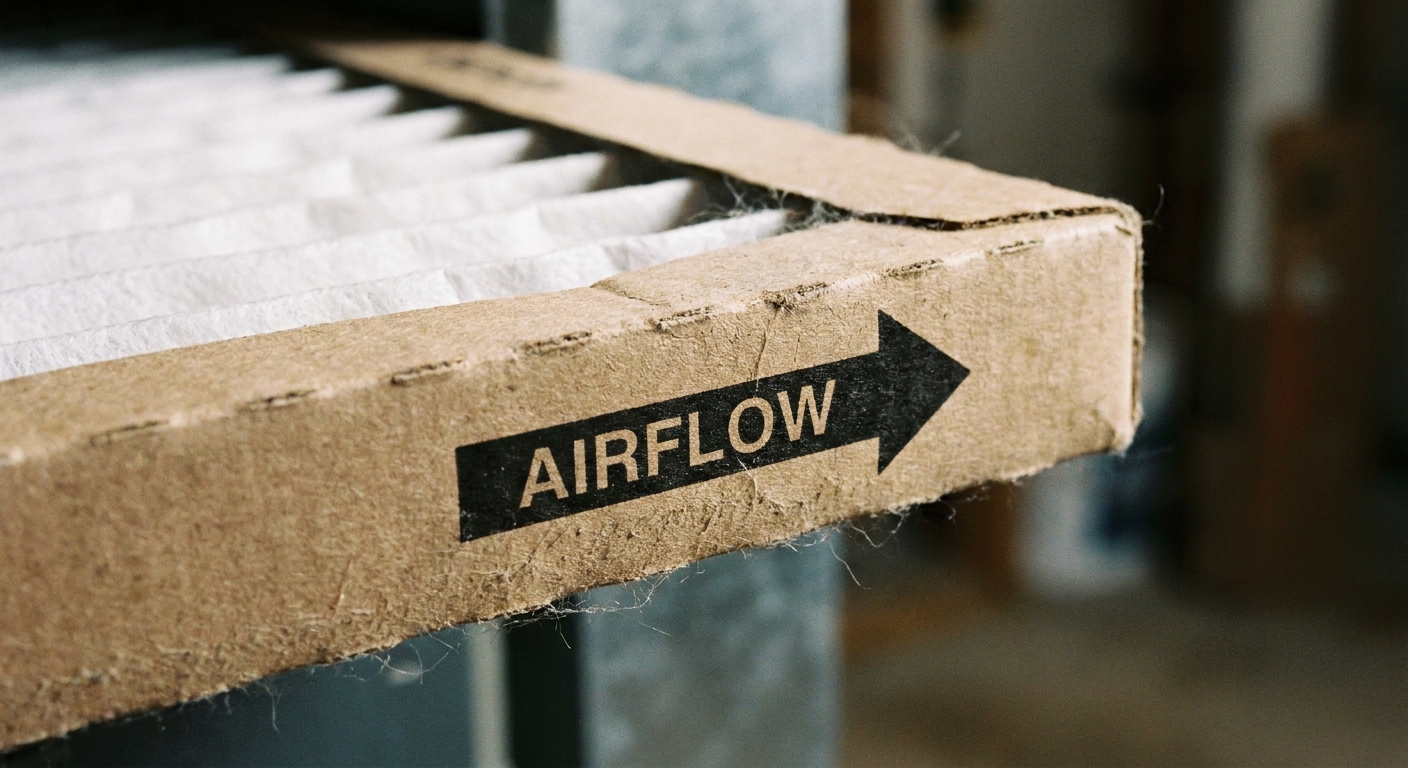
If the filter is installed crooked, not fully inserted, or the airflow arrow is pointing the wrong way, it may not sit as rigidly in the rack. That can contribute to bowing or movement, especially if the rack fit is already sloppy. Still, poor fit and missing support are usually the main culprits.
- If the filter is in the return duct, the arrow points toward the furnace cabinet.
- If it is in a slot at the furnace, the arrow points into the furnace toward the blower.
Airflow problems that increase suction
If the filter keeps trying to fold in on itself, look for airflow restrictions on the return side. These are the easy ones to check:
- Return grilles blocked by rugs, furniture, or pet beds
- Closed or crushed return duct sections (common in flex duct runs)
- An overly restrictive filter for your system, especially in a 1 inch thickness
High-MERV filters can be fine in some systems, especially deeper media cabinets, but “high MERV” by itself is not the whole story. If you keep fighting airflow issues, an HVAC tech can measure static pressure and tell you what your blower and ductwork can actually handle.
When it is OK to turn it back on
You can usually restore power and test the system once all of these are true:
- The old filter and all loose pieces are completely removed
- The blower wheel spins freely by hand with no rubbing
- No wiring was bumped loose and all panels are reinstalled correctly
- A correctly sized filter is secured in the rack with the airflow arrow the right way
When you test it, start with the fan set to ON at the thermostat for a minute if your system allows it. Listen for scraping, ticking, or a new vibration. If it sounds normal, switch back to heat and let it run through a cycle.
If it does not start, check the furnace for a blinking LED error code and make sure the doors are fully seated (that door switch gets a lot of people).
Red flags: call a pro
I am all for DIY, but a blower that has eaten a filter can hide damage. Stop and get help if you notice any of the following:
- Burning smell, electrical smell, or visible smoke
- Blower will not start, hums but does not spin, or trips the breaker
- Loud metal-on-metal scraping
- Strong vibration that was not there before
- Filter pieces appear to have gone past the blower or into the coil or supply ducting
Also call if you have to remove more than a basic access panel and you are not confident about what you are looking at. Furnaces pack a lot of sharp metal edges, wiring, and safety controls into a small space.
FAQ
Can a sucked-in filter damage the blower motor?
Yes. The most common issue is the blower wheel getting out of balance from debris or bending, which makes the motor work harder and can shorten its life. Sometimes the motor survives fine once the obstruction is removed, but you want to inspect the wheel before you run it again.
Why did my filter collapse?
A filter can collapse from being the wrong size, not being held securely in the rack, or being installed poorly so it can shift. A very restrictive filter can also contribute in some systems, but when a filter gets physically ingested, fit and support are the first things I check.
Is it dangerous to run the furnace without a filter while I run to the store?
I would avoid it. Even a short run can pull dust and hair into the blower wheel and evaporator coil, and that buildup hurts efficiency and can create future problems. If you must run it, keep it brief and replace the filter as soon as possible.
The 30-Second Cheat Sheet
Essential takeaways for: Furnace Filter Got Sucked Into the Blower? What to Do
Do this first (in order)
- Turn the thermostat OFF.
- Kill power at the furnace switch and, if you are unsure, the breaker too.
- Open the blower compartment and locate the collapsed filter.
- Pull the filter out slowly, grabbing the cardboard frame so it does not shred.
- Vacuum loose debris from the cabinet and around the blower inlet.
- Inspect the blower wheel: look for filter pieces in the fins, then spin the wheel by hand to check for rubbing or wobble.
- Fix the cause before restarting: correct filter size, filter rack cover/retainer in place, airflow arrow pointing toward the furnace.
Do not restart the furnace if you notice
- Scraping, grinding, or the wheel rubbing the housing
- A bent or damaged blower wheel
- Burning or electrical smell
- Breaker tripping or blower humming without spinning
Most common causes
- Wrong filter size so it bows and collapses
- No filter support because the rack cover or retainer is missing
- Filter not seated well (including backwards install) so it can shift
💡 Tip: Scroll up to read the full article for detailed, step-by-step instructions.
⬆️ Back to top
About Grit
Content Creator @ Grit & Home
Grit is Grit & Home’s little blue clay courier, delivering big questions about the place you call home. Expect practical ideas, a raised eyebrow, and a satchel full of curiosity.