
🚨 In a DIY emergency or rush?
Skip the details and jump straight to our 30-second cheat sheet for the most crucial info.
The first time I saw a garage door go off track at my own place, I did what a lot of DIY folks do. I tried to “just nudge it back.” Bad idea. Garage doors are heavy, spring-loaded, and unforgiving when they are not riding inside the tracks the way they are designed to.
If your door is off track, your job is not to force it. Your job is to stop movement, disconnect power, and make the door stable so nobody gets hurt while you figure out the next step.
Hard rule: If the door is off track and sitting open or half open, do not try to close it. Keep people away and call a technician.
How to tell it is off track
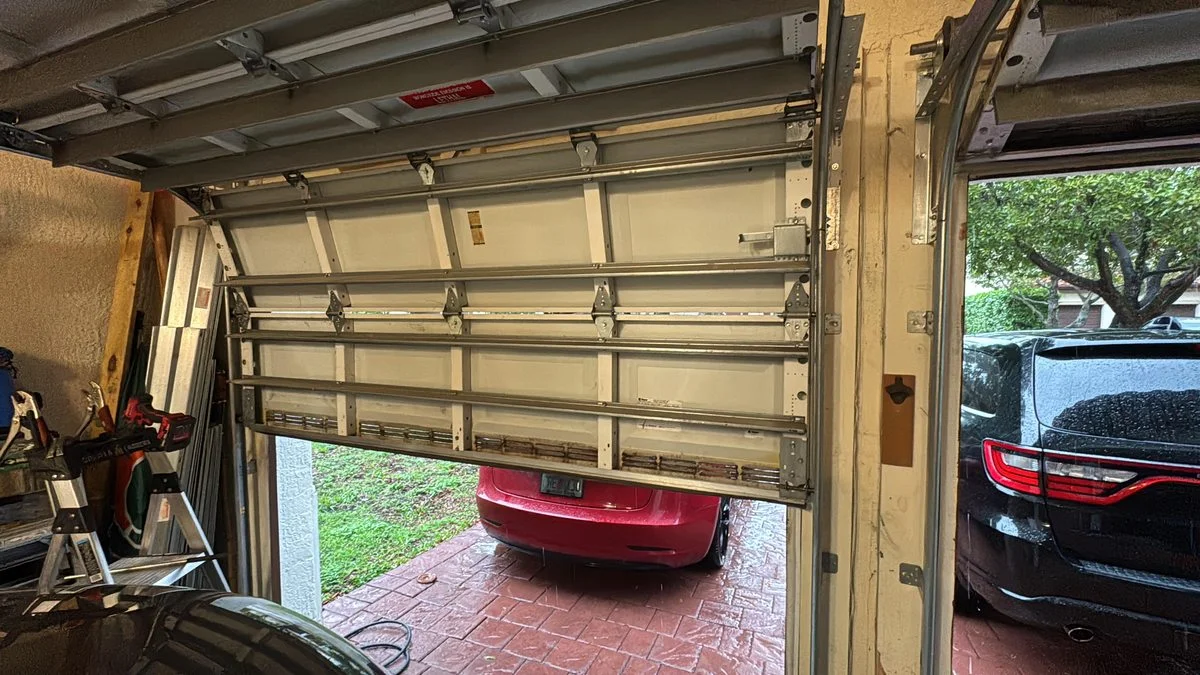
“Off track” means one or more rollers have jumped out of the metal vertical or horizontal tracks on the sides of the door. That is different from a door that is noisy, slow, or simply refuses to open.
Common signs a roller jumped the track
- The door looks crooked, with one side higher than the other.
- A gap appears between the roller and the track, or you can plainly see a roller sitting outside the track.
- The door binds and stops after moving only a few inches.
- A loud bang or pop happened right before the door jammed or went crooked.
- The top section bows or the door rubs hard on the jamb on one side.
Quick visual check you can do safely
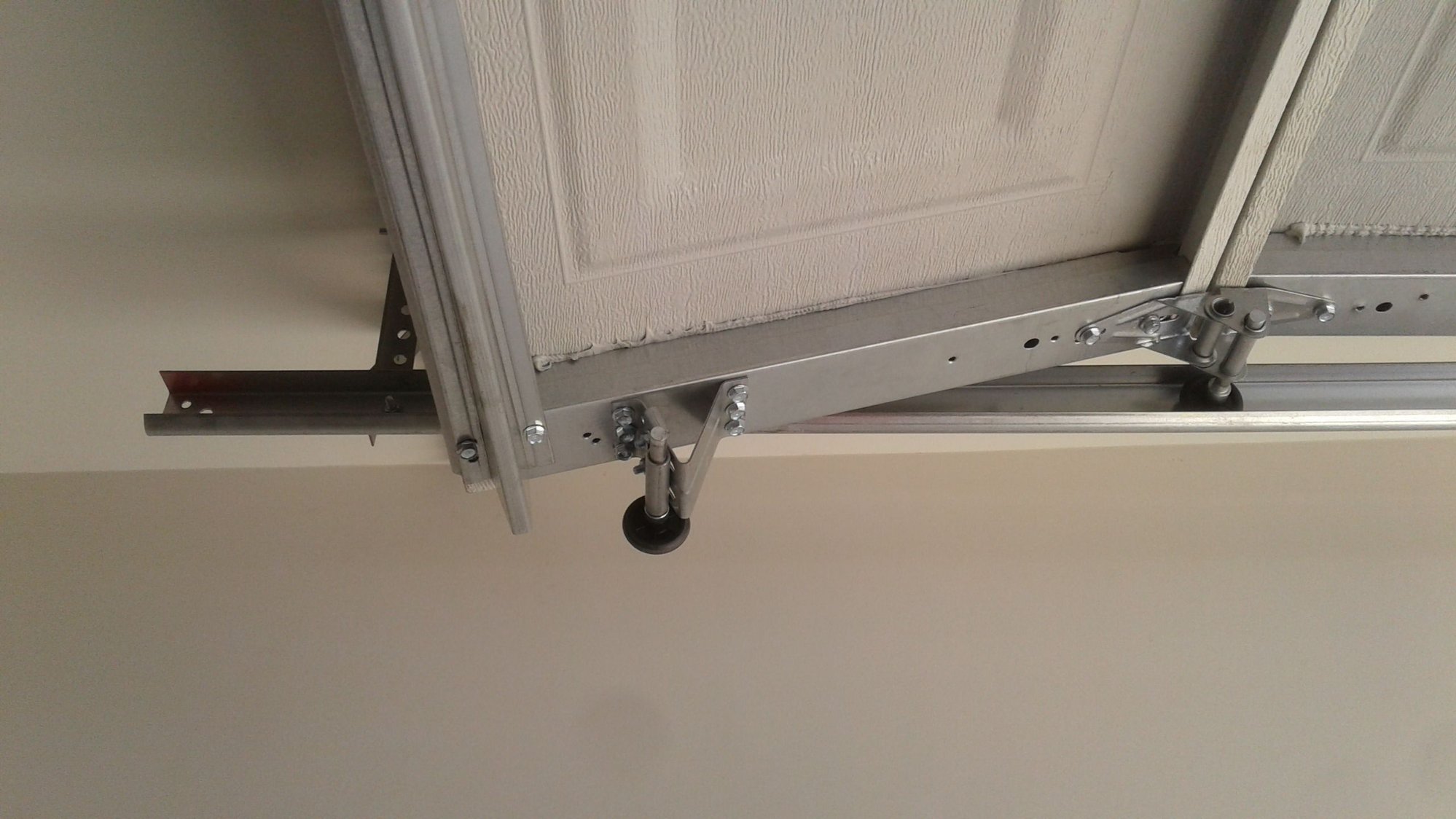
With the door not moving, stand inside the garage and look at both tracks from bottom to top. You are looking for:
- Rollers sitting fully inside the track channel
- Tracks that are not bent, cracked, kinked, or pulled away from the wall
- Loose bolts at the track brackets
If you see a roller out of the channel, treat the door like it could shift suddenly. Keep people and pets away from it.
Stop using the opener
If the door is off track, the opener can make things worse fast. It can twist the door, pull cables out of their grooves, bend the track, or even tear a top section.
Why the opener must stay disconnected
- An opener is not a safety device for an off-track door. It is a motor pulling on a door that is supposed to roll smoothly.
- Force settings are limited protection. They are meant to sense resistance, not correct a door that is racked sideways.
- It can turn a “reset” into a full replacement. A minor roller pop-out can become damaged hinges, cracked panels, or a bent track.
How to disconnect it safely
Do these in order:
- Do not press the wall button or remote again.
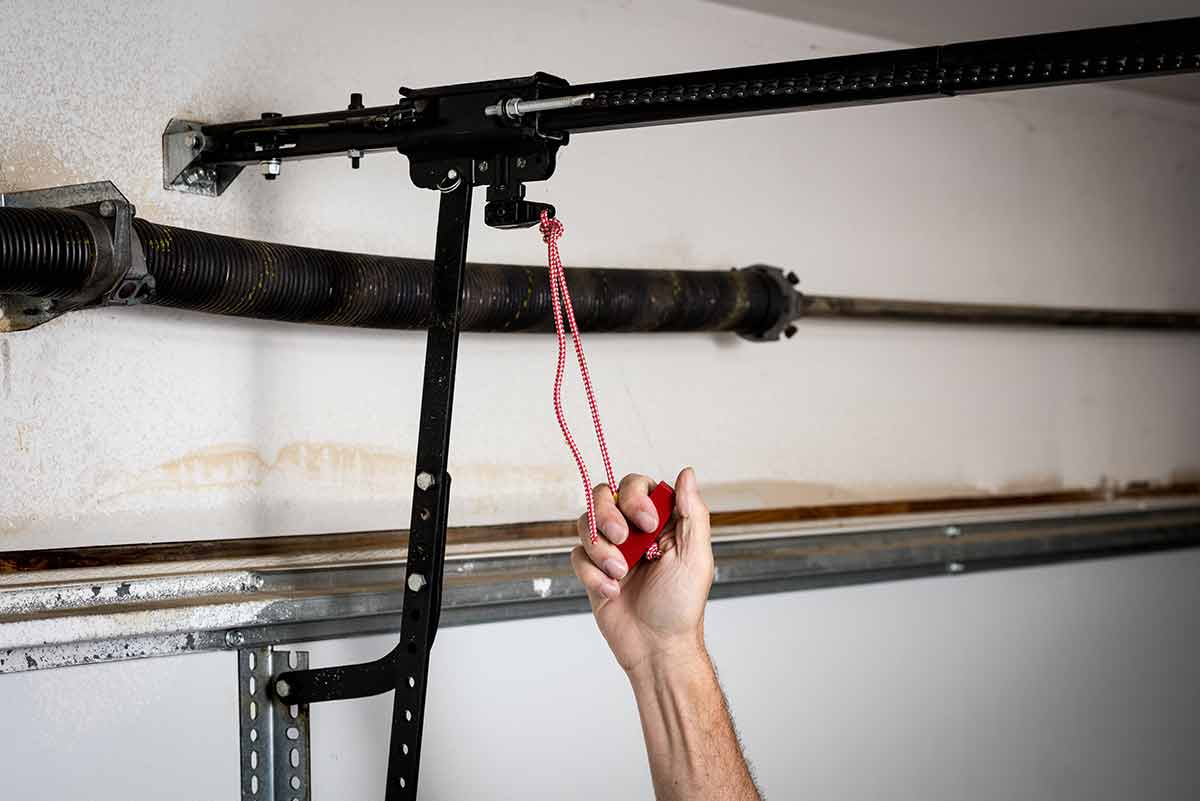
- Unplug the opener from the ceiling outlet if you can reach it safely.
- Use the emergency release cord (the red handle) only when the door is fully closed and sitting square.
Important: If the door is even slightly crooked, if one side looks lower, if cables look uneven or slack, or if you are not sure what you are seeing, do not pull the release cord. If the door is stuck partially open and crooked, do not pull the release cord. That can let the door drop.
Also, this is not a photo sensor problem. Safety eyes can stop a normal door from closing, but they do not cause a roller to jump the track, and adjusting them will not fix an off-track door.
Make it stable
An off-track garage door can slam down or shift sideways unexpectedly, especially if a cable has gone slack or a roller is hanging on the edge of the track.
If the door is fully closed
This is the safest situation. Your goal is to keep it closed and prevent anyone from trying to open it.
- Lock the door if it has an interior slide lock.
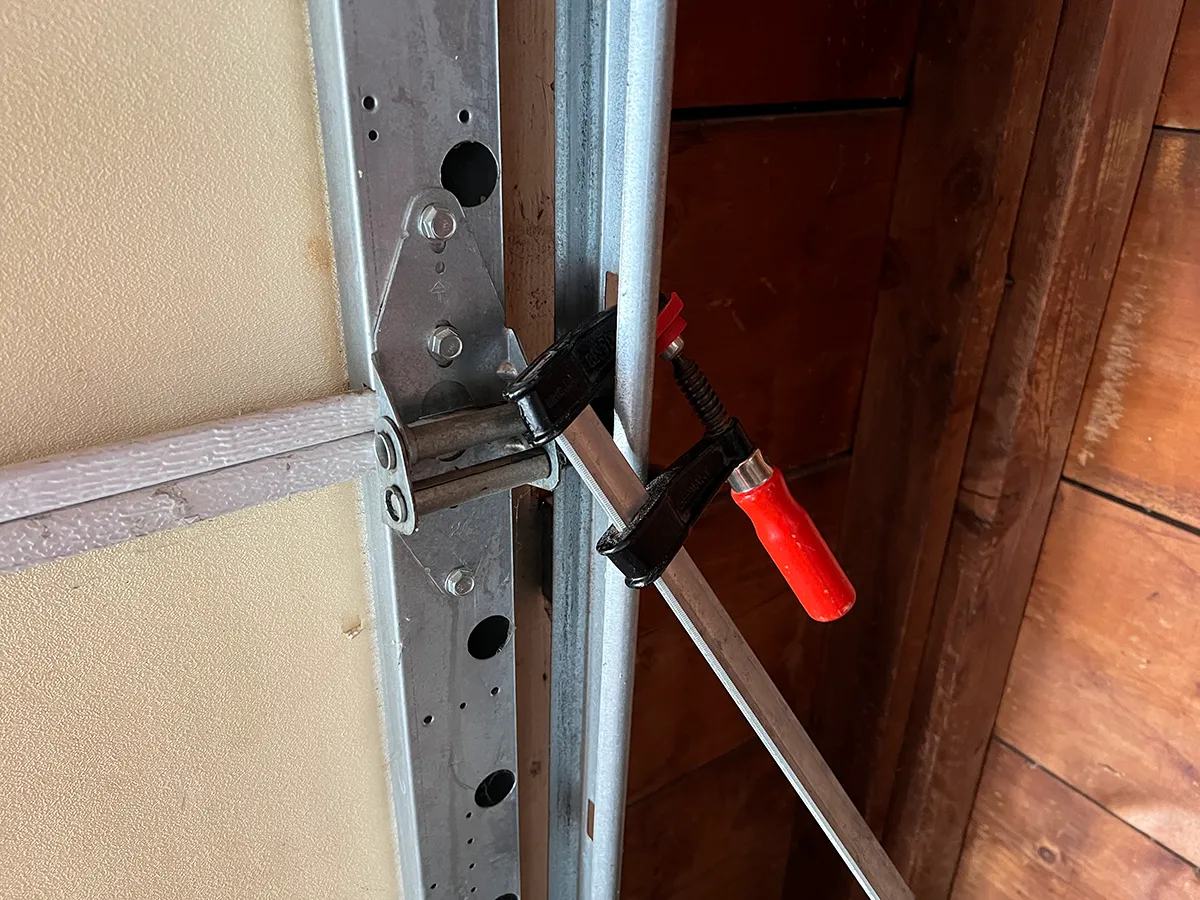
- Clamp the tracks just above the bottom rollers using locking pliers (Vise-Grips) or C-clamps as an extra physical stop. This is not a substitute for unplugging the opener. It is a backup that helps prevent surprise movement.
If the door is partially open
This is where people get hurt. A partially open, off-track door is unstable. If you can, call a technician and keep everyone away.
If you must secure it temporarily while you wait for help:
- Do not stand under the door. Work from the side.
- Do not try to move the door up or down. The goal is only to reduce the chance of a sudden drop.
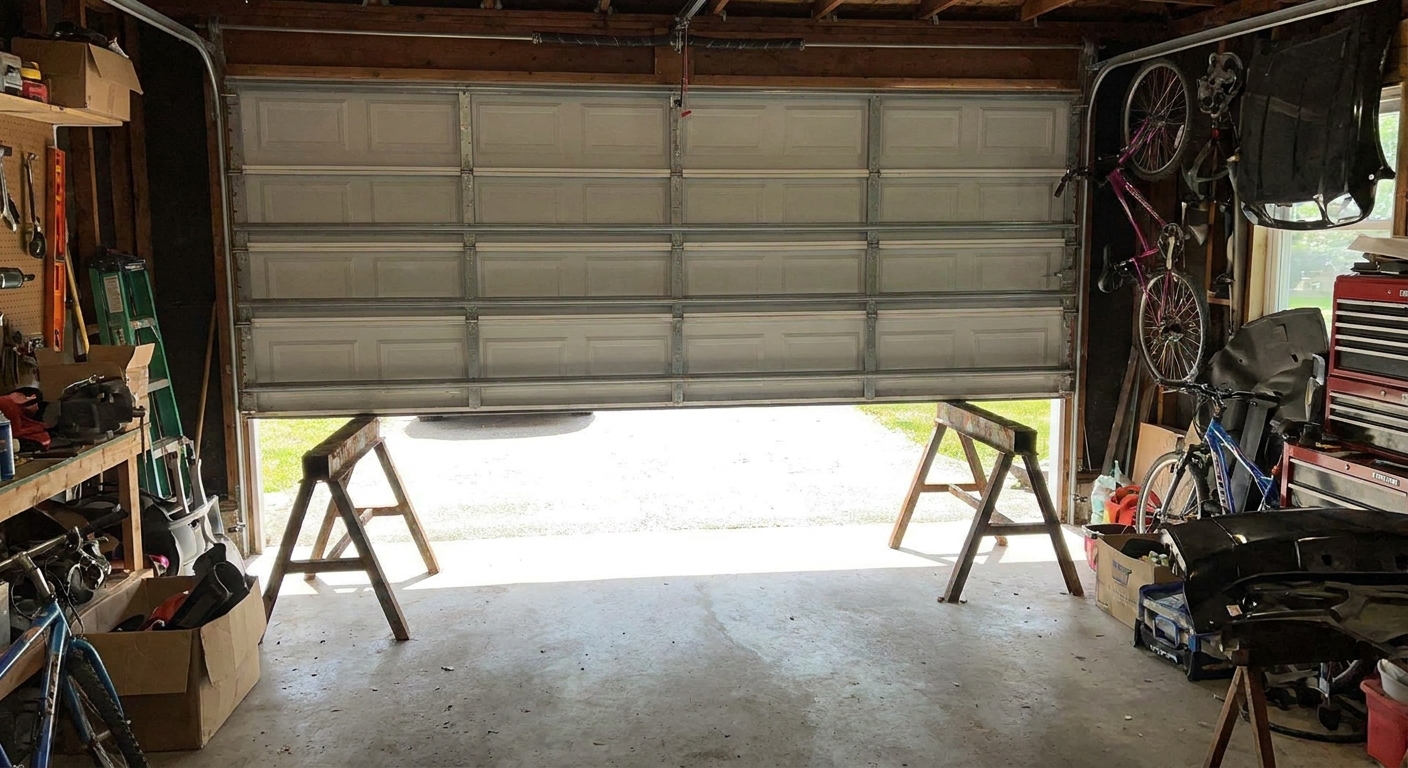
- If you can brace it without going under it, use stable cribbing like stacked 4x4 blocks or solid wood blocks placed near both bottom corners on the inside. Avoid anything that can roll or kick out.
- Avoid using step ladders as supports unless they are heavy-duty, placed securely at both corners, and you can set them without putting any part of your body under the door. Even then, treat it as a short-term brace only.
- Clamp the tracks above the rollers if the rollers are still in the tracks on at least one side, to reduce sudden movement.
Even with bracing, treat the door like it could move. If the door is high off the ground, or you see a slack cable, stop and call a pro.
What a technician does
I think it helps to know what you are paying for. A good garage door tech is not just “popping a wheel back in.” They are making sure the door is square, the hardware is intact, and the lift system is safe.
Typical pro steps
- Stabilize and secure the door so it cannot fall or twist further
- Inspect rollers, hinges, and track alignment for bends, cracks, or pulled fasteners
- Re-seat rollers into the track using proper leverage and track tools without kinking the track
- Re-align tracks to manufacturer spec and tighten brackets to framing
- Check cable tension on both sides and confirm drums and end bearings are behaving normally
- Test door balance by hand (with the opener disconnected) to see if the spring system is doing its job
- Reconnect and set opener limits and force only after the door moves smoothly by hand
That balance test is a big one. If the springs are not counterbalancing the door, the opener ends up doing dangerous work.
Safe homeowner checks
These checks are “eyes and hands off the heavy stuff.” If anything feels like it requires muscle, that is your cue to stop.
What you can check
- Look for an obvious roller out of the track and note which side and which hinge line it happened on.
- Check the track for bends or areas where the track is pulled away from the wall or ceiling supports.
- Check hinges for damage, especially at the section joint where the door twisted.
- Check fasteners you can reach safely for clearly backed-out lag screws at track brackets.
- Clear obstructions like a bumped trash can, ladder, or stored items touching the track.
What not to do
- Do not loosen track bolts “to give it room” while the door is loaded.
- Do not hammer the track back into shape.
- Do not try to lift a crooked door back into place.
- Do not reconnect the opener to “see if it will pull through.”
Related problems
It is common for homeowners to mix these up because they can all show up as “the garage door is acting weird.” Here is how I separate them.
Loose or dangling cable
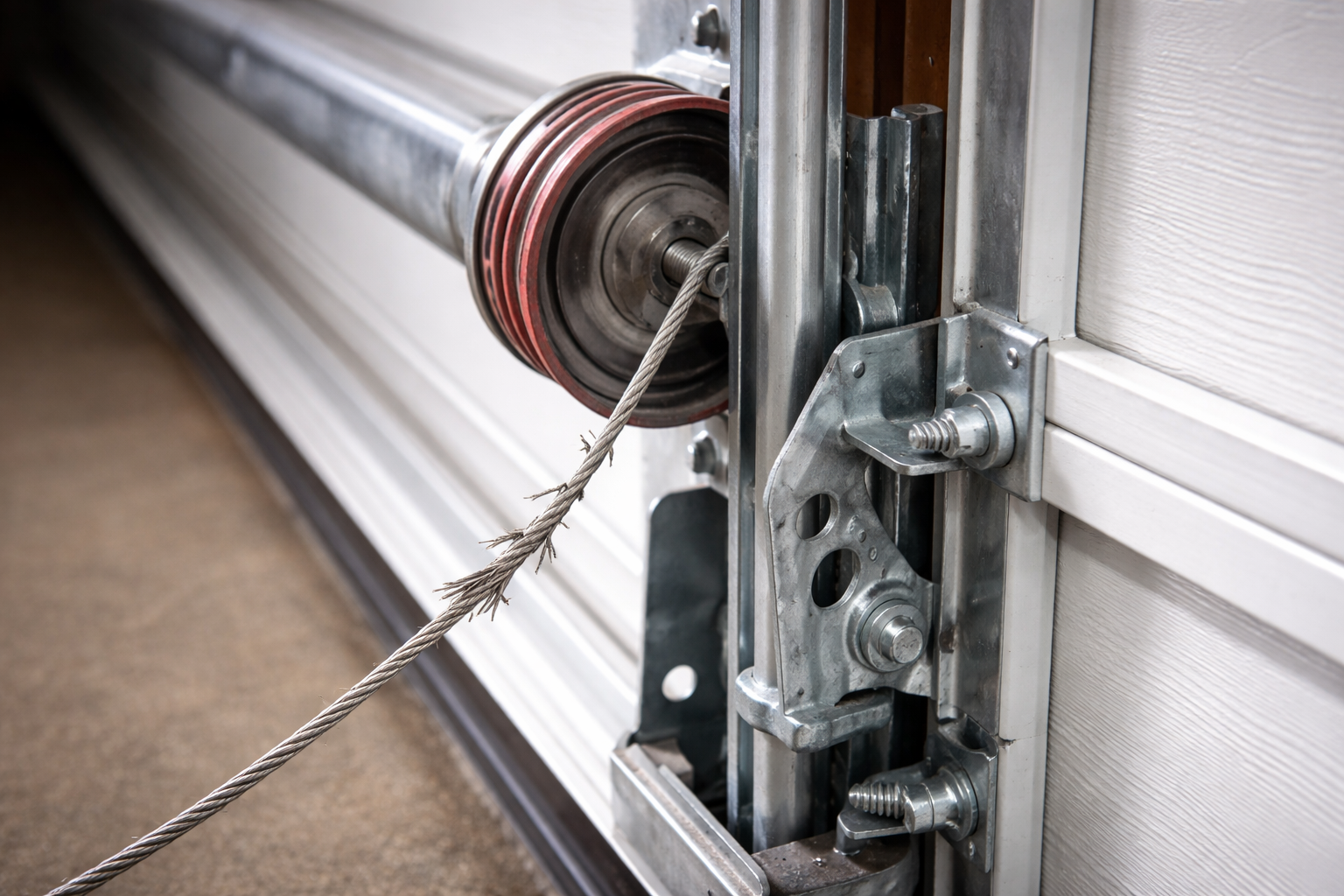
If you see a cable off the drum, frayed strands, or a cable hanging loose near the track, stop. Cables are under tension when the system is working correctly, and a cable problem can mean the door is unevenly supported.
- Do not run the opener.
- Do not try to rewind the cable.
- Call a technician.
Broken spring
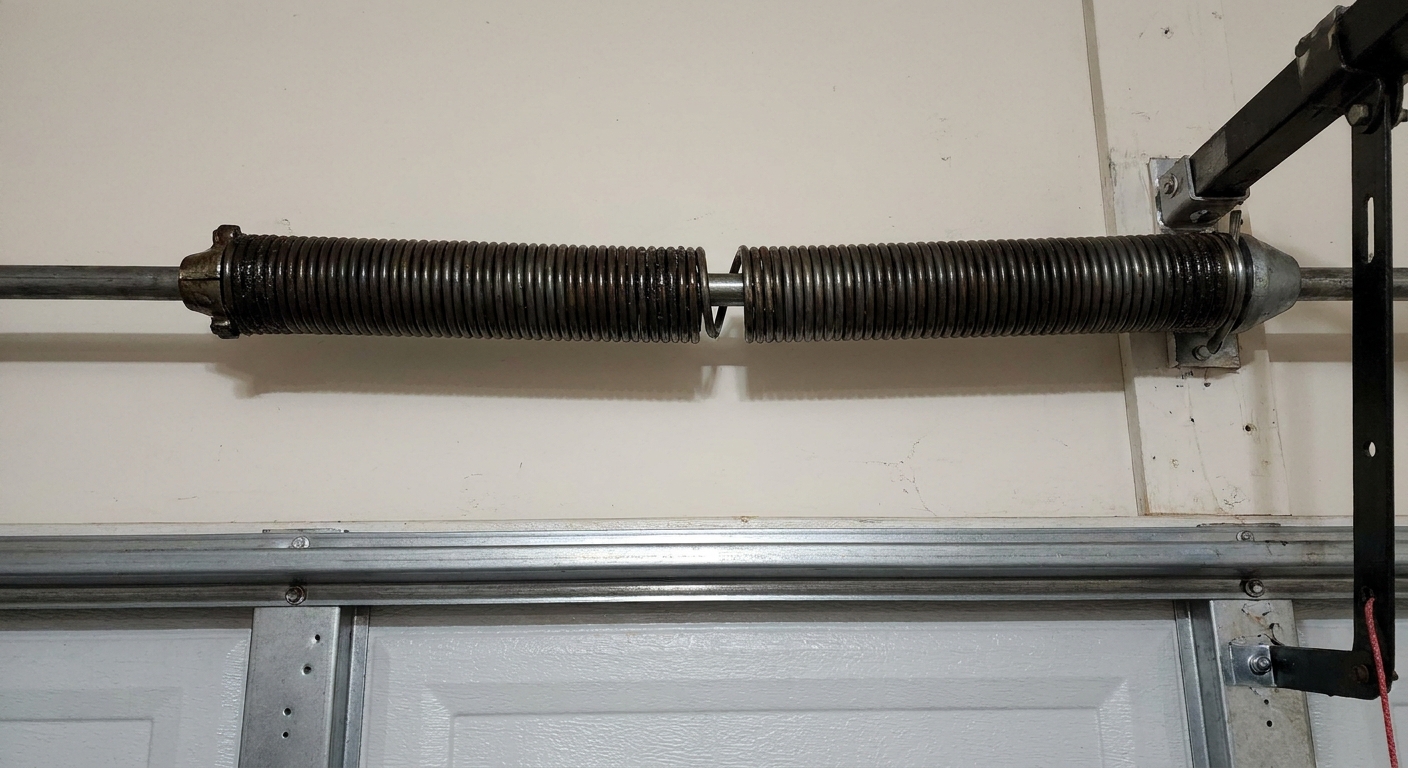
Most residential doors use torsion springs above the door or extension springs along the horizontal tracks. Signs of a broken spring include:
- A loud bang from the garage when the door was not moving
- A visible gap in a torsion spring coil
- The door feels extremely heavy if you try to lift it manually
- The opener strains, lifts a few inches, then stops
Springs are not a beginner DIY repair. If you suspect a spring issue, keep the door closed and call a pro.
Noisy operation in the tracks
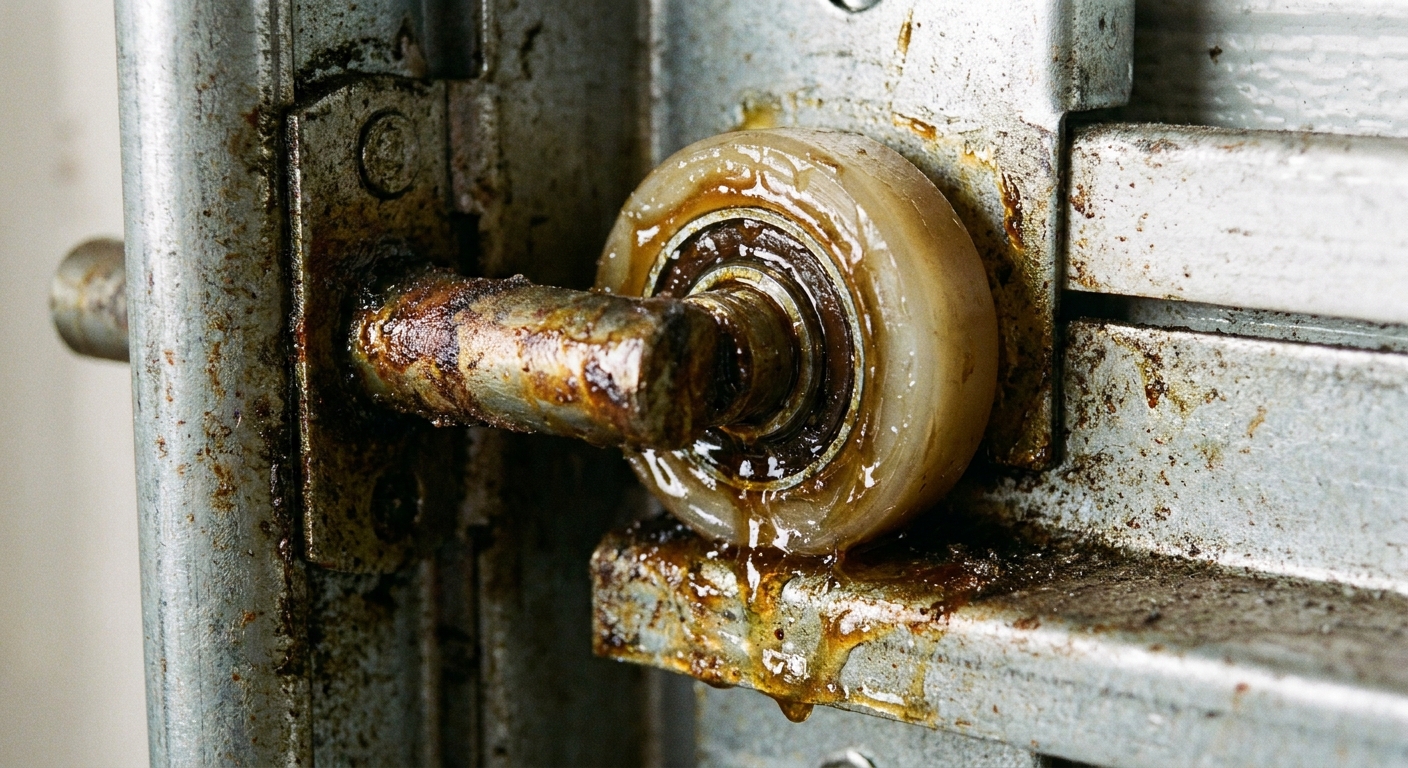
A squeaky or rattly door that still travels smoothly in the tracks is usually a maintenance issue, not an emergency reset. That is when lubrication, hinge inspection, and hardware snugging can help.
If your door is off track, skip the lubricant and skip the wrenching. Get it stable first, then address noise after the door is rolling correctly again.
Call a technician now
I am all for DIY, but garage doors are one of those systems where the risk ramps up fast. Call a pro if any of the following are true:
- The door is stuck partially open
- A roller is fully out and the door is racked or twisted
- You see a loose, off-drum, or frayed cable
- You suspect a broken spring
- The track is bent or pulled away from the framing
- The door was hit by a car, lawn equipment, or a falling object
While you wait: keep the opener unplugged, keep kids away from the door, and do not store anything under it.
FAQ
Can I pop the roller back into the track myself?
If the door is closed, the roller is barely out, and nothing is bent, a confident homeowner might be able to clamp the track, carefully open the track lip slightly, and re-seat a roller. But if you are asking because the door is crooked or jammed, that is usually not the “easy pop-back” scenario. In that case, it is safer to call a technician.
Is it safe to open a garage door that is off track?
No. Opening it can twist the door, throw cables off the drums, and increase the chance it falls. Treat an off-track door as out of service until it is reset and tested.
What if the door is closed but I need my car?
If you have another exit, use it. If this is your only exit, call a technician and explain that your vehicle is trapped. Forcing the door open is how small damage turns into big repair bills.
Why does a garage door go off track?
Common causes include an impact (bumped by a car or object), a worn roller, a loose track bracket, a track that is out of alignment, a track obstruction, or a cable issue that allowed one side to lift differently than the other.
The 30-Second Cheat Sheet
Essential takeaways for: Garage Door Off the Track? Safe First Steps
What “off track” means
A garage door is off track when one or more rollers jump out of the metal side tracks. The door often looks crooked, binds, or stops after moving a few inches.
First 60 seconds: make it safe
- Stop using the opener immediately. Do not press the remote again.
- Unplug the opener if you can reach the outlet safely.
- If the door is closed: clamp the tracks above the bottom rollers with locking pliers or C-clamps as an extra physical stop.
- If the door is partially open and crooked: keep everyone away and call a technician. Do not pull the emergency release cord.
Do not confuse these problems
- Loose or frayed cables: stop and call a pro.
- Broken spring: door feels extremely heavy or you see a gap in the spring. Call a pro.
- Noisy but still running in the track: usually maintenance. Off-track is a safety issue first.
Safe checks you can do
- Look for a roller outside the track.
- Look for bent track or brackets pulled from the wall.
- Look for damaged hinges.
- Clear any obstruction near the track.
When to call a technician right now
- Door is stuck partially open
- Door is twisted or badly crooked
- You see slack, off-drum, or frayed cables
- You suspect a broken spring
- Track is bent or coming loose
💡 Tip: Scroll up to read the full article for detailed, step-by-step instructions.
⬆️ Back to top
About Marcus Vance
Content Creator @ Grit & Home
Marcus Vance is a lifelong DIY enthusiast and self-taught home renovator who has spent the last decade transforming a dilapidated 1970s ranch into his family's dream home. He specializes in budget-friendly carpentry, room-by-room renovations, and demystifying power tools for beginners. Through his writing, Marcus shares practical tutorials and hard-learned lessons to help homeowners tackle their own projects with confidence.