
🚨 In a DIY emergency or rush?
Skip the details and jump straight to our 30-second cheat sheet for the most crucial info.
The first time my garage door opened by itself, I blamed the wind, then I blamed the old door, then I blamed the opener like it was haunted. Turns out, “door opens with nobody pressing anything” is most often a control problem, not a roller, hinge, or track problem.
If this is happening at your house, treat it like a safety issue first. An unexpectedly moving door can hit a car, a kid on a bike, or leave your garage wide open.
Below is the exact order I’d check things, starting with the fastest and most common fixes.
Stop the door safely first
Before troubleshooting, make the situation safe so the door cannot randomly open while you are working around it.
If the door is moving right now
- Use the wall button to stop it if you can do so without standing under the door.
- Keep people and pets clear of the opening and the door path.
- Do not grab the door by hand to stop it. The door is heavy and the opener has torque.
If the door keeps opening on its own
- Unplug the opener from the ceiling outlet. This is the quickest way to remove power.
- If you cannot reach the plug safely, turn off the garage circuit at your electrical panel.
- Until you solve it, use the door manually only if you can do it safely and the door is balanced.
One extra safety step: If the opener is unplugged and the door is closed, you can pull the emergency release cord to disengage the trolley. That way, if power is restored unexpectedly, the opener cannot move the door. Only do this with the door fully closed, because a poorly balanced door can move when the trolley is released.
When should you disconnect the opener entirely? If the door is repeatedly opening, opening at night, opening when you are away, or you have any suspicion the opener is self-triggering, unplug it until you identify the cause. Convenience is not worth the risk.
Quick triage: isolate the trigger
Your goal is to figure out what is commanding the opener: the wall control, the low-voltage wiring, a remote or keypad, a smart feature, or the opener’s internal electronics.
- Remove all remotes from vehicles and set them inside the house.
- Disable any smart features temporarily if you have a Wi-Fi hub or app control by logging out, disabling schedules, or pulling power from the hub.
- Watch the opener lights when the door opens. Some models may flash or show an error code when they detect a fault (the exact behavior is brand and model dependent).
If it still opens after you remove remotes and smart triggers, the wall control or wiring jumps to the top of the list.
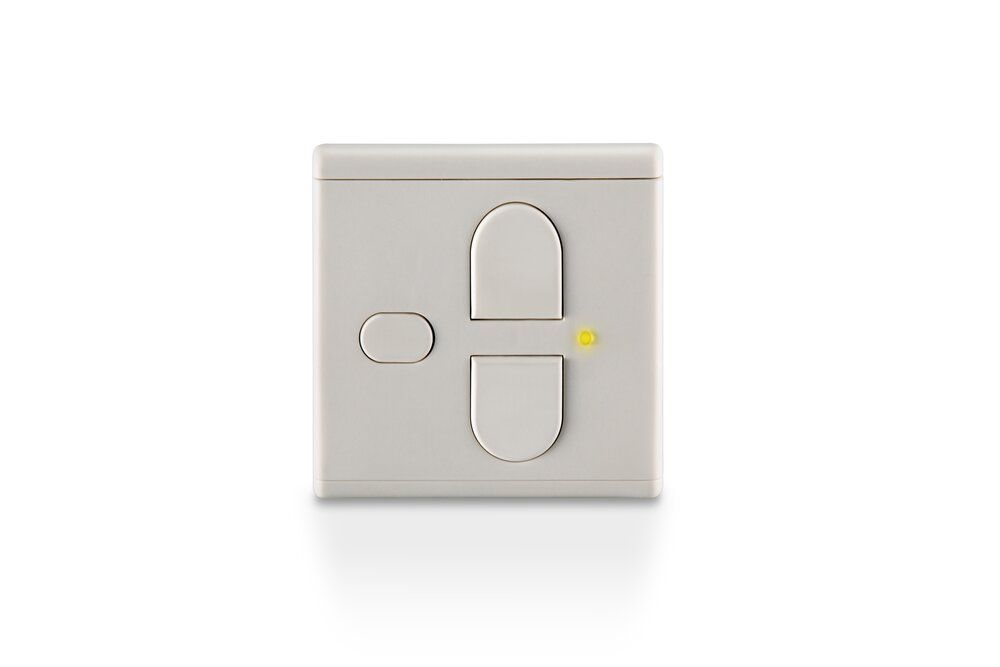
Check 1: Wall button or console
This is the most common culprit, especially with older wall buttons or multi-function wall consoles.
What happens
If the wall button is physically stuck, internally shorted, wet, or just grimy enough, it can send an open command without anyone touching it.
What to do
- Press and release the wall button a few times. It should spring back crisply.
- Inspect for gunk around the button edges, paint bridging the seam, or a cracked faceplate.
- Open the wall control and look for pinched wires or loose terminal screws touching each other.
- Confirm compatibility if the wall station was replaced recently. Some brands use “smart” wall consoles that do not play nicely with generic replacements.
Fast test
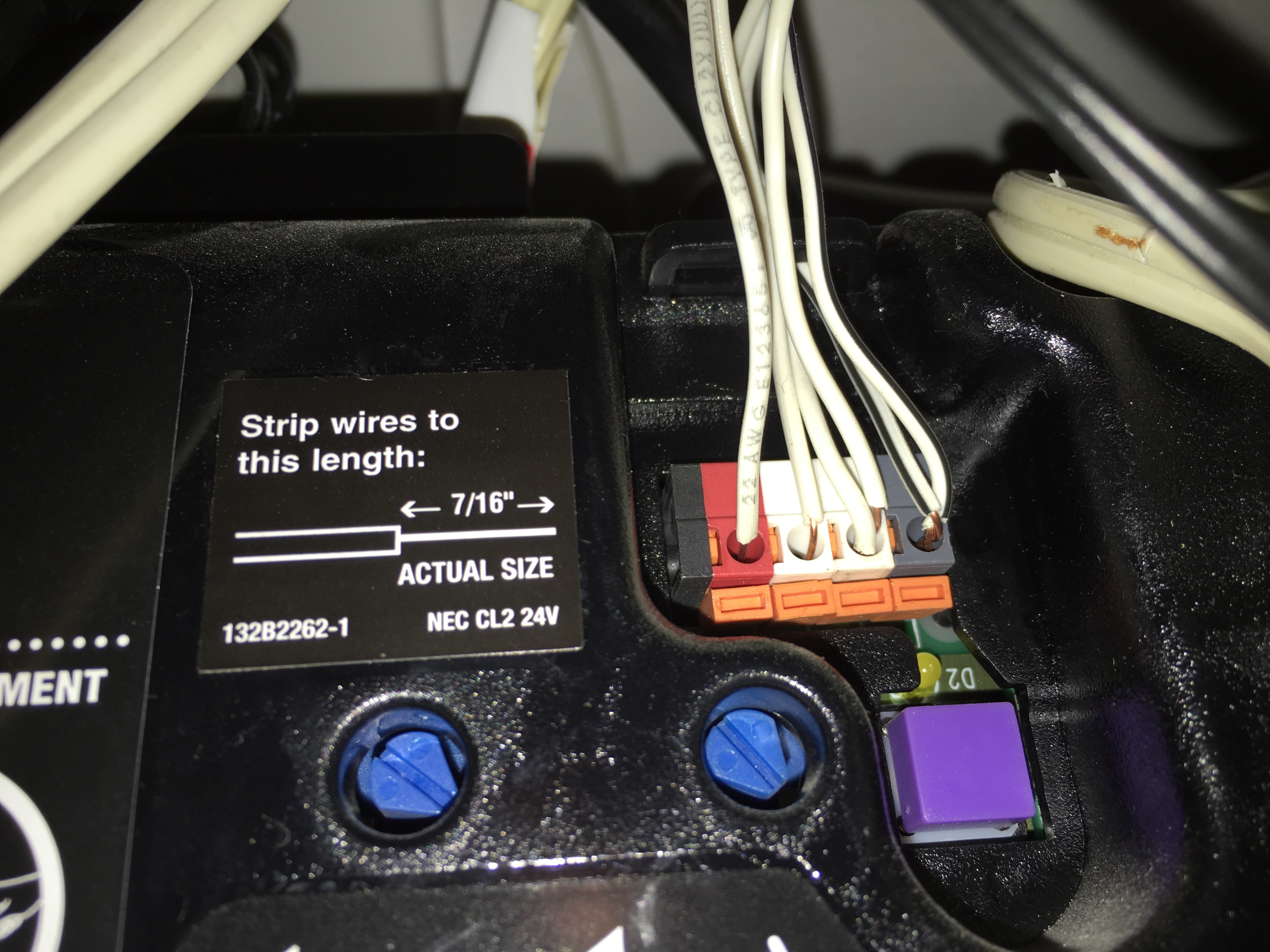
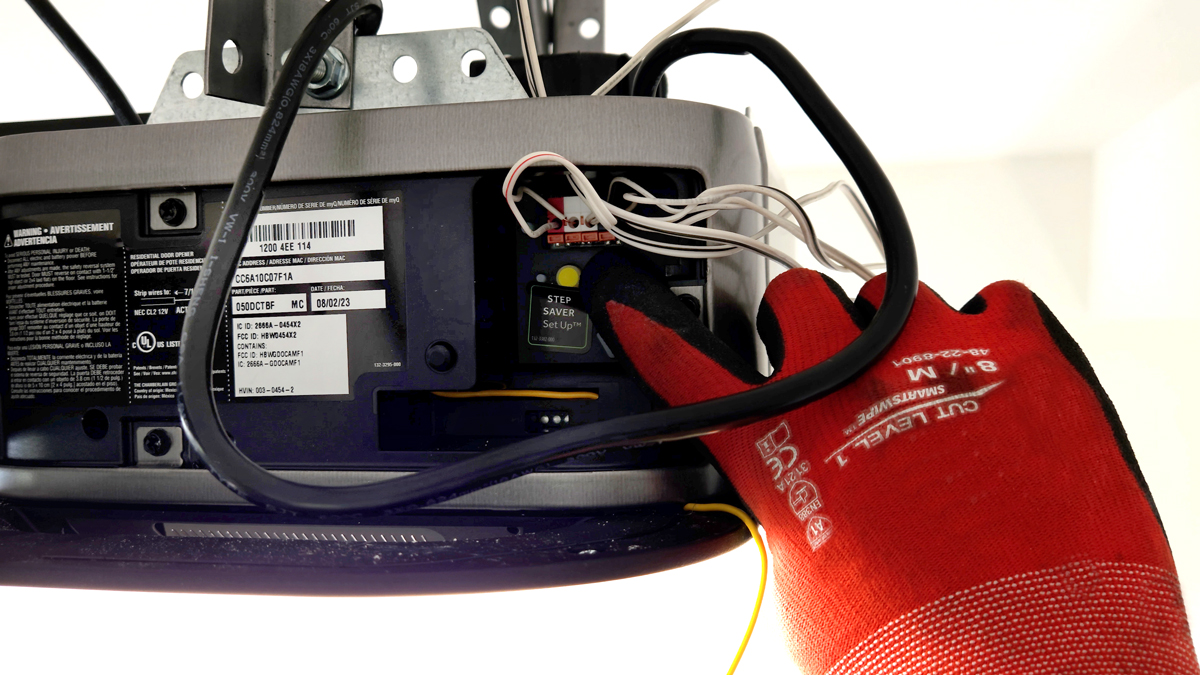
Most openers use two low-voltage wires from the opener head to the wall control.
- Unplug the opener.
- At the opener head (motor unit), take a quick photo of the wall-control terminals so you can put everything back exactly as it was.
- Remove the two wall-control wires from the push-in terminals or screws and keep the bare ends separated so they cannot touch each other or any metal.
- Plug the opener back in and wait.
If the random opening stops, the problem is either the wall button/console or the low-voltage wire run between the opener and the wall.
Check 2: Low-voltage wire short
The wall control wire is usually thin bell wire or similar low-voltage cable. Over time it gets nicked, pinched by trim, stapled too hard, or rubbed through where it passes a stud or ceiling joist. When the two conductors touch, the opener thinks you pressed the wall button.
Where I look first
- Right behind the wall button where the wire bends sharply
- Anywhere the wire is stapled to framing
- Where it passes through a hole in wood without protection
- Along the ceiling near storage hooks, ladders, or bikes where it can get snagged
Simple tests
- Wiggle test: With the opener powered and the door closed, gently wiggle sections of the wire where you can see it. If the opener clicks or the lights flicker, you likely found an intermittent short.
- Bypass test: If you can safely run a temporary wire from opener head to the wall button location (or directly to a spare button), you can confirm the original wire is the issue.
Thrifty fix: If you find a damaged spot and there is slack, cut out the bad section and splice it properly. For small-gauge low-voltage wire, gel-filled IDC connectors are usually more reliable than a bare twist. If the wire is brittle or damaged in multiple places, replacement is usually faster and more reliable than chasing gremlins.
Check 3: Remotes and old programming
This one sounds far-fetched until it happens. The most realistic scenario is not a neighbor randomly matching your rolling code. It is that your opener still has an old remote, keypad, or vehicle transmitter programmed to it from a previous owner, or you added a universal remote and the programming got messy.
Signs this is the issue
- The door opens at similar times of day
- It happens more when people are coming and going
- You recently added a universal remote, keypad, or car that has a built-in transmitter
- You moved in recently and never cleared the opener
What to do
- Clear the opener’s memory (the learn button procedure varies by brand).
- Reprogram only the remotes you actively use, one at a time.
- Erase built-in car transmitters if you bought a used vehicle, then program it fresh.
If you have a truly old fixed-code (DIP switch) unit, it is worth upgrading for security alone.
Check 4: Keypad issues
Wireless keypads take abuse: sun, rain, freezing temps, and greasy fingerprints. A failing keypad can send phantom signals, especially if buttons stick or the membrane breaks down.
Try this
- Remove the keypad batteries for several hours or overnight and see if the problem stops.
- Clean the keypad face gently and make sure no button is physically stuck down.
- Reprogram the keypad after you resolve other issues, not before.
If your opener opens randomly and you have a keypad, battery removal is one of the fastest yes or no tests you can do.
Check 5: Lock settings and manual locks
Lock settings can be confusing because different brands label them differently. Some wall consoles have a Lock or Vacation feature that disables remotes. That typically causes a door that will not open, not a door that opens by itself, but I still check it because it can complicate testing.
What to confirm
- The wall console is not in a lock mode that makes your remote tests misleading
- If you have a manual slide lock on the door, it is fully disengaged. A partially engaged lock can make the door stop, strain, or reverse, and it can look like “weird behavior” during troubleshooting.
If anything about the lock settings is unclear, reset your troubleshooting by unplugging the opener for a minute, then restore power and test one control at a time.
Check 6: Smart apps and integrations
If you have a Wi-Fi garage module or a smart opener, treat your phone like a remote that can accidentally trigger the door. Automations can also fire if they are tied to geofencing, routines, or voice assistants. And in the real world, account access problems happen too.
What to check
- Scheduled open or close routines
- Geofencing rules that trigger when you arrive or leave
- Shared users on the garage app
- Voice assistant history (accidental activations happen)
- Access logs or device list, if your app provides it
Isolation test
Disable the smart module or unplug it for a day. If the random opening stops, you just narrowed your problem to the smart side of the system.
Security reset
If the timing looks suspicious (especially middle-of-the-night openings), I also:
- Change the app password and use a strong, unique one
- Enable two-factor authentication if available
- Remove unknown users and revoke guest access
Check 7: Logic board or receiver
If you have ruled out the wall control, wiring shorts, remotes, keypad, and smart integrations, what is left is the opener itself. A failing receiver or logic board can “hear” noise like a command, or it can just misbehave as components age.
What a failing board looks like
- Random opening with no pattern
- Opener lights flicker or behave oddly
- Remotes work intermittently or only at very short range
- The unit behaves differently after humidity spikes or temperature swings
What you can do as a homeowner
- Power cycle the opener: unplug it for 60 seconds, then plug back in. If the problem returns, do not assume it is fixed.
- Inspect for obvious damage: burning smell, insect nests, corrosion, or water staining around the opener head.
- Consider board replacement or opener replacement: on some models a logic board is a straightforward swap, but it needs the exact part number and comfort working around electrical components.
My rule: If the opener is older and you are already sinking time into intermittent electronics, replacement can be the most budget-friendly option long term.
When to call a pro
I love DIY, but garage doors are one of the few systems in a house that combine heavy moving parts with stored spring energy and powered automation. If anything feels off, it is okay to hand it off.
- The door opens on its own and you cannot reliably stop it other than unplugging
- You see damaged wiring you cannot access safely in finished walls or ceilings
- The opener hums, smells hot, or shows signs of electrical damage
- The door feels heavy or slams when operated manually (balance issue)
- You suspect tampering or a security concern
What not to chase
When a door opens by itself, it is tempting to start tuning the door. For this specific symptom, I would not start with:
- Lubricating rollers and hinges
- Photo-eye alignment
- Close-then-reverse force and travel limit adjustments
One exception: If what you are actually seeing is the door closing and then immediately reversing back open, that is a different symptom. In that case, photo-eyes, force settings, travel limits, and binding in the tracks belong at the top of the list.
FAQ
Can a power outage make a garage door open by itself?
It is uncommon for a simple outage to cause opening, but power surges and brownouts can confuse electronics. If the behavior started right after stormy weather, unplug the opener for a minute, then test. If it repeats, treat it like a control, receiver, or logic board problem.
Why does my garage door open in the middle of the night?
Nighttime openings are often a stray trigger (a programmed remote you forgot about, a keypad acting up, a smart routine), an intermittent short in the wall-control wire that changes with temperature and humidity, or failing electronics in the opener. Start by clearing and reprogramming remotes, then isolate the wall button wiring at the opener head, and review smart access and users.
Is it safe to leave the opener unplugged?
Yes. If you need the door closed and secure, unplugging prevents unexpected operation. You can still lock the door from the inside if your door has a manual lock, and you can use the door manually if it is balanced and you can lift it safely.
The 30-Second Cheat Sheet
Essential takeaways for: Garage Door Opens by Itself? What to Check First
Do this first (safety)
- Keep people and cars clear.
- Unplug the opener (or shut off the garage circuit) if it keeps opening randomly.
- If you unplug it, consider pulling the emergency release (only with the door fully closed) so a surprise power return cannot move the door.
Fastest checks in order
- Wall button stuck: Press it a few times, check for gunk, paint, cracks.
- Isolate the wall control: Unplug opener, remove the two wall-control wires at the opener head, keep the wire ends separated, plug back in. If the random opening stops, the wall button or wire is the cause.
- Shorted low-voltage wire: Look for staples, pinches, rubbed spots. Wiggle suspect sections for a reaction.
- Remote, extra remote, or old programmed device: Clear opener memory, then reprogram only your remotes and car transmitters.
- Keypad problem: Pull keypad batteries overnight.
- Smart app routines or account access: Disable schedules, geofencing, and integrations. Change your password and remove unknown users.
- Failing logic board or receiver: If everything above checks out, the opener receiver/board is likely and may need replacement.
When to call a pro
- Opener shows electrical damage (hot smell, flickering, water staining)
- You cannot access or repair damaged wiring safely
- Door feels heavy or unsafe to lift manually
💡 Tip: Scroll up to read the full article for detailed, step-by-step instructions.
⬆️ Back to top
About Marcus Vance
Content Creator @ Grit & Home
Marcus Vance is a lifelong DIY enthusiast and self-taught home renovator who has spent the last decade transforming a dilapidated 1970s ranch into his family's dream home. He specializes in budget-friendly carpentry, room-by-room renovations, and demystifying power tools for beginners. Through his writing, Marcus shares practical tutorials and hard-learned lessons to help homeowners tackle their own projects with confidence.