
🚨 In a DIY emergency or rush?
Skip the details and jump straight to our 30-second cheat sheet for the most crucial info.
Small courier. Big home questions.
I hear some version of this all the time: “The heat pump water heater is running, but the water is lukewarm.” These “hybrid” tanks are a little different from standard electric or gas models because they borrow heat from the air around them. That means a few very fixable things can interrupt hot water even when the tank still has power.
This guide sticks to heat-pump-specific causes: mode settings, vacation mode, dirty air filters, not enough warm air to work with, condensate drain problems, and what it looks like when the backup elements do or do not take over.
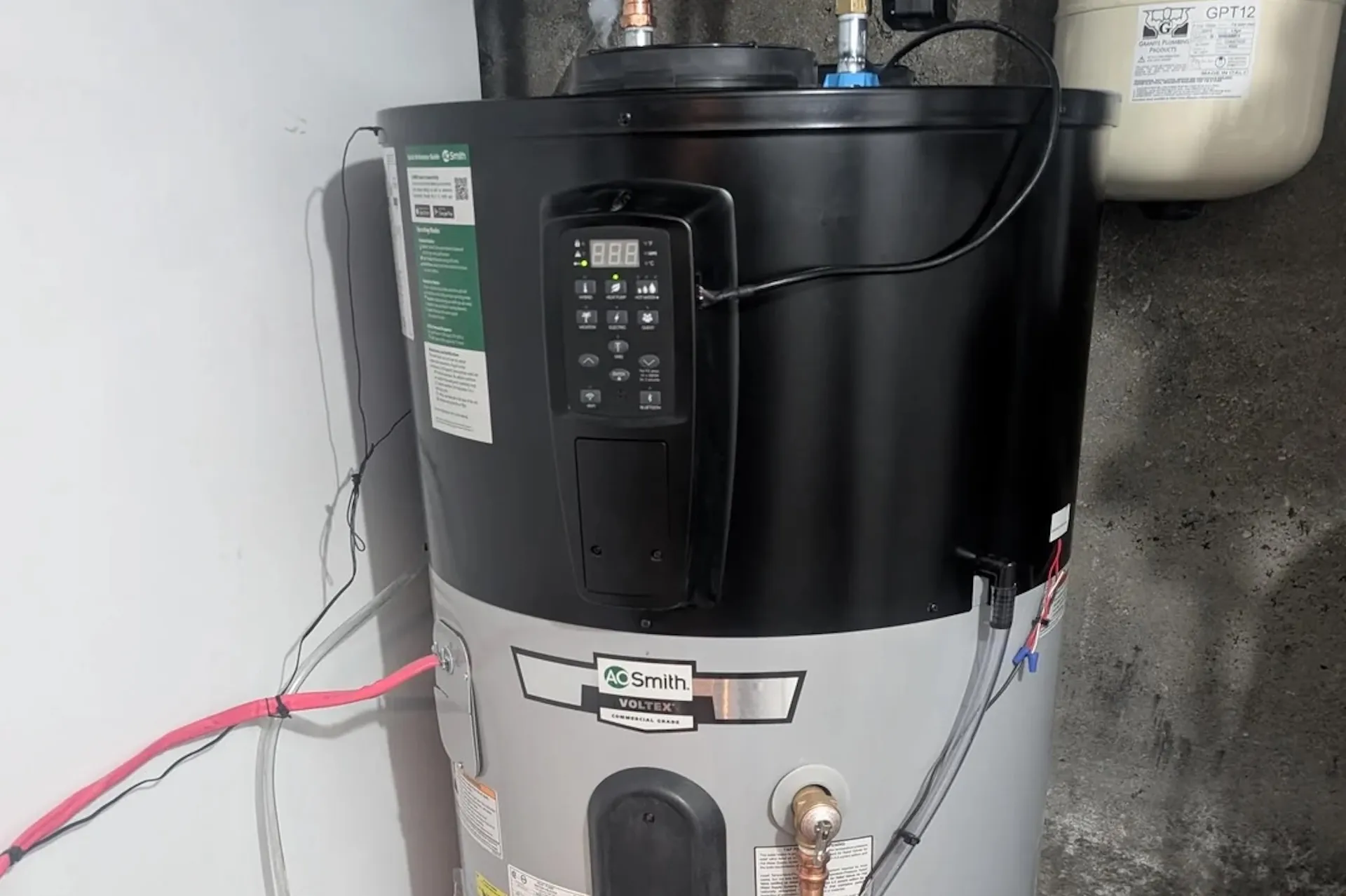
First: confirm it is a heat pump model
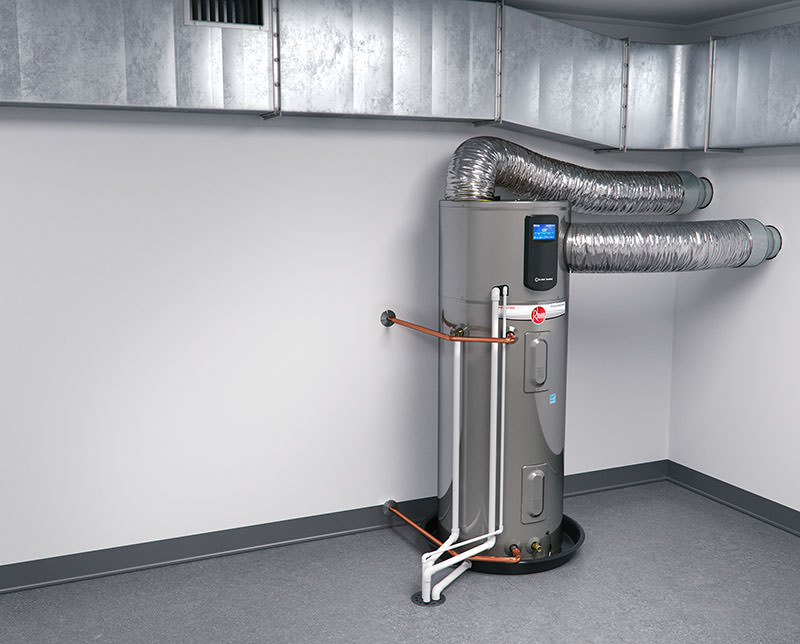
A hybrid heat pump water heater usually has a larger top section with vents or a fan grille, and it makes a soft fan or dehumidifier-like sound when running in heat pump mode. The control panel often offers modes like Heat Pump, Hybrid, Electric, and Vacation.
If you have a standard electric tank with two thermostats behind access panels, or a gas unit with a burner, stop here and use a standard tank troubleshooting guide instead. The checks below assume a true heat pump water heater.
Safety notes
- Electric shock risk: heat pump water heaters are high voltage appliances. If you are removing covers or reaching near wiring, switch the breaker off first.
- Sharp edges: sheet metal access panels can bite. Gloves help.
- Water on the floor: if there is standing water near the unit or outlet, turn power off and address the leak first.
Quick triage
- No hot water at all: suspect vacation mode, a tripped breaker, an error state, or a locked-out compressor.
- Hot water runs out fast: suspect operating mode, heavy demand, low ambient temperature, restricted airflow, or a unit stuck in heat pump only when you need backup elements.
- It is heating, but slowly: suspect a clogged filter, cool room air, blocked louvers, or a ducting issue if your unit is ducted.
Fix 1: Check mode and Vacation
Heat pump water heaters are very obedient. If the settings tell them to save energy, they will. Sometimes that looks exactly like failure.
What to look for
- Vacation mode enabled (or “Away”). This typically reduces the setpoint drastically and may stop normal heating, depending on the brand and settings.
- Heat Pump only mode selected during high demand. Heat pump mode is efficient, but recovery is slow. A few showers can empty the tank before it catches up.
- Set temperature too low. A setpoint in the 110°F range can feel like “not hot” depending on mixing valves and plumbing runs.
What to do
- Turn Vacation off.
- For a short-term fix, switch to Hybrid (or even Electric) so the resistance elements can help recover faster.
- Set temperature to a reasonable target, often 120°F for many homes. If you have small kids or special scald prevention needs, follow your household safety plan.
Give it time: after changing modes, it can take several minutes before you hear the fan or see heating status change.
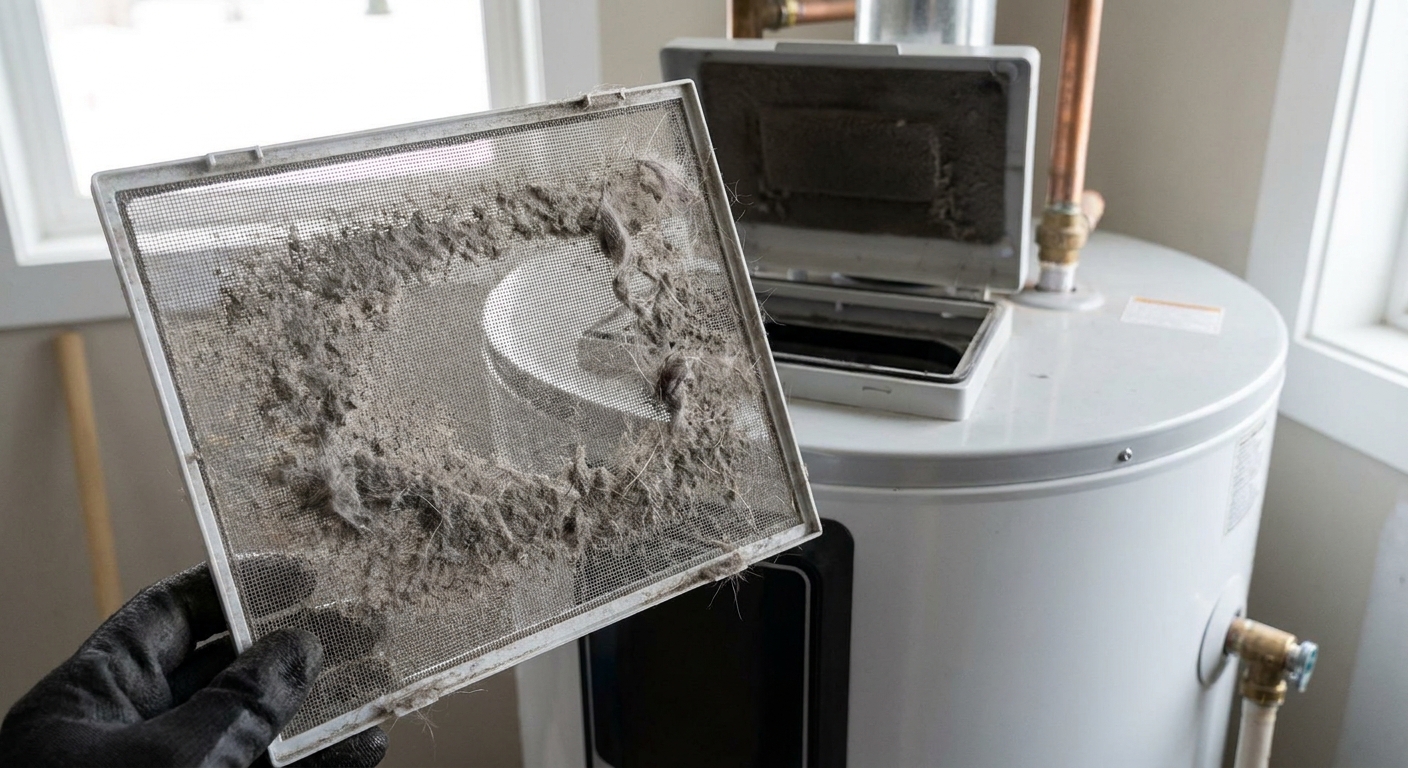
Fix 2: Clean the filter and open airflow
Your water heater has an air filter because it is basically a small HVAC system strapped to a tank. A clogged filter can reduce airflow enough that the heat pump cannot move heat into the water efficiently, or it may trigger a fault on some models.
Signs this is the issue
- Unit sounds like a fan is running, but hot water production is weak.
- You see a “clean filter” message or airflow-related alert.
- The top intake grille looks dusty or packed with lint.
What to do
- Power off at the breaker if your hands will be near the fan area or internal wiring during filter access.
- Remove the filter per your user manual. Many slide out from the top or side of the heat pump section.
- Vacuum the filter gently, then rinse with water if allowed by the manufacturer.
- Let it dry fully before reinstalling.
- Restore power and run the unit in Hybrid mode for a bit to see if recovery improves.
Also check the room: make sure boxes, shelves, or laundry piles are not blocking the intake or exhaust area. These units need breathing room.
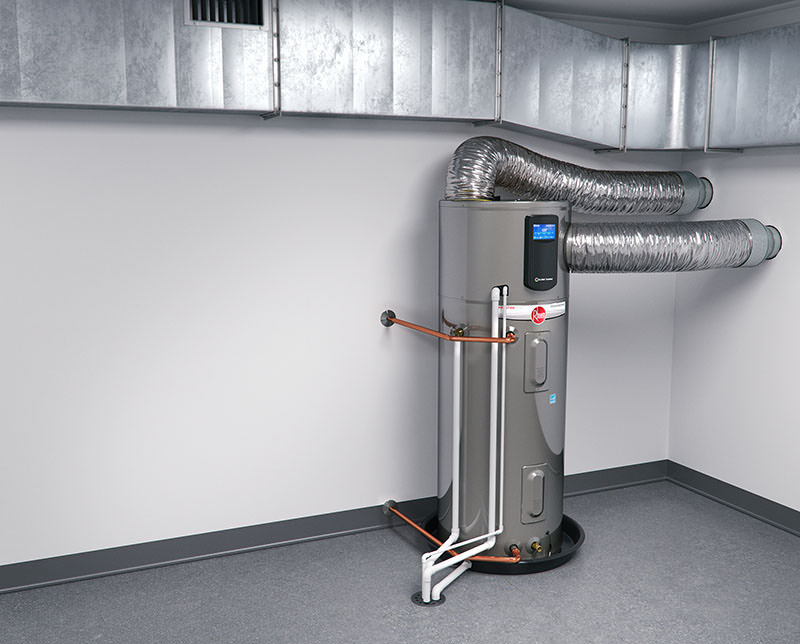
Fix 3: Check room temp and space
A heat pump water heater steals heat from the air. If the air is too cold, or there is not enough air volume, performance drops sharply. In some conditions the unit will rely on backup elements more often, and if it is set to heat pump only, you may get slow recovery and lukewarm water.
Common trouble spots
- Cold basements, unconditioned garages, or crawl-adjacent utility rooms, especially in winter.
- Tight closets with louvered doors that are not actually providing enough airflow.
- Ducted installs where intake or exhaust ducts are kinked, crushed, or blocked.
What to do
- Check your manual for minimum ambient temperature requirements for your exact model. Many units can run the heat pump into the 40°F range, but the cutoff and performance vary by brand.
- Open up airflow. If the unit is in a closet, make sure louvers are clear and the door is not sealed tight.
- If the space is cold or demand is high, switch to Hybrid so the resistance elements can assist.
- If your unit is ducted, inspect ducts for obstructions and crushed sections. Straighten and re-secure as needed.
Small clue: if the room around the unit feels noticeably cooler than the rest of the basement, that can be normal. It means the unit is extracting heat from the air. If hot water still is not keeping up, think cold air plus high demand, undersizing, or restricted airflow.
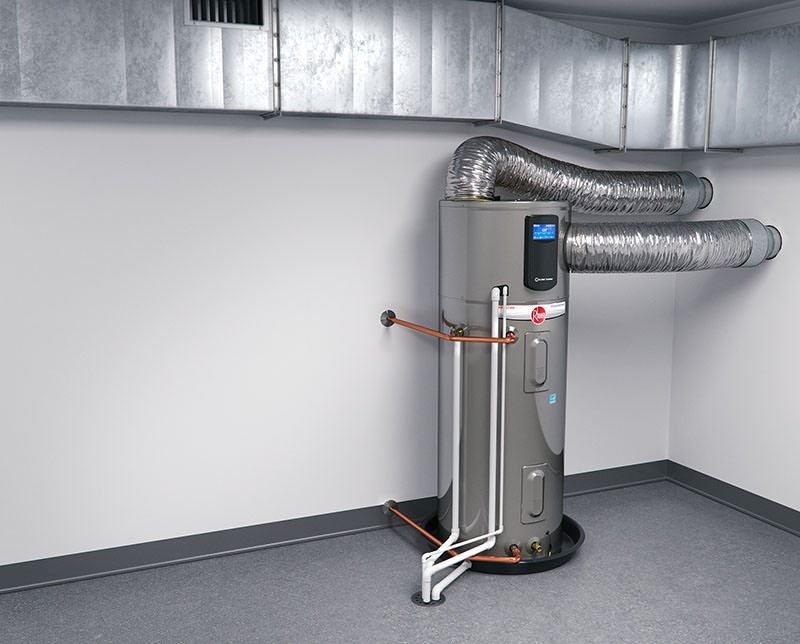
Fix 4: Check the condensate drain
Because a heat pump water heater dehumidifies the air as it runs, it creates condensate, just like an air conditioner. That water must drain properly. If the drain line is clogged, kinked, or the pump fails (when used), some units will throw an error or shut down the heat pump portion to prevent overflow.
What to look for
- Water pooling near the unit even though there is no obvious plumbing leak.
- A condensate line that is kinked, pinched, or running uphill without a pump.
- Algae or sludge in a clear drain tube.
- A condensate pump that is humming, overflowing, or silent when it should be running.
What to do
- Find the condensate drain outlet on the unit and follow the tubing to where it terminates.
- Straighten kinks and make sure the line slopes downward to a drain.
- Clear clogs. If you can safely disconnect the tubing at the drain end, flushing the line can help.
- If you have a condensate pump, check that it has power and that the discharge line is not blocked.
Important: Do not cap or plug a condensate line to “stop a drip.” That drip is the system doing its job.
Fix 5: Error codes and compressor lockout
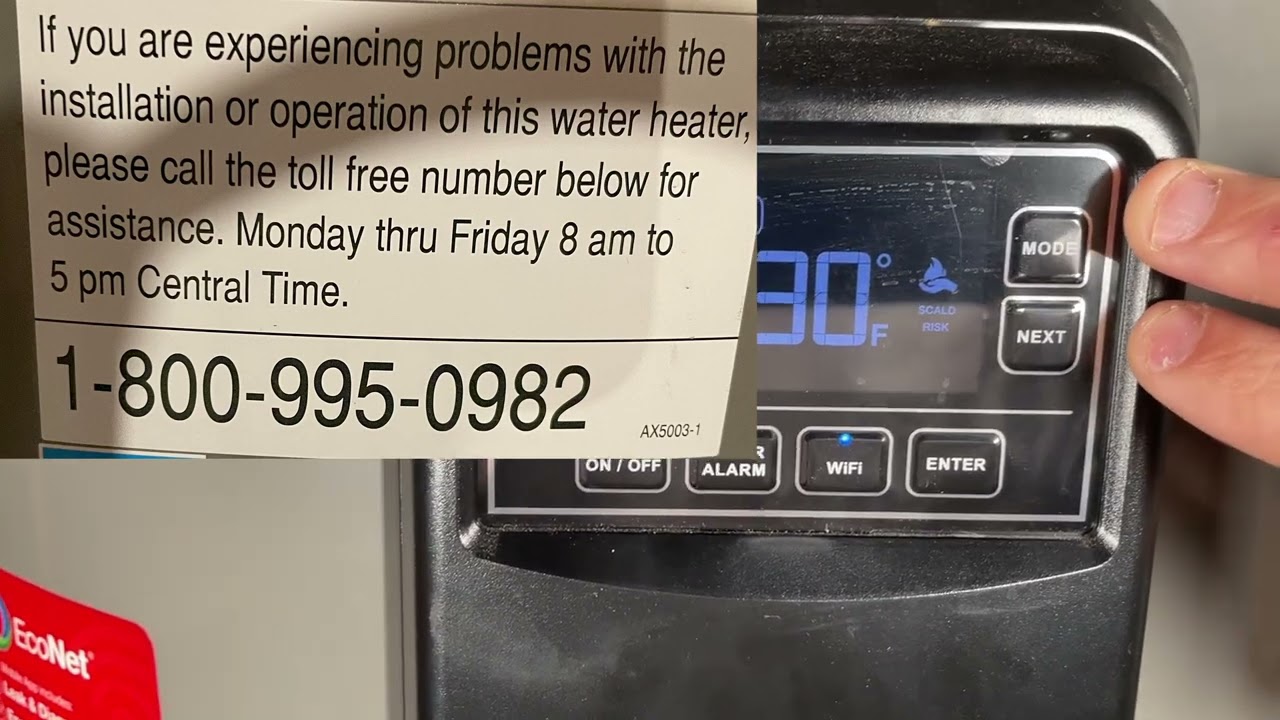
When a heat pump water heater gets unhappy, it usually tells you. Many models show an error code, flashing light pattern, or a message like “Service” or “Call for Service.”
What to do
- Take a photo of the display and write down the code exactly.
- Try a simple reset: power-cycle at the breaker per your manual. Many models clear with 30 to 60 seconds off, and some recommend longer. A safe general range is often 1 to 5 minutes off, then back on.
- Look up the code in your owner’s manual or on the manufacturer’s support site.
What not to do: do not keep resetting repeatedly if the unit returns to the same error quickly. That is the appliance asking for a real fix.
Fix 6: Know when backup elements should help
Hybrid units typically have electric resistance elements inside the tank as backup. In Hybrid mode, the unit decides when to use the elements to keep up with demand. In Electric mode, it mostly relies on the elements. In Heat Pump mode, it tries to avoid them.
Quick mode reality check
- Heat Pump: slowest recovery, lowest operating cost.
- Hybrid: medium to fast recovery depending on demand, usually a good daily driver.
- Electric: fastest recovery, usually the highest operating cost.
If you have lukewarm water during high demand
- Switch from Heat Pump to Hybrid. This is the most common “I need hot water today” move.
- Give the tank time to recover. Even with elements helping, full recovery can take a while after multiple showers or a big tub fill.
If you suspect the backup is not working
If your unit is in Hybrid or Electric mode and still cannot keep up, the issue could be with heating elements, thermostats, or controls inside the tank. Those tests overlap with standard electric tank troubleshooting and can involve live electrical checks. If you are not comfortable there, this is a good handoff point to a pro.
Also note: some units protect themselves by limiting element use under certain fault conditions. An error code is your best clue.
Fix 7: Rule out dilution at the plumbing
This one is not exclusive to heat pump water heaters, but it is a frequent “everything seems to run, but the water is never hot” complaint.
What to look for
- A thermostatic mixing valve installed on the outlet of the water heater (often used for scald protection).
- Recent plumbing work, a new shower valve cartridge, or a recirculation system change.
- Warm water at the tank outlet, but lukewarm at fixtures.
What to do
- If you have a mixing valve, confirm it is set correctly and not stuck. Mineral buildup can cause sticking over time.
- Try one fixture close to the tank. If it is hotter than distant fixtures, you may have a plumbing distribution or crossover issue rather than a tank heating issue.
Two quick checks that still matter
Even if your unit is a heat pump model, these two classic tank problems can mimic “the heat pump is running but water is cold.”
- Failed heating element: If you are in Hybrid or Electric mode and recovery is still terrible, a burned-out element can be the culprit. This is common and very fixable, but diagnosing it can involve electrical testing, so call a pro if you are not comfortable.
- Broken dip tube: A failed dip tube can make hot water run out fast because cold water mixes at the top of the tank. If hot water suddenly became brief and lukewarm, this is worth mentioning to a plumber.
When to call for service
Heat pump water heaters are repairable, but some problems are not worth a DIY wrestling match.
- Repeated error codes after a reset, especially sensor or compressor-related faults.
- No fan or compressor operation in heat pump mode, even with correct settings and a clean filter.
- Refrigerant system issues (icing, hissing, oil residue). Refrigerant work is not DIY.
- Water leaks from the tank or persistent pooling not explained by condensate routing.
- Burning smell, melted wiring, or tripping breaker. Shut power off and call.
Simple prevention
- Clean the filter on a schedule that matches your house. If the water heater shares air with laundry, expect lint.
- Keep clearance around the top and sides so airflow stays easy.
- Check the condensate line seasonally for kinks and clogs.
- Use Hybrid mode during guest weeks or busy mornings. Save Heat Pump only mode for normal demand days.
FAQ
Why is my heat pump water heater running but the water is cold?
Most often it is a settings issue (Vacation mode or Heat Pump only mode during high demand) or an airflow issue (dirty filter, blocked intake, or a cold, tight room). Error codes can also put the heat pump portion into a protective shutdown. If you are in Hybrid or Electric mode and it still cannot keep up, a failed heating element is also on the short list.
Should a heat pump water heater make hot water in a cold garage?
It can, but performance usually drops as the air gets colder. In a chilly garage, Hybrid mode may be necessary so the backup elements can assist. Confirm your unit’s minimum ambient temperature range in the manual for your specific model.
How long should it take to get hot water again after changing modes?
You may notice improvement within an hour, but full recovery depends on tank size, incoming water temperature, and how much hot water was used. Switching to Hybrid or Electric mode generally speeds recovery.
My unit is making water, but it runs out quickly. Is that normal?
It can be, especially if the unit is set to Heat Pump only and the household demand is high. A heat pump recovers more slowly than resistance elements. Try Hybrid mode during peak use times. If this started suddenly, ask about a dip tube problem.
The 30-Second Cheat Sheet
Essential takeaways for: Heat Pump Water Heater Not Making Hot Water? Fixes to Try
Do this first (2 minutes)
- Check the mode: turn Vacation off. If you need hot water fast, switch to Hybrid (or Electric temporarily).
- Confirm setpoint: many homes use about 120°F.
If hot water is weak or slow
- Clean the air filter and clear anything blocking intake or exhaust.
- Check the room: cold, tight spaces can reduce output. Use Hybrid in winter or high demand weeks.
- Confirm the heat pump is actually running: look for a “HP/Compressor” indicator on the display, or feel for cool air at the exhaust when it is in heat pump mode.
If there is water on the floor
- Inspect the condensate drain line for kinks or clogs. Heat pump water heaters should drain condensate like an AC.
If you see an error
- Photograph the error code, then do one reset: power-cycle at the breaker per your manual (often 1 to 5 minutes off), then back on.
- If the code returns, look it up in the manual or call for service.
Call a pro if
- Breaker trips, burning smell, melted wiring, refrigerant symptoms (icing or hissing), repeated compressor errors, or a leaking tank.
💡 Tip: Scroll up to read the full article for detailed, step-by-step instructions.
⬆️ Back to top
About Grit
Content Creator @ Grit & Home
Grit is Grit & Home’s little blue clay courier, delivering big questions about the place you call home. Expect practical ideas, a raised eyebrow, and a satchel full of curiosity.