
🚨 In a DIY emergency or rush?
Skip the details and jump straight to our 30-second cheat sheet for the most crucial info.
The first time Creeping Charlie took over my yard, I did what a lot of us do. I mowed shorter, bagged clippings, and tossed down the same weed stuff that knocks out crabgrass. It looked like I was “doing lawn care,” but that green mat just kept crawling right over everything.
Creeping Charlie, also called ground ivy, plays a different game. It spreads sideways, roots as it goes, and thrives where grass struggles. The good news is you can beat it, but you have to attack it like a system: correct ID, correct timing, correct product, and then fix the conditions that invited it in.
How to identify Creeping Charlie (ground ivy)
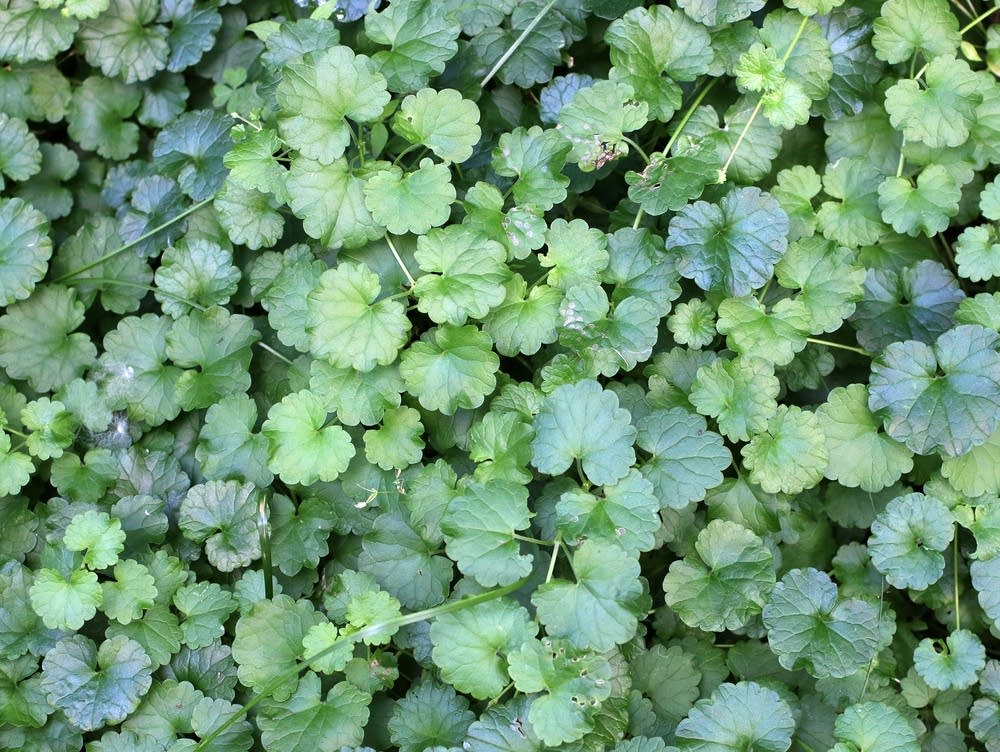
Before you spray anything, make sure you are actually dealing with Creeping Charlie. It gets confused with wild violet and henbit all the time, and those can require slightly different approaches.
Quick ID checklist
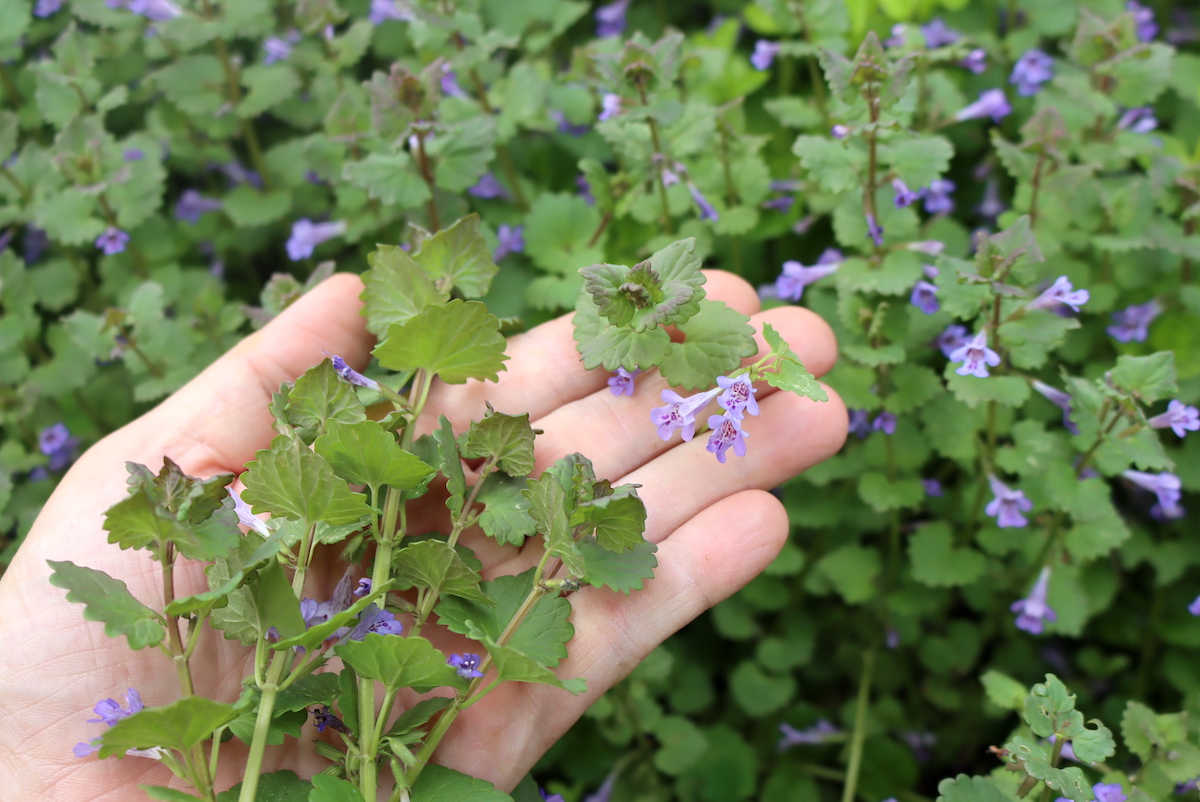
- Leaves: round to kidney-shaped with scalloped edges. Leaves are typically opposite each other on the stem.
- Stem: square stem if you roll it between your fingers. This is a mint-family giveaway.
- Growth habit: creeps along the soil in runners and forms a spreading mat. Nodes can root where they touch dirt.
- Flowers (when present): small purple-blue flowers in spring.
- Smell: if you crush the leaves, you may notice a minty, herbal odor.
If you want extra confidence, pull one runner and look for those little rooting points at the nodes. That is why it is so hard to “just rake it out” once it is established.
Why mowing and crabgrass products fail
Creeping Charlie survives the stuff that works on other lawn problems because it is not playing in the same category.
Mowing does not kill a creeping mat
Mowing mainly removes top growth. Creeping Charlie keeps its growing points low and spreads horizontally. If you mow short to “scalp it out,” you usually just stress the grass and give the mat more sunlight at soil level.
Crabgrass preventers are the wrong tool
Most crabgrass products are pre-emergents. They stop seeds from sprouting. Creeping Charlie is a perennial broadleaf that takes over lawns mostly by creeping stems (stolons) that root at nodes. It can produce seed, but seed is usually not the driver in established turf. A pre-emergent can be useful in an overall lawn plan, but it will not erase an established patch of ground ivy.
Many weed and feed mixes underdose the job
Some fertilizer plus broadleaf herbicide blends can ding it back a little, but Creeping Charlie often needs a stronger, properly timed broadleaf hit. If you have been “treating” for years and it keeps returning, timing and coverage are usually the culprits.
What actually works: fall broadleaf timing
If you remember one thing from this whole article, let it be this: fall is your best shot at long-term control.
In fall, Creeping Charlie is naturally moving energy down into roots and stolons to survive winter. Broadleaf herbicides applied at this time tend to move with the plant’s own storage process, which increases the odds of killing what is underground, not just the leaves you can see.
Early spring can work too, especially for touch-ups, but if you want the best odds with the least drama, I would start with fall.
Best window
- Early fall through mid-fall, when days are mild and the plant is actively growing.
- Aim for a stretch where daytime temps are generally about 60 to 80°F, unless your product label says otherwise.
- Do not spray right before a frost or during drought stress. You want active growth.
- Avoid windy days and hot afternoons. Drift and evaporation are real.
What to use
Look for a selective broadleaf lawn herbicide labeled for Creeping Charlie or ground ivy. The most common effective actives in lawn-safe products include:
- Triclopyr
- Dicamba
- 2,4-D
- MCPP (mecoprop) in many multi-ingredient mixes
Many homeowners have the best luck with products that include triclopyr for ground ivy. A lot of effective options are 3-way or 4-way blends, and results vary by grass type and growth conditions. Also worth saying out loud: 2,4-D by itself often disappoints on Creeping Charlie. Always read the label to confirm your turf is listed and the product specifically lists Creeping Charlie or ground ivy.
One big caution here: some warm-season grasses can be sensitive to certain broadleaf herbicides. If you have St. Augustine, centipede, Bahia, or another warm-season lawn, confirm the product is labeled as safe for your turf before you spray. And even in cool-season lawns, certain products have restrictions depending on the turf species and temperature. If you are not sure what grass you have, figure that out first, then buy the herbicide.
How to apply for real results
- Spot spray patches when possible. Blanket spraying the whole yard is usually unnecessary and harder on turf.
- Cover evenly, not to runoff. You want leaves wet, not dripping.
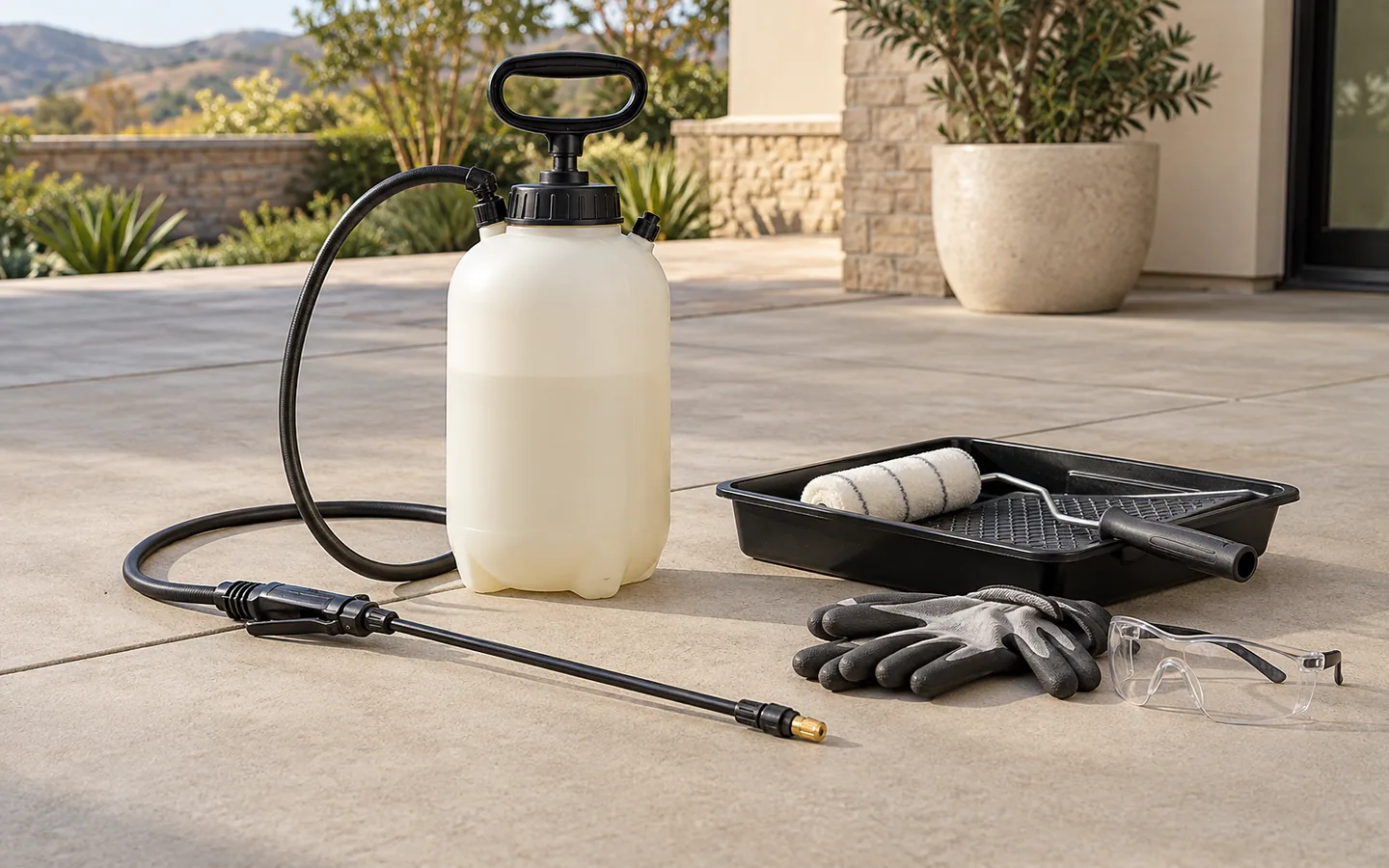
- Use a surfactant if the label allows it. Ground ivy leaves can shed spray. Some products already contain one.
- Spray technique matters: use a fan nozzle if you have one, keep pressure steady, and walk at a consistent pace so you do not accidentally double-hit some areas and miss others.
- Avoid mowing right before or after spraying. Follow the label, but many products recommend giving it 1 to 2 days on each side so there is enough leaf surface for uptake.
- Water rules: follow the label, but typically you need a rain-free window so it can dry on the leaves. Do not irrigate immediately after.
- Expect 2 applications spaced per label directions. One hit often browns the top, then it rebounds from runners.
Also, handle it like you mean it. Wear gloves and eye protection, and keep kids and pets off the area until the spray is dry. And be careful around flowers, shrubs, and tree suckers at the edge of the lawn. The real risk is off-target contact and drift onto ornamental leaves.
If the patch is huge, I like to think of it as a two-season project: knock it down hard in fall, then clean up survivors with targeted spot treatments in spring.
Non-chemical control that actually helps
I am not anti-spray or pro-spray. I am pro-results. If you want to use less herbicide over time, these steps make a real difference.
Hand pulling, done the right way
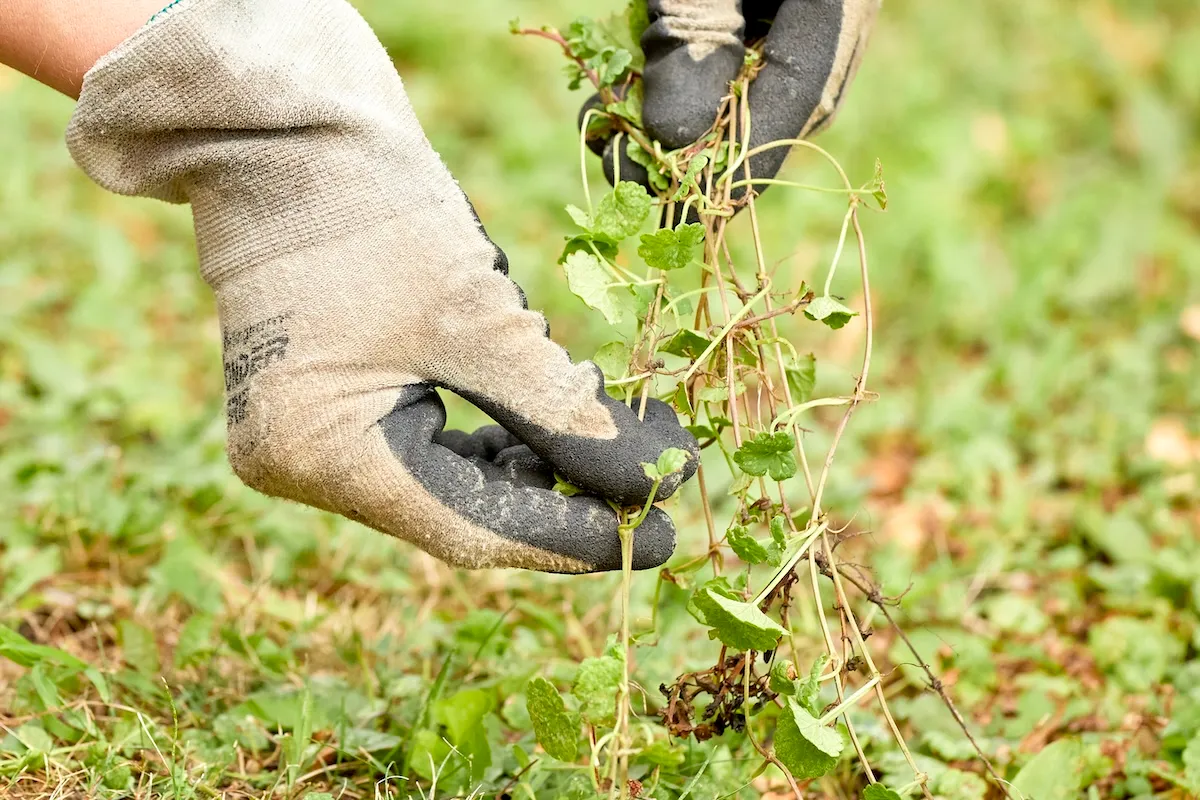
You can pull small patches, but be honest about the effort. Those runners snap easily, and every missed node can re-root.
- Pull when the soil is slightly moist.
- Use a hand cultivator or weeding fork to lift runners without shredding them.
- Bag and remove the material. Do not leave it sitting on damp soil.
Smothering as a reset (for beds and edges)
Along fence lines or in landscape areas where it creeps into turf, a smother layer can help after you knock it back. Cardboard under mulch works well in beds. In lawn, smothering is tricky because you still have to re-establish grass later, but it can be useful for stubborn edge strips.
Fix the shade and drainage issues that let it take over
Creeping Charlie is not just a weed problem. It is often a “site conditions” problem. It loves what grass hates: shade, wet soil, and compacted ground.
Shade: thin turf is an open invitation
If the patch is under a tree canopy or on the north side of a house, you have two realistic options:
- Increase light: prune up low branches, thin the canopy (carefully), and reduce shade where you can.
- Change the grass strategy: overseed with a shade-tolerant grass type that matches your region and yard conditions. In deep shade, turf may always struggle, and a mulch or shade groundcover bed might be the long-term win.
Drainage: ground ivy loves soggy soil
Common drainage culprits around a 1970s style home include downspouts dumping next to the foundation, low spots that hold water, and compacted soil from years of foot traffic.
- Extend downspouts so water discharges away from the lawn area that stays wet.
- Fill low spots with screened topsoil and regrade to shed water.
- Aerate compacted soil so grass roots can breathe and compete.
Fertility and mowing height: help grass win
- Mow higher (most lawns do better around 3 to 4 inches, depending on grass type). Taller grass shades the soil and reduces ground ivy spread.
- Fertilize based on need. A soil test is ideal, but even a sensible fall feeding program can strengthen turf so it crowds weeds out.
After removal: how to prep the spot for grass seed
Once Creeping Charlie is dying back, the temptation is to throw seed immediately. I have made that mistake. Seed needs soil contact, moisture, and sunlight. A half-dead weed mat is none of those things.
Step 1: Wait for the herbicide window
If you used a broadleaf herbicide, follow the label for seeding wait times. Some products allow seeding sooner than others. Do not guess here. This is where a lot of “my seed didn’t take” stories start.
Step 2: Remove the dead mat and loosen the top layer
- Rake aggressively with a steel rake to pull up dead runners and expose soil.
- If the area is compacted, loosen the top 1 to 2 inches with a hand cultivator or garden weasel-type tool.
- Do not dig deep and flip the soil unless you have to. You can wake up other weed seeds.
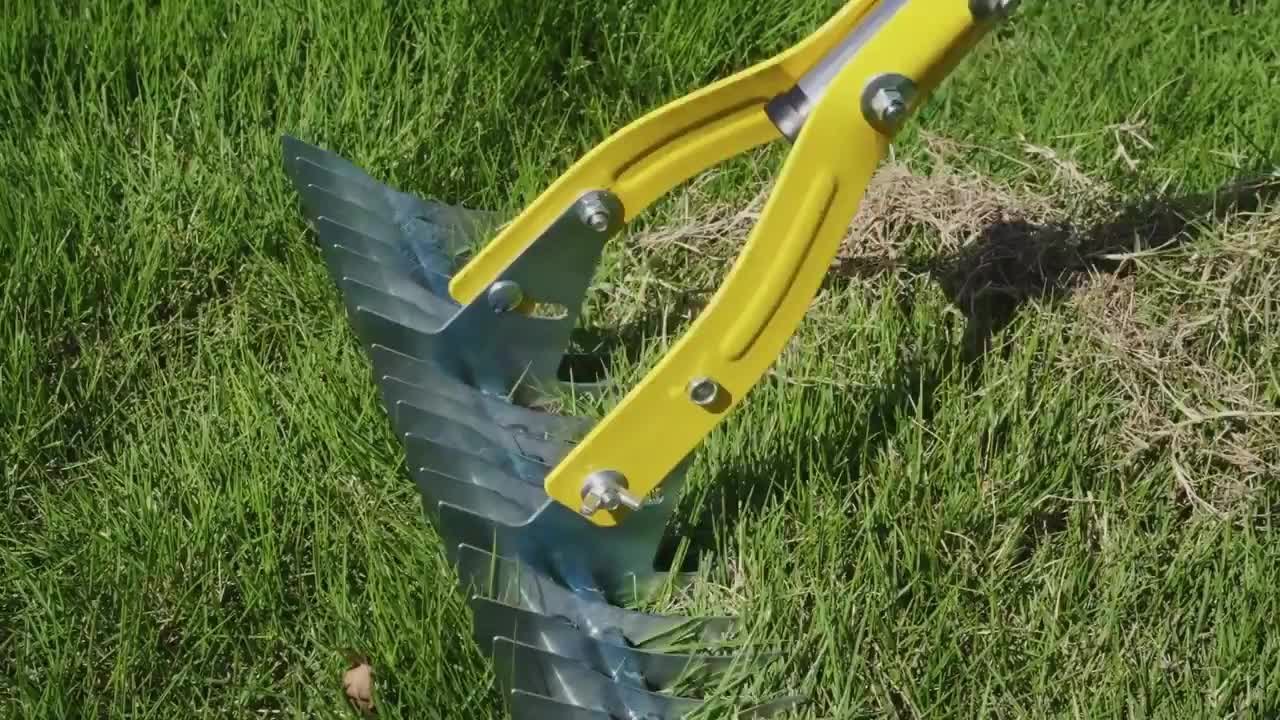
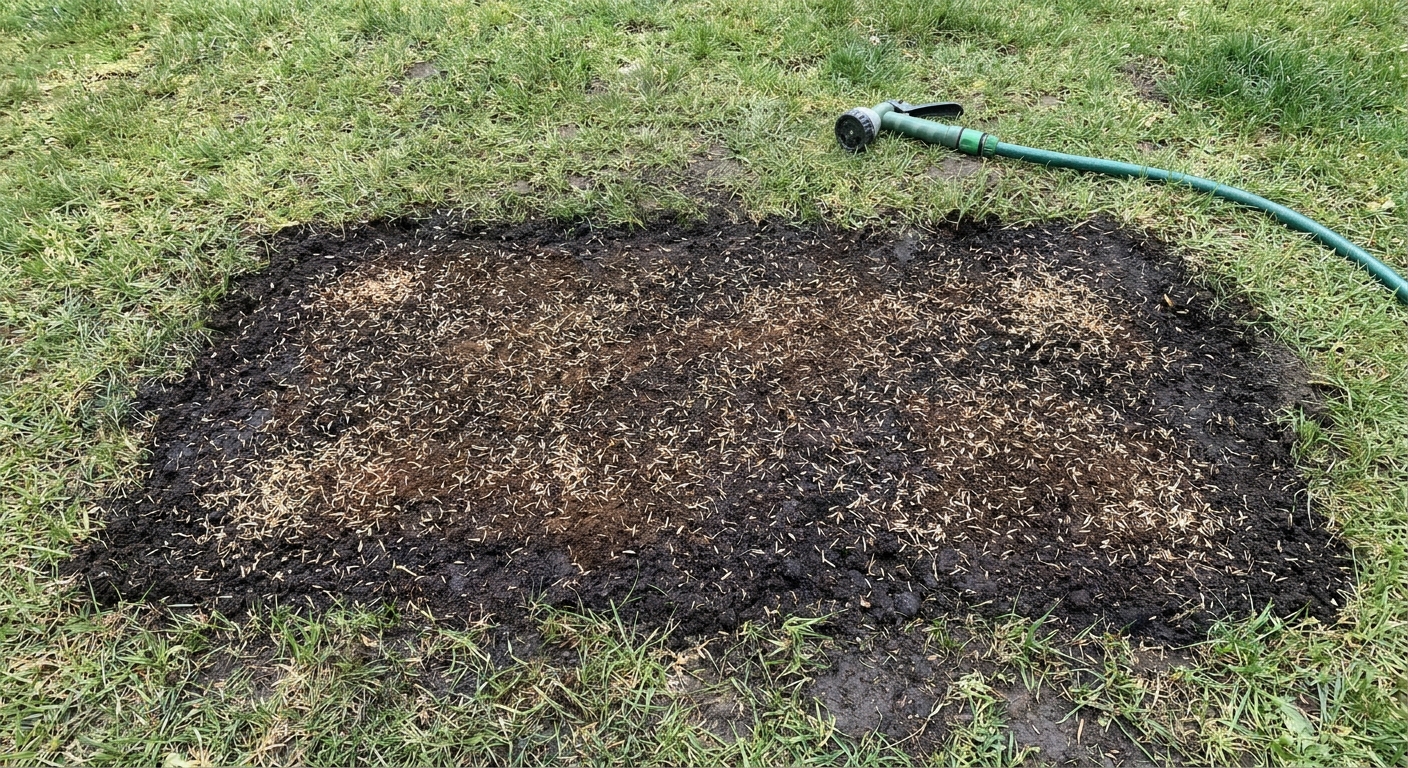
Step 3: Topdress, seed, and protect
Topdress for seed contact
Add a thin layer of screened topsoil or compost, about 1/4 inch is usually plenty. You are aiming for a clean, crumbly surface, not burying the area.
Choose the right seed for the conditions
Match seed to the site. If Creeping Charlie dominated because the area is shady and damp, “sun and sport” mixes can struggle. Use a shade-tolerant mix where appropriate, and consider improving light and drainage as part of the fix.
Seed and lightly rake in
- Spread seed at the bag’s recommended rate.
- Lightly rake so seed nestles into the soil surface.
- Press seed down with your shoe soles or a lawn roller for better contact.
Mulch and water
- Apply a light layer of clean straw or a seeding mulch to hold moisture.
- Water lightly and frequently until germination, then gradually water deeper and less often to encourage roots.
Hold off on heavy traffic and mowing
Keep pets and kids off as much as you can for the first few weeks. When you do mow, make sure the new grass is tall enough to cut safely and your mower blade is sharp.
Troubleshooting common Creeping Charlie problems
It turned brown but came back
Very common. You likely killed top growth but not all the rooted nodes. Plan for a second application at the label interval, and focus on fall timing for the best kill.
It is only in shady areas
That is your clue. You can spray it repeatedly, but if turf cannot thrive there, it will keep returning. Improve light, reduce moisture, and seed with shade-tolerant grass, or consider converting that zone to a bed.
My lawn is mostly weeds and ground ivy
At a certain point, it is less about “spot treating” and more about a reset: control weeds, fix soil and drainage, and then reseed or overseed properly. It is work, but it is straightforward work when you do it in the right order.
The 30-Second Cheat Sheet
Essential takeaways for: How to Get Rid of Creeping Charlie in Your Lawn
Fast ID
- Creeping Charlie (ground ivy) has square stems, scalloped round leaves, and spreads as a rooting mat.
- Mowing and crabgrass preventers usually fail because it is a perennial broadleaf that spreads mostly by runners that root at nodes.
What to do first
- Confirm the weed before treating.
- Do not scalp the lawn. Mow at a normal or slightly higher height.
Best time to kill it
- Fall is the best window because the plant is sending energy into roots.
- Spray during mild weather when it is actively growing. Avoid frost and drought stress.
What to use
- Use a selective broadleaf herbicide labeled for ground ivy.
- Products with triclopyr often work especially well. Follow label directions for your grass type.
- Plan on 2 treatments spaced per the label.
Fix what caused it
- Shade: prune for more light or switch to shade-tolerant turf. Deep shade may need a bed, not grass.
- Drainage: extend downspouts, regrade low spots, and aerate compacted soil.
After it clears: prep for seed
- Wait the label’s seeding interval after herbicide.
- Rake out dead runners, loosen the top 1 to 2 inches, topdress lightly, then seed and water consistently.
💡 Tip: Scroll up to read the full article for detailed, step-by-step instructions.
⬆️ Back to top
About Marcus Vance
Content Creator @ Grit & Home
Marcus Vance is a lifelong DIY enthusiast and self-taught home renovator who has spent the last decade transforming a dilapidated 1970s ranch into his family's dream home. He specializes in budget-friendly carpentry, room-by-room renovations, and demystifying power tools for beginners. Through his writing, Marcus shares practical tutorials and hard-learned lessons to help homeowners tackle their own projects with confidence.