
🚨 In a DIY emergency or rush?
Skip the details and jump straight to our 30-second cheat sheet for the most crucial info.
Small courier. Big home questions.
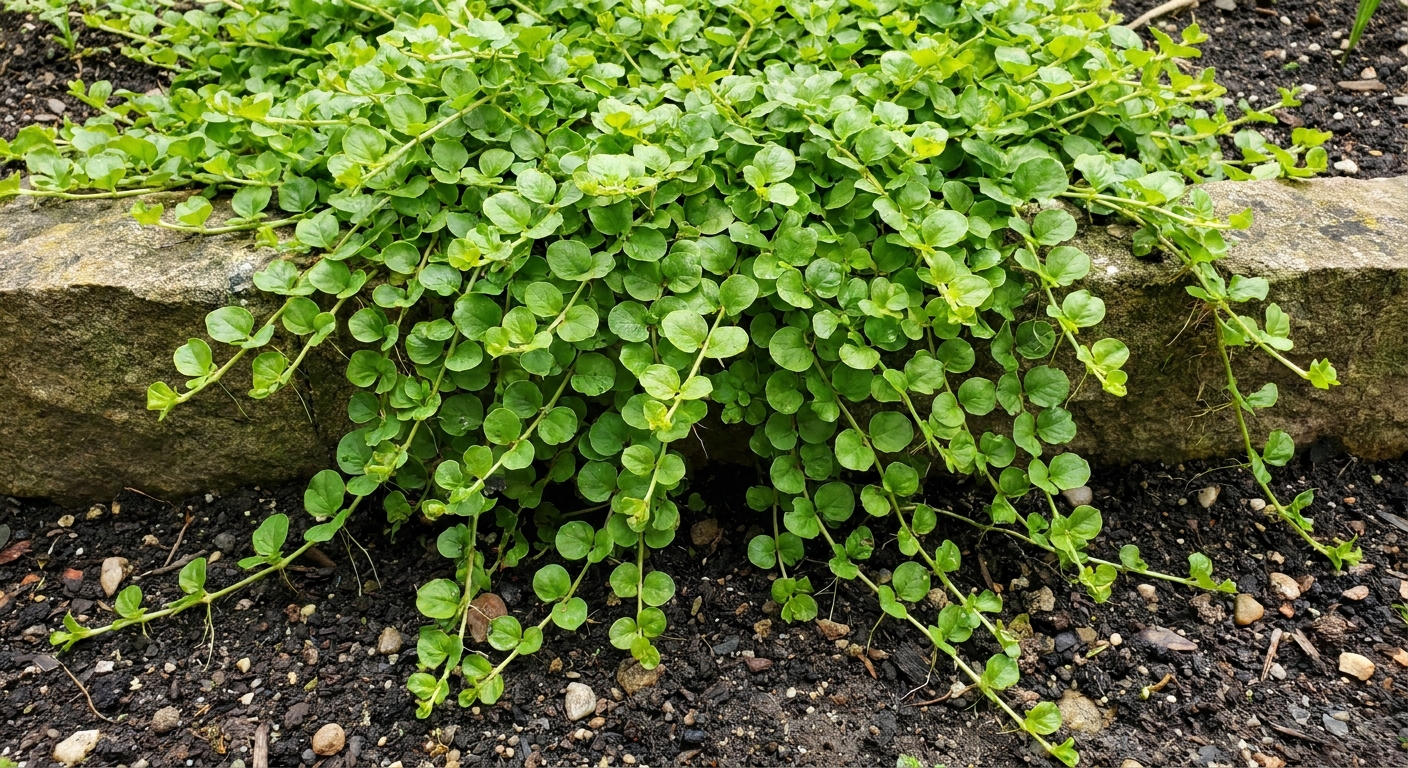
If you have a bright green mat creeping out of a pot, over a retaining wall, or under your shrubs like it pays rent, you might be dealing with creeping Jenny (Lysimachia nummularia). It is often sold as a groundcover, and in the wrong place, it becomes a garden escape artist with a talent for re-rooting at every little node along the stem.
First, confirm the plant
Creeping Jenny and creeping Charlie get confused constantly, and that mix-up matters because lawn weed killers are usually labeled for creeping Charlie (ground ivy) and may not solve a creeping Jenny problem that started in a bed, a pot, or a landscape edge.
Creeping Jenny (Lysimachia nummularia)
- Leaves: round to slightly oval, smooth-edged, arranged in opposite pairs along a trailing stem.
- Stems: long runners that hug the ground and root at nodes where the stem touches soil.
- Flowers: solitary yellow blooms with five petals, typically in the leaf axils. Depending on your climate and mowing or trimming, you may not see flowers at all.
- Overall vibe: shiny little coin leaves, bright chartreuse in sun, greener in shade.
Creeping Charlie (ground ivy, Glechoma hederacea)
- Leaves: kidney-shaped with scalloped edges, and can be slightly hairy, on longer petioles.
- Stems: often square (mint family trait), sprawling and rooting as it creeps.
- Flowers: small purple or bluish-purple tubular flowers in spring, but they are seasonal and lawns may not show them after mowing.
- Smell test: when crushed, it can smell minty.
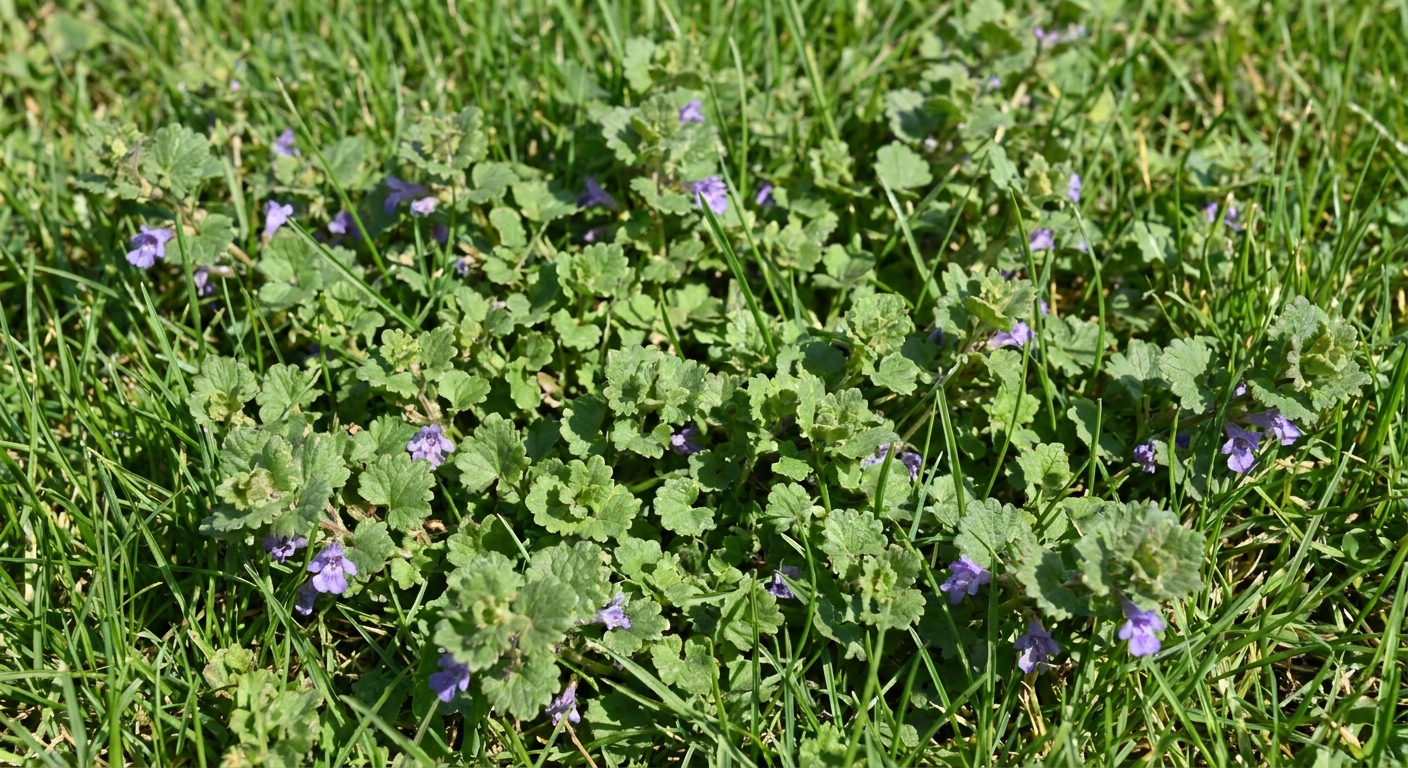
Quick ID shortcut: Yellow flowers and round leaves point to creeping Jenny. Purple flowers and scalloped leaves point to creeping Charlie. If there are no flowers, lean on leaf shape, the square-stem and minty-smell clues for Charlie, and the smooth, coin-leaf runner look for Jenny.
Why it is hard to eliminate
Creeping Jenny spreads by trailing runners with frequent nodes, and each node can root into the soil and become its own plant. That means:
- Pulling just the top growth usually leaves rooted nodes behind.
- Breaking stems into pieces can accidentally create a tray of clones if those pieces land on moist soil.
- Compost piles can turn into the world’s least fun propagation station if runners are still green and viable.
Containment comes first
If your creeping Jenny started in a pot or hanging basket, containment is the cheapest “treatment” you will ever buy.
- Keep runners off soil: Trim spillover before stems touch the ground and find a rooting spot.
- Mind the landing zone: A pot perched on mulch is basically a launchpad. Set pots on hard surfaces or a saucer that does not let stems make soil contact.
- Dispose of trimmings like they mean it: Do not toss fresh runners onto a damp bed edge. Bag them or dry them fully before composting.
Pick your plan by location
Creeping Jenny in a garden bed is a different problem than creeping Jenny threading through turf. The tools and the tolerance for disturbance are different, too.
Timing tip: Pulling and digging are often easiest in spring or fall when soil is naturally moist. You can do it in summer, but plan on watering first so you lift roots instead of snapping stems.
Garden beds: pull, dig, then smother
Step 1: Water, then pull slowly
Moist soil makes it easier to lift runners with roots attached. You want to pull in long strands, not snap them into confetti.
- Water the area lightly or pull after a rain.
- Grab stems near the base and pull low and slow.
- As you pull, look for rooted nodes and tease them free with your fingers.
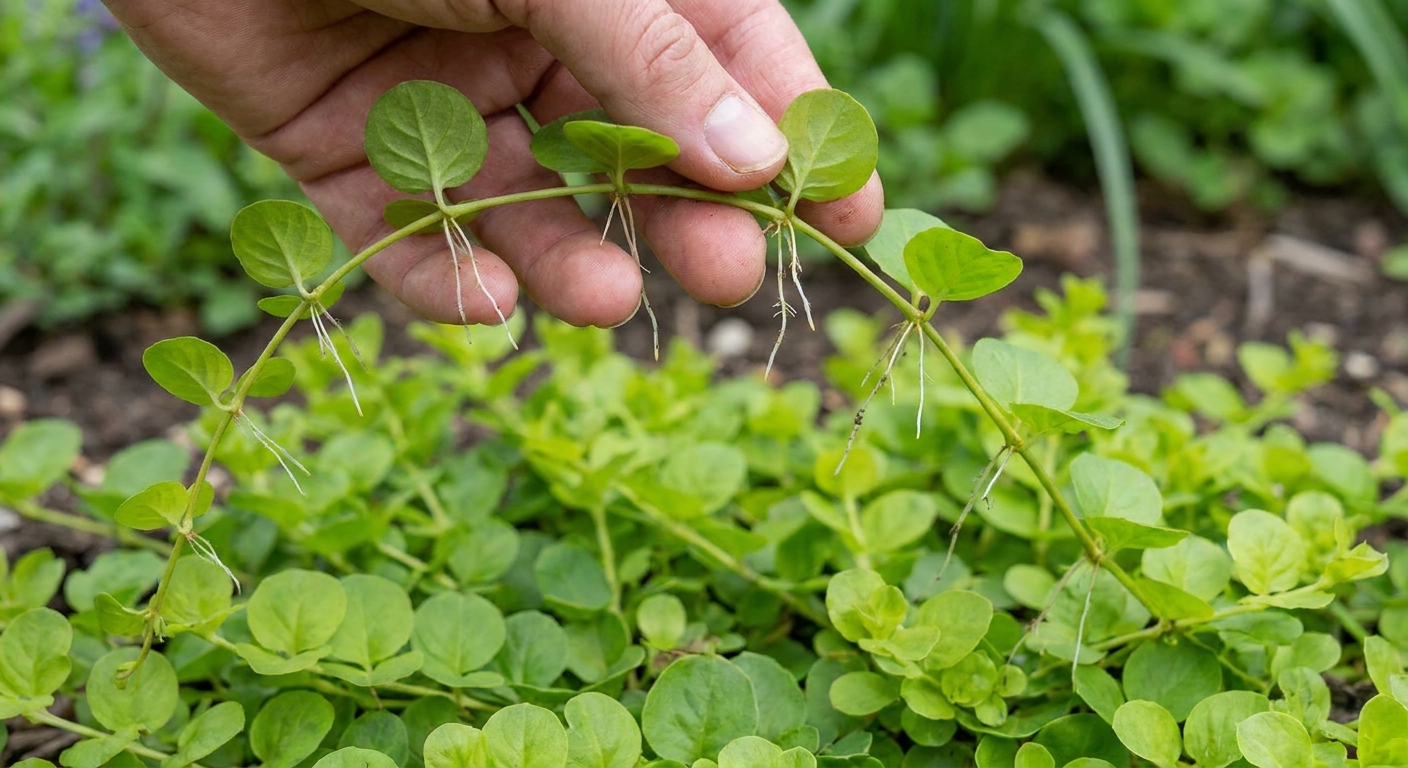
Step 2: Lift the rooted network
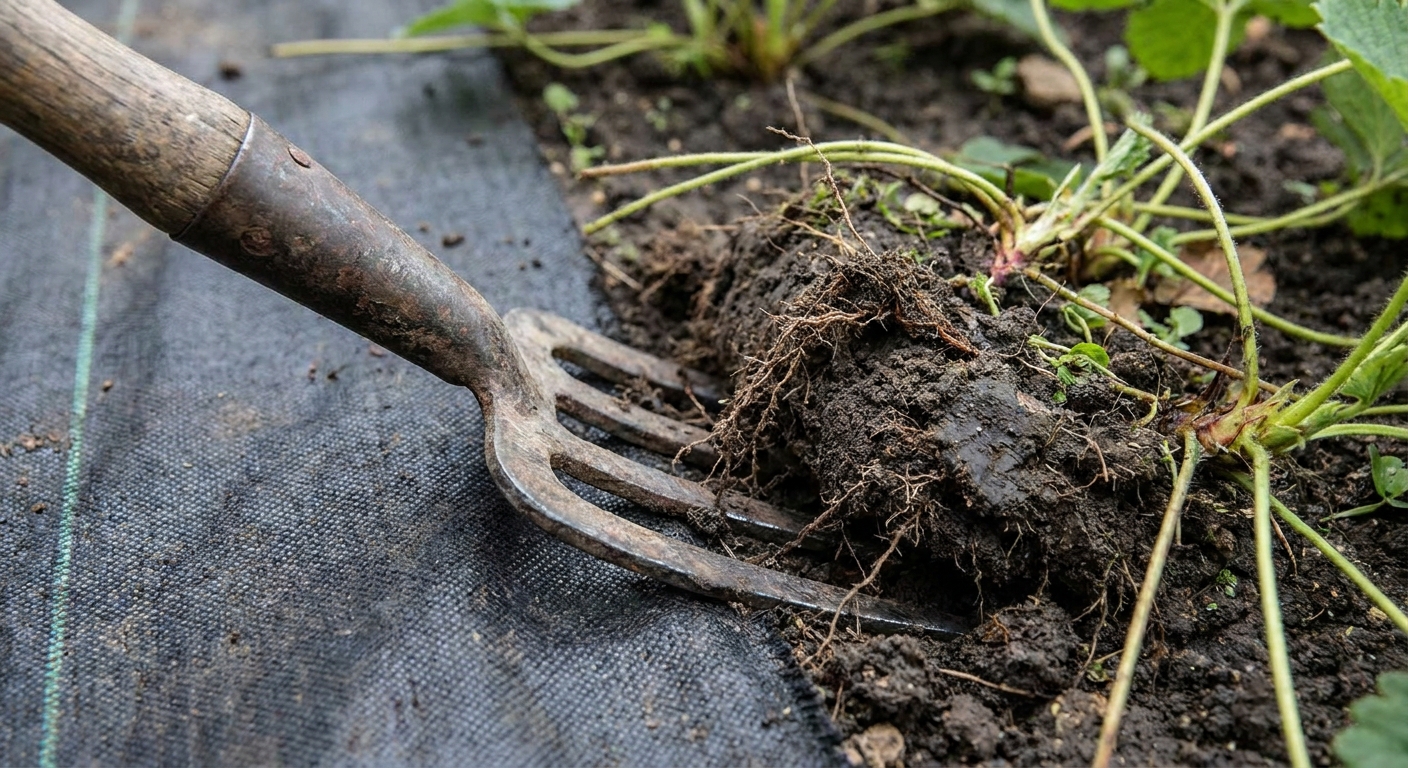
If the patch is established, a hand pull alone often leaves roots behind. Slide a garden fork under the mat and lift to loosen the soil, then pull again.
- Most mats are shallow, and roots and nodes are often concentrated in the top few inches, but older patches can root deeper into mulch and soil layers.
- Work from the edge of the patch inward so you can see what you are removing.
- Shake soil off roots so you are not hauling half the bed away.
Step 3: Bag runners immediately
This is the part people skip. A pile of “pulled weeds” sitting on damp soil can re-root quickly, sometimes within days.
- Put pulled runners straight into a bag or bin.
- If you compost, only add material that is fully dead and dried. When in doubt, bag it for disposal.
Step 4: Smother what you missed
Even careful pulling tends to miss a few nodes. Smothering helps starve the leftovers.
- Cover the cleared area with overlapping cardboard (no glossy coatings) and wet it so it hugs the soil.
- Add 2 to 4 inches of mulch on top.
- Keep edges overlapped so runners cannot sneak into light gaps.
How long to leave it: Plan on keeping the cardboard and mulch in place for at least 8 to 12 weeks, and longer if you are dealing with a big, stubborn patch. Success looks like pale, weak sprouts under the edges that pull out easily, followed by nothing at all.
Spot treatment in beds
If creeping Jenny is tangled through perennials or under woody shrubs, physical removal can become a root-tugging soap opera. In that case, a careful spot treatment can be more realistic than trying to spray the whole bed.
What to know before you spray
- Choose the right category: Some products are selective broadleaf herbicides (commonly for lawns), while others are nonselective herbicides that can injure almost any green plant. Effectiveness on Lysimachia varies by product and labeling, so read for the exact plant list and allowed use sites.
- Spray the leaves, not the planet: Avoid spraying soil broadly. It is usually wasteful and increases the chance of non-target impact.
- Use a shield: On a calm day, hold cardboard as a spray shield so drift does not tag your good plants.
- Expect follow-up: Perennial groundcovers often require repeat control.
- Basic safety: Follow the label for PPE, and keep kids and pets off treated areas until sprays have dried and the label says it is safe.
Important: Always follow the product label for where it can be used. Some herbicides are labeled for lawns but not for beds, or for beds but not around edible plants.
Turf: why sprays miss the mark
Lawn weed control products are commonly marketed around creeping Charlie (ground ivy). Those mixes are designed for broadleaf weeds in turf, and they work best when the target is actively growing and the product is specifically effective on that species.
If what you actually have is creeping Jenny escaping from a bed, two things can happen:
- Wrong target: the active ingredients and timing may be optimized for ground ivy, not Lysimachia.
- Wrong battlefield: the source patch in the bed keeps sending runners back into the grass, so the lawn looks like it “came back” even if you dinged what was in the turf.
A lawn plan that helps
- Start at the edge: Find where it is coming from. Bed border, downspout splash area, shady damp corner.
- Remove the source patch: If it is rooted in mulch or soil, address that first.
- Edge and patrol: A crisp edge and regular runner removal is often more effective than chasing it across the whole lawn.
- Repair the turf: Bare soil along edges invites re-invasion. Reseed or patch with sod after removal.
- Mow high: Taller turf shades the soil and makes it harder for creeping plants to establish.
If you are hoping for a one-and-done selective lawn herbicide solution for creeping Jenny, you may be disappointed. In many yards, the best long game is boundary control plus thicker grass.
Stop node re-rooting
This is the creeping Jenny secret handshake. The nodes are the whole trick. Your job is to keep stem pieces from making soil contact long enough to form roots.
During removal
- Lift and collect: Do not leave pulled runners on the ground.
- Do not rototill first: Tilling can chop runners into dozens of viable pieces.
- Work in sections: Clear a small area fully before moving on, so you can spot and remove stragglers.
After removal
- Mulch consistently: A 2 to 3 inch mulch layer reduces easy rooting sites.
- Edge barriers help: A clean trench edge or solid edging can slow runners crossing from one area to another.
- Scout weekly at first: New sprouts are easiest to pull when they are small and not yet well-rooted.
What to replant
After you remove a spreading groundcover, you are left with open soil, and nature hates open soil. If you do not choose what fills the space, the fastest plant in the neighborhood will choose for you.
Replacement strategy
- Go dense and appropriate: Pick plants suited to your light and moisture so they knit in without running wild. Also check local recommendations, because “well-behaved” depends on where you live.
- Layer it: Combine small shrubs or perennials with a living mulch layer to reduce gaps.
- Mulch while plants establish: Even the best replacement needs time to fill in.
Ideas by conditions
Shade to part shade (ornamental beds):
- Wild ginger (Asarum canadense where appropriate)
- Foamflower (Tiarella)
- Allegheny spurge (Pachysandra procumbens, not Japanese pachysandra)
- Sedges (Carex species) for a grassy, clumping fill, choose clump-formers for tidier edges
Sun to part sun (ornamental beds):
- Creeping thyme (Thymus serpyllum) in drier, sunnier spots
- Sedum varieties that stay clumping or gently spreading, skip the ones known to roam
- Low-growing ornamental grasses for structure and gap control
Along edges where you need toughness:
- Mulch plus a simple row of perennials or small shrubs, spaced to fill in
- Hardscape gap control like edging and mulch, rather than another aggressive runner
If you loved creeping Jenny for the color, consider keeping it contained in a pot where runners cannot hit soil and root. The plant is not the villain. The escape plan is.
Quick troubleshooting
I pulled it and it came back fast
That is usually leftover rooted nodes, or stem fragments that re-rooted where they landed. Tighten up cleanup and consider smothering the area to catch what you cannot see.
It keeps creeping in from my neighbor
Focus on boundary defense. Maintain a crisp edge, remove runners promptly, and use a physical barrier where practical.
It is under shrubs and I cannot pull it cleanly
That is a good situation for a multi-step approach: reduce biomass by pulling what you can, then smother exposed areas, and only then consider a careful spot treatment if needed and allowed by the label.
The 30-Second Cheat Sheet
Essential takeaways for: How to Get Rid of Creeping Jenny
Identify it fast
- Creeping Jenny (Lysimachia nummularia): round, smooth-edged leaves in opposite pairs on trailing runners; yellow 5-petaled flowers (when present).
- Creeping Charlie (ground ivy): scalloped, kidney-shaped leaves; stems are typically square and leaves can be slightly hairy; purple tubular flowers (when present), often a minty smell.
- When there are no flowers: Jenny looks like shiny little coins on a thin runner; Charlie looks more ruffled and “mint-family” (squarer stems, stronger smell when crushed).
Best removal in beds
- Pull after rain or watering, then pull low and slow to lift rooted nodes.
- Loosen with a garden fork to get the runner network out. You may need to go deeper in older patches.
- Bag everything immediately so stem pieces do not re-root.
- Smother leftovers with overlapping cardboard plus 2 to 4 inches of mulch. Leave it in place for weeks to months.
Why lawn sprays can disappoint
- Many products are aimed at creeping Charlie, not creeping Jenny.
- If the source plant is in a bed, it will keep sending runners into the turf.
- In lawns, repeated edging, hand removal, and thicker turf are often the realistic plan.
Stop re-rooting at nodes
- Do not leave pulled runners on damp soil. They can re-root quickly, sometimes within days.
- Avoid rototilling first. It chops runners into new starts.
- Mulch 2 to 3 inches and patrol weekly for new sprouts.
Replant so it does not come back
- Fill bare soil with well-behaved plants suited to your light and moisture, and check what is recommended in your region.
- Shade: foamflower, sedges (clumping types), wild ginger (where appropriate).
- Sun: creeping thyme, clumping sedums (choose non-running types), low grasses.
- Keep color cravings contained by growing creeping Jenny in a pot, not open ground.
💡 Tip: Scroll up to read the full article for detailed, step-by-step instructions.
⬆️ Back to top
About Grit
Content Creator @ Grit & Home
Grit is Grit & Home’s little blue clay courier, delivering big questions about the place you call home. Expect practical ideas, a raised eyebrow, and a satchel full of curiosity.