
🚨 In a DIY emergency or rush?
Skip the details and jump straight to our 30-second cheat sheet for the most crucial info.
Small courier. Big home questions.
Field bindweed is the vine that makes you doubt your own eyesight. One week it is a thin green thread. The next week it is lacing itself through your perennials like it pays rent. You pull. It snaps. You pull again. It comes back with flowers, smug as a postcard.
Let’s get you out of the loop. The trick with field bindweed is not finding the perfect single move. It is choosing a plan that matches how it lives: deep roots, big energy storage, and endless retries.
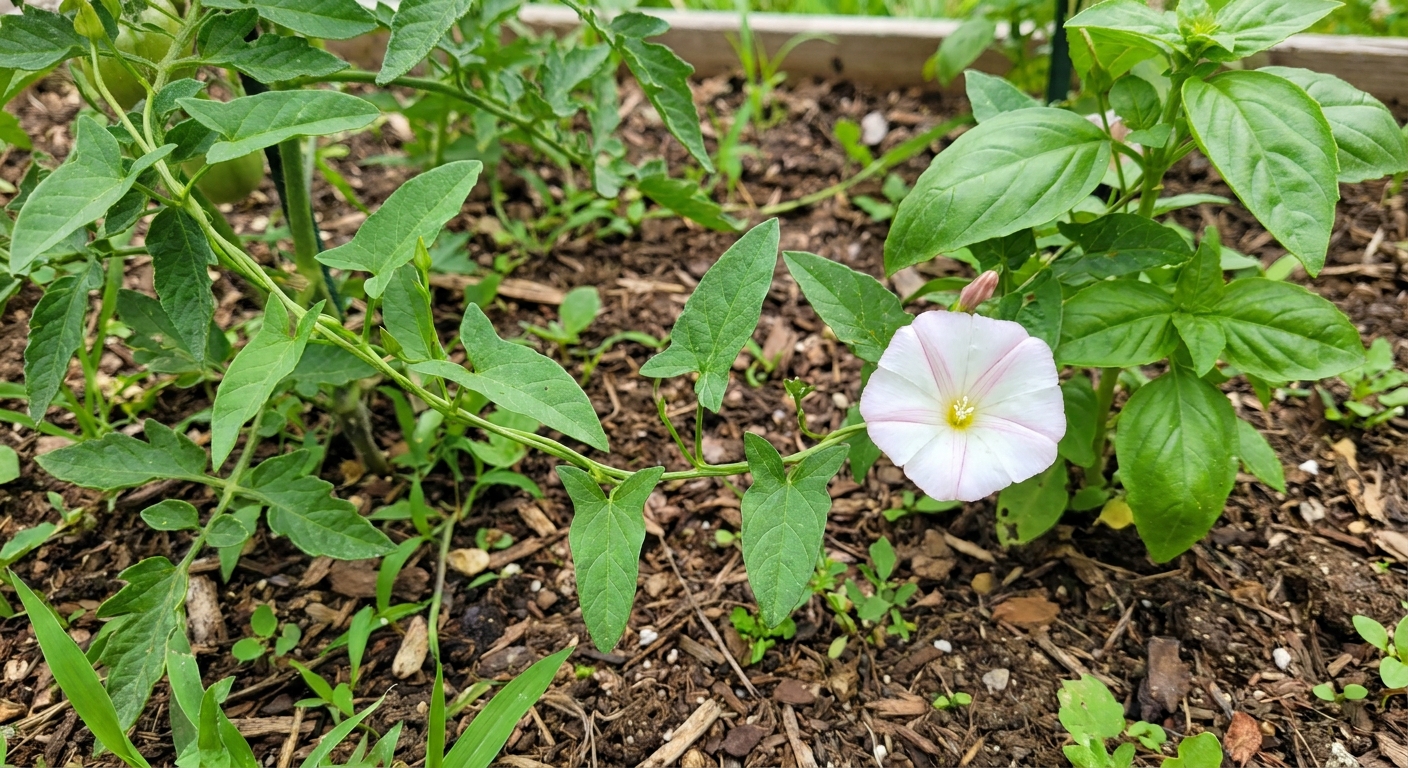
Make sure it is field bindweed
Bindweed and its cousins get mixed up constantly, and the fix changes depending on which one you have. Before you go swinging with a herbicide or a shovel, look for these field bindweed clues.
Quick ID checklist
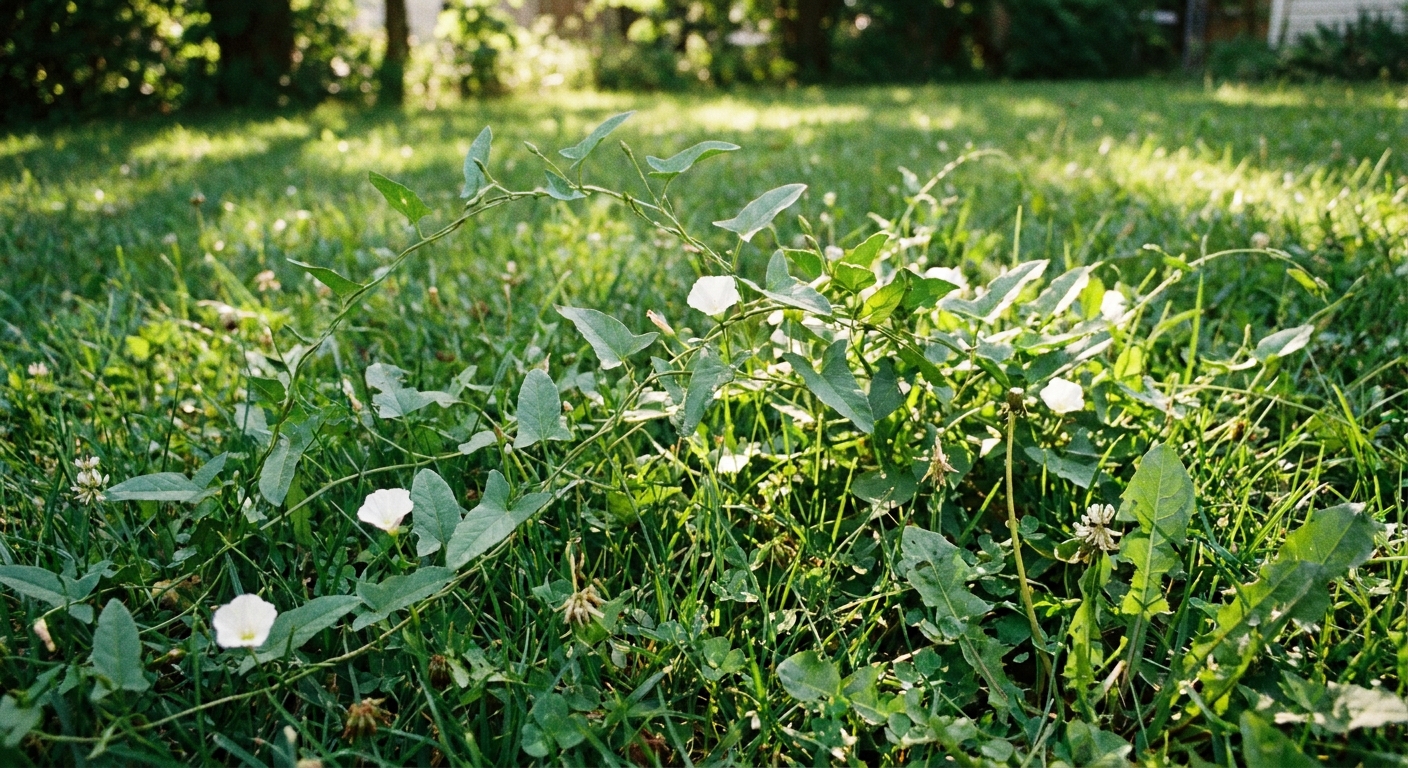
- Leaves: Usually arrow-shaped with two small backward-pointing lobes at the base.
- Vine habit: A thin, wiry vine that twines around stems, mulch, fences, and itself.
- Flowers: Small morning-glory-style trumpets, commonly white or pale pink, often with faint striping.
- Where it shows up: Garden beds, fence lines, landscape edges, and thin spots in turf.
Two common lookalikes:
- Ground ivy (creeping Charlie): Creeps as a shallow mat, has roundish scalloped leaves, and purple flowers. It does not twine like a vine. Many plans for creeping Charlie focus on shallow runners and lawn-safe broadleaf control. Field bindweed is a deeper, more stubborn storage machine.
- Hedge bindweed: Same general flower shape, but typically bigger everything: larger, more triangular leaves and larger white trumpets. It can climb more aggressively. Control approaches overlap, but hedge bindweed can be a heavier lift.
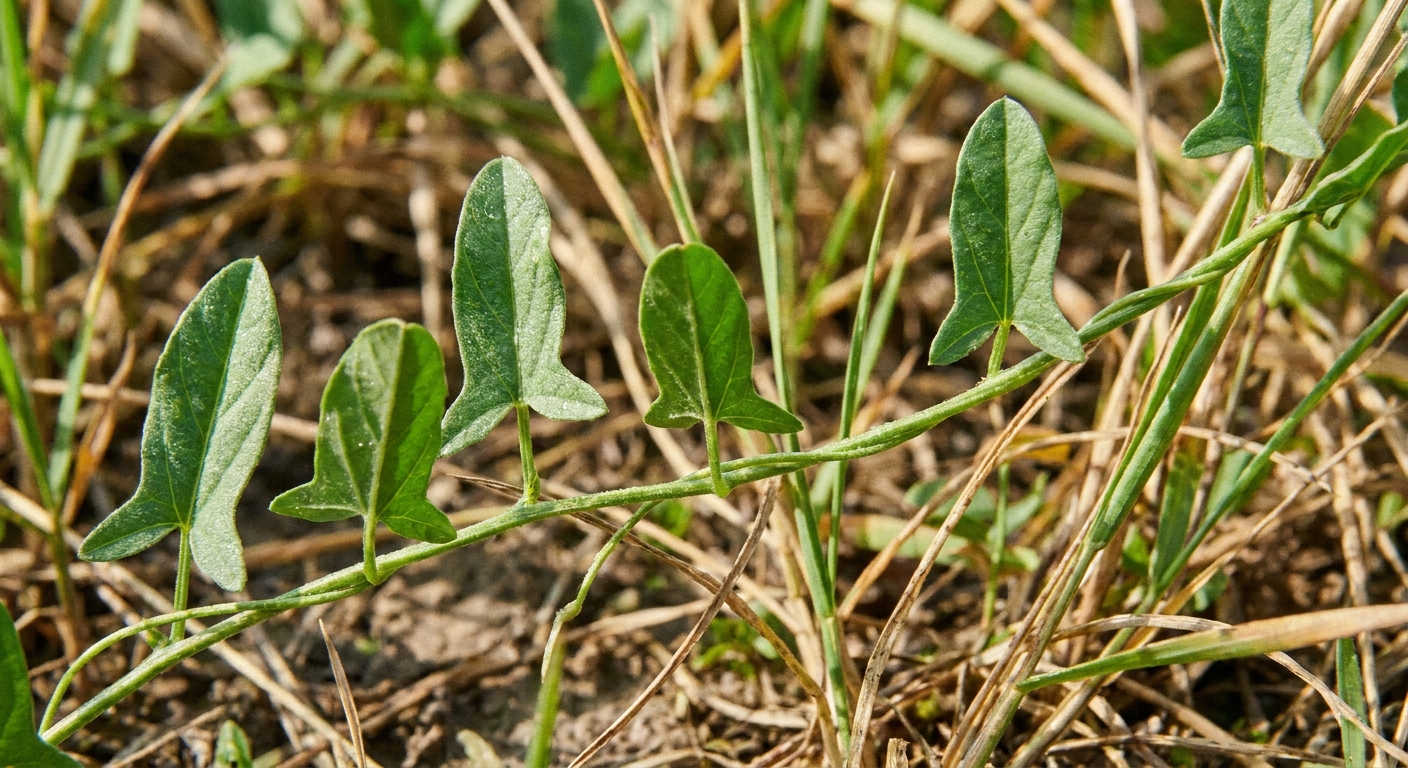
Why one pulling session fails
Bindweed’s party trick is that the part you see is the least important part. The top growth is just the solar panel. The real engine is underground.
Bindweed is a deep-rooted energy banker
Field bindweed forms an extensive root system that reaches down into the soil and spreads sideways. Those roots store carbohydrates. When you pull the vine, you remove the current stems and leaves. The roots respond by sending up new shoots using stored energy. That is why bindweed can look worse after you “clean it up” once. You basically pruned the top and challenged the roots to try again.
Why one spray often disappoints
Some products are contact herbicides, meaning they mainly damage what they touch, usually leaves. Others are systemic, meaning the plant absorbs the product and moves it internally, which is what you want if you are trying to hit deep roots.
Even then, timing matters. Many sprays burn down foliage fast but do not move enough active ingredient into the root system to stop regrowth. Systemic products can also underperform if you spray drought-stressed bindweed, spray at the wrong time of year, or cut and mow too soon after treatment.
Bindweed control is less like swatting a fly and more like paying off a debt. You win by repeatedly stopping the plant from photosynthesizing and, when you use herbicide, timing it when the plant is naturally sending resources down into its roots.
The plan that works: starve the roots
If you want the most reliable, least dramatic approach, you are looking for repeat defoliation. That means removing top growth again and again, so the root reserves shrink instead of refill.
Option A: Repeated cutting
This is the steady plan for garden beds, fence lines, and anywhere you can keep up with it.
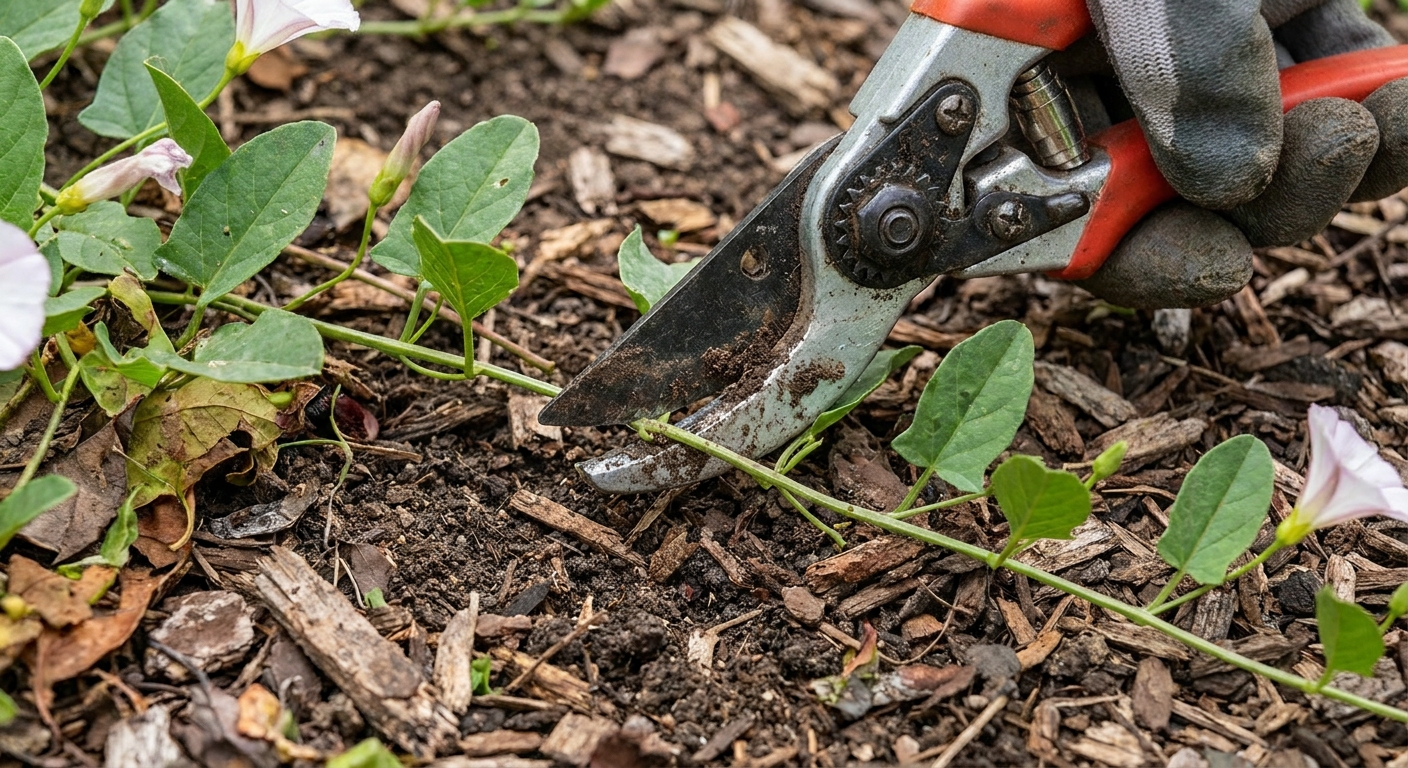
- Cut, do not tug: Snapping the vine by pulling tends to leave fragments wrapped around plants. Instead, follow the vine to the soil line and snip it off.
- Repeat on a schedule: Cut it back every 7 to 14 days during active growth. The goal is to never let it keep leaves long enough to refill the underground pantry.
- No deep digging required: You only need to cut at or near the soil line each time. Consistency beats intensity here.
Expectations, courier-style: you are not looking for instant disappearance. You are looking for each regrowth to come back weaker, thinner, and slower. That is progress.
When herbicide helps
I am not here to toss chemicals at every green thing. But field bindweed is one of those weeds where a carefully chosen and carefully timed systemic herbicide can shorten the war.
Best timing: late summer to early fall
Here is the logic: later in the season, field bindweed is naturally moving sugars from leaves down into the roots for storage. A systemic herbicide applied during that window is more likely to ride that downward traffic into the root system.
- Target window: Late summer to early fall, especially at or after flowering, while the plant is still green and actively growing.
- Avoid stressed plants: Drought-stressed bindweed and heat-stressed turf are common reasons people spray and get nothing but temporary leaf burn.
- Do not spray right after mowing or cutting: You need leaf surface to absorb product. Let it regrow enough to have several healthy leaves.
- Choose calm, dry conditions: Avoid wind and avoid rain in the forecast per label directions.
Spot treat, do not blanket
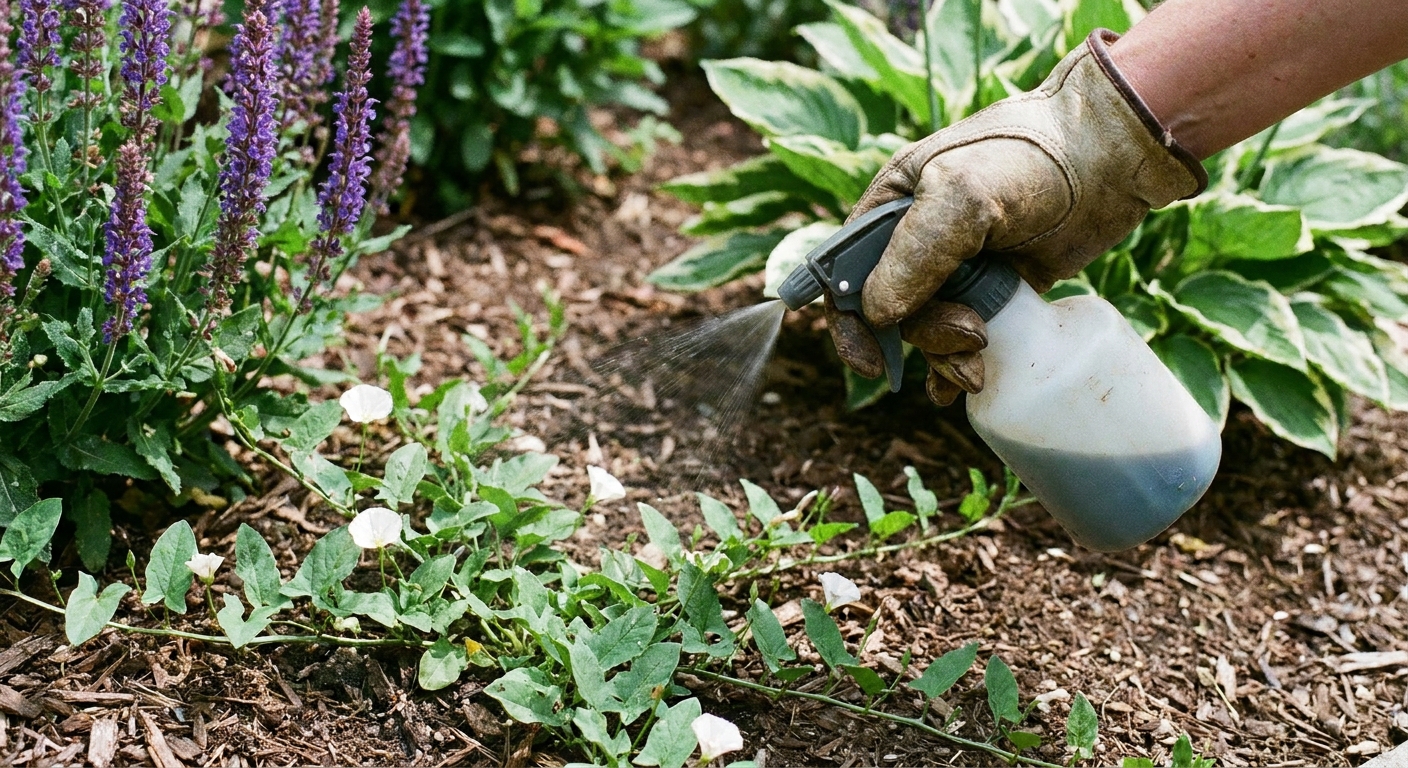
Field bindweed often weaves through ornamentals. That is how it survives. If you broadcast spray without a plan, you can damage the plants you actually like.
Ways people commonly spot-treat:
- Careful directed spray with a shield, keeping droplets off desirable leaves.
- Wipe-on application using a sponge or foam applicator on bindweed leaves, especially when it is climbing through shrubs.
Important: Follow the product label and local rules. Labels are not vibes, they are instructions. If you are near vegetables, waterways, trees, or sensitive ornamentals, choose products approved for that setting and use the application method the label allows. Also watch temperature limits on the label, since heat can raise drift and volatilization risk.
Barriers and smothering
Bindweed laughs at flimsy solutions. But barriers can be powerful when they are used for the right job.
In beds: block light, then cut escapes
Smothering works best when you combine it with persistence.
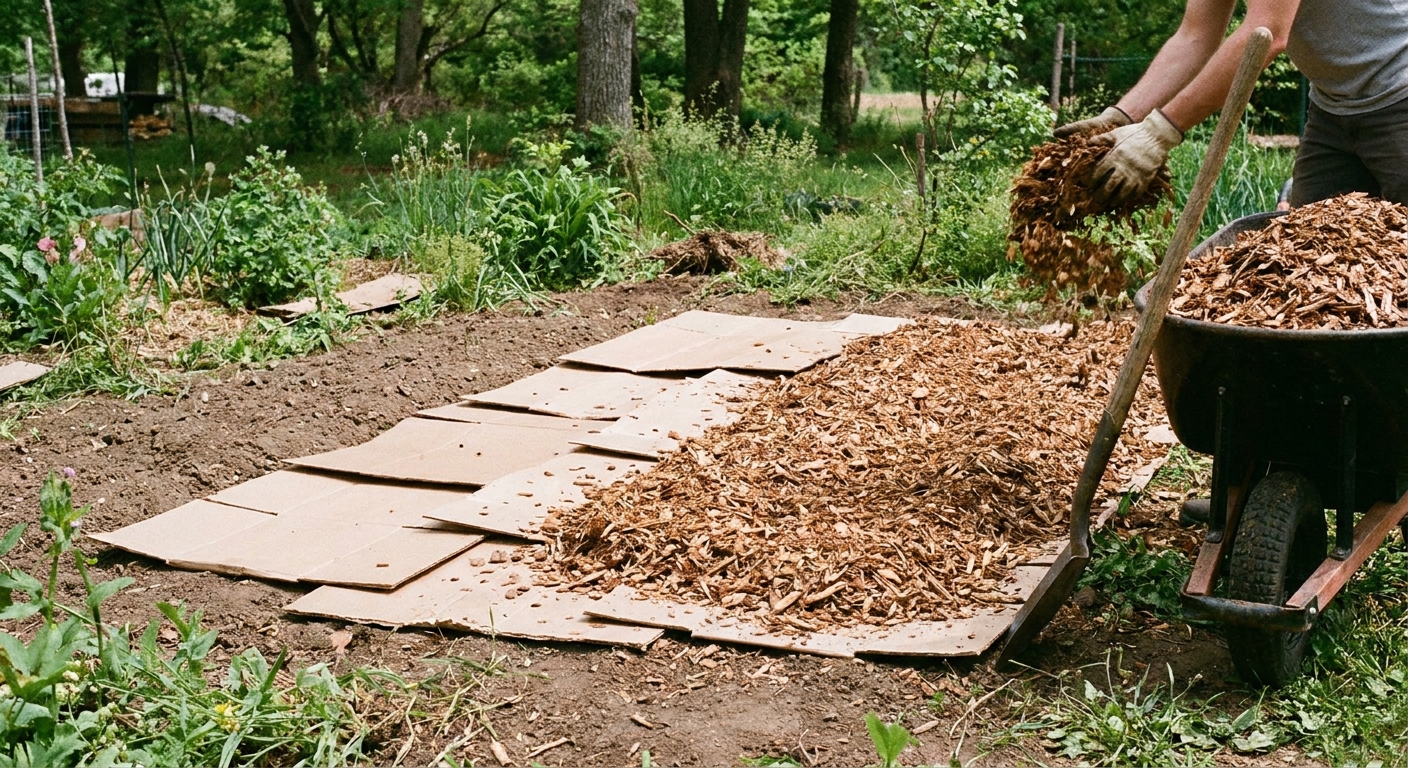
- Cardboard plus mulch: Overlap cardboard seams, wet it, then add a thick mulch layer. This blocks light and makes new shoots easier to spot and cut.
- Opaque tarp or heavy-duty fabric: More effective than thin landscape fabric. Secure edges well so bindweed cannot snake to daylight. Check regularly for runners sneaking out at seams.
Reality check: field bindweed can travel. Smothering one patch helps, but if roots extend beyond the covered area, you still need to cut any growth that emerges around edges.
Bindweed in a lawn
Field bindweed in turf is a special annoyance because you want to protect grass while targeting a broadleaf vine.
First: make the lawn less inviting
- Mow high: Taller turf shades the soil and makes bindweed seedlings less happy.
- Thicken thin spots: Overseed and improve fertility based on local guidance. Field bindweed loves open real estate.
- Avoid scalp mowing: Scalping gives bindweed more sun and reduces grass competitiveness.
Then: spot treat with lawn-safe broadleaf control
Many lawn broadleaf herbicides can suppress field bindweed with repeated applications, but complete control is not always realistic with one product pass. Read the label to confirm field bindweed is listed and to follow reapplication intervals.
If you do spray, be extra careful around trees and ornamentals. Herbicide can reach roots through soil or get onto leaves through drift, and woody plants tend to be the innocent bystanders in lawn wars.
If you are trying to avoid herbicide entirely, you can still win by repeatedly removing top growth. In a lawn, that usually means frequent mowing plus hand removal of long runners at edges and beds, though it often takes longer than a targeted late-season systemic plan.
Do not reuse a creeping Charlie playbook
Creeping Charlie often forms a shallow mat with runners near the soil surface, and control plans lean heavily on lawn-safe broadleaf sprays and thickening turf. Field bindweed may look like it is just “in” the lawn, but the root system is operating deeper and can pop up again even when the surface growth looks handled. Your plan needs time and repeat pressure.
Digging: when it helps
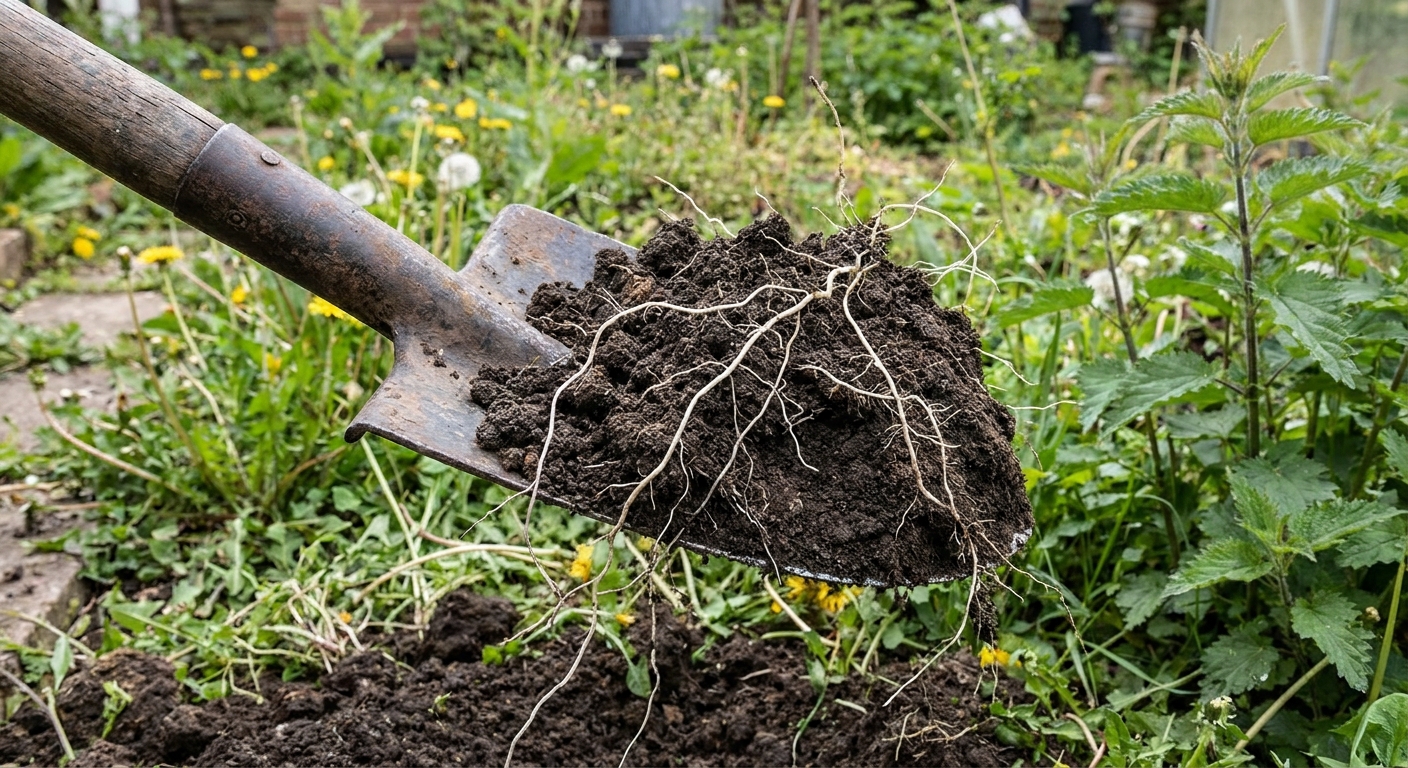
Digging sounds satisfying. Sometimes it is. But with field bindweed, aggressive digging can also chop roots into pieces that regrow, and it can spread the mess across a larger area.
Dig if you can isolate the patch
Digging can be worthwhile when:
- The patch is small and clearly defined.
- You can sift and remove as much root as possible.
- You are ready to monitor and cut regrowth for months afterward.
Avoid rototilling infested soil
Rototilling can distribute root fragments and create a wider infestation. If you need to renovate an area, consider a season of smothering and repeated cutting first, or plan for follow-up control after disturbance.
Containment and cleanup
Field bindweed is not just a weed. It is a traveler. A little containment saves you work later.
- Do not move infested soil: If you are digging or regrading, keep bindweed-heavy soil in place if you can, or plan to manage the new area it gets moved to.
- Watch edges and fence lines: This is where reinfestation likes to start. A five-minute check beats a five-hour cleanup.
- Clean tools when you are done: Knock soil off shovels and cultivators so you are not relocating root pieces to a new bed.
- Dispose of vines carefully: Do not toss fresh, green bindweed into a moist compost pile. Let pulled or cut vines dry out completely first, or dispose of them according to local guidance.
A simple seasonal timeline
If field bindweed has been freelancing in your yard for a while, a timeline helps you stay consistent without obsessing daily.
Spring
- Start cutting at the soil line as soon as you see new shoots.
- Smother bare areas in beds with cardboard and mulch if you are rebuilding a section.
- Improve lawn density in thin spots.
Summer
- Keep up the 7 to 14 day cutting rhythm in beds and edges.
- Do not let vines climb and leaf out on your ornamentals.
Late summer to early fall
- Consider systemic herbicide spot treatments when field bindweed is actively growing, still green, and at or after flowering.
- Avoid spraying during drought stress or extreme heat, and follow label temperature guidance.
- Keep desirable plants protected from drift and overspray.
Winter
- Mark problem zones on a yard note or map so you hit them early next spring.
FAQ
Will vinegar kill field bindweed?
Household vinegar solutions typically burn foliage and can top-kill small growth, but they generally do not move into deep roots like a systemic herbicide. That means field bindweed often returns. Vinegar can also damage nearby plants and is nonselective.
Should I pull field bindweed?
You can pull small seedlings, but mature field bindweed usually snaps and regrows. Cutting at the base on a schedule is often more effective and less disruptive to surrounding plants.
How long does it take to get rid of field bindweed?
Usually a full season of consistent cutting makes a visible dent, and stubborn patches can take multiple seasons. Late-season systemic treatments can speed things up, but follow-up is still needed.
Is field bindweed the same as morning glory?
They are in the same family and look similar in flower shape. Field bindweed has smaller flowers and the classic arrow-shaped leaves, and it behaves like a perennial weed with a persistent root system.
One last raised eyebrow
If field bindweed keeps coming back, it does not mean you are doing it wrong. It means you are up against a plant built for persistence. Your goal is to be more persistent, just on a schedule that fits a human life.
Choose your lane:
- Low-chemical lane: cut at the soil line every 7 to 14 days, smother where you can, and do not let it photosynthesize in peace.
- Faster lane: do the same cutting, then add a carefully timed late-summer to early-fall systemic spot treatment when the plant is sending energy to roots.
Either way, you are not hunting the vine. You are draining the roots. And that is how the story ends.
The 30-Second Cheat Sheet
Essential takeaways for: How to Get Rid of Field Bindweed
How to identify field bindweed
- Leaves: arrow-shaped with two small backward lobes.
- Growth: thin vine that twines around plants and fences.
- Flowers: small white or pale pink morning-glory trumpets.
Why one pull or one spray fails
- Bindweed stores energy in a deep, spreading root system and resprouts after top growth is removed.
- Contact sprays often burn leaves but do not stop roots. Even systemic sprays disappoint if timed wrong or sprayed on stressed plants.
Best no-drama plan
- Cut at the soil line (do not yank) every 7 to 14 days during active growth.
- Goal: starve the roots by never letting it keep leaves long enough to recharge.
Best herbicide timing (if you use it)
- Late summer to early fall: treat while bindweed is still green, actively growing, and not drought-stressed so systemic herbicide can move into roots.
- Spot treat: protect ornamentals, avoid wind, and follow the label.
Barriers that help
- Cardboard plus thick mulch in beds blocks light and makes regrowth easy to spot and cut.
- Secure tarps or heavy fabric well, and watch seams and edges.
Lawn notes
- Keep turf thick: mow high, fix thin spots.
- Use lawn-appropriate broadleaf control as spot treatments and expect repeats. Suppression is more common than a one-and-done cure.
- Do not reuse a creeping Charlie plan. Bindweed roots are deeper and more persistent.
💡 Tip: Scroll up to read the full article for detailed, step-by-step instructions.
⬆️ Back to top
About Grit
Content Creator @ Grit & Home
Grit is Grit & Home’s little blue clay courier, delivering big questions about the place you call home. Expect practical ideas, a raised eyebrow, and a satchel full of curiosity.