
🚨 In a DIY emergency or rush?
Skip the details and jump straight to our 30-second cheat sheet for the most crucial info.
Small courier. Big home questions.
Foxtail has one job: make a bristly seed head and fling the next generation into every thin spot in your lawn. If you have ever mowed and watched those little fuzzy bottles stand right back up, you already know it is not a “wait it out” kind of guest.
Let’s ID it early, block the next wave with pre-emergent, and use the right post-emergent tools when it is already up.
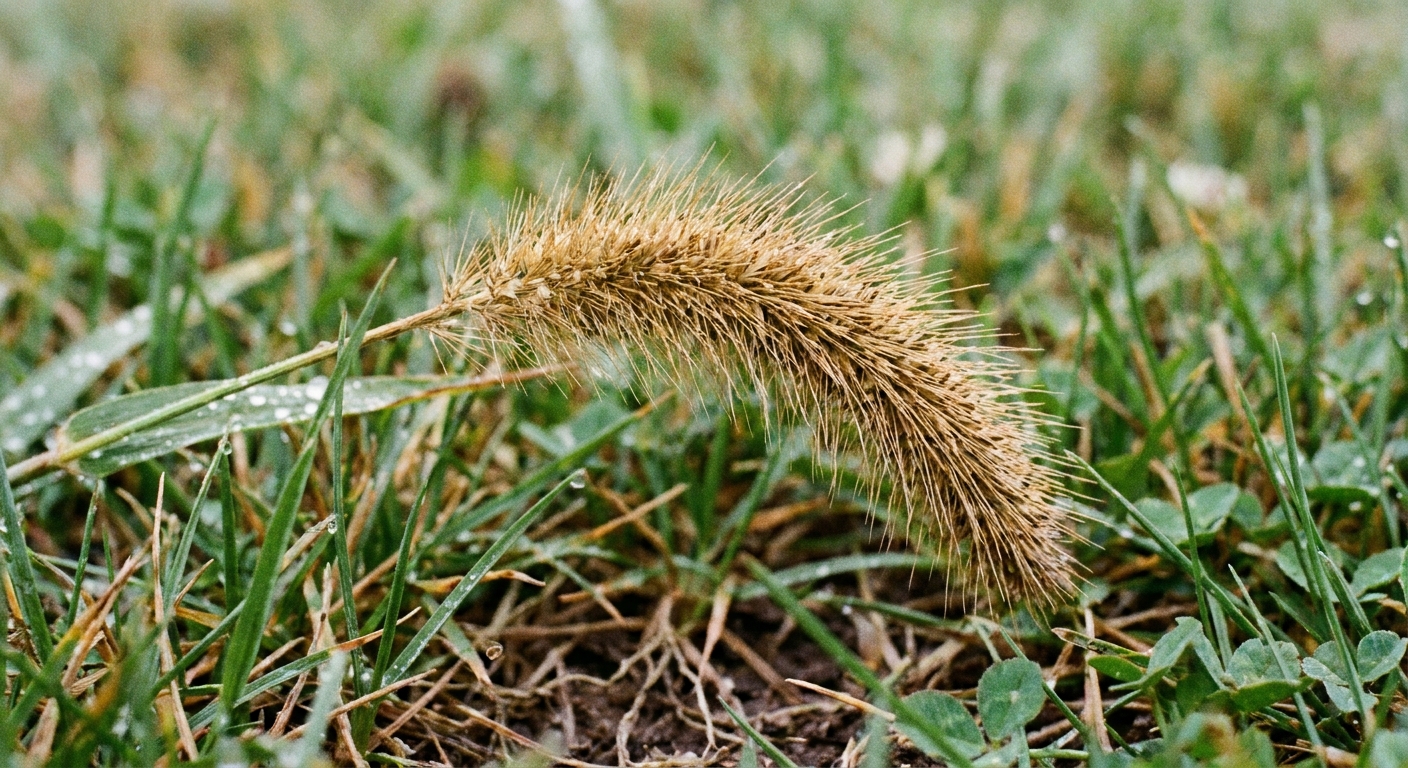
Foxtail basics: why it keeps coming back
“Foxtail” in lawns usually means one of three annual grassy weeds in the Setaria group:
- Green foxtail (Setaria viridis)
- Yellow foxtail (Setaria pumila, sometimes listed as S. glauca)
- Giant foxtail (Setaria faberi)
They germinate from seed when soils warm, grow fast in open or stressed turf, and then set seed heads that can mature even if you mow. Preventing seed is a big part of “getting rid of it.”
How to identify foxtail seedlings vs crabgrass
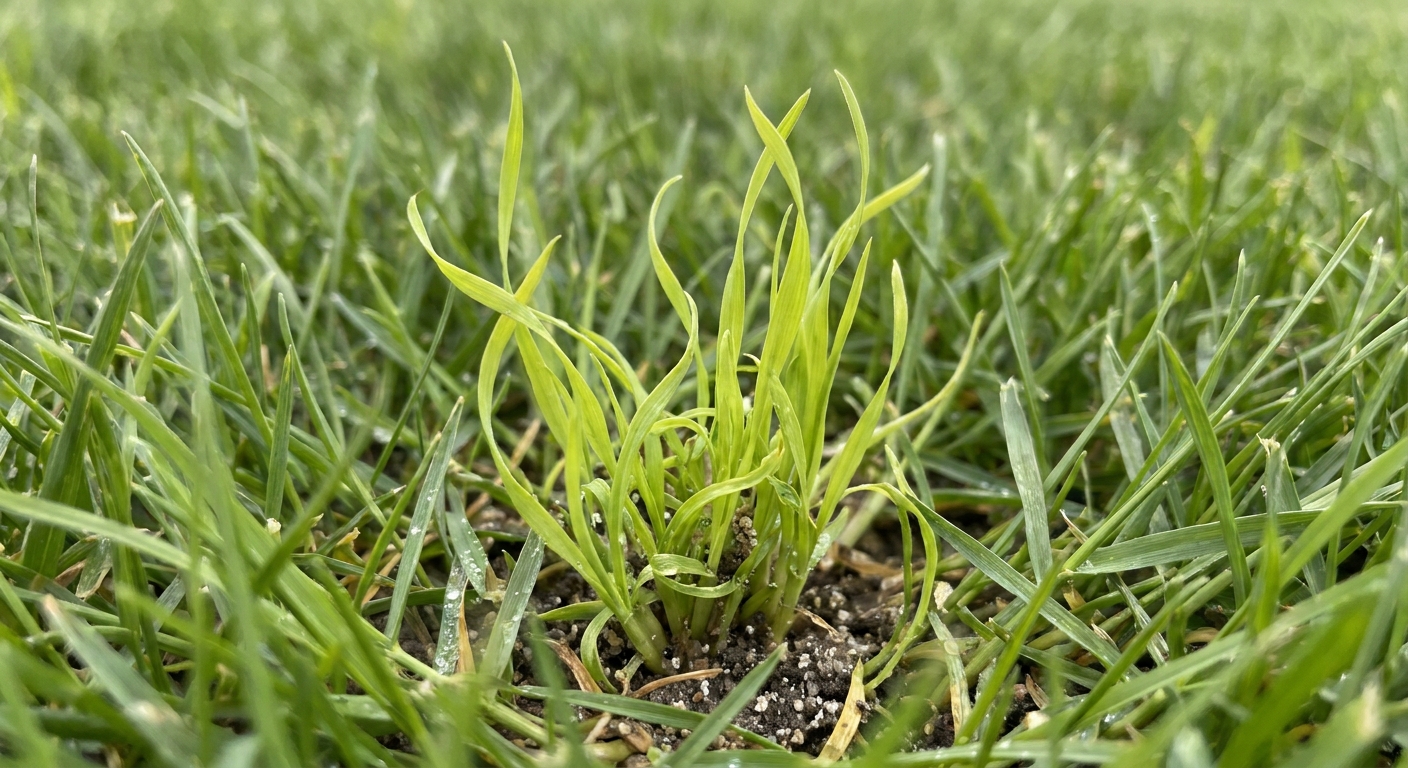
Crabgrass ID can be a whole saga, but here is the quick foxtail-focused version: foxtail seedlings usually look more upright and tufted, while crabgrass tends to sprawl outward like a low starburst.
What foxtail seedlings look like
- Growth habit: Upright, clumping, with leaves coming up more vertical than crabgrass.
- Leaf shape: Narrow, flat blades that can feel slightly rough along the edges.
- Leaf surface: Often has fine hairs, depending on species and growth stage.
Green foxtail (seedling to young plant)
- Clue to look for: Fine hairs can be present on the leaf blade near the base.
- Overall vibe: A tidy, upright little tuft that quickly becomes a thicker clump.
Yellow foxtail (seedling to young plant)
- Best single clue: Hairs on the upper surface of the leaf blade near the base are common, and the plant often looks a little more “softly fuzzy” than green foxtail.
- Color note: Despite the name, seedlings are not reliably yellow. Do not ID by color alone.
Giant foxtail (seedling to young plant)
- Best single clue: Often shows noticeable hairiness on the leaf surface and sheath early on.
- Scale: It tends to get tall and coarse faster than the others if you miss the seedling stage.
Two quick “not crabgrass” checks
- Foxtail is usually more upright. If it is hugging the ground and radiating out, crabgrass is more likely.
- Foxtail forms a clump. Crabgrass usually looks like a flatter, spreading mat.
If you are unsure, let one suspicious plant grow just long enough to show its intention. Foxtail’s seed head is unmistakable once it starts forming.
Best defense: pre-emergent timing for foxtail
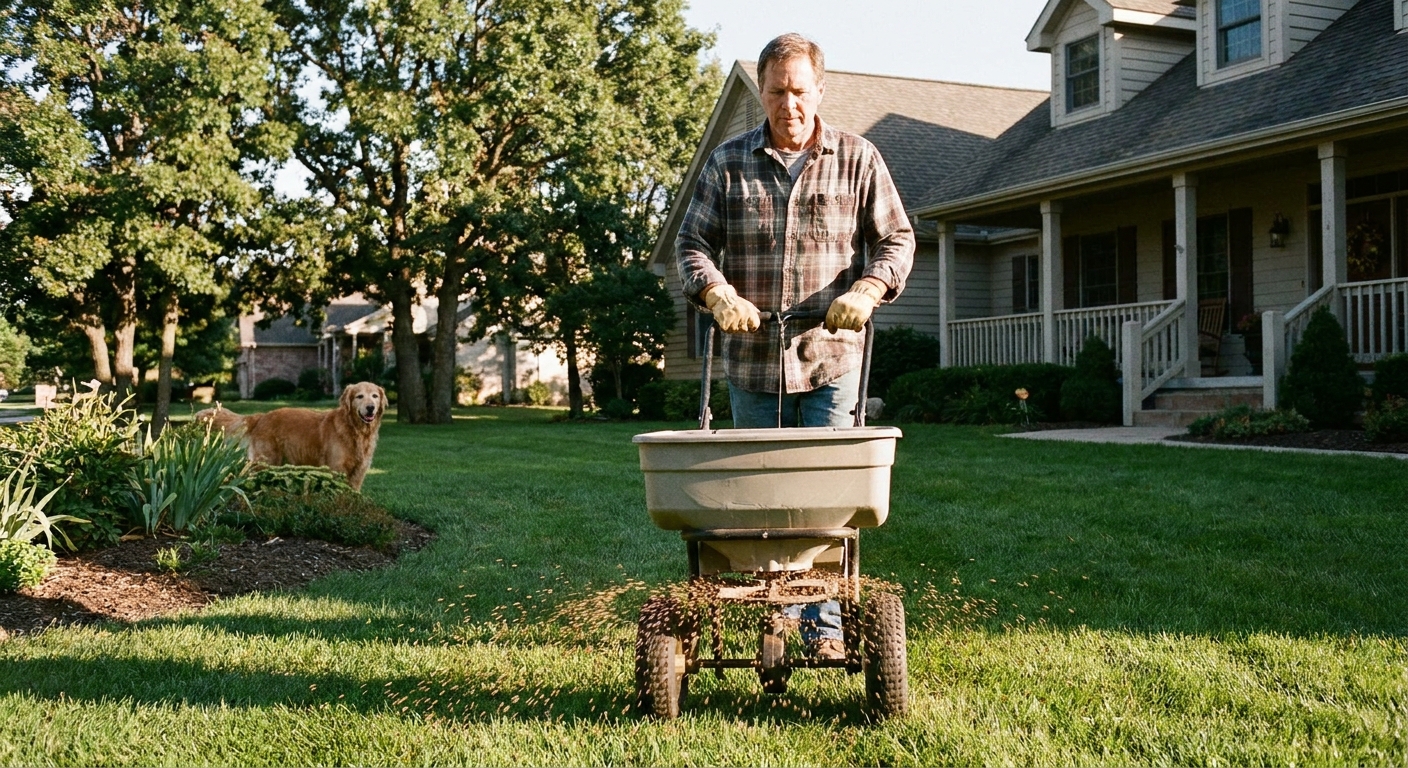
Pre-emergent herbicide is the most reliable way to reduce foxtail because it targets the weed before it becomes a tough grassy plant your lawn has to compete with.
When to apply
Foxtail germinates in spring into early summer as soils warm. A practical rule is:
- Apply in early spring before consistent warm weather.
- Use soil temperature as your real guide: Aim to have pre-emergent down before soil temps hover around the mid-50s to 60°F range for several days.
Because foxtail can have a longer germination window than some other summer annuals, many lawns benefit from a split application (two lighter applications spaced per label) rather than one heavy drop.
Pre-emergent ingredients that work for foxtail
Look for one of these active ingredients on the label:
- Prodiamine
- Pendimethalin
- Dithiopyr (often also gives some early post-emergent activity on very young grassy weeds)
Two timing traps to avoid:
- Putting it down too late: Pre-emergent does not kill established foxtail.
- Seeding conflicts: Most pre-emergents will also prevent grass seed from establishing. If you plan to seed bare spots, choose your product and schedule carefully and follow the label for seeding intervals.
When foxtail is already up: what works
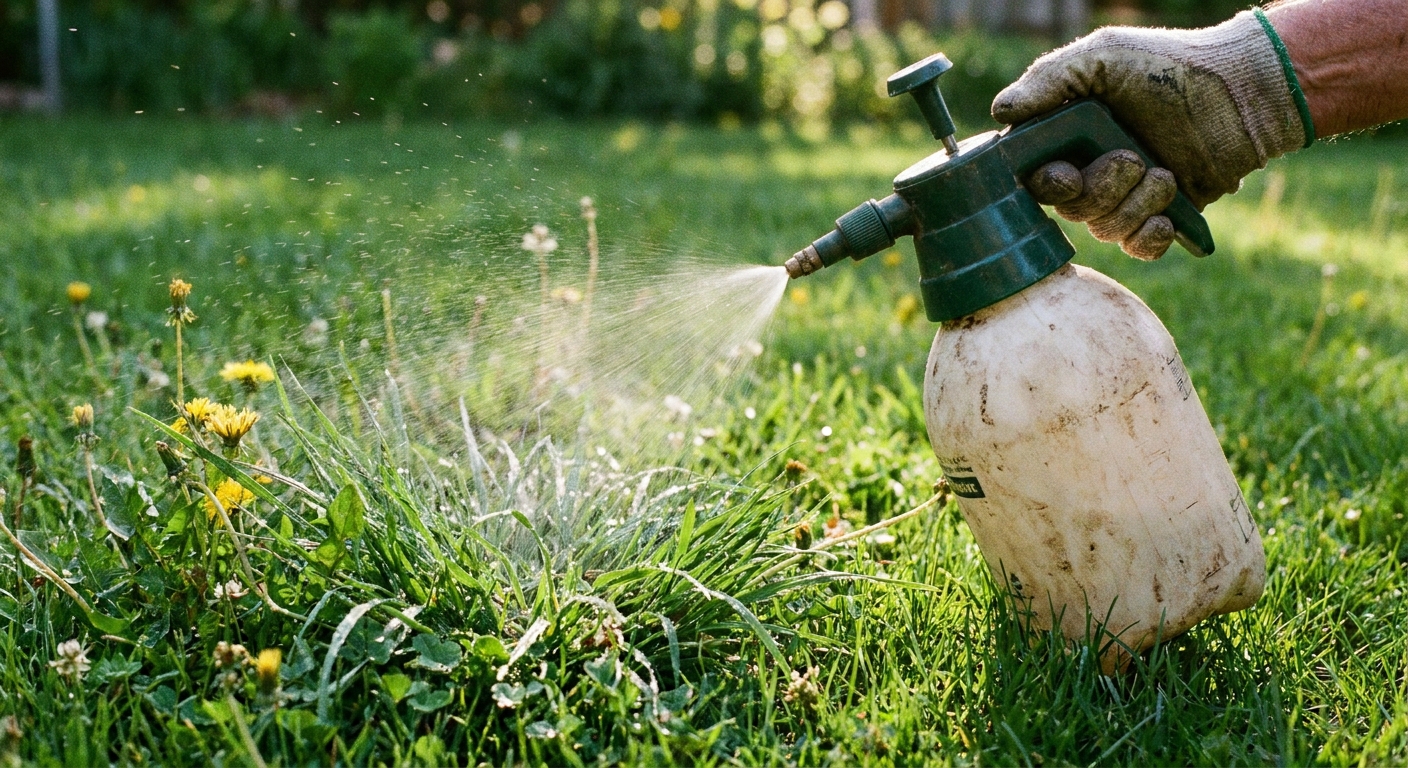
Once foxtail is visible, your goal shifts to selective post-emergent control or spot removal while preventing seed heads.
Important note from the satchel: many “weed killers” that work great on dandelions do nothing to foxtail because foxtail is a grass. You need a product labeled for annual grassy weeds and compatible with your turf type.
Selective post-emergent options
Check the label for foxtail or Setaria and confirm your grass type.
- Quinclorac: Commonly used for crabgrass, but many labels also list foxtail suppression or control, especially at younger growth stages. Often found in homeowner products and mixes. Works best with proper adjuvant guidance on the label.
- Fenoxaprop-p-ethyl: Often strong on foxtail and other grassy weeds in cool-season turf. Not for every grass type, so label-checking matters.
- Topramezone: A more pro-leaning option used in some turf products for grassy weeds including foxtail. Label specifics vary widely.
What about glyphosate? Non-selective herbicides like glyphosate will kill foxtail, but they will also kill your lawn where they touch. That makes it a last-resort spot treatment for clumps you plan to reseed later.
Application tips that help
- Hit it small: Foxtail is easiest to control when young and not drought-stressed.
- Mind mowing: Many labels recommend avoiding mowing for a window before and after application so the plant can take in the herbicide.
- Coverage matters: You are treating narrow, upright blades. Spray to wet the foliage evenly, not to the point of runoff.
- Do not guess at rates: Overapplying can injure turf and underapplying can create survivors that still make seed.
Keep seed heads from reinfesting
This is the part that turns “I knocked it back” into “it stayed gone.” Foxtail can set viable seed quickly, and mowing does not always stop it from maturing.
1) Bag clippings when seed heads appear
If foxtail has formed seed heads, switch from mulching to bagging for a few mowings. That keeps many seeds from dropping right back into the turf.
2) Mow higher
A dense canopy shades the soil and makes it harder for foxtail seedlings to get established.
- Cool-season lawns often do better with a higher mowing height during summer stress.
- Warm-season lawns have their own ideal heights, so follow what is right for your grass, but avoid scalping.
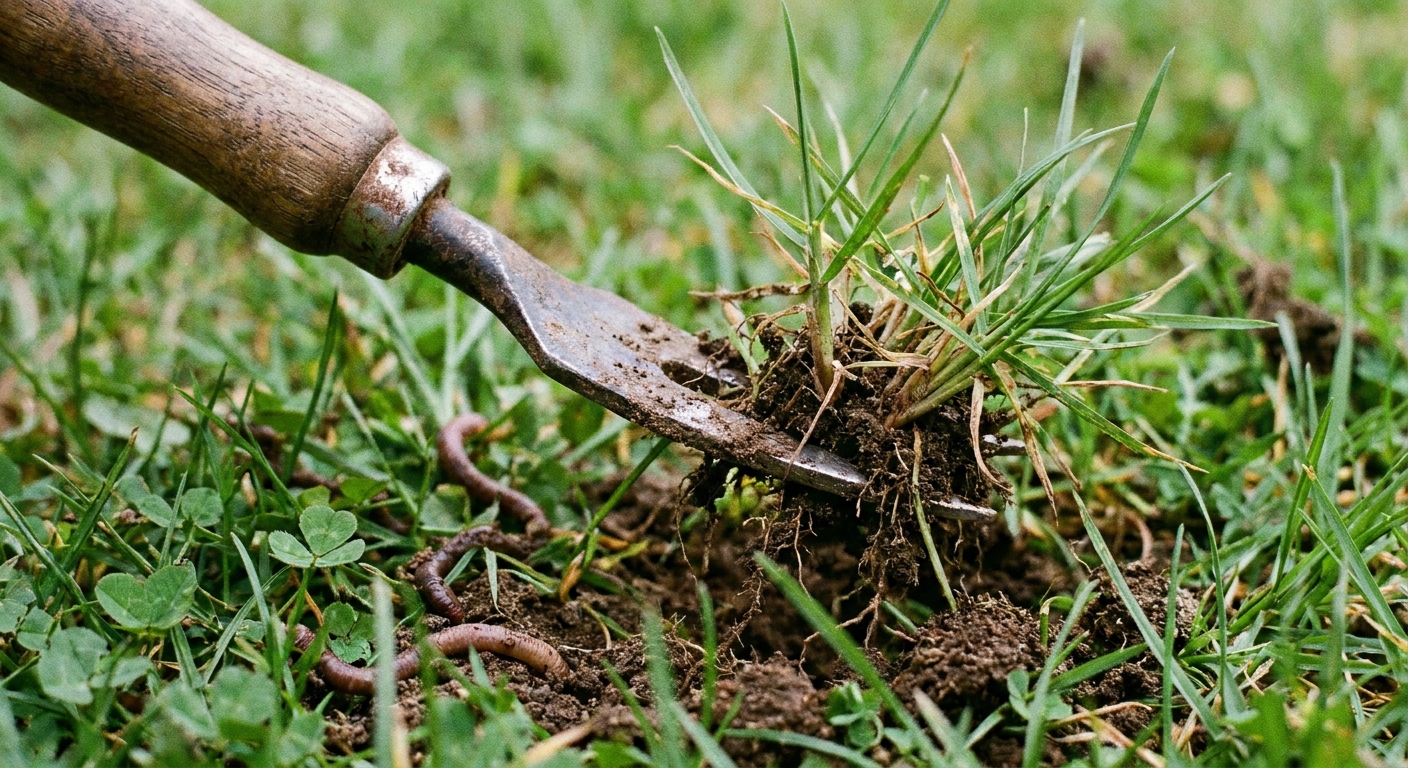
3) Pull or dig isolated clumps
For a few scattered plants, physical removal is satisfying and effective. Moisten the soil first, grab low, and remove the crown and roots.
4) Patch thin spots
Foxtail loves open soil and weak turf. The “permanent” fix is boring but powerful:
- Fix compaction and drainage issues
- Water deeply and less often, as appropriate for your turf and climate
- Fertilize based on your lawn’s needs
- Overseed cool-season lawns in the right season so bare areas do not sit open
The goal is to replace foxtail’s favorite habitat with thick grass blades that block light at the soil line.
Foxtail control plan
If you see foxtail seedlings now
- Spot treat with a selective post-emergent labeled for foxtail and safe for your turf.
- Plan a pre-emergent application next season so you are not playing whack-a-weed again.
If you are seeing seed heads
- Mow and bag for several mowings.
- Spot treat survivors after mowing windows per label.
- Do not let clumps stand tall long enough to keep producing seed.
If you are planning ahead for next year
- Apply pre-emergent in early spring before the main germination window.
- Consider split applications to cover a longer season.
- Commit to thick turf: correct mowing height, consistent irrigation, and fixing thin spots.
FAQ
Will the same pre-emergent that stops crabgrass stop foxtail?
Often, yes. Many crabgrass pre-emergents also control foxtail, but do not assume. Confirm on the label that foxtail or Setaria is listed.
Why did foxtail show up after I used pre-emergent?
Common reasons include applying too late, uneven coverage, disturbed soil after application, heavy rain washing product off slopes, or a germination window that outlasted the product’s effective period. Split applications and better coverage usually help.
Do I need to treat the whole lawn?
Not always. If foxtail is patchy, spot treating plus seed-head prevention can be enough. If it is widespread, a broadcast post-emergent labeled for your turf might make sense. Labels decide what is allowed.
Is foxtail dangerous to pets?
The seed heads of foxtail-type grasses can be a problem for pets because barbed awns can lodge in ears, paws, noses, and fur. If you have dogs that roam the yard, removing seed heads promptly and keeping the lawn mowed can reduce risk.
The 30-Second Cheat Sheet
Essential takeaways for: How to Get Rid of Foxtail Weeds in Your Lawn
Identify it fast
- Foxtail seedlings: more upright and clumping than crabgrass.
- Green, yellow, giant foxtail: often show fine hairs on leaf surfaces or near the base, then later make a bristly “bottlebrush” seed head.
Pre-emergent timing
- Apply in early spring before foxtail germinates.
- Use soil temps as a guide: aim to be down before soils sit in the mid-50s to 60°F range for several days.
- Consider a split application (per label) to cover a longer germination window.
Pre-emergent actives that work
- Prodiamine
- Pendimethalin
- Dithiopyr
Post-emergent options when foxtail is up
- Quinclorac (many labels include foxtail, best on younger plants)
- Fenoxaprop-p-ethyl (often strong on foxtail in many cool-season lawns)
- Topramezone (varies by product, label-check)
Skip broadleaf-only weed killers. Foxtail is a grass.
Stop reinfestation from seed heads
- Bag clippings when seed heads appear.
- Pull or dig isolated clumps before they fuzz up.
- Mow at the right height to keep turf dense and shaded at the soil line.
- Fix thin spots so foxtail has nowhere to land.
💡 Tip: Scroll up to read the full article for detailed, step-by-step instructions.
⬆️ Back to top
About Grit
Content Creator @ Grit & Home
Grit is Grit & Home’s little blue clay courier, delivering big questions about the place you call home. Expect practical ideas, a raised eyebrow, and a satchel full of curiosity.