
🚨 In a DIY emergency or rush?
Skip the details and jump straight to our 30-second cheat sheet for the most crucial info.
Small weed. Big home questions.
If your lawn has developed a stubborn, low, wiry mat that seems to shrug off mowing, you might be hosting prostrate knotweed. It is the kind of weed that does not “move in” by accident. It shows up when the soil gets compacted, the grass thins, and the turf loses its grip on the space.
Let’s identify it properly, then go after it in the right order: control the weed early, then fix the compaction, then reseed so the grass can actually win.
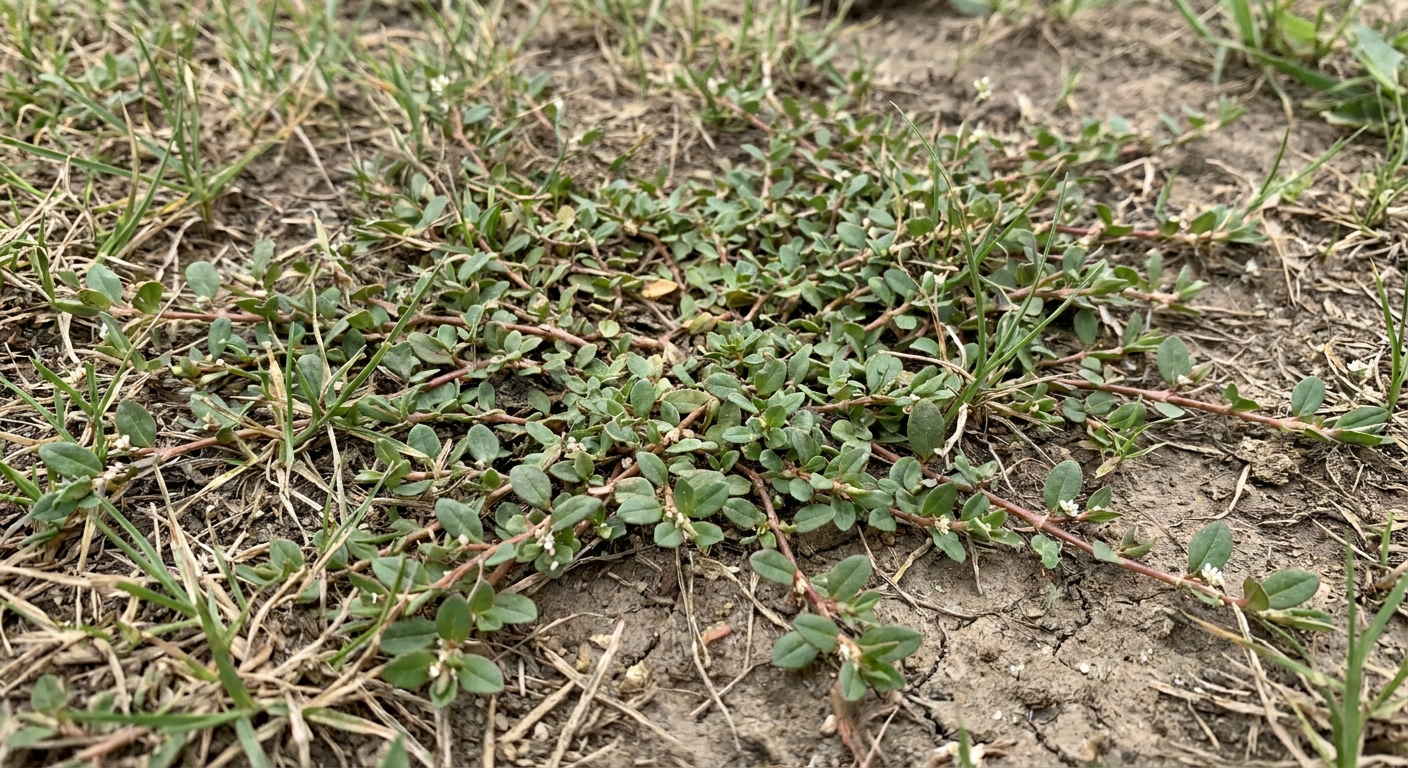
How to identify prostrate knotweed
Prostrate knotweed (often listed as Polygonum aviculare, also seen as Fallopia aviculare) is generally treated as an annual lawn weed. In many regions it germinates very early, then sprawls into a low mat as the season warms. It spreads outward like a green-brown doormat, hugging the soil where mower blades and foot traffic cannot bother it much.
Key clues to look for
- Wiry, branching stems that radiate out from a central point, forming a flat mat.
- Small, narrow leaves arranged alternately along the stems. Leaves can look a bit gray-green or dusty in hot weather.
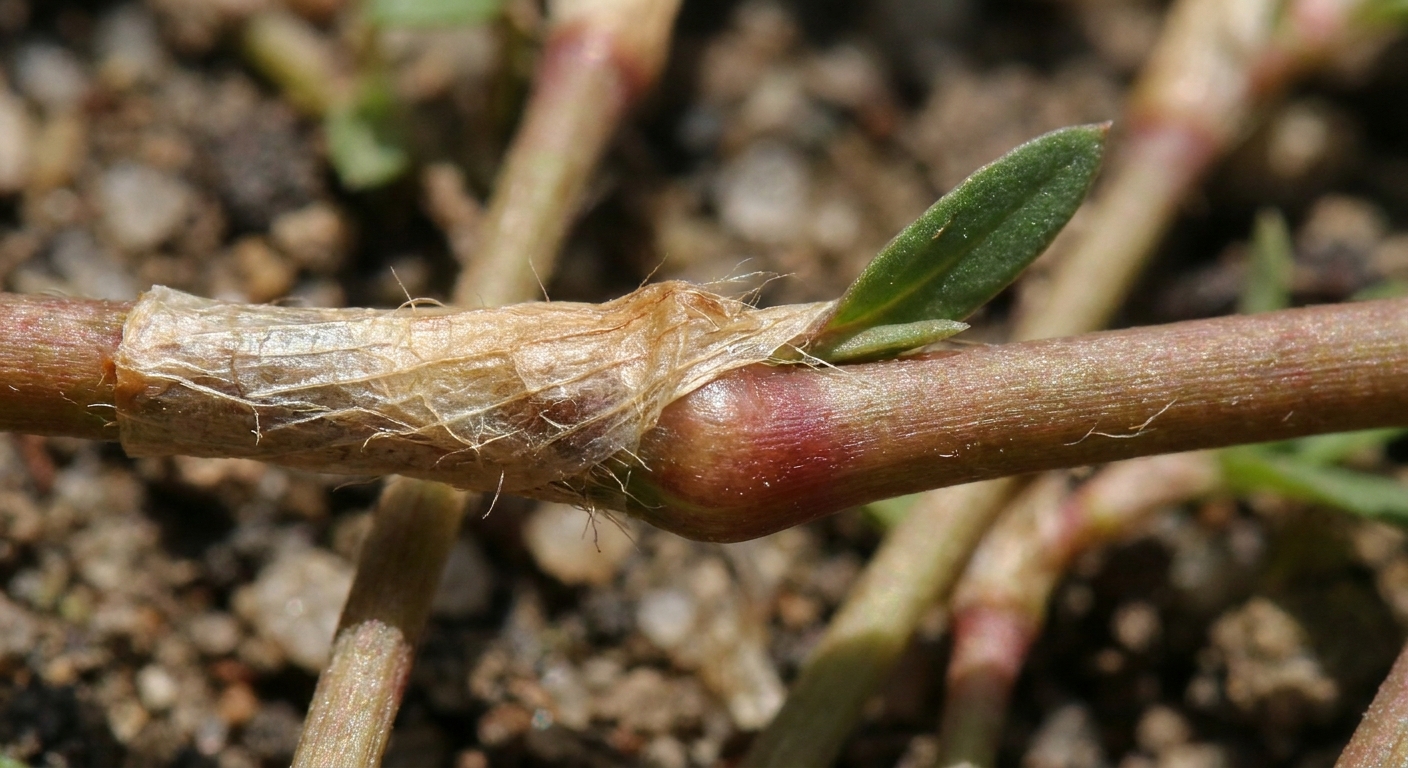
- Papery stem sheath (ocrea) at each node, where the leaf meets the stem. This is the giveaway. It looks like a little tan, translucent wrapper around the stem.
- Tough growth in high-traffic areas like along sidewalks, driveways, dog runs, sports paths, and where a mower turns around.
- Tiny, not-showy flowers tucked at nodes, usually greenish-white to pinkish, easy to miss.
Common lookalikes
- Spurge: Usually has opposite leaves and milky sap when snapped. Knotweed has alternate leaves and the papery sheath.
- Purslane: Thick, succulent leaves and stems, and it feels juicy compared to knotweed’s wiry texture.
Why prostrate knotweed wins
Knotweed is not just a random invader. It is a symptom. It thrives where grass roots struggle: hard, compacted, oxygen-poor soil.
Compaction helps knotweed and hurts turf in three big ways:
- Water runs off instead of soaking in, so grass dries out faster.
- Roots stay shallow because they cannot push into dense soil.
- Air exchange drops, which stresses desirable grass and slows recovery.
Knotweed tolerates that stress, stays low, and fills the gaps. So if you only spray and do nothing else, the lawn often looks better for a bit, then the same conditions invite the next wave.
What actually works
Here is the game plan that gives grass the best chance to take the space back.
Step 1: Confirm and mark patches
Walk the lawn and note where knotweed is thickest. This usually maps neatly onto compacted zones: paths, play areas, thin strips by pavement.
It helps to flag spots so you can treat evenly and remember where to focus aeration later.
Step 2: Spray young plants
Knotweed is easiest to control when it is young and actively growing. In many regions, that means late winter through spring and into early summer, before the plant toughens up and starts setting seed.
Look for a lawn-safe, selective broadleaf herbicide labeled for knotweed. Common active ingredients used in turf products include combinations with:
- 2,4-D
- Dicamba
- MCPP (mecoprop)
- Triclopyr (often helpful on tough broadleaf weeds)
Control can be inconsistent on mature plants, so plan for repeat applications if the label allows it. Also, product labels vary by turf species and local regulations, so confirm your grass type is listed as tolerant and follow all label directions.
Timing tips that matter:
- Spray when temps are moderate and the plant is not drought-stressed. Heat and drought can reduce control and increase turf injury.
- Do not mow right before spraying. Leaves are your absorption surface. Many labels recommend waiting 1 to 2 days before and after mowing.
- Expect a second application. Knotweed often needs a follow-up per label directions, commonly 10 to 14 days later.
Important: This is where a general “aerate and overseed” guide can quietly fail you. If you seed first, then realize you need to spray, you can end up stuck waiting out herbicide restrictions while the knotweed keeps spreading.
Step 3: Respect the seed wait time
Most broadleaf herbicides have a wait period before seeding or overseeding. This can range from a couple of weeks to a month or more, depending on the product and rate.
Do not guess. The label will say something like “Do not seed for X weeks after application.” That waiting time is the difference between seed that sprouts and seed that just sits there sulking.
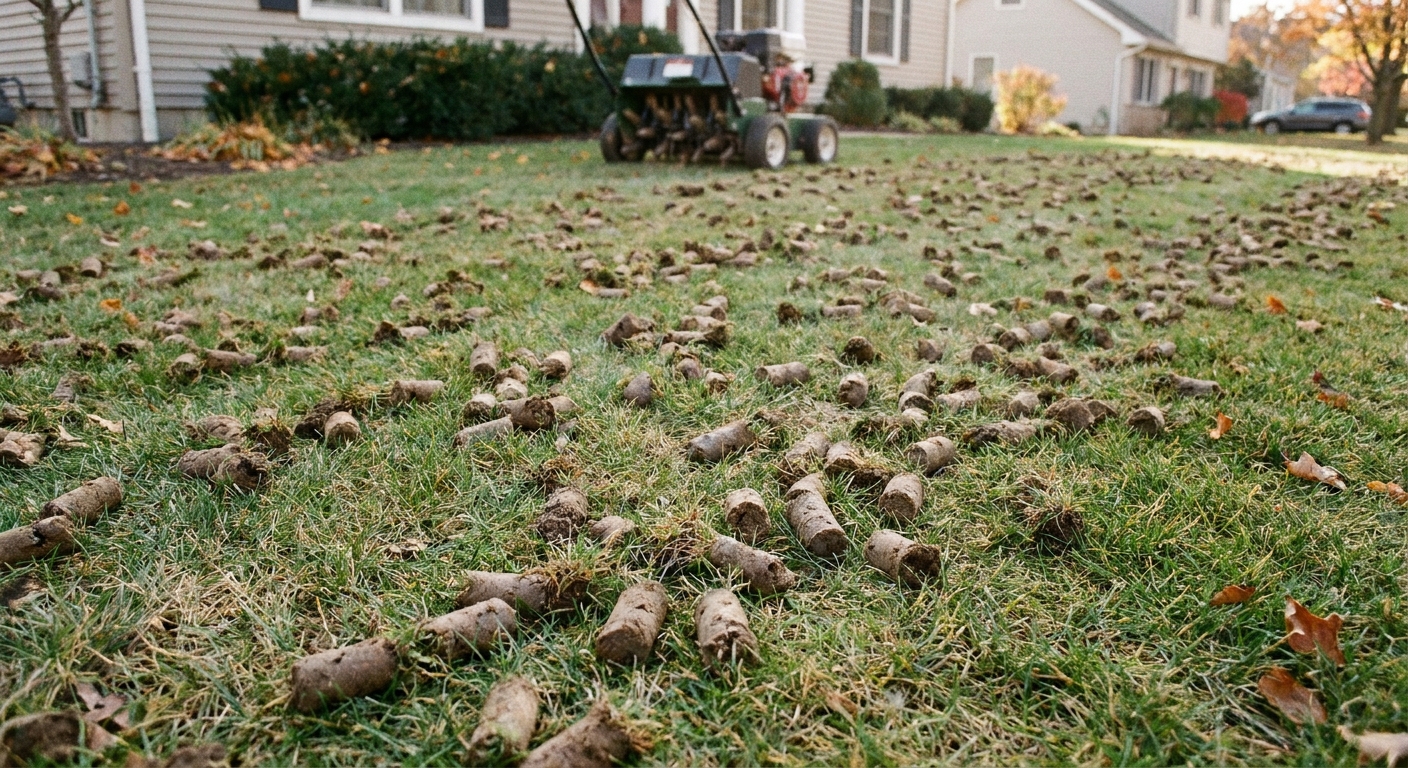
Step 4: Core aerate
Once you are in the safe window (either before herbicide or after the herbicide wait time, depending on your schedule), use a core aerator that pulls plugs, not a spike aerator that just punches holes and can worsen compaction along the sides.
Aim aeration at the zones knotweed loves:
- Along pavement edges
- Gate paths and dog routes
- Where kids play
- Where the mower turns
For heavy compaction, multiple passes in different directions help. Leave the cores to break down on the surface.
Open the surface
Aeration is the backbone, but knotweed often indicates you need a little more help right at the surface.
Options that work
- Rake and dethatch lightly if the lawn has a thick, matted layer that prevents seed from contacting soil.
- Topdress with a thin layer of compost or a compost-sand blend to improve structure over time. Keep it light so you do not smother existing grass.
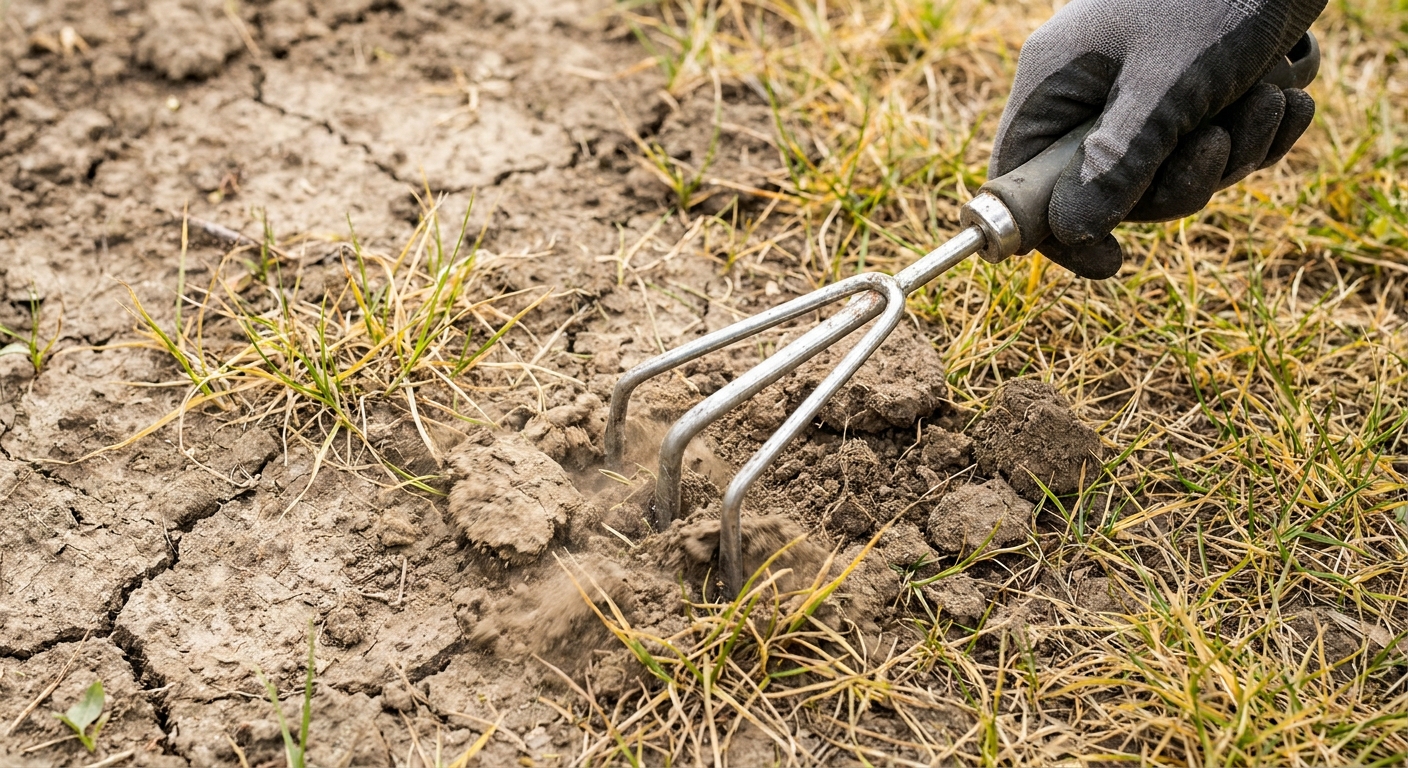
- Rough up bare spots with a garden rake or hand cultivator. Knotweed loves bare, crusty soil. Grass seed hates it.
If water puddles on the surface or runs off quickly, consider whether there is a drainage issue, not just compaction. Aeration helps, but standing water can point to grading or downspout problems.
Overseed the right way
Once herbicide restrictions are satisfied and the soil is opened up, overseeding turns your lawn from “vacant lots” into “occupied housing.” Occupied housing is harder to invade.
Timing by lawn type
- Cool-season lawns (common in northern areas): overseed in late summer to early fall for best results. Spring seeding can work, but it is usually a tougher establishment window.
- Warm-season lawns (common in southern areas): overseed or fill in thin spots in late spring to early summer when turf is actively growing.
Make overseeding count
- Pick the right seed for your region and light. Shade mix in shade, sun and traffic mix where it gets baked and trampled.
- Get seed-to-soil contact. Broadcast seed, then rake lightly or drag a mat so seed settles into the holes and loosened soil.
- Keep the top inch consistently moist until germination and early establishment. Light, frequent watering beats deep, infrequent watering during this stage.
- Be careful with pre-emergents. Many crabgrass preventers can also prevent grass seed from sprouting. If you must prevent weeds while seeding, use only a seed-safe product and follow its label precisely.
After seedlings are established, transition to deeper, less frequent watering to encourage roots to chase moisture down into the improved soil profile.

Can you pull it by hand?
Yes, especially in small patches, but it is not my first pick for a whole-lawn infestation.
- Pros: Immediate removal, no chemical wait period.
- Cons: It can leave bare soil behind, which is exactly what knotweed likes. It is also time-consuming. And if you leave behind rooted nodes or plant pieces, they can keep growing. Plus, seeds can keep germinating for a while.
If you hand-pull, do it after rain or irrigation when soil is softer, then fill the space immediately with soil improvement and seed (or patch with sod or plugs if appropriate for your grass type and season).
Keep it from coming back
Think of this as a two-part prevention plan: reduce compaction, and keep turf dense.
Prevent compaction
- Redirect traffic with a stepping-stone path or mulch walkway in problem corridors.
- Aerate routinely if your lawn gets heavy use or the soil is clay-heavy.
- Do not mow when the lawn is soggy, which compacts soil and ruts it.
Keep turf thick
- Mow at the right height for your grass type. Scalping opens the door for weeds.
- Fertilize based on need. A soil test can prevent overdoing it and help target deficiencies.
- Overseed thin areas before they become knotweed parking lots.
About pre-emergent timing
In some areas, knotweed prevention is helped by a late winter or early spring pre-emergent. The catch is that pre-emergents can also block grass seed, so you typically cannot use them and overseed in the same window. If you need to seed, plan your weed prevention strategy around that reality, and follow your product label and local guidance.
FAQ
When should I spray for prostrate knotweed?
Spray when it is young and actively growing, typically late winter through spring and into early summer, and follow label guidance on temperatures and mowing windows. Older, stressed plants are harder to control and more likely to need repeat applications.
Will aeration alone get rid of it?
Aeration helps remove the conditions knotweed loves, but existing knotweed often needs direct control first. The most reliable approach is herbicide (or removal) plus aeration plus overseeding.
Can I overseed right after I spray?
Usually no. Most selective broadleaf herbicides require a waiting period before seeding. Check your specific product label, then seed when you are clear. This is the step people skip, then wonder why their seed did nothing.
Is prostrate knotweed the same as Japanese knotweed?
No. Japanese knotweed is a tall, invasive perennial that spreads aggressively and is typically a much bigger property problem. Prostrate knotweed is a low, mat-forming lawn weed associated with compaction.
The 30-Second Cheat Sheet
Essential takeaways for: How to Get Rid of Prostrate Knotweed in Your Lawn
Spot it fast
- Growth: Flat, wiry mat hugging the soil.
- Tell: A papery tan sheath wrapped around the stem at each node.
- Where: High-traffic, compacted zones along pavement and paths.
Why it shows up
Compacted soil stresses turf and creates bare, crusty space where knotweed thrives.
Fix it in the right order
- Early season: Spot spray with a selective broadleaf herbicide labeled for knotweed (often combos with 2,4-D, dicamba, MCPP, or triclopyr).
- Wait: Follow the label’s seed-after-spraying restriction. Do not guess.
- Relieve compaction: Core aerate (plug-pulling, not spikes). Focus on traffic areas.
- Loosen surface: Light raking and optional thin compost topdressing for better seed contact.
- Overseed: Seed when allowed, ensure seed-to-soil contact, keep the surface moist until germination.
What not to do
- Do not rely on overseeding alone without fixing compaction.
- Do not seed first and spray later. Herbicide timing can force you to wait, and knotweed keeps spreading.
- Do not use a spike aerator as your main compaction fix.
💡 Tip: Scroll up to read the full article for detailed, step-by-step instructions.
⬆️ Back to top
About Grit
Content Creator @ Grit & Home
Grit is Grit & Home’s little blue clay courier, delivering big questions about the place you call home. Expect practical ideas, a raised eyebrow, and a satchel full of curiosity.