
🚨 In a DIY emergency or rush?
Skip the details and jump straight to our 30-second cheat sheet for the most crucial info.
Small courier. Big home questions.
If you have a weed that seems to appear overnight, hug the ground like a tiny doormat, and spread into every thin spot in your lawn, there is a good chance you are looking at spotted spurge. It is a summer annual that loves heat, compacted soil, and “just enough neglect.” The good news: once you match your fix to its life cycle, it is very beatable.
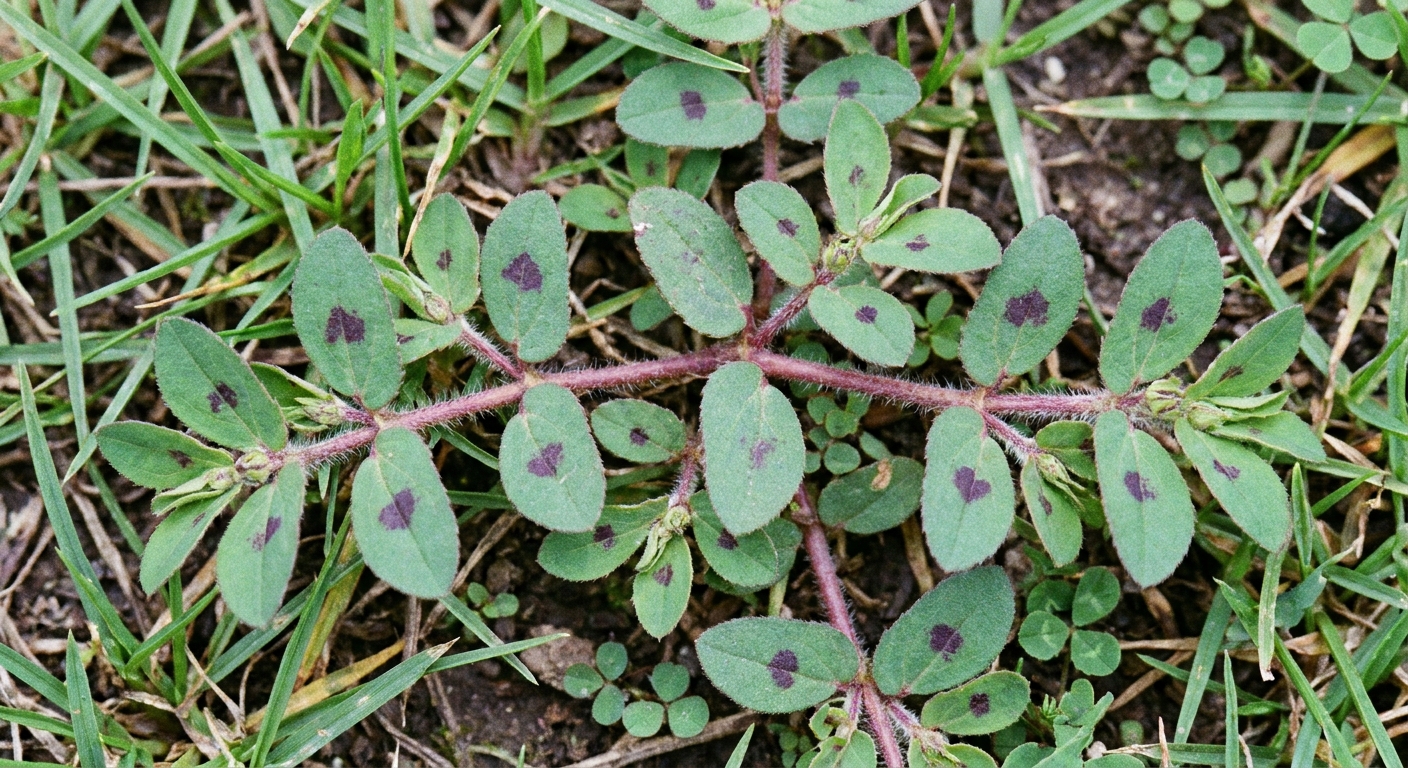
How to identify spotted spurge
Spotted spurge is low, branching, and stubborn. It does not stand up tall and wave at you. It sneaks.
Key ID features
- Flat mat growth: stems radiate out from a central point, forming a thin, ground-hugging patch.
- Reddish stems: often pink to red, especially in hot weather.
- Small oval leaves: usually in pairs along the stem.
- Purple leaf spot: many plants show a darker spot or blotch on the leaf. Not every leaf has it, but it is common.
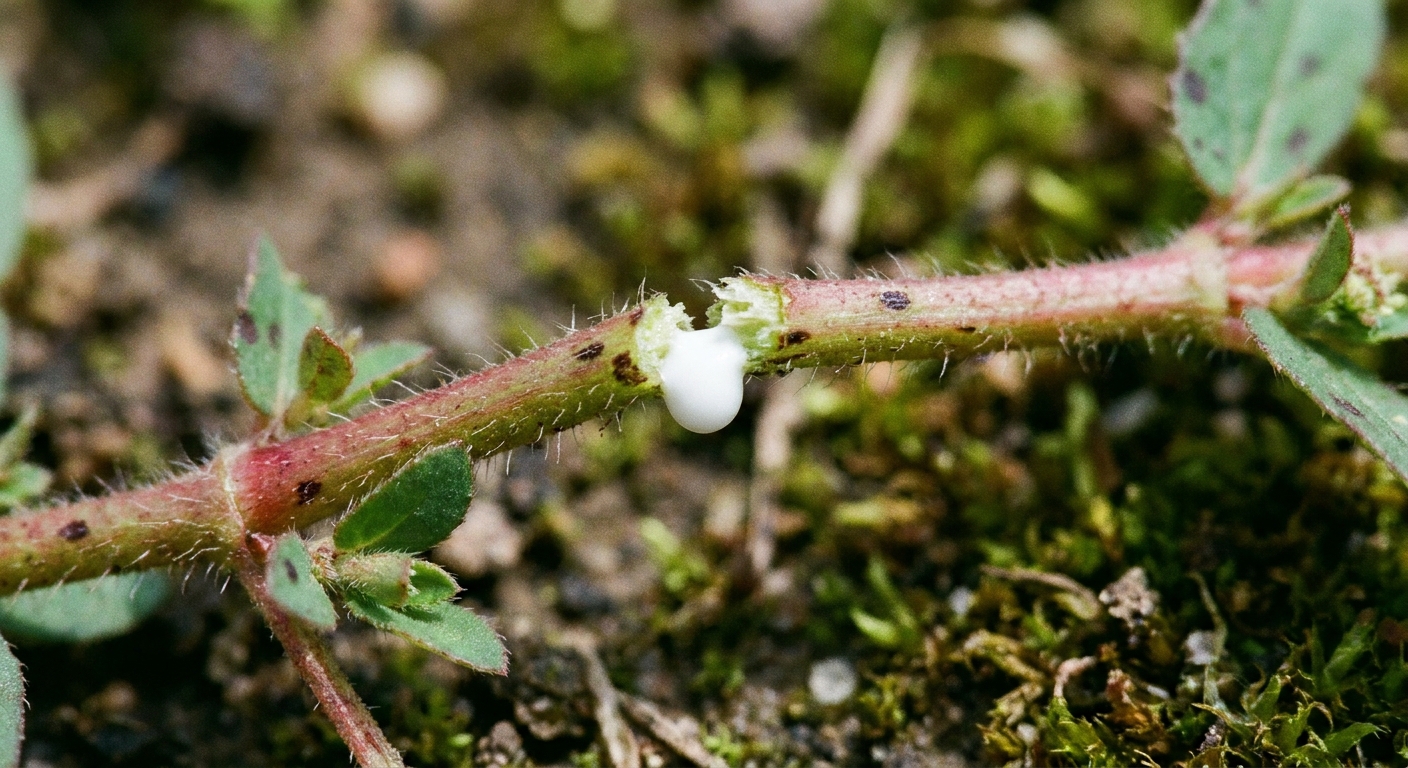
- Milky sap: break a stem and you should see a white, milky latex sap. This is one of the fastest tells.
- Tiny flowers: very small and not showy, often at leaf nodes.
Quick safety note: that milky sap can irritate skin and eyes for some people. Gloves and a quick hand wash after pulling is a smart, low effort upgrade.
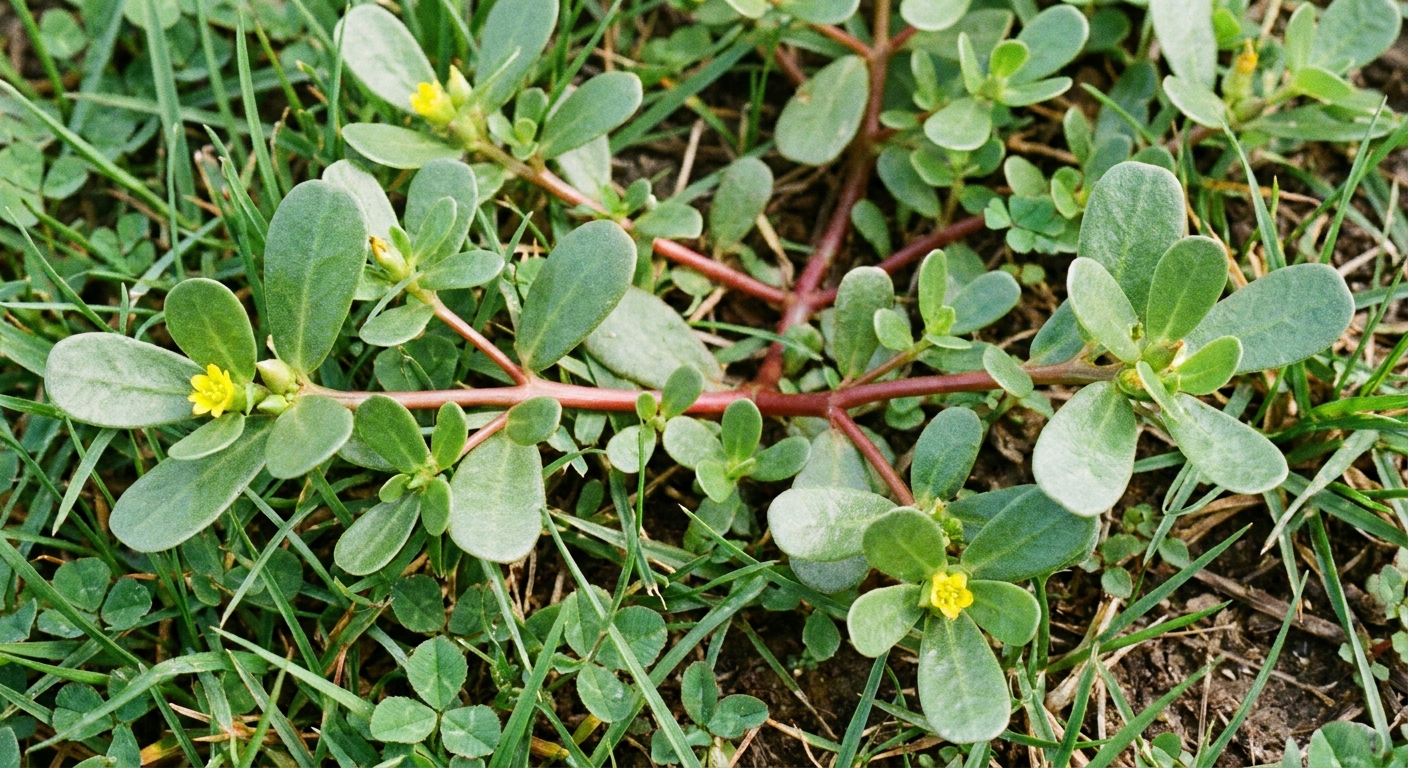
Spotted spurge vs. purslane
Spurge and purslane both creep. They both show up in summer. And they both make you question your lawn care choices at about the same time. But they are not the same plant, and the clues matter.
Tell them apart fast
- Sap test: spurge has milky white sap. Purslane has clear sap or watery moisture.
- Leaf feel: purslane leaves are thicker and succulent, like a tiny jade plant. Spurge leaves are thin and not fleshy.
- Stem look: purslane stems are usually smoother and thicker. Spurge stems are thin, wiry, often reddish, and branch a lot.
- Overall vibe: purslane looks “juicy.” Spurge looks “paper cuttable.”
Why spotted spurge keeps winning
Spotted spurge is a summer annual. It germinates when the weather warms, grows fast in heat, drops a lot of seed, and dies with frost. So if you only fight what you see in late summer, you are often battling a plant that already mailed out next year’s invitations.
What helps it spread
- Thin turf and bare spots where sunlight hits soil
- Compacted soil (high traffic, hard ground)
- Drought stress or inconsistent watering
- Short mowing that reduces grass shading
- Hot edges like sidewalks and driveways that warm soil earlier
What to do this week
If spurge is already in the lawn, here is the fastest “stop the spread” plan.
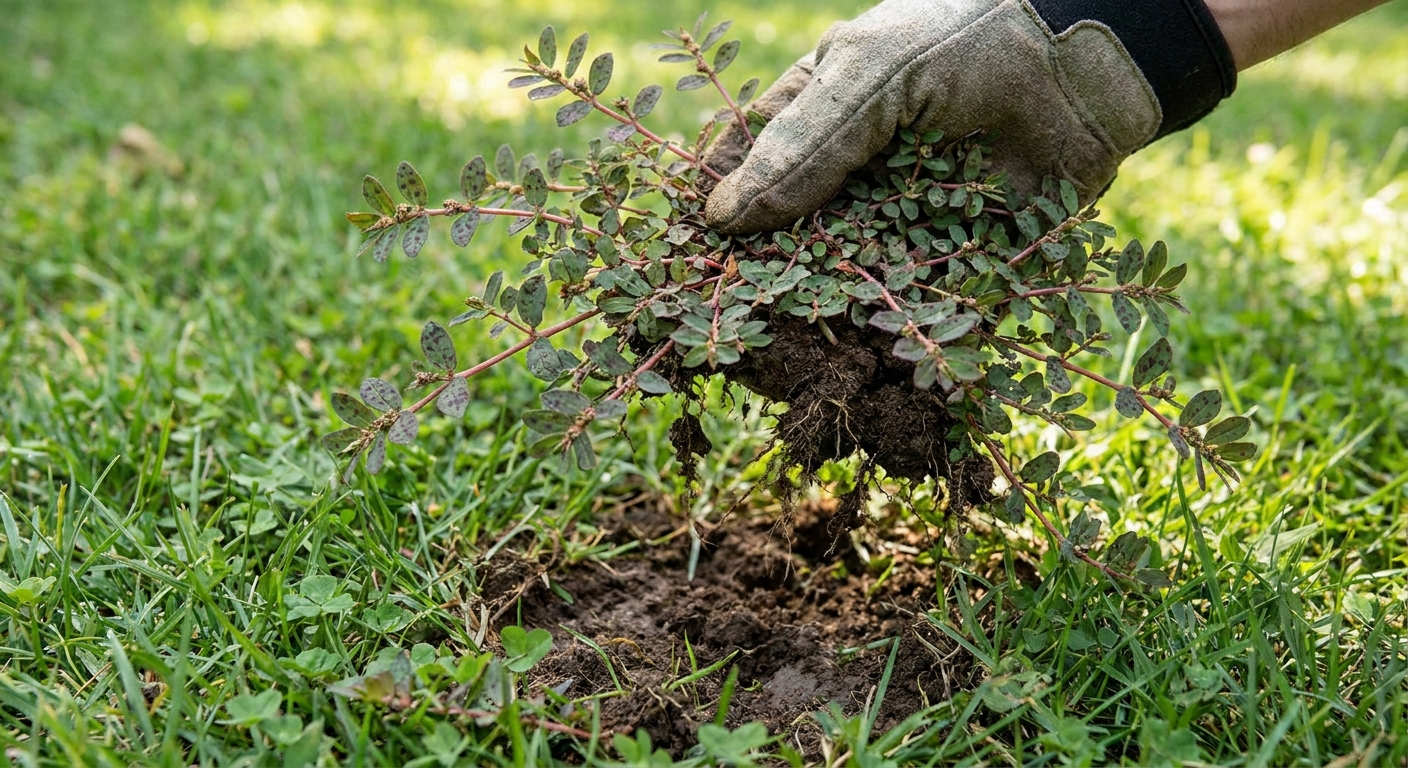
- Pull what you can before it seeds. Aim for slightly damp soil so roots come up more cleanly.
- Bag it if it has flowers or seed. Do not rely on compost piles to neutralize it.
- Spot spray what you cannot pull with an appropriate post-emergent (more on options below).
- Fix the thin spot with proper mowing height, watering, and overseeding in the right season for your grass type.
Pre-emergent control
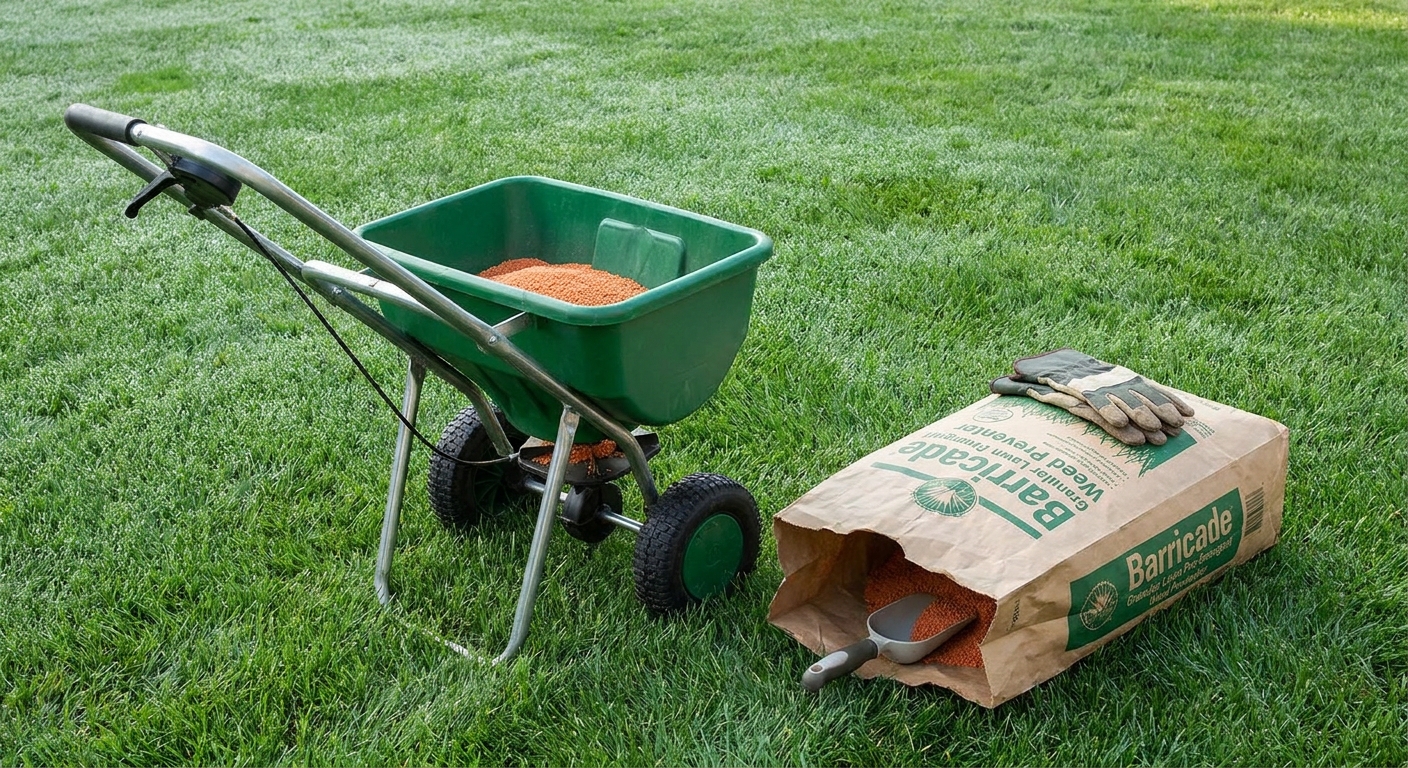
If you want fewer spurge mats next season, pre-emergent is the quiet hero. It works by stopping seeds from successfully establishing, which is exactly what a summer annual depends on.
When to apply
Spotted spurge germinates as soils warm in late spring into early summer. In many areas, a good target is late spring, around the time you would start thinking about true summer weeds.
- Timing cue: apply as the lawn transitions into consistent warm-weather growth.
- Second application: if your product label allows split applications, a follow-up several weeks later can extend the barrier through the hottest stretch.
Important: Pre-emergent blocks grass seed too. If you plan to seed soon, choose between “prevent weeds” and “grow new grass” for that window. You usually cannot do both at the same time in the same spot.
Common active ingredients
Look at the label. Many lawn pre-emergents are built around active ingredients like prodiamine, dithiopyr, or pendimethalin. Availability and best fit depend on your grass type, your climate, and whether you need crabgrass coverage too.
Apply exactly according to the label rate, then water it in if directed. Pre-emergents need to be in the upper soil layer to form a barrier.
Post-emergent control
Once you can see spurge, you are in post-emergent territory. The goal is to kill the plant before it drops seed and to avoid injuring your turf in the process.
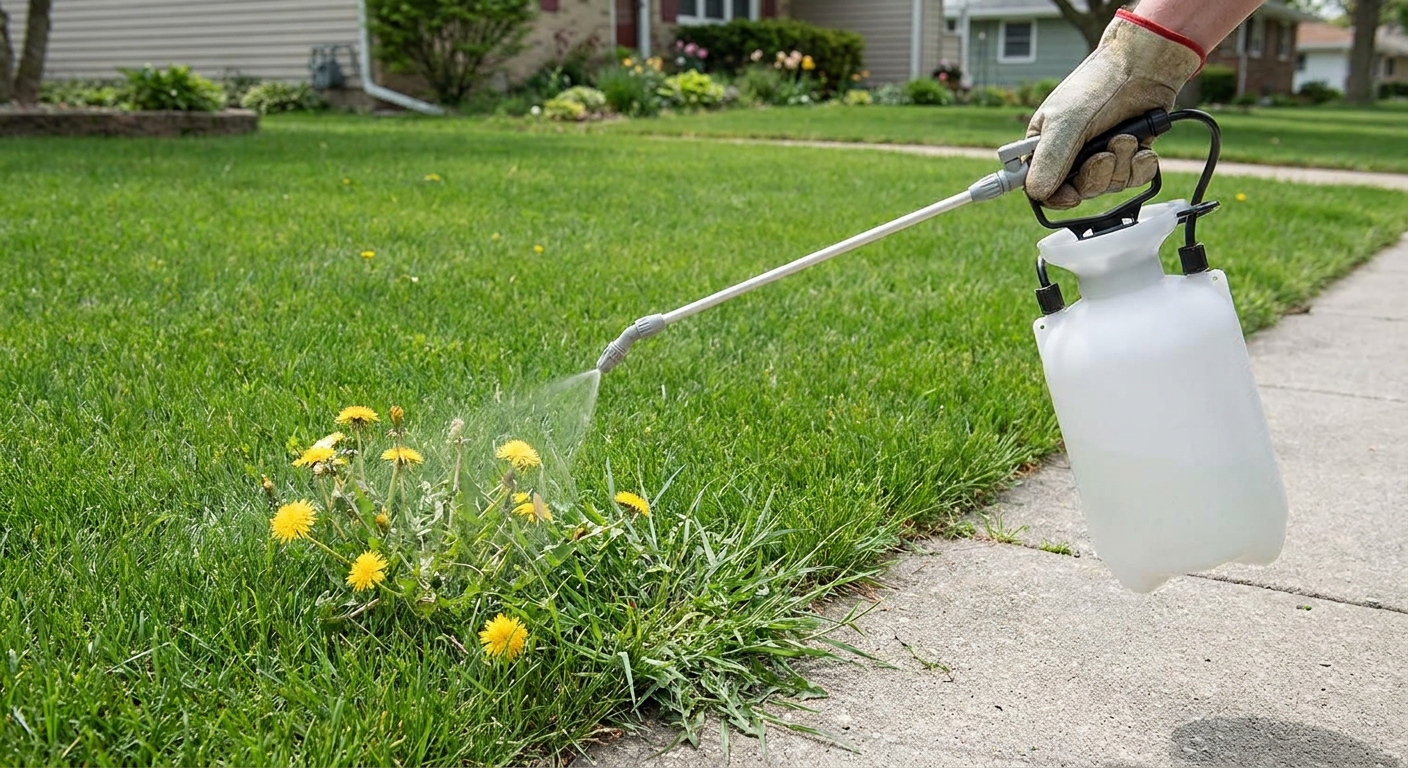
Spot treat, do not blanket spray
Spurge often shows up in patches and along hot edges. Spot treating saves product, reduces turf stress, and lowers the chance you accidentally nail ornamentals or tree roots with drift.
Common options for lawns
Many selective broadleaf herbicides for lawns list spurge on the label. Common active ingredients include combinations built around:
- 2,4-D
- Dicamba
- MCPP (mecoprop)
- Triclopyr (often strong on tough broadleaf weeds)
Read the label for your specific turf type. Some grasses, especially warm-season lawns and certain cultivars, have restrictions with certain products or rates.
How to spray for better results
- Spray young plants when possible. Mature spurge mats can be harder to knock back in one pass.
- Avoid extreme heat. Many labels warn against application during high temperatures to reduce turf injury and volatility.
- Do not mow right before spraying. Giving leaves more surface area can improve uptake.
- Use the right nozzle and avoid wind. Drift is the fastest way to turn “spot spray” into “why is my shrub angry?”
- Expect a second treatment if the label allows it. Spurge can regrow from missed nodes.
Non-chemical removal
If the patch is small, physical removal is surprisingly effective, especially before seed set.
Pulling tips
- Water first or pull after a rain to get more root out.
- Pull slowly from the center to lift the mat instead of snapping stems.
- Collect fragments. Spurge does not usually re-root like some creeping weeds, but leaving lots of broken pieces behind is still a messy habit.
- Dispose thoughtfully if seeds are present.
Smothering for beds and edges
In landscape beds or gravel edges (spurge’s favorite runway), you can reduce future outbreaks with:
- 2 to 3 inches of mulch to block light at the soil surface
- Landscape fabric used correctly with mulch on top, not as a stand-alone “weed forcefield”
Keep it from coming back
Herbicides and hand pulling handle the current problem. Turf health handles the reruns.
Mow higher
A slightly higher mowing height shades the soil and reduces germination success for sun-loving annual weeds.
Water deeply
Frequent light watering trains shallow roots and stresses turf in heat, which opens the door for spurge. Aim for deeper, less frequent watering that encourages roots to chase moisture downward, following any local watering rules.
Fix compaction
Spurge loves compacted soil. If your lawn feels hard underfoot, consider core aeration in the appropriate season for your grass type. That improves water movement, oxygen, and root growth.
Feed the grass
Use a fertilization schedule appropriate for your grass type. Over-fertilizing can cause problems too, but underfed turf struggles to fill in gaps.
Overseed on time
Thin turf is an invitation. Overseeding is the long game that pays off.
- Cool-season grasses are usually best seeded in late summer to early fall.
- Warm-season grasses are typically established in late spring to summer, depending on species and method.
What not to do
- Do not wait until it is everywhere. Spurge seeds easily, and a small patch can become a neighborhood.
- Do not apply pre-emergent right before seeding. You will block your grass seed too.
- Do not spray in peak heat unless your product label says it is safe. Turf injury can turn one weed patch into a bigger bare spot for next year.
- Do not assume it is crabgrass. Crabgrass is a grassy weed. Spurge is a broadleaf. Different tools, different results.
FAQ
Will spotted spurge die in winter?
Spotted spurge is typically a summer annual. It usually dies with frost, but it leaves behind seed that can germinate next warm season. Prevention is about stopping that seed cycle.
Is spotted spurge dangerous?
It is not usually dangerous to have in the yard, but the milky sap can irritate skin and eyes. Keep kids and pets from handling it, and wear gloves when pulling.
Why does it show up in the same spots every year?
Because those spots offer what spurge wants: sunlight on bare soil, compaction, heat, and thin turf. Address the underlying turf conditions and you will see fewer repeats.
Can I use vinegar to kill spurge?
Non-selective burn-down products can injure spurge, but they can also injure grass and nearby plants. In lawns, selective broadleaf herbicides labeled for spurge are usually the cleaner approach. Always follow label directions and consider spot treating.
The 30-Second Cheat Sheet
Essential takeaways for: How to Get Rid of Spotted Spurge in Your Lawn
Identify it fast
- Spotted spurge grows in a flat mat with reddish stems, small oval leaves often with a purple spot, and milky white sap when snapped.
- Purslane lookalike: purslane has thick succulent leaves and clear sap.
Do this now (if it is already in your lawn)
- Pull or spot spray patches before they set seed.
- Wear gloves. The milky sap can irritate skin and eyes.
- Bag plants that have flowers or seed.
Best prevention (next season)
- Use a pre-emergent in late spring to block summer annual germination.
- Common actives include prodiamine, dithiopyr, or pendimethalin. Follow the label and water in if directed.
- Do not apply pre-emergent where you plan to seed soon. It prevents grass seed too.
Post-emergent options (what works once it is up)
- Spot treat with a selective broadleaf herbicide that lists spurge on the label.
- Common actives include combinations of 2,4-D, dicamba, MCPP, and sometimes triclopyr.
- Spray when temperatures are moderate and expect a follow-up treatment if allowed on the label.
Keep it from coming back
- Mow a bit higher to shade soil.
- Water deeply instead of frequent sips.
- Fix compaction (consider core aeration in the right season).
- Fill thin turf by overseeding at the correct time for your grass type.
💡 Tip: Scroll up to read the full article for detailed, step-by-step instructions.
⬆️ Back to top
About Grit
Content Creator @ Grit & Home
Grit is Grit & Home’s little blue clay courier, delivering big questions about the place you call home. Expect practical ideas, a raised eyebrow, and a satchel full of curiosity.