
🚨 In a DIY emergency or rush?
Skip the details and jump straight to our 30-second cheat sheet for the most crucial info.
Small courier. Big home questions.
If Virginia buttonweed has moved into your lawn, you have probably had this exact thought: “I sprayed it. It laughed.” That is not you being dramatic. Buttonweed is stubborn for two reasons: it comes back from deep roots, and it can regrow from stem fragments left behind after mowing, raking, or pulling.
The good news is you can beat it. The plan just needs to be less “one heroic spray” and more “steady, well-timed pressure plus better drainage.”
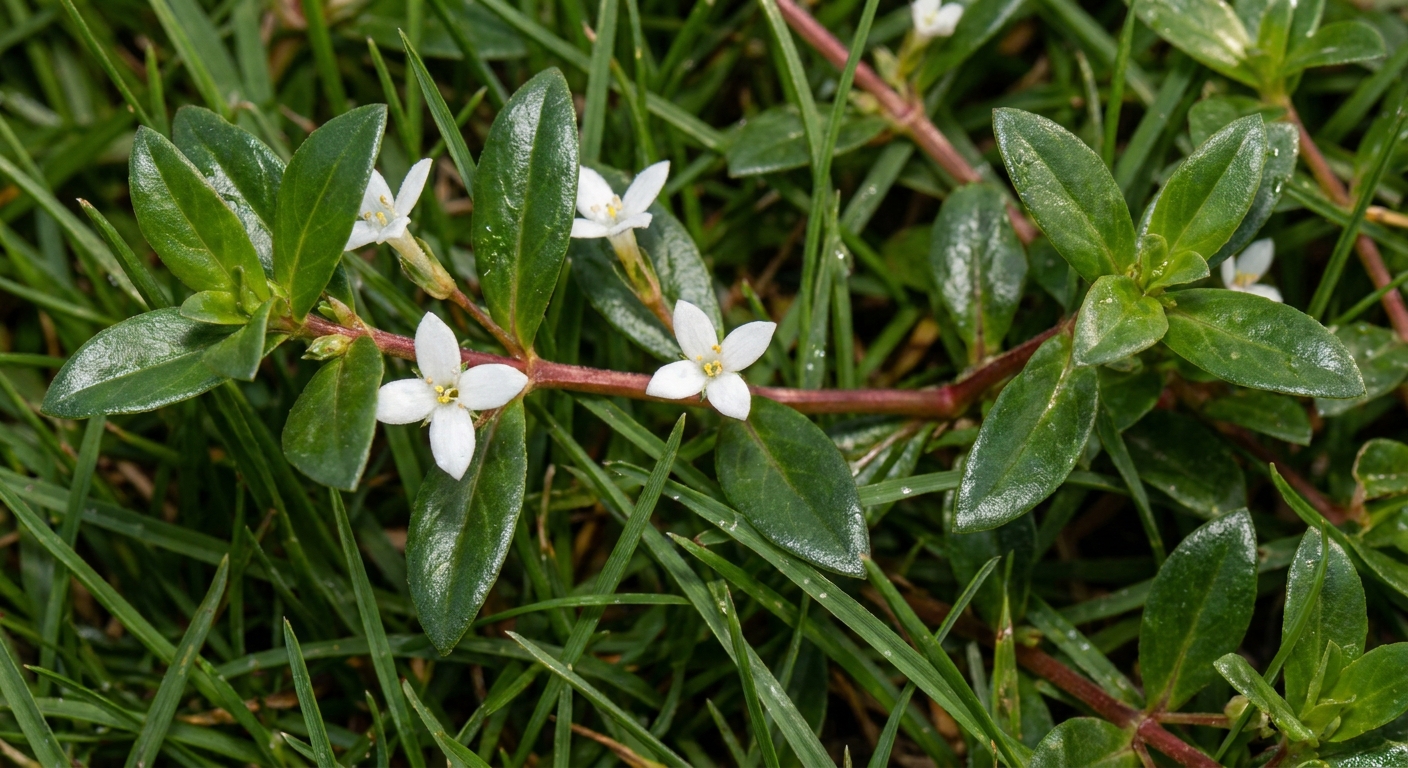
How to identify Virginia buttonweed
Virginia buttonweed (Diodia virginiana) is a warm-season perennial broadleaf weed that creeps low through grass. It loves moist, poorly drained spots and can form dense mats that smother turf.
Quick ID checklist
- Growth habit: low, creeping, branching stems that weave through turf
- Leaves: opposite leaves (paired across from each other) on the stem, often glossy and pointed
- Flowers: small white, four-petaled flowers that sit close to the leaves
- Where it shows up first: soggy lawn pockets, low spots, shaded edges, near downspouts, along irrigation overspray zones
If you are seeing white four-petaled flowers hugging the stems and a creeping tangle that seems to reappear after every mow, you are likely dealing with buttonweed.
Why one spray rarely finishes the job
Virginia buttonweed is not a simple top-growth weed. It is a “backup systems” weed.
- Deep roots: Even if the leaves brown out, the plant can rebound from root tissue that did not get enough herbicide.
- Stem pieces regrow: The creeping stems root at nodes. When stems are cut and moved around by mowing or raking, small pieces can establish again.
- Waxy leaves and low growth: Low, dense growth can make it harder to get consistent spray coverage down into the mat.
So the right mindset is: expect multiple treatments, spaced to hit regrowth, while you also remove the conditions that let it thrive.
Before you treat: set up success
Herbicide works better when the grass is healthy enough to fill in afterward. Buttonweed loves gaps and wet soil. Tighten those up first when you can.
Fix wet soil
If your yard stays damp, buttonweed gets a long growing season and your turf stays weak. These changes make a big difference.
- Correct low spots: Topdress shallow depressions with a sandy loam topsoil mix in thin layers so grass can grow through it.
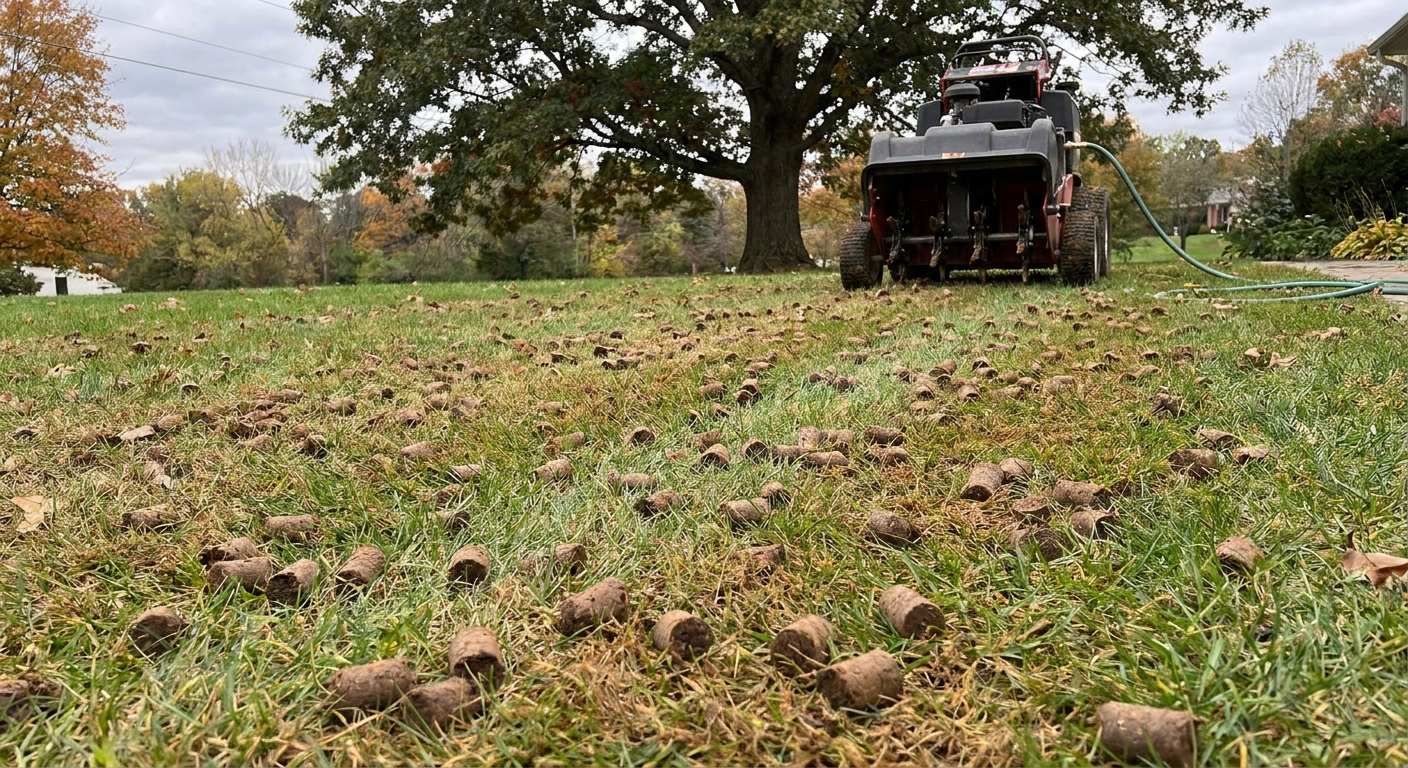
- Improve drainage: Consider core aeration, and for chronic puddling, a French drain or catch basin to move water away.
- Adjust irrigation: Water less often but more deeply. Avoid daily light watering that keeps the surface constantly moist.
- Redirect downspouts: Extend them away from lawn low spots.
- Reduce shade stress: Prune for light and airflow where possible. Shady, wet lawns are buttonweed’s favorite buffet.
Mowing that helps
- Mow at the correct height for your turf type so grass shades the soil and crowds weeds.
- Avoid mowing when the lawn is very wet if you can. Wet clippings and stem pieces move and stick more easily.
- Bag clippings temporarily if buttonweed is flowering heavily or you are actively battling an outbreak. It is not always necessary, but it can reduce spread by fragments.
How to kill buttonweed in turf
Because buttonweed is usually mixed into desirable grass, the goal is to selectively kill the weed without taking out your lawn.
In most home lawns, that means using a selective post-emergent broadleaf herbicide labeled for your turf type and for Virginia buttonweed, then repeating applications on a schedule.
Step 1: Use a label-listed product
Do not rely on “kills 250 weeds” vibes. Look for Virginia buttonweed named on the label, and confirm the product is safe for your grass species.
Active ingredients commonly found in products that are used for buttonweed control include combinations such as:
- 2,4-D + dicamba + MCPP (mecoprop)
- Triclopyr (often in blends aimed at tough broadleaf weeds)
- Metsulfuron-methyl (used in some turf settings where labeled and appropriate)
Important: the “right” choice depends heavily on your turf type (for example, bermudagrass, zoysiagrass, centipedegrass, St. Augustinegrass, tall fescue). Some grasses are sensitive to certain chemistries, especially in heat.
Step 2: Time it right
Buttonweed is most controllable when it is actively growing, but many herbicides also stress turf when temperatures are high. Follow your product label for temperature limits and seasonal guidance.
- Target active growth: late spring through summer is common, but avoid spraying stressed turf.
- Do not spray right before heavy rain unless the label says it is rainfast quickly. You want absorption time.
- Do not mow immediately before treatment: Leaving more leaf surface improves uptake. A common rule of thumb is to wait 24 to 48 hours after mowing before spraying, but always follow label directions.
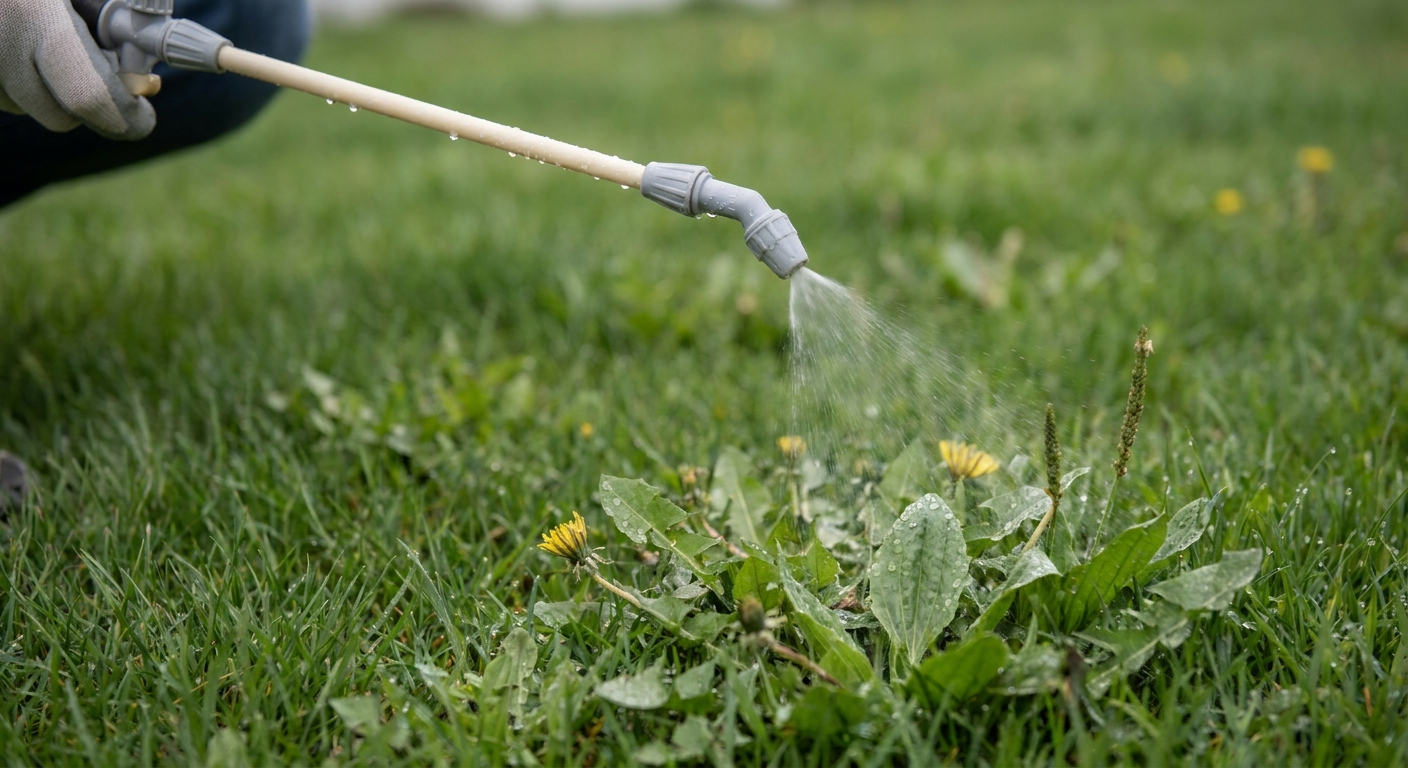
Step 3: Spray for coverage
Because buttonweed creeps under the grass canopy, walk slowly and aim for even coverage across the patch. You want leaves wet, not dripping.
- Use a pump sprayer or hose-end sprayer calibrated to the label rate.
- Spot spray where possible instead of blanketing the whole yard.
- Keep people and pets off until the product has dried or the label reentry time has passed.
Repeat sprays that work
Here is the piece many lawns miss: the follow-up. Buttonweed commonly needs multiple applications because regrowth appears from roots and surviving stem nodes.
A repeat plan
- First application: spot spray actively growing plants with a label-listed product.
- Wait and watch: expect some yellowing and slow decline, not instant disappearance.
- Second application: typically 10 to 14 days after the first, or whatever interval your label specifies. This timing is meant to hit the rebound growth.
- Third application (often needed): another 10 to 14 days later if you still see green, living stems.
If you only do one round, buttonweed often treats it like a haircut.
Do not exceed the label maximum number of applications per year, and do not “double dose” to speed things up. That is a fast way to injure turf and still not solve the root problem.
When it is mixed into grass
Most of the time, buttonweed is not politely sitting in a bare patch. It is braided into your turf. That changes your approach.
Spot treat, then thicken turf
- Spot spray the patches instead of broadcast spraying the whole lawn, especially if your turf is sensitive.
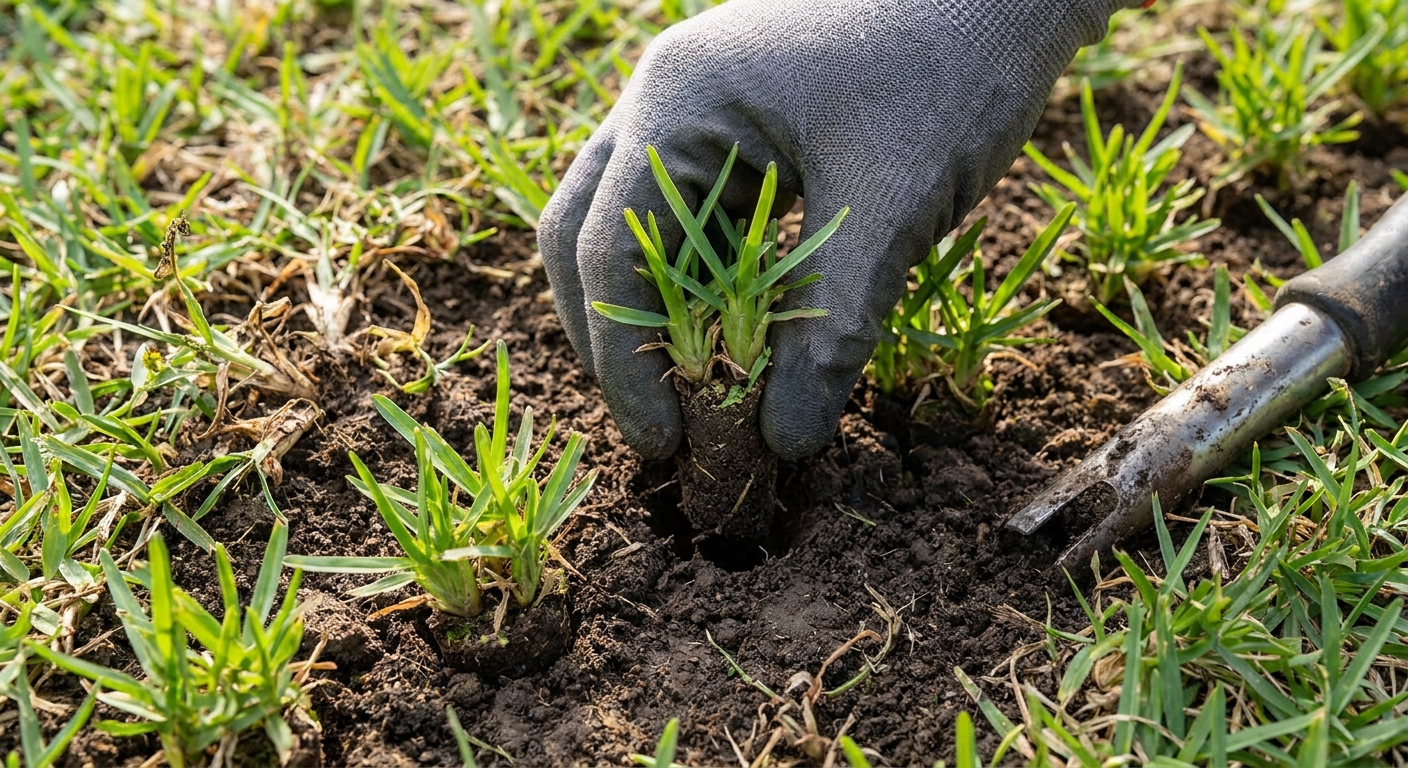
- After the weed declines, overseed or plug where appropriate for your grass type and season. A thin lawn is an invitation.
- Fertilize thoughtfully: follow a soil test if you can. Overfertilizing can encourage weed growth too, but underfed turf cannot compete.
When to renovate a small area
When buttonweed coverage is severe, selective control plus time might still leave you with a weak, thin area. In that case:
- Control the weed with repeated spot treatments.
- Rake out dead material once it is truly dead, not just browned.
- Topdress lightly to improve soil structure and drainage.
- Resod, plug, or reseed (depending on your turf type and season) so grass can reclaim the space.
Can you pull it by hand?
You can try, but buttonweed is famous for making this feel like a prank.
- Deep roots: pulling often snaps the plant, leaving roots behind.
- Stem fragments: broken creeping stems can reroot.
- In turf: you usually cannot dig deep enough without wrecking the grass around it.
Hand removal can help with tiny, isolated infestations if you dig out the crown and as much root as possible. For established mats in a lawn, selective herbicide plus turf repair is typically more effective.
Mistakes to avoid
- Spraying once and quitting: regrowth from roots is expected.
- Spraying during heat stress: you can injure turf and still not get good control.
- Using a product not labeled for buttonweed: some broadleaf mixes barely slow it down.
- Ignoring wet soil: if the area stays soggy, buttonweed keeps its home-field advantage.
- Mowing too low: scalping turf opens space and light for weeds.
FAQ
When does Virginia buttonweed show up?
It tends to appear in warm weather and spreads aggressively through summer, especially in consistently damp areas.
Will vinegar or boiling water kill it?
Non-selective home remedies can burn top growth, but buttonweed often returns from roots. In turf, they can also damage grass, leaving bare soil that invites more weeds.
How long until I see results after spraying?
Many selective herbicides work slowly. You might see yellowing in several days, with more visible decline over 2 to 3 weeks. Then you treat regrowth at the label interval.
What if I do not know my grass type?
Pause before spraying. Herbicide safety depends on turf species. If you are not sure, take a clear photo of the grass blades and growth habit and compare with local extension resources, or bring a sample to a local garden center for ID.
The 30-Second Cheat Sheet
Essential takeaways for: How to Get Rid of Virginia Buttonweed in Your Lawn
Fast ID
- Low, creeping stems weaving through turf
- Opposite leaves (paired on the stem)
- Small white four-petaled flowers close to the leaves
- Often worst in wet, poorly drained lawn spots
Why it keeps coming back
- Regrows from deep roots
- Can reroot from broken stem pieces
- One spray often only knocks back the top growth
What to do (simple plan)
- Spot spray with a selective post-emergent that lists Virginia buttonweed on the label and is safe for your turf type.
- Repeat at the label interval, commonly 10 to 14 days, and expect 2 to 3 rounds for established patches.
- Spray for even coverage, not runoff. Avoid windy days and avoid treating heat-stressed turf.
- Fix the conditions that help it: correct low spots, adjust irrigation, improve drainage (core aeration and drainage solutions if needed).
- After control, help grass fill in: mow at the right height and repair thin areas with plugs, sod, or overseeding when appropriate.
Big mistakes to avoid
- Spraying once and stopping
- Using a product that does not specifically mention buttonweed
- Overapplying or mixing stronger than the label rate
- Ignoring soggy soil and shade stress
💡 Tip: Scroll up to read the full article for detailed, step-by-step instructions.
⬆️ Back to top
About Grit
Content Creator @ Grit & Home
Grit is Grit & Home’s little blue clay courier, delivering big questions about the place you call home. Expect practical ideas, a raised eyebrow, and a satchel full of curiosity.