
🚨 In a DIY emergency or rush?
Skip the details and jump straight to our 30-second cheat sheet for the most crucial info.
The first time I heard someone say “moles,” I grabbed my mental checklist: raised ridges, volcano mounds, traps, patience. Then I actually walked the lawn. The “tunnels” were skinny, messy, and everywhere near the thatch line. No big push-up ridges. No mounds. That’s when the light bulb went on: mole crickets are a totally different problem than moles, and they need a totally different plan.
This guide will help you (1) tell the difference between mole cricket damage and true mole runways, (2) confirm what is in the turf with a quick soapy flush, and (3) treat at the warm-season timing that actually works.
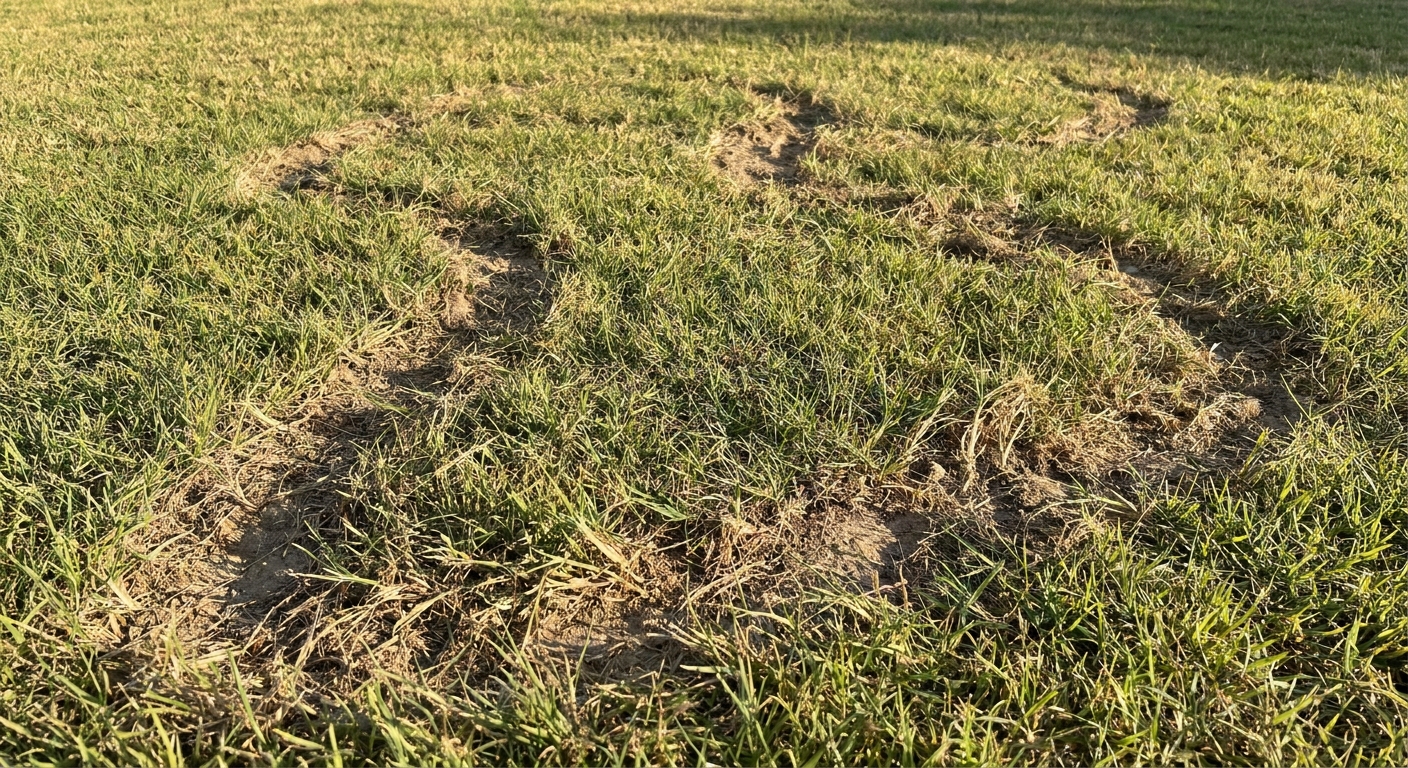
Mole cricket vs. mole damage
It is easy to mix these up because both can involve “tunnels,” but what you see and feel underfoot is different.
Mole crickets (insects)
- Tunnels are thin and messy: You will see small, branching surface tunnels right at or just under the thatch. Think scribbly lines, not one straight runway.
- Spongy turf: The grass can feel loose, like it is not anchored well.
- Thinning and dead patches: They feed on roots and tender plant tissue (blades and shoots, too) and they disturb soil, which can cause irregular brown areas that expand.
- More obvious in warm-season turf: Bermudagrass, centipede, zoysia, St. Augustine are common targets in many regions.
Moles (mammals)
- Runways are raised: A mole runway usually creates a long, continuous raised ridge you can feel with your foot.
- Soil mounds may appear: Some species leave mounds, some do not, but when you see them, they are a big clue.
- Damage is from tunneling: Moles are not eating your grass. They are chasing insects and worms underground.
Important: Mole traps will not work on mole crickets. Mole crickets are insects living in shallow soil and thatch. A trap designed for a burrowing mammal is solving the wrong problem.
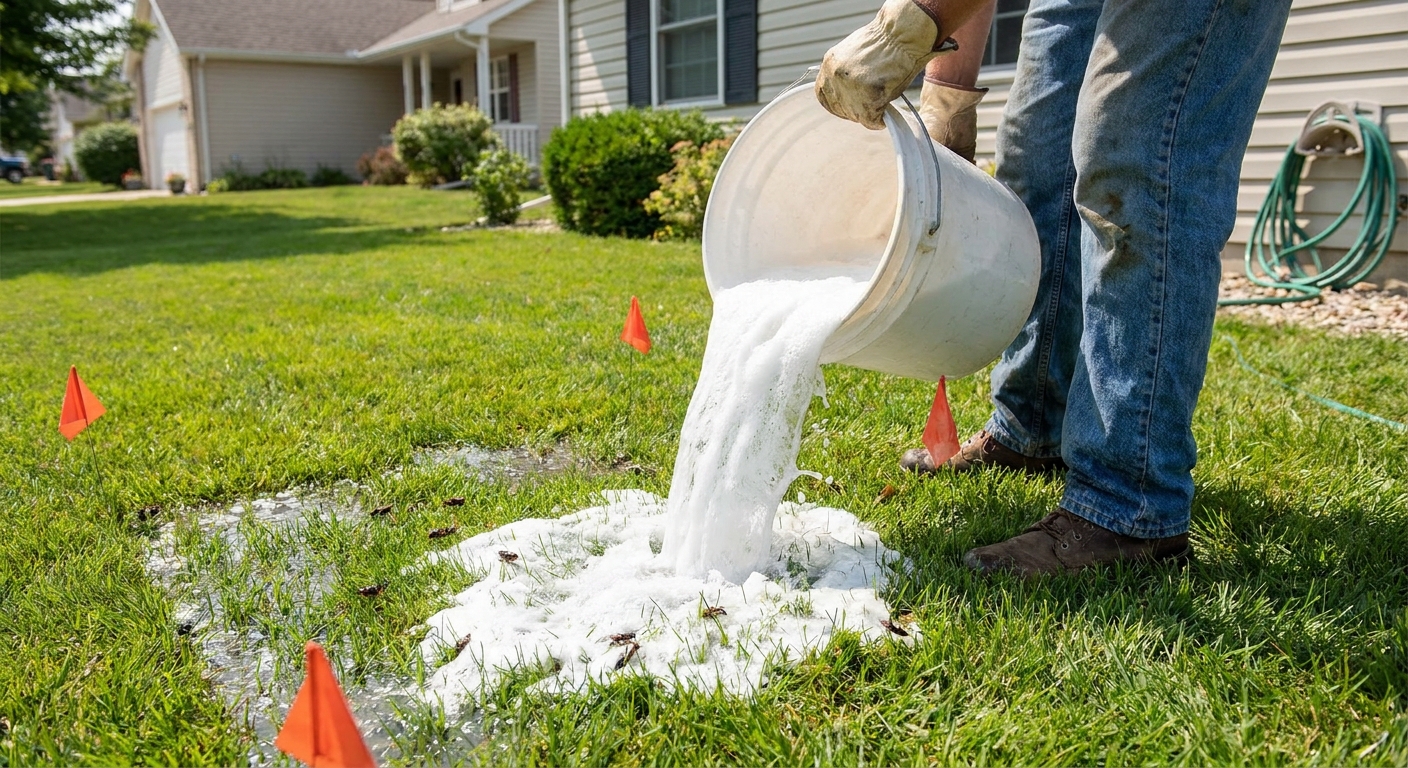
Soapy flush test
If you only do one diagnostic step, do this. It is simple, cheap, and it turns guessing into knowing.
What you need
- A bucket
- Water
- Liquid dish soap
- A measuring spoon (or a good eyeball, but I will give you a real number)
How to do it
- Pick a suspect spot: edge of a thinning patch, or where you see the most tiny tunnels.
- Mix the solution: stir 1 to 2 tablespoons of dish soap into 1 gallon of water. This is a common guideline, not a law of physics, so do not stress if your tablespoon is not perfect.
- Pour slowly over about 2 square feet: you want it to soak down, not run off.
- Wait 3 to 5 minutes: mole crickets often surface quickly when irritated.
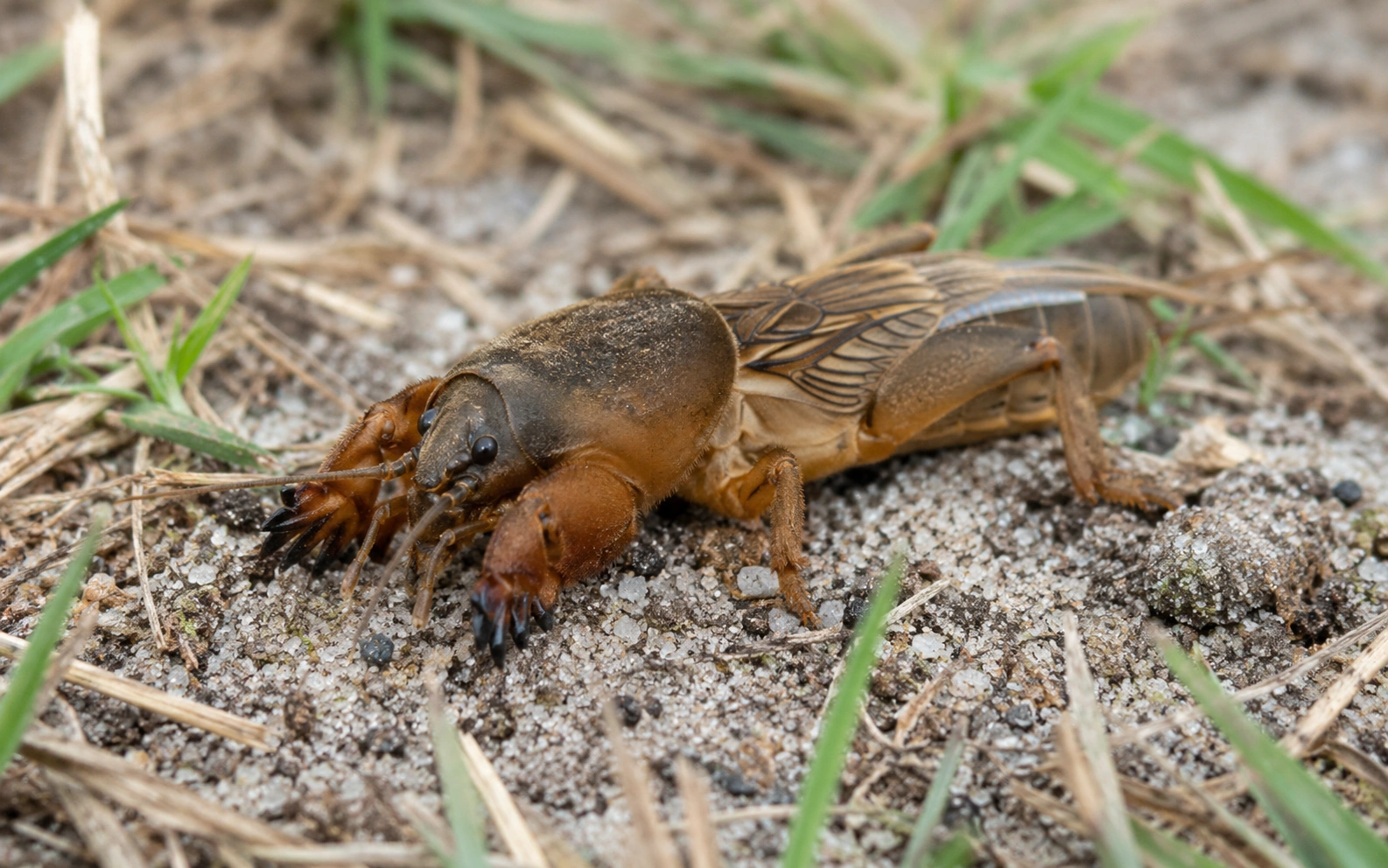
- Watch what comes up: you might see adults or nymphs. Nymphs can be small, and adults can be roughly 1/2 to 1 1/2 inches depending on stage and species.
- Repeat in a couple spots: if the first area is quiet, test another nearby location before you call it “no mole crickets.”
What a mole cricket looks like
If you have never seen one, here is the quick ID: they are tan to brown, cricket-shaped, and they have big shovel-like front legs made for digging. If something surfaces that looks like a little dirt-digger with oversized forearms, you are in the right neighborhood.
If nothing surfaces and your turf is very dry, water lightly first so the soapy mix can move into the thatch zone where they hide.
When to treat
Mole crickets are easiest to control when they are small (nymphs). Once they are larger and more armored, they are harder to knock back and the lawn has already taken the hit.
General warm-season timing
- Late spring into summer: this is often when young mole crickets are active in many warm regions.
- Peak is often early to mid summer: in many areas, that is when nymph activity really shows up, but it is still region- and species-dependent.
- Best rule of thumb: treat when you confirm activity with a flush and you are seeing fresh tunneling in actively growing turf.
Local timing varies by climate. If your area has a cooperative extension lawn calendar, that is gold. But even without that, the soapy flush gives you a real-time answer: if they are up and moving, your timing is likely in the workable window.
Treatment options
I like plans that start with the least drama and scale up only as needed. With mole crickets, you usually have three practical lanes: baits, sprays or granules, and biologicals.
Quick safety note: Use only products labeled for turf and specifically labeled for mole crickets in your state. Follow the label for PPE, reapplication intervals, and watering-in directions.
1) Baits
Baits can work well because mole crickets feed and move near the surface.
- Apply in the evening when mole crickets are more active.
- Do not water immediately unless the label tells you to. Watering too soon can ruin bait performance.
- Spread evenly across affected zones and a buffer area beyond the damage.
2) Sprays or granules
Products labeled for mole crickets in turf can reduce populations, but they work best when they reach the thatch and upper soil where the insects are.
- Examples of common actives you may see on labels: bifenthrin, lambda-cyhalothrin, carbaryl, imidacloprid, and fipronil. (Do not treat based on this list alone. The label is the boss, and not every active is labeled for every lawn situation.)
- Watering-in depends on the product: some need to be watered in to move the active ingredient down into the thatch and upper soil, while others work best left on the surface for a period of time. Follow the label, every time.
- Re-check in 7 to 14 days with another soapy flush to see if you are winning, especially if you had heavy pressure.
3) Biological controls
Some homeowners use beneficial organisms that target soil insects. Results vary with soil moisture, temperature, and application quality. If you go this route, think of it as a season-long improvement, not an overnight rescue.
- Beneficial nematodes: in some regions, you may find species associated with mole cricket suppression, such as Steinernema scapterisci. Availability and fit are regional, and they work best when applied correctly and kept moist per directions.
What not to do
- Do not set mole traps: wrong animal, wrong tool.
- Do not treat blindly for grubs just because you see lawn damage. Grub damage typically shows up as turf that peels back like a loose carpet, and you can often find grubs by digging a small square. Mole crickets cause more tunneling and root feeding near the surface.
- Do not overwater to “drown them”: you will stress the lawn and invite fungus long before you solve the insect problem.
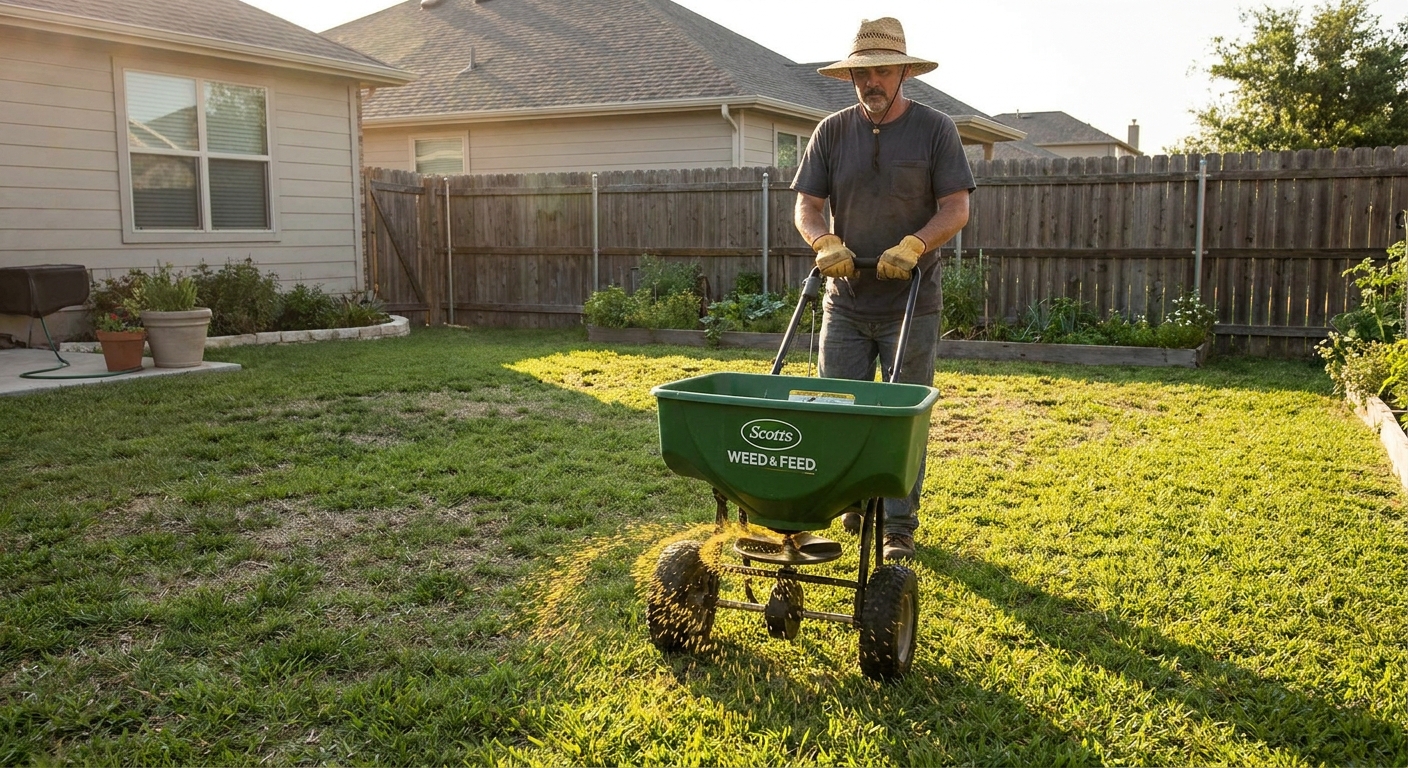
After you treat
Mole crickets can leave turf weak and loose. Once you get control, recovery is mostly about basic lawn fundamentals.
- Water deeply but not constantly: encourage roots to grow down.
- Mow correctly: avoid scalping. Scalped warm-season turf recovers slower and shows damage more.
- Rake and clean up dead areas: remove loose, dead blades so new growth can fill in.
- Patch if needed: plugs or sod patches work well for warm-season grasses where damage is concentrated.
Prevention and monitoring
You cannot make your yard “mole cricket-proof,” but you can make outbreaks less likely and catch them earlier.
- Keep thatch in check: excessive thatch gives them a cozy zone to hide and feed. If your lawn has a thick spongy layer even where there is no damage, consider dethatching practices appropriate for your grass type and season.
- Do not overdo nitrogen: heavy, frequent nitrogen can push tender growth that attracts feeding and makes damage show faster.
- Avoid constantly wet soil: normal irrigation is fine, but chronically soggy turf invites other problems and does not “solve” insects.
- Spot-check during peak season: a quick soapy flush in early to mid summer (or whenever you start seeing fresh scribbly tunneling) can keep you from being surprised.
FAQ
How do I know if I have moles or mole crickets?
If you have raised ridges you can feel underfoot like a little speed bump, think moles. If you have thin, scribbly surface tunnels and the turf feels loose, think mole crickets. Confirm mole crickets with a soapy flush.
Will mole traps work on mole crickets?
No. Mole traps are designed for a burrowing mammal traveling in deeper runways. Mole crickets are insects working in the thatch and upper soil. You need turf insect control methods labeled for mole crickets.
Do mole crickets come up after rain?
They can be more noticeable when soil moisture is up because activity near the surface increases and tunneling shows more clearly. The soapy flush still works better than guessing.
Should I treat the whole lawn or just patches?
If damage is localized and you confirm activity in a small zone, spot treating plus a buffer can work. If you are seeing tunnels scattered everywhere, a broader application may make more sense. Always follow the product label for coverage and reapplication guidance.
The 30-Second Cheat Sheet
Essential takeaways for: Mole Crickets in Your Lawn: How to Tell and Treat Them
Quick diagnosis
- Mole crickets: thin, messy, branching surface tunnels at the thatch line, spongy turf, irregular thinning patches.
- Moles: long, continuous raised ridges you can feel underfoot, sometimes soil mounds.
Confirm in 5 minutes (soapy flush)
- Mix 1 to 2 tbsp dish soap in 1 gallon water (common guideline).
- Pour over about 2 sq ft of suspect turf.
- Wait 3 to 5 minutes. If mole crickets surface, you have your answer. Repeat in a couple spots if needed.
What works
- Treat when you confirm activity and turf is actively growing, often late spring through summer in warm-season lawns (peak nymph activity is often early to mid summer in many areas).
- Use a product labeled for mole crickets (bait, granular, or spray). Follow label watering directions and PPE.
- Re-check with another flush in 7 to 14 days.
What will not work
- Mole traps will not work on mole crickets.
- Do not treat blindly for grubs unless you actually find grubs when you dig.
💡 Tip: Scroll up to read the full article for detailed, step-by-step instructions.
⬆️ Back to top
About Grit
Content Creator @ Grit & Home
Grit is Grit & Home’s little blue clay courier, delivering big questions about the place you call home. Expect practical ideas, a raised eyebrow, and a satchel full of curiosity.