
🚨 In a DIY emergency or rush?
Skip the details and jump straight to our 30-second cheat sheet for the most crucial info.
The first time I heard it, I honestly thought it was a loose duct banging around. It was that heavy, slow, deliberate thump-thump in the attic, almost like someone was gently rearranging a storage tote at 1 a.m. The next morning, I climbed up with a headlamp and that little knot-in-your-stomach feeling that comes with any attic visit. I did not find a duct problem. I found tracks in insulation, a few dark droppings, and a very clear lesson: attic critters are a roofline problem, not a yard problem.
If you suspect an opossum in your attic, you can handle a lot of this yourself, as long as you take it step by step and resist the urge to seal holes before the animal is actually out.
Quick reality check: what an attic opossum means
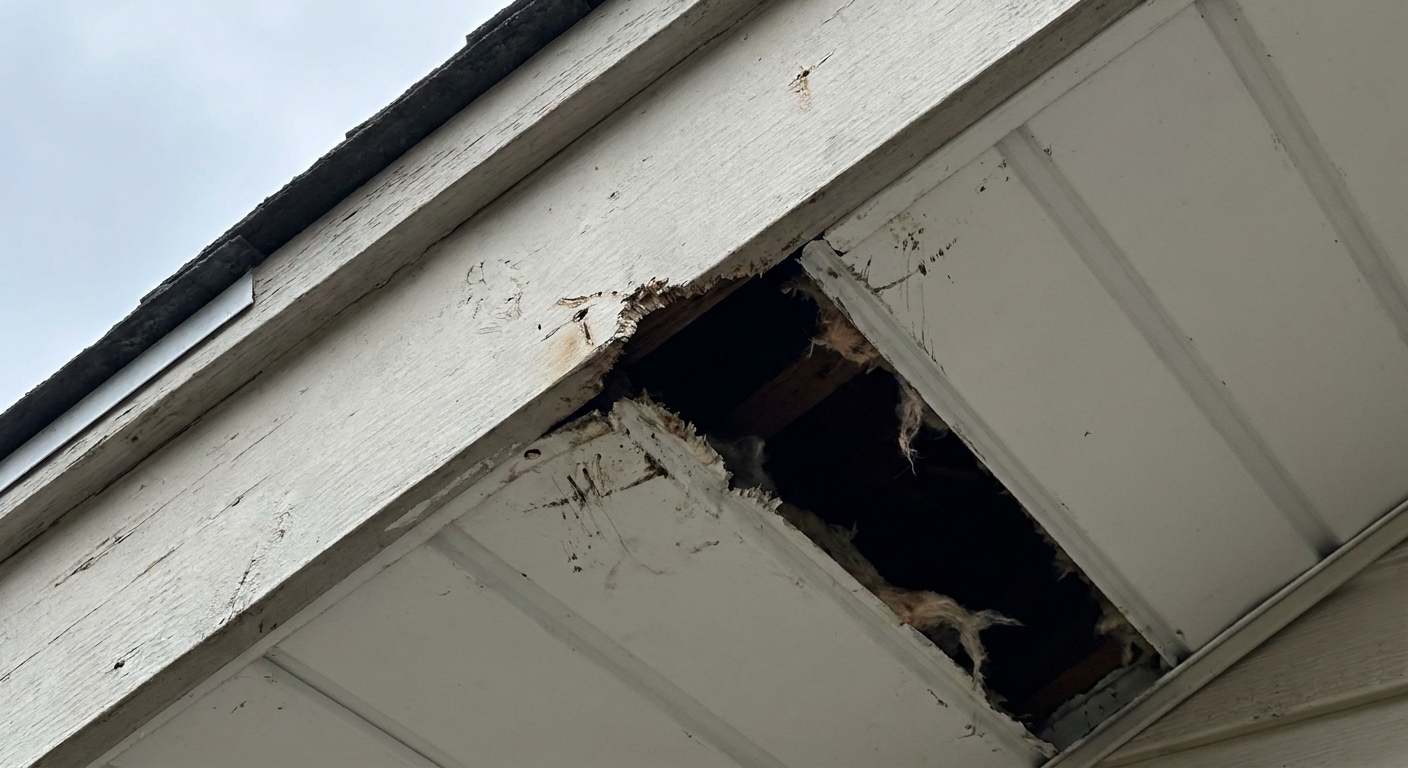
Opossums are ground-foragers, but they can climb well enough to reach a roofline, especially if you have a nearby tree, a fence line, or a rough exterior surface they can scale. When they end up in an attic, they are typically using roofline access such as a loose soffit panel, an opening at the fascia, a gap near a roof vent, or a spot where an old repair left a void.
That matters because the fix is mostly inspection, one-way exclusion, then sealing and repair up high. This is a different setup than evicting an animal living under a deck or in a crawl space.
One more reality check: in a lot of neighborhoods, raccoons, squirrels, and rats are more common attic intruders than opossums. The steps in this guide still help, but identification can save you time, money, and a lot of frustration.
Signs you might have an opossum in the attic
1) Nighttime attic noise that sounds heavy, not scratchy
Opossums are not subtle. Common sounds include:
- Slow, heavy footsteps above a bedroom or hallway ceiling
- Thumping or shuffling, especially soon after sunset and before dawn
- An occasional hiss or growl if it feels cornered
Fast, repetitive scurrying is more typical of rats or squirrels. Opossums tend to sound like a bowling ball with legs.
2) Droppings that look larger than rodent pellets
Opossum droppings are often dark brown or black and usually smooth. Size and shape can vary a lot by diet, but many homeowners describe them as roughly 1 to 2 inches long. The tricky part is that scat can overlap with raccoon, skunk, and even outdoor cat. Use droppings as a clue, not a positive ID.
Safety note: Do not dry sweep droppings. Wear gloves and an N95 or P100-style mask and lightly mist with water before cleanup to reduce dust.
3) “Highway” trails through insulation
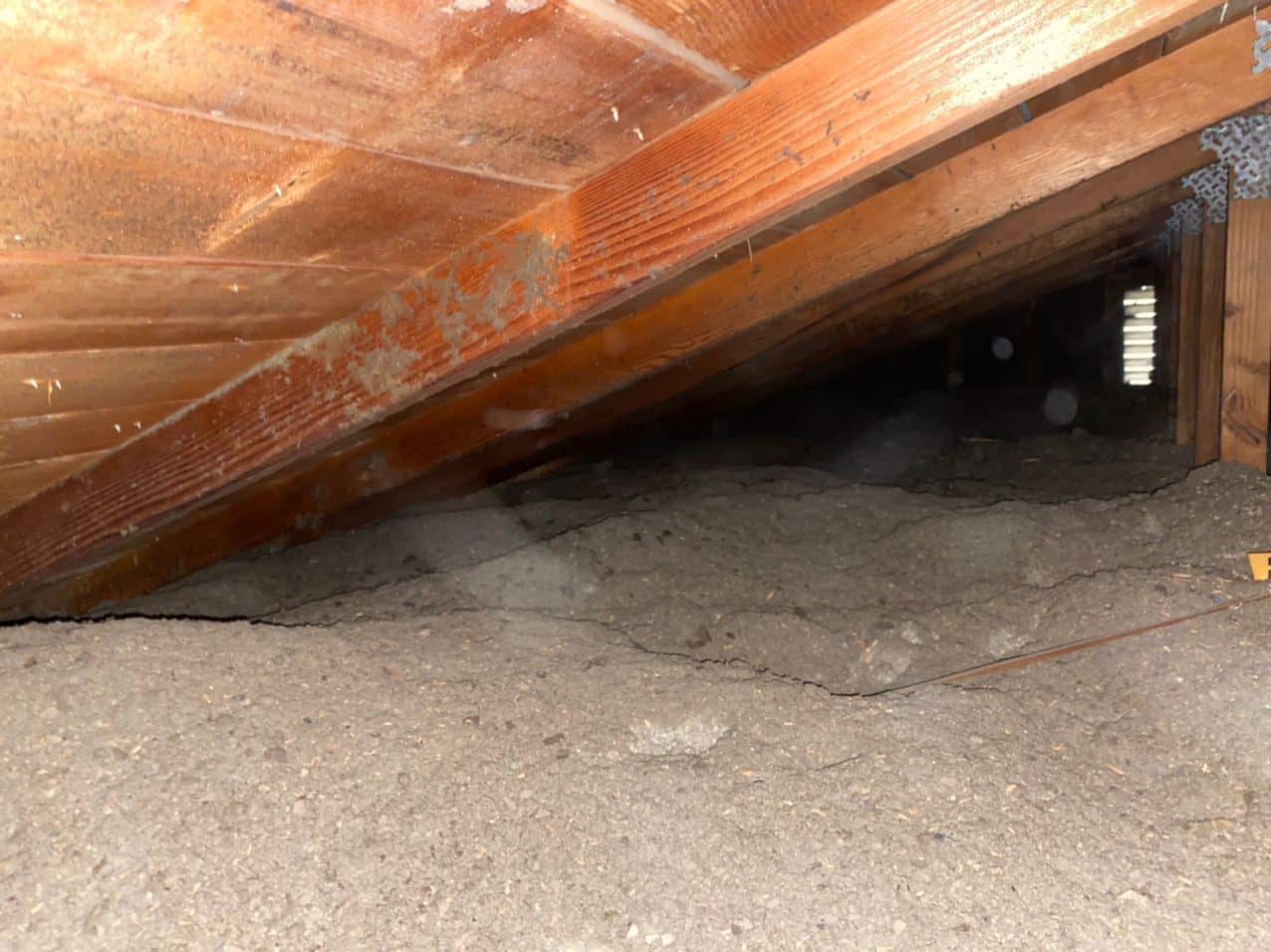
Opossums compress insulation like a little bulldozer. If you see a flattened path or a nest-like depression, that is a clue you are dealing with something bigger than mice.
4) Odor that comes and goes
An attic opossum can bring a musky, stale smell. If there are droppings, urine, or nesting material, the odor can linger and can soak into insulation over time.
5) Exterior clues at the roofline
Walk the perimeter of the house and look for:
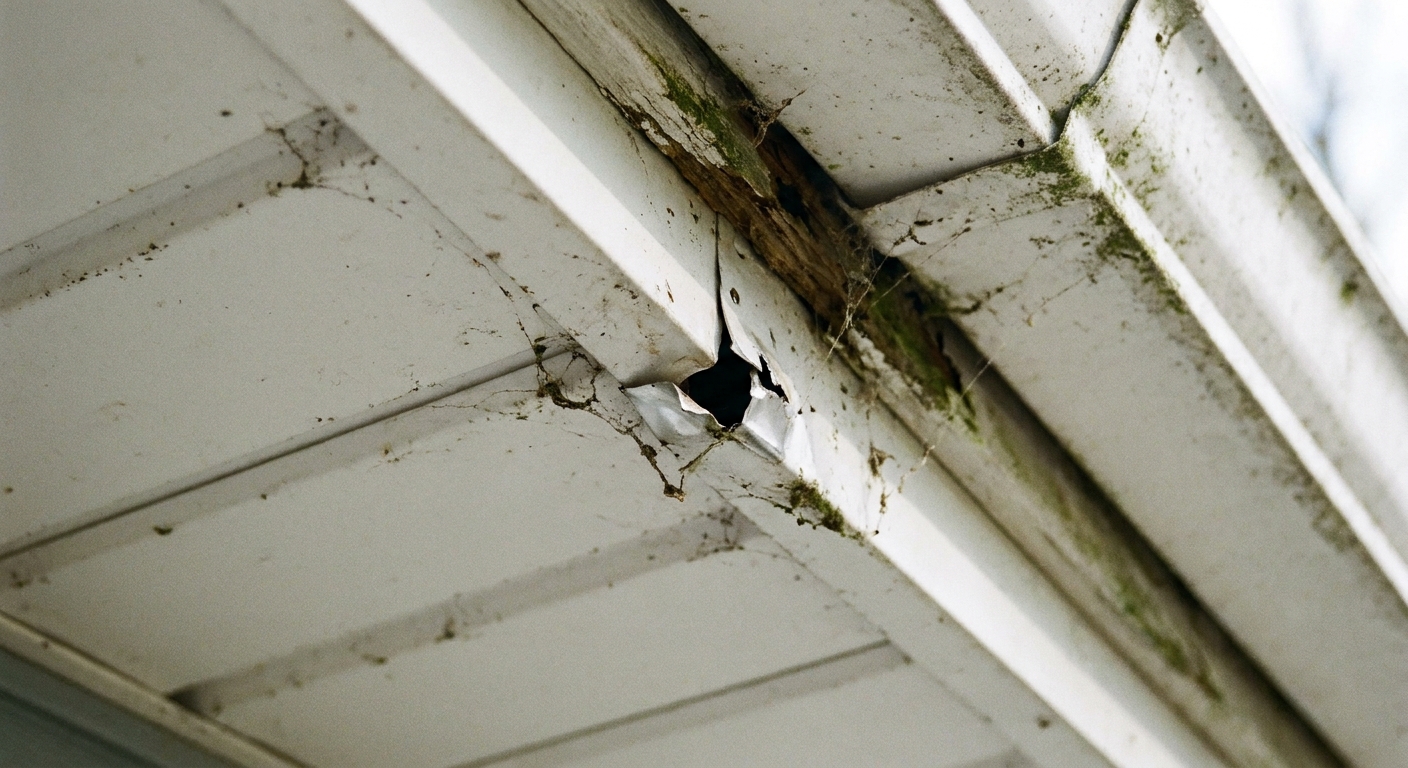
- Soffit panels that are bowed, cracked, or missing fasteners
- Gaps where fascia meets soffit, especially at corners
- Damaged vent screens or a rough “pulled open” look around vents
- Smudges or dirty rub marks near a gap
Opossum vs raccoon vs squirrel vs rats
If you are stuck on what you are hearing, here is the quick version I use before I commit to a plan:
- Opossum: heavier, slower thumps at night; flattened insulation trails; entry often looks like a pushed-in soffit or an existing gap that flexes.
- Raccoon: very heavy, with more "busy" noise, sometimes dragging or ripping sounds; they can tear vent screens and widen openings.
- Squirrel: more daytime activity; fast running and scratching; gnawing is common.
- Rats or mice: lighter, faster scurrying; smaller droppings; chewing and gnaw marks are common.
You do not need perfect certainty to start with inspection and exclusion, but if you see gnaw marks, shredded materials, or wiring damage, I start thinking rodents or squirrels first.
How opossums get into attics
In my experience, the entry is usually not a dramatic hole in the roof. It is usually a small failure that got ignored for a year or three.
- Loose soffit panels: Wind, rot, or a poor install leaves enough flex for an animal to push in.
- Fascia corners: Corners and returns can open up as wood swells and shrinks.
- Roof vents and gable vents: Damaged screening or old brittle plastic can crack.
- Plumbing stacks and roof penetrations: Gaps around flashing or a deteriorated boot can create access points.
- Tree access: A branch close to the roof makes it easy mode for climbers.
Before you do anything: do not trap babies inside
This is the part most DIY guides rush, and it matters. A female opossum may have young. If you install a one-way door when babies are still in the attic and cannot follow, you can create a serious odor problem and a humane one.
Baby-season caution: Timing varies by region, weather, and food availability. If you suspect babies, or you hear higher-pitched chirping and squeaking in the attic, slow down and consider calling a licensed wildlife professional.
If you proceed DIY, your goal is to confirm activity and confirm exit before sealing.
DIY plan: get an opossum out safely
Step 1: Confirm the entry point from the outside
Pick a daylight hour and do a careful exterior scan with binoculars if you have them. Look closely at soffits, fascia corners, gable vents, and roof vents. If you are tempted to climb, pause and be honest about ladder safety. Falls are the most common DIY injury here, and no attic animal is worth an ER visit.
If you think you found the opening, do a simple confirmation trick: lightly tape a strip of paper (or a small piece of aluminum foil) over part of the gap using painter’s tape so it will flap or tear if something pushes through. The goal is to detect activity, not to block ventilation or trap an animal. Check it the next morning.
Step 2: Make the attic less inviting
You are not trying to poison or harm anything. You are just encouraging it to leave.
- Remove food sources: Secure trash lids and bring pet food indoors at night.
- Add light: A work light on a safe surface can make an attic feel exposed.
- Add mild disturbance: A small radio at low volume can help, but only if it will not bother occupants. Do not rely on it alone.
Skip DIY chemical repellents in the attic. Many are messy, stink up living space, and do not solve the real issue, which is the entry hole.
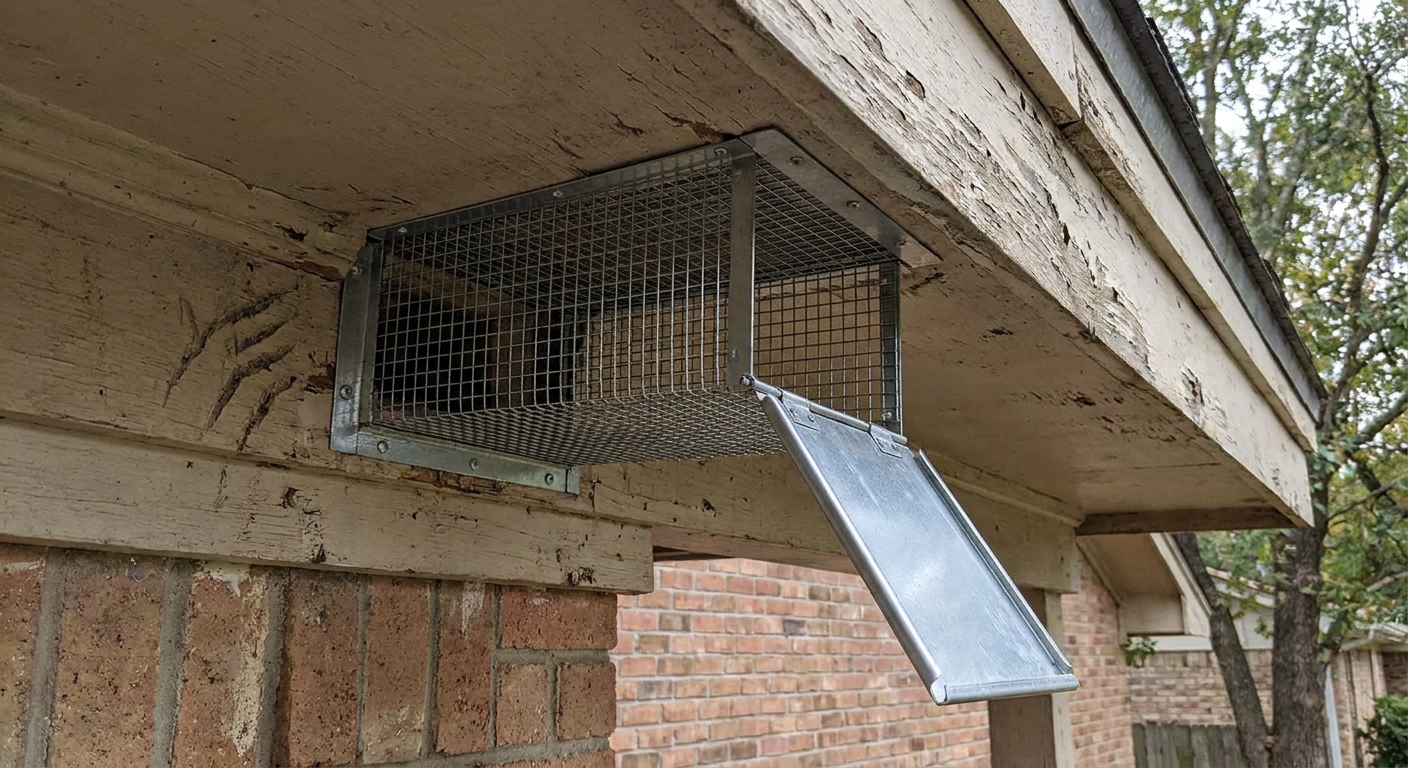
Step 3: Install a one-way exclusion device at the entry
A one-way door lets the opossum exit and prevents it from re-entering. You can buy a purpose-made one-way exclusion device sized for the opening. The key details:
- Install it directly over the active entry, not “near” it.
- Make sure it is securely fastened so the animal cannot push around the edges.
- Leave it in place long enough to cover normal activity, typically 3 to 7 nights as a guideline. Use longer if the weather is bad, activity is inconsistent, or you are not getting a clear read.
Important: If you seal the opening instead of using one-way exclusion, you risk trapping an animal in the attic. That can turn into torn ducting, damaged insulation, and a much bigger cleanup.
Step 4: Verify it is out
Here is how I verify, without playing attic detective all night:
- Listen for 2 to 3 nights. The heavy thumping should stop.
- Check your taped paper or foil indicator. It should stay undisturbed.
- If you can safely access the attic, look for fresh tracks in insulation. No new compressed paths is a good sign.
If the noise continues, you may have the wrong entry point, multiple access points, or a different animal.
Seal the opening after it is out
Once you are confident the attic is empty, you can remove the one-way device and do a permanent repair. This is where you stop the repeat performance.
What to use (and what not to use)
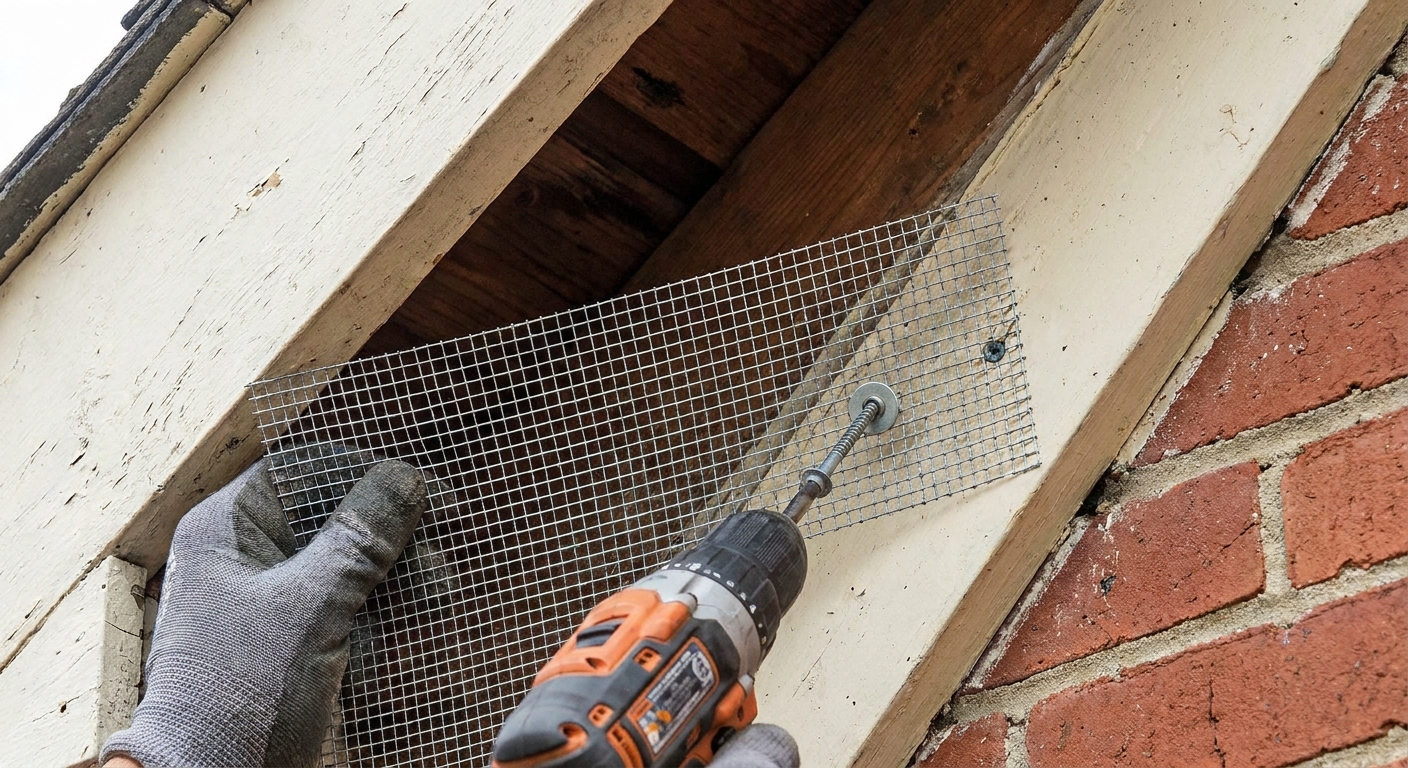
- Use: galvanized hardware cloth (typically 1/4 inch openings), exterior-grade screws with washers, soffit repair panels, new vent covers rated for wildlife resistance, exterior-rated caulk for small seams, and sheet metal flashing where appropriate.
- Avoid: spray foam as the only barrier. Animals can pull it apart, and rodents can chew through it. Foam is fine as an air seal behind a physical barrier, not as the barrier.
Basic soffit gap repair approach
The goal is to create a solid, chew-resistant patch that still allows proper ventilation where needed.
- Tighten or replace loose soffit panels and add fasteners where panels flex.
- For irregular gaps, cut hardware cloth oversized and screw it into solid framing.
- If the wood is soft or rotten, replace the damaged section. A patch screwed into mush does not hold up long.
- Seal small seams with exterior caulk after the structural fix, not before.
Do a quick roofline scan
If one spot failed, another might be close behind. Before you put the ladder away, walk the roofline again and check corners, vents, and transitions. Sealing one hole only works when it is the only hole.
Cleanup and damage check
Even if the animal is gone, you still want to address what it left behind.
Safety gear I recommend
- Gloves
- N95 or P100 mask
- Eye protection
- Disposable coveralls if insulation is contaminated
A quick “do not” list
- Do not use poisons in an attic. A dead animal in a wall or ceiling is a problem you do not want.
- Do not use glue traps.
- Do not handle the animal. Wild animals can bite or scratch and may carry fleas and ticks.
What to inspect
- Insulation: Matted down, soiled, or torn insulation can reduce performance and hold odor. If a section is heavily soiled or the smell persists, replacing that insulation is often the fastest path back to normal.
- HVAC ducts: Flexible duct can be punctured or pulled loose.
- Wiring: Opossums are not famous for gnawing like rodents, so chewed wiring can be a clue that you have rats or squirrels instead. Either way, any damaged wiring is a pro-level repair. Turn off power to the affected circuit and call an electrician.
- Ceiling stains: Moisture or urine spots can show up as discoloration.
For droppings: mist, pick up with paper towels, and bag. Ventilate the area if you can do so safely. If contamination is widespread, it is worth pricing a professional attic sanitation service, especially if you have respiratory sensitivities in the household.
When you are done, wash hands, and do not wear attic clothes and shoes through the house.
When to call a professional
I am all for DIY, but there are times it is smarter and safer to get help:
- You suspect babies are present
- You cannot confidently locate the entry point
- The entry is on a steep roof or high gable where ladder work is unsafe
- You find electrical damage
- You have recurring intrusions after prior repairs
Also, check your local wildlife rules. Many areas regulate trapping, handling, and relocation, and some require a licensed operator. A pro who focuses on exclusion and repair, not just removal, is usually the best fit for attic problems.
FAQ
Are opossums dangerous to have in the attic?
They are generally not aggressive, but any wild animal can bite or scratch when cornered. The bigger risk for homeowners is contamination, odor, and damage to insulation and ducts. If you see gnaw marks or chewed wiring, suspect rodents or squirrels too.
Will mothballs or ammonia drive an opossum out?
Strong odors might make the space unpleasant, but they do not solve the entry problem and can also make your living space smell awful. Focus on one-way exclusion and sealing.
Can I just seal the hole and be done with it?
Not until you are sure the animal is out. Sealing first is how people end up with a trapped animal and a much bigger mess.
How small of an opening can an opossum fit through?
They need more room than a rat, but you would be surprised what a determined climber can squeeze through, especially if the opening flexes. If a soffit panel can be pushed in, it can become an entry.
Should I handle this the same way as an opossum under a deck or in a crawl space?
No. Under-deck and crawl-space setups are ground-level denning and usually involve different access points and barriers. An attic intrusion is a roofline inspection and repair problem first.
The 30-Second Cheat Sheet
Essential takeaways for: Opossums in the Attic: Signs and How to Get Them Out
Do this first
- Do not seal any holes yet. You can trap the opossum inside the attic.
- Confirm the entry point at the roofline, usually soffit, fascia corner, or a damaged vent screen.
Top signs it might be an opossum
- Heavy, slow thumping at night, not quick scurrying
- Larger droppings and flattened “trails” through insulation (ID can overlap with other animals)
- Roofline gaps or loose soffit panels outside
How to get it out
- Install a one-way exclusion device over the active entry.
- Leave it 3 to 7 nights as a guideline, longer if weather is bad or activity continues. Verify the noise stops and your entry indicator stays undisturbed.
Baby-season caution
- If you suspect babies (chirping sounds, repeated nesting), slow down and consider a licensed wildlife pro. Timing varies by region and weather.
Seal and repair after it is out
- Use hardware cloth, flashing, new soffit material, and sturdy fasteners.
- Avoid spray foam alone. It is not a durable animal barrier.
Cleanup basics
- Wear gloves and an N95 or P100 mask.
- Mist droppings before pickup to avoid kicking up dust.
- Inspect insulation, ductwork, and wiring. If you see gnaw marks or wiring damage, you may be dealing with rodents or squirrels. Call an electrician for any wiring issues.
💡 Tip: Scroll up to read the full article for detailed, step-by-step instructions.
⬆️ Back to top
About Marcus Vance
Content Creator @ Grit & Home
Marcus Vance is a lifelong DIY enthusiast and self-taught home renovator who has spent the last decade transforming a dilapidated 1970s ranch into his family's dream home. He specializes in budget-friendly carpentry, room-by-room renovations, and demystifying power tools for beginners. Through his writing, Marcus shares practical tutorials and hard-learned lessons to help homeowners tackle their own projects with confidence.