
🚨 In a DIY emergency or rush?
Skip the details and jump straight to our 30-second cheat sheet for the most crucial info.
Small courier. Big home questions.
If your little three-light outlet tester is suddenly tattling with a “hot/neutral reversed” pattern, it can feel like a plot twist. The lamp still turns on. The phone charger still charges. So what is the tester complaining about?
Let’s unpack what that light pattern means, why things can still run anyway, and what you should do next without becoming the grounding path.
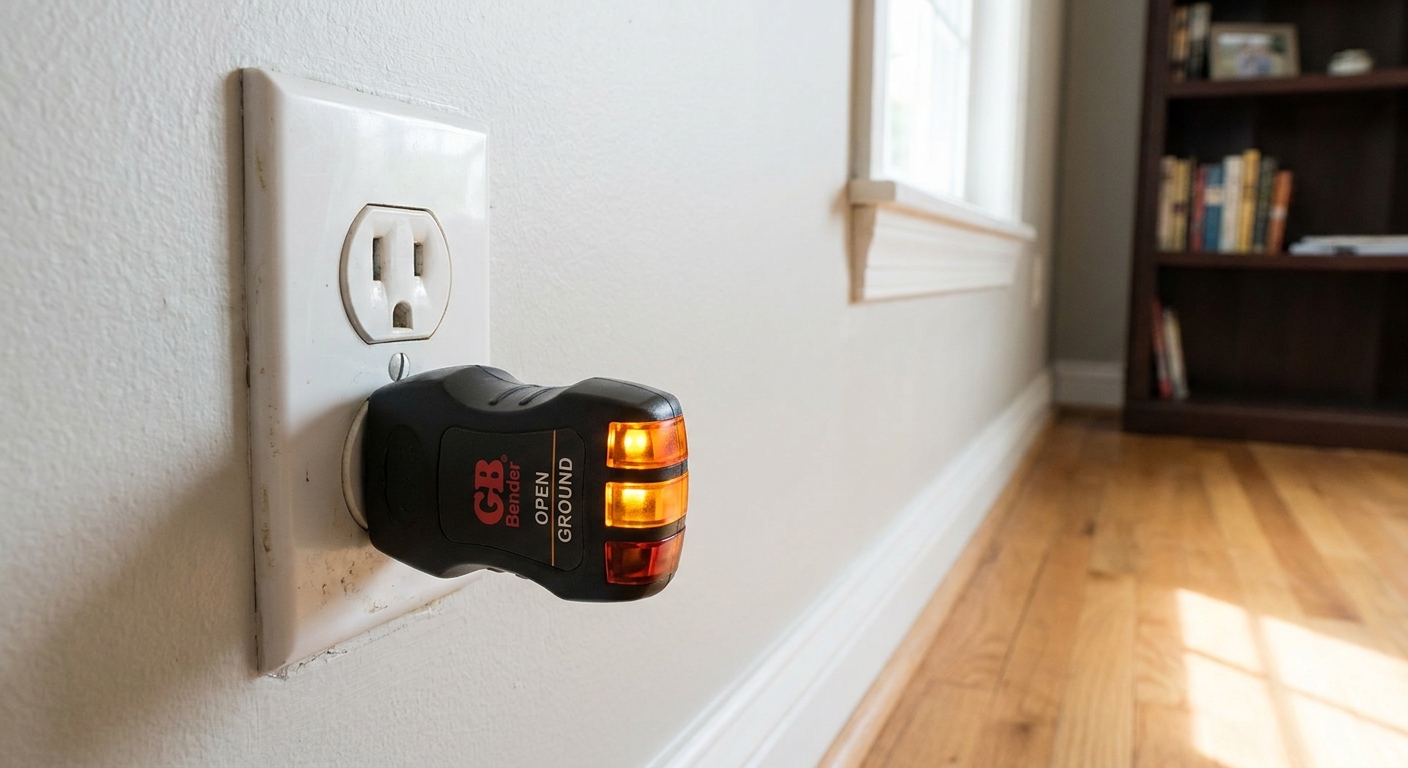
What “hot and neutral reversed” means
In a standard North American 120V outlet (a typical duplex receptacle):
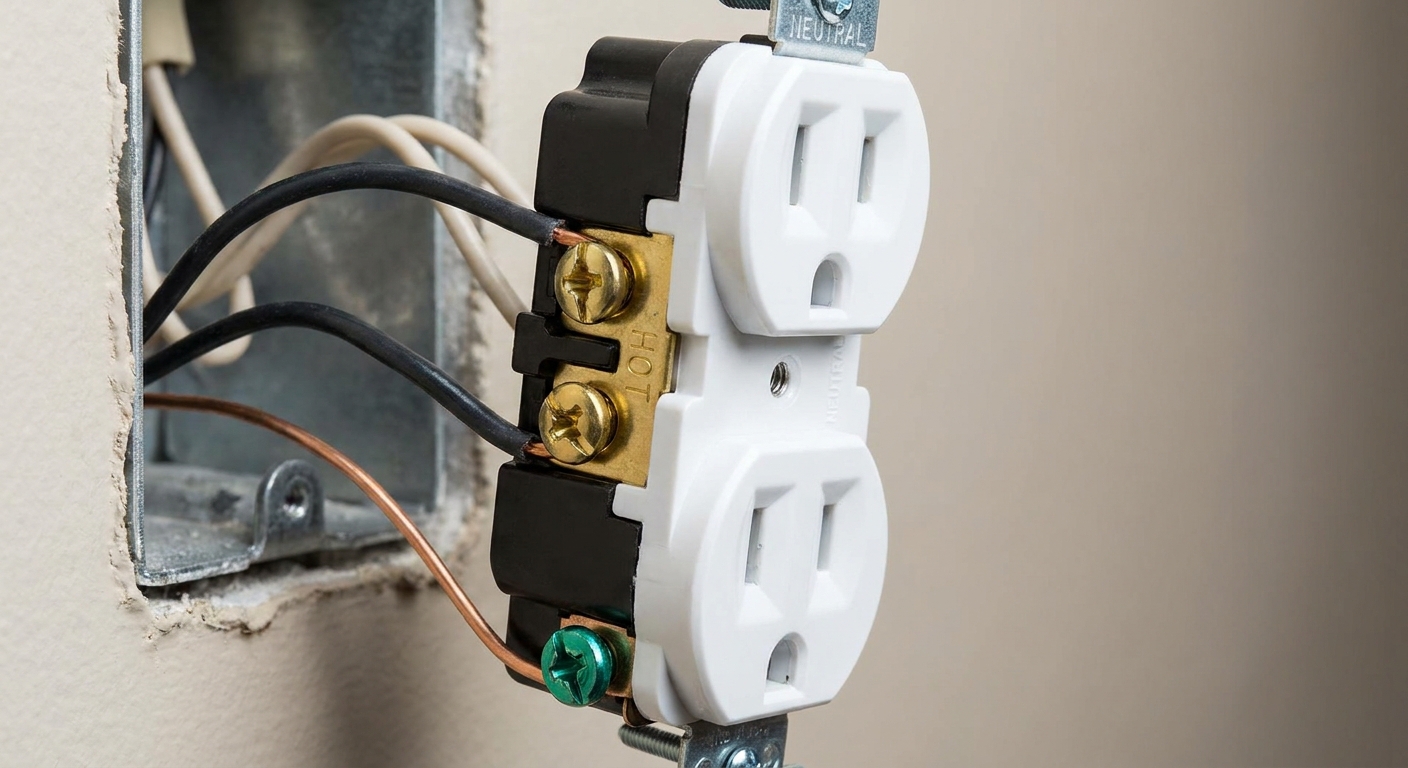
- Hot (usually black or red wire) should land on the brass-colored screw. This is the energized conductor.
- Neutral (usually white wire) should land on the silver-colored screw. This is the grounded conductor that carries return current under normal operation.
- Ground (bare copper or green) should land on the green screw.
“Hot/neutral reversed” means the hot conductor is connected to the neutral side of the receptacle, and the neutral conductor is connected to the hot side.
This is also called reversed polarity.
Tester light patterns
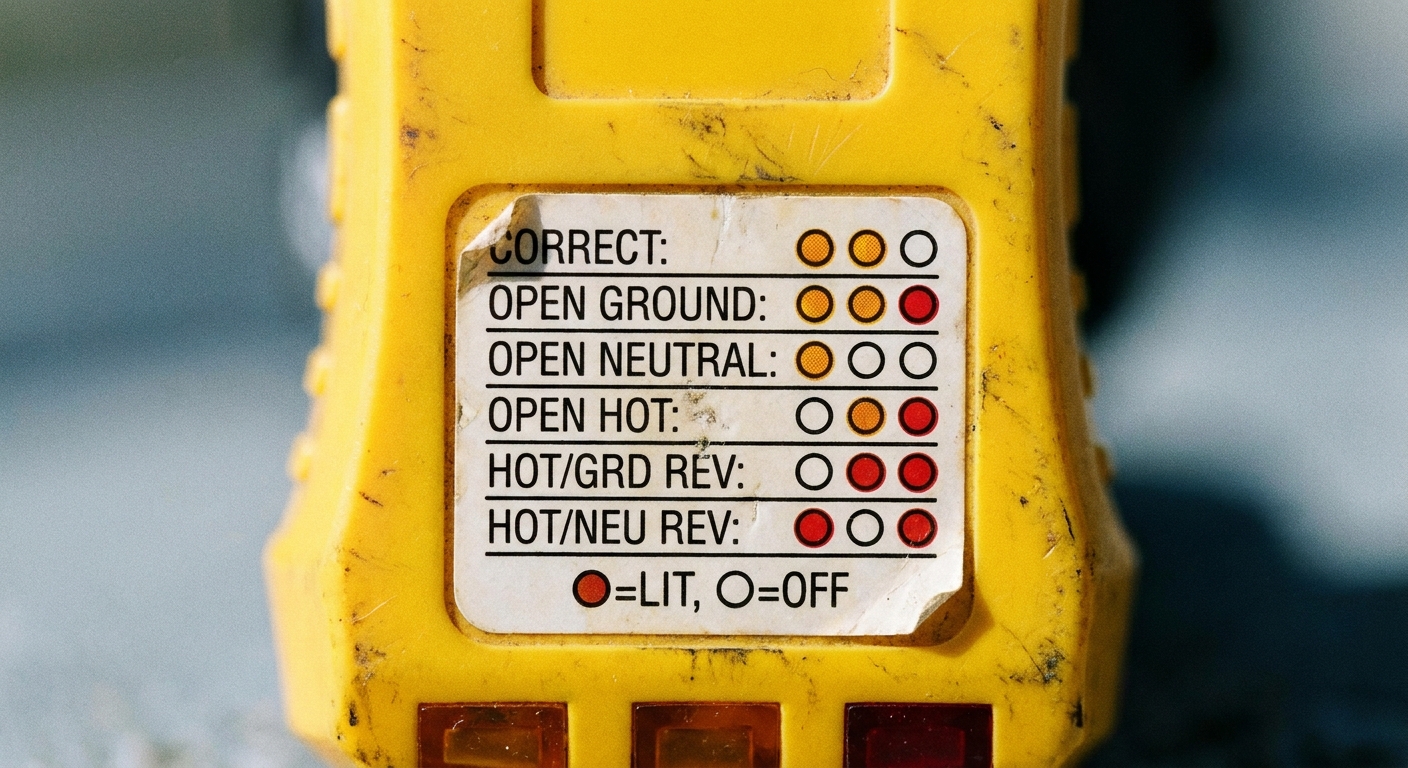
Most basic three-light plug-in testers use a legend printed right on the tool. That legend is the final authority for your specific tester model.
On many common three-light testers, hot/neutral reversed shows as:
- Two amber/yellow lights ON, and the red light OFF.
But brands vary, so use this rule: match the exact light combination you see to the chart on your tester. If the chart says “hot/neutral reversed,” treat it as real until proven otherwise.
Why stuff still turns on
Most plug-in devices only need a voltage difference between hot and neutral to operate. When hot and neutral are swapped, the device still sees about 120V across the two flat blades, so it runs.
The problem is where the energized hot ends up inside the device.
- Many devices and lamps are designed so the switch interrupts the hot conductor.
- With reversed polarity, the switch might interrupt the neutral instead, leaving parts of the device energized even when “off.”
So yes, it can work. It is just working with the house rules flipped.
Is it dangerous?
It can be. Reversed polarity increases shock risk because it can energize parts you expect to be neutral or safer to touch.
Common shock hazards
- Lamps: With an Edison-base lamp, reversed polarity can leave the screw shell energized when it should be neutral, increasing shock risk during bulb changes. Polarized plugs are meant to keep the threaded shell on the neutral side.
- Older two-prong devices: Many rely on polarization for safety assumptions.
- Appliances with switches: If the switch is cutting neutral instead of hot, internal components can remain energized even when the appliance appears off.
- DIY troubleshooting: People assume “neutral” is always the safer conductor and get surprised.
Bottom line: It is not just a picky tester. It is warning you that the outlet is wired incorrectly.
First: confirm the tester
Before you pull out tools, do two quick checks:
- Test the tester: Plug it into another outlet you strongly believe is correct (ideally one you have tested before). If the “correct” pattern shows there, your tester is probably fine.
- Try a second tester (if you have one): A second opinion is cheap insurance.
If both indicate reversed polarity at the same outlet, proceed as if the wiring is reversed.
What to do right now
- Stop using the outlet for anything you touch frequently, like a lamp you switch on and off, a phone charger you unplug daily, or a metal appliance.
- If it is a critical outlet (fridge, sump pump), keep the device running if needed, but plan a repair as soon as possible and avoid repeated unplugging and plugging.
- Do not assume the breaker label is correct. Labels are often wrong, especially in older panels.
Fix it or call a pro
There are two broad realities here:
- If the reversal is at one outlet because someone swapped wires on that device, the fix can be straightforward.
- If the reversal is caused by a miswire upstream (a junction box, a different receptacle feeding this one, or a shared-neutral issue), the fix may not be “just swap two screws.”
Call an electrician if
- You are not 100 percent comfortable identifying hot, neutral, and ground conductors in a box.
- The outlet is on a multi-wire branch circuit (two hots sharing a neutral) or you suspect shared neutrals.
- The wiring is aluminum, cloth-insulated, brittle, scorched, or crowded.
- The outlet is in a kitchen, bathroom, garage, outdoors, basement, laundry area, or near a sink and you suspect GFCI complications.
- You see multiple cables in the box, a broken tab (half-switched receptacle), or any “creative” wiring choices you cannot immediately explain.
If you DIY: basic steps
This is the “it was simply landed on the wrong screws” scenario. If at any point your wiring does not match what you expect, stop and call a pro.
Tools
- Outlet tester (the one that started the drama)
- Non-contact voltage tester (helpful, not perfect)
- If you know how to use one safely, a two-pole tester or multimeter for more definitive verification
- Phillips and flathead screwdriver
- Needle-nose pliers (optional)
- A flashlight
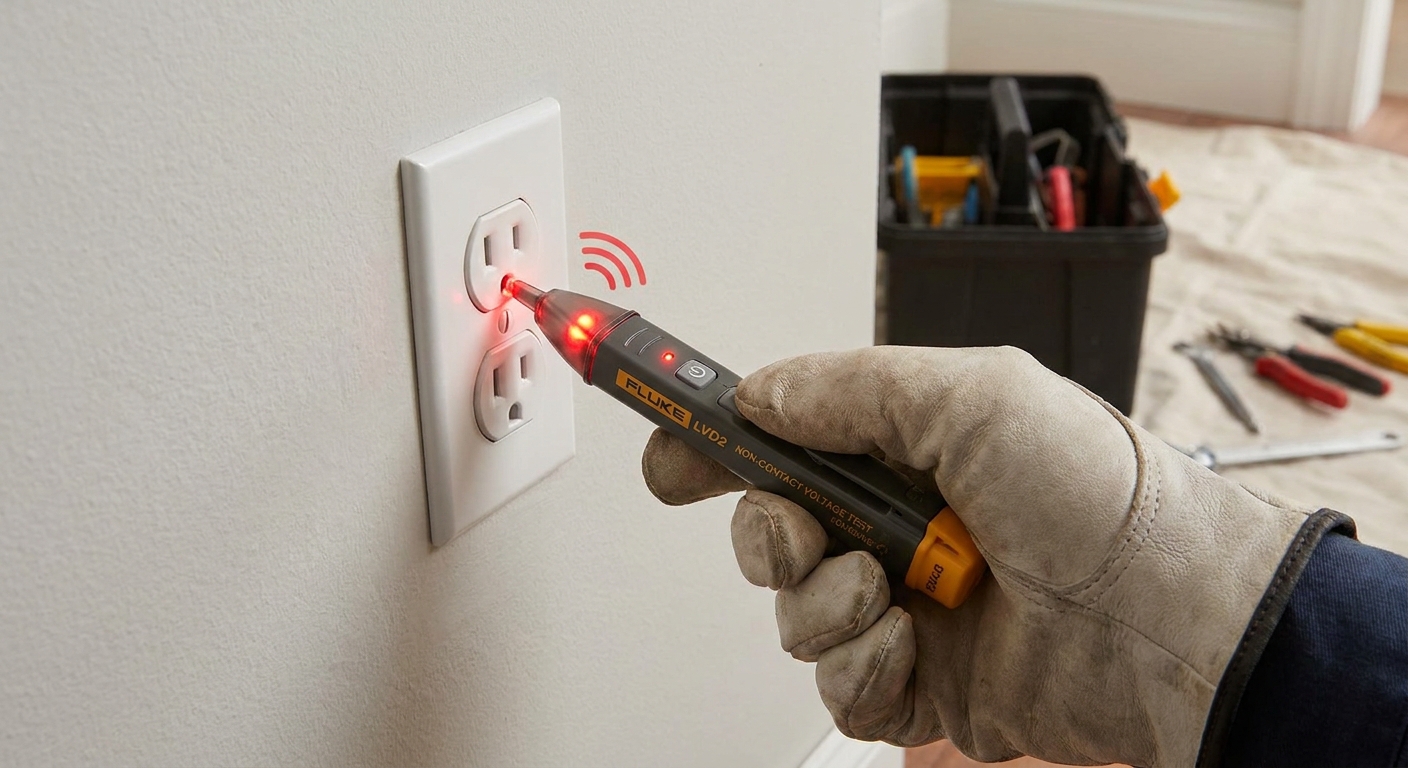
1) Turn off power and verify
- Turn off the breaker you believe controls the outlet.
- Plug in your outlet tester and confirm the lights go out.
- Also check with a non-contact voltage tester at the outlet and inside the box later.
Important: A plug-in tester going dark is a helpful sign, but it is not a guarantee. Non-contact testers can be wrong, too. If you are going to put hands near conductors, a properly used two-pole tester or multimeter is the more reliable way to confirm de-energized wiring.
2) Remove the plate and pull the receptacle
Unscrew the faceplate, then remove the two mounting screws holding the receptacle to the box. Gently pull it forward without yanking the wires.
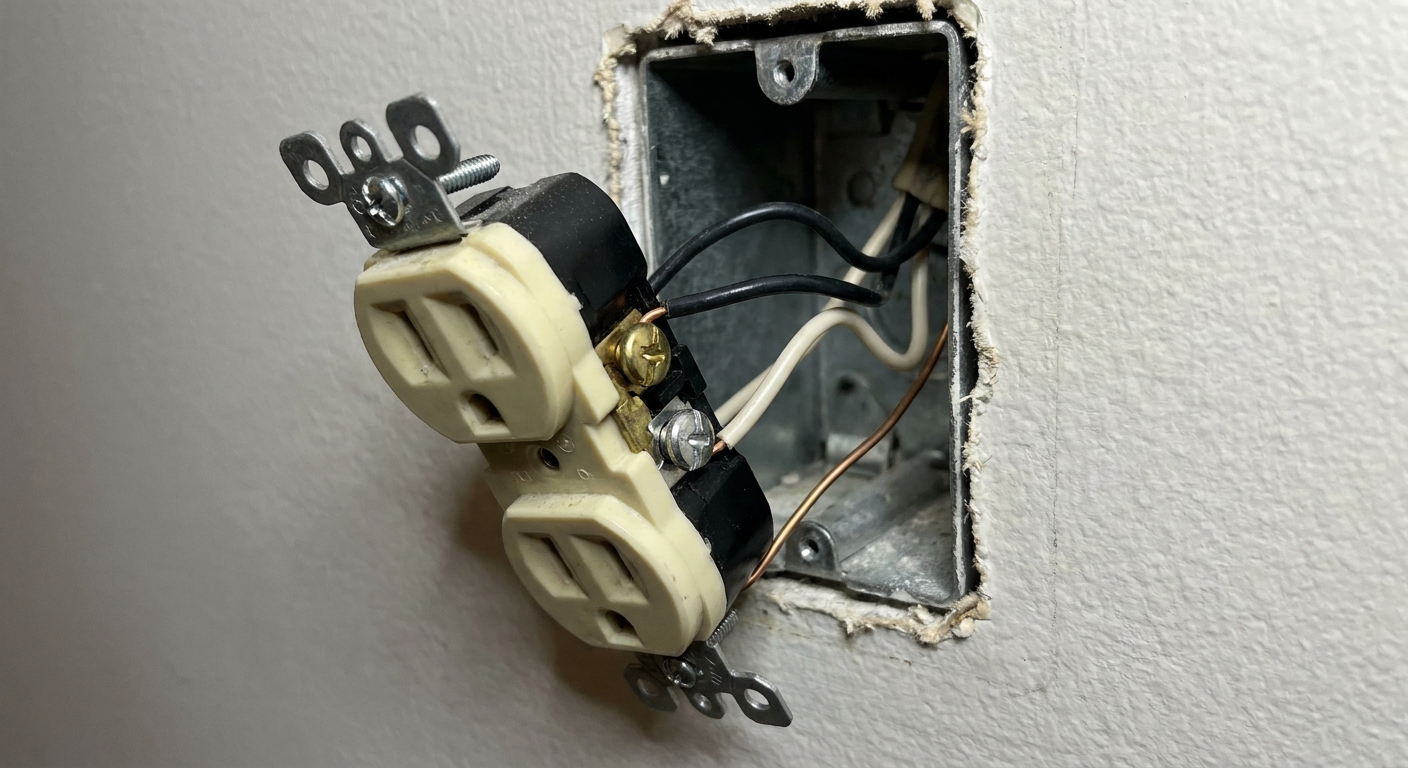
3) Find the right terminals
- Brass screws are for hot conductors (black or red).
- Silver screws are for neutral conductors (white).
- Green screw is for ground (bare or green).
Also note the outlet orientation: the short slot is hot, the long slot is neutral.
4) Move wires to correct screws
- If the white wire is on brass, move it to a silver screw.
- If the black wire is on silver, move it to a brass screw.
Form a neat clockwise hook so tightening the screw pulls the wire tighter, not looser.
If you see two wires under one screw, or you are dealing with a mixed bundle of hots and neutrals, slow down. Many good repairs use pigtails and wire connectors so each device terminal gets only one conductor.
If the receptacle uses backstab push-in holes (wires pushed into the back), consider moving them to the side screws instead for a more reliable connection. Some receptacles have a release slot for backstab removal. If you are unsure, this is a good place to stop and call an electrician.
5) Reinstall and retest
- Carefully fold wires back into the box.
- Mount the receptacle and reinstall the cover plate.
- Turn the breaker back on.
- Plug in your outlet tester and confirm the “correct wiring” pattern on the legend.
If it still reads reversed
That usually means the problem is not just this receptacle. A few common reasons:
- The outlet is fed from another device upstream that is miswired, and you corrected only the last stop on the chain.
- Bootleg ground: an improper neutral-to-ground jumper at a receptacle that can confuse testers and defeat safety features.
- Shared neutrals or multi-wire branch circuits are involved and something is crossed in a junction or device box.
- Multiple faults at once (like an open ground plus other wiring issues) can create misleading readings on basic testers.
This is the point where I stop being a brave little courier and start being a cautious one: call a licensed electrician. Troubleshooting upstream wiring can escalate quickly, especially if multiple boxes are involved.
GFCI notes
If the problem outlet is protected by a GFCI (either a GFCI receptacle or a GFCI breaker), weird tester results can show up if:
- Hot and neutral were landed incorrectly on the GFCI device.
- The LINE and LOAD terminals were mixed up, which often causes a GFCI that will not reset, leaves downstream outlets unprotected, or produces confusing indications during testing.
If your tester indicates a problem on multiple outlets in the same area, check whether one upstream GFCI device was recently replaced or worked on.
Quick FAQs
Can reversed polarity start a fire?
Reversed polarity by itself is more about shock risk than overload or heating. Fire risk is more often tied to loose connections, damaged insulation, backstab failures, arcing, or overloaded circuits. Still, if an outlet was wired incorrectly once, it may also have loose terminations. Take it seriously.
Is it safe to leave it if everything works?
No. “Works” is not the same as “wired safely.” Polarization exists to put the energized conductor where devices expect it.
Will a surge protector or power strip fix it?
No. A power strip cannot correct reversed building wiring. You have to fix the receptacle wiring or the upstream wiring fault.
Does this mean my whole house is wrong?
Not necessarily. It is often isolated to one receptacle or one section that was repaired or replaced. Still, if you find one reversed outlet, it is worth testing nearby outlets too.
Choose the boring option
The boring option is: stop using the outlet, turn off the circuit if practical, and call a licensed electrician. Reversed polarity is fixable, but it is also sneaky because everything seems normal until the moment it is not.
If you do DIY it, keep it simple: power off, verify, move hot to brass and neutral to silver, button everything back up, then retest.
Courier’s honor: your future self changing a light bulb will thank you.
The 30-Second Cheat Sheet
Essential takeaways for: Outlet Tester Says Hot and Neutral Reversed? What to Do
What the tester result means
- “Hot/neutral reversed” (reversed polarity) means the hot and neutral conductors are landed on the wrong terminals of the receptacle.
- Many three-light testers show this with a specific two-light pattern, but always follow the legend printed on your tester.
Why stuff still turns on
- Devices can still get about 120V across the two flat blades, so they run.
- The danger is that energized parts can end up where you expect neutral, increasing shock risk, especially with lamps and switched devices.
What to do right now
- Stop using the outlet for things you plug and unplug often.
- Test your tester on another outlet to confirm it is working.
If you DIY a single outlet fix
- Turn off the breaker and verify power is off before touching any conductors.
- Move wires to the correct screws: black (hot) to brass, white (neutral) to silver, ground to green.
- Reinstall, restore power, and retest for the correct wiring pattern.
Call an electrician if
- The tester still shows reversed after you correct the receptacle.
- There are multiple cables in the box, a GFCI involved, a half-switched outlet tab, aluminum or damaged wiring, or you are not fully confident identifying conductors.
💡 Tip: Scroll up to read the full article for detailed, step-by-step instructions.
⬆️ Back to top
About Grit
Content Creator @ Grit & Home
Grit is Grit & Home’s little blue clay courier, delivering big questions about the place you call home. Expect practical ideas, a raised eyebrow, and a satchel full of curiosity.