
🚨 In a DIY emergency or rush?
Skip the details and jump straight to our 30-second cheat sheet for the most crucial info.
The first time tomato hornworms hit my garden, I thought a rabbit had gotten in. Overnight, a couple of my tomato plants went from lush to bare sticks with a few sad leaf stems left behind. Then I noticed the giveaway: little dark droppings on lower leaves and the soil. Five minutes later, I found the culprit. A big green caterpillar the size of my finger, sitting there like it owned the place.
If your tomatoes or peppers are getting stripped fast, you can stop hornworms quickly without turning your backyard into a chemical war zone. You just need to know what to look for and when to use which tool.

What hornworms look like
Tomato hornworms are large green caterpillars with pale markings and a horn-like spike on the back end. The horn looks intimidating, but it is harmless.
They blend in extremely well. In bright sun they can look like part of the plant, especially if you are scanning quickly.
Two common hornworms
- Tomato hornworm (Manduca quinquemaculata): usually has V-shaped white marks and often a darker horn.
- Tobacco hornworm (Manduca sexta): usually has diagonal white stripes and often a red horn.
In real life, color can vary with lighting and growth stage, so do not get stuck on horn color. For a home gardener, the control steps are the same: if it is a big green horned caterpillar eating your tomato or pepper leaves, treat it like a hornworm problem.
Signs it is hornworms
Hornworms cause fast, obvious chewing damage. You will usually see missing leaves and ragged stems, not tiny holes or speckles.
Three dead giveaways
- Stripped stems and missing leaves, often starting mid-plant and moving up.
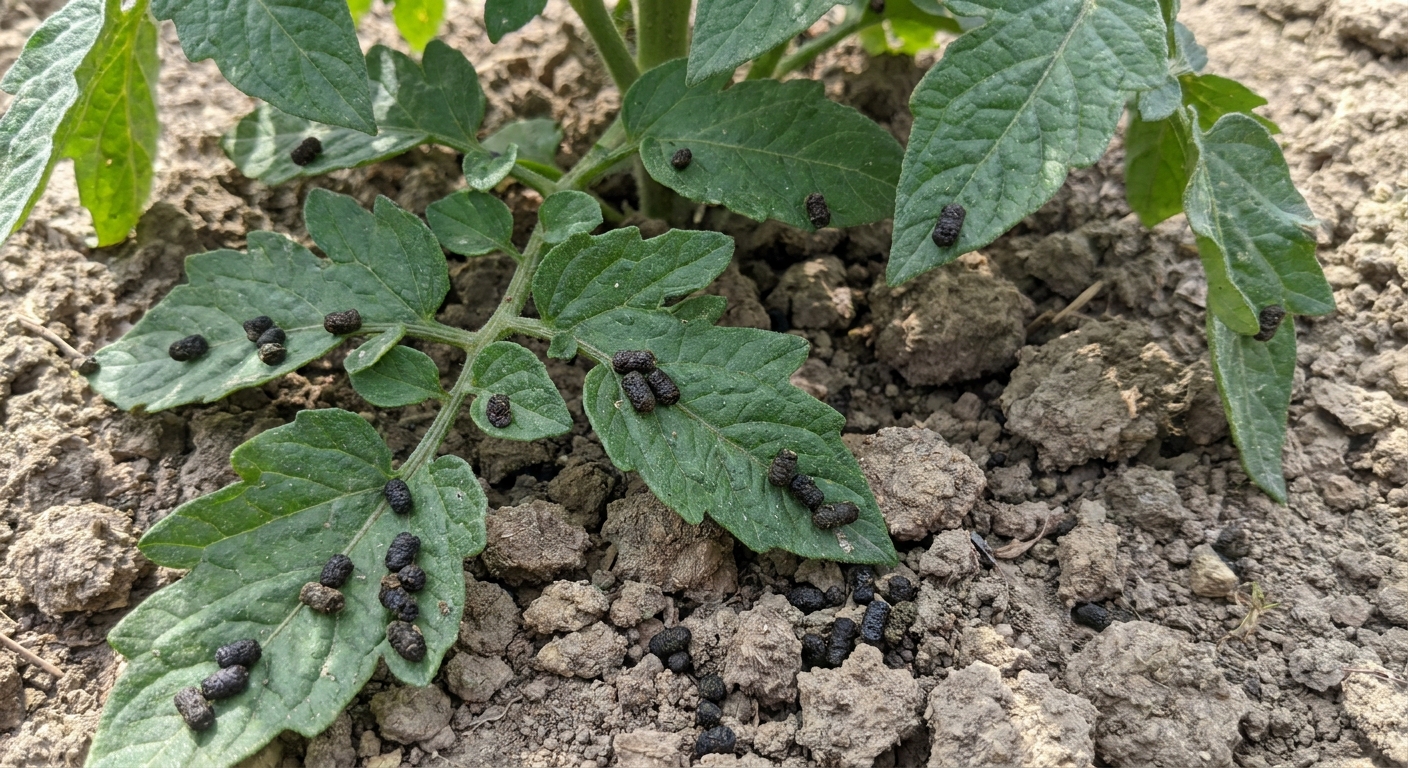
- Dark green or black droppings that look like small pellets. These collect on leaves below the feeding area or on the soil.
- Partially chewed tomatoes sometimes show up later, but most of the damage is defoliation.
Find them fast
If you try to find hornworms by casually looking at the plant, you will miss them. Here is the method that saves time.
Step 1: Start at the droppings
Look for the freshest droppings on lower leaves or the ground. Hornworms are usually nearby and often higher up, feeding above that spot. If you do not see anything directly overhead, check adjacent stems and the undersides of leaves.
Step 2: Scan stems first
Hornworms often hang along the main stem or a thick branch, lined up lengthwise like a green extension of the plant.
Step 3: Check at dusk
This is my favorite trick. In the evening, many hornworms settle in to feed and a flashlight beam sweeping across the plant can catch their shape and shine. It is not magic, but it stacks the odds in your favor.
Optional: Use a blacklight
Many gardeners (me included) find that hornworms often stand out under UV light more than the foliage does. If you already own a small UV flashlight, it is a surprisingly effective cheat code.

Option 1: Hand-pick
If you only have a few plants, hand-picking is the quickest win. It is also the most targeted, meaning you are not affecting helpful insects.
How to do it
- Wear gloves if you prefer. Hornworms do not sting, but they can feel a little gross to handle.
- Pinch behind the head and pull them off the stem.
- Drop them into a bucket of soapy water if you want a sure end.
Tip from my own mistakes: Do not assume there is only one. If you found one hornworm, keep looking. I have pulled four off a single tomato plant that looked mysteriously thin.
Option 2: Use Bt
If you are dealing with a heavier infestation, or you have a lot of plants and cannot play hide-and-seek every evening, Bt is a smart next step.
The version most gardeners mean for caterpillars is Bacillus thuringiensis var. kurstaki (Btk). It is a naturally occurring soil bacterium used in many organic gardening programs. The key detail is that Bt works when the caterpillar eats treated foliage. It is not a contact killer.
When Bt helps
- You keep finding new hornworms every few days.
- You have multiple tomato or pepper plants and want broader coverage.
- The caterpillars are still small to medium sized. Smaller ones are easier to control.
How to apply Bt
- Spray in the evening so it lasts longer on the leaves and you are less likely to hit active pollinators.
- Coat both sides of leaves, especially the upper canopy where they feed.
- Avoid spraying blossoms when possible and aim for foliage instead.
- Reapply after heavy rain or overhead watering.
- Expect results in about 1 to 3 days, not instantly.
Common reason Bt fails: The hornworm is big and you only lightly misted the top leaves. Make sure you are actually treating the feeding zones, not just fogging the plant.

Leave cocoons alone
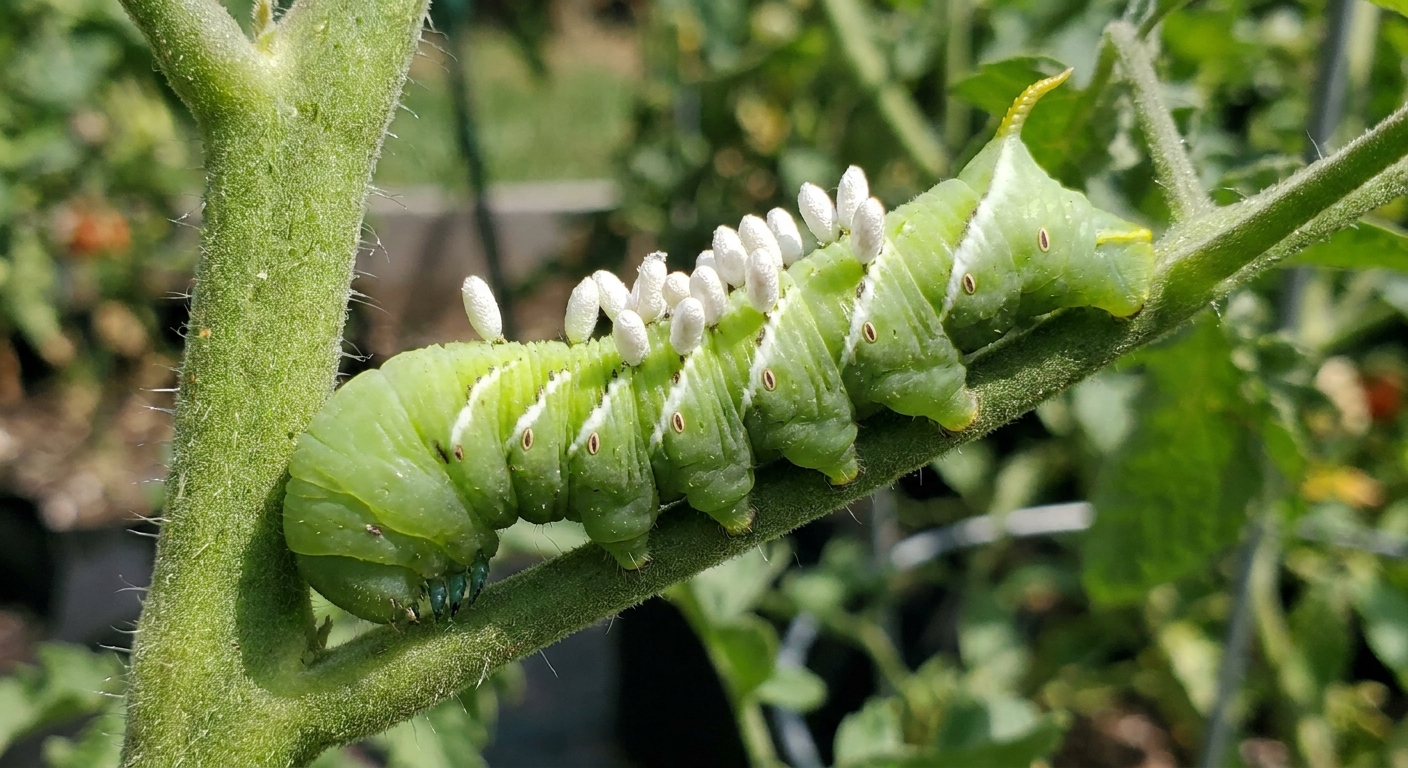
Sometimes you will find a hornworm with clusters of small white capsules on its back. Those are parasitic braconid wasp cocoons (often Cotesia congregata). This is one of the best forms of free pest control you can get.
In plain terms, the wasps have already used that hornworm to reproduce. The hornworm may still feed for a little while, but it is usually slowed down, and the adult wasps that emerge will help control future hornworms.
What to do instead
- Leave it if the plant can tolerate a bit more chewing.
- If you cannot stand it on a prized plant, move it off your crop entirely to a nightshade weed or sacrificial plant away from your garden beds, or simply relocate it far from your tomatoes and peppers.
Prevent them next week
You cannot fully worm-proof tomatoes, but you can make your garden less inviting and catch problems earlier.
Do these five things
- Inspect twice a week during peak tomato season. Look for droppings first.
- Remove lower leaves that drag on the soil and make hiding places. Do not over-prune, just clean up the bottom few inches as the plant grows.
- Keep the area weeded, especially nightshade relatives that can host hornworms.
- Encourage beneficial insects by avoiding broad-spectrum insecticides. Those products can wipe out the wasps and other helpers that keep caterpillars in check.
- End-of-season cleanup: pull and discard old tomato vines and fallen fruit. If you lightly turn soil in fall or early spring, you may expose pupae to birds and weather.
Are stripped plants doomed?
Not always. Tomatoes are tough. If you catch hornworms and the plant still has a healthy main stem and some leaves, it often rebounds.
Quick recovery checklist
- Water deeply in the morning.
- Add a light mulch layer to hold moisture.
- Avoid heavy nitrogen fertilizer right after major leaf loss. You want steady recovery, not weak, overly lush growth that attracts more pests.
- Give the plant a few days before pruning anything else. Let it stabilize.
FAQ
Do hornworms bite or sting?
No. The horn looks scary, but they are harmless to handle. They might wriggle or try to grip your glove.
Will hornworms kill a tomato plant?
They can, especially young plants or smaller pepper plants. On larger tomatoes, they can cause major stress and reduced harvest even if the plant survives.
Should I spray everything just in case?
If you have a history of hornworms, a targeted Bt spray can be reasonable. Otherwise, I prefer scouting and hand-picking first. It is cheaper and protects beneficial insects.
Why do I only see damage, not the caterpillar?
Because they are excellent at camouflage and they often feed higher up than where you notice the damage. Follow the droppings upward, then check nearby stems and leaf undersides, especially in the evening with a flashlight.
The 30-Second Cheat Sheet
Essential takeaways for: Tomato Hornworms Stripping Your Plants? How to Stop Them
What you are seeing
- Big green caterpillar with a horn on the back end: tomato or tobacco hornworm.
- Fast defoliation with stripped stems: classic hornworm feeding.
- Dark pellet droppings on leaves or soil: hornworms are usually nearby, often above that spot.
Fastest fix (5 to 10 minutes)
- Search where droppings collect, then look up and around the plant.
- Hand-pick hornworms and drop into soapy water.
- Keep looking. If you found one, there are often more.
When to use Bt
- Use Bacillus thuringiensis var. kurstaki (Btk) when you have multiple plants or repeated hatchings.
- Spray in the evening and coat the feeding areas well.
- Bt must be eaten to work. Expect 1 to 3 days for results.
- Reapply after heavy rain.
One time you should not kill a hornworm
- If it has white rice-like cocoons on its back, leave it if you can. Those are parasitic wasps that help control future hornworms.
Prevent repeat damage
- Inspect plants twice a week, especially at dusk with a flashlight.
- Keep weeds down and avoid broad-spectrum insecticides that kill beneficials.
💡 Tip: Scroll up to read the full article for detailed, step-by-step instructions.
⬆️ Back to top
About Grit
Content Creator @ Grit & Home
Grit is Grit & Home’s little blue clay courier, delivering big questions about the place you call home. Expect practical ideas, a raised eyebrow, and a satchel full of curiosity.