
🚨 In a DIY emergency or rush?
Skip the details and jump straight to our 30-second cheat sheet for the most crucial info.
The first time my washer left black streaks on a load of light colored shirts, I did what most of us do. I blamed the dryer. Then I blamed my detergent. Then I blamed my kids for leaving a crayon in a pocket. (That last one was true exactly once.)
Here’s the honest deal: black marks after a cycle that did finish and did spin usually come from one of two buckets.
- Not actually grease: detergent residue, fabric softener buildup, grime from pockets, or a dirty drum gasket.
- Actual oil or grease: contamination from the seal and bearing area (grease, rust, metal fines), or on some machines, belt dust or a gearcase leak.
This guide helps you separate those quickly, do the “stop using” checks, and recognize when the seal and bearing area (or gearcase on some top-loaders) is the real source.
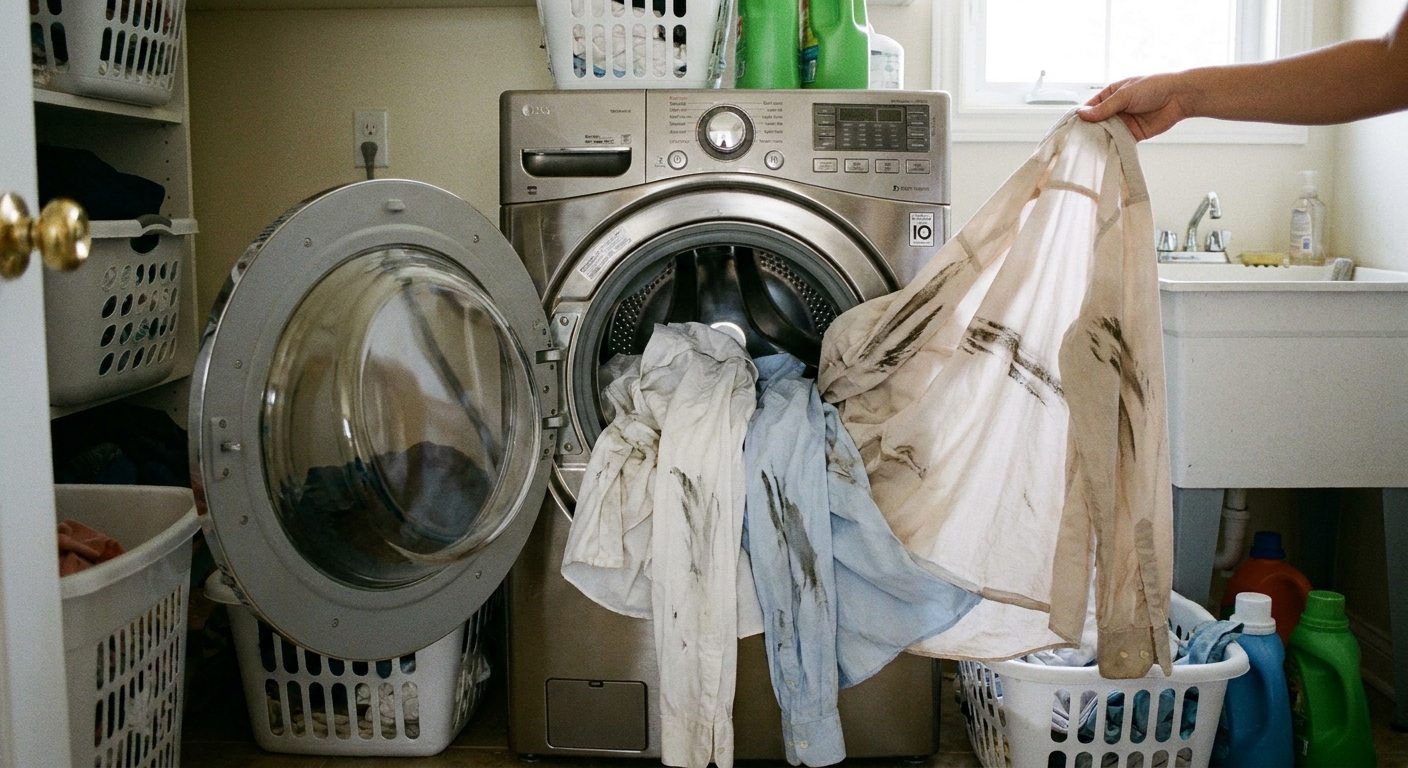
First: What do the black marks look and feel like?
Before you take anything apart, do this simple check on the worst marked item:
- Rub test: Rub the mark between your fingers with a dab of dish soap and warm water.
- Smell test: Bring the fabric close and smell it.
If it is detergent or grime
- Feels waxy or soapy, not slippery.
- May lighten or break up quickly with warm water and soap.
- Smell is neutral or “laundry-ish.”
If it is oil or grease
- Feels slick or oily.
- Smears easily when you rub it.
- Often has a mechanical odor, sometimes like an auto shop or old oil.
That slick, smearable streak is the one that makes me stop and look for a seal, bearing-area, or belt issue.
Stop-using checks
If the marks seem oily or are getting worse load to load, don’t keep washing “just to see.” A failing seal can let water into the bearing area, and once bearings are damaged the repair cost jumps fast.
- Unplug the washer before any inspection where your hands go near moving parts.
- Check for water or oil underneath. Pull the machine forward and look for a wet spot, rusty streaks, or oily drips. A small puddle can also come from the drain hose or standpipe, so look for repeat drips and where the moisture starts.
- Spin the drum by hand. It should feel smooth and quiet. Grinding, rumbling, or a sandy feeling points toward the seal and bearing area.
- Check drum play. Grab the inner drum at the top and try to move it up and down. A tiny amount is normal on some machines. A noticeable clunk or wobble is not.
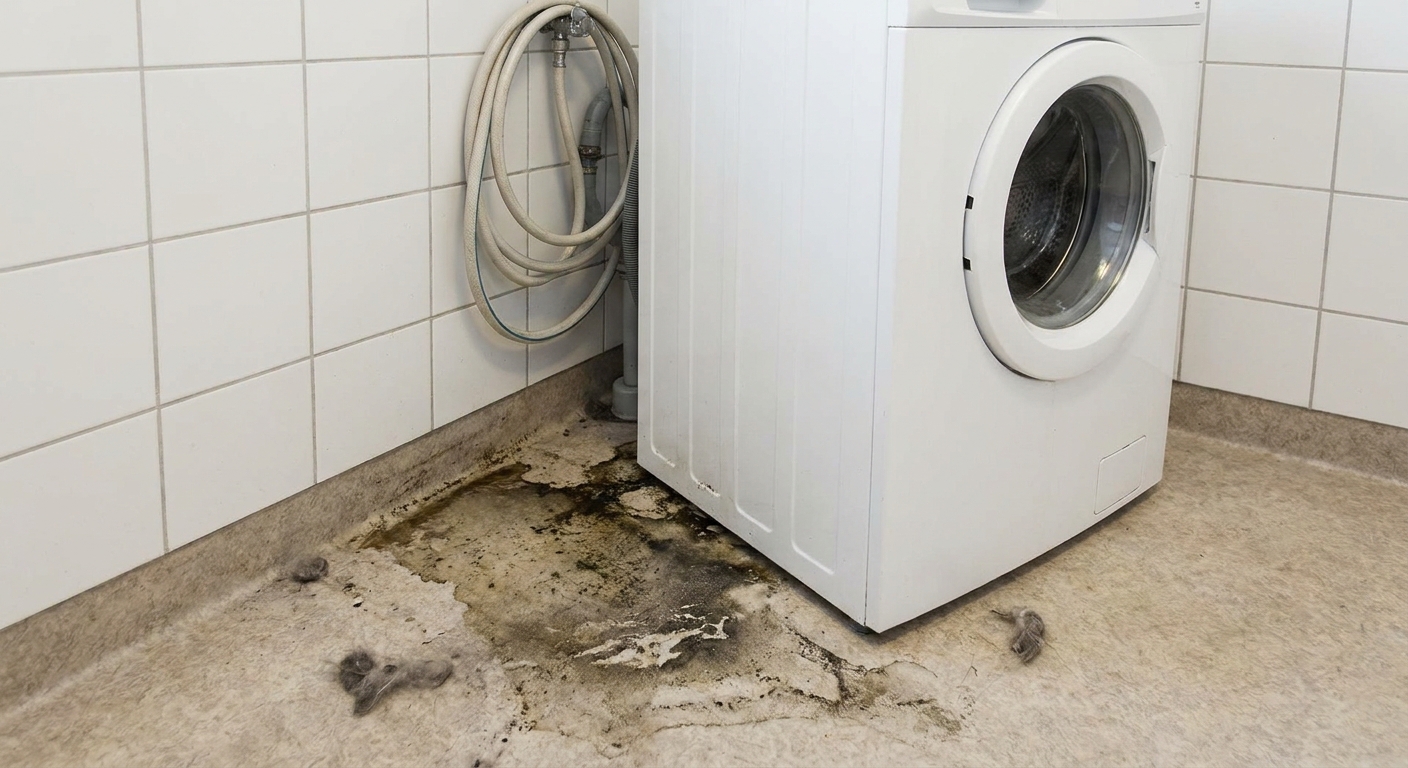
Common non-grease causes
1) Too much detergent or the wrong kind
HE washers are picky, and using non-HE detergent in an HE machine can leave residue that turns gray or black as it collects lint and soil.
- Use the minimum detergent amount recommended for your water hardness.
- If you have soft water, you usually need less than the cap suggests.
- Skip extra “boosters” until the problem is solved.
2) Fabric softener and detergent buildup
That buildup can break loose in chunks and smear dark marks onto clothes, especially in cold water cycles.
- Run a hot cleaning cycle with the machine empty.
- If your washer has a “Tub Clean” cycle, use it.
- Wipe the drum and any accessible surfaces after the cycle.
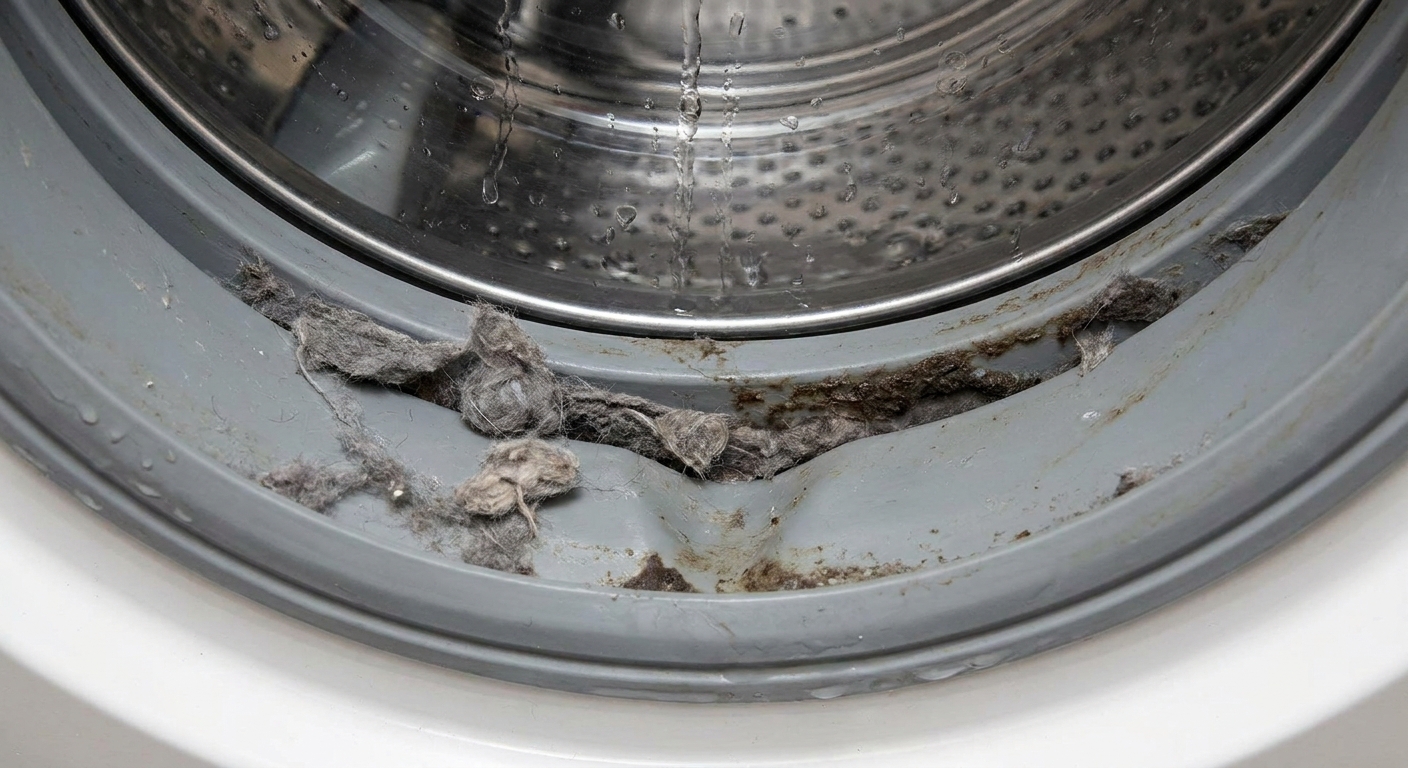
If you have a front-loader, pay extra attention to the door gasket. That fold can hide gunk that transfers to laundry. Also check the little drain holes at the bottom of the boot, if your design has them, since clogs there help grime stick around.
Prevention that actually helps: wipe the gasket dry now and then, and leave the door cracked when you can so the boot can dry out between loads.
3) Something left in pockets
Common culprits I’ve personally fished out of my own washer include:
- Black pens and markers
- Greasy screws or small hardware
- Chapstick
- Receipts and carbon paper
- Coins and metal fragments that leave dark rub marks
Quick test: Run a small load of towels with known empty pockets. If the marks disappear, the machine may be fine.
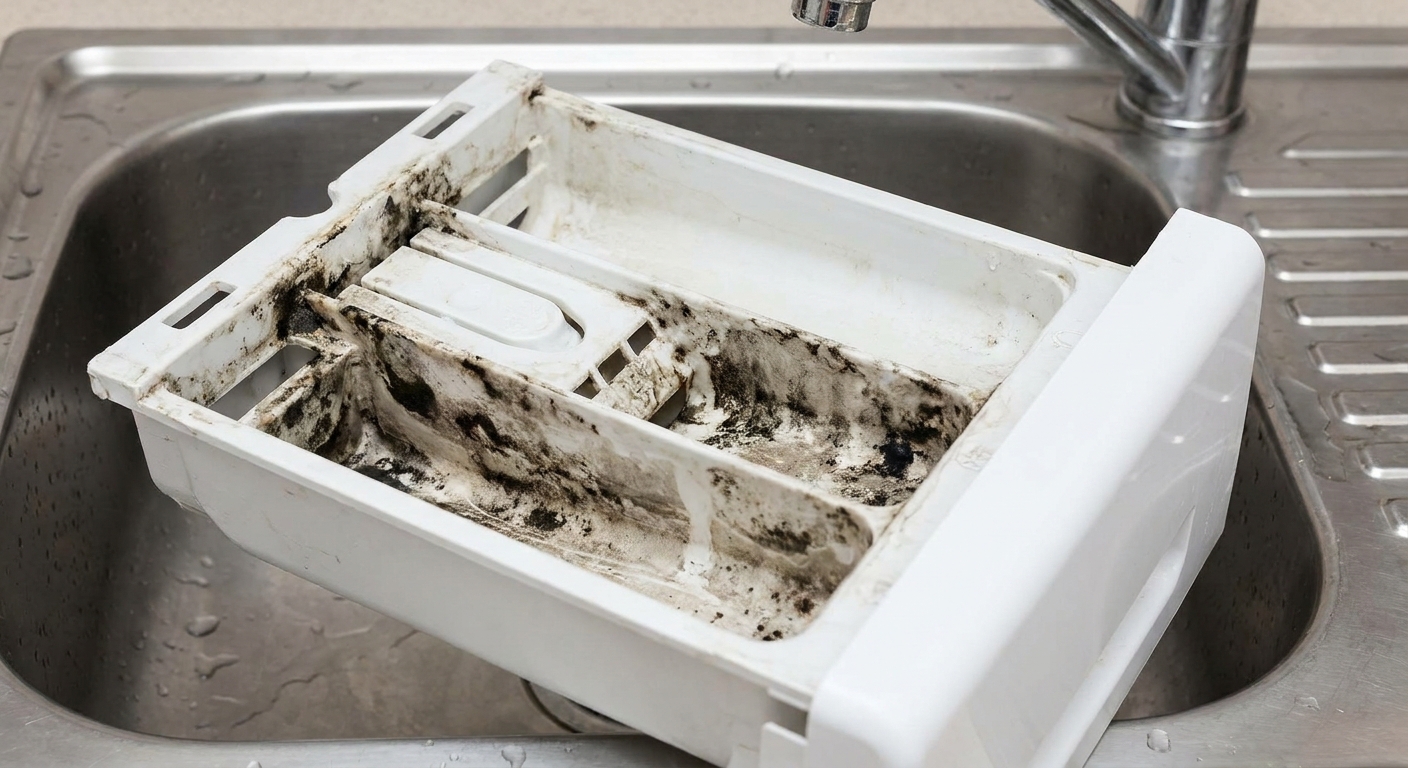
4) A dirty dispenser drawer
Dispenser buildup is real. It is often a mix of detergent residue, mildew, and biofilm, and it can be dark, sticky, and surprisingly good at staining.
- Remove the drawer (most have a little release tab).
- Wash it with hot water and a toothbrush.
- Wipe inside the drawer cavity too.
When it really is oil or grease
Now let’s talk about the stuff that creates true dark, greasy streaks. These marks tend to show up on clean clothes as random dark lines or smears. They can be worse on lighter fabrics, and they can show up more on small items that end up riding near the door boot or tub edges.
Tub seal failure
Most washers have a seal that helps keep wash water out of the bearing area. When that seal fails, you can get contamination moving where it should never be, including washed-out seal grease, rust, and fine metal particles.
Signs it is the tub seal:
- Grease-like streaks that keep coming back even after cleaning cycles
- A rusty smell, or rust streaks mixed with dark marks
- Water staining or rust near the center rear of a front-load drum (behind the pulley area), if you can access it
Why you should not ignore it: a bad seal often takes the bearings with it. If the bearings go, you can get loud spin noise and eventually a drum that wobbles or damages the outer tub.
Bearing wear
Bearings usually announce themselves with sound before they destroy clothes. If your machine sounds like a low airplane rumble or a growl during spin, pay attention.
Signs it is the bearings:
- Loud rumbling that gets worse during high-speed spin
- Roughness or grinding when you spin the drum by hand
- Noticeable drum wobble or play
Suspension problems (rubbing and scuff residue)
This is less common than residue or seals, but it happens. When the tub bounces excessively, it can rub the cabinet, a hose, a boot, or another plastic or rubber part. That rubbing can create black scuff dust that finds its way into the wash through gaps around the tub or door boot.
Signs it is suspension related:
- Washer bangs around even with balanced loads
- Inner drum sits off-center
- You find black rubber dust or shavings inside the cabinet (if you remove an access panel)
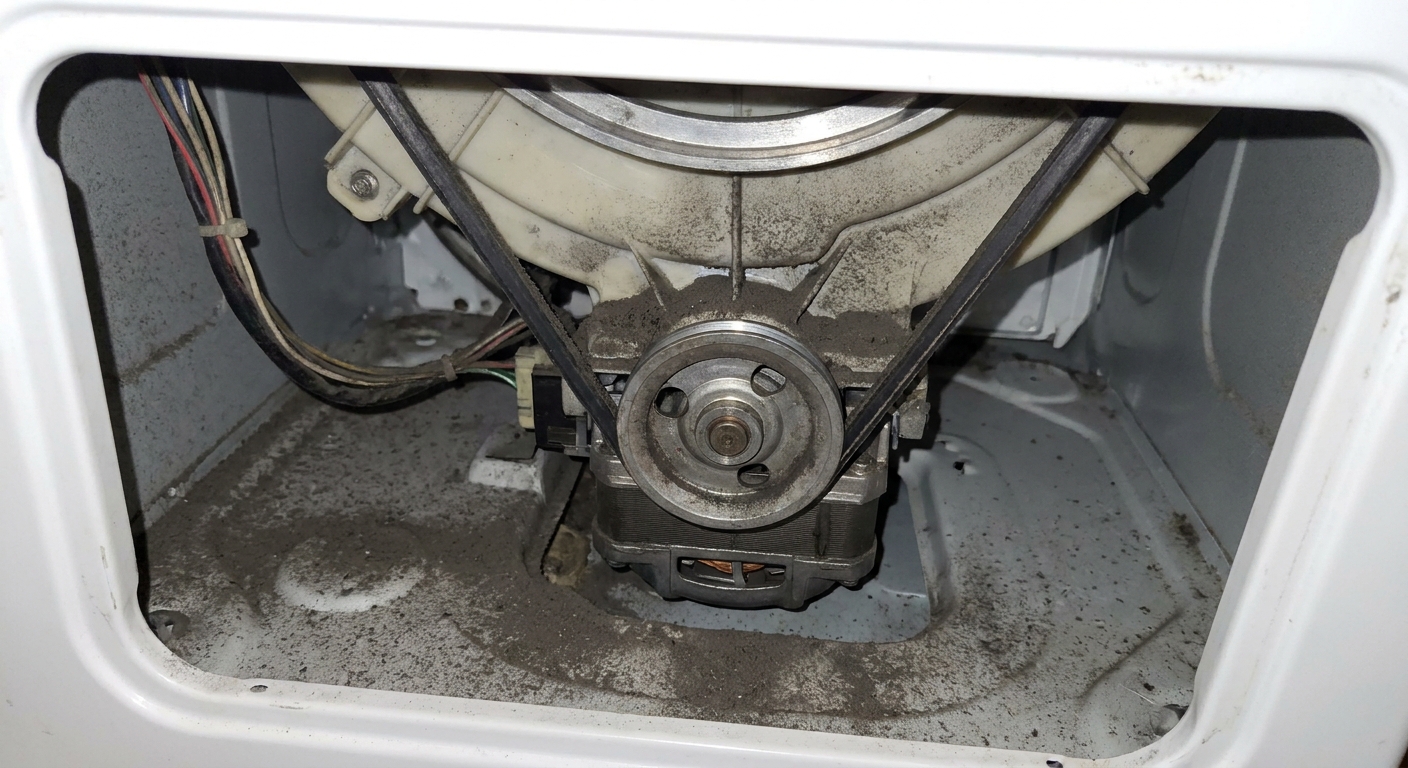
Belt and pulley dust (belt-driven washers)
If your washer uses a drive belt, a worn belt can shed fine black dust. Sometimes it stays in the cabinet. Sometimes it migrates and shows up as dark smears that get blamed on “grease.”
Signs it is belt or pulley dust:
- A rubbery smell during or after spin
- Black dust inside the lower cabinet, especially near the motor or pulley
- Squealing, chirping, or slipping sounds on agitation or spin
Front-load vs top-load clues
Front-load washers
- Gasket grime is a huge source of dark marks. Check the rubber boot carefully, including the bottom drain area.
- Bearing noise is usually very noticeable on spin.
- Marks can come from small items getting trapped between the inner drum and boot, then smearing.
Top-load washers
- Marks often come from agitator residue or gunk under the rim of the tub.
- Greasy streaks can still be from a seal or gearcase area, depending on design.
- If you have an agitator, check for black residue around the base and inside the fabric softener cup.
Confirm the source
You can learn a lot with a flashlight, patience, and about five minutes.
Step 1: Inspect the drum and gasket
- Wipe the drum with a white paper towel. Look for gray or black transfer.
- On front-loaders, pull back the gasket folds and wipe inside.
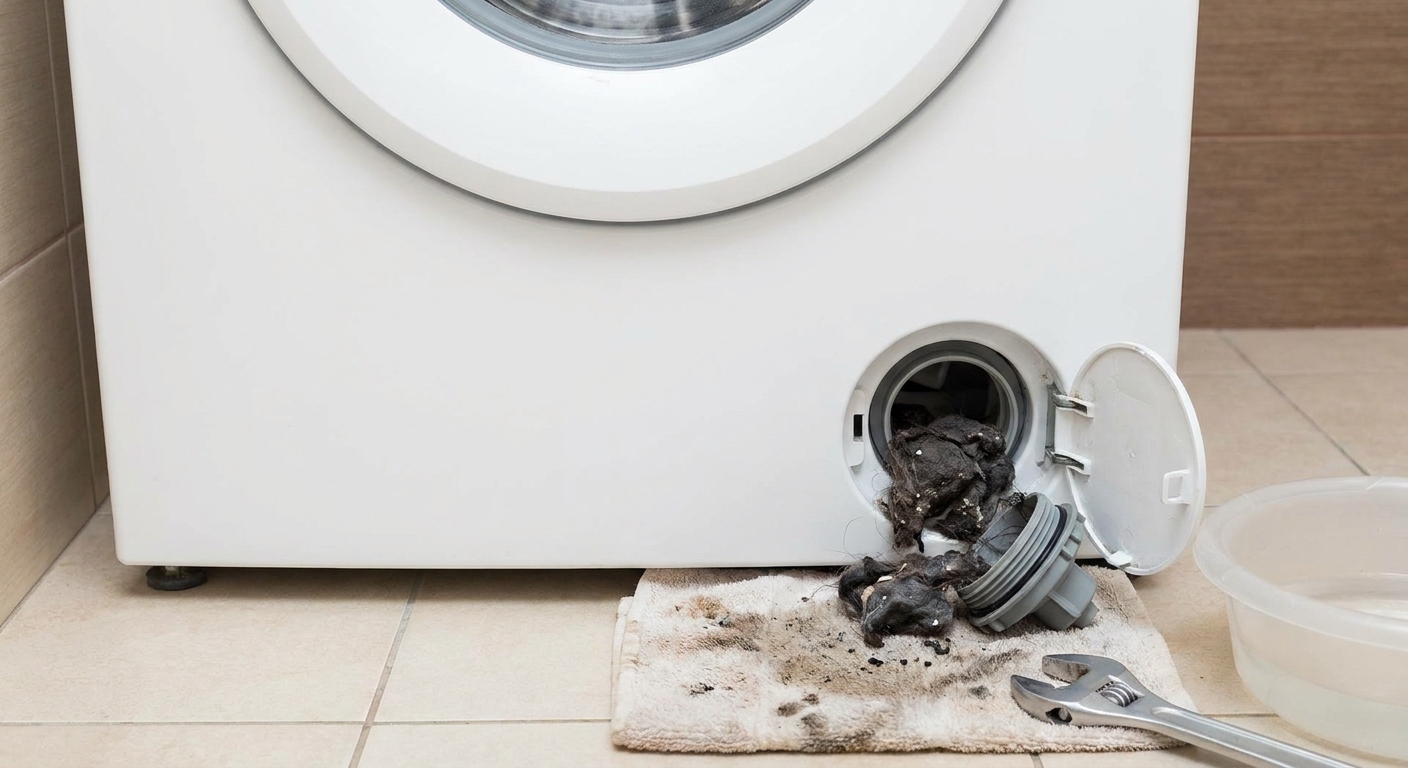
Step 2: Check the drain filter (front-loaders)
If your washer has a drain pump filter access door, clean it. You might find:
- Coins and metal fragments that cause rub marks
- Hair pins and screws
- Sludge that points to buildup problems
Step 3: Run an empty rinse and spin
After cleaning, run a rinse and spin with the drum empty. When it’s done:
- Wipe the drum again.
- Look for fresh oily spots or dark smears.
If you get fresh oily transfer with no laundry in the machine, that is a strong clue you are dealing with seal and bearing-area contamination (or belt dust inside the cabinet).
When it is the seal or gearcase
Because your cycle finished and the drum did spin, we are not chasing a no-spin issue. We are chasing contamination. These are the situations where I stop trying cleaning tricks and start thinking “mechanical repair or replacement.”
Likely seal or bearing-area trouble
- Oily, smearable black streaks that return quickly
- Rumbling or grinding during spin
- Drum wobble or play you can feel by hand
- Rusty streaks or water evidence near the bearing area
Possible gearcase leak (some top-loaders)
- Oil on the floor under the center of the washer
- Grease smell near the bottom of the machine
- Fresh dark oily residue on the inside of the cabinet walls when you remove an access panel
On many modern machines, a bearing job or gearcase related repair can be labor-heavy and sometimes approaches the cost of replacement. If your washer is older and already noisy, this is the fork in the road where getting a repair quote makes sense.
Save the clothes
If you already have marks, don’t toss the load straight into the dryer. Heat sets stains.
- For oily or greasy marks: work a few drops of dish soap into the stain, rinse warm, then rewash. Repeat before drying if needed.
- For waxy residue or grime: rewash in the warmest water safe for the fabric, with a good rinse. Oxygen bleach can help on whites and colorfast items.
- If you are not sure what it is: start with dish soap and a rinse, then rewash. Dry only after the mark is gone.
What to do next
If marks seem like residue or grime
- Cut detergent back for the next 3 to 5 loads.
- Run a hot tub clean cycle and wipe the drum and gasket.
- Clean the dispenser drawer and drain filter.
- Do a test load of towels.
If marks seem oily, or you hear rumbling
- Stop washing anything you care about.
- Check underneath for leaks and confirm drum play by hand.
- Look up your model number and verify whether seal and bearing replacement is a reasonable DIY job for your machine. Some are, many are not.
- If you suspect belt dust, inspect the belt and pulley area for black powder and cracking.
- If you are on the fence, get a service quote before you sink money into repeated ruined loads.
I’m all for DIY, but I’m also thrifty. If a washer is eating clothes and the bearings are roaring, the most budget-friendly move is sometimes calling it and putting that money toward a new machine with a warranty.
FAQ
Can a washing machine leave black marks even if it spins normally?
Yes. Finishing the cycle only tells you the drive system is functioning enough to spin. Black marks are often contamination from buildup, pocket items, belt dust, or the seal and bearing area.
Are black marks always grease?
No. Many are detergent and fabric softener residue mixed with lint and soil. The rub test helps. Grease feels slick and smears. Residue often feels waxy or chalky.
Will running a cleaning cycle fix it?
If the cause is buildup, often yes. If the cause is a seal, bearing-area issue, or gearcase leak, a cleaning cycle will not solve it and may even make symptoms more obvious as things heat up and move around.
What if the marks are only on small items like socks and baby clothes?
That can point to items getting trapped and dragged across a dirty gasket (front-loaders) or picking up grime from a dirty tub ring or agitator area (top-loaders). It can also happen with oily contamination, since small items have more surface contact.
The 30-Second Cheat Sheet
Essential takeaways for: Washing Machine Leaves Black Marks on Clothes?
Do this first (2 minutes)
- Rub the mark with warm water and dish soap. If it smears slick, treat it like oil or grease. If it feels waxy, chalky, or soapy, suspect detergent or softener buildup.
- Spin the drum by hand. Smooth and quiet is good. Grinding or rumbling points to the seal and bearing area.
- Check for wobble by lifting the inner drum edge. Noticeable play is a red flag for bearing or support issues.
Most common easy causes
- Too much detergent or non-HE detergent in an HE washer
- Fabric softener buildup breaking loose and smearing
- Pocket items like pens, greasy hardware, or coins
- Dirty front-load gasket or gunky dispenser drawer
When to stop using the washer
- Marks are oily and keep returning after cleaning cycles
- You hear rumbling or grinding during spin
- You see water, rust, or oil under the machine
Likely mechanical sources of true dark streaks
- Failing tub seal letting contamination migrate (grease, rust, metal fines)
- Worn bearings often paired with loud spin noise and drum play
- Suspension-related rubbing causing rubber or plastic scuff residue
- Belt or pulley dust on belt-driven machines
Smart next step
If it feels greasy or the washer is noisy on spin, plan for a seal or bearing-area repair (or a replacement decision) instead of chasing detergent tweaks. If it feels waxy, clean the gasket, dispenser, and filter, cut detergent back, and run a hot tub clean cycle before your next test load.
💡 Tip: Scroll up to read the full article for detailed, step-by-step instructions.
⬆️ Back to top
About Grit
Content Creator @ Grit & Home
Grit is Grit & Home’s little blue clay courier, delivering big questions about the place you call home. Expect practical ideas, a raised eyebrow, and a satchel full of curiosity.