
🚨 In a DIY emergency or rush?
Skip the details and jump straight to our 30-second cheat sheet for the most crucial info.
The first time I saw a lazy orange flame on our range, I did what a lot of DIYers do. I assumed it was a “dirty burner” thing, grabbed a toothpick, and started poking around. It did improve, but it also taught me an important rule: flame color is not just cosmetic. A steady yellow or orange flame can correlate with incomplete combustion, and that is where carbon monoxide concerns come into the picture.
This page is about flame color after the burner is already lit. If your issue is clicking that will not stop or a pilot that keeps going out, treat those as separate problems and troubleshoot them separately.
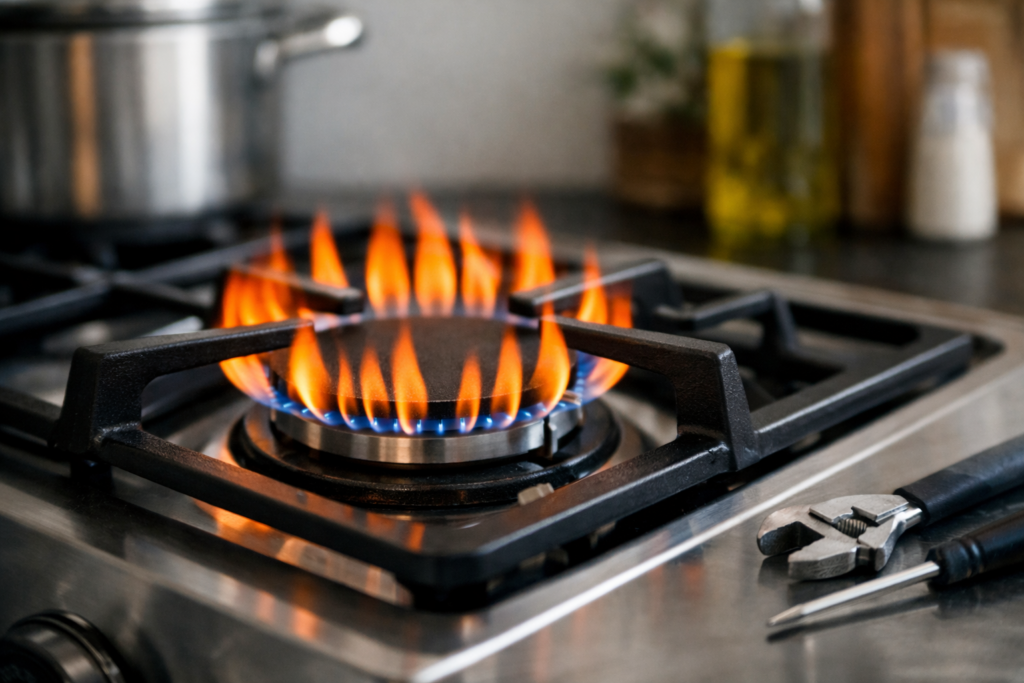
What flame color is normal on a gas stove?
In a perfect world, a gas stove flame is:
- Mostly blue
- Steady and evenly distributed around the burner
- Possibly with tiny yellow or orange tips now and then, especially when a pot first goes on or when the burner is cold
One important nuance: brief orange flickers are often caused by impurities, not a failing stove. Things like dust in the air, aerosol sprays, cleaner residue, or even minerals (sodium) can tint a flame orange for a moment.
A flame that is consistently yellow or orange across most of the burner, looks lazy, or produces black soot on cookware is your signal to troubleshoot.
Safety first: carbon monoxide and when to stop
When combustion is incomplete, gas appliances can produce more carbon monoxide (CO). On cooktops, a lot of orange flame complaints are ultimately contamination, moisture, or a cap that is slightly off. Still, I treat a persistent color change seriously and use common-sense guardrails.
Stop cooking and act now if you notice any of these
- Soot (black powder) collecting on pans, burner parts, or nearby cabinets
- Strong gas odor that does not quickly dissipate after lighting
- Headaches, dizziness, nausea, or symptoms that improve when you leave the room
- A CO alarm that alerts
- Flames that are lifting (hovering above the burner ports), roaring, or behaving erratically
If a CO alarm goes off: get everyone outside for fresh air and follow your alarm instructions. If you suspect a gas leak: shut off the range gas supply valve (if accessible), ventilate, avoid sparks, and call your gas utility or emergency services per local guidance.
My personal baseline: if I clean the burner properly and the flame is still mostly yellow or orange, I stop. That is when I want a licensed gas tech involved.
Quick causes checklist
- Dirty burner ports (food spills, boil-overs, grease)
- Burner cap or head misaligned after cleaning
- Blocked burner cap holes or clogged slots (depending on design)
- Moisture trapped under the cap or around the igniter area
- Impurities in the air (cleaner residue, aerosol sprays, humidifier minerals, dust)
- Strong exhaust or poor makeup air (range hood interaction, very tight kitchen)
- Fixed or mis-set aeration (some older models have an adjustable air shutter, many newer models do not)
- Wrong gas conversion (LP vs natural gas mismatch or incorrect orifices, typically after an install or move)
Step 1: rule out a quick burn-off
Before you take anything apart, ask two questions:
- Did you just clean the cooktop? Moisture or cleaner residue can make flames look orange for a short period.
- Did you just spill something sugary or starchy? Some residues can cause orange flares until they burn off.
Try this: run the burner on medium for 1 to 2 minutes with the range hood on low. If the flame returns to mostly blue and stays that way, you may be done.
If the flame stays yellow or orange, move on to cleaning the burner parts.
Step 2: clean the burner cap and ports
This is the fix I reach for first because it is safe, cheap, and often effective.
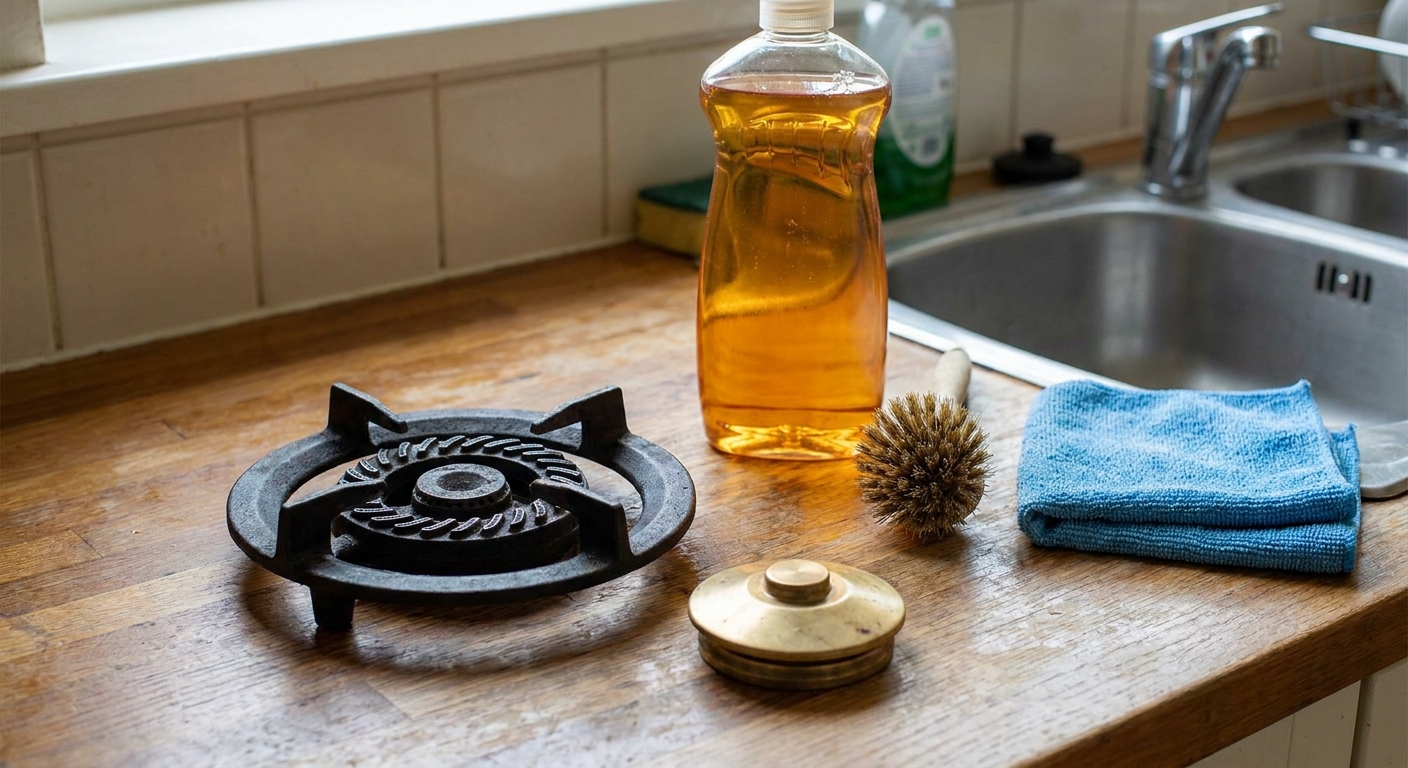
Tools and supplies
- Dish soap and warm water
- Non-scratch scrub pad or soft brush
- Wooden toothpick or bamboo skewer (gentle poking only)
- Microfiber cloth
- Vacuum with a hose attachment (optional but helpful)
- Optional: a straightened paper clip only if you are careful. I prefer wood because hard metal tools can enlarge ports if you get aggressive.
2A: shut things down
- Turn all knobs to OFF.
- Let the grates and burner parts cool completely.
- For extra peace of mind, you can close the gas shutoff valve behind the range if it is accessible and you know how to reopen it.
2B: remove grates, burner cap, and burner head
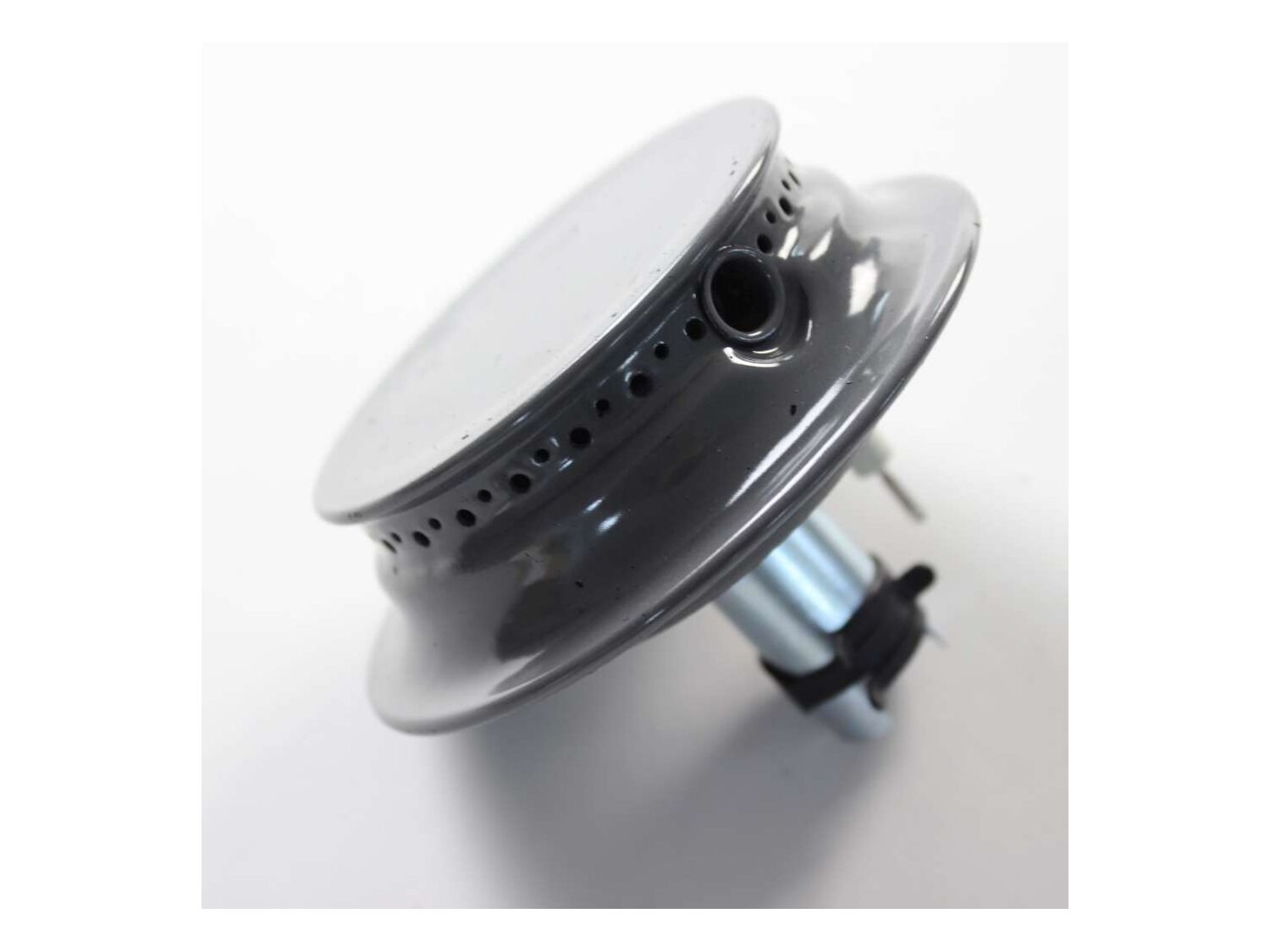
Most sealed-burner cooktops have a cap that lifts off. Some also have a burner head that comes off once the cap is removed.
Key detail: take a quick phone photo before you remove parts, especially if your burners have multiple pieces. Correct reassembly matters for flame quality.
2C: wash and fully dry
- Wash burner caps and removable heads in warm soapy water.
- Scrub off grease, cooked-on spills, and carbon deposits.
- Rinse well and dry thoroughly. Water trapped under the cap can cause poor burning, weak ignition, and odd flame color.
If the parts are heavily gunked up, a 15 to 30 minute soak in hot soapy water usually softens the mess enough to scrub it off.
2D: clear the burner ports
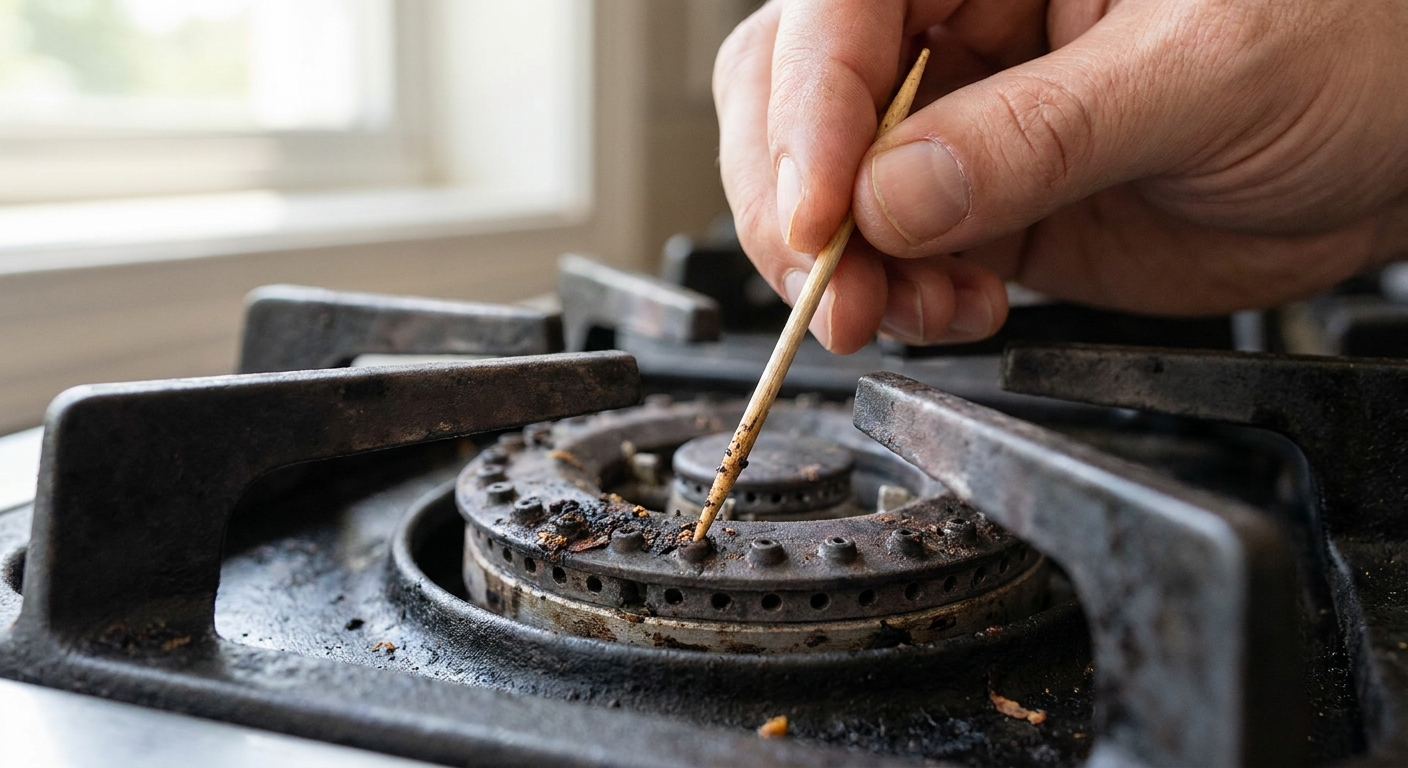
Ports are the small openings where gas exits before it ignites. If they are partially blocked, your flame pattern can become uneven and the gas and air mix at the burner can get thrown off, which is when yellow or orange flames show up.
- Use a soft brush first.
- If you need to, gently clear individual ports with a wooden toothpick or bamboo skewer.
- Avoid enlarging ports. Do not use drill bits or anything that removes metal.
- Vacuum loose debris instead of blowing it deeper into the burner.
2E: reassemble carefully
A slightly crooked burner cap is a classic reason for an uneven or yellow flame after cleaning.
- Seat the burner head flat (if applicable).
- Set the cap on in the correct orientation so it sits level and does not rock.
- Replace grates.
Light the burner and check flame color. If it is now mostly blue and steady, you likely fixed it.
Step 3: check airflow
If cleaning did not solve it, the next step is looking at airflow conditions in the kitchen.
Try these quick tests
- Turn the range hood off and see if the flame improves. Some powerful hoods can disrupt burner performance on high, especially in tighter kitchens.
- Close nearby windows if there is a cross-breeze.
- Crack a different window slightly if your kitchen is very tight and you suspect you are short on makeup air, especially if multiple gas appliances are running.
If the flame changes dramatically with hood settings or drafts, you may have an airflow balance issue, not a dirty burner problem.
Step 4: air shutter check
Some gas ranges, especially older ones, have an air shutter that adjusts how much primary air mixes with gas before ignition. If it is too closed, you can see more yellow. If it is too open, flames can lift (hover above the ports) or blow off the burner.
Important: many newer sealed-burner ranges have fixed aeration and no homeowner-accessible air shutter at the top burners. If you cannot access anything without removing panels, pulling the range out, or working near gas tubing, this is a good stopping point.
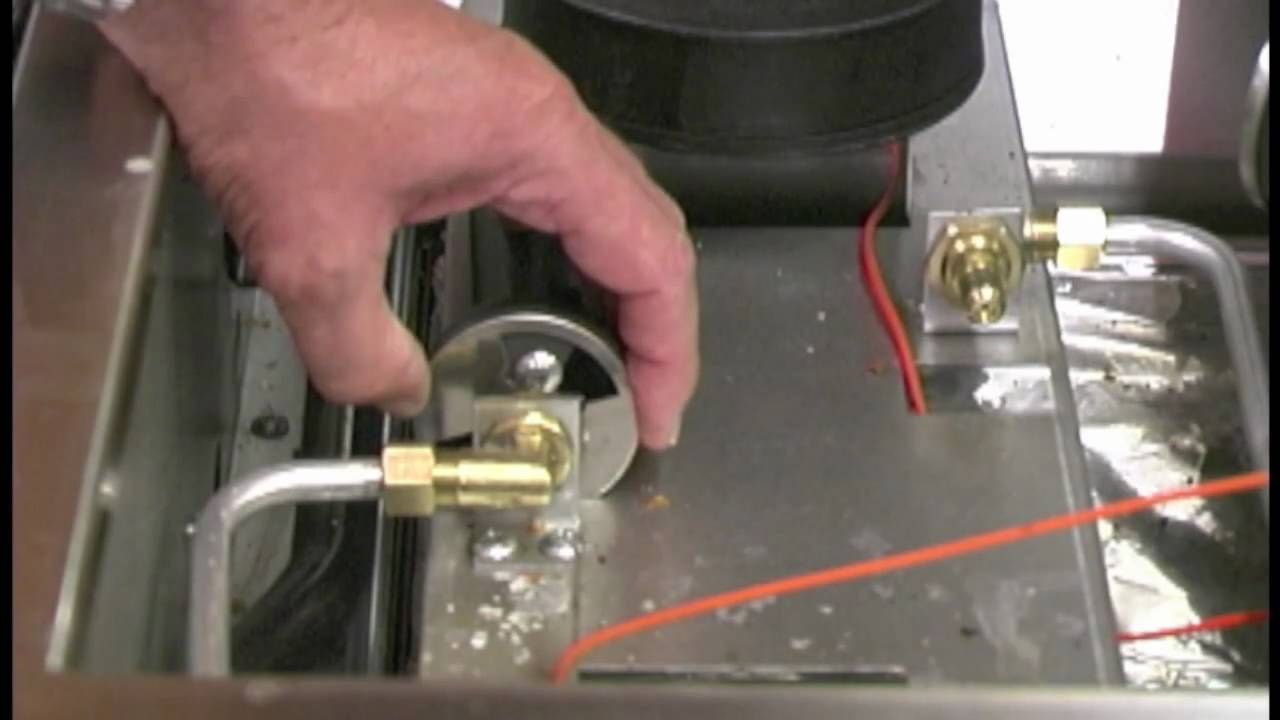
What a safe basic check looks like
- Unplug the range to reduce the chance of accidental sparking while you are looking around. This does not shut off gas, so do not treat it like a gas safety step.
- Access the shutter area only if your model makes it straightforward and clearly visible.
- Look for heavy grease buildup or lint that could restrict air intake and clean it gently.
If your model allows adjustment and you are experienced: adjustments should be tiny, followed by a test burn. The goal is a stable blue flame without lifting, noise, or soot. When in doubt, leave it alone and call a pro.
When to call a gas tech
I am all for DIY, but gas appliances have a line. If any of these are true, get a qualified technician involved:
- You cleaned the burner thoroughly and the flame is still mostly yellow or orange.
- You see sooting anywhere.
- Multiple burners show the same problem suddenly (could point to regulator or supply issues).
- All burners turn orange right after the range was installed, moved, converted, or after gas plumbing work. That can be a pressure or conversion issue, and it is not a guessing game.
- The stove was recently installed, moved, or converted between natural gas and propane.
- Flames are lifting (hovering), roaring, or unstable.
- You smell gas repeatedly or suspect a leak.
A tech can verify correct gas pressure at the regulator, confirm the correct orifices, inspect the mixing path, and check for issues that are not visible from the top.
FAQ
Is a little orange in a gas flame normal?
Yes. Occasional orange flickers can be normal, especially with dust in the air, humidity, or right after cleaning. A flame that is consistently orange or yellow across most of the burner is not something I ignore.
Why does my gas flame turn orange after I clean the stove?
Moisture and cleaner residue can do it. Let everything dry fully, then run the burner for 1 to 2 minutes. If it clears up and stays mostly blue, you are probably fine.
Why does my gas flame turn orange when the window is open?
Drafts can change how air mixes at the burner and can push the flame around, making it look lazier and more yellow. Try reducing cross-breezes and running the hood on a lower setting.
Can I use a needle to clean the burner holes?
I avoid metal needles because it is too easy to enlarge the ports. A wooden toothpick or a soft brush is safer. If a port seems truly plugged and will not clear, that is a good reason to involve a technician or replace the burner head if your model allows it.
Why is only one burner yellow?
That usually points to a localized issue: a dirty burner head, a cap that is not seated right, or moisture under that cap. Start by swapping the cap with a neighboring burner (if they match). If the problem follows the cap, you found your culprit.
Could this be from the wrong gas type?
Yes, and it matters. A range set up for propane behaves differently than one set up for natural gas. If your range was recently installed, converted, or moved homes, do not guess. Get it checked.
The 30-Second Cheat Sheet
Essential takeaways for: Gas Stove Flame Yellow or Orange? Causes and Fixes
What it usually means
- Mostly blue flames are normal.
- Brief orange tips can be normal and are often caused by dust or impurities (like salts from cleaners or minerals in humid air).
- Steady yellow or orange flames can correlate with a gas and air mix problem or uneven gas flow, often from clogged burner ports or a misseated cap. That can increase the chance of incomplete combustion.
Do this first (safety)
- If you see soot, feel sick (headache, dizziness), smell gas repeatedly, or a CO alarm alerts, stop using the stove and get help.
- Ventilate the kitchen. Do not ignore persistent yellow flames.
Fast DIY fixes
- Clean burner caps and heads: wash with warm soapy water, scrub grease, rinse, and dry completely.
- Clear burner ports: brush first, then gently clear ports with a wooden toothpick. Vacuum debris.
- Re-seat the cap: misalignment after cleaning is a common cause of uneven, yellow flames.
Quick airflow checks
- Turn the range hood off or down and see if flame improves.
- Eliminate strong drafts from open windows.
Air shutter: proceed cautiously
- Many newer sealed-burner ranges have no homeowner air-shutter adjustment.
- Only check an air shutter if it is clearly accessible on your model.
- If adjustment is not obvious or requires panels off or working near gas lines, stop and call a pro.
Call a gas tech if
- Cleaning does not restore a mostly blue flame.
- You see sooting or flames are lifting (hovering above the burner) or unstable.
- The range was recently installed or converted between natural gas and propane.
- All burners suddenly look orange after plumbing work or a move (possible pressure or conversion issue).
💡 Tip: Scroll up to read the full article for detailed, step-by-step instructions.
⬆️ Back to top
About Marcus Vance
Content Creator @ Grit & Home
Marcus Vance is a lifelong DIY enthusiast and self-taught home renovator who has spent the last decade transforming a dilapidated 1970s ranch into his family's dream home. He specializes in budget-friendly carpentry, room-by-room renovations, and demystifying power tools for beginners. Through his writing, Marcus shares practical tutorials and hard-learned lessons to help homeowners tackle their own projects with confidence.