
🚨 In a DIY emergency or rush?
Skip the details and jump straight to our 30-second cheat sheet for the most crucial info.
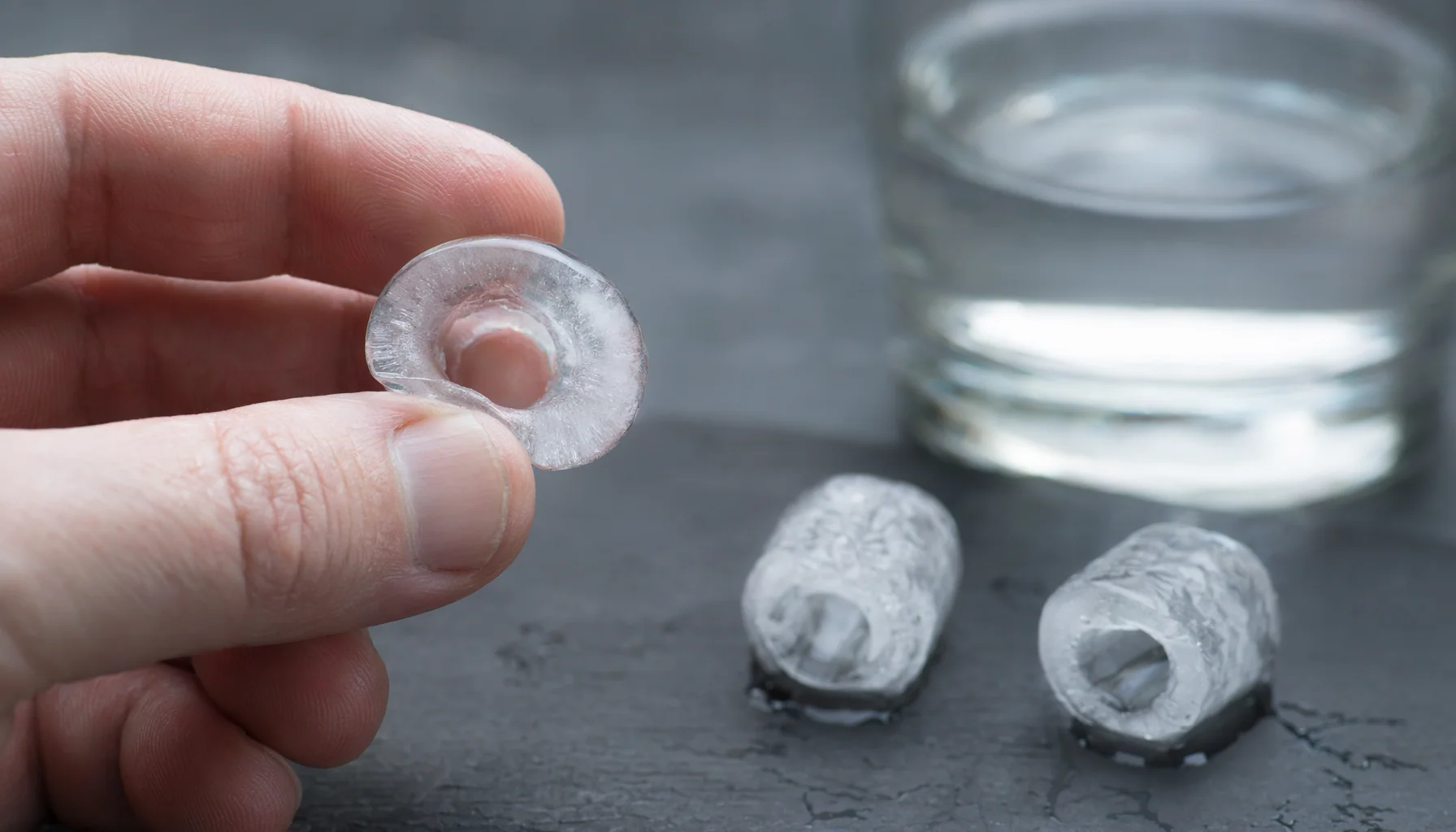
The first time my fridge started spitting out cloudy cubes, I assumed something was wrong with the ice maker. Turns out, most of the time cloudy ice is less “broken appliance” and more “your water is doing water things.” The trick is separating normal, full-size cloudy cubes from small, hollow, weird-shaped cubes, which can point to an underfill problem.
Let’s walk through what cloudy ice really means, what you can fix yourself, and when cloudiness is totally harmless.

Quick check: full-size vs hollow cubes
Before you buy anything or start pulling the fridge out, do this 30-second check.
Cloudy but full-size cubes (usually harmless)
- Cubes are the normal size for your ice maker
- They feel solid, not brittle or thin
- Cloudiness is in the center or looks like a white swirl
- They freeze normally and your bin is filling like usual
This points to dissolved air or minerals in your water, not a failing ice maker.
Small cubes, hollow cubes, or “half-moon shells” (often a fill issue)
- Cubes are smaller than normal
- Hollow centers or fragile “caps” that break easily
- Odd shapes that look incomplete
- Slower production or the bin never really catches up
That pattern often means the mold is not getting enough water during the fill cycle. Cloudiness is not the main issue. The issue is underfilling, and it needs a different set of troubleshooting steps than water-quality cloudiness.
If you are seeing hollow or undersized cubes, the most common culprits to check next are:
- A kinked or flattened supply line behind the fridge
- A partially closed shutoff valve
- A clogged filter or a filter that is not seated correctly
- Low house water pressure
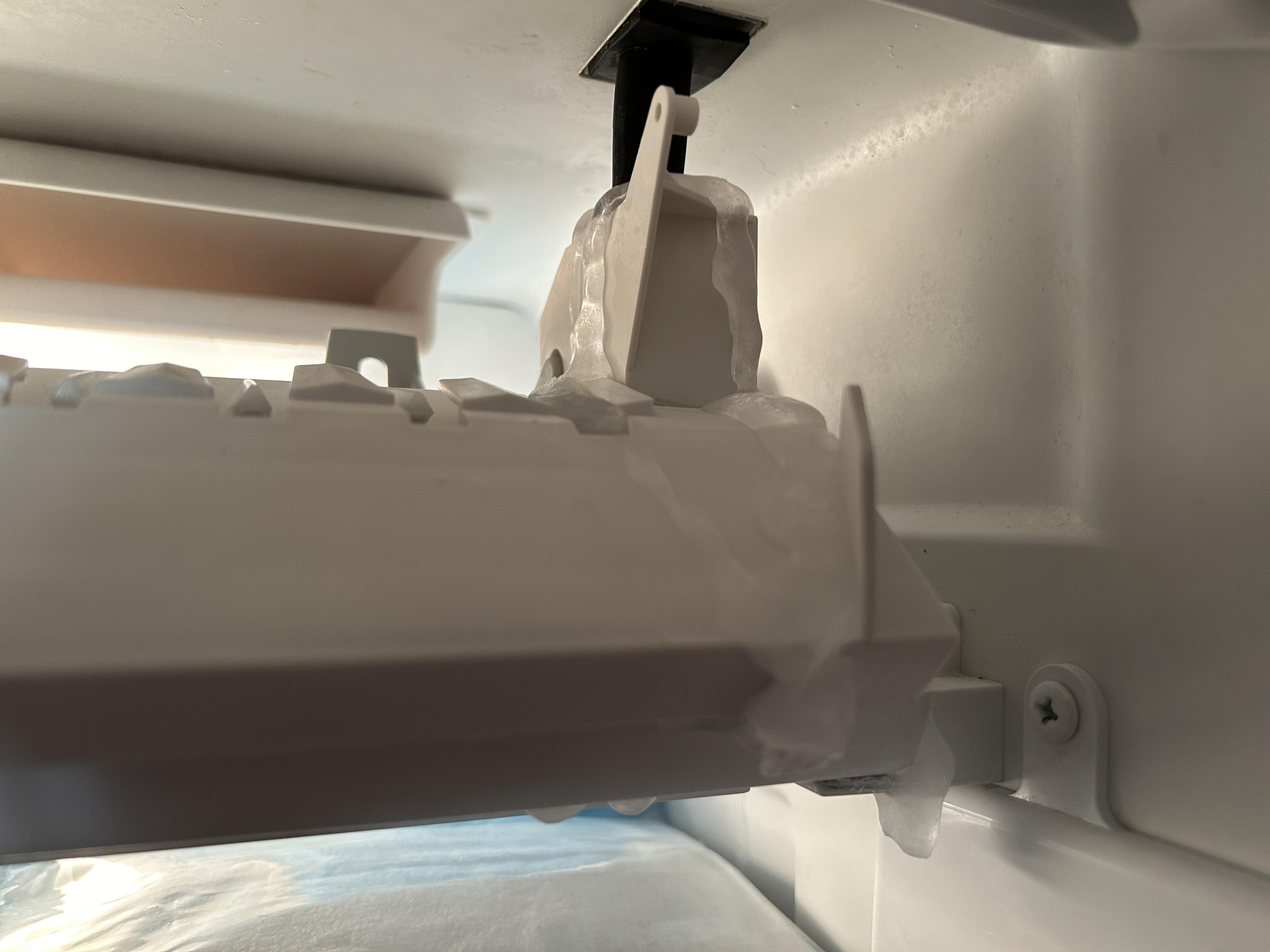
- A frozen fill tube (ice blockage where water enters the ice maker)
- A restricted inlet valve screen or a failing inlet valve
Why full-size cubes turn cloudy
Cloudy ice is mostly about what gets trapped inside the cube as it freezes. In a typical freezer ice maker, water freezes from the outside inward. Whatever is in the water gets pushed toward the center as the outside freezes first.
Dissolved air (common, harmless)
Tap water contains dissolved gases. When water freezes, those gases come out of solution and collect inside the cube, usually right in the middle. That makes a cube look cloudy even if the water is safe.
You may notice it more when:
- Your water source or temperature shifts seasonally
- Your plumbing was recently worked on and air got in the line
- You just replaced a filter and the line needs flushing
- The fridge was moved or the supply line was bumped
Minerals and hardness (also common)
Hard water carries dissolved minerals like calcium and magnesium. As the cube freezes, those minerals concentrate toward the center and can create a milky look. This is especially noticeable with well water or municipal water that runs hard.
Water sitting in the line or filter housing
If your dispenser and ice maker do not get used much, water can sit in the filter head and supply line. It is still usually safe, but it can make ice look and taste “off” until you flush it.
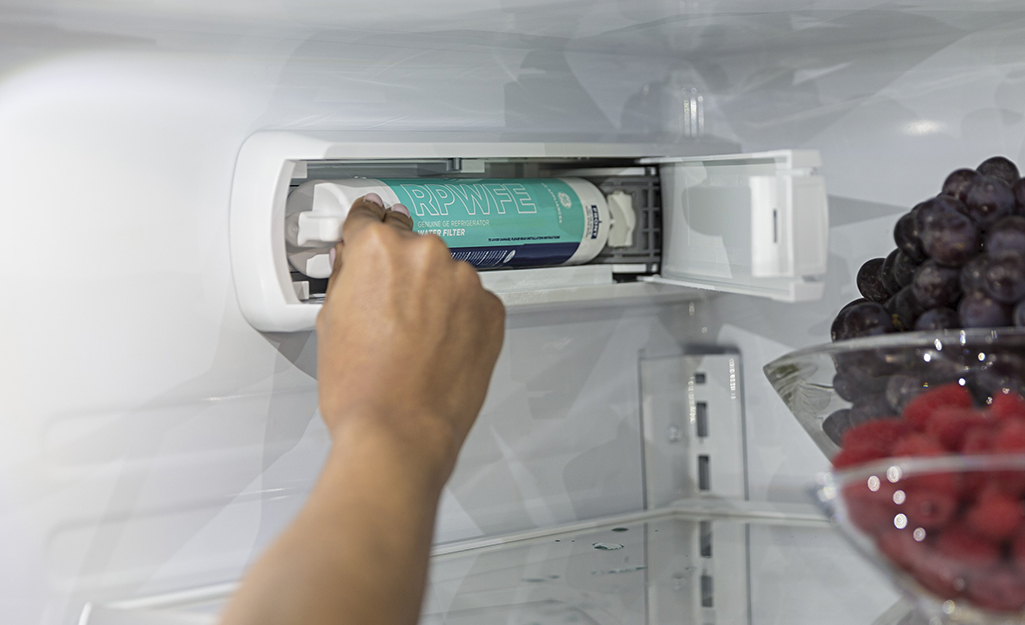
Is cloudy ice safe to drink?
Most of the time, yes. Cloudiness from dissolved air or normal hardness minerals is generally harmless. It is the same water you are drinking from the tap.
That said, cloudy ice can be a clue to water quality changes. I would pay attention if you notice any of these along with the cloudiness:
- New bad taste or odor in ice or water
- Visible particles or sediment
- Oily sheen on melted ice water
- Sudden change after plumbing work, a boil notice, or well maintenance
If any of that is happening, start by flushing and changing filters, and consider a water test if you are on a well.
Fixes that help (easy to involved)
1) Flush the dispenser and dump the first ice
If you have a door dispenser, dispense water for 3 to 5 minutes as a general starting point. If your fridge manual specifies a different flush time or volume, follow that instead. You do not have to do it all at once. This pulls fresh water through the filter and line.
Then:
- Empty the ice bin
- Let the ice maker make 1 to 2 full bins
- Dump those bins too
This sounds wasteful, but it is the fastest way to clear air and any stale water. It is also what I do anytime I change a fridge filter.
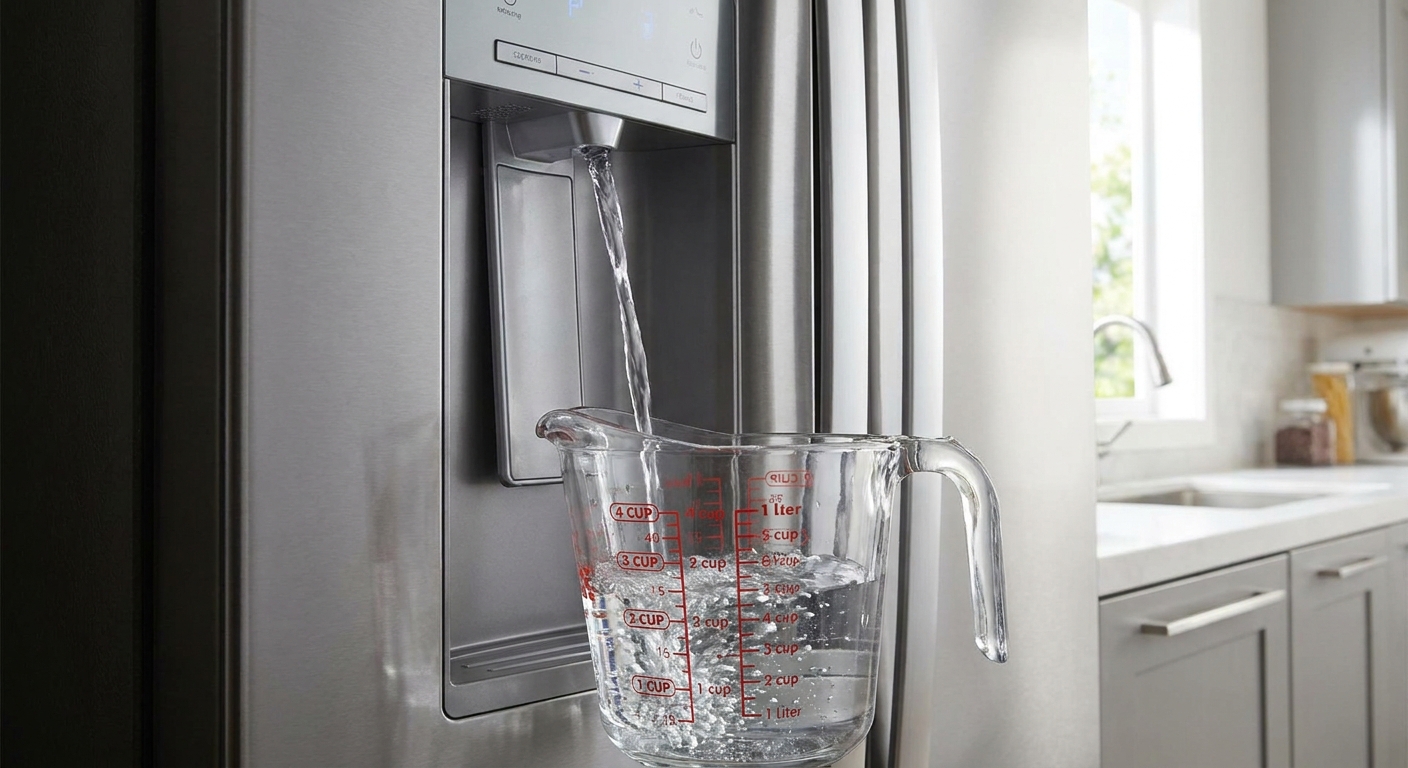
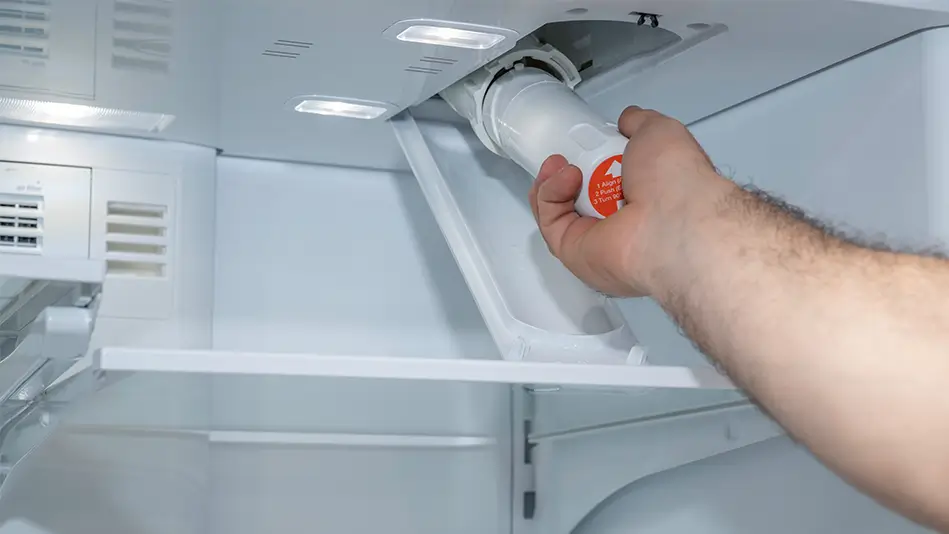
2) Replace or reseat the refrigerator water filter
A partially seated filter, an overdue filter, or the wrong filter model can change flow characteristics and sometimes increase cloudiness and off-taste.
- If your filter is older than 6 months (or your fridge indicator says replace), swap it.
- After installing, flush water through the dispenser as described above.
- If you just installed a filter and cloudiness started immediately, pull it back out and reinstall carefully. A lot of these filters feel “in” when they are not fully locked.
Note: new carbon filters often release a little trapped carbon dust at first. That is why flushing matters.
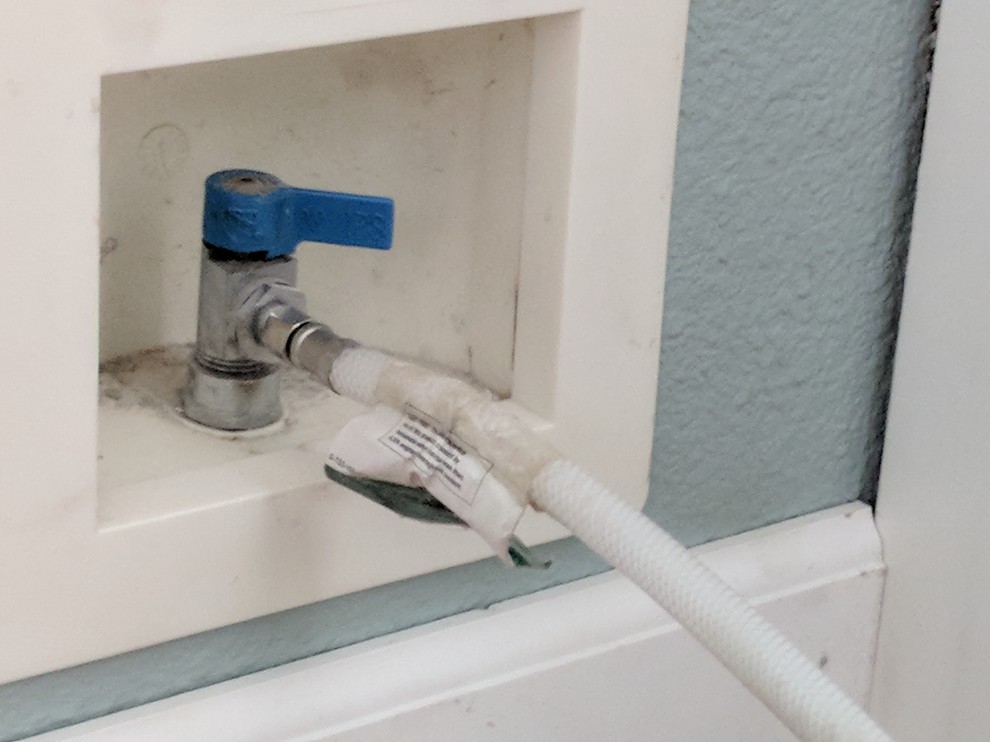
3) Check the shutoff valve is fully open (and be safe)
This is here for one reason: if cubes are cloudy and you also suspect the ice maker is not filling properly, you want to rule out the simple stuff.
Behind the fridge, locate the shutoff valve (often under the sink, in the basement, or on a dedicated line). Make sure it is fully open.
One safety note: if you plan to disconnect any water line or move the fridge far enough to strain the line, shut off the water supply first.
Also, if your fridge is fed by a saddle valve and you keep dealing with low flow or underfilled cubes, it is worth knowing that many plumbers recommend replacing saddle valves with a proper shutoff valve because saddle valves can clog and can be prone to leaking over time.
4) Improve water quality at the source (best for hard water)
If your cubes are consistently cloudy and you have hard water, you can chase your tail with filters. A standard refrigerator carbon filter improves taste and reduces some contaminants, but it is not a true hard-water softener.
Your options, from simplest to most effective:
- Use a quality fridge-compatible filter and keep it fresh. This helps taste more than hardness, but it can still make a noticeable difference.
- Add an inline filter on the fridge supply line (easy DIY if you are comfortable shutting off water and making push-to-connect fittings). Some inline options target sediment and taste.
- Consider a whole-house water softener if hard water affects showers, fixtures, and appliances. This is the fix that actually addresses mineral-heavy water across the home.
If you are on well water, a basic water test can tell you what you are really dealing with. You cannot filter what you have not identified.
5) Clean the ice bin and ice path (for taste and “snowy” cubes)
Sometimes what looks like cloudy ice is actually a little frost or “snow” from the bin, especially if the bin gets left open or the freezer door does not seal well.
Do this once in a while:
- Dump the ice
- Wash the bin with warm water and mild dish soap
- Rinse well and dry completely
- Wipe any loose frost from the ice chute area (do not chip at it with anything sharp)
If you have an in-door ice maker, follow your manufacturer’s cleaning guidance for the chute and flap area. A poor seal can let humid air in, which leads to frost.
When cloudy ice signals a real issue
Cloudy, full-size cubes are usually just air or minerals. But I start treating it as a troubleshooting problem when any of these show up:
- Cloudy and suddenly smaller cubes
- Hollow cubes or cubes that collapse easily
- Ice production slows down noticeably
- You see bubbles and sputtering from the dispenser for days, not just after a filter change
Those patterns can point to restricted water flow, a kinked line, a frozen fill tube, a failing inlet valve, or an underfill situation. In other words, cloudiness is not the issue. It is the symptom you noticed first.
How to get clearer ice (if you care)
If you are making cocktails or you just like pretty ice, it helps to know this: most refrigerator ice makers are not designed to make crystal-clear ice. Clear ice is usually made by directional freezing methods.
Still, you can improve clarity:
- Keep the filter fresh and flush after changes
- Use freshly run water if your dispenser has been sitting for a while (mainly for taste and odor, with clarity changes usually being minor)
- Address hard water with softening or targeted filtration
- Keep the freezer temperature steady, ideally around 0°F (-18°C) for most home freezers
If you want truly clear cubes, countertop clear-ice molds are the most reliable route. Your fridge will likely always be a little cloudy, and that is normal.
FAQ
Why is my ice cloudy all of a sudden?
Most often it is a water change or an air change. Recent filter replacement, plumbing work, seasonal shifts in water source or temperature, or even moving the fridge can introduce more dissolved air or stir up minerals. Flush the dispenser and dump the first bin or two of ice.
Will changing the refrigerator filter make ice clear?
It can help, especially with taste and odor. It may reduce some cloudiness, but if your main issue is hard water minerals, a fridge filter alone might not fully solve it.
Is cloudy ice a sign my ice maker is broken?
Not if the cubes are normal size and the bin fills normally. Cloudiness in full-size cubes is usually just dissolved air or minerals concentrating as the water freezes.
What if my ice is cloudy and hollow?
Hollow or small cubes usually point to underfilling or restricted water flow, not water quality. Start by checking the shutoff valve is open, the supply line is not kinked, the filter is not clogged or incorrectly installed, and the fill tube is not frozen.
The 30-Second Cheat Sheet
Essential takeaways for: Ice Maker Makes Cloudy Ice? Causes and Fixes
What cloudy ice usually means
- Full-size but cloudy cubes are typically caused by dissolved air or minerals from hard water.
- This is usually harmless if the ice tastes normal and cubes are solid.
Fastest fix
- Flush the water line: run the water dispenser for 3 to 5 minutes as a general starting point, or follow your fridge manual if it specifies a different flush amount.
- Dump 1 to 2 bins of ice after flushing, especially after a filter change.
Filter and water quality
- If your fridge filter is over 6 months old, replace it and flush again.
- If you have hard water, expect some cloudiness. For real improvement, consider source-level treatment like a water softener.
When cloudiness is NOT the main issue
- Small, hollow, or incomplete cubes often mean the ice maker is underfilling (restricted flow, kinked line, partially closed shutoff, clogged filter, low house pressure, frozen fill tube, or inlet valve issues).
When to worry
- Cloudy ice with bad taste/odor, sediment, or a sudden major change after water work can signal a water-quality problem. Flush, change filters, and consider a basic water test if you are on a well.
💡 Tip: Scroll up to read the full article for detailed, step-by-step instructions.
⬆️ Back to top
About Grit
Content Creator @ Grit & Home
Grit is Grit & Home’s little blue clay courier, delivering big questions about the place you call home. Expect practical ideas, a raised eyebrow, and a satchel full of curiosity.